
Pull a weed, and it looks like a win. Three weeks later, the same plant is back in the same spot, sometimes with two or three stems where there used to be one. That’s the signature move of a taproot weed. The top comes away easily. The root — thick, tapered, and often a foot or more underground — stays behind, and most of these plants can regrow from whatever fragment is left.
This is different from grassy weeds like crabgrass, which spread from shallow, fibrous roots and die once they’re cut below the crown. Taproot weeds store energy in that long central root, and unless a meaningful portion of it comes out with the plant, they simply rebuild. That single fact explains almost every frustration people run into with dandelions, dock, and their relatives — and it’s the key to removing them for good.
Why Pulling the Top Off Doesn’t Work
A taproot is a single, dominant root that grows straight down, tapering as it goes, with smaller lateral roots branching off it. Compare that to a fibrous root system, which spreads out sideways in a shallow mat close to the surface. Grass has fibrous roots. So do many lawn weeds like white clover and crabgrass, which is exactly why a mower can control them over time — there’s no underground reserve to regenerate from.
Taproot weeds work on a different survival strategy. The root is a storage organ. It holds carbohydrates the plant uses to push out new growth after being mowed, frozen, or grazed. Cut the top off and leave two or three inches of root in the ground, and for many species that’s enough to send up a new rosette within a few weeks. This is why mowing alone rarely eliminates dandelions, and why a hoe that shears weeds off at soil level tends to produce a temporarily tidy-looking lawn full of weeds that return by the following month.
The practical implication is straightforward, even if the execution takes some patience: control depends on removing enough of the root to exhaust the plant’s reserves, whether that happens in one extraction or through repeated removal of new growth over a season or two.
What You’ll Actually Need
Before getting into individual weeds, it’s worth setting up the right tools, because the tool matters more than the technique for most of these plants.
- A dandelion knife (asparagus knife) or hori-hori for lawn weeds growing among grass, where a shovel would tear up turf.
- A long-handled weeder or taproot puller with forked tines, useful for reaching several inches down without bending over or disturbing a wide area of lawn.
- A garden fork or spade for garden-bed weeds with thick roots, like burdock or dock, where the root needs to be loosened around its full circumference before it will lift.
- Gloves, always, and specifically puncture-resistant gloves for thistles.
- Water, for moistening compacted soil an hour or two before digging. Dry, hard soil is the single biggest reason taproots snap off partway down.
One point worth flagging early: for a handful of species on this list — poison hemlock and wild parsnip in particular — the plant itself is a hazard, and the removal method changes because of it. Those get their own warnings below.
The Weeds, and How to Remove Each One
1. Dandelion (Taraxacum officinale)
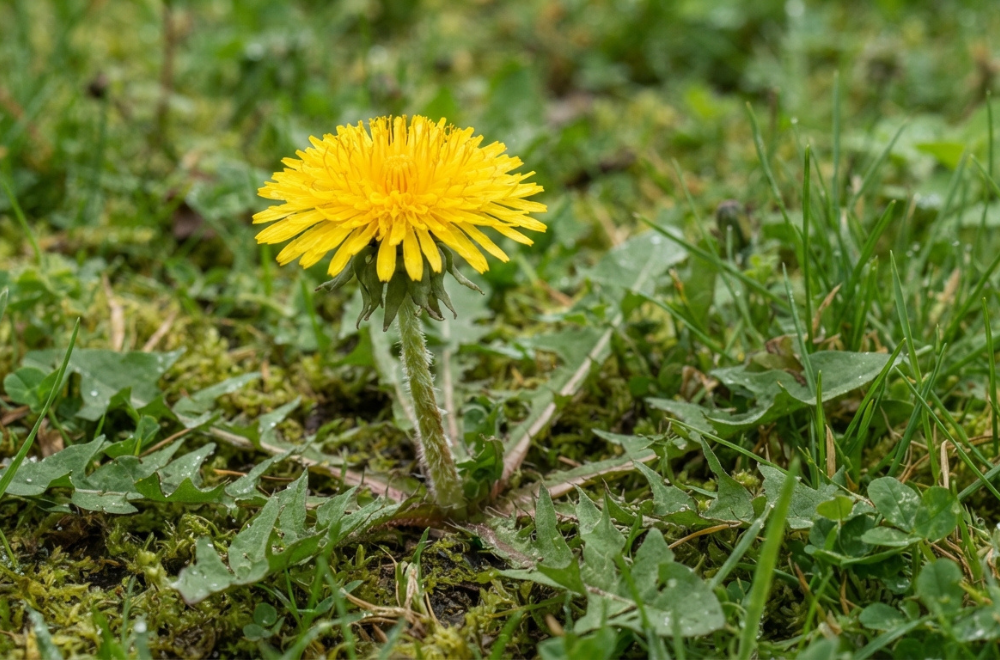
Dandelions are the most familiar taproot weed, and also one of the more forgiving to remove, mostly because the rosette shape makes the crown easy to locate. The taproot is thick near the surface and narrows as it goes, typically reaching 6 inches to 2 feet deep depending on soil conditions, and it can branch and regenerate from broken sections left behind.
Hand removal works best with a dandelion knife inserted at an angle alongside the root, several inches out from the crown, then worked underneath to loosen the full root before lifting straight up. Pulling from the leaves alone almost always snaps the root at the crown. Moist soil after rain or watering makes a measurable difference here — in compacted, dry clay, even a well-placed tool will often shear the root rather than free it.
Herbicide, where it’s used, is most effective applied in late summer through fall, when the plant is moving sugars down into the root to prepare for winter and will carry a systemic herbicide down with them. Spring applications tend to be less effective for the same reason in reverse — the plant’s energy is moving up and out into leaf growth.
Prevention comes down to turf density more than any single technique. Dandelions establish readily in thin, compacted, or bare patches, so overseeding thin areas and mowing at a taller height (which shades the soil and reduces germination) does more long-term work than repeated spot removal.
2. Dock — Curly Dock and Broadleaf Dock (Rumex crispus, Rumex obtusifolius)
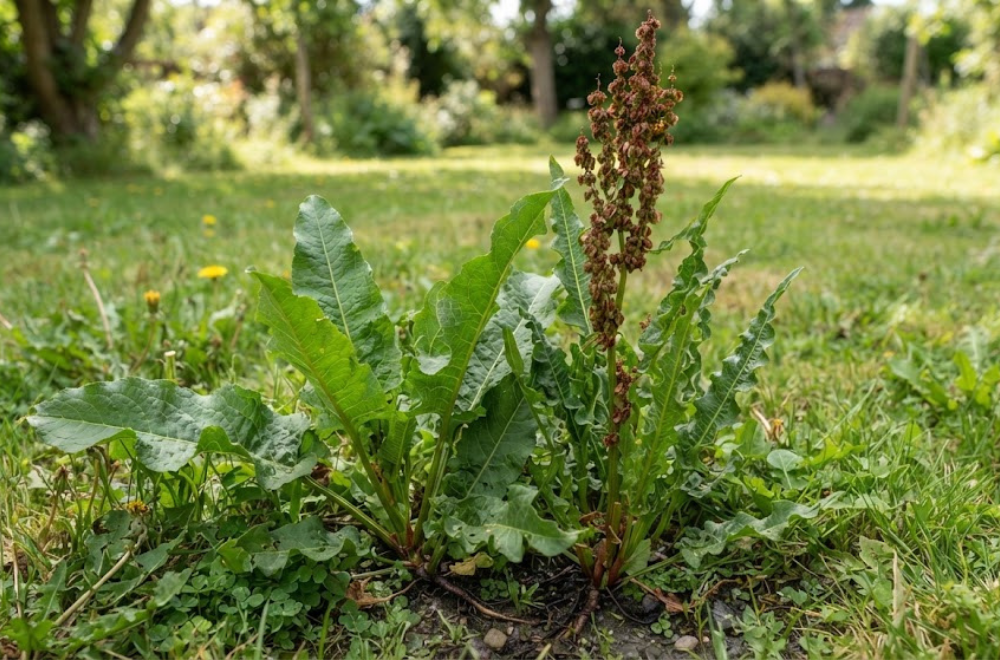
Dock is one of the more physically demanding weeds on this list to remove by hand. The taproot is thick, fleshy, and branching, and in favorable soil it can extend 3 to 4 feet down — deep enough that complete manual removal of a mature plant is often impractical. The rosette has long, lance-shaped leaves with distinctly wavy or crimped edges (curly dock) or broader, more rounded leaves (broadleaf dock), and mature plants send up a tall flower stalk that turns rust-brown and can hold seed well into winter.
For young plants, a garden fork driven in a circle around the crown, then levered to loosen the soil before pulling, has a reasonable success rate. For established plants, expect to either accept that some root will remain — meaning the plant may return and require repeat treatment — or use a systemic herbicide applied directly to the cut stem or foliage, since digging out the entire root often isn’t realistic in a lawn setting without excavating a large hole.
One detail worth knowing: dock seed can remain viable in soil for decades, and a single mature plant can produce tens of thousands of seeds. Cutting flower stalks before they go to seed, even if the root removal is incomplete, prevents the problem from multiplying.
3. Common Burdock (Arctium minus)
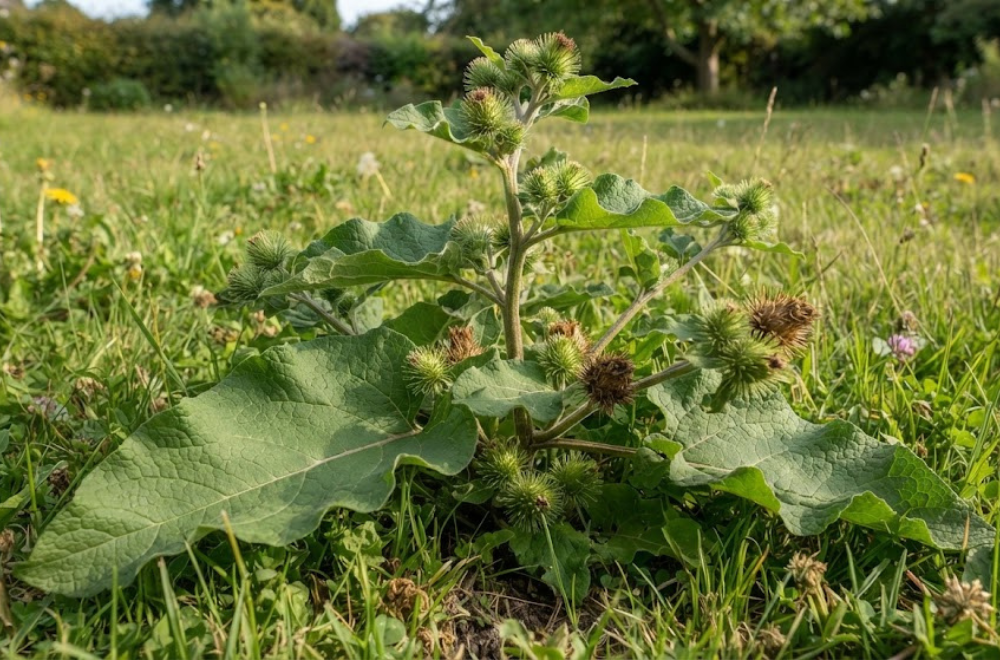
Burdock is a biennial — it spends its first year as a low rosette of large, heart-shaped leaves, then bolts into a tall, branching plant with the familiar bur seed heads in its second year. The taproot is thick and fleshy, and it stores enough energy that even a substantial fragment left in the ground can regenerate.
Removal is most manageable during the first-year rosette stage, before the plant bolts and while the root is smaller. Dig around the plant with a shovel, aiming to get several inches below the crown, and lever the root out rather than pulling straight up, which tends to snap it. If the plant has already flowered, cut and bag the flower heads before digging — the hooked burs disperse seed extremely effectively on clothing, fur, and equipment, and handling a flowering plant without doing this step first often just relocates the seed problem elsewhere in the yard.
Burdock plant material, especially anything with seed heads attached, should go in the trash rather than the compost pile, since home composting rarely reaches temperatures high enough to reliably kill the seed.
4. Chicory (Cichorium intybus)
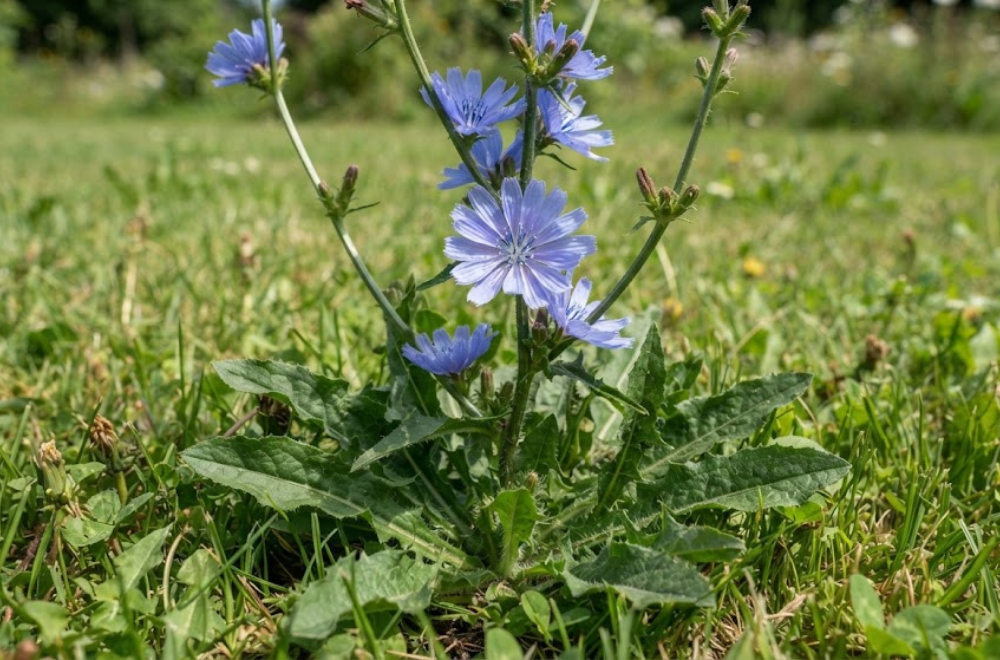
Chicory’s rosette leaves look enough like a dandelion’s that it’s commonly misidentified, especially before the plant sends up its wiry, branching flower stalk with sky-blue blooms that open in the morning and close by midday. One practical distinction: chicory’s leaves are rougher to the touch, and the plant grows a large, dark, fleshy taproot with a bitter, milky sap, similar in principle to dandelion but often thicker and set deeper.
Removal follows the same logic as dandelion but requires more leverage given the taproot’s size — a long-handled weeder or garden fork works better than a hand tool once the plant is past the seedling stage. Chicory tends to colonize roadsides, compacted waste ground, and thin lawn edges, so as with dandelion, improving turf density in those specific trouble spots reduces re-establishment more reliably than repeated digging alone.
5. Wild Carrot / Queen Anne’s Lace (Daucus carota)
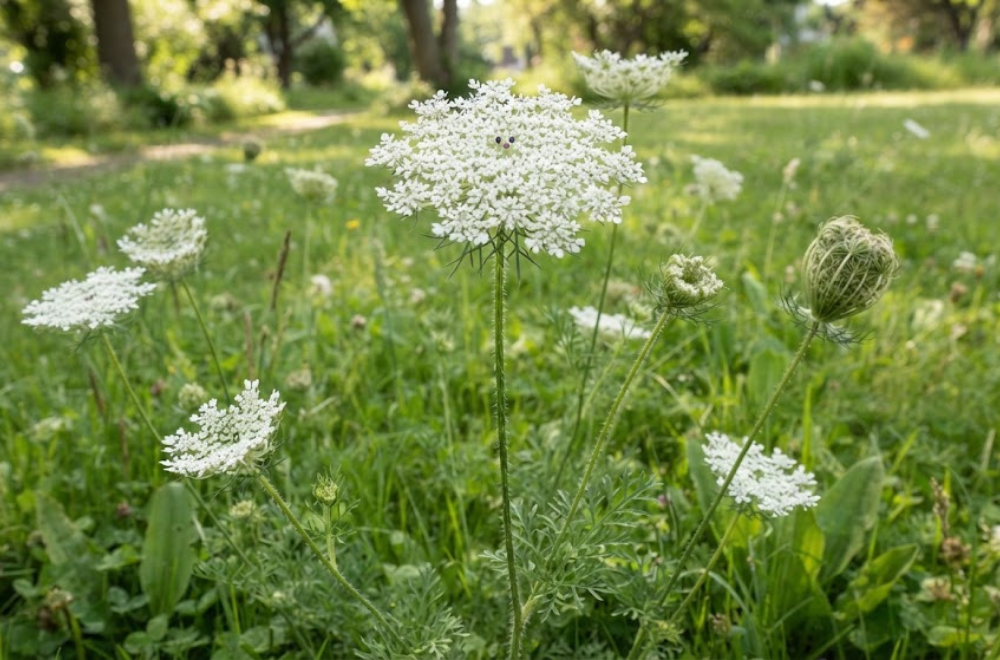
Wild carrot is a biennial with finely divided, fern-like leaves and a distinct carrot smell when crushed, topped in its second year by a flat, lacy white flower cluster, often with a single dark purple floret at the center of the umbel. The taproot is pale yellowish-white and, true to its name, does resemble a slender, woody carrot.
Before pulling anything that looks like this, it’s worth stopping to check the stem carefully. Wild carrot has a hairy, unmarked green stem. Poison hemlock — a highly toxic look-alike discussed below — has a smooth, hairless stem with purple blotches, and can grow in the same disturbed ground. Getting this identification wrong before hand-pulling or weed-whacking is the most consequential mistake a reader can make with any plant on this list, so if there’s any uncertainty, it’s worth checking the stem for purple marking and the odor for a carrot smell rather than pulling on a hunch.
Once positively identified, wild carrot is removed the same way as other taproot biennials — loosen with a fork, pull the full root, and remove before seed set, since a single plant can produce thousands of seeds.
6. Poison Hemlock (Conium maculatum) — Handle With Caution
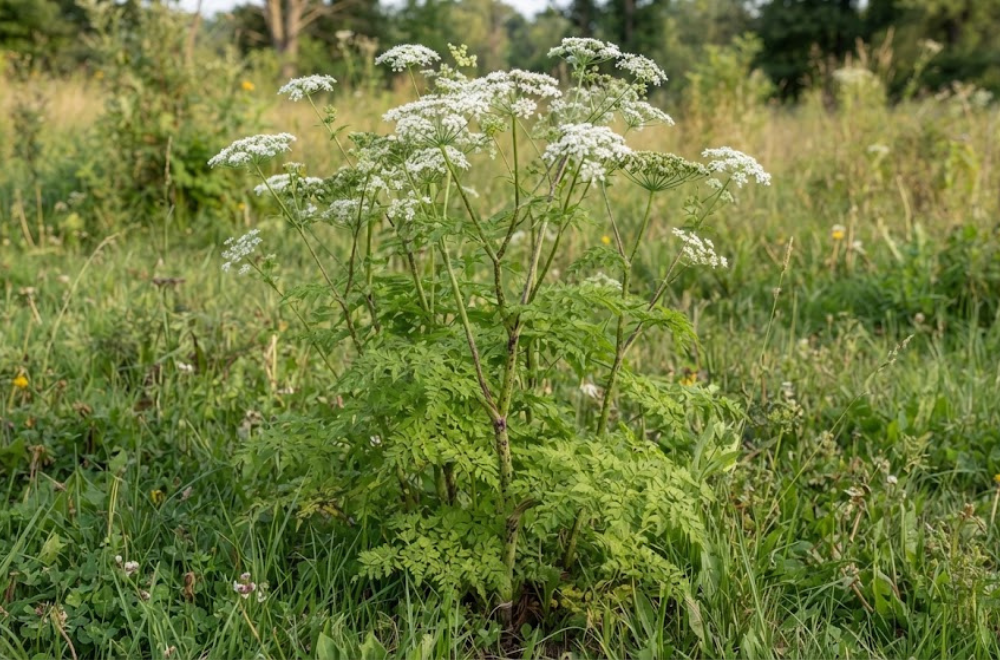
Every part of poison hemlock is toxic if ingested, and the sap can cause skin irritation on contact for some people. This plant is included here because it has a genuine taproot and gardeners do sometimes attempt to remove it by hand, but it deserves a different approach than the rest of this list.
Identification first: poison hemlock grows into a much larger plant than wild carrot, often 6 to 9 feet at maturity, with smooth, hairless, hollow stems marked with purple blotches, and a musty, unpleasant smell rather than a carrot scent when the foliage is crushed. It’s frequently confused with wild carrot at the rosette stage, before the distinguishing stem markings are obvious.
If removal is necessary, wear long sleeves, gloves, and eye protection, avoid mowing or weed-whacking it (which can aerosolize plant material), and avoid touching your face or eyes during the work. Bag and dispose of plant material rather than composting it. Given the toxicity involved, homeowners dealing with a significant stand of poison hemlock — rather than an isolated seedling or two — may reasonably prefer to contact a local extension office or a professional service rather than handle it directly, particularly if children or pets have access to the area.
7. Bull Thistle (Cirsium vulgare) — and Why It’s Not the Same as Canada Thistle
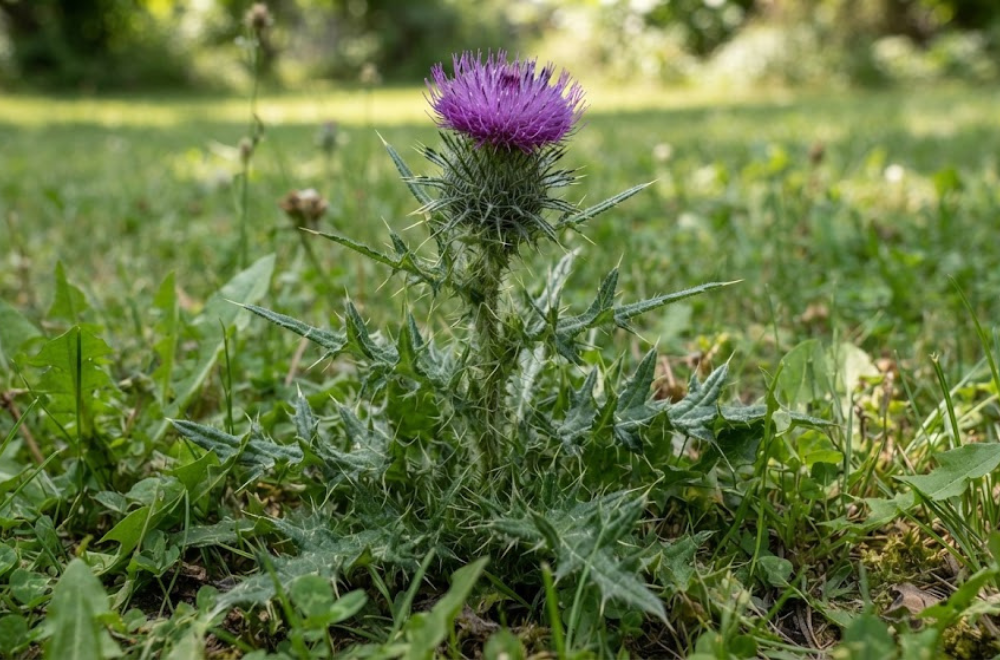
Bull thistle is a biennial with a true taproot, no underground spreading stems, and rough hairs on the upper leaf surface. It’s commonly confused with Canada thistle, which looks similar but spreads primarily through creeping underground rhizomes rather than a single taproot — and that distinction changes the entire removal strategy.
For bull thistle, digging out the taproot with a shovel, well below the crown, is usually enough to prevent regrowth from that individual plant, since there’s no rhizome network to worry about. For Canada thistle, by contrast, digging can actually make the problem worse: broken rhizome fragments as small as half an inch can generate new shoots, so tilling or aggressively chopping at the roots tends to spread the infestation rather than control it. Canada thistle control generally requires repeated cutting of new shoots through a growing season, systemic herbicide timed to the bud stage and again at fall regrowth, or both, sustained over more than one year.
Practically, this means it’s worth pulling a plant or two before committing to a removal plan, specifically to check the root type. A single unbranched taproot with no lateral runners points to bull thistle and a dig-it-out approach. Thin, pale, horizontal roots running sideways from the base point to Canada thistle and a longer-term suppression strategy instead.
8. Common Mallow (Malva neglecta)
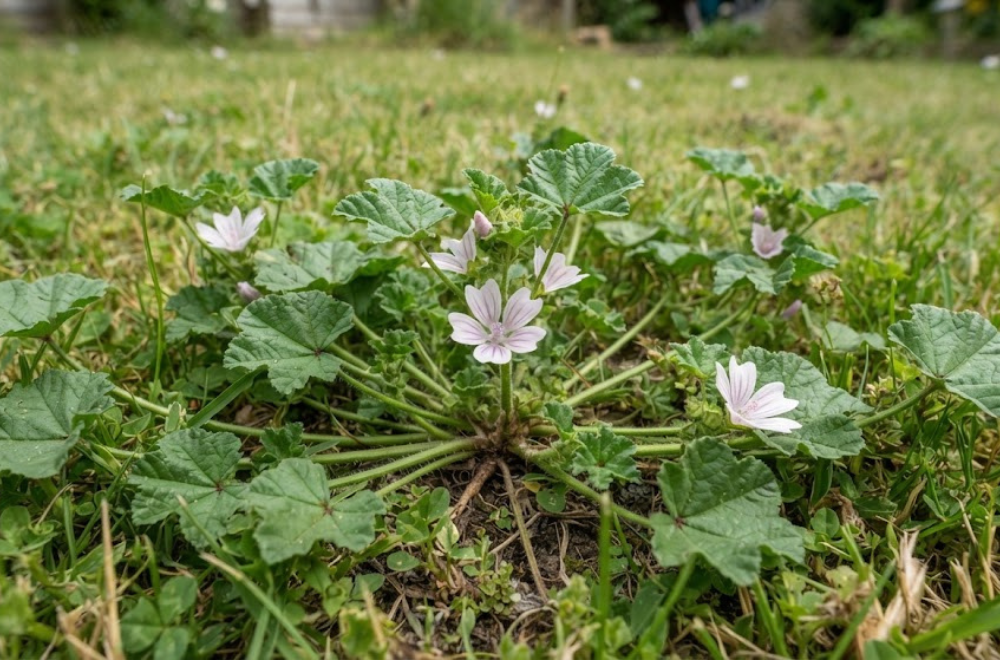
Common mallow — also called cheeseweed for its round, button-like seed pods — grows low and spreading, with round, lobed leaves resembling a small geranium. It has a single deep taproot that lets it persist in compacted soil where many other weeds struggle, including gravel edges, sidewalk cracks, and heavily trafficked lawn areas.
Removal requires getting at least 4 to 5 inches of root out; less than that and the plant frequently regrows. Pre-moistening the soil a few hours before digging noticeably improves success, since mallow’s habitat — compacted, dry ground — is exactly the condition that causes taproots to snap. The seed pods are durable and can persist in soil for years, so removing plants before seed set matters more here than with some faster-cycling annuals.
9. Common Mullein (Verbascum thapsus)
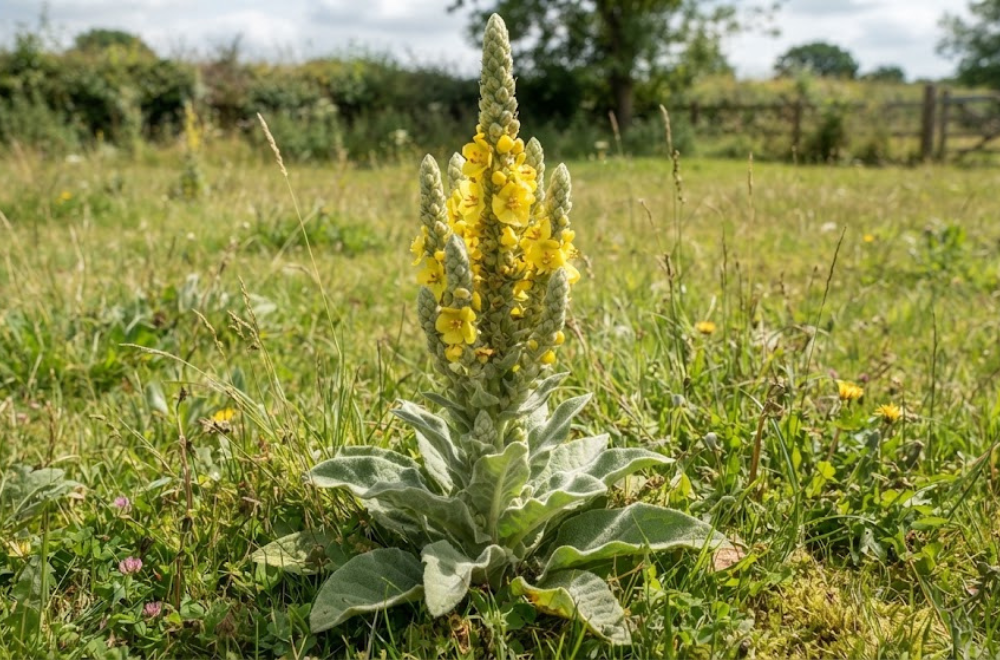
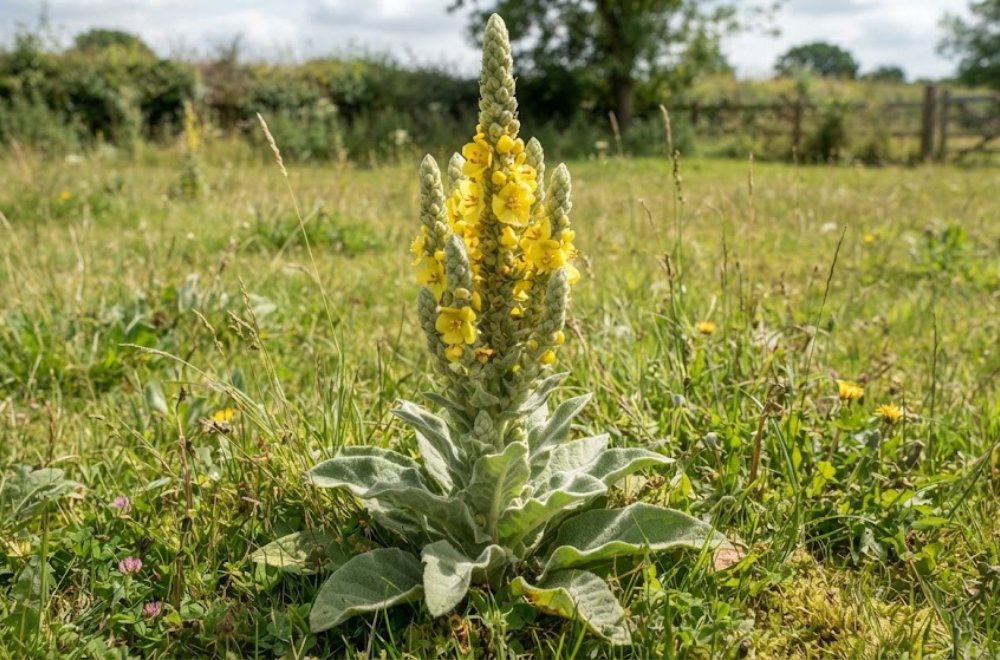
Mullein is a biennial that spends its first year as a distinctive rosette of large, soft, silvery-gray, felt-textured leaves, then bolts in its second year into a tall flower spike that can reach 5 to 7 feet. The taproot is moderately deep but not particularly thick, and first-year rosettes come out of loose or moist soil with hand-pulling alone, provided the whole root is taken rather than snapped at the crown.
Because mullein reproduces entirely by seed — and a single mature plant can release hundreds of thousands of seeds that remain viable in soil for decades — the highest-value moment to remove it is before the second-year flower spike sets seed. A rosette pulled in year one prevents that entire seed load; a flowering plant cut down after seed has set does comparatively little.
10. Wild Parsnip (Pastinaca sativa) — Another Plant to Handle Carefully
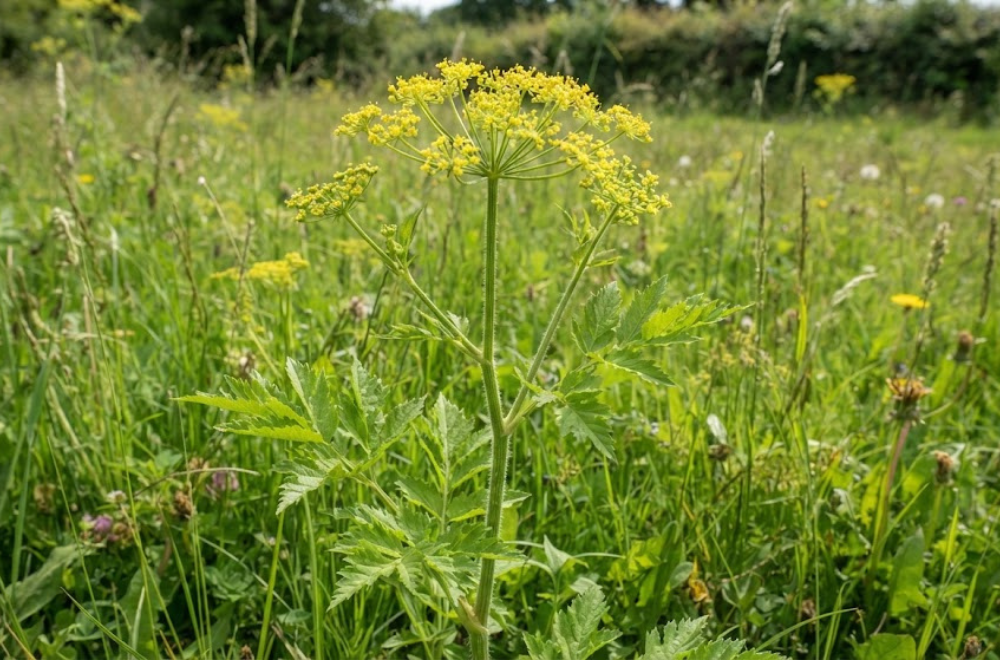
Wild parsnip looks like a yellow-flowered relative of Queen Anne’s Lace, with the same umbrella-shaped flower clusters, and it does have a genuine taproot (it’s the wild ancestor of cultivated parsnip). The concern is the sap, which contains compounds that cause phytophotodermatitis — skin reddening, rash, and in more severe cases blistering — when it contacts skin that’s then exposed to sunlight.
If wild parsnip needs to be removed, the same precautions apply as with poison hemlock: cover skin, wear gloves, and if a reaction does occur after contact, keep the area out of sunlight and wash it as soon as possible. Given the reaction depends on sun exposure, working on an overcast day or in early morning/evening light reduces the risk somewhat, though it doesn’t eliminate the need for protective clothing.
11. Prickly Lettuce (Lactuca serriola)
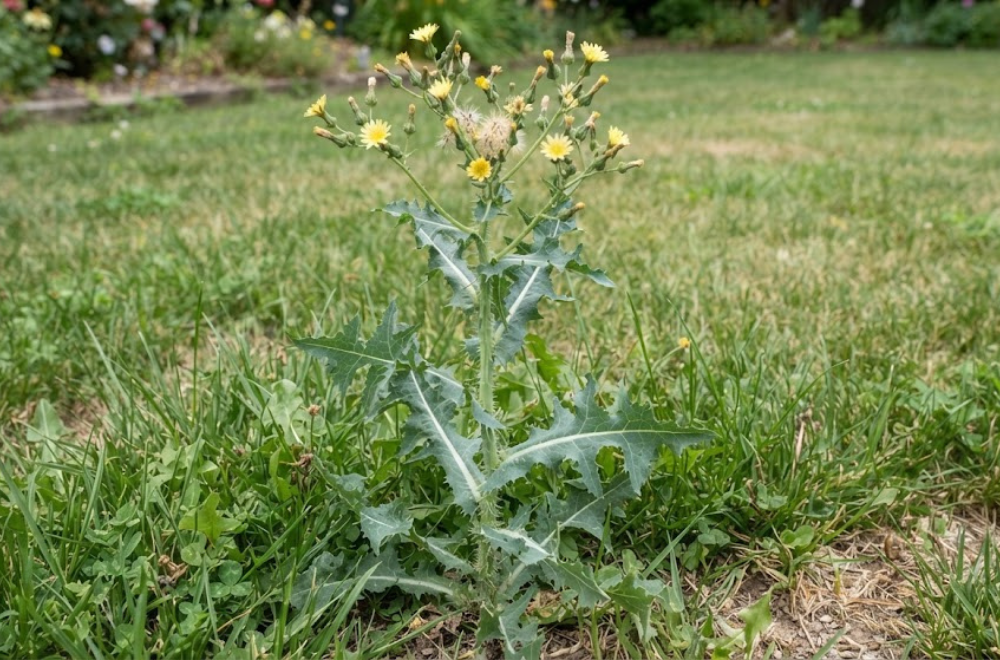
Sometimes called compass plant for the way its leaves orient vertically to reduce midday sun exposure, prickly lettuce has a milky sap similar to dandelion and a spiny midrib on the underside of its leaves that distinguishes it at a glance. The taproot is moderately deep and, as with most plants on this list, regrows readily from fragments left in the soil.
It behaves more like an annual or biennial than a long-lived perennial in most gardens, which is actually good news: consistent removal of young rosettes before they bolt, combined with not letting any plant reach the fluffy seed head stage, tends to reduce a population fairly quickly compared with true long-lived perennials like dock or chicory.
12. Catsear / False Dandelion (Hypochaeris radicata)
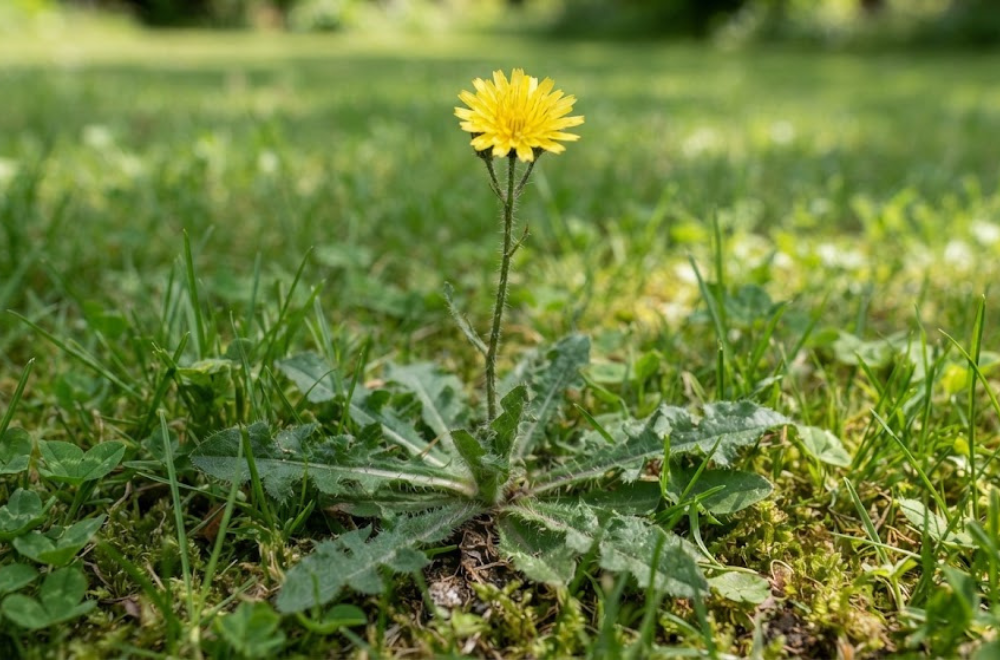
Catsear is frequently mistaken for dandelion at a glance — same yellow flower, same rosette shape — but its leaves are covered in coarse hairs (dandelion leaves are smooth), and its flower stems branch and can carry more than one flower head, where dandelion stems are hollow, unbranched, and single-flowered. It has a similarly deep taproot and the same tendency to regenerate from a broken root fragment.
The removal approach doesn’t differ meaningfully from dandelion, but the identification distinction matters for anyone trying to figure out why a “dandelion” treatment plan doesn’t seem to be working — catsear tends to be somewhat more drought- and mowing-tolerant than true dandelion, so a lawn that’s otherwise thinning out its dandelion population may still be holding onto catsear in the same spots.
13. Shepherd’s Purse (Capsella bursa-pastoris)
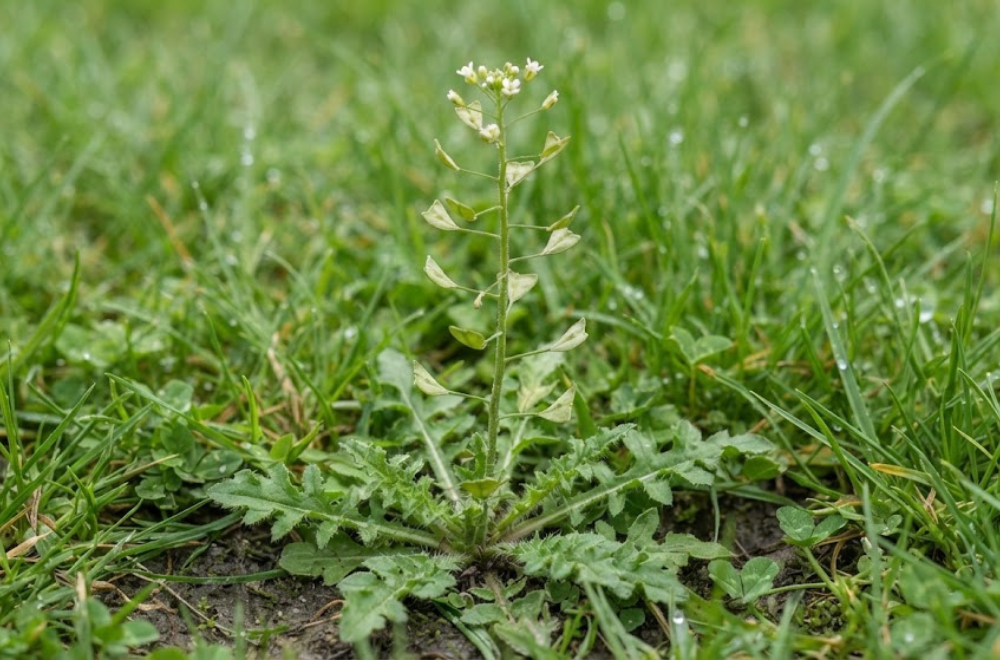
Shepherd’s purse is smaller and less imposing than most of the other plants here — a low rosette with small, triangular, heart-shaped seed pods on a slender flowering stem — but it does have a taproot, and in garden beds with looser soil it can be surprisingly persistent if only the top growth is removed. It’s a winter annual or biennial in most climates, which means the practical control window is before it flowers, since a single plant can produce a large number of seeds quickly and continuously through a growing season.
Hand-pulling in loose garden soil is usually sufficient; the taproot on this species is not typically thick enough to require a fork or long-handled tool the way dock or burdock does.
14. Spotted Knapweed (Centaurea stoebe)
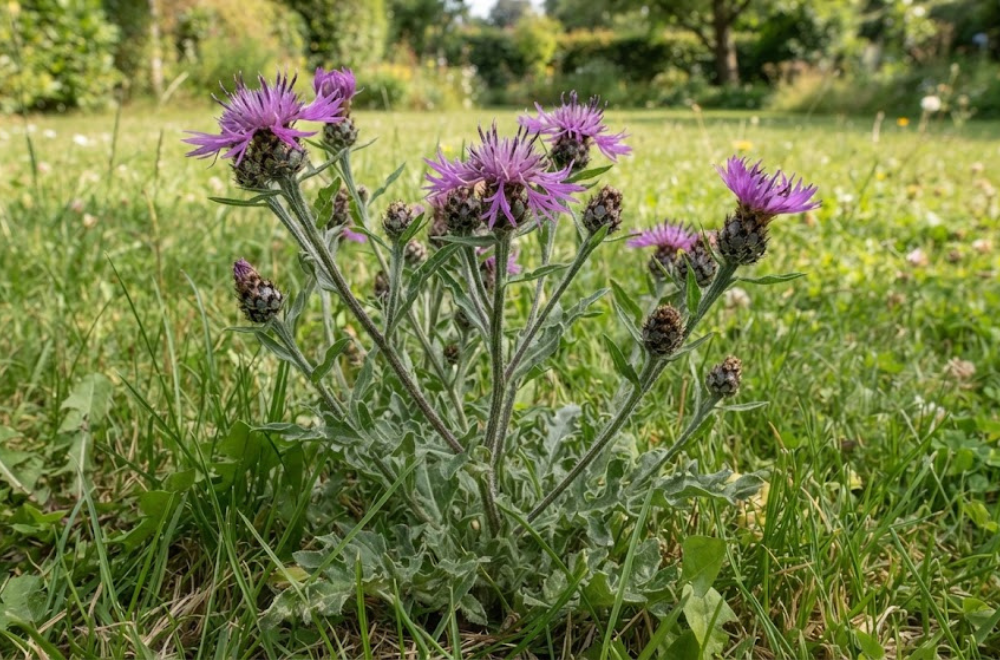
Spotted knapweed is more often a problem in pastures, roadsides, and larger landscaped areas than in a typical lawn, but it does turn up in garden beds and disturbed soil around new construction, and it’s worth including because it’s frequently mistaken for a thistle relative without the spines. It has a stout taproot and a rosette of finely divided, grayish-green leaves, followed by pink-purple, thistle-like flower heads with distinctive black-tipped bracts.
This is a plant where prevention matters more than removal technique, because it produces large numbers of long-lived seeds and can also release compounds into the surrounding soil that suppress competing plants. Removing isolated plants by digging out the taproot before flowering is manageable; a well-established patch in a larger area is a longer-term management project, and in agricultural or conservation settings it’s often treated as a regional priority rather than a single-yard task.
15. Common Sowthistle (Sonchus oleraceus)
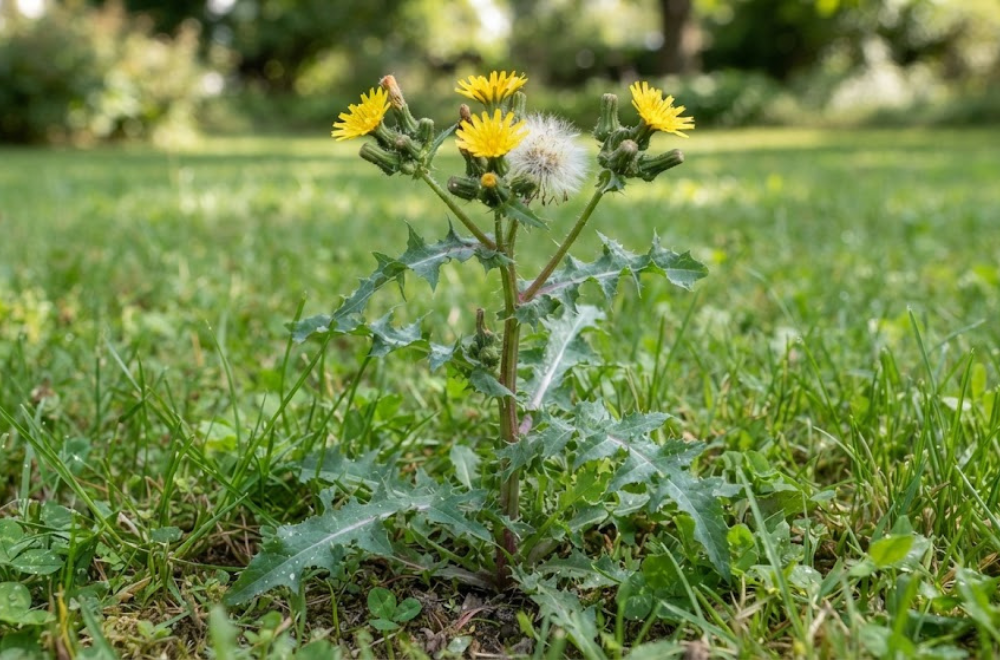
Sowthistle looks like a rougher, more angular relative of dandelion, with jagged, sometimes spiny-edged leaves and clusters of small yellow flowers rather than one flower per stem. Despite the name, its leaves aren’t especially prickly to the touch compared with true thistles, and the taproot, while genuine, tends to be shallower and less persistent than dock or burdock.
It’s usually one of the easier plants on this list to remove by hand, especially from moist garden soil, but it grows and sets seed quickly, so the practical challenge is timing rather than root depth — a patch that looks manageable can go from rosette to seed head in a matter of weeks during warm weather.
When Hand-Pulling Genuinely Won’t Be Enough
For most of the plants above, a single hand-removal, done thoroughly, resolves an individual plant. Two situations change that calculation. The first is a large, well-established infestation — a lawn with dock or dandelion scattered across hundreds of square feet isn’t a digging project, it’s a lawn-health project, and the more effective long-term move is usually improving turf density, drainage, and mowing height so the lawn itself out-competes new seedlings, rather than spot-digging indefinitely. The second is any plant that spreads by rhizome in addition to, or instead of, a taproot — Canada thistle being the clearest example on this list — where digging can fragment the root system and spread the problem rather than solve it.
Herbicide, where it’s used for taproot weeds, is most effective as a systemic (translocated) product applied to actively growing foliage, ideally in late summer or fall when perennial plants are moving energy down into the root for winter storage — the same timing that makes hand-digging somewhat easier, since the plant isn’t putting fresh energy into top growth to resist removal. Always read and follow the product label, particularly around application near desirable plants, children’s and pets’ access to the treated area afterward, and weather conditions (wind, rain forecast) that affect drift and effectiveness.
Preventing Taproot Weeds From Coming Back
A few things make the biggest measurable difference across nearly every plant on this list:
- Mowing height. Taller grass shades the soil surface, which reduces germination for many light-dependent weed seeds, including dandelion and catsear. Most cool-season lawns do better at 3 to 3.5 inches than at the shorter heights often associated with a manicured look.
- Soil compaction. Several of these weeds — common mallow especially — thrive specifically because they tolerate compacted soil better than turfgrass does. Core aeration in high-traffic areas addresses the underlying condition rather than just the symptom.
- Timing removal before seed set. This matters more than root-removal perfection for controlling weed population over time. A dock or burdock plant with an incomplete root removal but no seed head is a far smaller long-term problem than one left to mature and disperse tens of thousands of seeds, even if its own root eventually regrows.
- Bare and thin patches. Nearly every plant here establishes fastest in open, disturbed, or thin turf. Overseeding bare spots promptly, rather than letting them sit exposed through a season, closes the opportunity these weeds depend on.
Frequently Asked Questions
Will a piece of taproot left in the soil always regrow into a new plant? Not always, but often enough that it’s worth assuming it will. Species like dandelion, dock, and chicory are particularly good at regenerating from a broken root fragment; others, like shepherd’s purse and sowthistle, are somewhat less persistent, since more of their energy goes toward fast seed production than long-term root storage.
Is it safe to compost pulled taproot weeds? For most of them, yes, if they haven’t gone to seed and the pile reaches a solid working temperature. For anything with mature seed heads — dock, burdock, mullein — home compost piles typically don’t get hot enough to reliably destroy the seed, so bagging for trash disposal is the safer choice. Poison hemlock and wild parsnip shouldn’t go in a home compost pile at all, given the toxicity concerns.
How do I know if what I’m looking at is poison hemlock before I touch it? Check the stem before doing anything else. Wild carrot and wild parsnip both have hairy, unmarked stems; poison hemlock’s stem is smooth and marked with purple blotches. If there’s any doubt, it’s reasonable to treat the plant as poison hemlock until proven otherwise, wear gloves, and avoid crushing or mowing it.
A Practical Starting Point
Not every weed on this list needs the same urgency. A single dandelion in an otherwise healthy lawn is a five-minute job with a dandelion knife. A stand of poison hemlock along a fence line, or a patch of Canada thistle spreading through rhizomes, is a different kind of project — one where identification comes before action, and where the right tool or timing matters more than effort. Start by identifying what’s actually growing, confirm anything that looks even slightly like hemlock or wild parsnip before handling it, and then match the removal method to the root system in front of you rather than reaching for the same shovel or spray for every plant in the yard.

About Syprose Kiche
Syprose Kiche is the creator and writer behind My Besuited Home, a practical home and garden website covering DIY projects, gardening, lawn care, landscaping, home improvement, and outdoor living. She focuses on turning everyday homeowner questions into clear, practical guides backed by careful research and useful real-world considerations.