
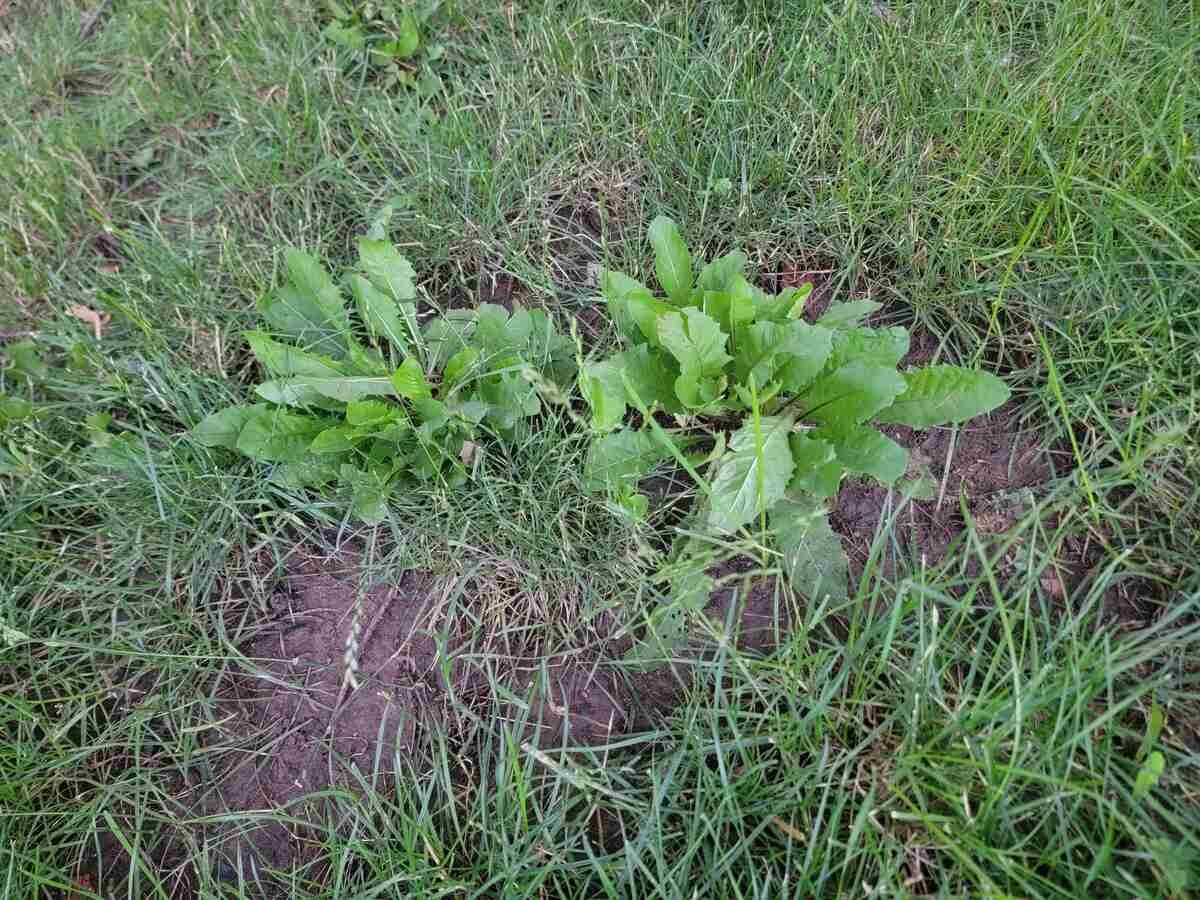
You spot something in the lawn that doesn’t look like the grass around it. Maybe it’s got a rosette of leaves hugging the ground, or a patch that stays a slightly different shade of green after everything else goes dormant. Before you spray anything, it helps to know exactly what you’re looking at — because the wrong herbicide on the wrong weed, at the wrong time of year, usually just wastes money and leaves the weed to spread another season.
Most lawn weeds fall into three broad groups, and figuring out which group you’re dealing with is the fastest way to narrow things down.
Three Categories, Not Hundreds of Species
Before memorizing individual plants, it’s worth sorting weeds into the three structural categories that most identification charts and herbicide labels are built around:
- Broadleaf weeds have wide, flat leaves with visible veins branching out from a central rib — think dandelion or clover. They’re usually the easiest to spot because their leaf shape contrasts sharply with turfgrass blades.
- Grassy weeds look like grass because they are grass, just not the species you planted. Crabgrass and foxtail are the most common examples, and they can hide in a lawn until they mature and their seed heads give them away.
- Sedges are often mistaken for grass but have a triangular stem — roll the stem between your fingers and you can usually feel the three edges, where a true grass stem is round or flat. Yellow and purple nutsedge fall into this category, and they matter because most standard grass herbicides don’t touch them.
Once you know which category you’re looking at, the list of likely suspects shrinks considerably.
Common Broadleaf Weeds
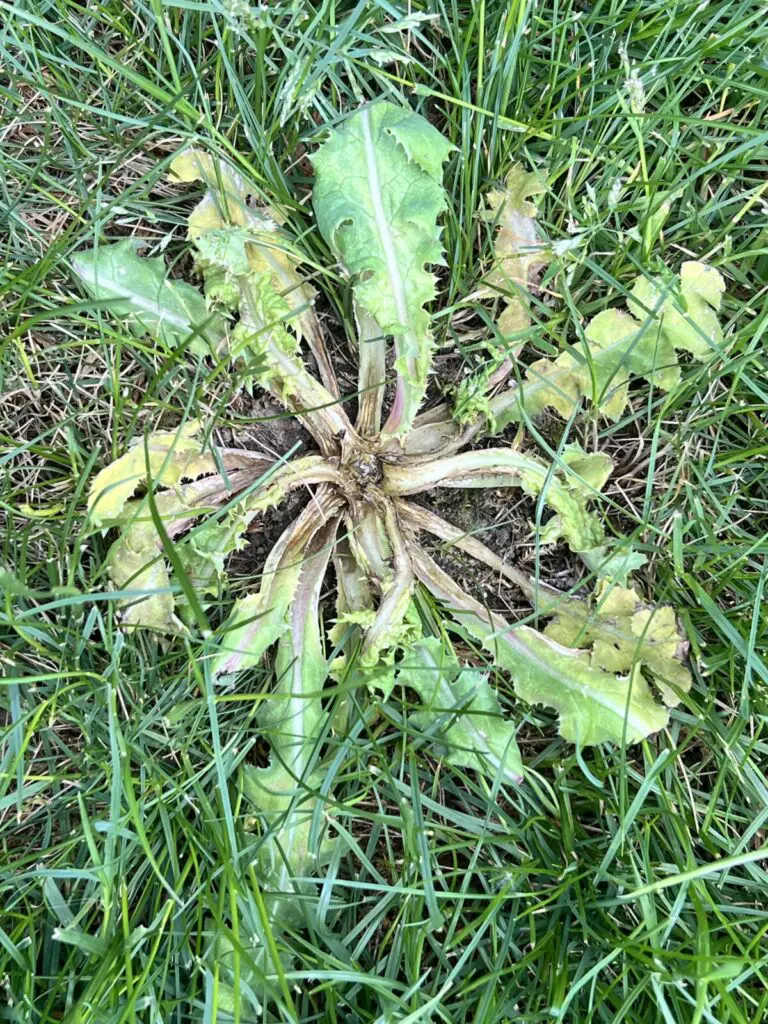
Dandelion. A basal rosette of jagged, deeply toothed leaves with a single yellow flower on a hollow stem. The taproot can extend 6 to 18 inches into the soil, which is why pulling one and leaving even a small piece of root behind often means it regrows within a few weeks.
White clover. Low-growing with three rounded leaflets, each usually marked with a faint white chevron, and small white or pale pink globe-shaped flower clusters. Clover often signals nitrogen-poor soil, since it’s a legume that can fix its own nitrogen where turfgrass struggles.
Broadleaf plantain. Wide, oval leaves with prominent parallel veins, growing in a flat rosette close to the ground, with a narrow spike of tiny flowers rising from the center. Plantain tends to show up in compacted areas — along walking paths, near gates, or in high-traffic sections of the yard — because it tolerates soil conditions that stress turfgrass roots.
Common chickweed. Small, oval, smooth-edged leaves on sprawling stems that root at the nodes where they touch soil, with tiny white star-shaped flowers. It’s a cool-season annual, so it’s most active in fall and spring and tends to die back on its own once summer heat arrives.
Henbit. Square stems (a giveaway that it’s in the mint family), scalloped leaves, and small purple tubular flowers. It’s a winter annual that germinates in fall, overwinters as a low mat, and flowers in early spring — which means by the time it’s obvious and flowering, it’s often close to the end of its natural life cycle anyway.
Ground ivy (creeping Charlie). Rounded, scalloped leaves on square stems that root at the nodes and spread along the soil surface, often in shaded, damp areas where turf is already thin. The crushed foliage has a distinct minty smell.
Black medic. Small, clover-like trifoliate leaves, but with a tiny point at the tip of the center leaflet that true clover lacks, and small yellow flower clusters instead of white. It often shows up in the same compacted, low-fertility spots as clover.
Spotted spurge. A low mat with small, oval leaves that frequently have a dark red or purple spot in the center, and stems that ooze a milky sap when broken. It thrives in thin turf and bare patches during hot weather and can produce seed within a few weeks of germinating.
Common Grassy Weeds
Crabgrass. Coarse, light green blades that grow low and spread outward from a central point, with a star-like or crab-like growth pattern that becomes obvious by mid to late summer. It’s a summer annual — it germinates when soil temperatures warm in spring, which is why pre-emergent timing matters more than the herbicide product itself.
Foxtail (yellow or green). Upright grassy blades topped with a bristly, fox-tail-shaped seed head. Once the seed head appears, the plant has already accomplished its main goal for the season, so control is far more effective before that stage.
Nimblewill. A wiry, fine-textured perennial grass that forms circular patches and turns straw-brown earlier than surrounding turf in fall, then greens up later in spring. It’s frequently mistaken for a disease patch rather than a weed grass.
Sedges
Yellow nutsedge. Bright yellow-green, glossy blades that grow faster than surrounding turf, giving lawns an uneven, “just mowed but already shaggy again” look within days. It spreads through underground tubers (nutlets), which is why pulling the visible plant rarely solves the problem — the tubers remain and resprout.
Purple nutsedge. Similar in structure but with darker green blades and a purplish flower head, generally found in warmer climates and consistently damp or poorly drained soil.
Why Getting the ID Wrong Costs You Time
Herbicides are generally formulated for one of these three categories, not all of them. A broadleaf herbicide will do little to nothing against crabgrass, and a pre-emergent timed for crabgrass won’t touch a dandelion that’s already established. Treating nutsedge with a standard broadleaf or grass product is one of the more common mistakes homeowners make, since it looks grass-like but requires a sedge-specific herbicide to actually work.
Timing compounds the problem. Crabgrass and other summer annuals need to be addressed with a pre-emergent before soil temperatures warm in spring — once you can see the mature plant, that window has already closed for the season. Winter annuals like henbit and chickweed are the opposite: they’re easiest to manage in fall, before they’ve had a chance to establish over winter.
When Identification Alone Isn’t Enough
A thin, patchy lawn with an ID chart in hand will keep growing the same weeds back every year if the underlying cause isn’t addressed. Compaction, poor drainage, low mowing height, and thin turf from shade or foot traffic all create the exact conditions many of these weeds prefer. If the same species keeps returning to the same spots despite treatment, that’s usually a sign the lawn itself needs attention — aeration, overseeding, or a soil test — rather than a sign the herbicide failed.
For large infestations, spreading perennial weeds with underground tubers or rhizomes (like nutsedge or nimblewill), or situations involving licensed pesticide application near water sources or on a large property, contacting a local lawn care professional or your state’s cooperative extension office is often more effective than repeated DIY treatments.
A Few Questions Worth Answering Directly
Is it possible to have more than one type of weed in the same patch of lawn? Yes, and it’s common. Compacted, thin turf areas often host several species — plantain, black medic, and spotted spurge frequently show up together because they tolerate the same soil conditions.
Does a weed’s appearance change throughout the season? Often, yes. Many weeds are far easier to identify once they flower or seed, but by that point they’re also closer to completing their life cycle, which affects how well certain treatments work.
The Practical Next Step
Before treating anything, confirm whether you’re looking at a broadleaf weed, a grassy weed, or a sedge, and note whether it’s behaving like an annual (dies back on its own) or a perennial (persists year after year). That single distinction — category plus life cycle — determines almost every other decision that follows, from which product to buy to when to apply it.

About Syprose Kiche
Syprose Kiche is the creator and writer behind My Besuited Home, a practical home and garden website covering DIY projects, gardening, lawn care, landscaping, home improvement, and outdoor living. She focuses on turning everyday homeowner questions into clear, practical guides backed by careful research and useful real-world considerations.