
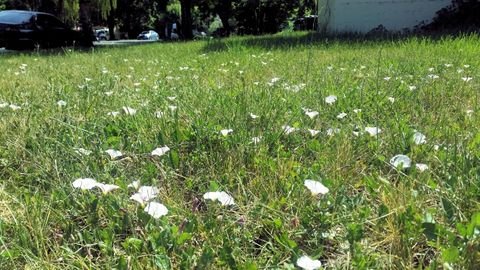
You pull it on Saturday. By the following weekend, it’s back — climbing the same fence post, wrapping around the same rose cane, threading through the same patch of grass like nothing happened. That’s not bad luck. That’s how field bindweed works, and understanding why it behaves this way is the first real step toward controlling it without reaching for a jug of glyphosate.
Bindweed (Convolvulus arvensis, sometimes confused with its larger-flowered cousin hedge bindweed, Calystegia sepium) is a perennial vine in the morning glory family. It’s often mistaken for a fast-growing annual because of how quickly it reappears, but the plant you’re fighting isn’t really the vine on the surface. It’s the root system underneath — and that root system is the reason so many well-meaning removal attempts fail.
Why Bindweed Is So Hard to Get Rid of in the First Place
Most lawn weeds you can out-muscle with a single aggressive season of pulling, mowing, and overseeding. Bindweed doesn’t play by those rules, and the reason comes down to what’s happening below the soil line.
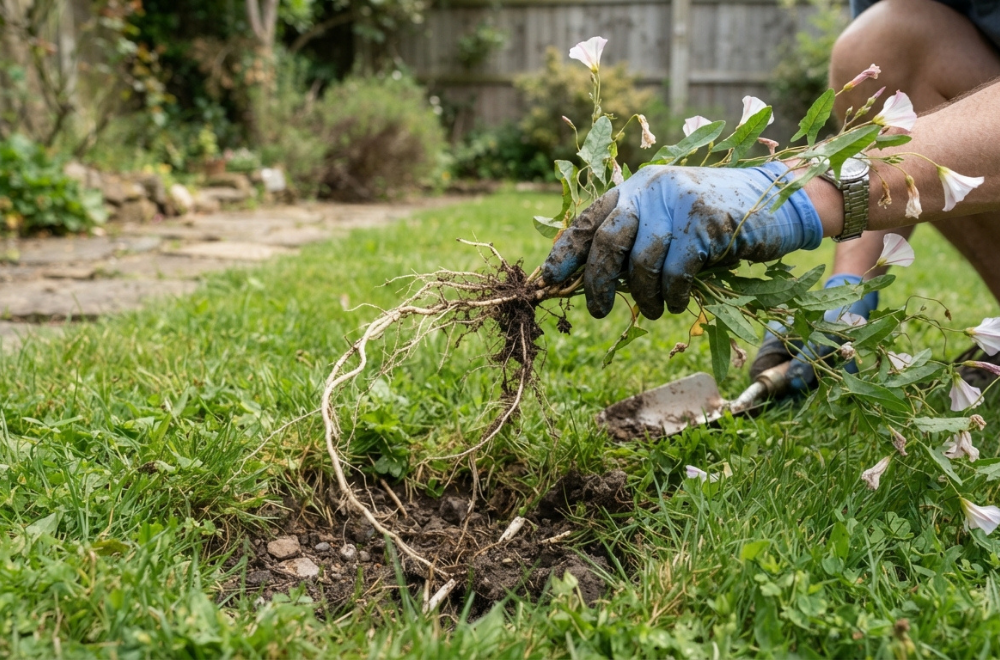
Field bindweed roots can extend far deeper than almost any other lawn weed — extension researchers have documented root systems reaching down ten feet or more, with some going considerably deeper in loose or sandy soil. Most of that root mass is storing energy, not actively growing. When you pull the visible vine, you’re removing maybe the top few inches of a plant that can regenerate from any point along a much longer root.
This is the detail that trips people up: a piece of bindweed root as short as two inches can grow into a brand-new plant. That means tilling, rototilling, or aggressively hand-digging through an established patch can actually multiply your problem by chopping one root system into a dozen viable fragments. If you’ve ever “removed” bindweed from a bed only to watch it come back thicker and more widespread the following year, this is very likely why.
Bindweed also spreads by seed, and the seeds are unusually patient. They can remain viable in soil for years, waiting for the right conditions — which is part of why a lawn that’s been bindweed-free for a season or two can suddenly show new seedlings after the soil is disturbed by aeration, edging, or a landscaping project.
None of this means bindweed is unbeatable. It means the strategy has to account for the root, not just the vine.
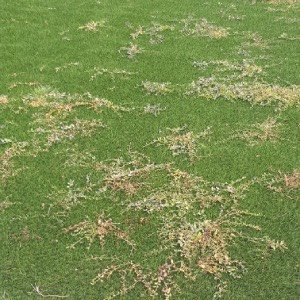
Confirming You’re Actually Dealing With Bindweed
Before investing weeks into a control plan, it’s worth ruling out lookalikes. Field bindweed has arrowhead-shaped leaves, roughly one to two inches long, with pointed or blunt lobes at the base. Its flowers are funnel-shaped, white to pale pink, and about an inch across. The stems twine counterclockwise around anything they touch — grass blades, sprinkler heads, the base of shrubs — and lie flat and mat-forming where nothing’s around to climb.
Hedge bindweed looks similar but is larger overall, with bigger arrow-shaped leaves that have squared-off basal lobes (closer to a right angle where the leaf meets the stem, rather than field bindweed’s leaves lying more level with the stalk) and bigger, often white, trumpet flowers. Wild buckwheat (a common agricultural weed) is sometimes confused with young bindweed too, though its leaves are more triangular and its flowers are small and greenish, not showy.
If you’re not certain, a local extension office can usually confirm identification from a photo, and getting it right matters — the control approach for bindweed is more intensive than what you’d use on most other creeping lawn weeds.
The Realistic Timeline: What “Naturally” Actually Means Here
It helps to set expectations early. There is no natural method that clears an established bindweed infestation from a lawn in one weekend. Even glyphosate, the conventional systemic herbicide most commonly used against it, typically requires repeat applications over more than one season for full control, according to extension weed specialists. Natural and mechanical methods take longer than that, not less — because you’re relying on starving the roots rather than poisoning them systemically.
What natural control does offer is a way to manage bindweed without introducing synthetic herbicide to a lawn where kids, pets, or food crops are nearby, and a genuinely permanent result if you stick with it. The tradeoff is time and consistency, not effort in any single session.
Starving the Roots Through Repeated Removal
The single most effective non-chemical strategy for lawn bindweed is also the least glamorous: cutting or pulling the vine back to the ground every time it appears, on a tight and consistent schedule, for an entire growing season or longer.
Here’s the logic behind it. Bindweed’s root system stores the energy the plant uses to keep resprouting. Every time you cut the vine down, the root has to spend stored energy pushing up new growth. If you let that new growth photosynthesize for even a couple of weeks, the plant replenishes what it spent and then some — which is exactly why occasional, inconsistent pulling barely dents an infestation and can even make it worse by encouraging denser root branching.
The fix is frequency, not force. Cutting or pulling bindweed back every seven to ten days, without exception, prevents the plant from ever fully recharging. Over a full season of this, root reserves genuinely decline. Extension research on nonchemical suppression backs this up: shallow, repeated tillage or cutting timed to when runners are only four to six inches long, combined with limiting irrigation to the area, measurably reduces bindweed spread over time.
A few practical notes on doing this in a lawn specifically, rather than a bed:
- Hand-pull where the soil is loose, gripping as close to the soil line as possible and pulling steadily rather than yanking, which tends to snap the root and leave a fragment behind that can resprout.
- In compacted lawn soil, a narrow weeding tool or old kitchen knife run alongside the stem to sever it just below the crown is often more realistic than trying to extract the whole root — and severing it repeatedly is what does the actual damage over time, not any single extraction.
- Don’t till or rototill an area with established bindweed. It feels productive, but every root fragment it creates is a potential new plant. This is one of the most common mistakes homeowners make, and it’s usually the reason a “cleared” area comes back worse the next spring.
- Mow bindweed-infested lawn areas slightly more often than you otherwise would, since regular mowing has the same starving effect as hand-cutting on any bindweed that’s managed to establish within turf.
Expect this to take one to three growing seasons for a well-established patch. That’s not a failure of the method — it reflects how much energy is actually stored underground.
Smothering: Cutting Off the Light Supply
For bindweed growing in a bed adjacent to the lawn, or in a lawn area you’re willing to take out of service temporarily, smothering can shortcut the timeline considerably. The principle is straightforward: without light, bindweed can’t photosynthesize, and a plant that can’t photosynthesize is drawing purely on stored root reserves with no way to replenish them.
Overlapping layers of cardboard (with tape and glossy inserts removed) topped by three to four inches of mulch is the standard approach, and it needs to stay in place through an entire growing season to meaningfully deplete an established root system — removing it after a few weeks generally just interrupts the process without finishing it. Commercial woven landscape fabric works too, though it tends to be less effective long-term than cardboard-and-mulch because bindweed shoots are persistent enough to find gaps at the fabric’s edges and seams, and it’s worth checking and resealing those edges periodically.
This method obviously isn’t compatible with maintaining a lawn in that spot while it’s happening — you’re sacrificing turf temporarily to win the underground fight. It’s most practical for a defined bindweed hotspot at the edge of a lawn, along a fence line, or in a bed that borders turf and keeps reseeding it, rather than for bindweed scattered evenly through an entire yard.
A related option for non-turf areas: soil solarization, where clear plastic is laid over moist soil and sealed at the edges for four to six weeks during the hottest part of summer, using trapped heat to damage roots and seeds near the surface. It’s more useful for prepping a bed before replanting than for an active lawn, since it also kills the grass.
Where Natural Herbicides Fit — and Where They Fall Short
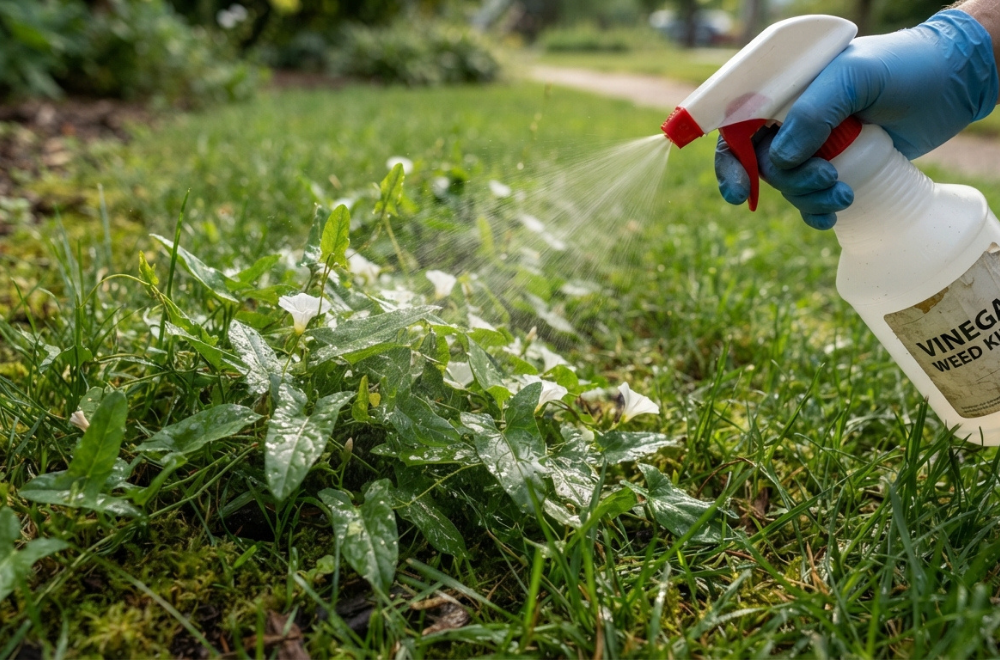
Vinegar-based (“horticultural vinegar”) products get recommended constantly as a natural bindweed killer, and it’s worth being direct about what they actually do. Standard grocery vinegar is about 5% acetic acid; horticultural vinegar products run 20% to 30%. Both work the same way — as contact herbicides that dehydrate whatever leaf tissue they touch. Neither one moves down into the root system the way a systemic herbicide does.
That distinction matters enormously for a perennial like bindweed. Acetic acid will visibly wilt and brown bindweed foliage within hours, which looks like success. But because the roots are untouched, regrowth from the same root system within one to three weeks is the typical outcome, according to extension research on the topic — the plant simply pushes up new shoots using stored reserves. Vinegar is genuinely effective against young annual weeds and bindweed seedlings still relying on a small root, which is one reason it’s worth keeping on hand for new bindweed sprouts you catch early, before an established root system develops. It is not, on its own, a solution for an established infestation.
If you do use it: apply on a dry, sunny day so the acid has time to work before rain dilutes it, avoid overspray onto grass and desirable plants since it’s non-selective, and treat horticultural-strength (20%+) product with real caution — it’s classified with the EPA’s strongest hazard signal word and needs gloves and eye protection, not casual handling. Higher concentrations aren’t simply a stronger version of kitchen vinegar; they’re a different level of hazard.
Boiling water is another commonly suggested natural option, and it has the same fundamental limitation as vinegar — it’s a contact treatment that scalds foliage without reaching the root. It’s best suited to bindweed growing in pavement cracks or gravel where a lawn isn’t involved, not for use around living turf, since it will kill the grass just as thoroughly as the weed.
Building a Lawn That Bindweed Struggles to Get Into
Bindweed doesn’t compete well against dense, healthy turf — it needs bare soil or thin grass to get a foothold, because its seedlings are relatively poor at pushing up through established competition. This is where prevention does real work, and it’s often the piece that gets skipped in favor of chasing individual vines.
A few things extension turf research consistently points to as reducing bindweed establishment:
- Mow at the taller end of the recommended range for your grass type rather than scalping it. Taller turf shades the soil surface, which limits the light bindweed seedlings need to establish.
- Overseed thin or bare patches as soon as they appear, particularly in fall, rather than leaving open soil exposed over winter and into spring — bindweed seed germination often picks up as soil warms in spring, and bare ground is exactly what it’s waiting for.
- Avoid unnecessary soil disturbance in areas with any known bindweed history. Aeration and dethatching are still worth doing for lawn health, but be aware they can bring buried seed closer to the surface or expose root fragments, so follow up with extra vigilance for new shoots in the weeks after.
- Address compaction and drainage issues. Bindweed tolerates poor, compacted soil far better than most turfgrass does, so a compacted lawn is inherently more vulnerable — not because bindweed prefers bad soil exactly, but because your grass struggles there while bindweed doesn’t.
None of this replaces the removal work above. It’s what keeps a cleared area clear once you’ve actually gotten ahead of an existing patch.
When It’s Reasonable to Bring In Herbicide — or a Professional
There’s no obligation to go fully chemical-free, and it’s worth saying plainly: for a heavy, long-established infestation across a large lawn area, natural methods alone can take several seasons and a level of consistency that isn’t realistic for every household. If bindweed has spread through a significant portion of the yard, or keeps reinvading from a neighboring property or right-of-way you don’t control, a targeted, professionally applied systemic herbicide treatment — timed to bindweed’s active growth period, often combined with follow-up spot treatments — may get ahead of the problem faster than an entirely manual approach, and a licensed applicator can advise on products and timing appropriate to your region and any local regulations. This isn’t a failure of natural methods; it’s a reasonable response to scale.
For smaller patches, borders, and newly noticed bindweed, the combination of consistent cutting, targeted smothering where practical, and thicker turf is a genuinely workable path — it just asks for patience measured in seasons rather than weekends.
Common Questions About Removing Bindweed Naturally
Will pouring boiling water on the roots kill bindweed for good? Not reliably. Boiling water is a contact treatment — it damages whatever it touches on the surface but doesn’t reach roots several feet underground. It’s more useful for bindweed in pavement cracks than for lawn infestations, and it will kill surrounding grass along with the weed.
Can I compost pulled bindweed? Home compost piles often don’t reach temperatures high enough to reliably kill bindweed root fragments or seed, so pulled bindweed is generally safer to bag and dispose of, or dry out completely for a couple of weeks in full sun before composting, rather than tossing it straight in the bin.
Does baking soda or salt work as a natural bindweed killer? Salt-based treatments do kill plant tissue, but the salt persists in soil far longer than vinegar does and can damage soil structure and future plantings in that spot for a long time afterward. It’s generally not a good choice for anywhere near a lawn you want to keep using.
Why does bindweed keep coming back in the exact same spot? That’s almost always the root system reasserting itself rather than a fresh seed germinating. The consistent-cutting approach described above exists specifically to address this — a single removal rarely finishes the job because the root below is still storing enough energy to try again.
If you’re also dealing with compacted soil or bare patches where bindweed and other weeds keep finding an opening, it’s worth looking at core aeration and overseeding as a companion project — a denser lawn does a lot of the long-term prevention work on its own.

About Syprose Kiche
Syprose Kiche is the creator and writer behind My Besuited Home, a practical home and garden website covering DIY projects, gardening, lawn care, landscaping, home improvement, and outdoor living. She focuses on turning everyday homeowner questions into clear, practical guides backed by careful research and useful real-world considerations.