
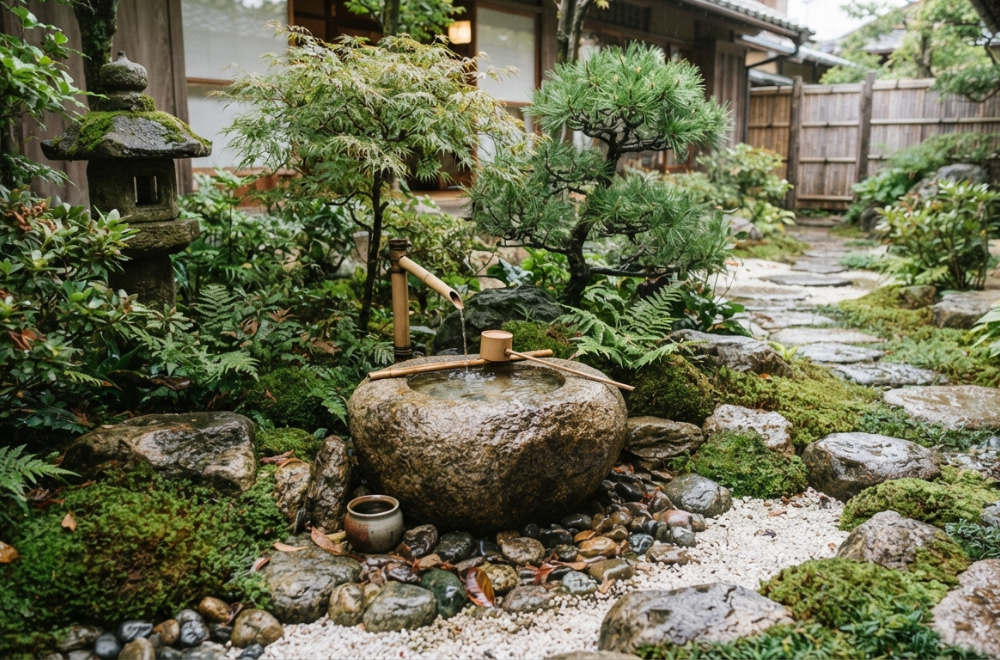
Your backyard is the size of a postage stamp, and every “zen garden” article you find online seems to assume you own three acres and a team of monks. I get it. My first attempt at a Japanese-style corner was crammed into a side yard so narrow I could touch both fences at once, and I still made it work. You don’t need a koi pond the size of a swimming pool or a wallet full of landscaping cash. You need a few smart choices and the patience to not overplant everything on day one.
This isn’t a “some homeowners enjoy Japanese gardens” kind of post. I’m going to tell you exactly what worked in my own tiny spaces, what I’d never do again, and how to fake the calm, layered look of a proper Japanese garden even if your entire lot is 400 square feet.
What Makes a Garden “Japanese-Style” Anyway
Before we get into the list, let’s clear something up. A small Japanese garden isn’t about buying a stone lantern from a big box store and calling it a day. The whole point of Japanese garden design is restraint. Every plant, rock, and path earns its spot. Nothing is there just to fill space.
The core principles you’ll see repeated in every Japanese garden design guide are asymmetry, borrowed scenery, and the idea that empty space matters as much as filled space. In small yards, that last one is your best friend. A cramped garden with one perfect maple tree and some raked gravel reads as intentional. The same yard stuffed with twelve different plant varieties just reads as cluttered.
Keep that in mind as you go through this list. I’m not handing you a shopping list to max out. I’m handing you ten separate directions you could take, and you should honestly only combine three or four of them in a small space.
1. Build a Dry Stream Bed Instead of Real Water
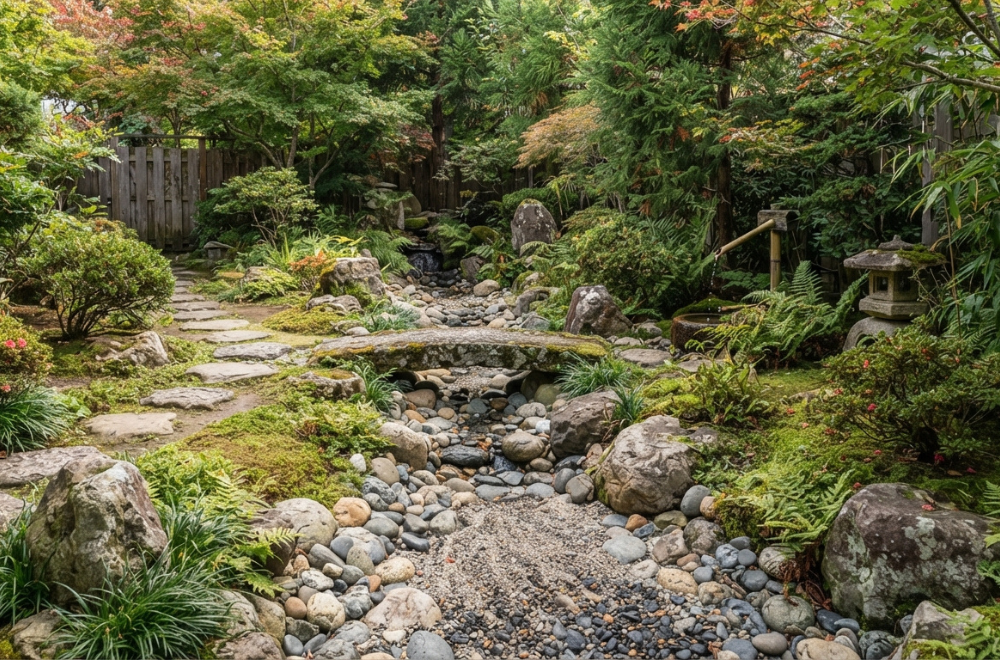
A koi pond sounds amazing until you’re the one cleaning algae off a pump filter every Saturday morning in July. I had a real pond in my first Japanese-inspired garden, and by year two I’d drained it and turned it into a dry stream bed. Best decision I made that whole project.
A dry stream bed, sometimes called a karesansui-style river, uses smooth river rocks arranged in a winding path to represent flowing water without any actual plumbing. You dig a shallow trench, curve it naturally rather than in a straight line, and layer in rocks of varying sizes with the smaller ones toward the “banks.”
This works especially well in small yards because it creates the illusion of depth and movement without eating up much square footage. A stream bed only two feet wide can still make a ten-foot yard feel like it has a real focal point running through it.
Search terms like “dry creek bed landscaping ideas” pull up a ton of examples, and most of them are honestly overbuilt for a small space. Keep yours narrow, keep the curves gentle, and resist the urge to line every inch with rocks that are all the same size. Variation is what sells the illusion.
2. Go Small With a Tsubo-Niwa Courtyard Garden
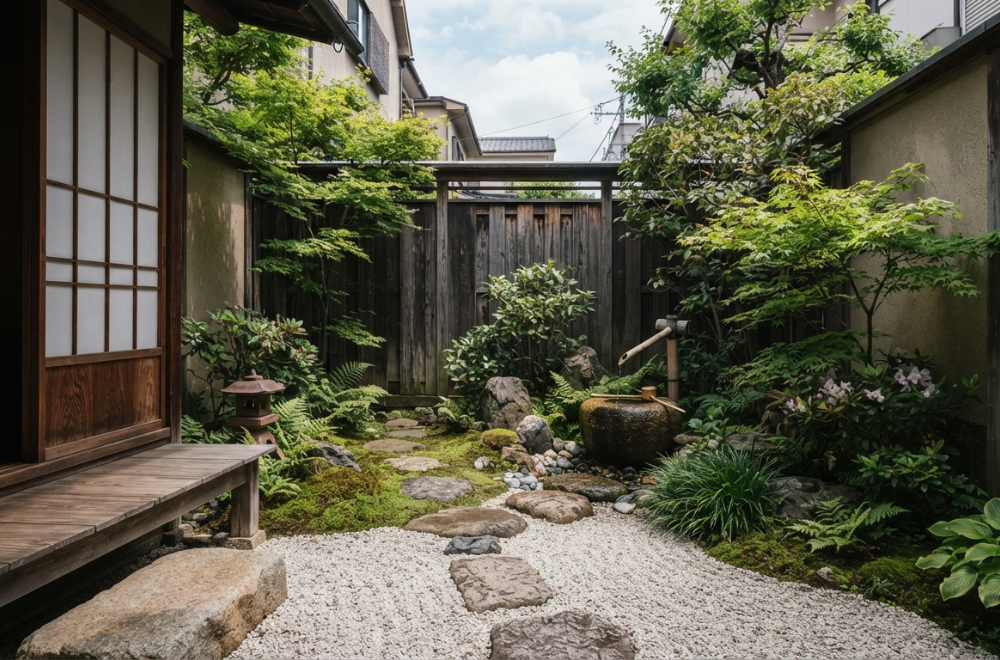
If your “yard” is actually a side passage, a light well, or a gap between your house and the fence, you’re sitting on prime real estate for a tsubo-niwa, which is a traditional Japanese courtyard garden designed specifically for tight urban spaces.
These gardens were originally built in narrow gaps between traditional Japanese townhouses, so they’re basically made for the exact problem most of us have: a strip of unused space nobody knows what to do with.
The formula is simple. Pick one small tree or a tall, narrow shrub. Add a stone lantern or a simple stone basin. Cover the ground in moss or fine gravel. That’s genuinely most of it. I put one together in a side yard that was barely three feet wide, and it became the view from my kitchen window that I actually looked forward to seeing every morning.
The mistake people make with tsubo-niwa gardens is trying to add too much greenery because the space feels “empty” otherwise. Resist that. The whole appeal is that you can take in the entire scene in one glance without your eyes bouncing around.
3. Use Gravel and Rock Instead of a Lawn
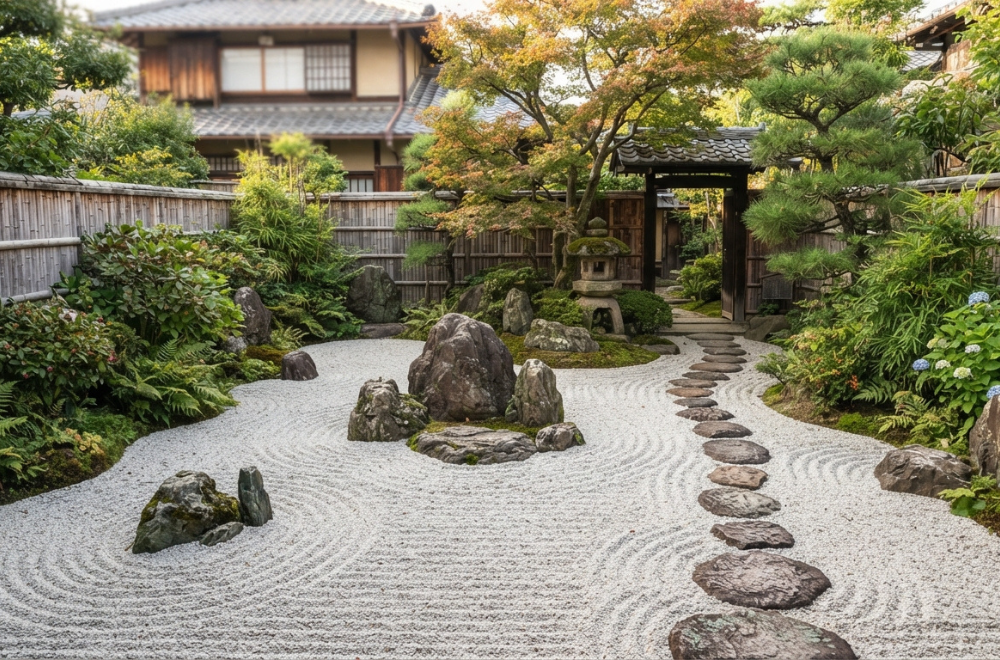
Grass is expensive, thirsty, and honestly kind of pointless in a small Japanese-style garden. I’ve found that ripping out a small patch of lawn and replacing it with raked gravel is one of the highest-impact, lowest-effort changes you can make.
Karesansui, or Japanese rock gardens, use raked gravel to represent water and larger rocks to represent islands or mountains. You don’t need a temple-sized space to pull this off. A ten-by-ten patch of decomposed granite or pea gravel, raked into simple wave patterns around two or three larger stones, gives you that instantly recognizable zen garden look.
Practically speaking, this also solves the “what do I do with this awkward dead zone in my yard” problem that a lot of small lots have. Corners that get too much shade for grass, strips along a fence line, areas where tree roots make mowing miserable — gravel doesn’t care.
One thing nobody tells you: raking gravel patterns takes maintenance too. Wind, rain, and your dog running through it will mess up the lines. If you want that crisp raked look at all times, you’re committing to touching it up regularly. If that sounds like a chore, skip the elaborate wave patterns and just let the gravel sit smooth. It still looks intentional.
4. Frame the View With a Single Statement Tree
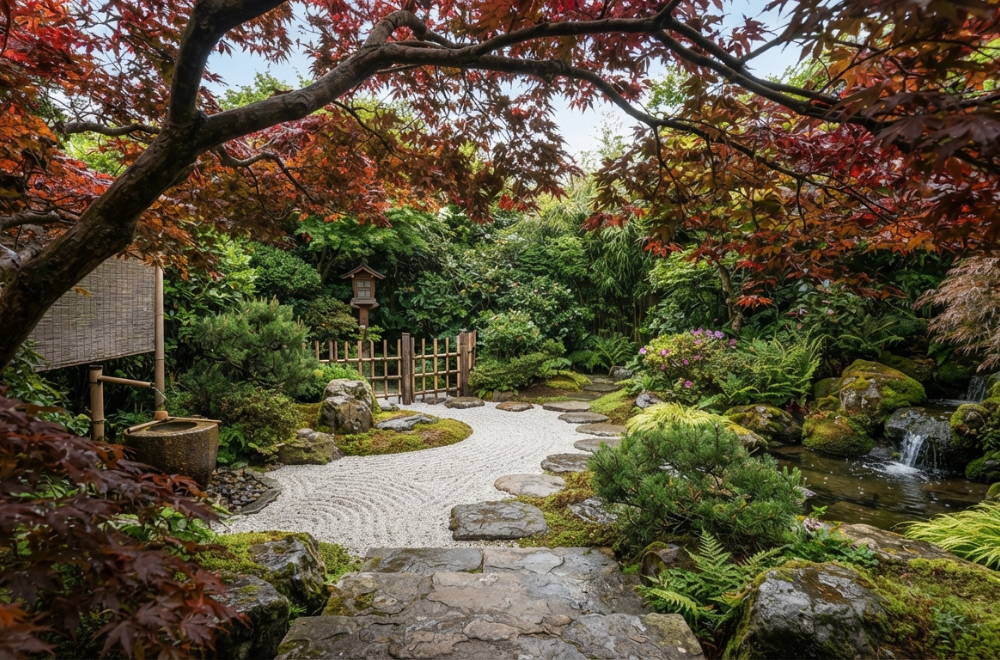
Every small Japanese garden I’ve seen that actually works has one thing in common: a single tree that does all the visual heavy lifting. Japanese maples are the classic choice for good reason. They stay relatively compact, especially dwarf cultivars like ‘Shaina’ or ‘Crimson Queen,’ and their leaf color shifts through the season without you lifting a finger.
You don’t need five different specimen trees crowding each other for attention. Pick one. Plant it somewhere it can be seen from inside your house, not tucked into a corner you never walk past.
I planted a dwarf Japanese maple about eight feet from my back window specifically so I’d see it while doing dishes. That tree has done more to make my tiny yard feel finished than every other plant combined, and it’s a single specimen in a pot that took up maybe four square feet of actual ground space.
If a Japanese maple isn’t hardy in your climate, black pine, or even a well-pruned dwarf conifer can fill the same role. The point isn’t the exact species. The point is picking one tree, giving it room to be the star, and not competing with it.
Pruning matters here more than people expect. A Japanese maple left completely alone will fill in dense and blobby, which kills the elegant, airy look you’re going for. Every winter when the tree is dormant, I remove crossing branches and thin out the interior so light can actually pass through the canopy. It feels aggressive the first time you do it. The tree doesn’t mind, and the following spring’s growth looks noticeably more sculptural for it.
5. Add a Stone Lantern, But Just One
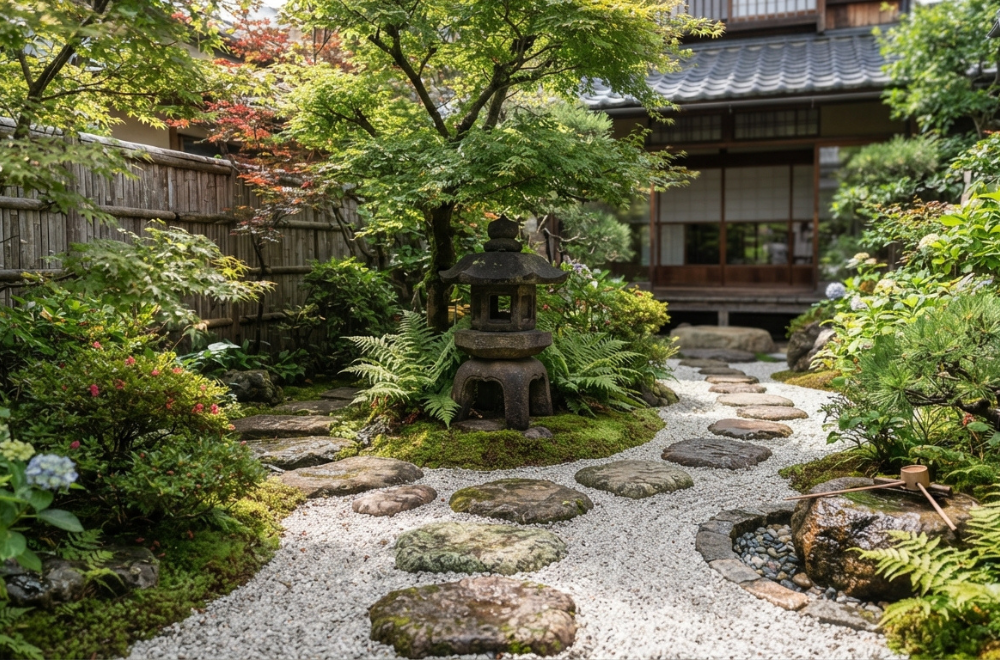
Stone lanterns, or tōrō, are probably the single most recognizable prop in Japanese garden design, and also the thing people most overdo. One lantern, placed with intention near a path or a water feature, looks authentic. Three lanterns scattered around a small yard looks like a garden center display.
Place your lantern where it makes sense functionally, not just decoratively. Traditionally these marked pathways or sat near water features so light would reflect off the surface. In a small modern garden, that might mean placing it at a bend in your dry stream bed or beside your tsubo-niwa entry point.
Concrete reproductions run cheap and hold up fine outdoors, so you don’t need to spend real money on hand-carved stone unless you want to. I bought mine secondhand off a local listing site for less than a fast food meal for four, and it looks exactly as good as the pricier version at my neighbor’s place.
6. Layer in Moss Instead of Fighting for a Perfect Lawn
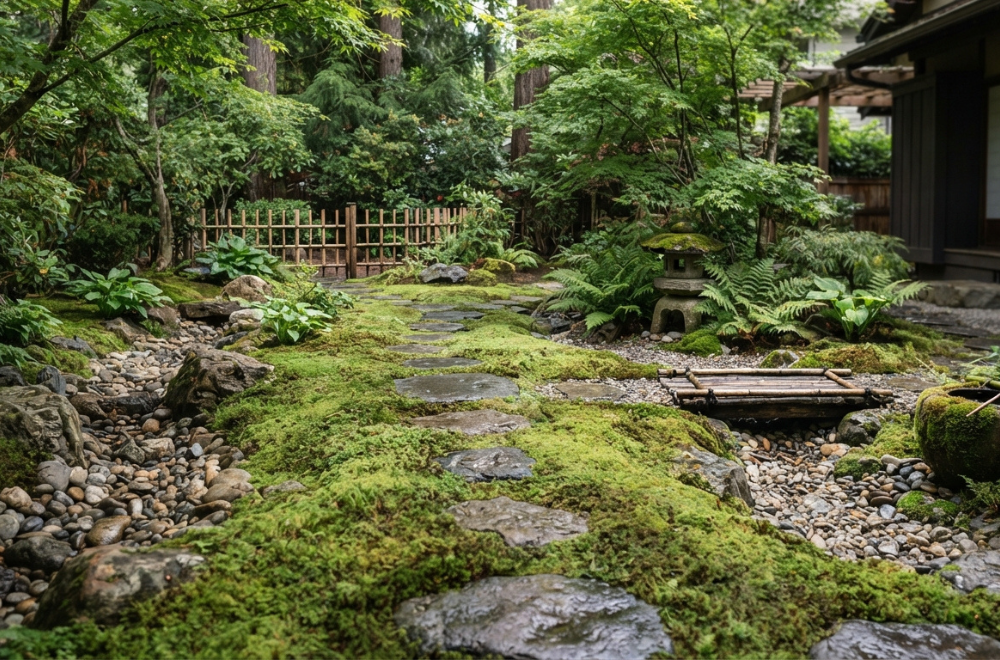
If your small yard has shade, moss is doing you a favor, not ruining your lawn. Moss gardens are a staple of Japanese garden design, and they thrive in exactly the low-light, high-moisture conditions that make grass miserable to grow.
You can encourage existing moss by simply stopping the fight against it. Skip the lime treatments, skip the aggressive raking, and let it fill in naturally. If you want to speed things up, moss can be transplanted in small patches from a shaded area of your yard, or propagated from a moss-and-buttermilk slurry painted onto damp soil or stone.
The texture moss adds is honestly hard to replicate with any other plant. It softens hard edges around stones and pathways and gives the whole space that slightly overgrown, been-here-forever look that Japanese gardens are known for, even in a garden that’s only a year or two old.
7. Install a Simple Bamboo Fence Panel
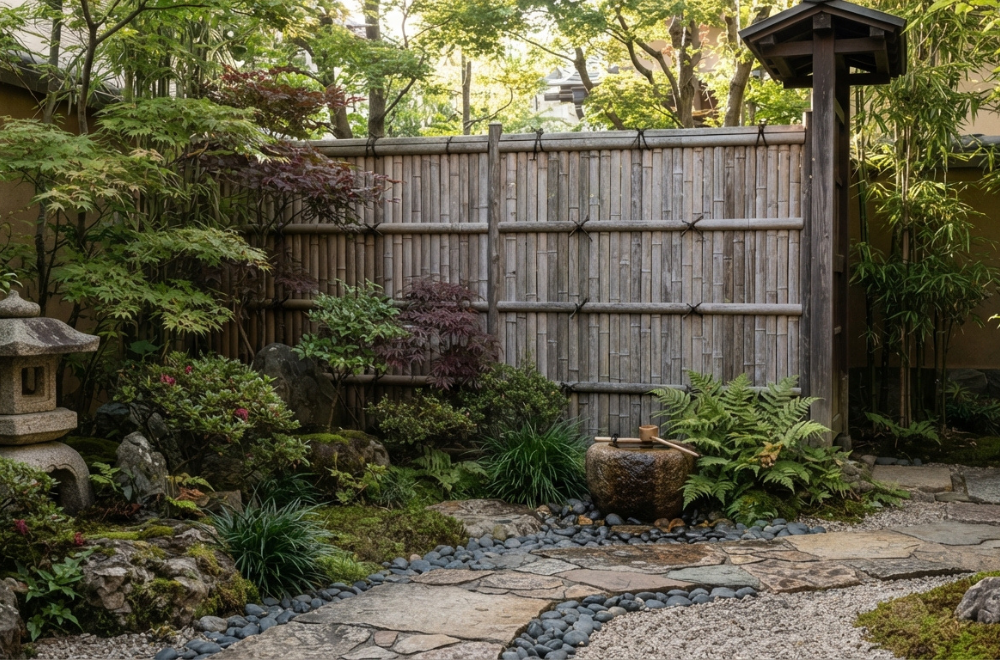
A tall privacy fence made of bamboo panels does double duty in a small yard: it blocks the view of your neighbor’s trampoline, and it instantly reads as Japanese-inspired without you doing anything else.
You don’t need to fence the whole perimeter. A single panel behind your featured tree, or along the back third of a narrow side yard, does the job. Bamboo fencing rolls are sold at most garden centers and can be zip-tied or wired to an existing chain-link or wood fence in an afternoon.
Quick side note here: cheap bamboo rolls fade to gray within a year or two of sun exposure. Some people love that weathered look. If you don’t, budget for a UV-protectant spray or plan on replacing panels every few seasons.
8. Use a Stone Water Basin (Tsukubai) Instead of a Full Pond
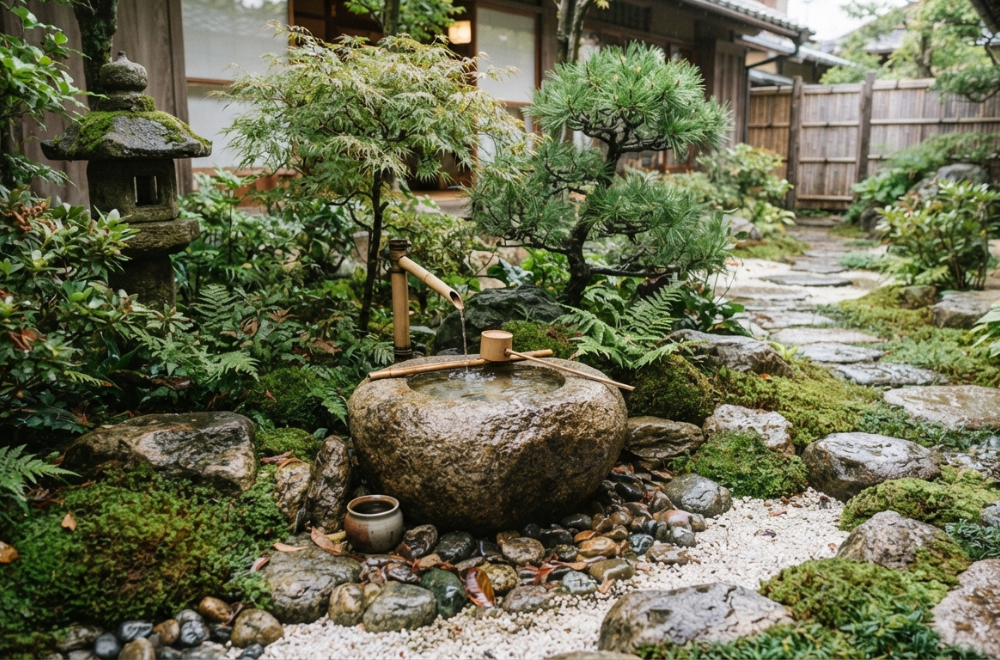
I mentioned ditching a full pond earlier, but that doesn’t mean water has to disappear from your small garden entirely. A tsukubai, a low stone water basin traditionally used for ritual hand-washing before tea ceremonies, gives you the sound and presence of water in a footprint smaller than a kitchen sink.
These basins are typically fed by a small bamboo spout called a shishi-odoshi, or “deer scarer,” which drips water on a timed cycle. You can buy a small solar-powered pump kit that recirculates water through the basin without any plumbing work, which is genuinely the only water feature I’d recommend for a small yard on a budget.
The sound of dripping water does more for the “peaceful garden” feeling than almost anything else on this list. It’s a small addition, but it’s the one guests always comment on.
9. Keep Pathways Narrow and Irregular
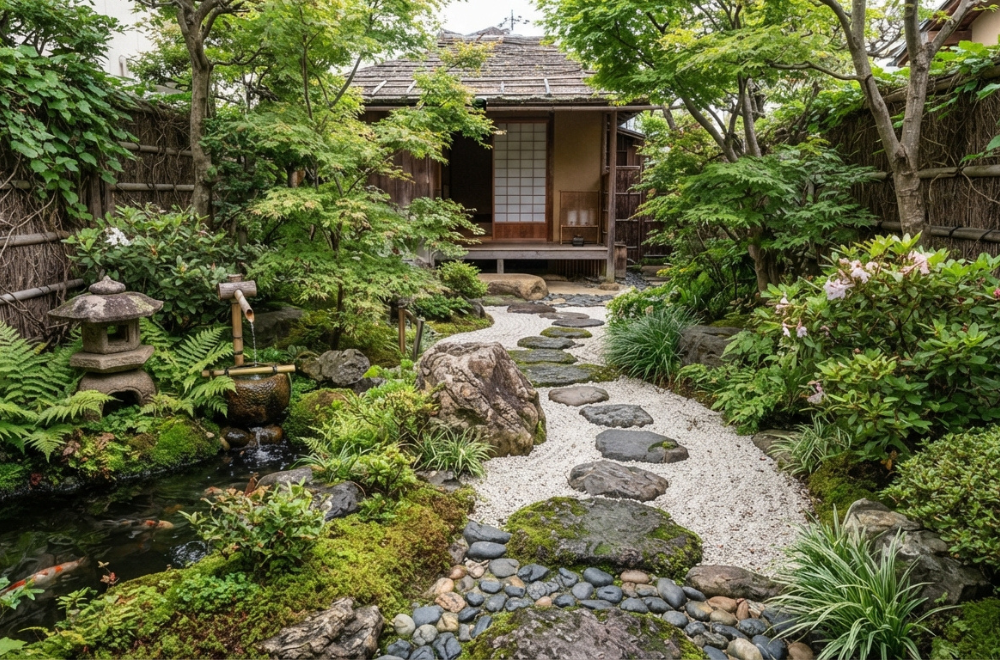
Straight concrete pathways feel like an office park. Japanese garden paths, called tobi-ishi when made of stepping stones, are deliberately irregular, forcing you to slow down and watch your footing as you walk.
In a small yard, a winding stepping-stone path can actually make the space feel larger, not smaller, because it implies there’s more garden to explore than there really is. Space the stones for a natural walking stride, not perfectly even, and let moss or low groundcover fill the gaps between them.
I redid my own front path this way two summers ago, swapping a straight poured-concrete walkway for staggered flagstone with creeping thyme filling the gaps. It’s maybe fifteen feet long. People still ask about it more than anything else in the yard.
If you’re searching for “stepping stone path ideas small yard,” most results assume you’re working with wide open space. Scale everything down. Use stones twelve to fourteen inches across instead of the oversized slabs you’ll see in bigger gardens, and space them closer together than feels natural at first. A too-wide stride between stones in a small yard just looks like you ran out of material.
10. Add Bonsai or Container Plants for Instant Structure
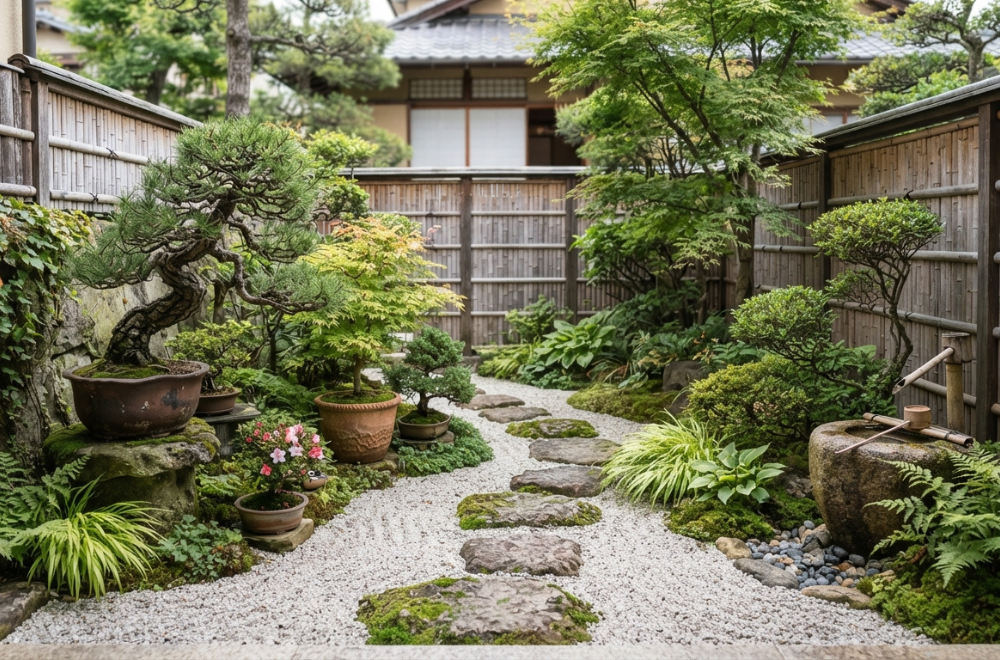
If you’re renting, or your “yard” is actually a balcony, bonsai and container-grown plants let you build a Japanese garden feel without touching the ground at all. A single well-shaped bonsai on a stand near your seating area gives you that sculpted, intentional look instantly.
You don’t need to start with an expensive imported specimen. Juniper and ficus bonsai are forgiving for beginners and widely available at reasonable prices. Group a bonsai with two or three other containers at varying heights, using simple unglazed ceramic pots rather than bright colors, and you’ve got a corner that looks curated rather than accidental.
Bonus tip since this list is already ten items deep: even a single potted Japanese black pine on an apartment balcony, paired with a small bag of pea gravel around its base, reads as intentional garden design. You don’t need square footage. You need one thing done well.
Real Talk: What’s Not Worth the Effort
Not everything that looks good in a magazine spread translates to a real small yard, so here’s where I’ll save you some money and frustration.
Full koi ponds are a mistake in small spaces. Between the filtration system, the risk of raccoons or herons treating your investment as a buffet, and the algae maintenance, a real pond eats way more time than it’s worth for a yard under a few hundred square feet. Stick with the dry stream bed or a small basin.
Bamboo as a living plant, not a fence panel, is another trap. Running bamboo species spread aggressively through underground rhizomes and will absolutely invade your neighbor’s yard if you don’t install a root barrier. I’ve seen people spend more on bamboo removal than they spent on the original planting. If you want the look, use clumping varieties only, or stick with manufactured bamboo fencing instead.
Elaborate raked gravel patterns look stunning in photos and become a genuine chore in real life. Unless you enjoy raking as a form of meditation, which some people honestly do, plan for low-maintenance smooth gravel instead.
And don’t try to cram every idea on this list into one small yard. I’ve seen small gardens with a stream bed, a lantern, a tsukubai, a bonsai display, and a moss patch all within twenty feet of each other. It doesn’t read as Japanese-inspired. It reads as busy. Pick three, maybe four elements, and give them room to breathe.
Parting Wisdom
A small Japanese garden isn’t about shrinking a big design down to fit your yard. It’s about restraint, and restraint is honestly the hardest gardening skill to learn. I still have to stop myself from adding “just one more thing” every spring.
Start with one tree, one water feature, and one path. Live with it for a season before adding anything else.
Which of these ideas fits your space best, and what’s stopping you from starting this weekend? Drop your yard size and your biggest obstacle in the comments below. I read every one and I’m always curious what people are working with.

About Syprose Kiche
Syprose Kiche is the creator and writer behind My Besuited Home, a practical home and garden website covering DIY projects, gardening, lawn care, landscaping, home improvement, and outdoor living. She focuses on turning everyday homeowner questions into clear, practical guides backed by careful research and useful real-world considerations.