
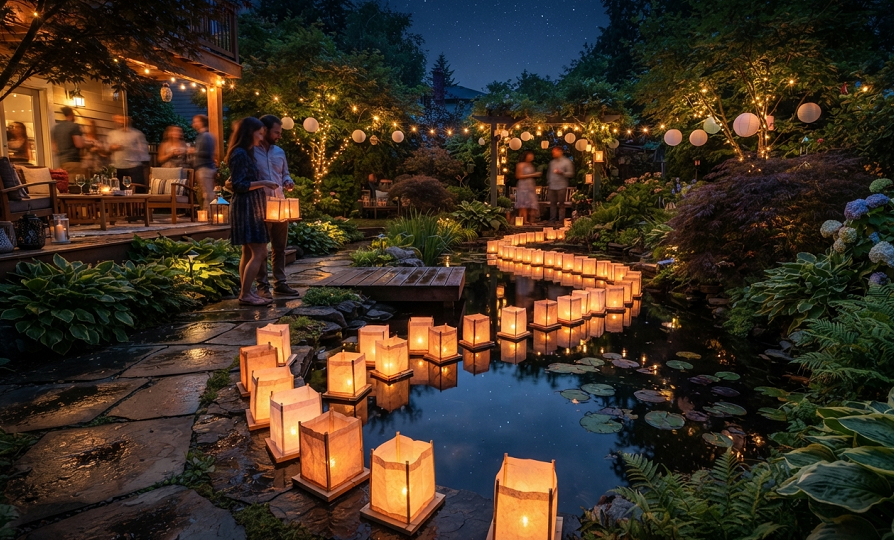
Your backyard gets dark, quiet, and honestly a little boring the second the sun goes down. You’ve strung up fairy lights. You’ve bought the fire pit. And it still feels like something’s missing when you’re trying to throw a memorable evening party.
That missing piece, more often than not, is water. Specifically, floating lanterns bobbing across a pond, a kiddie pool, or even a repurposed galvanized trough, throwing soft light across the water and onto everyone’s faces.
I’ve thrown three water lantern parties in my own yard over the past six years, and I’ve helped two neighbors set up their own for graduation parties. I’ve burned through cheap lanterns that turned into soggy paper mush within twenty minutes. I’ve also figured out what actually works, what’s worth the money, and what’s a complete waste of a Saturday afternoon. Here’s everything I know.
What Is a Water Lantern Festival, Exactly?
A water lantern festival is basically what it sounds like: floating lanterns released onto a body of water, usually at dusk, so the glow reflects across the surface. Commercial versions like WaterLantern Festival draw thousands of people to lakes and parks. But you don’t need a permit, a park district, or a few thousand strangers to get the same magic in your own backyard.
All you really need is a container that holds water, some floating lanterns, and a plan for how you’re going to arrange them so they actually look good in photos (because trust me, everyone is going to want a photo).
Below are more than ten ideas I’ve either tried myself, stolen from Pinterest and actually tested, or picked up from other backyard hosts who know what they’re doing.
1. The Classic Pond Release
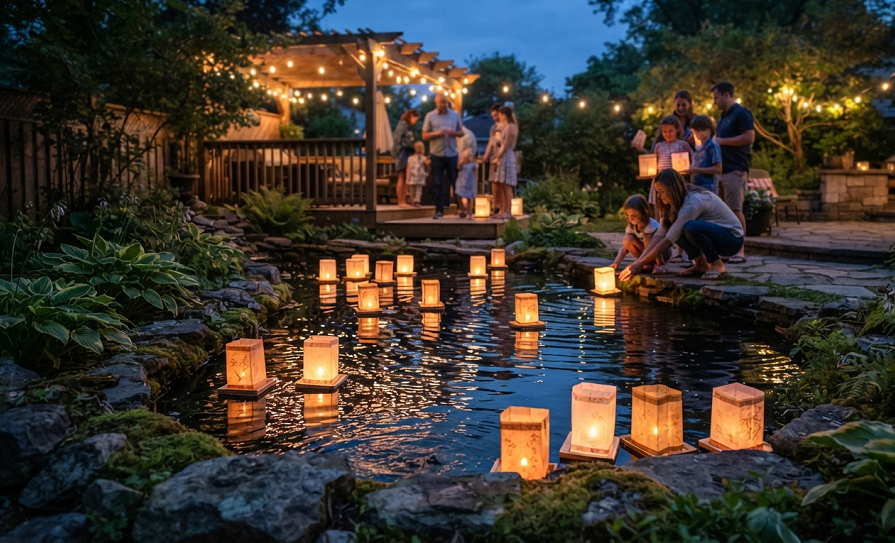
If you’ve got an actual garden pond, you’re already halfway to a stunning setup. Wait until it’s fully dark, or close to it, then release a cluster of floating lanterns from one edge and let the water’s natural current (or a small pond pump) carry them across the surface.
The trick here is timing. Release them too early and the ambient light from the sky washes out the glow. Release them right at true dusk, about 20 to 30 minutes after sunset, and you get that deep blue “magic hour” backdrop that makes the lanterns look like they’re floating in a painting.
I made the mistake of releasing my first batch at 7:30 pm in June, thinking it was late enough. It wasn’t. Everyone stood around watching lanterns that looked like they were floating in a well-lit swimming pool, not a mystical pond. Now I check the actual sunset time for my zip code and wait the extra half hour.
If your pond has fish, use battery-operated LED lanterns instead of anything with an open flame or hot wax. Fish don’t love surprise heat sources dropped into their home.
2. The Kiddie Pool Upgrade
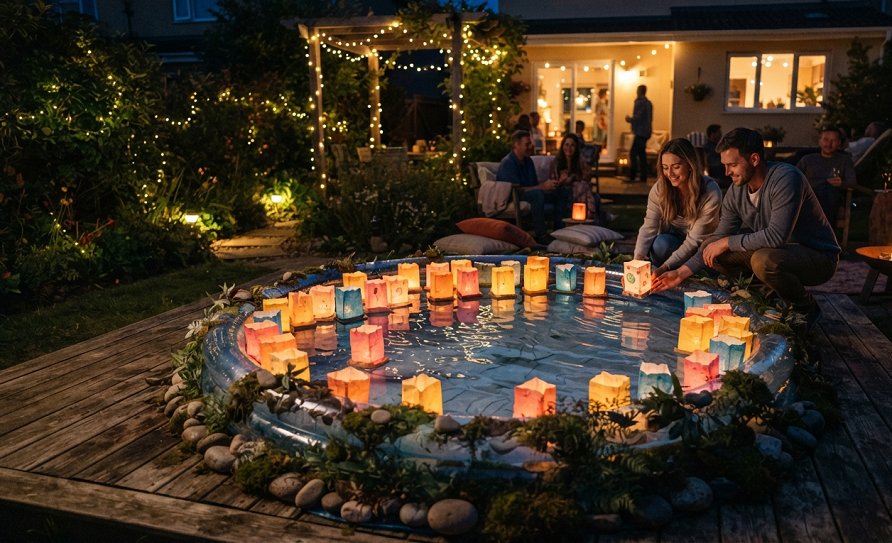
Not everyone has a pond, and that’s fine. A cheap plastic kiddie pool, the kind you can grab for $15 to $25, works surprisingly well once you dress it up.
Line the outside rim with battery fairy lights or small potted plants to hide the plastic edge. Fill it, drop in your lanterns, and place it somewhere flat and slightly elevated, like on a low deck or a stack of pavers, so guests aren’t looking down at ground level to see it.
This is genuinely my favorite budget option for a backyard birthday party. It costs almost nothing, it packs away when you’re done, and kids especially love it because they can help set it up earlier in the day.
One quick side note: skip the inflatable pools with cartoon characters printed on them. They photograph terribly once lanterns are floating on top, and the print shows through the water in a way that ruins the mood entirely.
3. Galvanized Trough Centerpiece
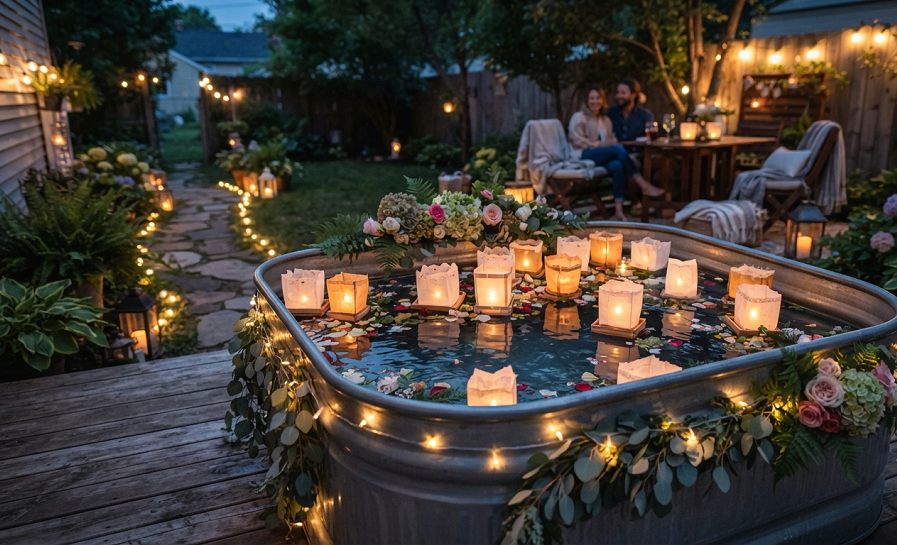
For anyone doing a rustic, farmhouse, or cottagecore-style party, a galvanized steel trough (the kind you’d normally use for icing drinks) makes a gorgeous lantern basin. Set it on a table as a centerpiece, fill it about two-thirds full, and float a smaller number of lanterns, maybe five to seven, so they have room to drift and cluster naturally.
The metal reflects the lantern glow in a way plastic just can’t match. It also holds heat and cold differently, so if you’re using real candles instead of LEDs, the water stays cooler longer and you get more burn time before it warms up too much.
I’ve used mine for both a rustic wedding shower and a fall harvest dinner, and both times it became the thing people gathered around instead of the food table. If you already own a trough for gardening or drink-chilling duty, this costs you nothing extra.
4. The Floating Lantern Pathway
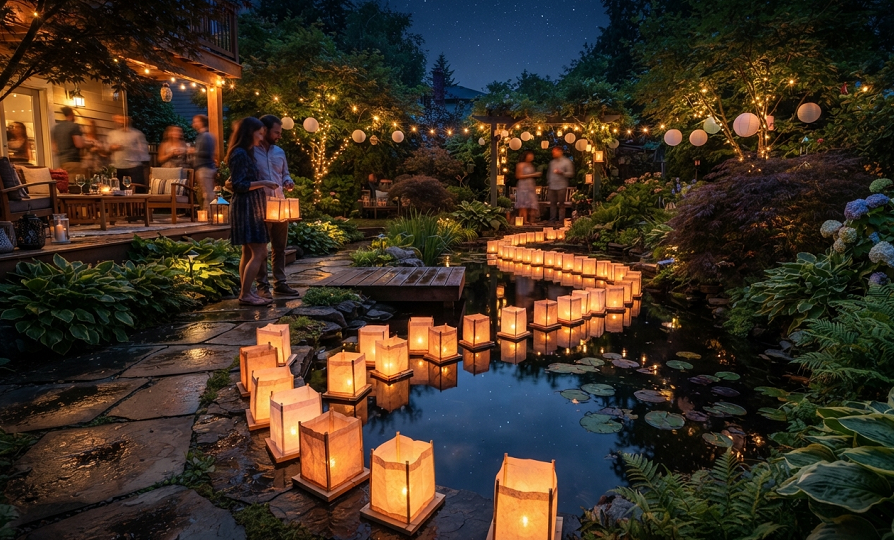
Instead of one big cluster, spread your lanterns out along a stream, a drainage ditch that holds water seasonally, or even a series of connected basins to create a “pathway” effect guiding guests from one part of the yard to another.
This works especially well if you’re hosting an evening event where guests need to walk from a parking area to a patio, or from the house to a garden ceremony space. The lanterns act as both decor and functional lighting, which is a nice two-for-one.
To pull this off, you’ll want lanterns with a longer battery or burn life since they’re going to be out longer and covering more visual ground. I’d recommend LED lanterns rated for at least 8 hours over the little tea-light versions that fizzle out after 90 minutes.
Space them unevenly. A perfectly even row of lanterns looks like a runway, not a magical path. Cluster two or three together, leave a gap, then cluster a few more.
5. DIY Paper Lantern Boats
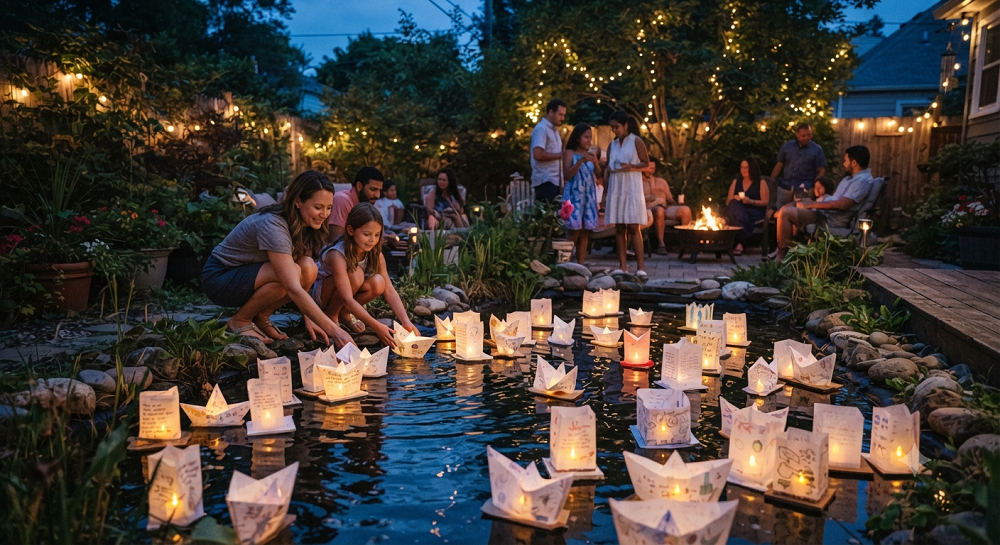
If you want the most authentic look, and don’t mind a little crafting time, make your own paper lantern boats using biodegradable paper, a small cork or foam base, and a battery tea light.
Here’s my basic process:
- Cut a circle of thin, water-resistant paper (rice paper or vellum works well) about 8 inches across.
- Fold up the edges to form a shallow cup shape, similar to a cupcake liner.
- Glue or staple the seams so the paper holds its shape once wet.
- Attach a small cork disc or a thin foam base to the bottom for buoyancy.
- Set a battery-operated tea light in the center. Never use real flame on paper lanterns unless you enjoy small emergencies.
These take real time, probably 10 to 15 minutes per lantern once you get into a rhythm, so this is more of a project for a smaller, intimate gathering than a big party of 40 people. I made a batch of a dozen for my daughter’s graduation party and started three days ahead of time because, frankly, my hands cramp up after lantern number six.
6. Color-Themed Lantern Clusters
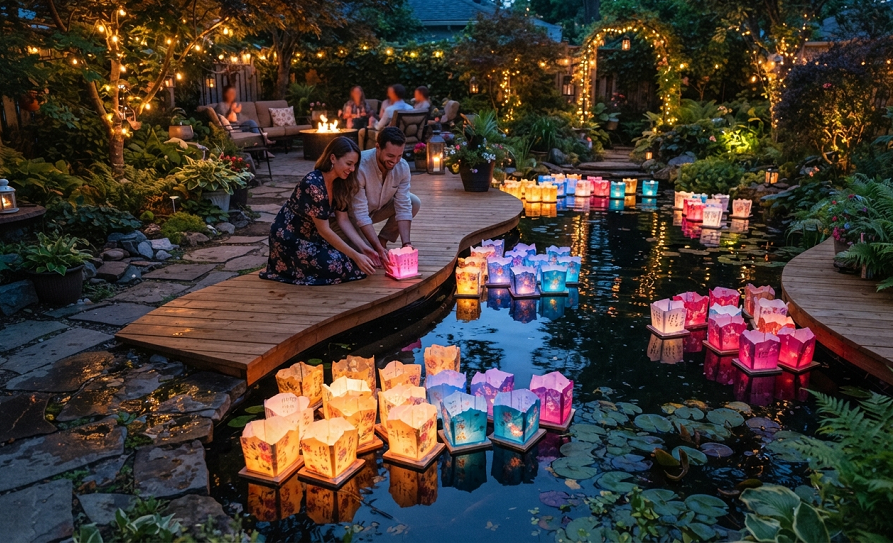
Store-bought floating lanterns now come in almost every color imaginable, and grouping them by color creates a much more intentional, styled look than just tossing a mixed bag onto the water.
For a summer party, I like warm ambers, soft pinks, and pale yellows clustered together. For a fall gathering, deep oranges and burgundy reds against dark water look incredible with almost no other effort. Winter events call for cool blues and whites, which genuinely look like ice even in warmer climates.
If you’re hosting a themed event, like a baby shower or a graduation party in school colors, this is the easiest way to tie your lantern display into the rest of your decor without buying anything custom-printed.
Buy in odd numbers. Five lanterns of one color cluster more naturally on water than four or six, since even numbers tend to spread into a rigid grid pattern as they drift.
7. Lanterns With Floating Flowers
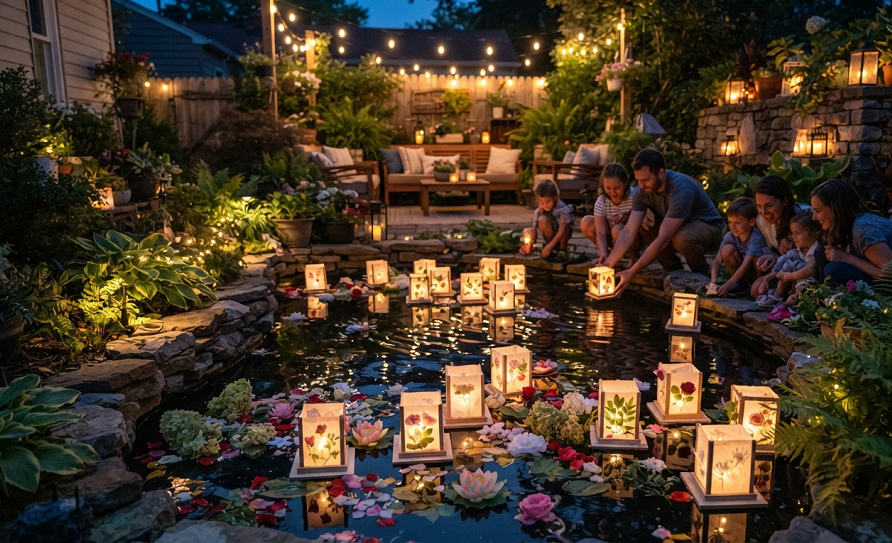
Combine floating lanterns with floating flower heads, like dahlias, marigolds, or gerbera daisies, for a look that reads more “high-end floral event” than “backyard DIY project.”
Cut the stems close to the flower head so the bloom sits flat on the water’s surface. Float them alongside your lanterns rather than mixing them in too densely; you want the flowers to frame the light, not compete with it.
This idea works beautifully for garden weddings, anniversary parties, or honestly any event where you want a slightly more elegant, adult feel rather than a casual backyard hangout. I did this for a friend’s 25th anniversary party using dahlias from my own cutting garden, and the water looked like something out of a bridal magazine by the time it got dark.
One thing worth knowing: flowers wilt and start looking rough after 3 to 4 hours in water, especially in warm weather. If your event runs longer than that, plan to swap in fresh blooms partway through, or accept that the display will look a little tired by the end of the night.
8. The Multi-Tier Fountain Float
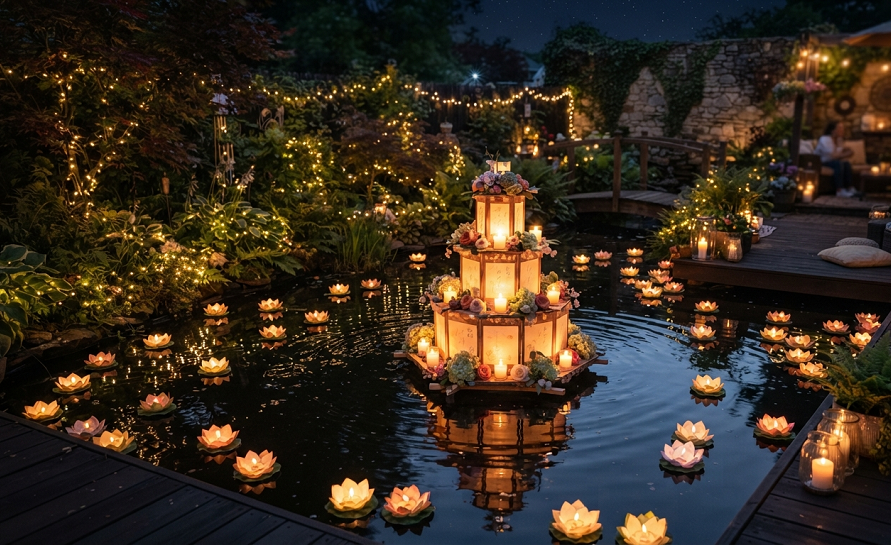
If you already own a tiered garden fountain, turning off the pump for the evening and floating lanterns in each basin creates a layered lighting effect you can’t get from a flat pond or pool.
The different heights catch light differently, and the sound of the (now silent) fountain being repurposed as a lantern stage tends to surprise guests in a good way. It’s an unexpected use of something they’ve probably walked past a hundred times without a second thought.
Use smaller lanterns for upper tiers since those basins are usually shallower and narrower. Save your bigger, showier lanterns for the bottom basin where there’s more room for them to drift and cluster.
9. Pool Party Lantern Floats
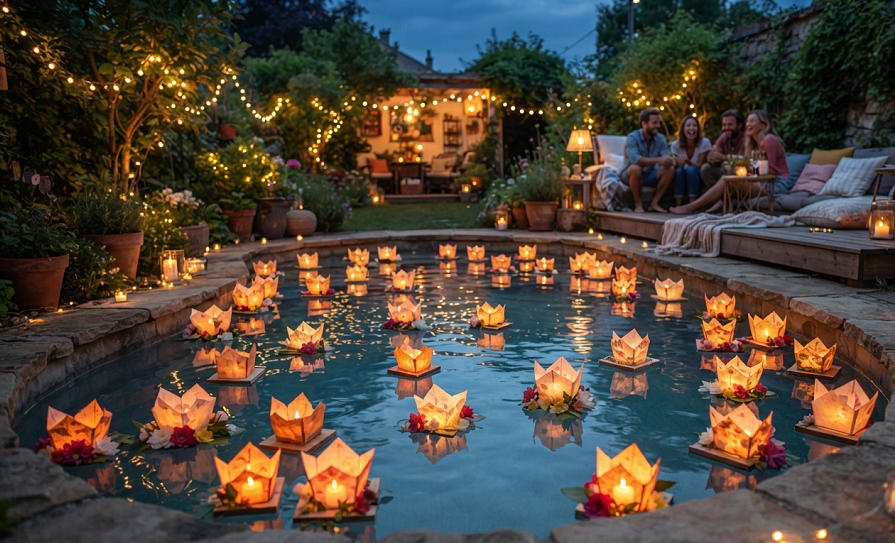
For anyone with an actual in-ground or above-ground swimming pool, floating lanterns turn a regular pool party into an evening event worth staying for. Wait until swimming winds down, clear the pool of pool noodles and floats, then release a large batch of lanterns for the after-dark portion of the party.
Because a full-size pool is a lot bigger than a trough or kiddie pool, you’ll want more lanterns than you’d think, I’d say at minimum 20 to 30 for a standard-size backyard pool, or the display looks sparse and scattered rather than lush.
Keep the pool pump and filtration system running on low if possible; a little bit of water movement keeps lanterns drifting instead of getting stuck against one wall in a clump. Skip the automatic pool cleaner robot for the night, though, since it will absolutely tangle itself in lantern wicks and battery casings.
10. Lanterns Paired With Wish Tags or Notes
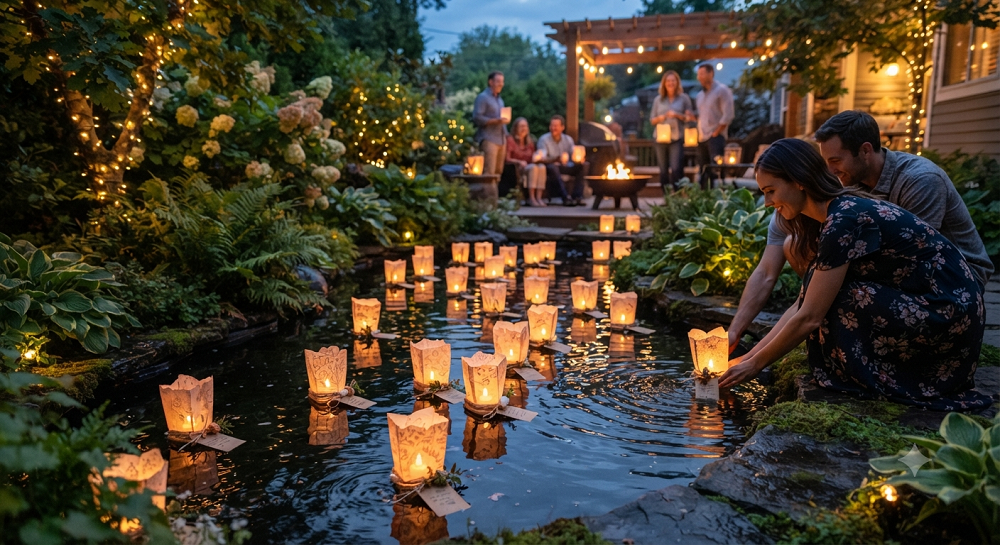
For more sentimental events, like memorial gatherings, graduation parties, or milestone birthdays, attach small waterproof tags to each lantern where guests can write a wish, a memory, or a piece of advice before releasing it onto the water.
This adds a genuinely moving, participatory element rather than just passive decor. I did this at my own father’s memorial gathering, and reading some of those tags back afterward turned out to be one of the more healing parts of the whole evening.
Use a paint pen or waterproof marker so the writing doesn’t smear once the tag inevitably gets a little damp. Attach tags with a small loop of fishing line or thin wire rather than tape, which peels off in water within minutes.
Bonus: Solar-Powered Lantern Clusters for Zero Maintenance
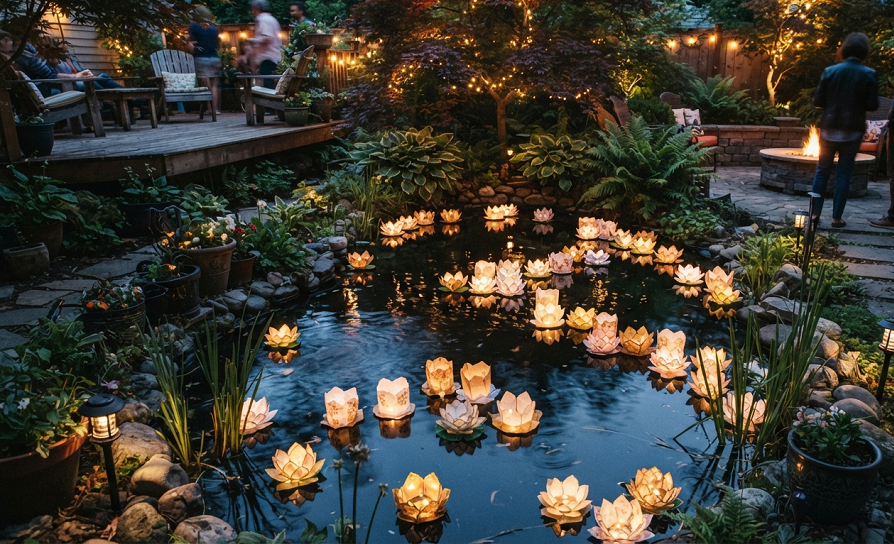
If you host outdoor gatherings often and don’t want to deal with batteries or wax every single time, invest in solar-powered floating lanterns. They charge during the day, float in your pond or pool as a permanent fixture, and turn on automatically at dusk.
I added six of these to my garden pond two summers ago, and I genuinely don’t think about them anymore. They just work. The only real maintenance is wiping off pollen and algae buildup on the solar panel every couple of weeks so they keep charging properly.
Best Time of Year for a Water Lantern Display
Most people default to summer for this kind of party, and summer does work well since evenings are warm enough to linger outside. But I’ve actually had better luck in early fall.
The water tends to be calmer once the peak summer storms pass, the light hits differently once the sun starts setting earlier, and there’s something about lanterns glowing against cooler autumn air that photographs better than a hazy August evening. If you’re planning a fall harvest party or a late-September birthday, don’t assume lantern displays are strictly a summer thing.
Spring works too, especially right after your pond or water feature wakes up from winter, but I’d steer clear of very early spring in most climates. Runoff and debris tend to cloud the water, and cloudy water dulls the reflection you’re going for.
How Many Lanterns Do You Actually Need?
This is the question I get asked most, and the honest answer is: more than you think. A single lantern floating alone in a pond looks lonely, not romantic. For a small kiddie pool or trough, aim for 8 to 12 lanterns minimum. For a garden pond, plan on 15 to 25. For a full-size swimming pool, as mentioned above, you’re looking at 20 to 30 just to avoid a sparse, scattered look.
Buy a few extra beyond your target number, too. Some will inevitably drift into a corner, tip over, or get bumped by an overeager kid trying to touch one, and having backups on hand means your display still looks full even after a little chaos.
Real Talk: What Can Go Wrong (Because Something Usually Does)
Here’s the part nobody puts in the pretty Pinterest posts.
- Wind ruins everything. Even a light breeze pushes floating lanterns into a corner of your pond or pool within minutes, and suddenly your beautifully spread-out display is a clump against one edge. Check the wind forecast before committing to an elaborate arrangement, and have a backup plan, like a more sheltered spot near the house, ready to go.
- Cheap paper lanterns disintegrate fast. I bought a 24-pack of dollar-store paper lanterns for my first attempt at this years ago, and half of them were soggy, collapsed messes within 20 minutes. Spend the extra few dollars on lanterns rated for actual water use, not just “waterproof-ish” packaging claims.
- Real candles and kids don’t mix. If you’ve got children at the party, and you probably do, stick with battery LED lanterns. An open flame floating at toddler height near a pool edge is asking for trouble, and I say that as someone who almost had exactly that trouble at my nephew’s birthday party.
- Retrieval is a pain nobody plans for. At the end of the night, someone has to fish every single lantern back out of the water. Buy a cheap pool skimmer net specifically for this job, and assign the task to someone before the party starts. I guarantee you don’t want to be the one doing it at 11 pm while everyone else is saying their goodbyes.
- It’s genuinely not worth it for windy coastal or lakefront properties. If you live somewhere with consistent evening wind off the water, save yourself the frustration and skip the floating lantern idea entirely. Go with hanging lanterns or ground-level luminaries instead. I say this as someone who tried it once at a friend’s lake house and watched every single lantern end up jammed against the dock within ten minutes.
Final Thoughts
A backyard water lantern display doesn’t need to be complicated or expensive to look genuinely magical. Start small with a kiddie pool or a trough, figure out your timing and wind conditions, and build up from there once you know what works in your specific space.
My honest advice after doing this more times than I probably needed to: buy slightly better lanterns than you think you need, check the wind, and always, always have a skimmer net ready for cleanup.
Have you tried a water lantern display in your own yard, or are you planning your first one? Drop your questions or your own tips in the comments below. I read every single one, and I’m always curious what other backyard hosts have figured out that I haven’t.

About Syprose Kiche
Syprose Kiche is the creator and writer behind My Besuited Home, a practical home and garden website covering DIY projects, gardening, lawn care, landscaping, home improvement, and outdoor living. She focuses on turning everyday homeowner questions into clear, practical guides backed by careful research and useful real-world considerations.