
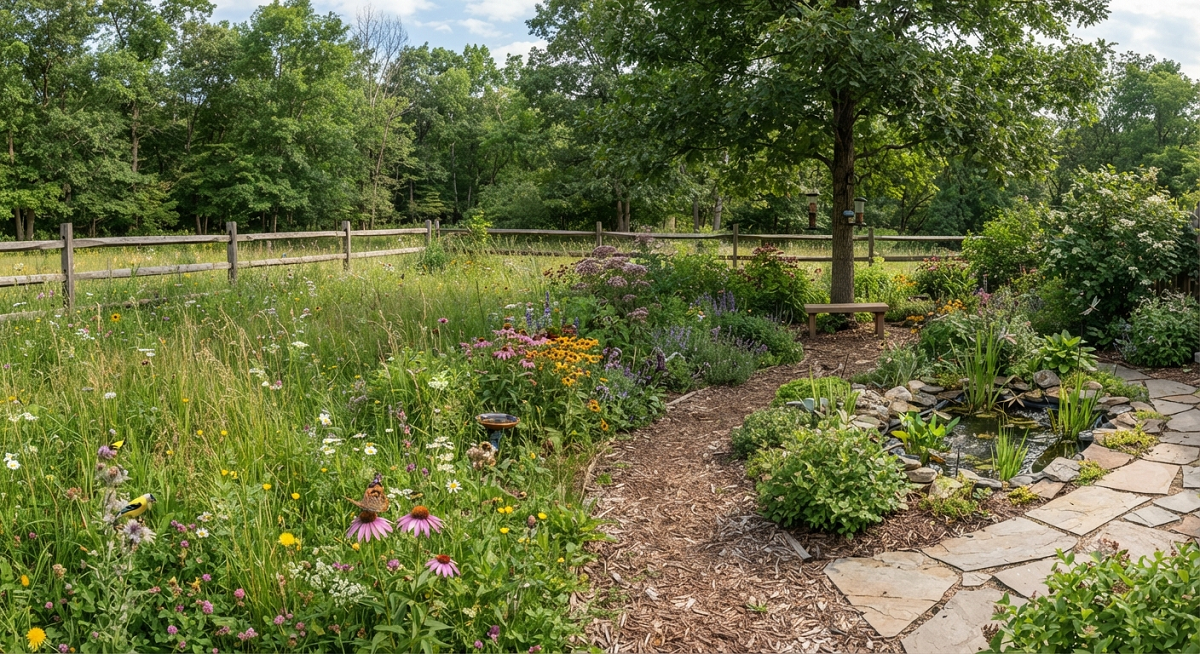
Your yard is quiet. Too quiet. No bees bumbling around, no birds arguing over the fence line, nothing but a lawn that eats water and gives nothing back. If that sounds familiar, you’re not alone, and you’re not doing anything “wrong.” Most yards are built for mowing, not for living things.
I turned my own backyard from a green carpet into a buzzing, chirping, hopping little ecosystem, and it didn’t take a landscaping degree. It took a few weekends, some patience, and a willingness to let a corner of the yard get a little wild.
My neighbor still thinks my front bed looks “messy.” Meanwhile I’ve got hummingbirds fighting over my salvia every July and a toad that’s lived under my hosta for three summers running. I’ll take messy.
Below are eleven ways to turn your yard into a real backyard wildlife habitat, the kind that supports pollinators, birds, and other backyard critters instead of just looking good from the street.
1. Plant a Native Plant Garden First
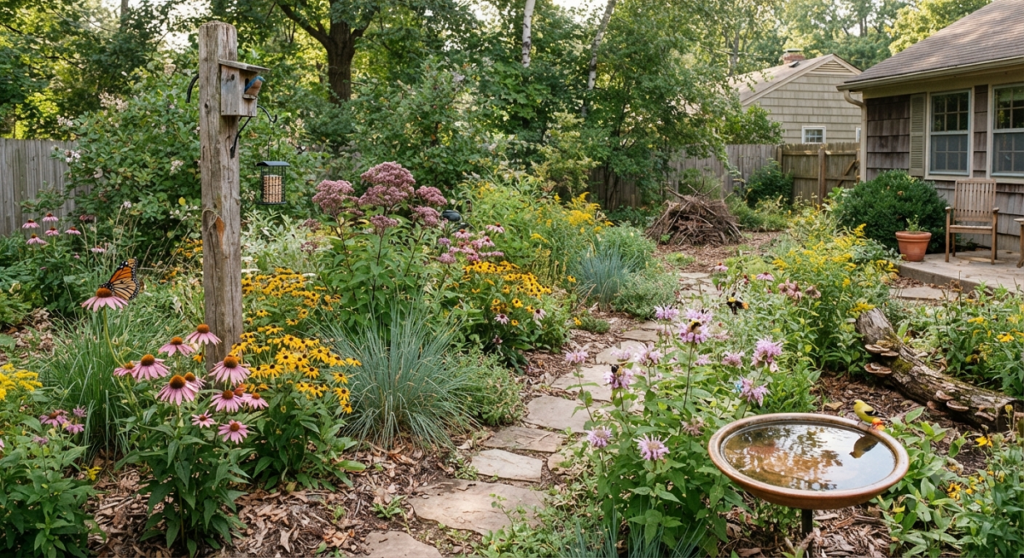
Start here. Everything else on this list works better once you’ve got native plants in the ground.
Native plants and local wildlife evolved together over thousands of years. A monarch caterpillar can only eat milkweed. A lot of native bee species need specific native flowers, not the double-petaled hybrids sold at big box stores that look pretty but have no pollen for anything to eat.
I made this mistake for years. I’d buy whatever looked good at the nursery, plant it, and wonder why I never saw a single butterfly. Once I swapped my border beds for native coneflower, bee balm, and little bluestem, the difference showed up within a single season.
Check your state’s native plant society website or a local extension office for a regional plant list. Every region is different, and what works in Ohio will flop in Arizona. Don’t guess. Get the list, then build your beds around it.
Start small if the idea of ripping out an entire bed feels overwhelming. Pick one 4-by-8-foot section and commit to filling it exclusively with native perennials and grasses. You can always expand next season once you see what thrives in your specific soil and sun conditions.
I’d also recommend grouping the same species together in clusters of three or five rather than scattering one of everything around the yard. Pollinators forage more efficiently when they can visit a cluster of the same bloom instead of hunting across the whole yard for a single stem. It also just looks better, honestly, more like an intentional garden bed and less like a seed packet exploded.
One more thing nobody tells you: native plants often look scraggly their first year. They’re putting energy into root systems below ground instead of flashy growth up top. Don’t judge the plant by August of year one. Give it until year two or three before deciding it’s not working.
2. Add a Water Source for Backyard Wildlife
Water pulls in more animals than food does, hands down. Birds need it to drink and bathe. Bees need shallow water to cool their hives. Even toads and lizards will show up for a reliable puddle.
A birdbath is the easiest entry point. Keep the water no more than two inches deep and change it every couple of days so it doesn’t turn into a mosquito nursery.
If you want to go further, a small pond with a solar-powered pump works wonders and doesn’t need electrical wiring run across your yard. I put one in three years ago, and within a month I had dragonflies patrolling it like it was their personal runway.
Quick side note: drop a few flat stones or a shallow dish near the water’s edge. Bees and butterflies can’t land on open water without drowning, so they need a landing pad to drink safely.
3. Build a Brush Pile Instead of Bagging Yard Waste
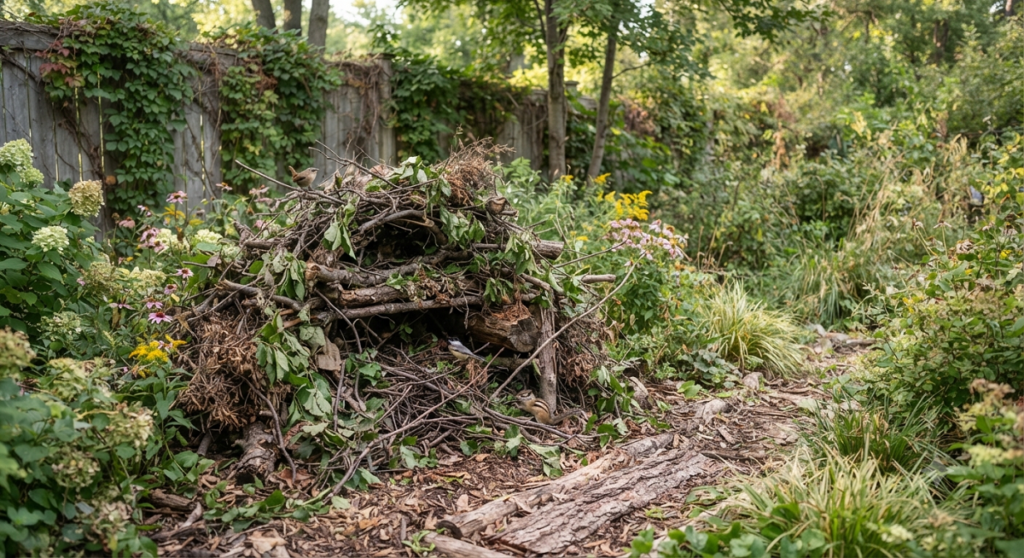
Stop bagging your fall leaves and branch trimmings for the curb. Pile them in a back corner instead.
A brush pile gives shelter to rabbits, chipmunks, ground-nesting birds like wrens, and overwintering insects that need somewhere to hide from cold and predators. It costs nothing and takes ten minutes to build.
Stack the biggest branches first to create air pockets underneath, then layer smaller sticks and leaves on top. Leave it loose. A tightly packed pile doesn’t give small animals room to move through it.
My brush pile is the ugliest thing in my yard and also the busiest. I’ve watched a whole family of wrens raise two broods in there over one summer, and I never had to lift a finger after the initial build.
Size matters more than people assume. A pile smaller than about three feet across doesn’t offer much protection from predators like hawks or neighborhood cats. Aim for something at least four to six feet wide at the base so smaller critters have real cover, not just a token pile of sticks.
Refresh it once a year by tossing on your spring pruning debris and any storm-downed branches. The bottom layer will slowly compost down into rich soil over several years, which is a nice bonus if you eventually want to relocate the pile and plant something in that spot. Just don’t build one directly against a wooden fence or your house siding, since it can hold moisture against the wood and invite rot or termites over time.
4. Grow Host Plants for Caterpillars and Butterflies
Everyone wants butterflies. Almost nobody plants for caterpillars, which is backwards, because no caterpillars means no butterflies.
Host plants are the specific plants a caterpillar species eats before it transforms. Monarchs need milkweed. Black swallowtails need dill, parsley, or fennel. Spicebush swallowtails need, unsurprisingly, spicebush.
Plant a small patch of these and expect some chewed leaves. That’s the plant doing its job, not a pest problem. I used to panic every time I saw holes in my dill until I realized those holes meant caterpillars, and caterpillars meant butterflies were coming.
Tuck host plants into the back of a bed or a less visible corner if chewed leaves bother you visually. They don’t need to be front and center to work.
5. Leave a Section of Lawn Unmown
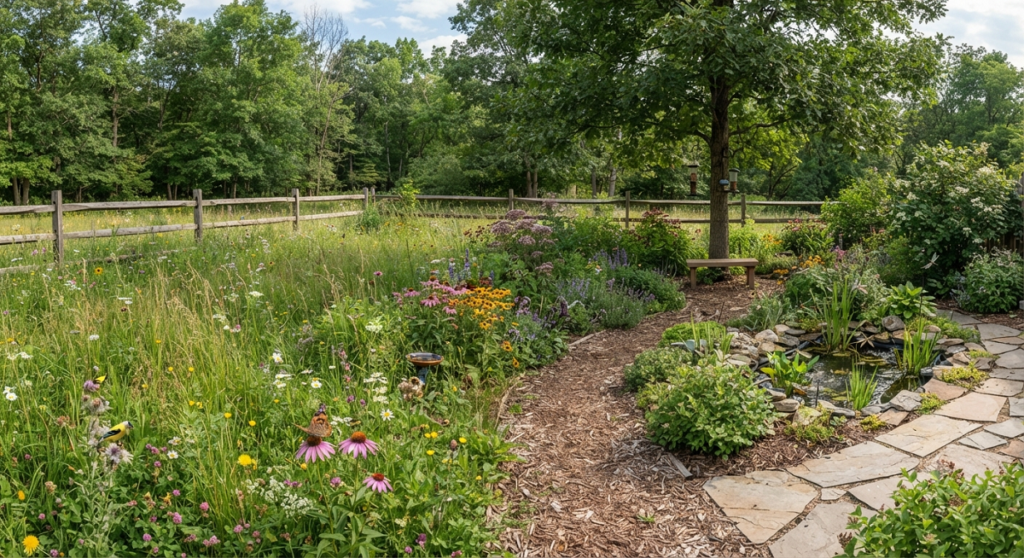
I’ve found that a perfectly manicured lawn is a total waste of resources, even if it looks sharp on a Sunday afternoon. It’s basically a green desert for wildlife.
Pick a section of your yard, even a small one, and let it grow through spring before your first mow. Clover, dandelions, and other so-called weeds are some of the earliest food sources for bees coming out of winter, when almost nothing else is blooming yet.
“No Mow May” has become a popular movement for exactly this reason, but you don’t need to follow a calendar trend to get the benefit. Just pick a patch, mark it if your neighbors need convincing, and let it be.
You’ll likely get questions from neighbors. I did. I now just tell people it’s my “pollinator patch,” and most folks nod and move on.
6. Install Bird and Bat Houses
Nesting spots are disappearing as old trees get removed and yards get tidier. A birdhouse or bat house helps fill that gap.
Different birds need different box dimensions and hole sizes, so don’t just grab the first cute birdhouse at the hardware store. Bluebirds need a specific entrance hole diameter that keeps out larger, more aggressive species like starlings. Match the box to the bird you’re hoping to attract.
Bat houses work similarly but need to go up higher, usually twelve to fifteen feet, and get full sun for most of the day to stay warm enough. Bats eat an enormous number of mosquitoes and garden pests in a single night, so this one pays for itself fast if you deal with bug problems.
Mount boxes away from bird feeders and busy foot traffic. Nesting birds want privacy, not a front-row seat to your patio furniture.
7. Skip the Pesticides in Your Habitat Beds
You can’t build a wildlife habitat garden and spray broad-spectrum pesticides in the same breath. They cancel each other out.
Pesticides don’t just kill the pest you’re targeting. They wipe out the pollinators, beneficial insects, and even the birds that eat poisoned bugs. Systemic pesticides get absorbed into the plant itself, showing up in pollen and nectar for months.
I sprayed my roses once for aphids years ago and lost every ladybug in the yard for the rest of the season. Ladybugs are the actual aphid solution. I’d killed my own pest control.
If you’ve got a real infestation, try insecticidal soap or a strong blast from the hose first. Save the harsh chemicals for a true last resort, and never spray anything while plants are in bloom.
8. Layer Your Plantings Like a Forest Edge
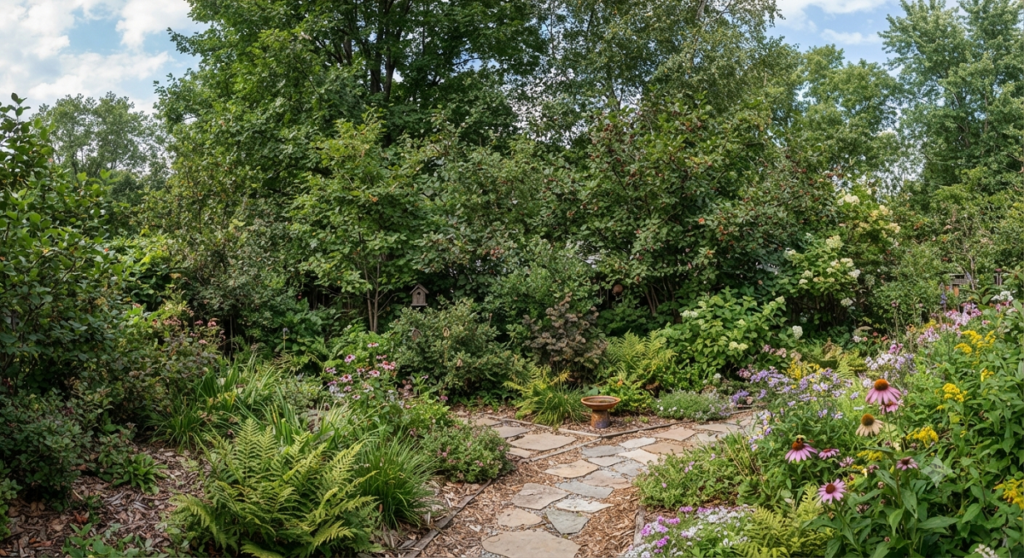
Wildlife doesn’t just need flowers. It needs structure: tall trees, mid-size shrubs, and low ground cover, all layered together the way a natural forest edge grows.
This layering gives different species different jobs. Birds nest in the trees, forage in the shrubs, and hunt insects in the ground cover. Rabbits and small mammals use the shrub layer for cover while they move between open areas.
A single layer of lawn with a tree stuck in the middle doesn’t offer this. Add a mid-height shrub border like viburnum or serviceberry under your trees, then tuck low native perennials or ground cover underneath that.
I redid one side of my yard this way two summers ago, and it’s now the loudest, most active corner of the property. More birds pass through that one layered section than the rest of my yard combined.
Think about it in terms of “rooms” rather than a flat plane. The canopy layer is the roof, shrubs are the walls, and ground cover is the floor. Each room needs to actually connect to the next one so animals can move between them without crossing wide-open lawn where they’re exposed to predators.
If your yard is small, you can still pull this off with a single corner or a narrow side yard rather than needing the whole property. A dwarf serviceberry, a couple of native shrubs like ninebark, and a groundcover like wild ginger or creeping phlox underneath can recreate that layered structure in a space no bigger than a parking spot.
9. Add a Rock or Log Pile for Ground-Level Habitat
Not every animal you want in your yard flies or crawls through flowers. Toads, lizards, snakes, and beneficial insects need somewhere cool and hidden at ground level.
A simple pile of rocks or a stacked log or two, tucked into a shady spot, creates exactly that. Rocks hold heat and give basking spots for reptiles, while the gaps underneath stay cool and damp, perfect for toads during the heat of the day.
Place your pile near your garden beds rather than out in the open lawn. Toads in particular are voracious pest eaters and will patrol nearby plants for slugs and beetles if you give them a home base close by.
I built mine out of leftover landscaping stone I didn’t want to haul to the dump. Free habitat, and I didn’t have to pay a disposal fee. Win-win.
10. Choose Fall and Winter Interest Plants, Not Just Spring Bloomers
Most people plant for spring and summer color, then leave fall and winter completely bare. That’s a huge gap for wildlife that needs food and shelter well past the first frost.
Seed heads from coneflower, black-eyed Susan, and ornamental grasses feed birds through winter if you leave them standing instead of cutting everything back in October. Goldfinches in particular will work over a dried coneflower head for weeks.
Evergreen shrubs like holly or juniper give birds dense cover from winter wind and predators when deciduous trees have gone bare. Berries on winterberry or viburnum hang on through the cold months and become an important food source once other options run out.
I stopped doing a full fall cleanup years ago and just leave my perennial beds standing until March. My yard looks a little rougher for a few months, but the finch traffic alone makes it worth it.
11. Bonus Idea: Set Up a Simple Bee Hotel
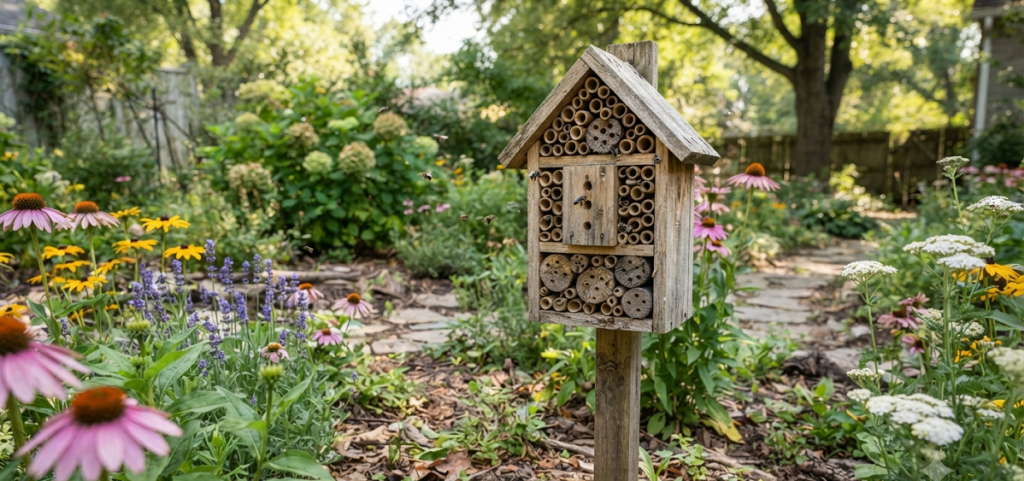
This one’s small, cheap, and easy to overlook, so I’m tacking it on as a bonus rather than giving it a full standalone spot.
Most people picture honeybees when they think about pollinators, but the majority of native bee species are solitary and don’t live in hives at all. Many nest in hollow stems or small holes in wood.
A bee hotel is just a bundle of hollow reeds or a drilled block of untreated wood, mounted somewhere it’ll get morning sun and stay dry. Mason bees and leafcutter bees will move right in.
Clean or replace the nesting tubes every year or two to cut down on mites and mold. Skip the pre-treated or painted wood; stick with untreated material so you’re not exposing bees to chemicals right at their nesting site.
Real Talk: What Can Go Wrong With a Habitat Garden
Not everything about this goes smoothly, and I want to be straight with you about it.
Your neighbors might complain. An unmown patch or a brush pile can look like neglect to someone used to a tidy suburban lawn. A small sign that says “pollinator habitat” solves more arguments than you’d expect.
Mosquitoes can become a real problem around still water. If you add a pond or birdbath, you need to keep the water moving or change it regularly, or you’ll trade one pest for another.
Some HOAs have rules against unmown grass or “wild” looking beds. Check your covenant before you commit to a full lawn conversion, because ripping it all out only to get a violation notice is a frustrating way to spend a weekend.
A bee hotel that’s never cleaned can actually spread mites and disease instead of helping bee populations. Don’t install one and forget about it. It needs a few minutes of upkeep every year, or it does more harm than good.
And honestly, not every idea on this list belongs in every yard. If you’ve got small kids running around barefoot, a rock pile loaded with hidden critters might not be the first project you tackle. Match the ideas to your actual life, not just the picture in your head.
Budget is another thing worth being honest about. A pond with a pump, several bird boxes, and a full native plant overhaul can add up fast if you try to do it all in one weekend. I spread my own habitat conversion out over about three years, adding one or two elements each spring instead of maxing out a credit card in April. Nobody’s grading you on speed here.
Finally, expect a slower payoff than you’d like. I didn’t see my first monarch caterpillar until the second year after I planted milkweed. Wildlife has to find your yard, and that takes time, especially if your neighborhood is mostly lawn and there’s nothing nearby to draw pollinators in. Patience matters more than any single product or plant you buy.
Final Thoughts
A backyard habitat doesn’t happen overnight, and it definitely doesn’t happen by accident. It happens because you decided your yard could be more than a patch of grass to maintain. Start with one or two ideas from this list, not all eleven at once. Add native plants first, get water going, and let the rest build up over a season or two.
What’s already living in your backyard, and what are you hoping to attract next? Drop your questions or your own habitat garden wins in the comments below. I read every one, and I love seeing what other people are growing.

About Syprose Kiche
Syprose Kiche is the creator and writer behind My Besuited Home, a practical home and garden website covering DIY projects, gardening, lawn care, landscaping, home improvement, and outdoor living. She focuses on turning everyday homeowner questions into clear, practical guides backed by careful research and useful real-world considerations.