
By mid-July, most home gardens look like they’ve given up. The lettuce bolted in May, the petunias are crispy, and that cheerful spring bed you photographed for Instagram is now a graveyard of brown stalks and broken dreams. I’ve been there — more times than I care to admit. One particularly brutal August, I stood in my backyard looking at a garden that resembled a tumbleweed convention and thought, there has to be a better way.
There is. It comes down to planting the right anchors — what I call keystone plants. These are the workhorses that don’t flinch when July turns into a blast furnace, that keep producing, keep blooming, and keep your garden looking intentional instead of abandoned. After 12-plus years of overcomplicating this hobby and then slowly figuring it out, these are the 13 plants I now rely on every single summer. If your garden is struggling right now, at least half of these can still be planted today and turn things around before the season is over.
What Is a Keystone Plant (and Why Your Summer Garden Needs One)?
A keystone plant isn’t just a pretty face. In ecology, a keystone species is one that holds an entire ecosystem together — remove it, and everything collapses. In your garden, keystone plants are the ones that do multiple jobs at once: they provide structure, attract pollinators, suppress weeds, feed your table, or bloom continuously without demanding constant babying.
Most people fill their gardens with high-maintenance divas that look stunning in April and fall apart by June. Keystone plants are the opposite. They’re the reliable neighbors who show up with a casserole when you’re sick. You want a mix of edibles and ornamentals in this list, and you want plants that laugh at heat, drought, and neglect.
Let’s get into it.
1. Zucchini — The Plant That Will Feed Your Entire Neighborhood Whether They Want It or Not
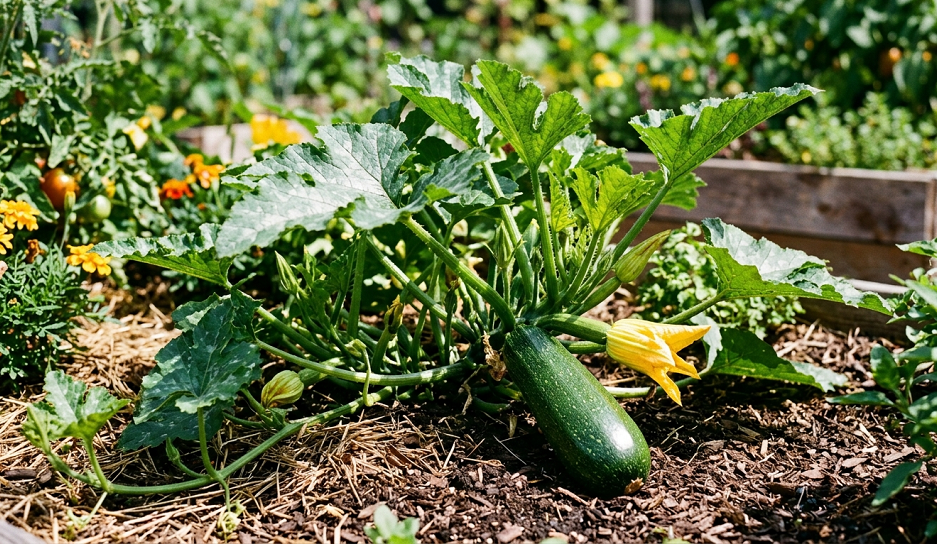
I say this with love: zucchini is the most productive plant you will ever put in the ground, and one summer it genuinely took over an entire corner of my yard. I found a zucchini the size of a baseball bat hiding under a leaf. My neighbors started leaving early when they saw me coming with a bag.
Why it’s a keystone: Zucchini produces fast — typically 50–55 days from seed to harvest — and it produces constantly. One plant can yield 6–10 pounds of squash per week at peak season. It also has giant leaves that shade out weeds underneath, meaning less work for you.
How to grow it in summer: If you’re planting mid-season, start with transplants rather than direct seed. They’ll catch up faster. Give each plant at least 3 feet of space, water deeply twice a week rather than shallowly every day, and harvest often. The more you pick, the more it produces. Ignore it for a week and you’ll have a squash that could double as a weapon.
Real tip: Powdery mildew will show up on the leaves eventually. Don’t panic. It looks worse than it is. As long as the plant is still fruiting, just remove the worst-affected leaves and carry on. I wasted two seasons ripping out plants that had months of production left in them because I was scared of a little white fuzz.
2. Cherry Tomatoes — The Easiest Tomato for Hot, Dry Summers
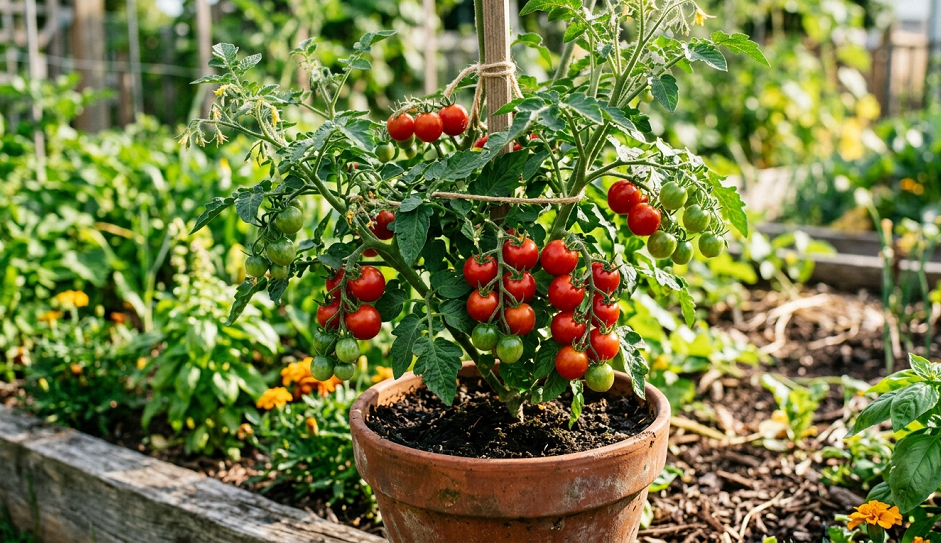
Full disclosure: I spent years chasing big beefsteak tomatoes and failing spectacularly. Blossom drop, blight, cracking — the whole tragic parade. Then I switched my focus to cherry tomato varieties like Sun Gold, Sweet Million, and Black Cherry, and I have never looked back.
Why they’re a keystone: Cherry tomatoes tolerate heat far better than large-fruited varieties. They set fruit even when daytime temps push past 90°F, which is when most big tomatoes stop producing entirely. They’re also more disease-resistant and tend to recover faster from inconsistent watering.
Best varieties for struggling summer gardens: Sun Gold is my top pick — it’s sweet, prolific, and somehow always outperforms everything else in my garden. Sweet 100 and Juliet (technically a grape tomato, but close enough) are close runners-up. Avoid any heirloom cherry tomato if you’re in a humid climate — they tend to crack badly in rain.
The support issue: Cherry tomatoes get enormous. I once trained a Sun Gold plant along a 6-foot fence and it kept going for another 4 feet. Use a sturdy cage, a stake, or a fence. Do not use those little cone-shaped wire cages from the hardware store — they’re a total waste of money, even if they look tidy on Pinterest. They will collapse under the weight of a productive plant by August.
3. Basil — The Companion Plant That Earns Its Space Ten Times Over
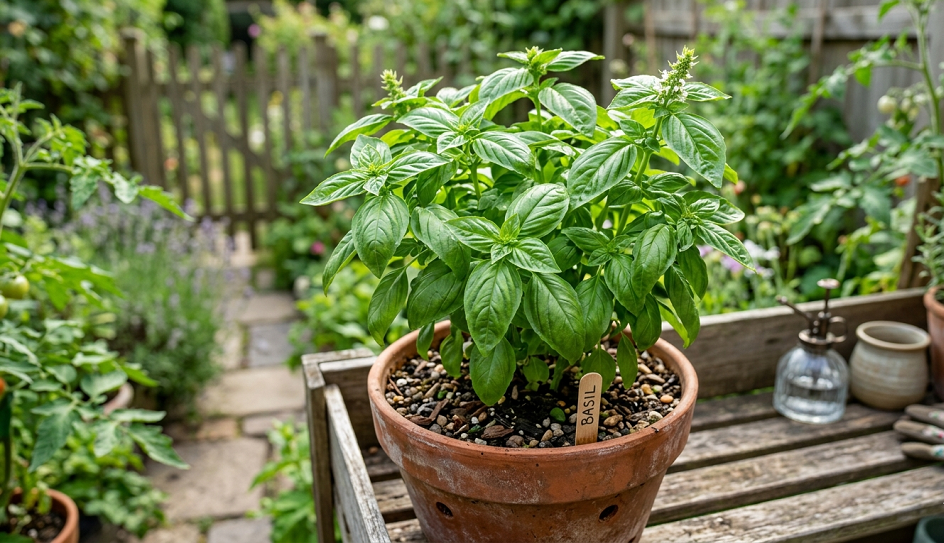
Basil and tomatoes together isn’t just a cooking pairing — it’s genuinely smart garden design. Basil repels aphids and whiteflies, attracts pollinators, and smells incredible. In my garden, I tuck basil plants under and around every tomato I grow.
Why it’s a keystone: Beyond pest suppression, basil fills gaps quickly. It grows fast, stays compact (or goes full bush depending on variety), and can be harvested repeatedly all summer. It’s also a great container plant, which means you can move it to wherever your garden needs help.
Heat and water tips: Basil hates wet feet and cold nights. If you’re planting after a cool spell, wait until the soil has genuinely warmed up — I’m talking consistently above 60°F. Water at the base, not the leaves. Wet foliage plus hot sun equals ugly brown spots that everyone will assume is disease.
Keep it from flowering: The moment basil starts to bolt and flower, the leaves turn bitter. Pinch the flower heads off the second you see them. I do a quick basil check every few days in peak summer. It takes 30 seconds and keeps the plant producing for weeks longer.
4. Echinacea (Coneflower) — The Native Perennial That Will Outlive Your Fence
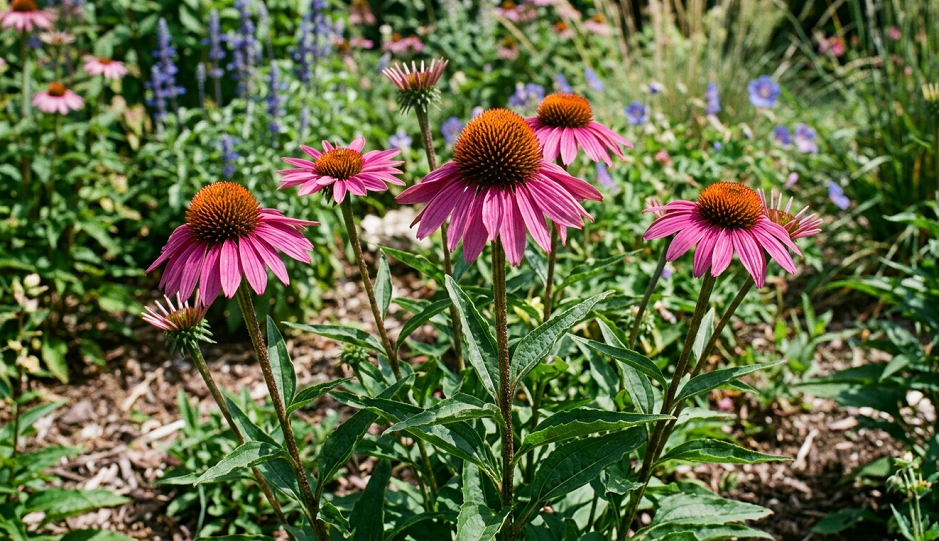
If you’re planting ornamentals and not including coneflower, I genuinely feel bad for your pollinators. Echinacea is native to North American prairies, which means it evolved to handle exactly the kind of brutal, dry, forget-to-water-for-a-week conditions most summer gardens deliver.
Why it’s a keystone: Once established, echinacea blooms from late June through September and requires almost zero input. It attracts bees, butterflies, and goldfinches (who eat the seed heads in fall). It spreads slowly but steadily, filling in gaps over the years. I planted five plants six years ago. Now I have 30, and I’ve given divisions to half my street.
Varieties worth growing: Purple coneflower (Echinacea purpurea) is the classic and the toughest. If you want to get fancy, Magnus has larger blooms and White Swan is beautiful for a softer look. I’d skip the trendy double-flowered varieties — they produce less nectar and pollinators ignore them. Pretty to humans, useless to your garden ecosystem.
Establishment tip: The first year, echinacea will look like it’s doing nothing. It’s building its root system. Water it through the first summer, then leave it alone. Year two, it’ll bloom. Year three, you’ll be giving divisions away like I am.
5. Black-Eyed Susan — Heat-Proof Color That Blooms When Everything Else Has Quit
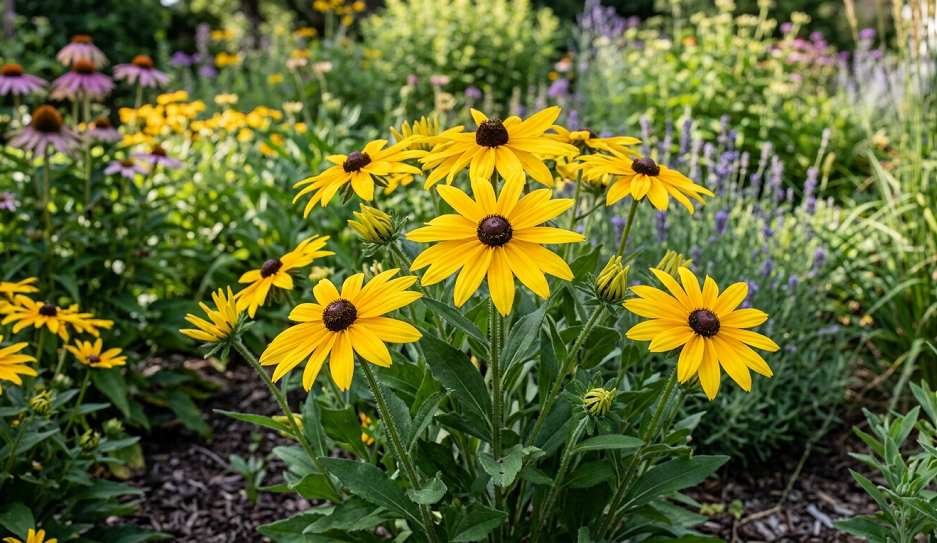
By mid-August, most flowers have given up. Black-eyed Susan hasn’t even hit its stride yet. This native wildflower is genuinely unstoppable in hot, dry conditions, and it blooms in some of the richest golden-yellow tones in the garden color palette.
Why it’s a keystone: Black-eyed Susans bloom from July through October — exactly the window when most summer gardens fall apart visually. They’re self-seeding, so a patch started this year will come back bigger next year without any effort on your part. They also attract 17+ species of native bees, according to most native plant studies I’ve come across.
Growing tips: Direct sow in spring or transplant established starts now. They prefer full sun and lean soil — I once amended a patch heavily with compost thinking I was being generous, and I got enormous floppy plants that flopped all over each other. Turns out they like it rough.
Bonus: The seed heads are architectural and beautiful through winter. Don’t cut them down in fall. Leave them standing — the birds will thank you, and your garden will look more interesting than a bare, mulched bed.
6. Sweet Potato Vine — The Best Ground Cover You’re Probably Not Using
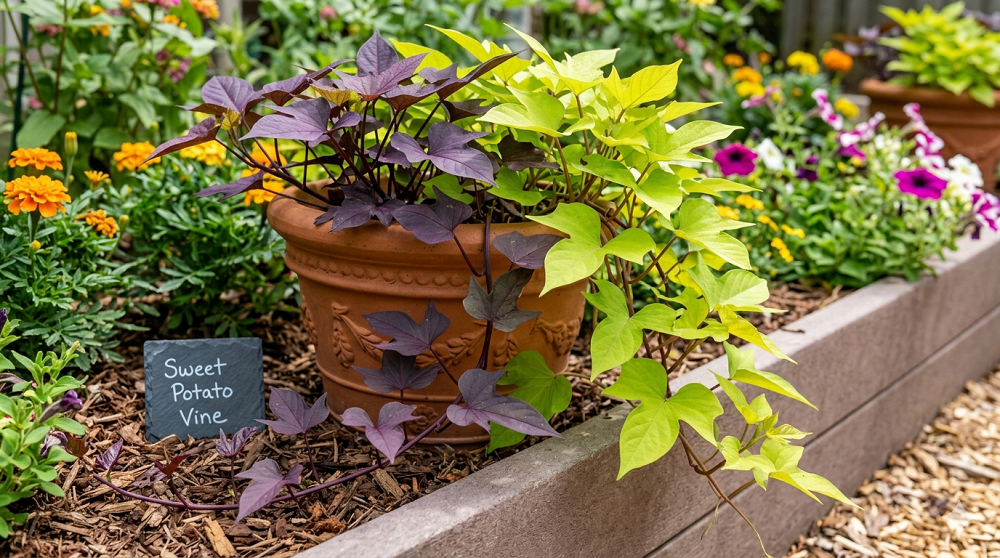
Okay, this one surprises people. Sweet potato vine (Ipomoea batatas) is usually sold as an ornamental, but here’s the thing: if you plant the right variety, you’ll actually get edible sweet potatoes out of it in fall. That’s a two-for-one that I find deeply satisfying.
Why it’s a keystone: The foliage is spectacular — chartreuse, deep purple, bronze — and it grows fast, covering bare ground and suppressing weeds before you can blink. It cascades beautifully from containers or sprawls as a ground cover between taller plants. It laughs at heat and humidity.
Edible vs. ornamental: Most ornamental varieties produce small, sometimes bitter tubers. For edible production, choose varieties like Beauregard or Covington. For ornamental impact, Marguerite (chartreuse) and Blackie (deep purple) are the two I’ve used most reliably.
One honest caveat: It spreads. A lot. I planted it as a “quick gap filler” between my pepper plants and by September it had consumed two raised beds. Not a disaster, but plan for it. Give it space or keep it in containers where it can trail without taking over.
7. Peppers — The Slow Starter That Carries Your Fall Harvest
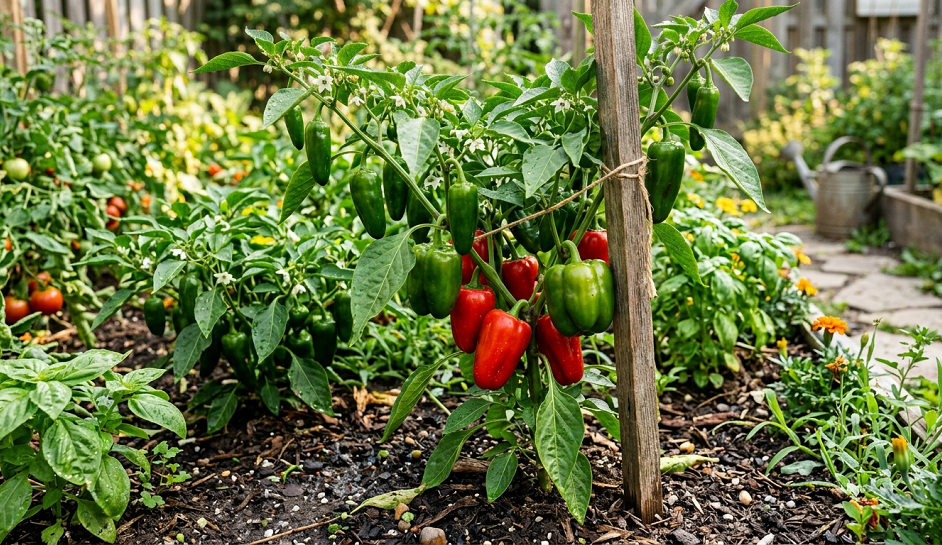
Peppers are the quiet achievers of the summer garden. They start slowly, look like they’re doing nothing all June, and then — as everyone else is burning out — they kick into high gear in August and September and don’t stop until frost.
Why they’re a keystone: Peppers love heat. Unlike tomatoes that drop blossoms when temps spike, peppers respond to summer heat by producing harder. A single mature bell pepper plant can yield 6–8 peppers at once; a hot pepper plant can give you hundreds of pods.
The best types for struggling gardens: If your summers are brutal, skip bell peppers and grow banana peppers, poblanos, or cayennes instead. They’re more heat-tolerant and produce faster. I’ve grown Italian frying peppers that just kept going and going — I was roasting them in October when everything else was done.
Don’t overwater: This is where most people go wrong with peppers. They look droopy on a hot afternoon and you assume they’re thirsty. Sometimes they are. But more often, they’re just reacting to heat and will perk back up in the evening. Overwatering peppers leads to root rot and blossom drop. Water deeply once or twice a week and resist the urge to baby them.
8. Marigolds — The Workhorse Flower That Does More Than Look Pretty
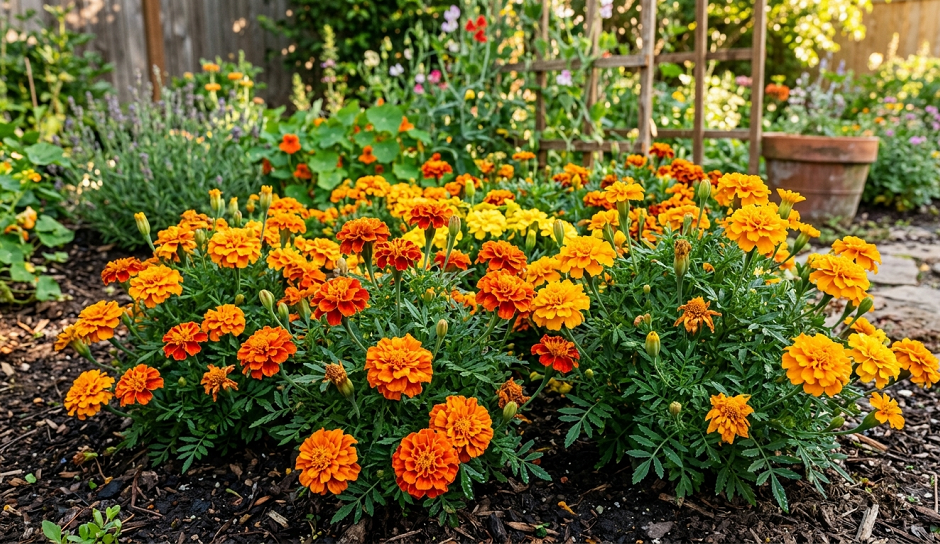
I resisted marigolds for years. They felt too suburban, too expected. Then I learned what they actually do underground and I’ve had them in every garden since.
Why they’re a keystone: Marigold roots produce a compound called alpha-terthienyl that suppresses nematodes — microscopic soil pests that can devastate tomatoes and peppers. They also repel aphids, beetles, and whiteflies above ground. A ring of marigolds around your vegetable bed is the cheapest, most natural pest control you’ll ever use.
French vs. African: French marigolds (small, bushy) are better for pest control and do well in heat. African marigolds (tall, big blooms) are showier but more finicky. I use French marigolds as workhorses throughout the vegetable garden and African marigolds at the front border where I want impact.
Keep deadheading: Remove spent flowers every week or two and marigolds will bloom continuously from June to frost. Skip deadheading and they’ll slow down significantly. This is the one flower that genuinely rewards regular attention.
9. Cucumbers — Fast Production for Mid-Season Gaps
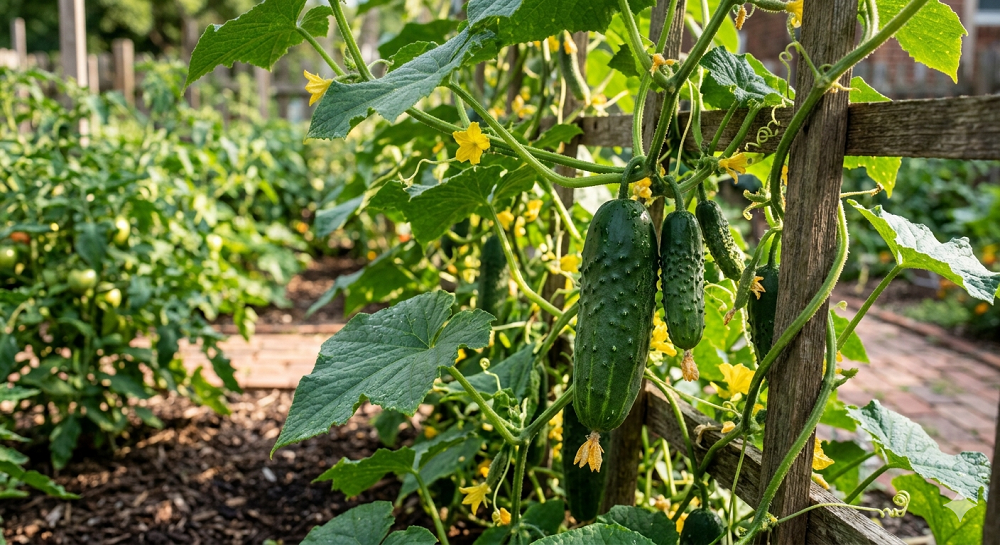
When I have a bare raised bed in July and need something to fill it fast, cucumbers are my first call. They germinate in 3–5 days in warm soil and go from seed to first harvest in about 55 days — meaning a mid-July planting can still give you cucumbers in September.
Why they’re a keystone: Cucumbers grow vertically if you give them a trellis, which means they take up almost no footprint. They produce abundantly and continuously. A trellis-grown cucumber plant is also easier to spot harvest on than a sprawling plant, which means you won’t accidentally grow a yellow balloon of a cucumber that escaped detection for two weeks (not that I’d know anything about that).
Heat and water management: Cucumbers need consistent moisture — more than most vegetables on this list. Irregular watering leads to bitter fruits. Mulch heavily around the base to retain soil moisture, and water deeply at least every two days during peak heat. I add a layer of straw mulch 3–4 inches thick and my cucumber plants last weeks longer because of it.
10. Lantana — The Tough Ornamental That Pollinators Are Obsessed With
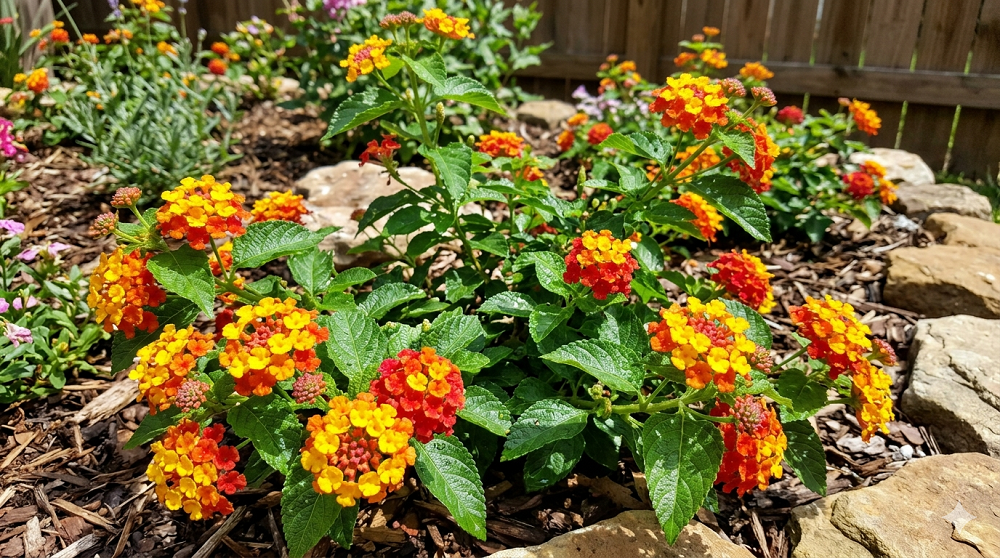
Lantana is basically indestructible. I’ve grown it in pots that dried out completely for weeks, in garden beds that baked in full afternoon sun with no supplemental water, and it has never once let me down. It blooms in clusters of yellow, orange, pink, and red — sometimes all on the same plant — from June until the first hard frost.
Why it’s a keystone: Lantana is one of the top nectar plants for butterflies and hummingbirds. In a struggling summer garden, it provides the consistent bloom and the pollinator traffic that helps everything else fruit and set seed. It’s also a conversation starter — every visitor to my garden asks what the colorful “bouquet shrub” is.
Container vs. in-ground: In frost-free climates, lantana grows as a woody shrub and gets enormous. In cold climates, treat it as an annual or overwinter it in a pot indoors. I’ve brought the same container lantana through five winters now by cutting it back hard in October and keeping it in my garage under a grow light.
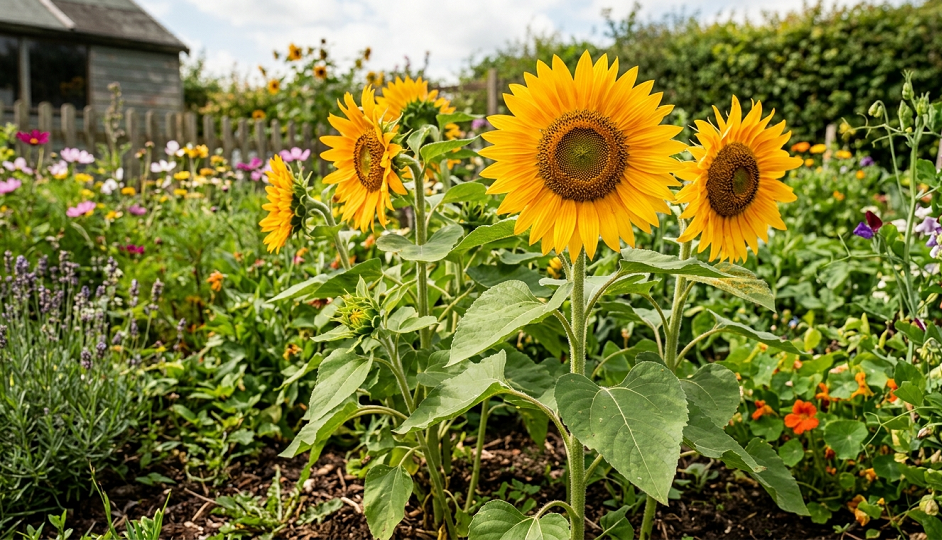
11. Sunflowers — The Tall Anchor That Makes Everything Around It Look Better
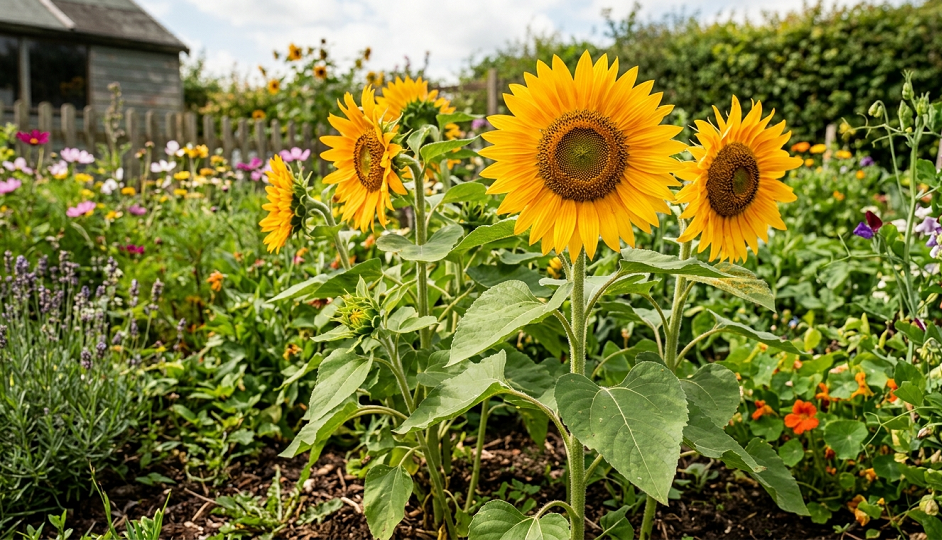
A sunflower at the back of a flagging border does more for garden aesthetics than any amount of fresh mulch. It’s tall, dramatic, and undeniably cheerful — and by planting a succession of seeds every 2–3 weeks, you can have sunflowers blooming continuously from July through October.
Why they’re a keystone: Sunflowers attract bees at a rate that benefits everything around them. Their deep taproots also break up compacted soil. And when they go to seed, finches, sparrows, and chickadees will visit your garden daily for weeks. I’ve had sunflower patches turn into unofficial bird feeders that kept me watching out the kitchen window for hours.
Variety tip: Avoid single-stem varieties if you want continuous color. Branching varieties like Autumn Beauty, Lemon Queen, and Soraya produce multiple flowers per plant and keep going long after the main head is done.
12. Herbs: The Trio of Rosemary, Thyme, and Oregano
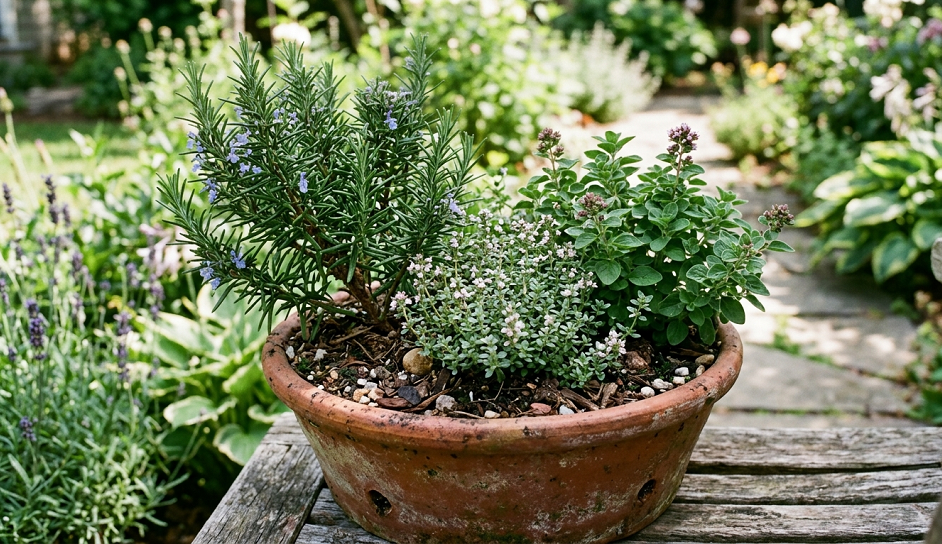
I’m grouping these three together because they behave essentially the same way and should be treated as a unit. All three are Mediterranean natives, which means they evolved in hot, dry, rocky soil. They thrive on neglect and will die if you over-love them with too much water and fertilizer.
Why they’re keystones: Herbs in this trio bloom in summer and are absolute magnet plants for bees — especially thyme in flower, which I’ve seen covered in 20+ bees at once. They’re also evergreen or semi-evergreen depending on your climate, meaning they provide year-round structure. And obviously, you can cook with them constantly.
The mistake almost everyone makes: Planting these in rich, moist soil. Don’t do it. They want lean, well-drained soil in full sun. I once lost a gorgeous rosemary bush to root rot because I planted it in a slightly low spot where water pooled after rain. These plants want to be a little thirsty. Treat them mean and they’ll grow into beautiful, productive shrubs.
13. Sedum (Autumn Joy) — The Late-Season Closer That Saves August and September
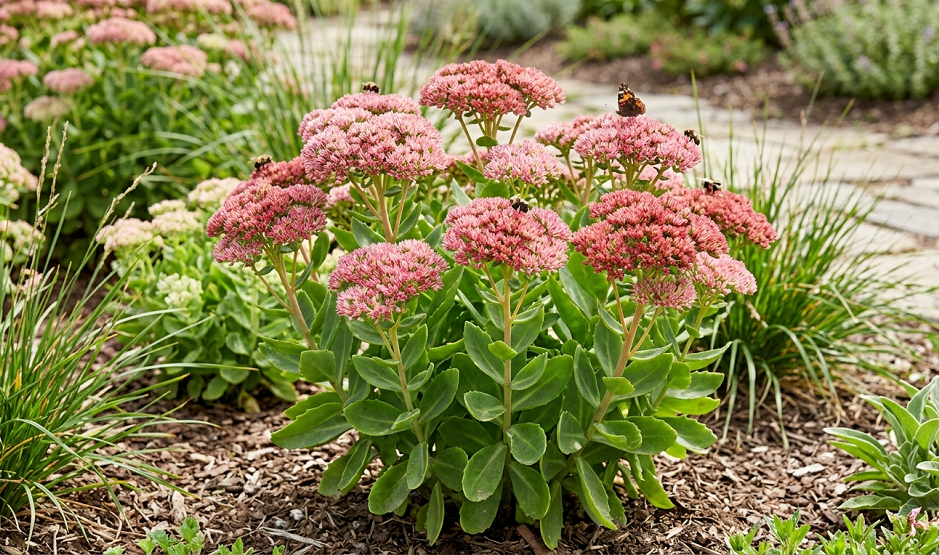
Every garden needs a closer — a plant that steps up when everyone else has run out of steam. Sedum ‘Autumn Joy’ is mine. The flower heads start as pale green in summer, shift to rose-pink in August, deepen to copper-red in September, and turn bronze-brown in winter. It earns four seasons of interest from one planting.
Why it’s a keystone: Late-season pollinators — particularly monarch butterflies migrating south — rely heavily on September and October nectar sources. Sedum is one of the best. In a good year, I count 10–15 monarchs on my sedum patch in a single afternoon. It also requires zero care: no deadheading, no supplemental watering once established, no fertilizer. You plant it and walk away.
Quick side note: Sedum pairs beautifully with black-eyed Susan and ornamental grasses — all share the same rough-and-ready, late-season attitude. The combination looks deliberately designed even if you just planted whatever survived last year.
The Real Talk: What Can Go Wrong (and What’s Not Worth Your Energy)
Here’s the honest part. Even with the best plant choices, some things will still go sideways.
Pest pressure: Aphids, Japanese beetles, squash vine borers — they don’t care how carefully you chose your plants. My best defense has always been healthy soil, companion planting (marigolds, basil, herbs), and doing a quick visual check every few days rather than waiting for an infestation to blow up. I’ve wasted money on every spray and treatment imaginable. The ones that actually work: neem oil for soft-bodied insects, row cover for squash vine borers, and hand-picking Japanese beetles in the early morning when they’re sluggish.
Over-fertilizing: I see this constantly in summer. People look at a struggling garden and decide it needs to be fed. Then they apply too much nitrogen, get an explosion of leafy growth with no flowers, and wonder why their tomatoes aren’t setting fruit. If you’re growing in decent soil with compost, most of these plants need very little additional fertilizer. A light application of balanced, slow-release fertilizer at planting and maybe once mid-season is plenty for most of this list.
Chasing trends: Every year there’s a new “it” plant on social media. A few years ago it was strawflower. Before that it was giant blue Himalayan poppies (which, by the way, require cold, wet climates and will make you miserable if you live somewhere warm — I know this because I tried twice). Plant what works in your specific climate, not what looks good in a British gardening YouTube video.
What’s genuinely not worth the effort for most home gardeners: Artichokes in cold climates, lemongrass if you’re not in Zone 9+, and any vegetable labeled “full season” when you’re already past July. Cut your losses and plant fast producers instead.
Final Piece of Parting Wisdom
Gardening isn’t about perfection. Some years the aphids win. Some years you get six inches of rain in June and root rot takes out half your bed. I’ve had seasons where nothing I planted seemed to work, and I’ve had seasons where I couldn’t give produce away fast enough.
The secret — if there is one — is showing up consistently. Check the garden every day or two, not just when something looks wrong. The best gardeners I know are just the most observant ones. They catch problems early, they notice what thrives in their specific microclimate, and they stop fighting their conditions and start working with them.
Pick three or four plants from this list that match your climate and your energy level, and actually commit to them this season. Don’t plant all 13. Doing a few things well beats doing everything at once badly. Trust me on that — the year I tried to grow 22 different vegetables in a 400-square-foot plot was a humbling lesson in overambition.
Now I want to hear from you: which plant on this list surprised you most, and what’s the one stubborn problem in your summer garden that you haven’t been able to solve? Drop it in the comments below — I read every one, and I’ve probably killed that plant at some point myself.

About Syprose Kiche
Syprose Kiche is the creator and writer behind My Besuited Home, a practical home and garden website covering DIY projects, gardening, lawn care, landscaping, home improvement, and outdoor living. She focuses on turning everyday homeowner questions into clear, practical guides backed by careful research and useful real-world considerations.