
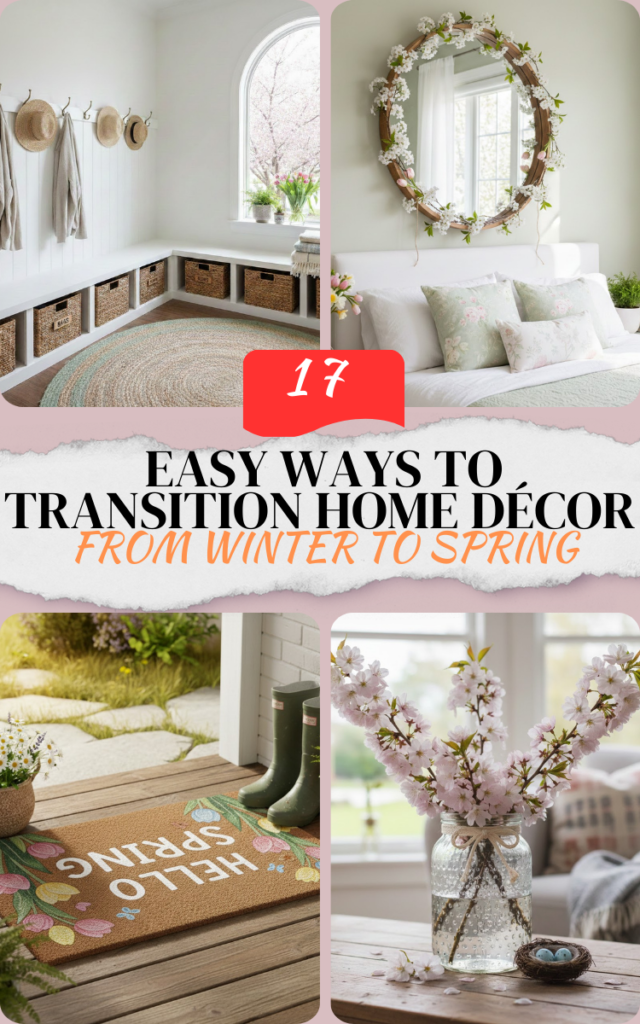
Stop staring at that dusty evergreen garland. I get it—it’s February, the sky is the color of a wet sidewalk, and you’re currently huddled under three weighted blankets. But keeping your house in “winter mode” until May is a recipe for seasonal blues. Trust me, I once left my heavy velvet curtains up until July, and I’m pretty sure I grew actual moss on my shins.
Transitioning your home for spring isn’t about a total gut renovation. It’s about tricking your brain into thinking the sun is actually out. Here are 17 ways to kick winter to the curb without breaking your back or your bank account.
1. Swap Heavy Textiles for Breathable Fabrics
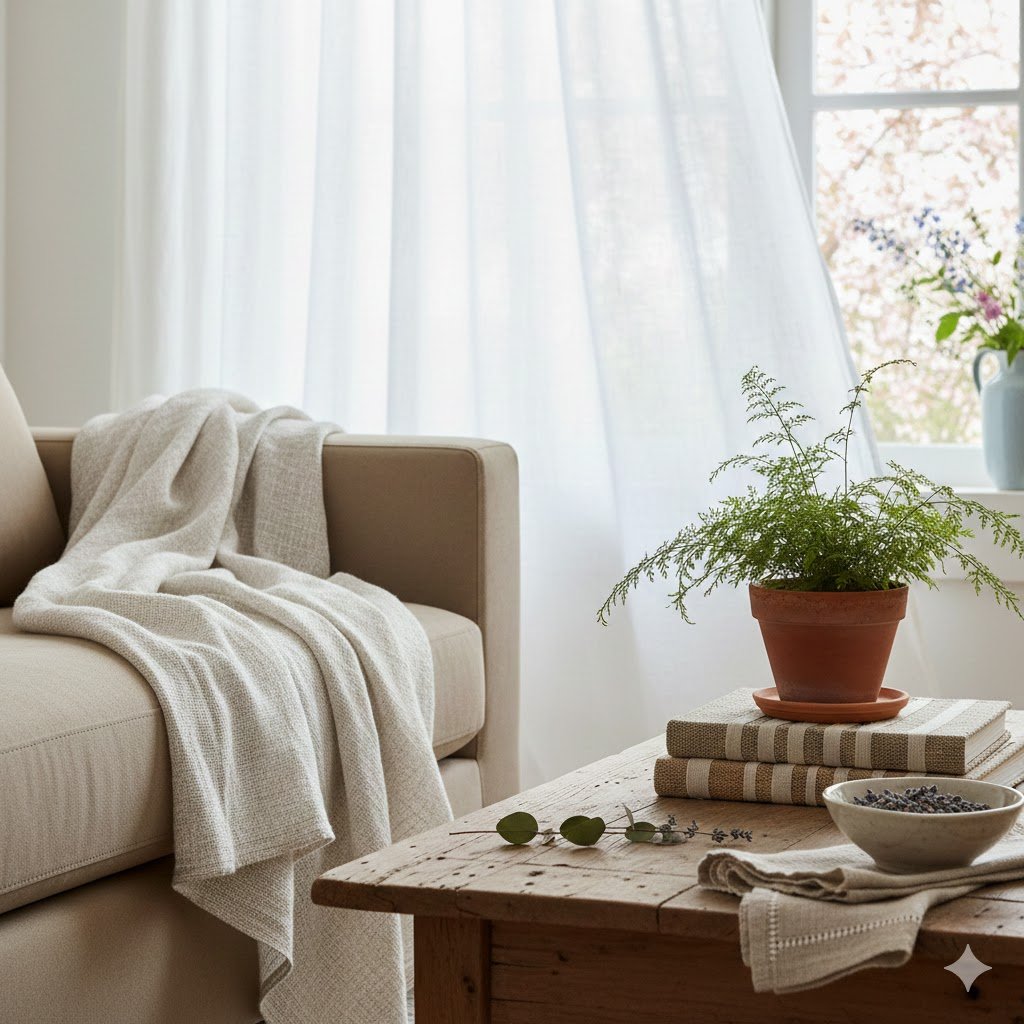
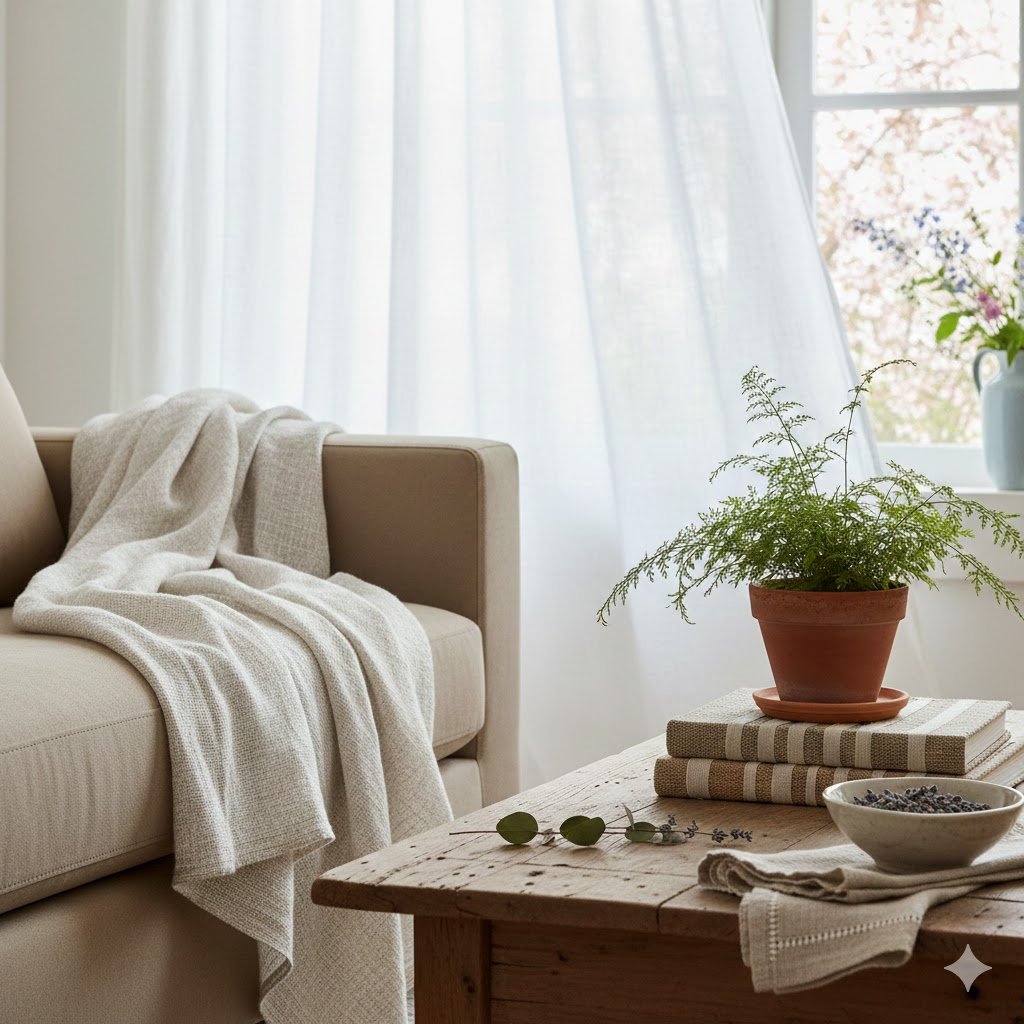
If your living room feels like a grizzly bear’s den, it’s time to strip. I’m talking about those wool throws and faux-fur pillows that seemed like a great idea in December. By mid-February, they just trap cat hair and sadness. I once tried to keep a chunky knit throw on the sofa year-round, and by April, it felt like I was being hugged by a hot radiator.
Pull out the linen, cotton, and lightweight blends. These fabrics let the air move, which is exactly what you need when the heater is still kicking on but the afternoon sun starts hitting the windows. It’s a psychological shift—seeing a light, breezy fabric makes the whole room feel five pounds lighter.
Don’t feel like you need to buy all new inserts, either. Just grab some cheap linen covers. I’ve found that high-end silk covers are a total waste of money for a high-traffic living room; they snag the second a fingernail or a dog paw touches them. Stick to durable cotton or flax linen that you can actually throw in the wash.
2. Refresh Your Entryway with a Spring Doormat
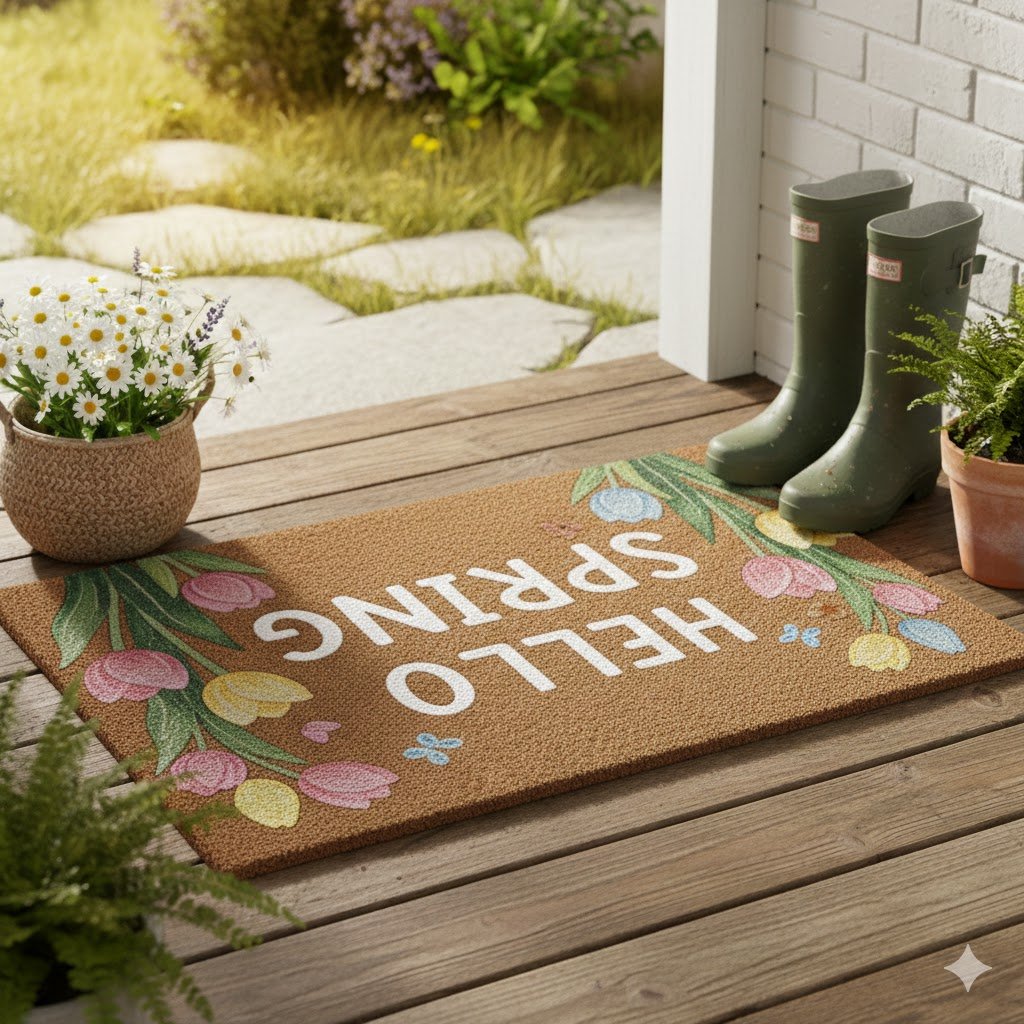
Your front door is the first thing you see when you trudge home from work, and if there’s a salt-stained “Let it Snow” mat greeting you, you’re going to stay in a winter headspace. I learned this the hard way when I slipped on a frozen slush-pile right onto a “Merry Christmas” mat in late March. It was embarrassing and entirely preventable.
Look for a natural coir mat with a simple floral or geometric pattern. Better yet, layer it. Put a slightly larger, washable outdoor rug underneath it for that “I have my life together” look. It adds a pop of color and keeps the mud from your boots from migrating into the hallway.
Make sure you actually scrub the threshold while you’re at it. A winter’s worth of road salt and grime builds up in the cracks. A quick sweep and a fresh mat tell your brain that the seasons are changing, even if there’s still a stubborn pile of snow in the corner of the yard.
3. Brighten Up Walls with Removable Wallpaper
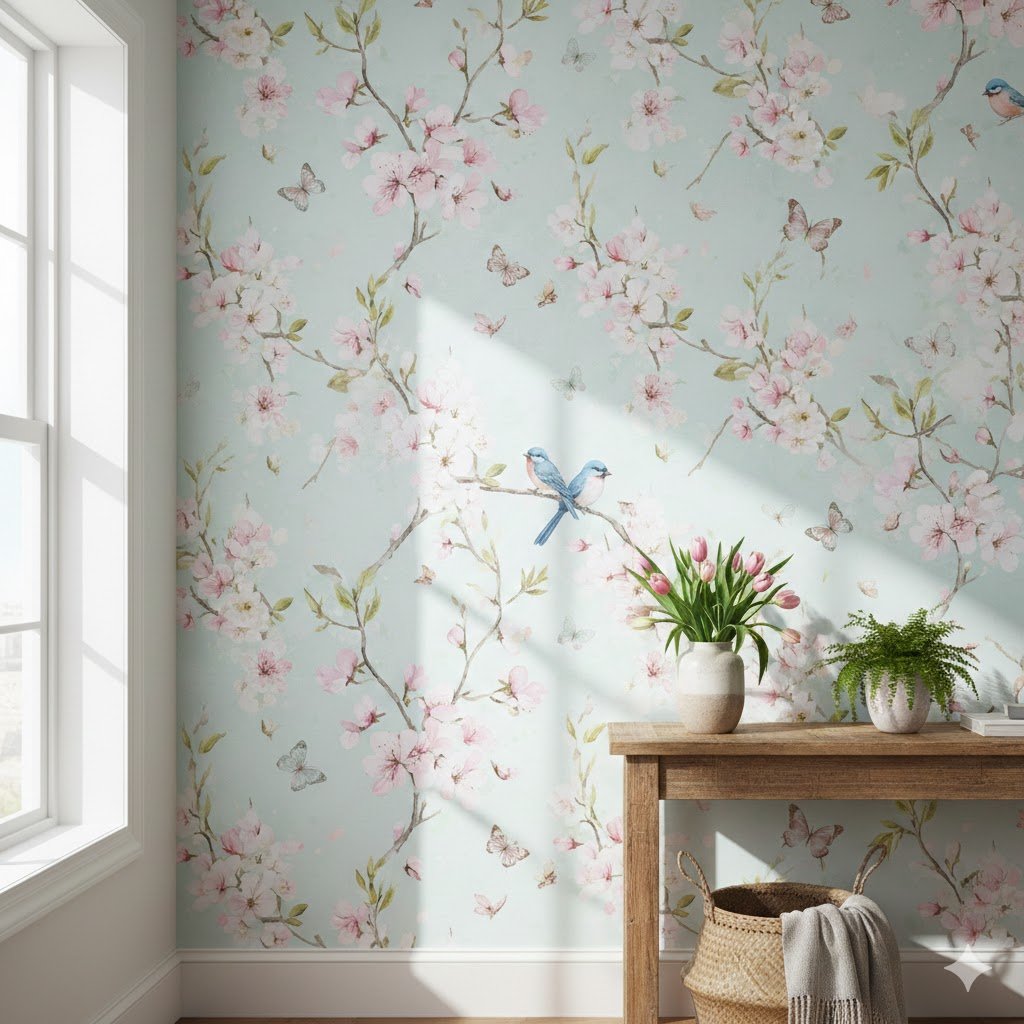
If your walls feel like they’re closing in after three months of darkness, give them a “fake” makeover. I’m a huge fan of peel-and-stick wallpaper for accent walls. It’s the ultimate low-commitment relationship. Back in my early DIY days, I painted a room “Sunset Orange” thinking it would feel like spring—it actually just looked like the inside of a Cheeto bag.
Using a light, botanical print or a soft pastel stripe on a single wall can completely change the luminosity of a room. It reflects the returning natural light instead of soaking it up like a sponge. And the best part? If you hate it by the time summer rolls around, you just peel it off. No sanding, no priming, no tears.
When you’re searching for patterns, avoid anything too “busy” or dark. You want something that feels airy. I’ve found that “watercolor” styles work best for early spring because they mimic the soft, hazy light we get during the transition. It makes the room feel expansive rather than cluttered.
4. Introduce Live Greenery and Potted Bulbs
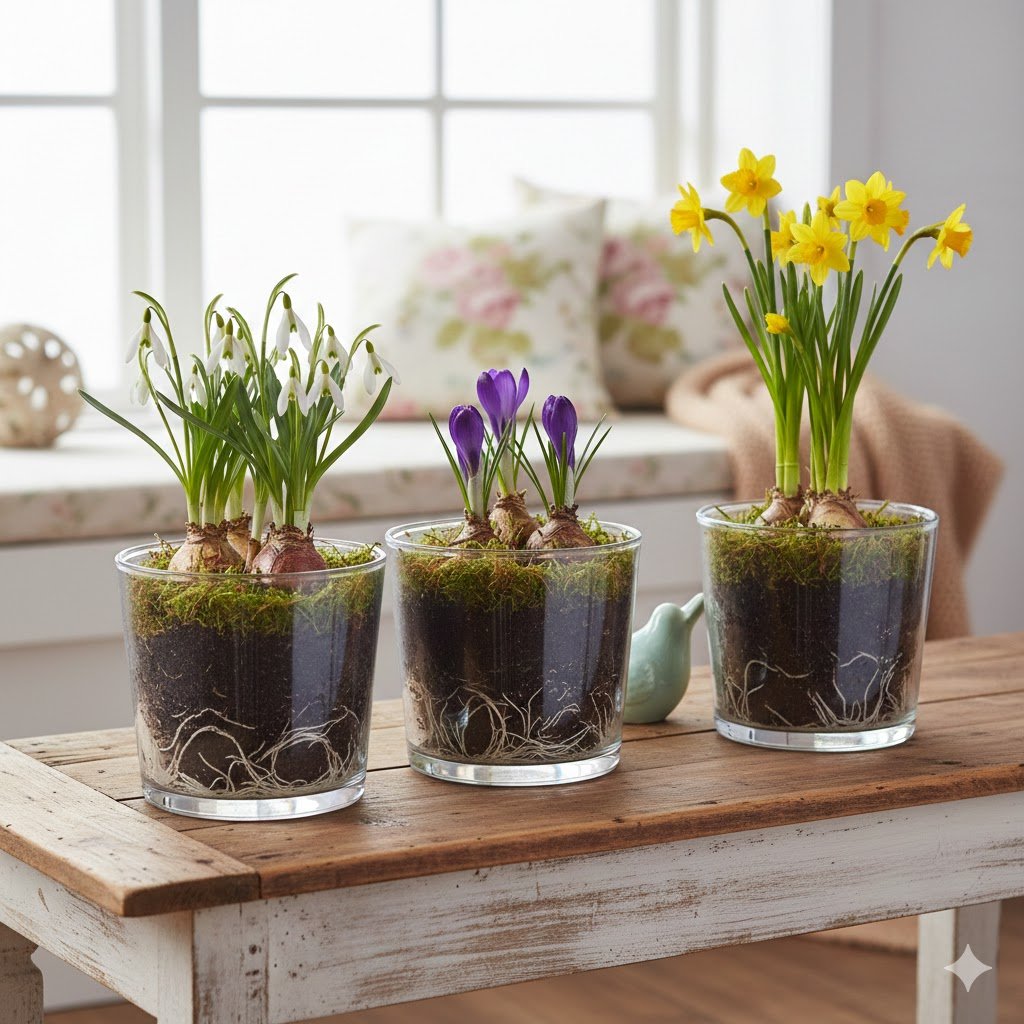
Artificial plants are fine for high shelves where you can’t reach, but for early spring, you need the real deal. There is nothing like the smell of actual dirt to remind you that life exists. I once tried to pass off a plastic ivy plant as “spring decor,” but my cat chewed a leaf off and looked at me with such betrayal that I went straight to the nursery.
Grab some potted tulips, hyacinths, or daffodils from the grocery store. You don’t even have to plant them outside yet. Just stick the plastic pots inside some pretty ceramic crocks. They bring immediate color and a scent that screams “winter is over” much louder than any candle ever could.
Once the blooms fade, don’t toss them! Keep the bulbs, let the leaves die back naturally, and toss them in the garden later. It’s the gift that keeps on giving. If you’re a “black thumb” like I used to be, start with a snake plant or a pothos. They are basically impossible to kill, even if you forget they exist for two weeks.
5. Transition Your Scent Profile
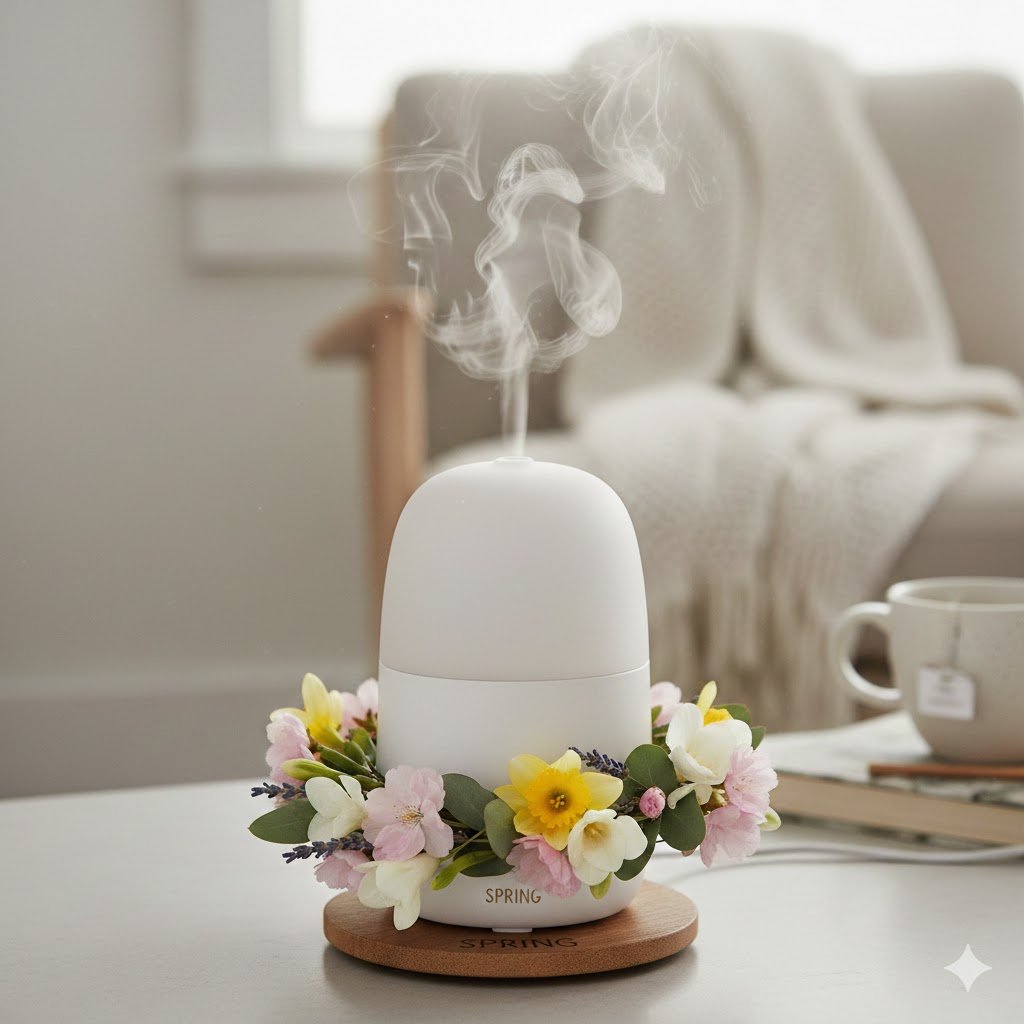
If I walk into a house in March and it still smells like “Cinnamon Spiced Cider” or “Fraser Fir,” I feel like I’m stuck in a time loop. Your sense of smell is the fastest way to change your mood. I used to hoard “Midnight Forest” candles until I realized they were making my house feel dark and heavy during the day.
Switch to citrus, eucalyptus, or light floral scents. Think lemon, grapefruit, or fresh linen. You want scents that feel “clean” rather than “cozy.” It’s like opening a window without actually letting the 40-degree air inside.
I’m also a big proponent of essential oil diffusers for this time of year. A mix of lemon and peppermint is like a shot of espresso for your house. It wakes the space up. Avoid those super-sugary “Cupcake” or “Cookie” scents; they’re too heavy for the transitional period. You want crisp, not cloying.
6. Audit Your Bookshelf Decor
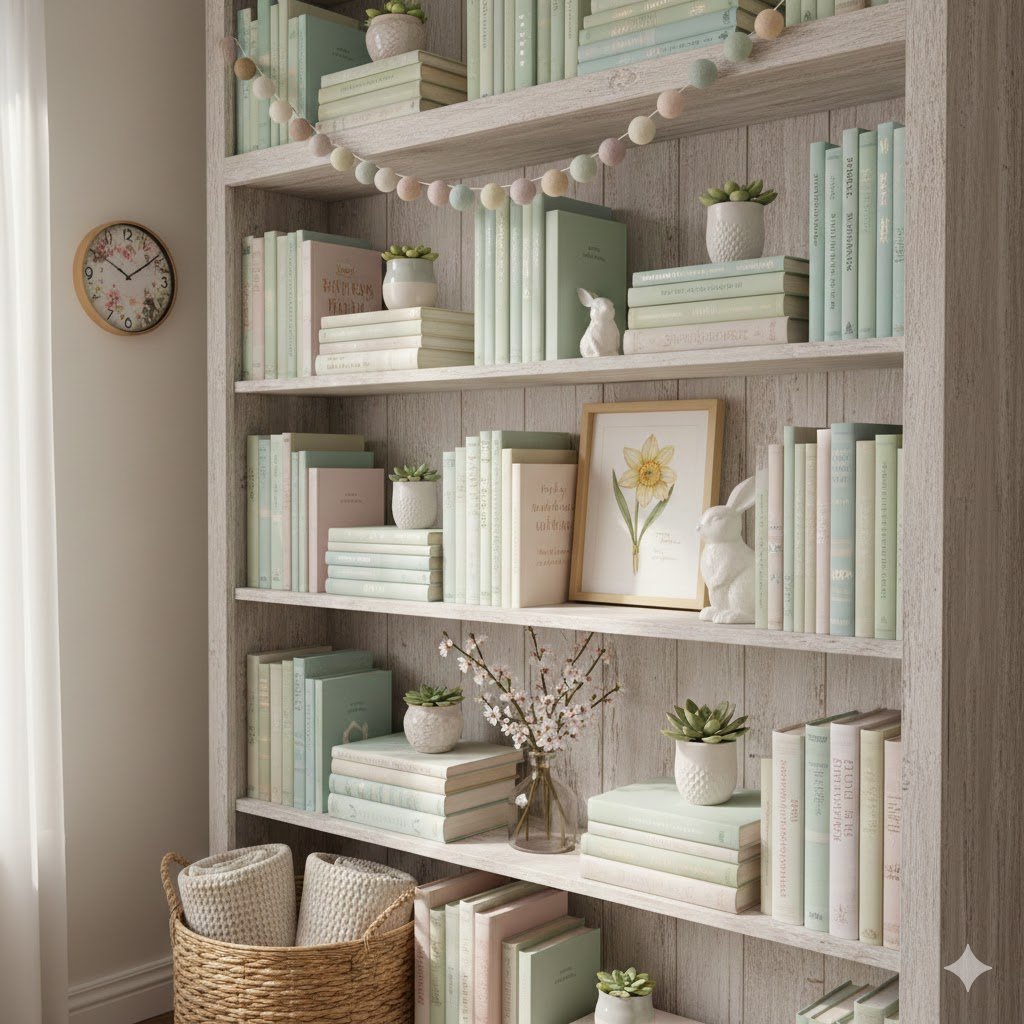
Bookshelves tend to become “clutter magnets” during the winter. We stack books we’ve read, mail we’ve ignored, and heavy decorative objects that feel “grounding.” For spring, you want to introduce negative space. Take everything off the shelves—yes, everything—and wipe them down.
When you put things back, don’t jam them in. Leave some breathing room. Turn some books horizontally, use a few light-colored vases, and maybe a small framed sketch of a landscape. I once over-decorated my shelves so much that the actual shelf bracket gave up and snapped. Lesson learned: less is more.
Try to group items by color or material. Using lighter wood tones or white ceramics will help bounce the light around the room. It’s an easy, free way to make your living room feel curated instead of just “full.”
7. Swap Out Heavy Window Treatments
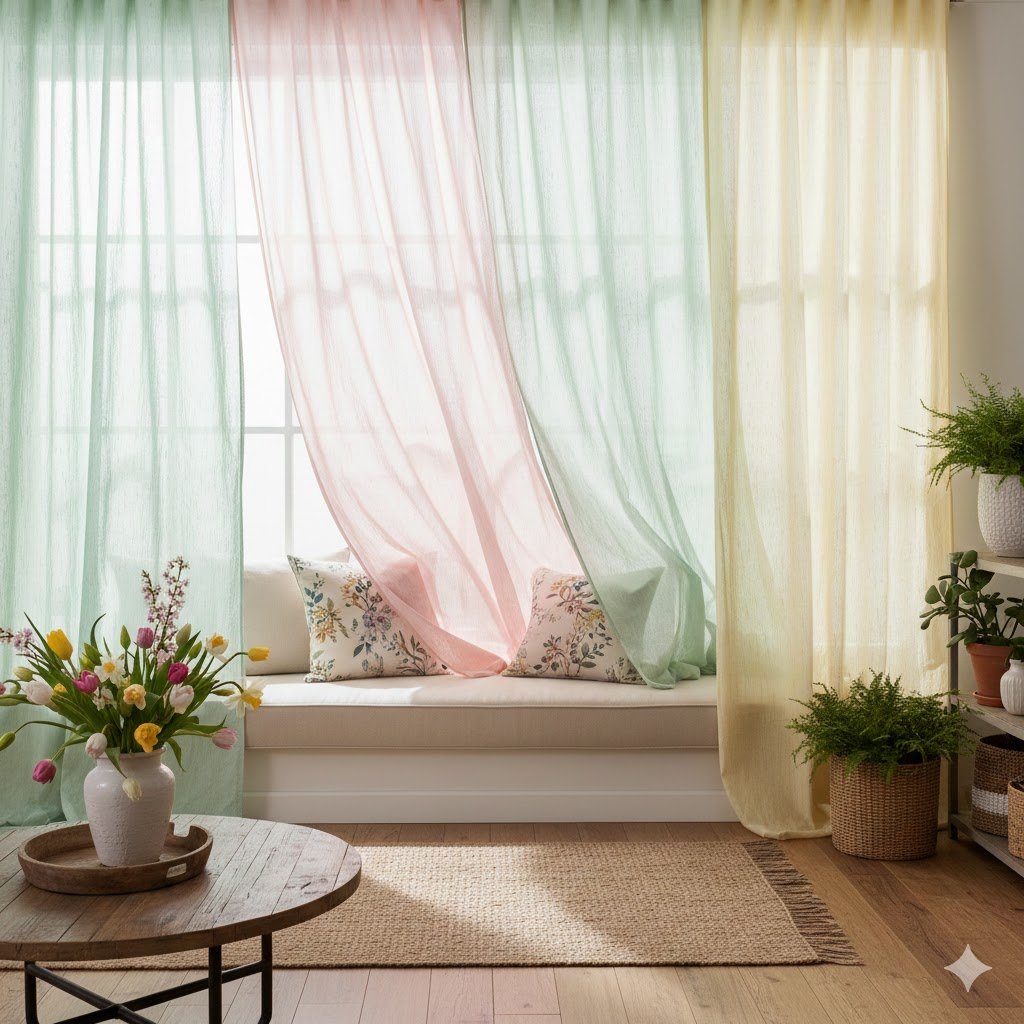
During the winter, we need those thermal-lined curtains to keep the heat in. But come March, they’re just blocking the three hours of sunlight we actually get. I spent one whole year living in a “cave” because I was too lazy to change the drapes. Never again.
Switch to sheer panels or light cotton curtains. If you’re worried about privacy or cold nights, you can layer a sheer behind your heavier curtain and just keep the heavy ones pulled back with a decorative tie. It lets the “milky” early spring light filter in, which is incredibly flattering for your skin and your furniture.
I’ve found that expensive custom drapes are rarely worth it for seasonal swaps. Grab some decent off-the-rack panels and hem them with iron-on tape if they’re too long. It takes twenty minutes and makes the room look like a professional decorator handled it.
8. Rotate Your Artwork
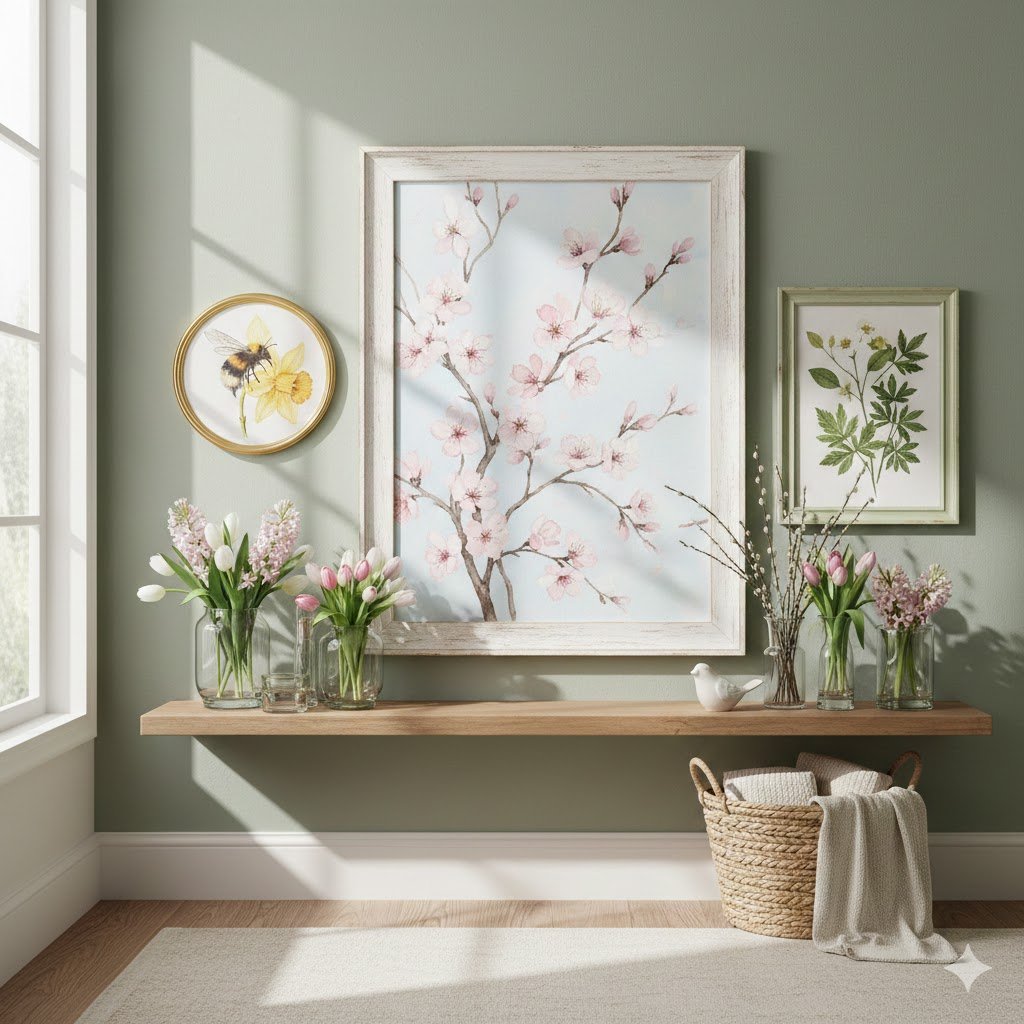
You don’t have to buy a Picasso. Just take down that dark, moody oil painting of a stormy sea and replace it with something lighter. I’m a big fan of botanical prints or simple line drawings for the spring. Even just changing the frames from dark wood to light oak or white can make a massive difference.
I once spent $200 on a “Spring Landscape” only to realize I could have just printed a high-res photo of a local park and put it in an old frame. Check out digital download shops; you can get amazing art for five bucks, print it at the local pharmacy, and you’re done.
Think about the “temperature” of the art. Winter art usually has “cool” blues or very “warm” oranges. Spring art should feel “bright”—think yellows, pale greens, and lots of white space. It’s like giving your walls a breath of fresh air.
9. Lighten the Bedding Layers
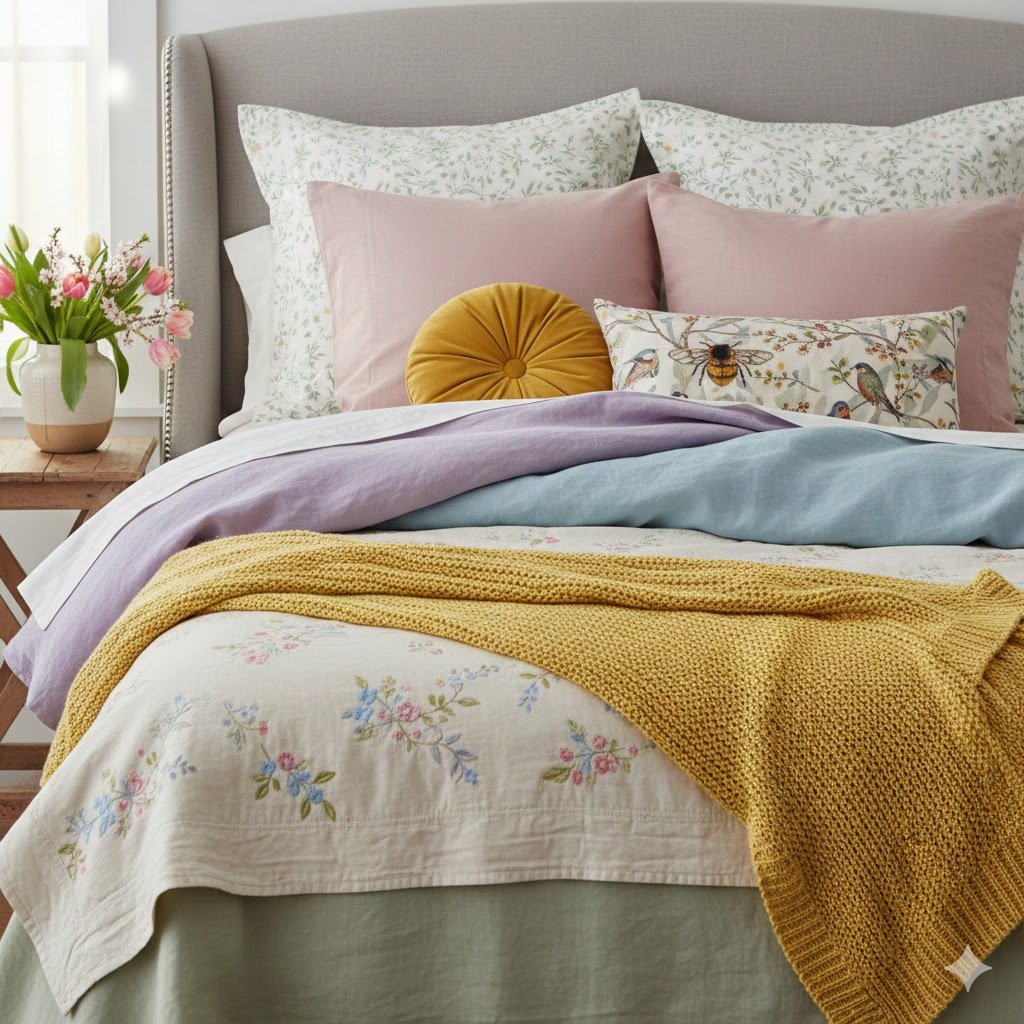
Stop sleeping under a 20-pound duvet the second the nighttime temps hit 45 degrees. You’ll just wake up sweaty and annoyed. I’m a big fan of the “Coverlet Swap.” Pull off the heavy comforter and replace it with a cotton quilt or a textured coverlet.
Layering is key here. Keep a thin blanket at the foot of the bed for those weirdly chilly nights, but make the “base” layer something breathable. If you want that hotel look, use white or light grey sheets. Dark sheets feel like a “cocoon,” which is great for January but feels stifling in April.
Also, flip your mattress! It has nothing to do with decor, but it’s a “spring” thing you should be doing anyway. I forgot to do mine for three years and ended up with a literal valley in the middle of my bed. Your back will thank you.
10. Clear the Kitchen Counters

Winter is for slow cookers and heavy Dutch ovens sitting out on the stove. Spring is for… space. Clear off the counters. I used to leave my massive stand mixer out all year until I realized I hadn’t made bread in months and it was just collecting grease.
Put the heavy appliances away and replace them with a bowl of fresh citrus. Lemons and limes are the ultimate spring decor. They’re bright, they’re cheap, and you can actually eat them. It makes the kitchen feel functional and “zippy.”
While you’re at it, swap your dark dish towels for some bright, checkered, or floral ones. It’s a five-dollar upgrade that makes doing the dishes feel slightly less like a chore. Slightly.
11. Organize the Mudroom (or “The Pile”)
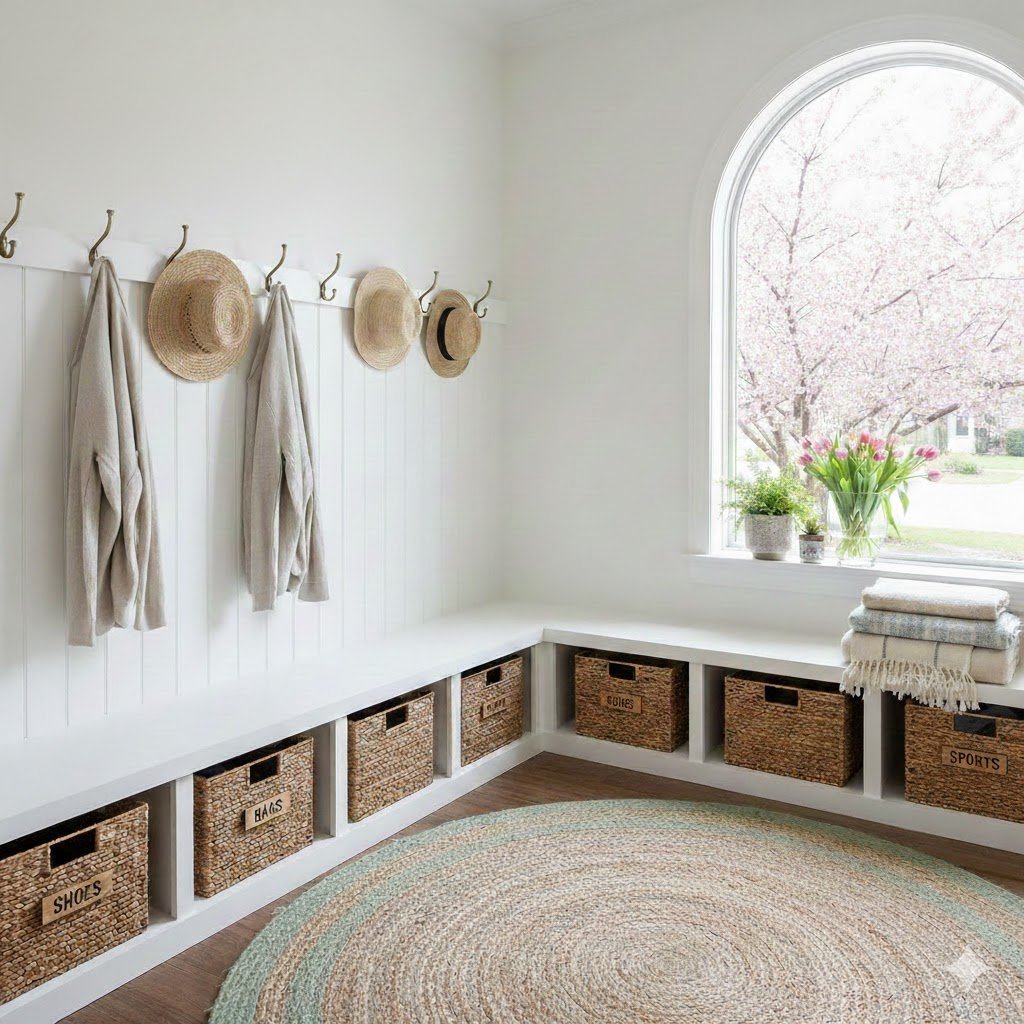
We all have that one chair or corner where the winter coats go to die. By early spring, that pile is a hazard. Clear it out. Move the heavy parkas to the back of the closet and bring out the trench coats and denim jackets.
If you have a dedicated mudroom, swap the heavy boot tray for a smaller one. I’ve found that those giant rubber trays are just “dirt collectors” once the snow stops. A clean, organized entryway makes leaving the house feel less like an expedition and more like a stroll.
Pro Tip: If you have kids, this is the time to check if their rain boots still fit. Nothing ruins a spring walk like a kid with a pinched toe and a soggy sock.
12. Update Your Decorative Hardware
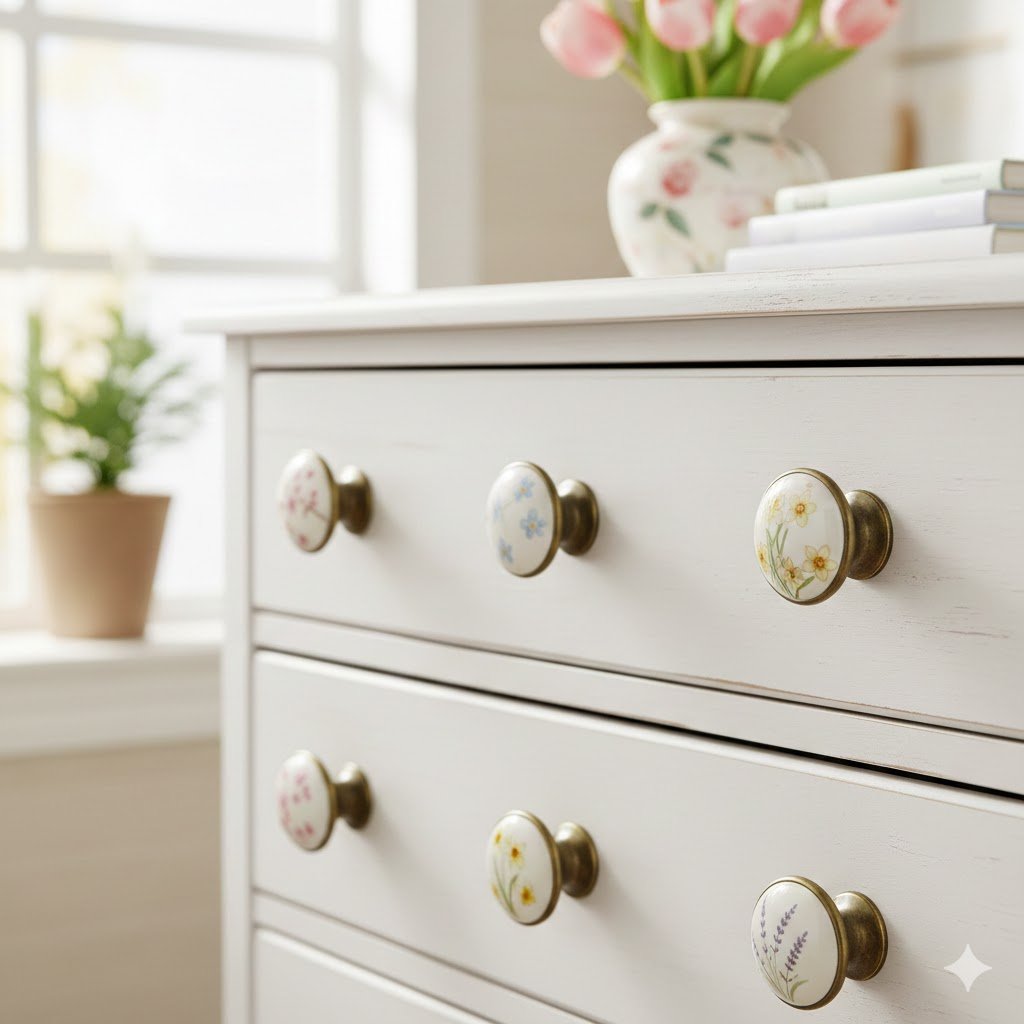
This is a “secret” expert move. Swap out the knobs on your dresser or your kitchen cabinets. It sounds like a lot of work, but it takes ten minutes with a screwdriver. I swapped my heavy bronze kitchen pulls for clear glass and brushed brass last March, and it made the whole kitchen look brand new.
Hardware is the “jewelry” of the home. In winter, we like heavy, rustic, “iron” looks. In spring, we want things that sparkle or feel light. Ceramic knobs with little flower patterns or simple “mother of pearl” pulls are perfect for this.
It’s also an easy way to experiment with trends without committing to a whole piece of furniture. If you’re bored of the “modern farmhouse” look, try some sleek, modern matte black handles. It’s a low-cost thrill.
13. Focus on “Micro-Vignettes”
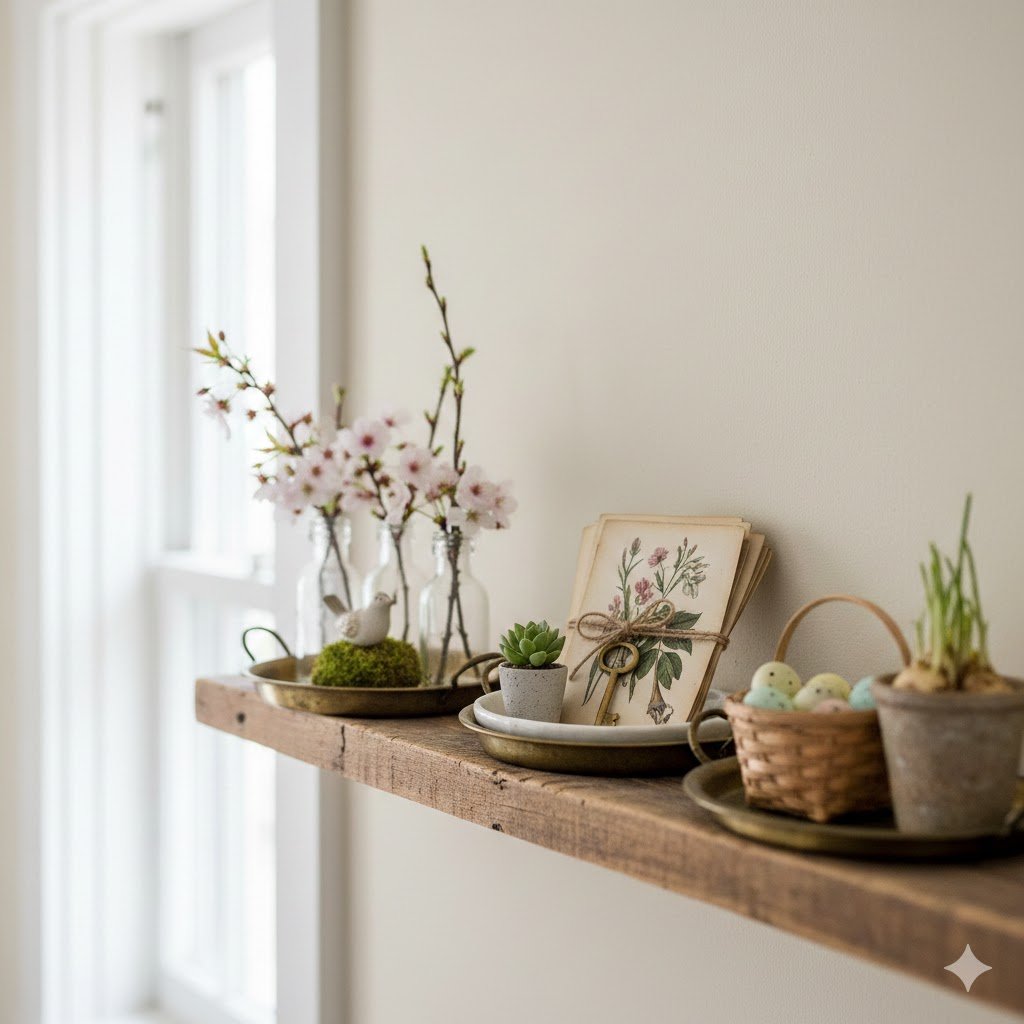
Don’t try to decorate the whole house at once. Focus on small areas—I call them “micro-vignettes.” The coffee table, the nightstand, or a small corner of the kitchen. I once tried to re-do my entire downstairs in a weekend and ended up crying in a pile of bubble wrap.
On a coffee table, stack two or three books with light-colored spines, add a small candle, and a singular bud vase with one green leaf. That’s it. It’s clean, it’s intentional, and it doesn’t look like a hoard.
The goal is “curated,” not “cluttered.” If you can’t see the surface of the table, you’ve gone too far. Spring is about the return of the light, and light needs flat surfaces to bounce off of.
14. Add a Mirror to Bounce Light
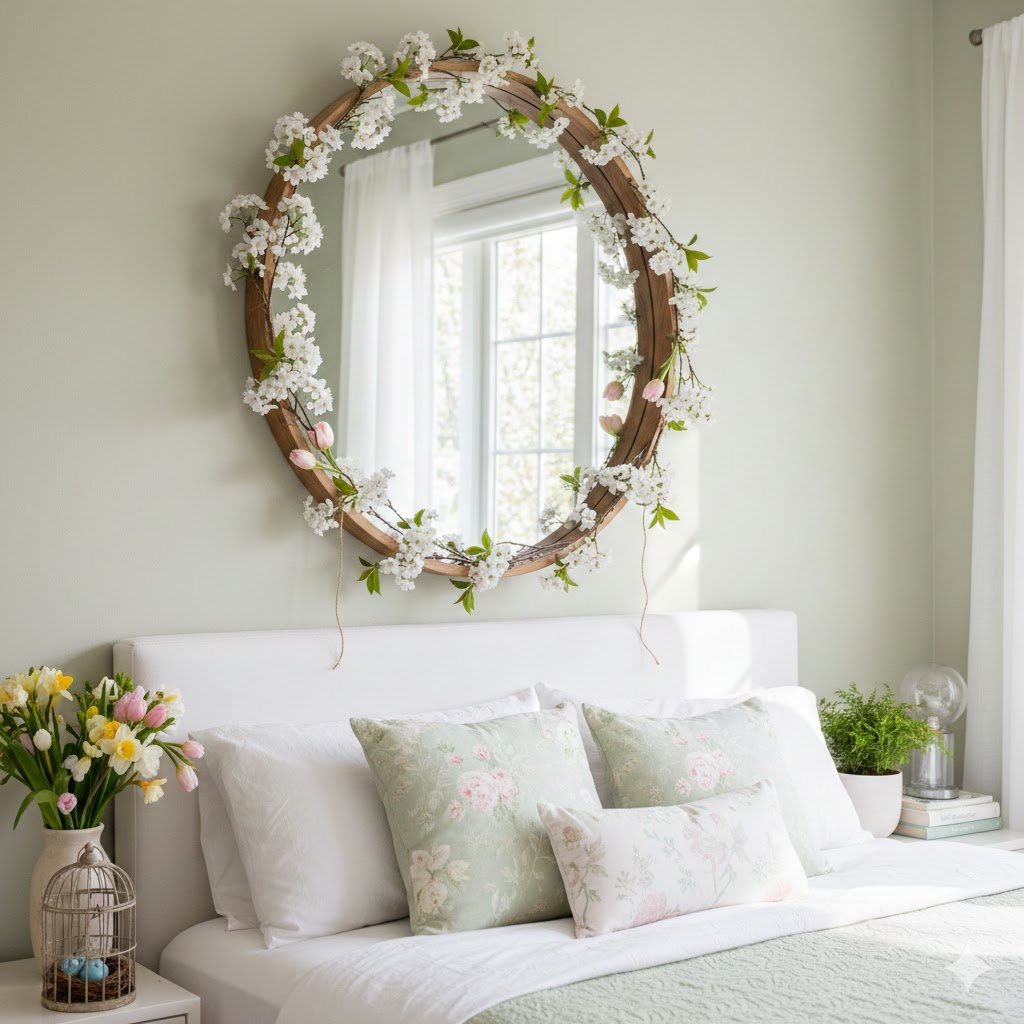
If you have a dark corner that feels like a black hole, hang a mirror. It’s the oldest trick in the book because it works. I put a large floor mirror opposite my main window, and it doubled the amount of “morning” light in the room.
Spring light is notoriously fickle—it’s bright one minute and grey the next. A mirror helps you catch every bit of it. Choose a frame that’s thin or made of a light material like rattan or light wood.
Avoid those heavy, ornate “gold leaf” mirrors unless they really fit your vibe. They can feel a bit “stuffy” for a fresh spring transition. You want something that feels effortless.
15. The “White T-Shirt” Rule for Pillows
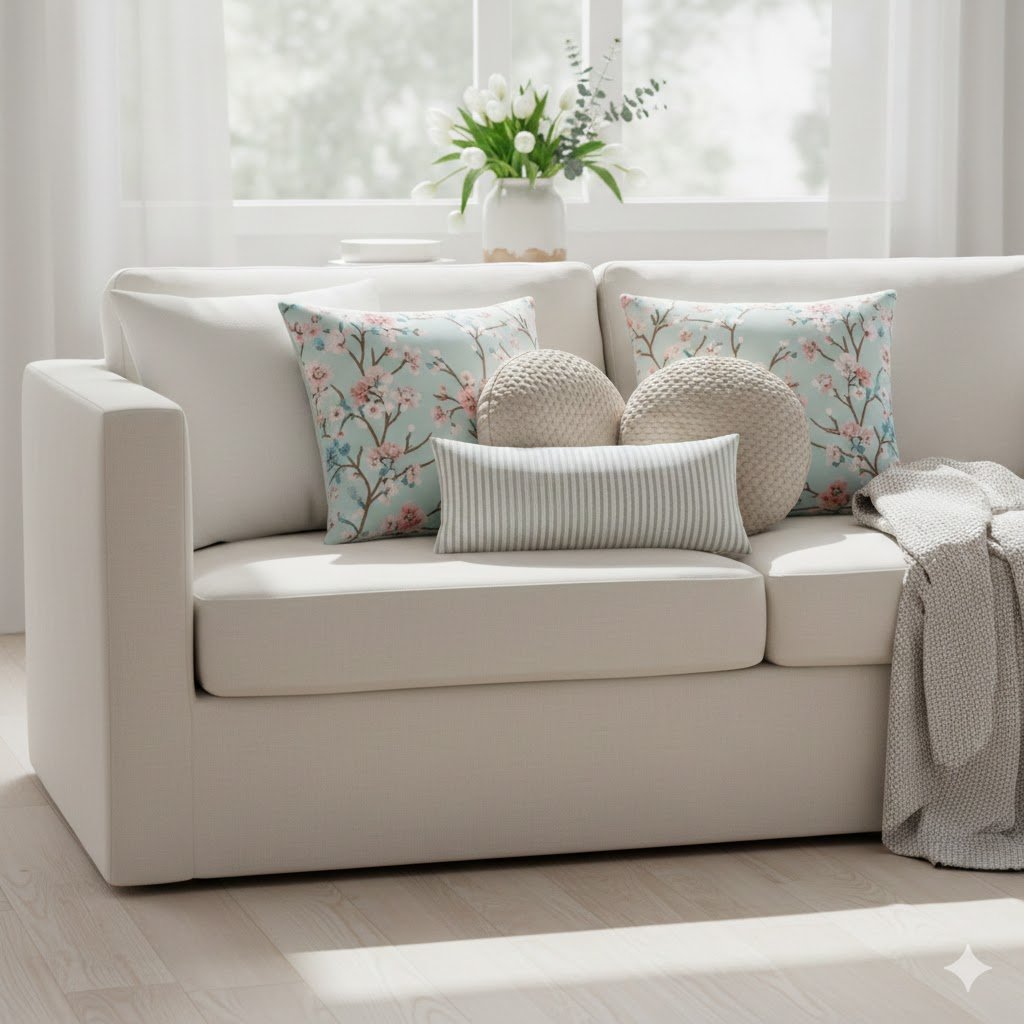
Think of your sofa like an outfit. In winter, you’re wearing a parka. In spring, you want a crisp white T-shirt. Use neutral, creamy, or white pillows as your base. Then, add one “pop” of color—maybe a soft sage green or a pale terracotta.
I’ve found that people go overboard with floral patterns. If every pillow has a different flower on it, your sofa looks like a botanical garden exploded. Use textures instead of patterns. A white waffle-weave pillow is much more “spring” than a cheap polyester floral print.
Also, get rid of the “chopped” pillow look. You know, where people hit the top of the pillow to make a dent? It’s over. Just let them sit there naturally. It feels more relaxed and less “staged.”
16. Clean Your Light Fixtures
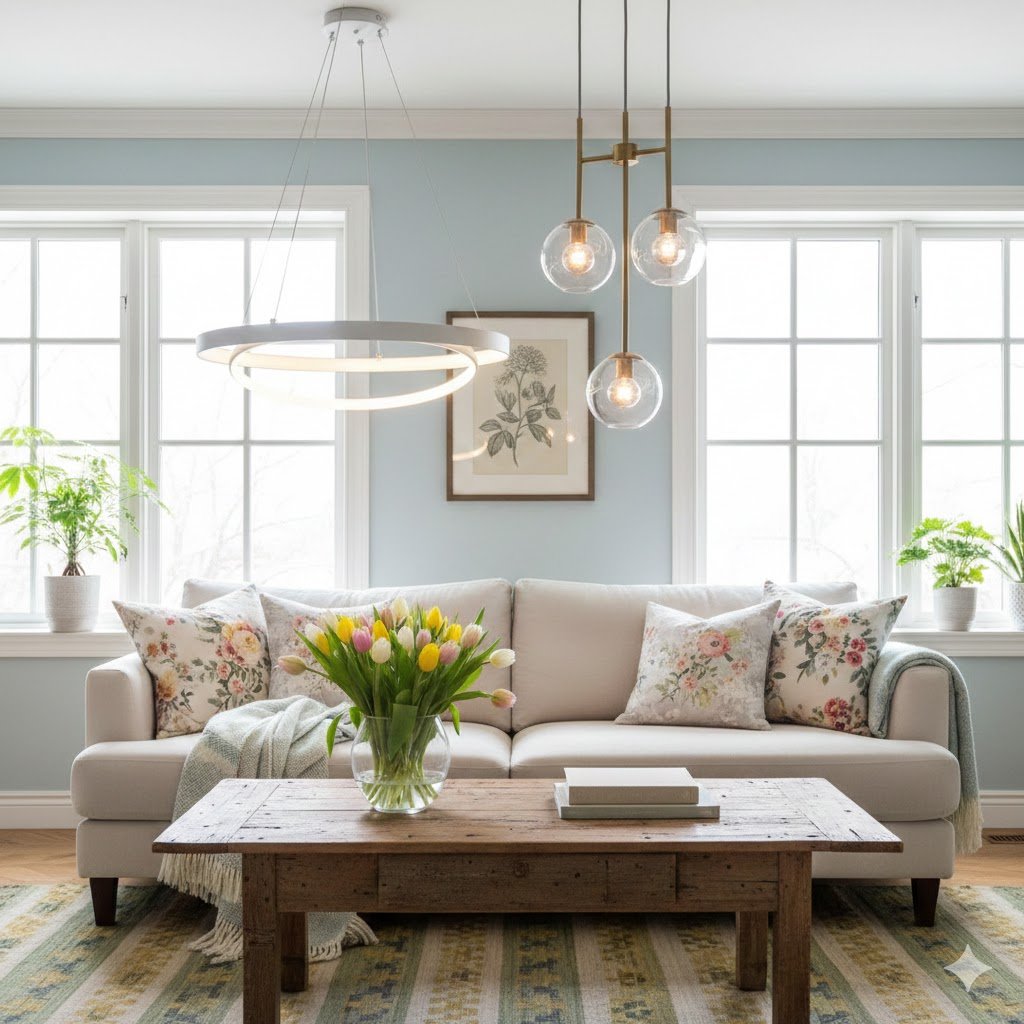
You would not believe how much dust builds up on light bulbs and glass shades during the winter. It’s gross. I took down my dining room chandelier last year and found enough dust to knit a small sweater.
Wipe down the bulbs (when they’re cool!) and wash the glass covers. The light will be sharper and brighter. It’s a “hidden” decor tip that makes the whole room feel cleaner without you having to buy a single thing.
If you have those “warm yellow” bulbs that feel like a fireplace, consider switching to “cool white” or “daylight” bulbs for the spring. It mimics natural sunlight and makes the colors in your room pop.
17. Bonus: Bring the Outside In (Literally)
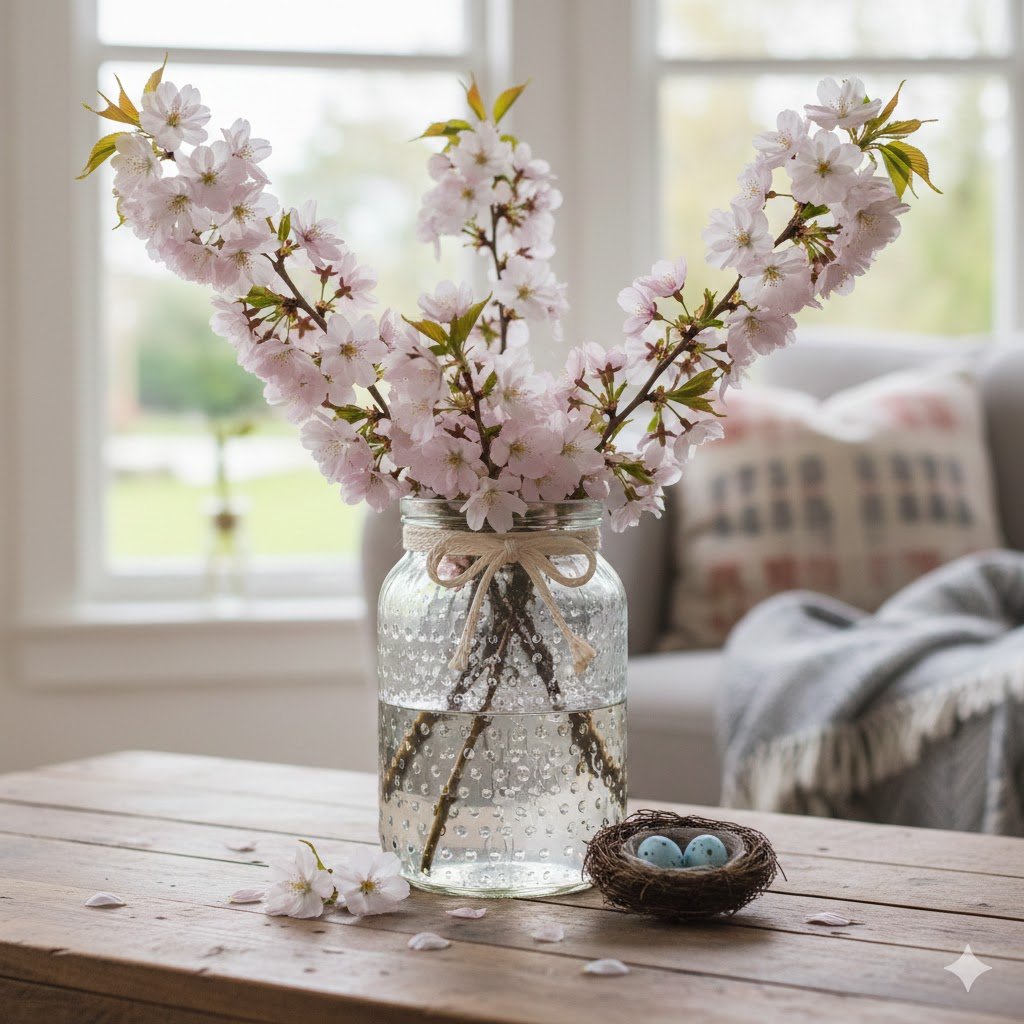
Go outside with a pair of shears. Look for branches that are just starting to bud—forsythia, cherry blossoms, or even just some interesting-looking twigs. Stick them in a tall glass vase with water.
They will “force” bloom inside your warm house within a week. It’s a living sculpture that costs zero dollars. I do this every year with some wild branches from the back of my yard, and it’s always the thing people comment on.
It’s the ultimate “early spring” move because it shows the transition in real-time. Plus, it makes you look like a gardening genius, even if you just found the branch on the ground after a windstorm.
The Real Talk: What’s Not Worth Your Time
Listen, I love a good project, but some things are a total trap.
- Painting your whole house a “spring” color: Don’t do it. You’ll regret that mint green wall in November. Stick to pillows and rugs for color.
- Buying expensive “seasonal” furniture: That wicker chair looks great in a catalog, but it’s uncomfortable for 80% of the year.
- Over-the-top floral arrangements: Giant bouquets of lilies are expensive and die in four days. Stick to a few simple stems or a hardy potted plant.
Parting Wisdom
The biggest mistake you can make is trying to do too much. Your home should evolve with the weather, not compete with it. Start with one room—usually the one where you drink your morning coffee—and go from there. If you change your doormat and your hand towels, you’re already 50% of the way to a spring state of mind.
Which one of these are you going to tackle first this weekend? Or have you found a “spring hack” that I totally missed? Let me know in the comments below—I’m always looking for new ways to hide my winter clutter!