
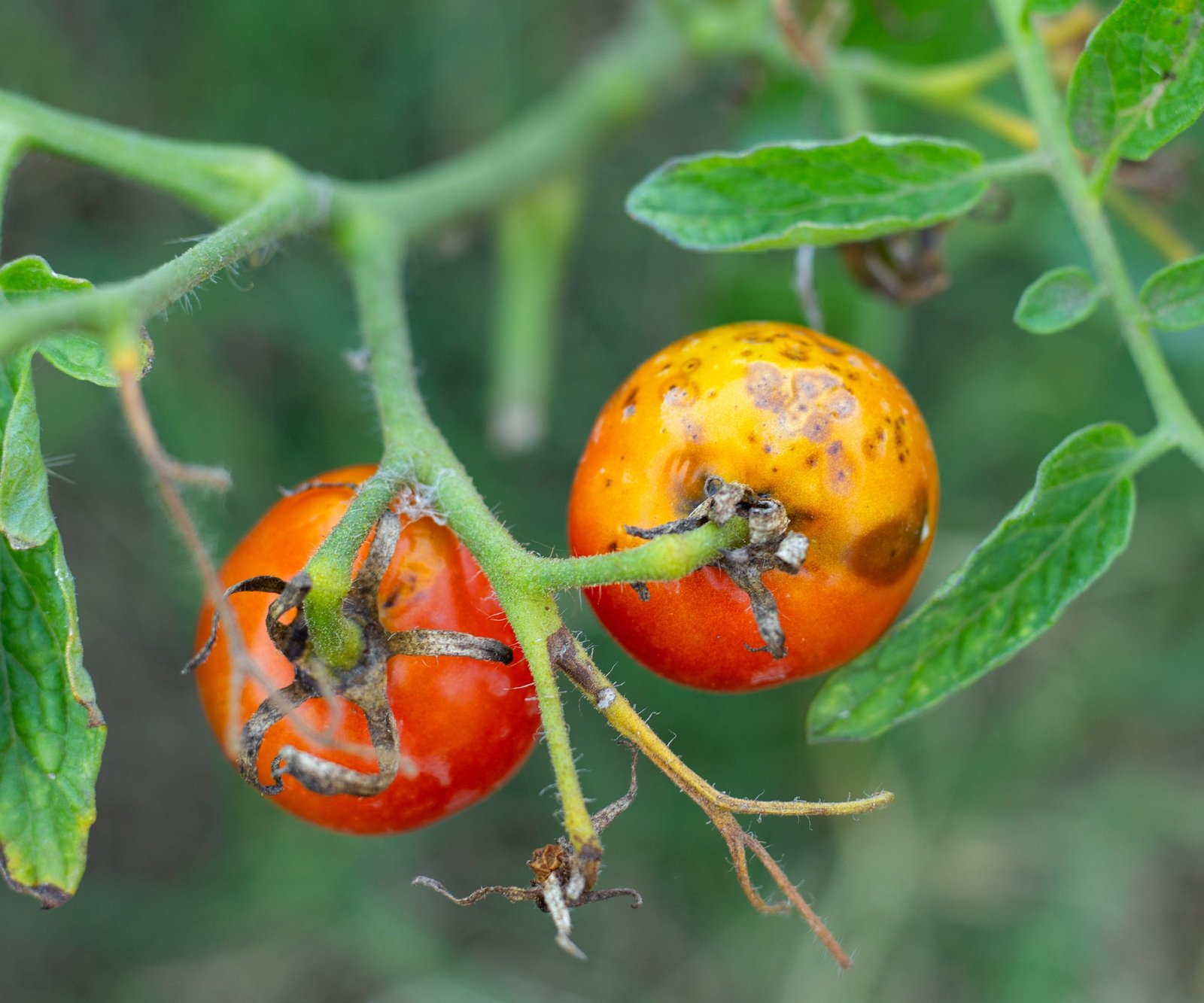
There is nothing more heartbreaking than walking out to your garden with a cup of coffee, expecting to see those prize-winning tomatoes, only to find them covered in a fuzzy, gray coat of mold. It feels like the humidity is literally choking the life out of your hard work. I’ve been there. One summer, my zucchini plants didn’t just grow; they became a giant, mildew-covered blob that looked like a science experiment gone wrong. The air was so thick you could wear it, and my garden paid the price.
If you are tired of watching your rose leaves turn yellow and drop or seeing your cucumbers melt into a pile of mush, you aren’t alone. Humidity is a fungal disease’s best friend, but it doesn’t have to be the end of your gardening season. We are going to talk about how to stop these spores in their tracks without reaching for the heavy-duty chemicals that ruin your soil and scare off the bees.
Best Spacing for Airflow to Stop Powdery Mildew
When I first started gardening, I wanted to cram every single seedling I bought into the smallest space possible. I thought more plants meant more food. I was wrong. What I actually grew was a high-density apartment complex for spores. When your plants are touching, they create “dead zones” where air just sits and rots. In a humid climate, stagnant air is your biggest enemy.
I now follow the rule of “aggressive spacing.” If a seed packet says to space plants 18 inches apart, I usually give them 24. It might look a bit sparse in June, but by August, when the humidity hits 90%, you’ll be glad for every inch. This extra room allows the breeze to move through the foliage and dry off the leaves after a morning dew or a rainstorm.
Think of air as a natural leaf-dryer. If the leaves stay wet for more than a few hours, you are basically inviting fungus to dinner. I’ve found that even a slight breeze can be the difference between a healthy harvest and a total crop failure. If you have a walled-in garden or a spot where the air doesn’t move, you might even consider thin lattice fencing instead of solid wood to keep things moving.
Don’t be afraid to pull out a plant if it’s getting too crowded. It feels like a waste, but losing one plant to save the other ten is a trade I will make every single day. I once tried to save a crowded row of snap peas by “weaving” them together—big mistake. Within a week, the whole row was white with powdery mildew. Now, I give them room to breathe, and my lungs (and theirs) are much happier for it.
Pruning Techniques for Increased Garden Ventilation
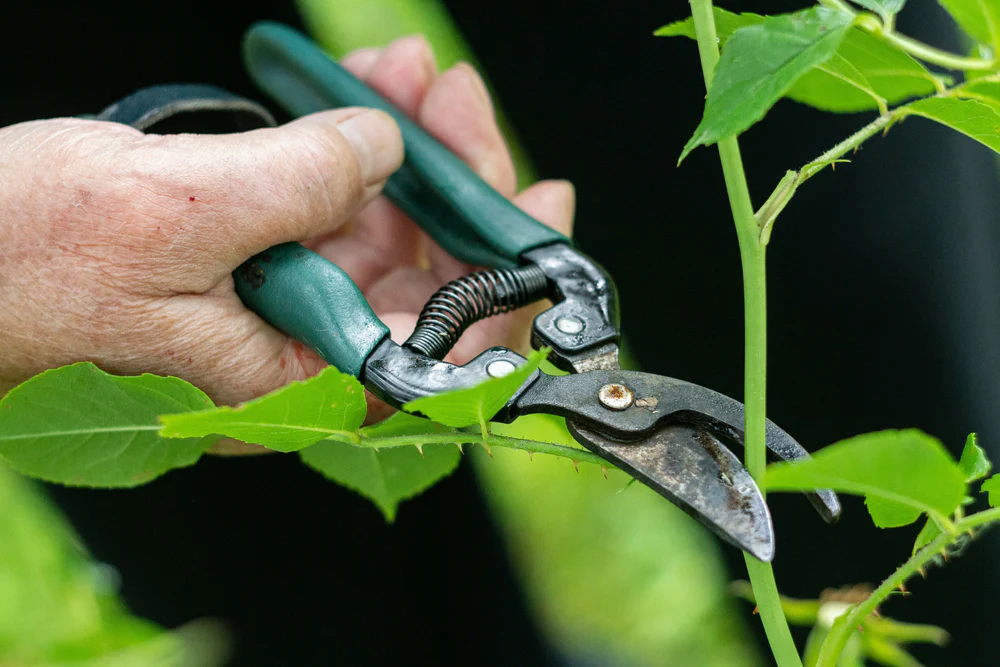
If you aren’t using your pruners, you aren’t gardening. Most people are terrified to cut their plants, but I promise you, your tomatoes actually want you to take a little off the top (and the bottom). I spent years letting my tomato plants grow into giant, unruly bushes because I thought more leaves meant more energy for the fruit. All it actually meant was that the inner stems never saw the sun and stayed damp all day long.
The most effective thing I do now is “lollipopping” my plants. I strip away all the leaves from the bottom 12 inches of the main stem. This prevents soil-borne fungi from splashing up onto the foliage when it rains. It also creates a clear tunnel for air to flow right at the base of the plant where moisture tends to settle. It looks a bit funny at first, but it is a total game-changer for blight prevention.
Beyond the bottom leaves, you need to look at the “elbows” of your plants. In tomatoes, these are the suckers that grow in the crotch between the main stem and a branch. If you let every sucker grow, you end up with a tangled mess. I prune most of them out to keep the center of the plant open. If I can’t see through my tomato plant to the other side, it’s too thick.
I also take this approach to my perennial flowers. My phlox used to get covered in white dust every single July. Now, I go in during the late spring and cut out about a third of the stems right at the ground. This thins out the clump. The remaining stems grow stronger, the flowers are bigger, and because there is air moving between them, the mildew never gets a foothold. It’s a bit of extra work in May that saves me hours of frustration in August.
How to Water Plants Without Causing Fungus
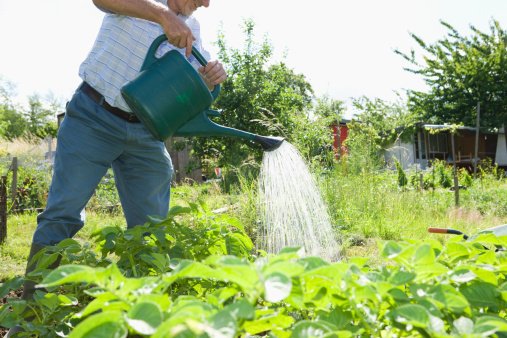
I’m going to be blunt: if you are watering your garden with an overhead sprinkler in the evening, you are basically hand-delivering disease to your plants. I did this for years because it was “easy.” I’d come home from work, turn on the hose, and soak everything. Then the sun would go down, the leaves would stay wet all night, and by morning, the spores had already moved in.
The best investment I ever made wasn’t some fancy tool; it was a simple soaker hose. These hoses leak water slowly directly into the dirt. This keeps the leaves bone-dry while getting the moisture right where the roots need it. If you can’t afford a whole irrigation system, just use a watering can and pour it at the base of the stem. It takes longer, but it’s a lot cheaper than buying new plants every month.
Timing is everything, too. I’m a firm believer in “Early Morning or Not at All.” I aim to have my watering finished by 8:00 AM. This gives the sun all day to evaporate any stray drops that accidentally hit the foliage. If you water in the heat of the afternoon, you lose too much to evaporation. If you water at night, you’re creating a fungal playground.
I once tried one of those “automated” systems that went off at 6:00 PM. Within two weeks, my roses looked like they had been dipped in black ink. Black spot thrives in that overnight dampness. I scrapped the timer and went back to my morning routine. If I miss the morning window, I just wait until the next day. A slightly thirsty plant is usually better off than a moldy one.
Soil Management and Mulching for Disease Control
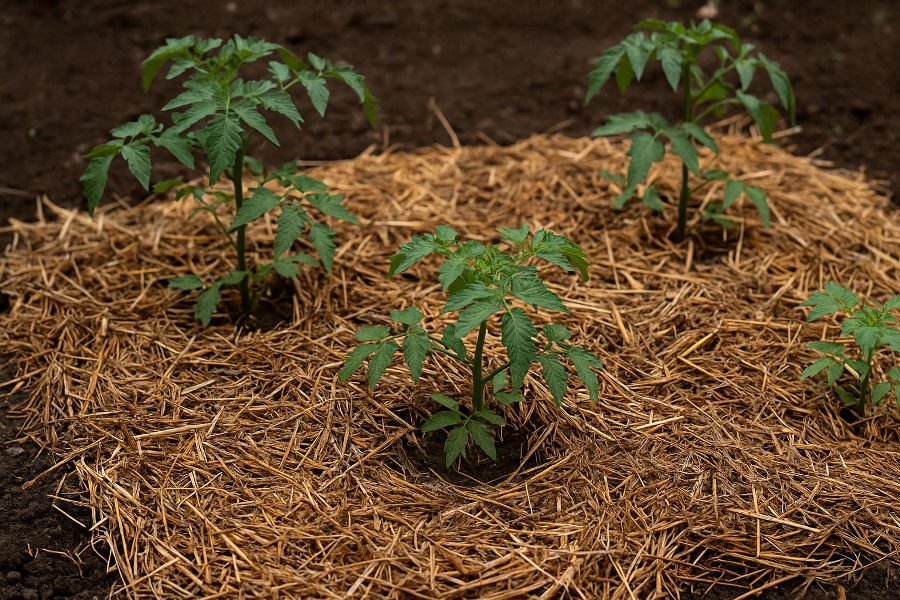
We spend so much time looking at the leaves that we forget the fungus is often living in the dirt. Many fungal spores, like those that cause septoria leaf spot, live in the soil and wait for a rainstorm to splash them up onto your plants. If your soil is bare, you’re asking for trouble. I used to leave my garden beds “clean” (aka naked soil), thinking it looked neater. All it did was turn my garden into a mud-splatter zone.
Now, I am a mulch fanatic. A thick layer of straw, shredded leaves, or wood chips acts like a physical barrier. When it rains, the water hits the mulch instead of the dirt, so the spores stay trapped underground. It also keeps the soil temperature steady, which reduces stress on the plants. Stressed plants are like tired people—they catch every “cold” that goes around.
However, you have to be careful about what kind of mulch you use. I once used some “free” hay I found on the side of the road. Big mistake. It was full of weed seeds and was so compacted that it actually held too much moisture against the stems of my peppers, causing them to rot. Now I stick to clean, weed-free straw or high-quality compost.
I also make sure to “top-dress” with fresh compost every spring. Healthy soil is full of beneficial bacteria and “good” fungi that actually fight off the bad guys. Think of it like a probiotic for your garden. If your soil is dead and sandy, the pathogenic fungi have no competition and will take over. I treat my soil like a living thing, and in return, it helps keep my plants from getting sick.
DIY Natural Fungicide Recipes That Actually Work
I’ve tried every “home remedy” on the internet, and most of them are total garbage. I once spent a week spraying my cucumbers with diluted chamomile tea because a blog told me it worked. Spoilers: it didn’t. The mildew loved it. But through a lot of trial and error (and a lot of dead plants), I’ve found two recipes that I swear by.
The first is the Baking Soda Spray. This is great for powdery mildew because it changes the pH on the leaf surface, making it an “unfriendly” place for spores to grow. I mix one tablespoon of baking soda with half a teaspoon of liquid soap (not detergent!) in a gallon of water. You have to spray this as a preventative, though. Once the plant is covered in fungus, this won’t “cure” it, but it will stop it from spreading to the neighbors.
The second—and my personal favorite—is the Milk Spray. I know it sounds gross, but it works. Mix 40% milk with 60% water. Scientists aren’t entirely sure why it works, but it seems to have a protein that, when exposed to sunlight, creates a mild antiseptic effect. I’ve used this on my squash for years, and it keeps them green way longer than the untreated ones. Just don’t use it if it’s going to rain right away, or you’re just pouring milk on the ground for no reason.
A Quick Side Note on Copper Fungicides: If things get really bad, some people suggest copper sprays. Personally, I find they build up in the soil over time and can be toxic to earthworms. I’d rather lose a few tomatoes than kill off my worm population. Stick to the baking soda and milk unless you’re truly desperate.
The “Real Talk” on What’s Not Worth Your Time
Let’s be honest for a second: some plants just aren’t meant for humid climates. I spent years trying to grow heirloom tomatoes that were bred for the dry hills of Italy. Every year, they would succumb to blight before I got a single red fruit. It was a waste of money, time, and emotional energy. Now, I specifically look for “VFN” (Verticillium, Fusarium, Nematodes) resistant varieties or anything labeled “Blight Resistant.” It’s not “cheating”—it’s being smart.
Also, those “decorative” garden statues and tight-knit trellises? They look great on Pinterest, but they are often wind-blockers. If you have a beautiful stone wall, don’t plant your most disease-prone roses right against it. They’ll get no airflow and will be covered in black spot by June. Give your plants the “prime real estate” where the wind blows.
Lastly, don’t bother “treating” a plant that is more than 50% gone. If it looks like a lost cause, pull it out, bag it (don’t compost it!), and get it out of the garden. Keeping a dying, diseased plant around is just keeping a spore factory open next door to your healthy plants. It’s hard to do, but sometimes you have to be the “garden reaper” to save the rest of the harvest.
Wrapping Up
The big takeaway here is that you can’t control the weather, but you can control how your garden reacts to it. By spacing things out, pruning for air, and watering the dirt instead of the leaves, you’re doing 90% of the work. Gardening in high humidity is a bit of a chess match, but as long as you stay one step ahead of the spores, you’ll come out on top.
What’s the one plant that always seems to get “the fuzz” in your garden no matter what you do? Drop a comment below or ask me about a specific DIY remedy you’ve been curious about—I’ve probably tried it (and potentially regretted it) already!