
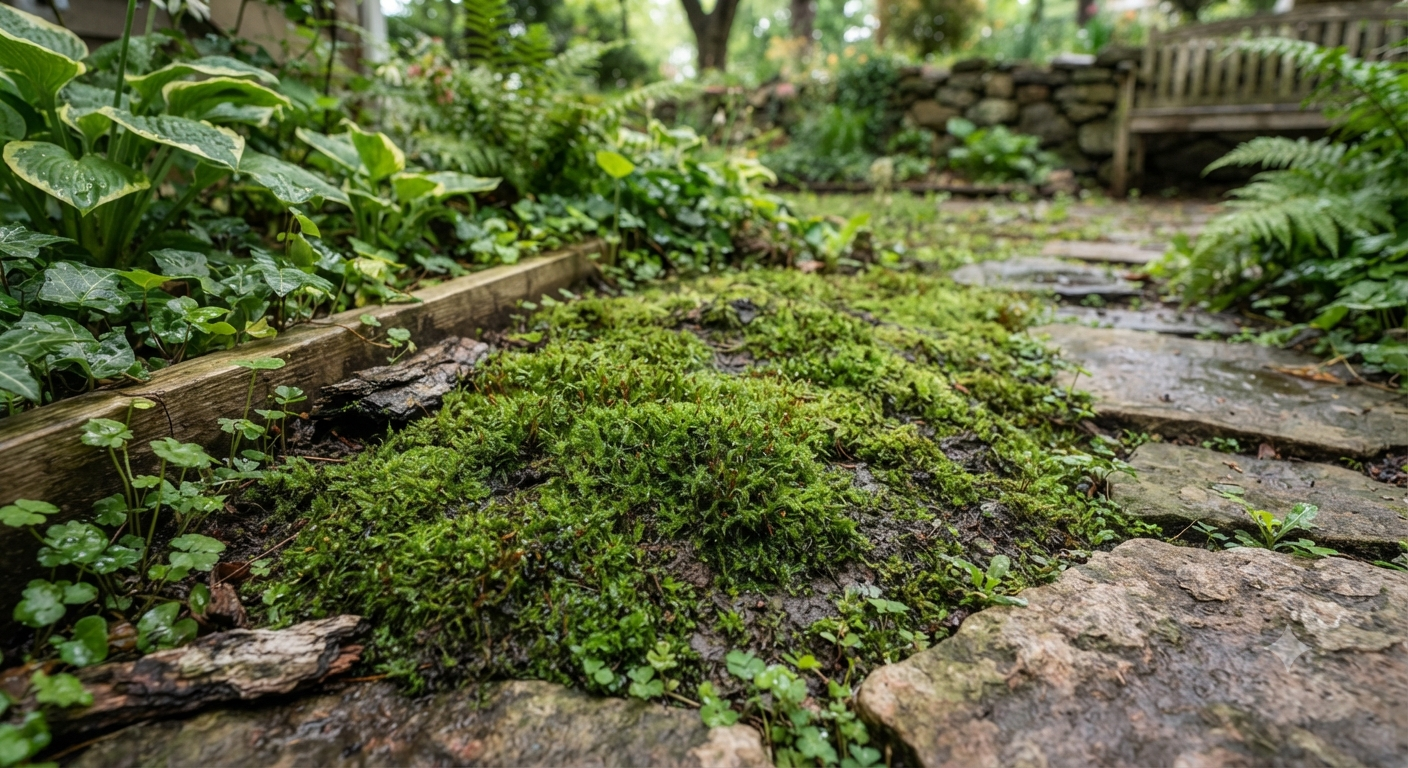
You step outside on a Saturday morning, coffee in hand, ready to admire your lawn. Instead, you find another green, spongy patch creeping across what used to be grass. You poke it. It’s soft. Almost springy. That’s moss, and it’s not going anywhere on its own.
If you’re tired of watching moss take over one shady corner after another, you’re in the right place. I’ve spent more Saturdays than I’d like to admit on my hands and knees, raking the stuff out by hand, only to watch it show back up six weeks later. The problem isn’t the moss itself. The problem is almost always something underneath it that nobody bothers to fix.
This guide walks through exactly how to remove moss the natural way, and more importantly, how to stop it from coming back. No harsh chemical moss killers required.
I’ll be straight with you: there’s a lot of bad moss advice floating around out there. Half the internet tells you to spray something toxic and call it a day. The other half tells you moss is basically unbeatable, so don’t even bother. Neither one is true. Moss is beatable, but only if you treat it as a soil and light problem first, and a “green stuff on my lawn” problem second.
Why Moss Is Taking Over Your Lawn in the First Place
Moss doesn’t invade healthy grass. It moves into weak spots where grass is already struggling. Think of it as a symptom, not the disease itself.
Here’s what usually invites moss in:
- Too much shade. Grass needs a solid 4-6 hours of direct sun to grow thick and outcompete anything else. Moss, on the other hand, thrives in low light. My neighbor’s oak tree drops so much shade on my side yard that grass has basically given up over there, and moss moved in like it paid rent. It’s one of those situations where you can pour every bag of grass seed you own into that patch and moss will still win, simply because sunlight is the one thing you can’t fake.
- Compacted soil. When soil gets packed down from foot traffic, mower wheels, or kids doing cartwheels in the same spot every day, grass roots can’t get the oxygen and water they need. Moss doesn’t care. It sits right on top of compacted soil and thrives. You can usually spot compaction by pushing a screwdriver into the ground. If it takes real effort to get it a few inches deep, that soil is packed tight enough to be choking your grass roots.
- Poor drainage. Moss loves damp, soggy ground. If water pools in certain spots after rain, or your lawn stays wet longer than the rest of the yard, that’s basically a welcome mat for moss.
- Acidic soil. Grass prefers a slightly acidic to neutral pH, somewhere around 6.0 to 7.0. Once soil dips much lower than that, grass roots weaken and moss steps right in, since it tolerates acidic conditions just fine.
- Low soil fertility. Thin, malnourished soil grows thin, malnourished grass. Moss isn’t picky about nutrients the way turfgrass is, so it fills in the gaps grass leaves behind.
Once you know which of these is happening in your yard, everything else on this list makes a lot more sense.
How to Remove Lawn Moss Naturally: Step by Step
Step 1: Test Your Soil pH First
Before you do anything else, grab a soil pH test kit from a garden center or hardware store. They’re cheap, usually under fifteen dollars, and take about ten minutes to use.
If your pH comes back below 6.0, that acidic soil is very likely feeding the moss problem. This single test can save you weeks of guessing.
Step 2: Rake Out the Existing Moss
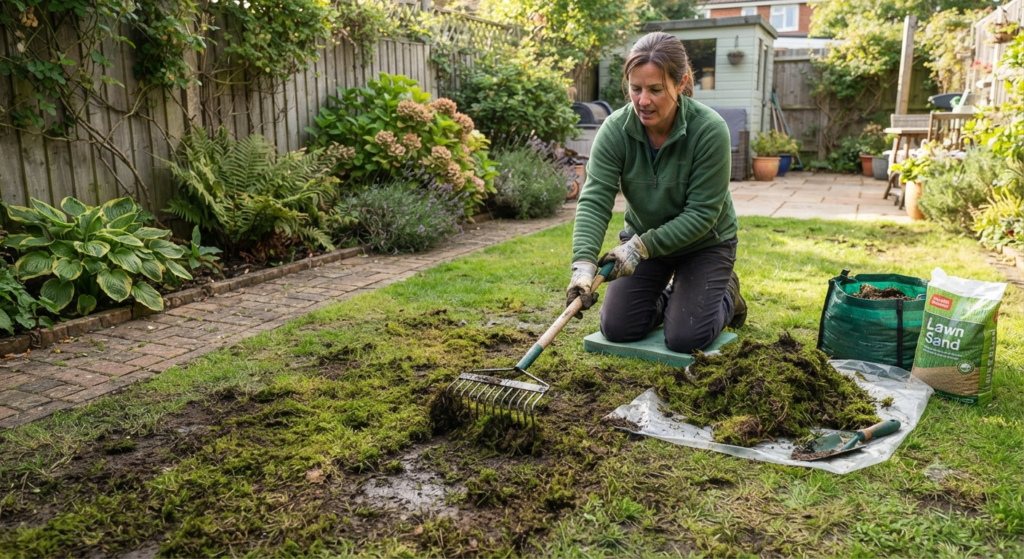
You have to physically remove what’s already there before any long-term fix will work. A dethatching rake (sometimes called a moss rake) works best for this job.
- Rake firmly against the grain of the moss, digging into the soil surface a bit.
- Pull up as much moss as you can in sections, working in small areas so you don’t lose steam halfway through.
- Bag it up and toss it in the compost or yard waste bin. Don’t leave clumps sitting on the lawn, since they’ll just re-root given the chance.
For smaller patches, a stiff garden rake does the job fine. For anything covering more than a few hundred square feet, renting a power dethatcher from a hardware store will save your back and your Saturday.
Step 3: Apply Lime to Raise Soil pH
If your soil test showed acidic soil, this step matters more than almost anything else on this list. Garden lime (calcium carbonate) raises soil pH gradually and naturally, making the ground less hospitable to moss and more welcoming to grass.
Spread lime according to the bag’s instructions, which usually depends on how acidic your soil is and how large the area is. Fall and early spring are the best windows for application, since lime needs time to work into the soil before the growing season kicks into high gear.
Quick side note: don’t apply lime and fertilizer on the same day. Give it a week or two between the two, or you risk them canceling each other out.
Step 4: Improve Drainage and Break Up Compacted Soil
This is the step most people skip, and it’s usually the one that actually solves the problem long-term.
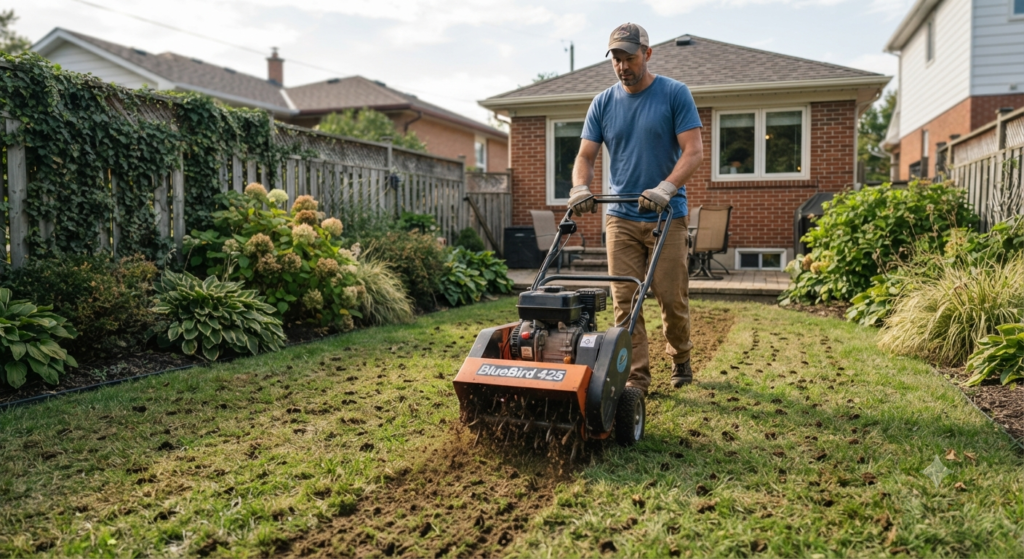
Core aeration is the natural, non-chemical way to fix compacted soil. It involves pulling small plugs of soil out of the lawn, which opens up space for air, water, and nutrients to reach grass roots again.
- Rent a core aerator from a hardware store, or hire someone if you’d rather not wrestle a machine around your yard.
- Run it over the affected area, making two passes in different directions for stubborn compaction.
- Leave the soil plugs on the lawn. They’ll break down naturally and feed the soil.
For drainage issues specifically, consider adding a layer of compost or sand to low-lying areas that collect water. In extreme cases, a French drain might be worth the investment, though that’s a bigger project than most moss problems call for.
Step 5: Let in More Light
If shade is your main culprit, you’ve got two honest options: thin out the tree canopy above the moss, or accept that grass isn’t going to win that fight and switch to a shade-tolerant ground cover instead.
Pruning overhanging branches to let more dappled sunlight through can make a real difference, even if you only manage a few extra hours of sun per day. I did this with a maple tree that was choking out my back corner, and within one growing season, grass finally had a fighting chance.
If cutting branches isn’t an option (maybe it’s your neighbor’s tree, or you just love the shade), consider overseeding with a shade-tolerant grass blend, or leaning into moss-friendly ground covers like creeping thyme or Irish moss as an intentional design choice instead of fighting it.
Step 6: Boost Soil Fertility With Compost
Thin, nutrient-poor soil struggles to support thick grass, which leaves the door wide open for moss. Top-dressing your lawn with a half-inch layer of compost gives grass roots the nutrients they need to fill back in.
Spread it evenly across the affected area, then water it in well. Compost also improves soil structure over time, helping with both drainage and moisture retention depending on what your yard needs.
Step 7: Overseed the Bare Patches
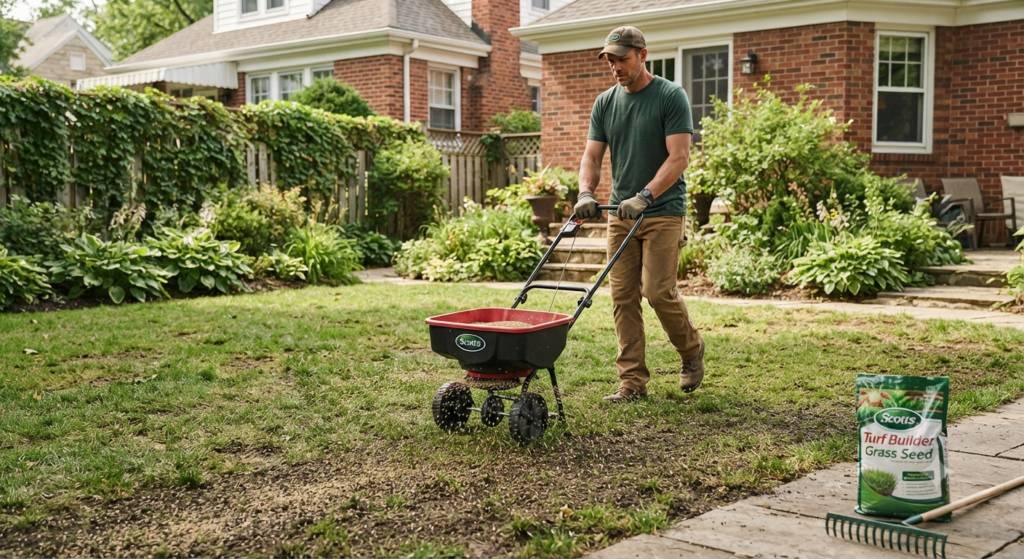
Once you’ve raked out the moss, adjusted the pH, aerated, and added compost, it’s time to give grass a real shot at reclaiming that ground. Bare soil left uncovered is basically an open invitation for moss to move right back in.
- Choose a grass seed blend suited to your light conditions (there are dedicated shade mixes for this).
- Spread seed evenly over the bare patches.
- Keep the area consistently moist, watering lightly once or twice a day until you see germination.
- Avoid heavy foot traffic on the area until the new grass is established.
This is the step that actually locks in your progress. Everything before it just clears the way and improves conditions. Overseeding is what puts grass back in charge of that territory instead of leaving bare dirt for moss spores to colonize the second you look away. I’ve skipped this step before, thinking the soil fixes alone would be enough, and ended up with bare patches that turned right back into moss by the following spring. Don’t make that mistake.
Natural Moss-Killing Remedies People Ask About
I get asked about home remedies for moss removal constantly, so let’s run through the popular ones.
- Baking soda. Sprinkling baking soda directly on moss can dry it out and kill it within a few days. It works because it raises the pH right at the surface, which moss hates. This is a decent option for small, isolated patches like moss growing between pavers, but I wouldn’t recommend it for a large lawn area since you’d need an enormous amount.
- Dish soap and water spray. A mix of dish soap and water, sprayed directly on moss, can dehydrate it over a few sunny days. It’s cheap and easy, though results are inconsistent and it won’t address whatever’s causing the moss to grow there in the first place.
- Corn gluten meal. This is more of a preventative than a cure. It’s often marketed as a natural pre-emergent, and while it’s better known for stopping weed seeds from germinating, some gardeners swear it discourages moss spores too. I’ve found the evidence here is mixed at best, so don’t count on it as your main strategy.
None of these remedies fix the underlying shade, compaction, drainage, or pH issue. They just knock back what’s already growing. If you skip the soil work in the section above, the moss will be back before you know it.
Real Talk: What’s Not Worth the Effort
Let’s be honest about a few things, because plenty of moss advice online oversells what actually works.
- Chemical moss killers give you a false sense of victory. Yes, they’ll blacken and kill the moss you see within days. But if you don’t fix the soil conditions underneath, you’re just clearing space for the next batch of moss spores to move in. I’ve watched people spray the same patch three summers in a row and wonder why nothing changes. It’s satisfying in the short term, since black, dead moss looks like progress, but it’s basically the lawn care equivalent of hitting snooze instead of getting out of bed. The problem is still there waiting for you.
- “Just add more grass seed” doesn’t work in heavy shade. I wasted an entire spring reseeding a patch under a big maple tree, convinced that enough seed would eventually out-compete the moss. It never took. Grass genuinely cannot photosynthesize its way through deep shade, no matter how many bags of seed you throw at it. At some point, working with the shade instead of against it is the smarter move.
- Vinegar is popular advice, but it’s risky. A lot of blogs recommend spraying vinegar on moss. It can work, but household vinegar is acidic, and repeated use can actually lower your soil pH over time, which is the exact opposite of what you want if acidity caused the moss problem to begin with. If you use it, spot-treat carefully and don’t make it a habit. I tried this on a small brick pathway once and it did knock the moss back, but I noticed the grass edging the path looked a little worse for wear afterward too. Vinegar doesn’t discriminate between moss and grass, so precision matters more than people give it credit for.
- Moss removal is not a one-and-done job. Even after you fix drainage, pH, and shade, moss spores are everywhere and will try again given the right conditions. Plan on a light yearly check-up, especially in damp, shady corners, rather than expecting to solve it permanently in one weekend.
When to Just Let the Moss Win
Sometimes the smartest move is admitting grass was never going to thrive in that spot anyway. Deep, permanent shade under mature trees, north-facing slopes that barely see sun, or areas with consistently soggy soil are all places where fighting for grass is a losing, expensive battle.
In those spots, I’ve found that leaning into moss (or planting something like Irish moss, creeping thyme, or shade-loving ground covers) actually looks better than a patchy, stressed-out lawn ever will. It’s low maintenance, it’s green year-round, and it stops the yearly cycle of raking, liming, and reseeding the same stubborn patch.
Frequently Asked Questions About Getting Rid of Lawn Moss
How long does it take to get rid of moss naturally?
Don’t expect overnight results. Raking out existing moss is instant, but fixing the soil pH, drainage, and compaction underneath takes a full growing season, sometimes longer. I usually tell people to give it six months to a year before judging whether the natural approach worked.
Will moss come back after I remove it?
If you only rake it out and skip the soil fixes, yes, almost certainly. Moss spores travel easily on wind, water, tools, and even shoes, so they’ll find their way back to any spot that still has the same low-light, compacted, acidic conditions that invited them in the first place.
Is moss actually bad for my lawn?
Not directly. Moss doesn’t kill grass. It simply moves into spots where grass has already thinned out or died from other causes. In that sense, moss is more of a warning sign than a villain. It’s telling you something else is wrong with that patch of lawn.
What time of year is best to tackle moss?
Early spring and fall are the best windows. Soil is naturally moist, temperatures are mild, and grass seed germinates well during both seasons. Trying to fix a moss problem in the peak heat of summer usually just stresses out whatever grass you’re trying to establish.
Can I walk on moss, or will it spread faster?
Foot traffic doesn’t really spread moss the way it damages grass, since moss doesn’t have the same root structure to worry about. That said, heavy foot traffic keeps soil compacted, which is exactly the condition moss loves. So indirectly, yes, a well-worn path through a mossy patch will make life easier for the moss and harder for any grass trying to grow there.
Final Thoughts
Getting rid of lawn moss naturally isn’t about finding one magic spray. It’s about figuring out why your lawn is weak in that spot and fixing the actual cause, whether that’s shade, compaction, poor drainage, acidic soil, or low fertility. Rake it out, test your soil, aerate, add compost, and reseed, and you’ll get results that actually stick instead of a temporary fix that disappears by next spring.
Have you battled moss in your own yard? I’d love to hear what worked (or spectacularly didn’t) for you. Drop your questions or your own moss horror stories in the comments below.

About Syprose Kiche
Syprose Kiche is the creator and writer behind My Besuited Home, a practical home and garden website covering DIY projects, gardening, lawn care, landscaping, home improvement, and outdoor living. She focuses on turning everyday homeowner questions into clear, practical guides backed by careful research and useful real-world considerations.