
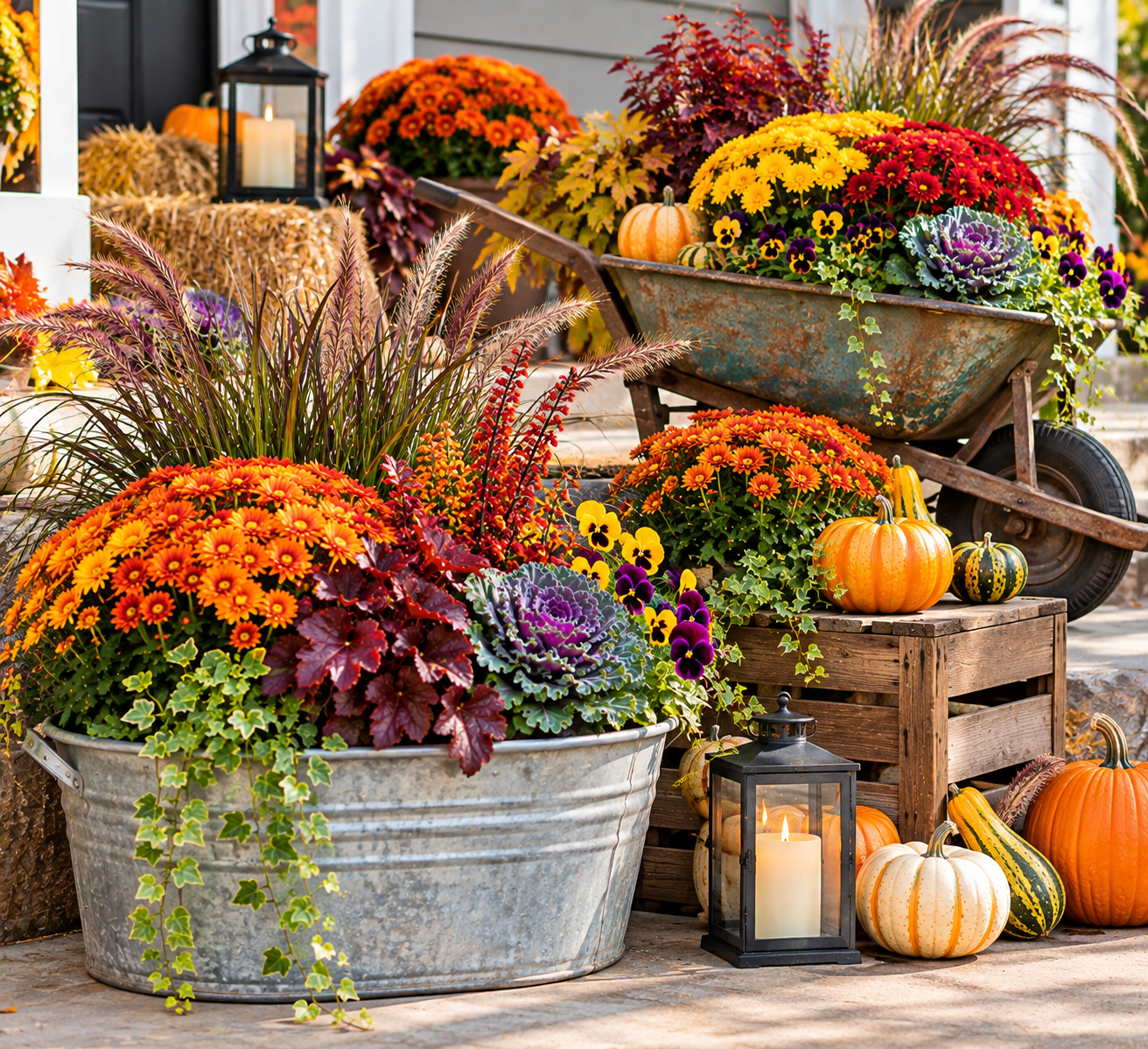
A pot of mums bought in full bloom on a Saturday can look finished by the end of the month. The pumpkin beside it develops a soft spot by mid-October. The sweet potato vine blackens after the first frost, and what looked like a styled entryway now looks like leftovers.
Fall containers tend to fail in three predictable ways. Plants with different frost tolerance get grouped in one pot, so something always collapses. The pots are too small to hold moisture or buffer cold nights. And pumpkins sit somewhere damp, where they rot long before they’ve done their job.
Most of the fifteen ideas below are built to avoid those problems, so a short section on how fall containers work comes first. It will save you from replanting in three weeks.
Sort Your Plants by Frost Tolerance Before You Buy Anything
Fall plants fall into three groups, and keeping them straight explains most container success and failure.
| Group | Common examples | What a frost does |
| Tender | Coleus, sweet potato vine, purple fountain grass, begonias | Blacken or collapse after a killing frost, often overnight |
| Light-frost tolerant | Garden mums, calibrachoa, dusty miller | Handle chilly nights; a hard freeze ends the flowers |
| Hardy | Pansies and violas, ornamental kale and cabbage, heuchera, sedges (Carex), sedum, ivy, dwarf conifers | Carry on through freezing weather; kale and cabbage often color up in the cold |
The practical rule is to build each pot from one group, or from one group plus the hardier ones. A pot with a tender plant is only as good as the weather forecast, and you should expect to pull that plant out at the first hard frost. Pots built from the hardy group often last into winter.
Your first expected frost date varies a lot by region. A local cooperative extension office or national weather service can give you an estimate. Plan your plant choices against that date, not against what the garden center has on display.
Pot Size, Drainage, and Material Matter More Than Plant Choice
Size. As a general guide, 12 inches across is about the smallest pot that holds a mum, a grass, and a trailing plant without drying out constantly. Pots of 16 to 20 inches give more margin. Small pots lose moisture quickly and swing hard between hot afternoons and cold nights.
Drainage holes. Cool fall rain on poorly draining soil is a good recipe for root rot. If a decorative pot has no holes, keep the plants in a plastic nursery pot inside it, raised on a brick or pot feet so water can’t pool around the roots. Tip out any standing water after heavy rain.
Material. Terracotta and some glazed ceramics can crack when soil holds water and freezes. Resin, fiberglass, and thick plastic generally handle freezing better, and they’re much lighter. Metal containers like galvanized tubs get hot in sun and cold at night, which stresses roots, so they need drainage holes and a bit of lift off the ground.
Potting mix. Use fresh container potting mix. Garden soil compacts in pots and drains badly. If you’re reusing a summer pot, remove spent plants, pull out the old root mass, and refresh the mix. If last season’s plants had disease, discard the soil instead of recycling it.
Mum Ideas That Last Longer Than the Store Display
Garden mums are the default fall container plant because they’re cheap, colorful, and everywhere. They’re also commonly bought at the wrong stage and then placed where they dry out in a day.
1. One oversized mum in a pot larger than its nursery pot
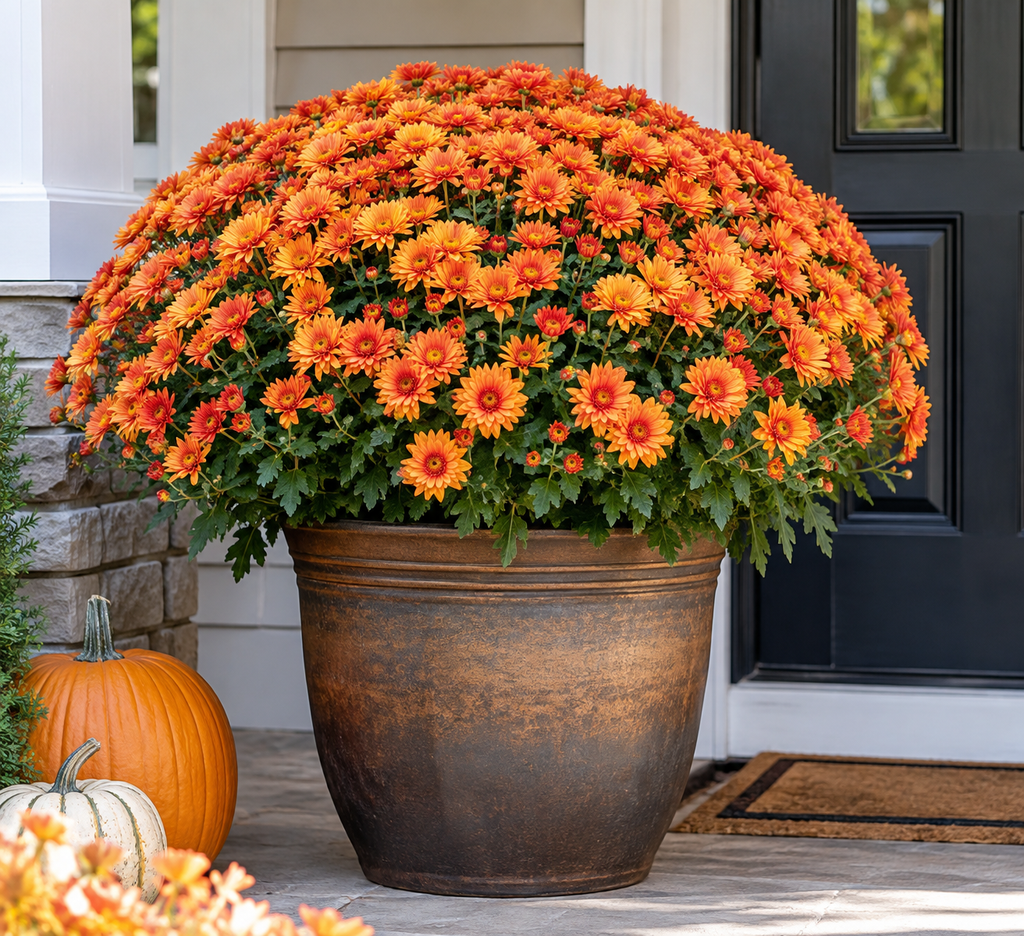
Mums are often sold in 8-to-10-inch nursery pots with a dense, root-filled rootball. Slipping that whole pot into a bigger decorative container, raised on a spacer so the nursery pot isn’t sitting in water, is the easiest approach. It also lets you swap the plant out when it’s finished without disturbing anything else.
If you’d rather repot, loosen the outer roots, set the plant at the same depth it was growing, and fill around it with fresh mix. A single color in a single pot looks deliberate. Deep burgundy against a white door and golden yellow against dark green both work well.
Buy plants with lots of tight buds showing color, not a plant already in full bloom, because the flowering ahead is what you’re paying for. Mums have shallow roots and a lot of foliage, so in warm, windy weather a plant in a nursery pot can need water daily. A wilted mum often recovers if caught early, though the flowers may brown.
Mums form flower buds in response to the lengthening nights of fall. A porch light that stays on all night can interfere with bud development in plants that haven’t bloomed yet. If your mum is still tight and green, keep it out of a constant light source.
2. A mum with a grass spike and a trailing edge
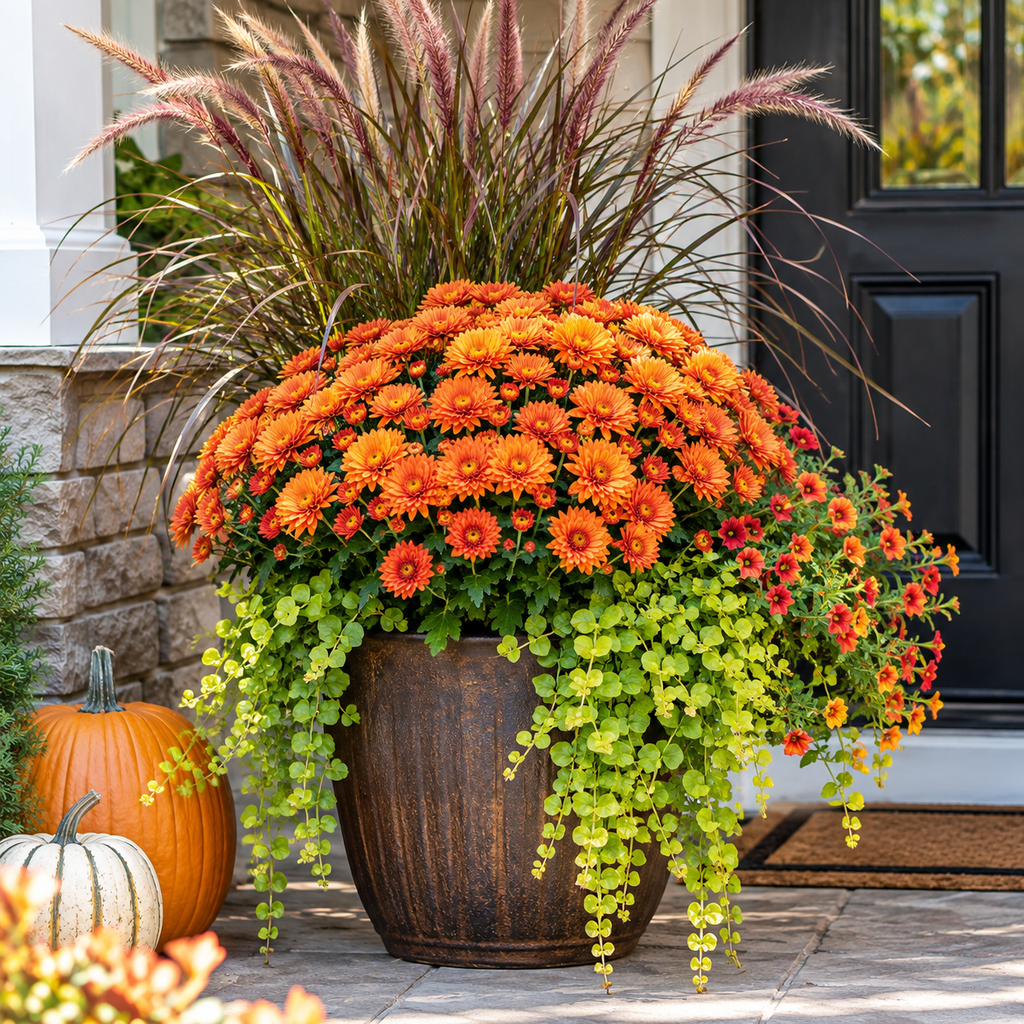
The classic container formula is a tall plant at the back or center, a mounding plant in the middle, and something that spills over the edge. For fall, a grass provides the height, a mum provides the mass, and ivy or another trailer softens the rim.
In a 16-inch pot, put the grass in the center if the pot will be viewed from all sides, or toward the back if it sits against a wall. Plant the mum in front of it and the trailing plant at the rim, tilted slightly outward. Fall containers can be planted more densely than summer ones because the plants won’t grow much more before cold arrives. Leave a couple of inches between rootballs and fill the gaps with mix.
3. Three mums at graduated heights beside the steps
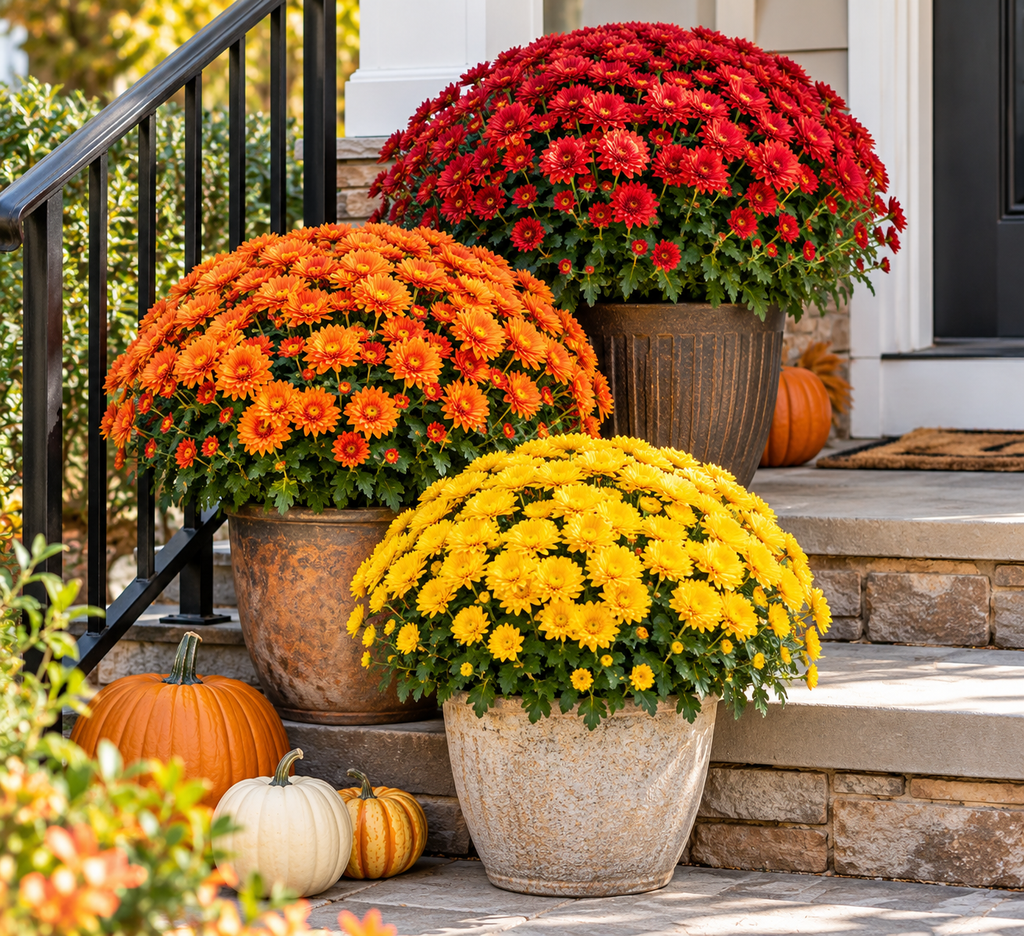
Odd-numbered groups usually look better than pairs. Use two or three pots of different sizes, or raise some on overturned pots or a sturdy crate to get a stepped effect. Keep the same color family, or limit yourself to two colors.
Step arrangements need a few practical rules. Keep the walking path clear. Put the heaviest pot on the outside edge. Tall, lightweight pots tip over in wind, so weigh them down with a layer of heavier material at the bottom or choose a pot with a wider base.
4. A mum, ornamental kale, and pansy bowl for cold snaps
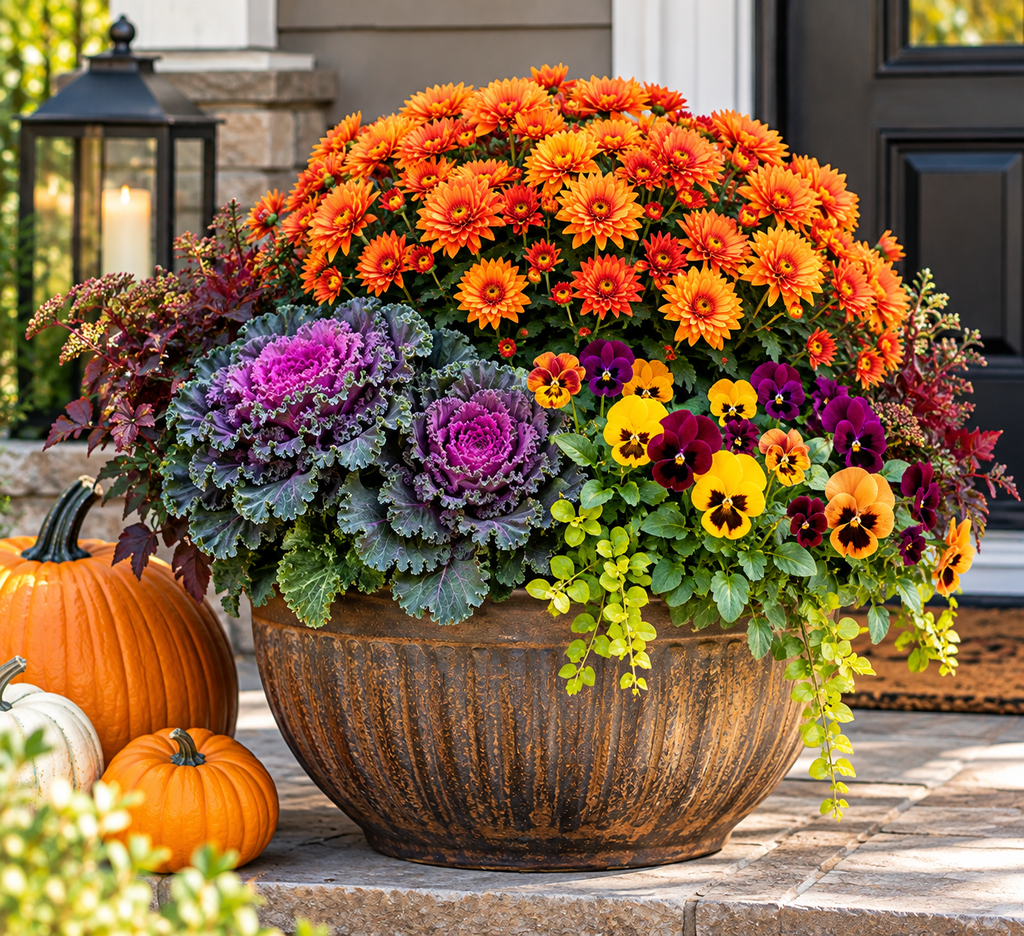
Mums handle light frost but not hard freezes. Pairing them with hardy plants gives the arrangement a second act. Plant a mum in a wide bowl with ornamental kale or cabbage and a ring of pansies or violas. When the mum finishes, pull it out and the pot keeps going.
Pansies and violas generally tolerate light frost and often keep blooming through cool spells, though growth slows or stops in deep cold. Ornamental kale and cabbage tend to develop richer color as temperatures drop, which makes them useful as a planned backup instead of a rescue.
Ornamental Grasses for Height, Movement, and Winter Staying Power
Grasses give containers a vertical line, rustle in wind, and often look good long after flowers fade. Their main drawbacks are that tall ones tip over in small pots and that some popular fall grasses are tender.
5. A tall, upright grass as the backbone of a large pot
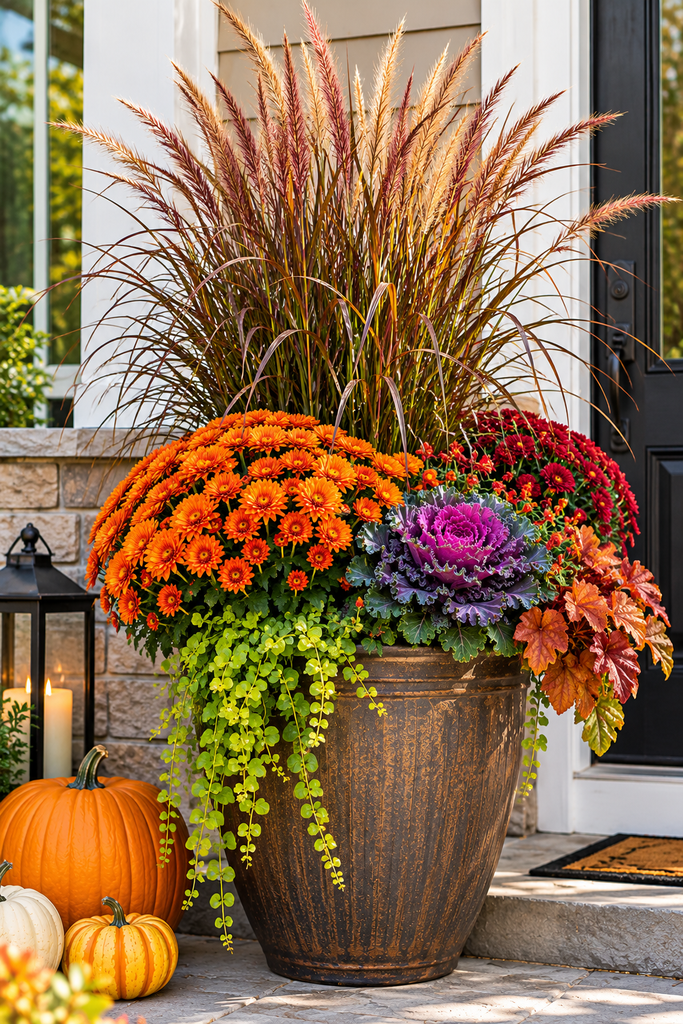
Feather reed grass (Calamagrostis × acutiflora, especially ‘Karl Foerster’) holds an upright, narrow shape and turns golden in fall. It’s hardy across a wide range of climates, roughly zones 4 to 9, though check the plant tag for the cultivar you buy.
Give a tall grass a container of at least 18 inches, preferably a heavy one. A small pot dries quickly and the grass can topple. Pair it with ornamental cabbage at the base and a trailing ivy at the edge for a pot that keeps looking good through the first freezes. Leave the seed heads standing through winter instead of cutting them back in fall.
6. Low, mounding grasses for tables, railings, and small spaces
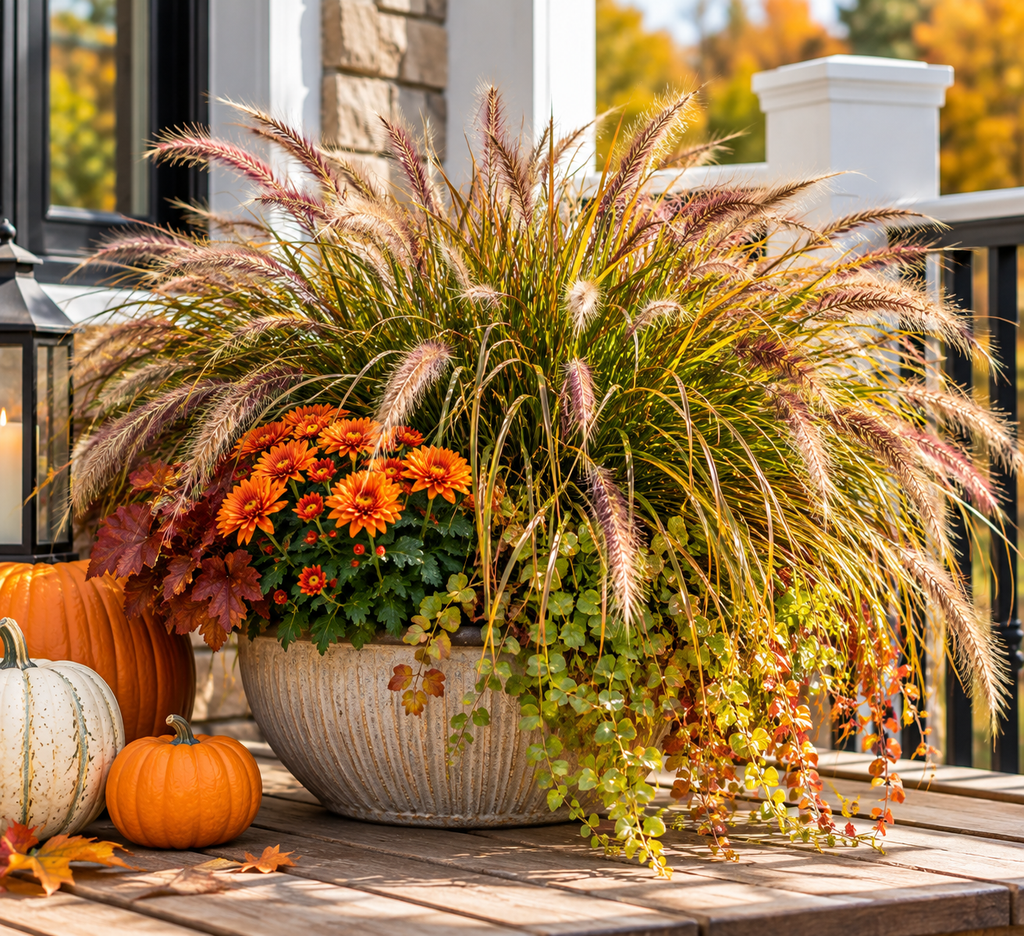
Blue fescue (Festuca glauca), sedges (Carex), and Japanese forest grass (Hakonechloa, for shade) stay compact. They’re useful where a tall plant would block a view or tip a table. Blue fescue prefers sun and good drainage, and sedges tolerate a wider range of conditions.
In a shallow bowl, combine a low grass with sedum for a pot that asks little. Shallow bowls dry out quickly, so choose one at least 6 inches deep. If you’ll be watering infrequently, pick plants with similar moisture needs. Sedum and fescue like it drier, while many sedges are more forgiving of moisture.
7. Purple fountain grass for warm color, with a frost warning
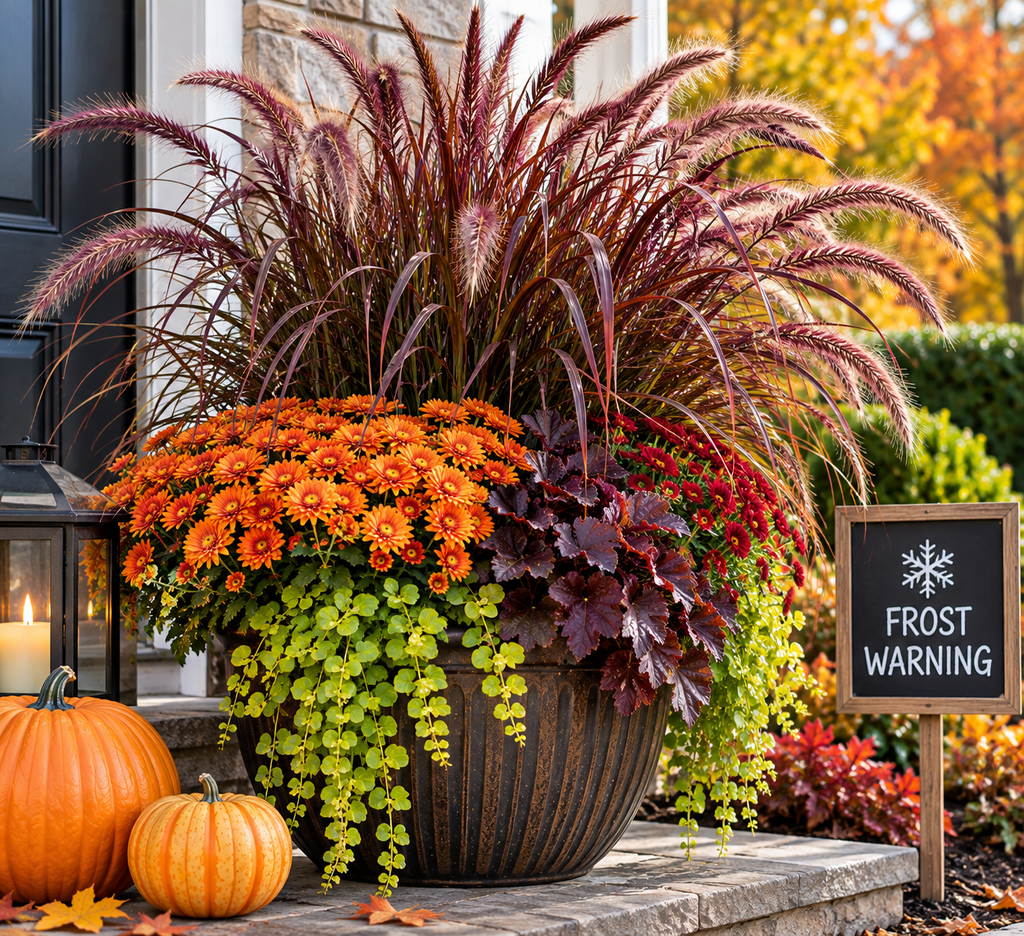
Purple fountain grass (Pennisetum setaceum ‘Rubrum’) has burgundy foliage and plumes that suit orange and bronze fall plantings. It’s a tender perennial that most gardeners outside warm regions grow as an annual, so a killing frost will finish it. Where it’s hardy it can also become a nuisance: it’s considered invasive in parts of California, Hawaii, and Arizona, so check local listings before planting it outdoors in warm climates.
Treat it as a seasonal decoration in colder areas. If you want something similar that keeps going, dwarf fountain grass (Pennisetum alopecuroides, ‘Hameln’ being a common cultivar) is hardier, with softer, tan-and-cream plumes instead of burgundy.
8. Grasses that peak when everything else has faded
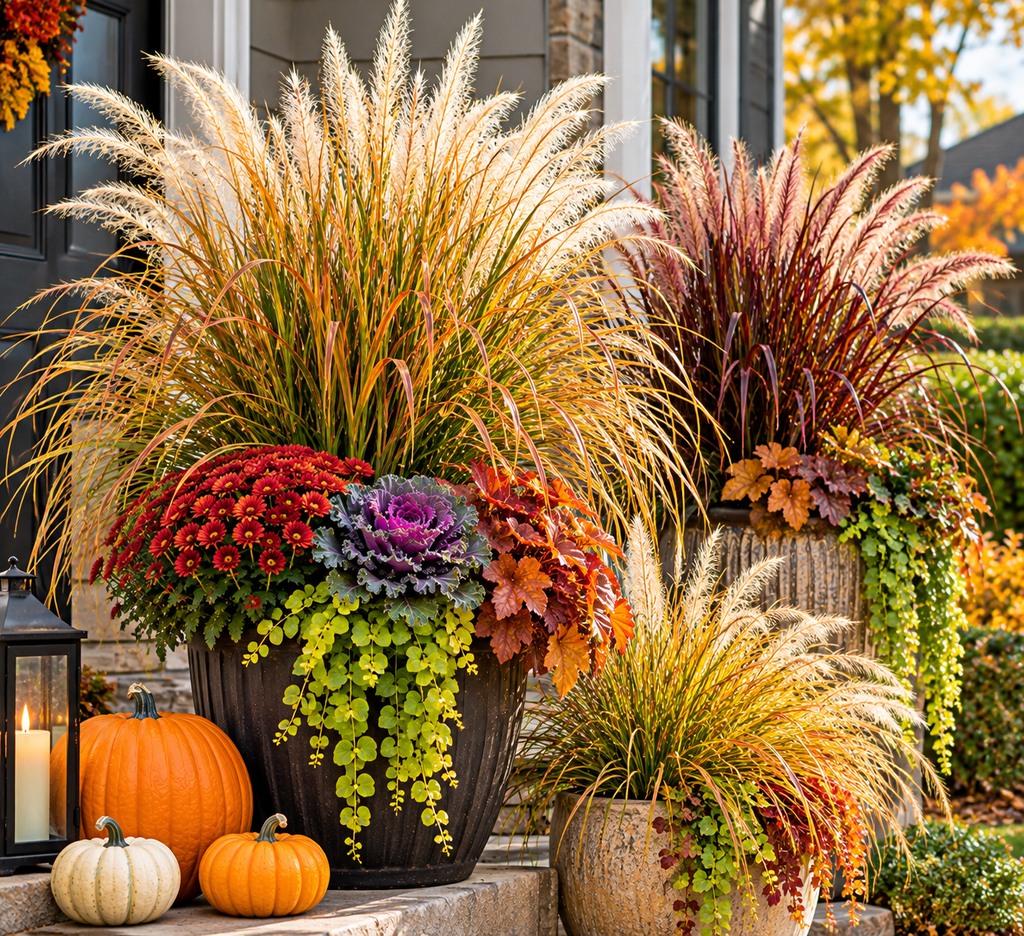
Some grasses are at their best in late fall. Muhly grass (Muhlenbergia capillaris) sends up pink to purple plumes in autumn, and little bluestem (Schizachyrium scoparium) turns coppery red and orange. Both do best in sun and in climates where you can leave them outdoors through winter.
Plants in containers are generally less cold-hardy than the same plants in the ground, because the roots have less soil insulating them. A common rule of thumb is that a container plant behaves as though it’s one or two hardiness zones colder than its listed zone. If your winters are near the limit for a given grass, treat it as a fall display and put it in the ground afterward.
Pumpkin Ideas That Don’t Rot in Two Weeks
Pumpkins add instant fall color, but a few simple habits help them last. Pick firm ones with the stem attached, and carry them by the base, since a broken stem opens an entry point for rot. Keep them off wet surfaces by setting them on a brick, a plastic saucer, or a board. Avoid long afternoons of direct sun, and know that repeated freezing and thawing leaves them mushy. Uncut pumpkins generally last far longer than carved ones, often a couple of months in cool, dry conditions, though that varies a lot by climate and pumpkin.
9. A pumpkin cluster tied into a container grouping
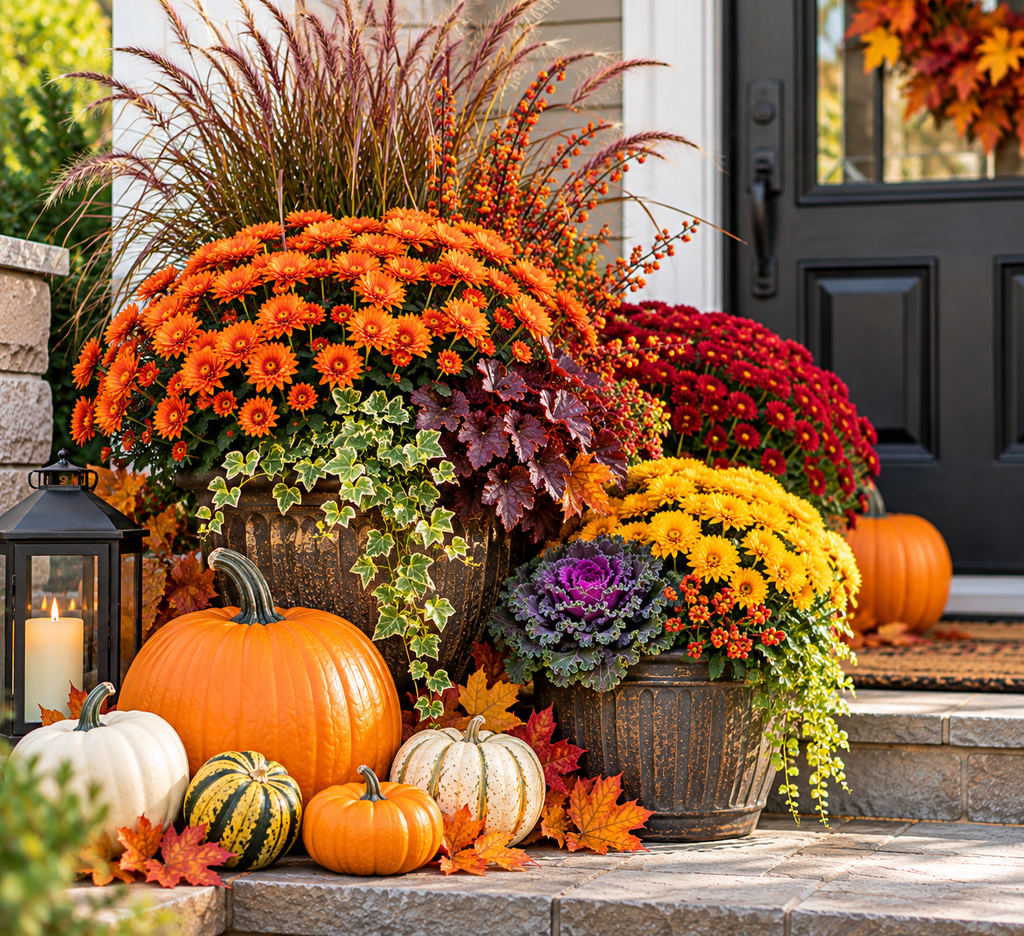
Instead of dropping pumpkins at random, set two or three at the base of a container group so they read as part of the same arrangement. Vary the size and limit the colors to two or three. White (such as ‘Lumina’), blue-gray (such as ‘Jarrahdale’), and classic orange mix well.
Raise each pumpkin on a saucer or brick so it isn’t sitting on wet wood or a doormat. Put the cluster on the side where the plants are shortest so it doesn’t hide them.
10. A hollowed pumpkin used as a planter, with a liner
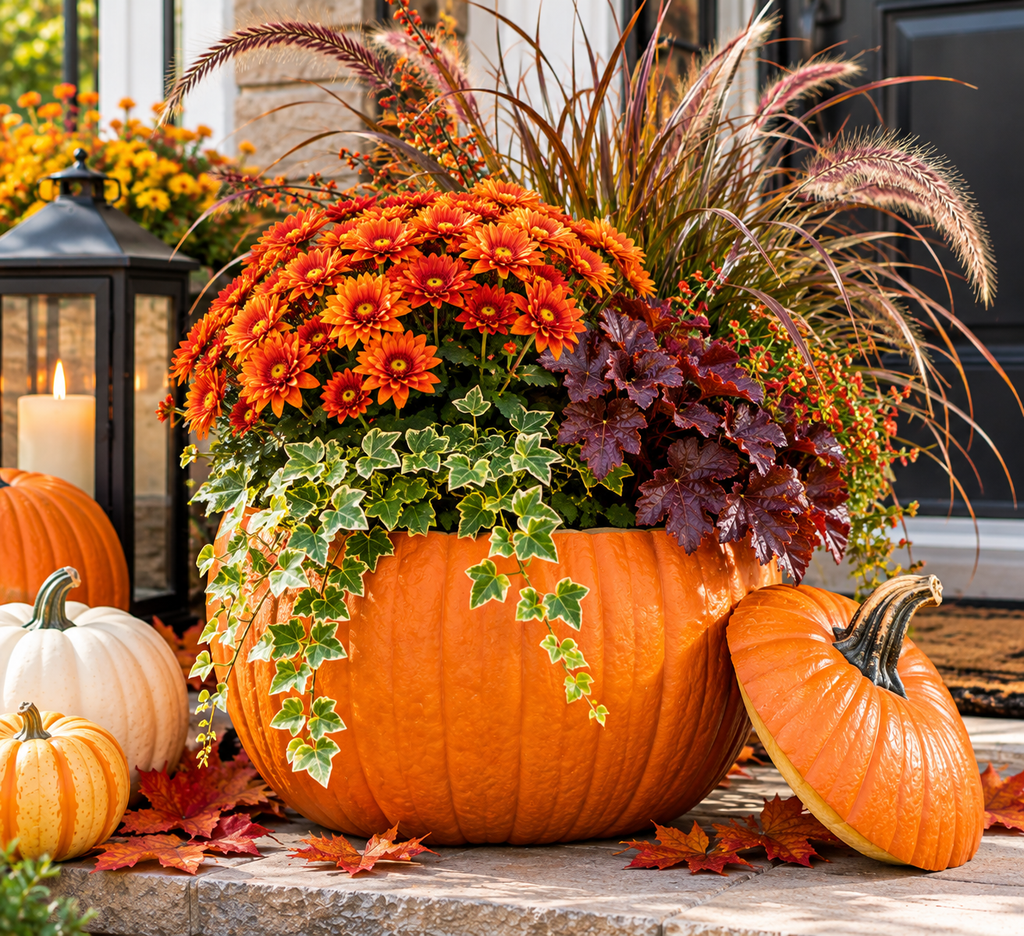
A scooped-out pumpkin holding a small plant is a nice centerpiece, but it has a short lifespan. Once cut, a pumpkin starts breaking down faster, and wet soil speeds that up. Expect a couple of weeks, perhaps longer in cool weather and less in warm.
Skip planting directly into the pumpkin. Put a small plant in its nursery pot inside the hollow, so the pumpkin holds the plant but not wet soil. Set the whole thing on a tray or plate to catch seepage. Small mums, pansies, ornamental kale, and dusty miller all work.
11. A galvanized tub, crate, or wheelbarrow display
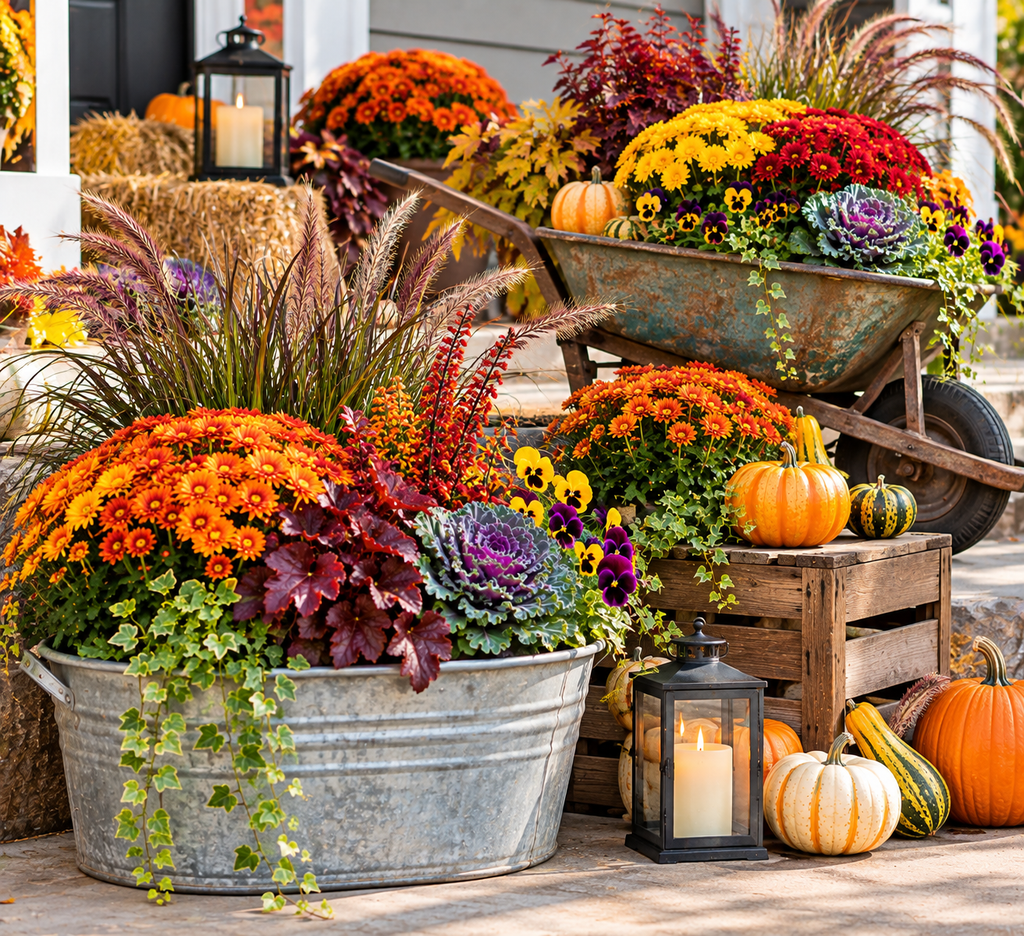
A galvanized tub or wooden crate suits the farmhouse look and holds a lot of plants. Drill several drainage holes in a tub, set it on feet or bricks, and plant grasses at the back with mums in front. Mini pumpkins can sit on top of the soil and be swapped out when they soften.
Metal gets hot in sun and cold at night, so check soil moisture often. A full tub of wet mix is heavy, so decide where it will live before you fill it. Wooden crates need a liner or will rot from the inside.
Squirrels and other wildlife sometimes gnaw pumpkins. If you see chewed ones, a sturdier arrangement against the house or a closer position to the door may help, but there’s no guaranteed fix.
Trailing Plants That Soften the Edges
12. A window box that spills
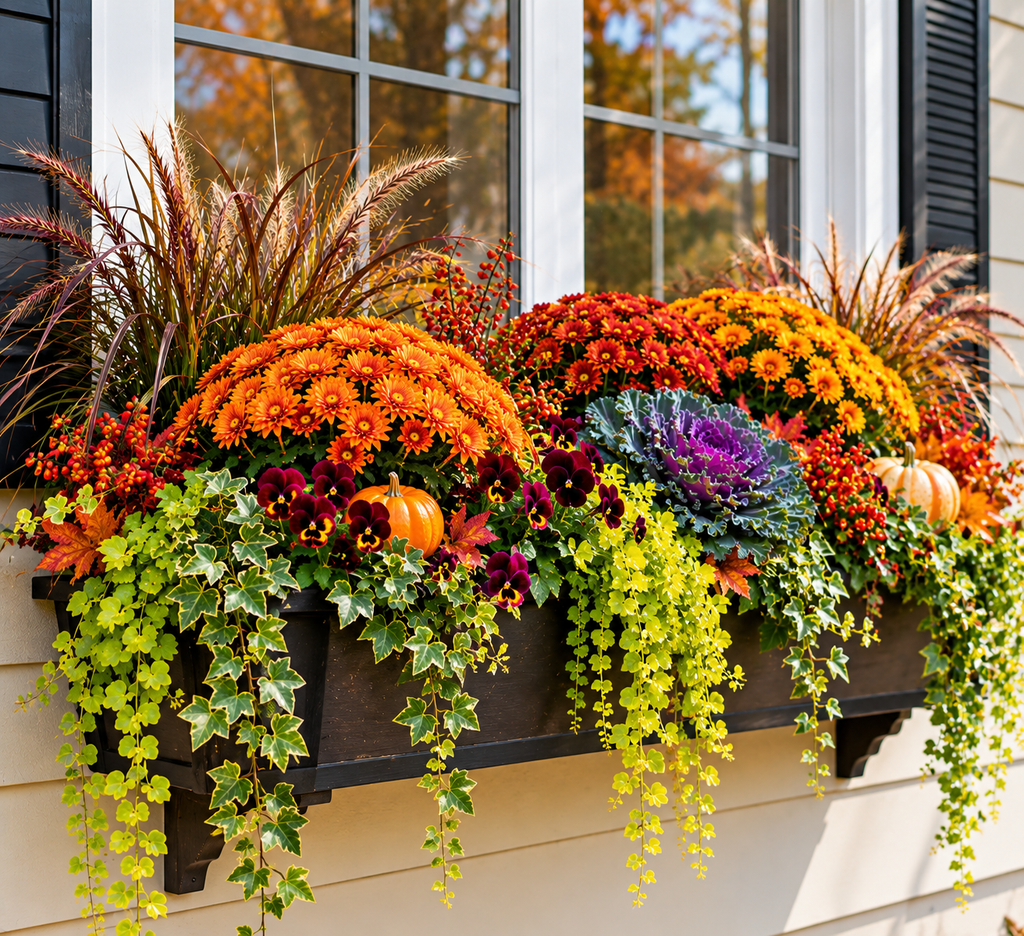
Window boxes dry out fast and take more wind than ground-level pots. For fall, combine pansies or violas with ornamental kale and a trailer. Ivy is a classic choice, but English ivy is invasive in parts of the Pacific Northwest, the Southeast, and elsewhere, so check local guidance. Creeping Jenny (Lysimachia nummularia) and vinca can also be problematic in some regions. Creeping thyme is a lower-risk trailer for many gardeners. Sweet potato vine is eye-catching but tender and lasts only until frost.
Window boxes must be mounted securely. A saturated box is heavy, and brackets and fasteners need to be rated for that weight, especially over a walkway.
13. A hanging basket reworked for fall
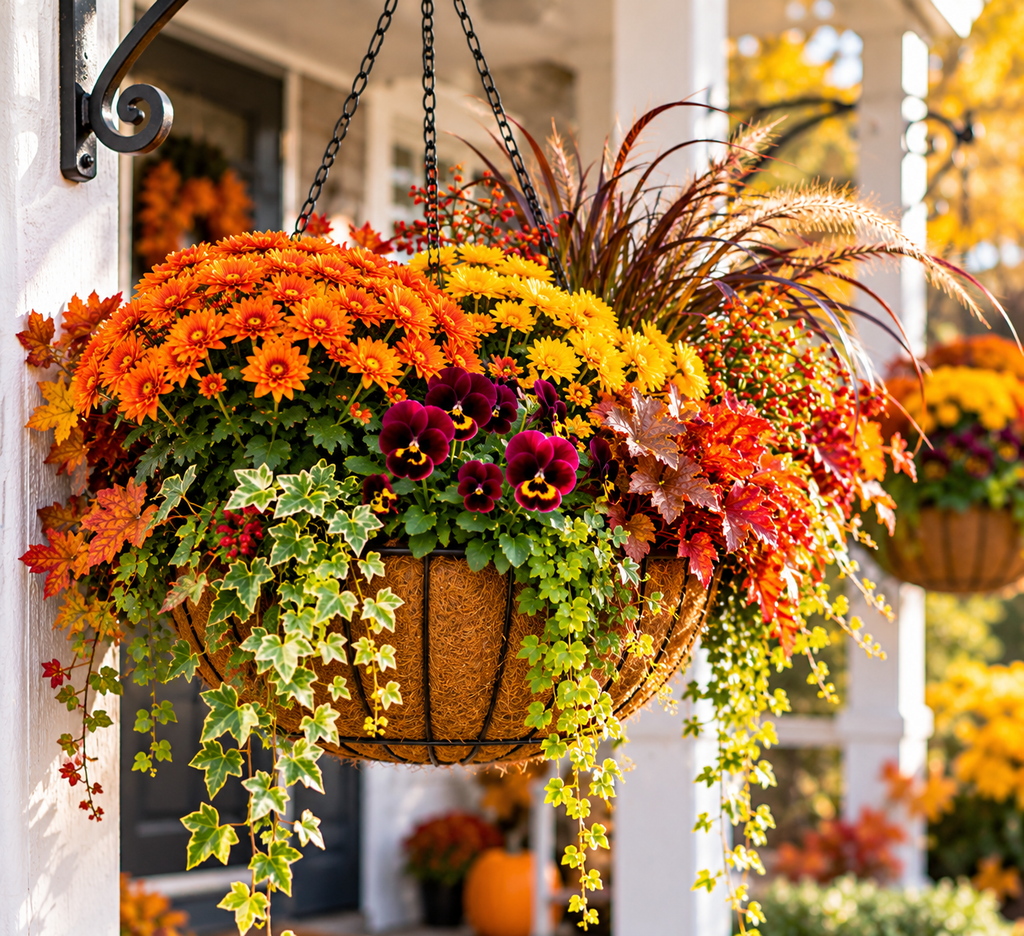
Summer baskets often look worn by September. Replace the plants with fall-appropriate ones such as calibrachoa, which tolerates light frost, trailing pansies, and ivy. Coir-lined baskets dry out especially fast, and wind makes it worse, so check them often.
Hang them where they’re sheltered, and be ready to move them under cover on a frost night. Check that the hook and ceiling or bracket can carry a wet basket, which can be much heavier than it looks.
Foliage-Driven Containers for Color Without Flowers
14. A flowerless pot built on leaf color
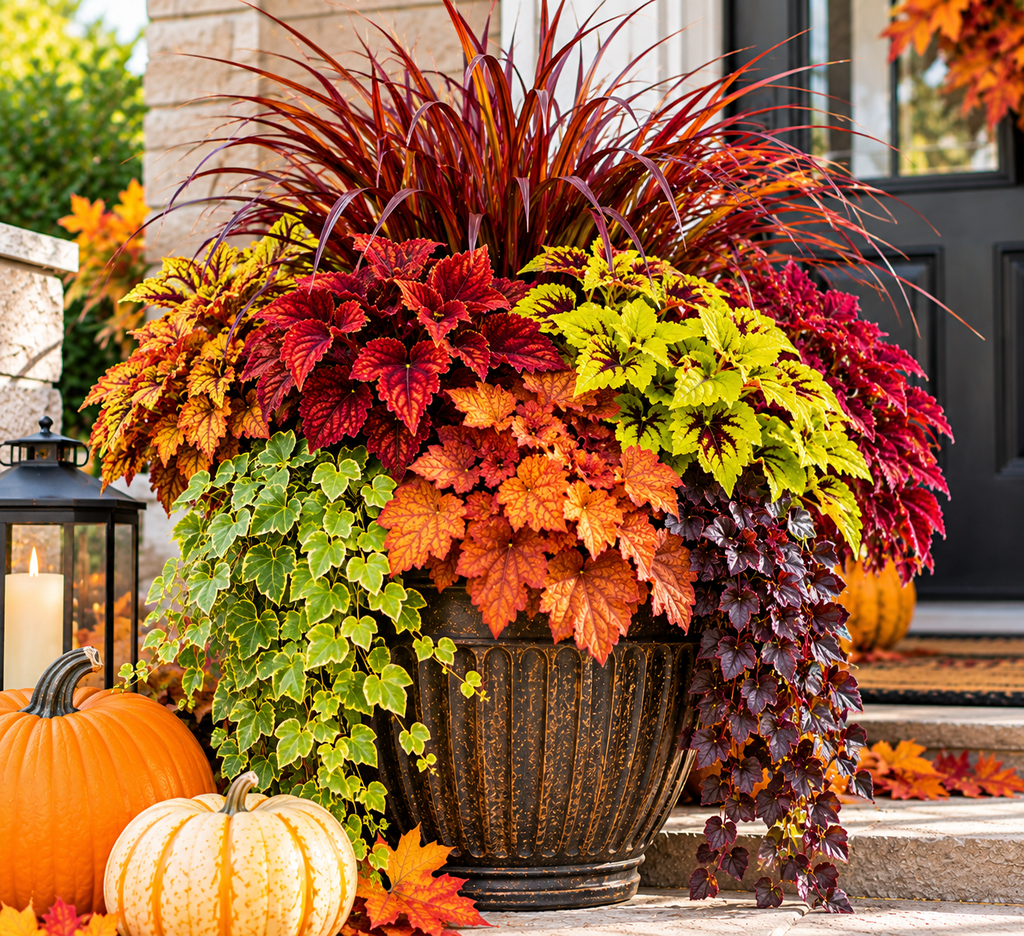
Heuchera (coral bells) comes in bronze, plum, caramel, and chartreuse, and many cultivars hold their color into cold weather. Many are hardy roughly in zones 4 to 9, depending on the cultivar. Pair them with sedum, which turns rosy in fall, and a sedge for texture.
Heuchera dislikes soggy soil and can develop crown rot, so use a well-draining mix and don’t let the pot sit in water. Sedum prefers drier conditions than heuchera, so water the pot sparingly and let the top inch of mix dry between waterings. When the season ends, the heuchera and sedum can go into the garden.
15. An evergreen-based container that carries into winter
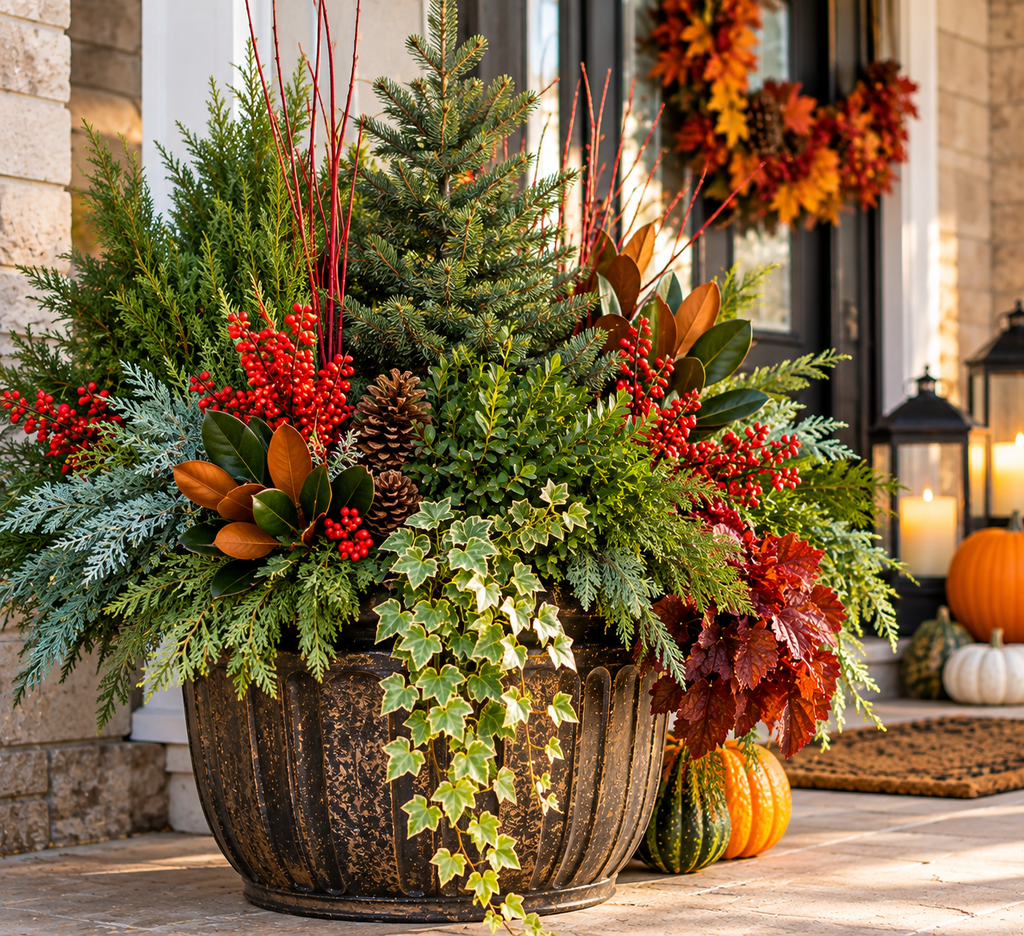
A dwarf conifer, boxwood, or wintergreen (Gaultheria procumbens) gives a pot structure that doesn’t fall apart at frost. Add pansies for fall color, then swap in cut evergreen boughs, red-twig dogwood stems, and pinecones for December.
The pot needs to be frost-proof. In cold climates, evergreens in containers can dry out in winter, so water on mild days when the soil isn’t frozen. Pots near a house wall or under an overhang get some protection from wind.
Making Any of These Work on a Balcony, Stoop, or Narrow Patio
Small spaces change the rules in a few ways. Wet potting mix is heavy, and balconies and railings have load limits, so check building rules or ask a landlord or property manager before adding large containers. Lightweight resin or fiberglass pots and a lighter potting mix reduce the load.
Use vertical space. Railing planters, wall-mounted pots, and tiered stands let you grow more in less floor area, but anything on a railing needs to be secured against wind and weight. Drainage matters more where water can drip onto a neighbor below, so use saucers or trays and empty them after rain.
On stoops and steps, keep a clear path. A single large container usually looks better in a tight spot than several small ones.
Watering, Frost Nights, and Feeding Without Overdoing It
Watering. Check by pushing a finger an inch or two into the mix. If it’s dry, water until it runs out of the holes. Mums in small pots can need water daily in warm, windy weather. Cool, rainy stretches mean less, and waterlogged pots invite rot. Fall plants grow slowly, so don’t water on a fixed schedule.
Frost nights. A light frost warning doesn’t mean the end. Cover tender plants with a bedsheet or frost cloth, keeping it off the foliage if you can, and remove it in the morning. Moving pots against the house wall or under an overhang gives some protection. Plastic touching leaves can transfer cold, so use fabric.
Feeding. Most nursery plants have been fed recently, and fall plants grow little, so heavy fertilizing is unnecessary and can push soft growth that frost then damages. If the label on a slow-release fertilizer suggests fall use, follow its directions.
Deadheading and pests. Removing spent mum flowers keeps plants tidy. Aphids and spider mites can still show up on mums in dry weather, and a spray of water often handles light infestations.
What to Do With the Pots When the Season Ends
Compost spent tender plants and dispose of anything diseased. If a pot held disease-prone plants, discard the mix.
Empty and store ceramic and terracotta pots under cover before hard freezes. Plastic and resin pots can often stay out, but frozen soil can still crack them over time.
Move perennials like heuchera, sedum, and sedges into the garden. Grasses in pots can stay out if your climate is mild enough, with the pot moved against the house for insulation. Hardy mums can be planted in the ground, though results are more reliable when they go in during spring than when planted late in fall.
Questions Readers Actually Ask
Can I plant a store-bought mum in the ground after it finishes blooming?
Sometimes. Garden mums sold as hardy can survive winter in many climates, but florist mums sold as gifts usually aren’t hardy. Fall-planted mums have less time to root before freezing, which lowers their odds, so planting in spring gives them a better chance. Check the plant tag and your hardiness zone.
How close together can I plant a fall container?
Closer than a summer one. Because fall plants won’t grow much more before cold arrives, a couple of inches between rootballs is usually enough, and the arrangement looks full from the start.
Is ornamental kale edible?
Ornamental kale and cabbage are cultivars of the same species as edible ones, but they’re bred for looks and are often tougher or more bitter. Nursery plants may also have been treated with products that aren’t labeled for food crops. Check the tag, and don’t assume a garden center plant is safe to eat.
Your Next Step
Before you shop, measure your space, check your first expected frost date, and sort the plants you like by frost tolerance. Then choose one container size that suits the spot, with drainage, and build the pot from one frost group. That planning step does more for a fall display than any particular plant choice.

About Syprose Kiche
Syprose Kiche is the creator and writer behind My Besuited Home, a practical home and garden website covering DIY projects, gardening, lawn care, landscaping, home improvement, and outdoor living. She focuses on turning everyday homeowner questions into clear, practical guides backed by careful research and useful real-world considerations.