
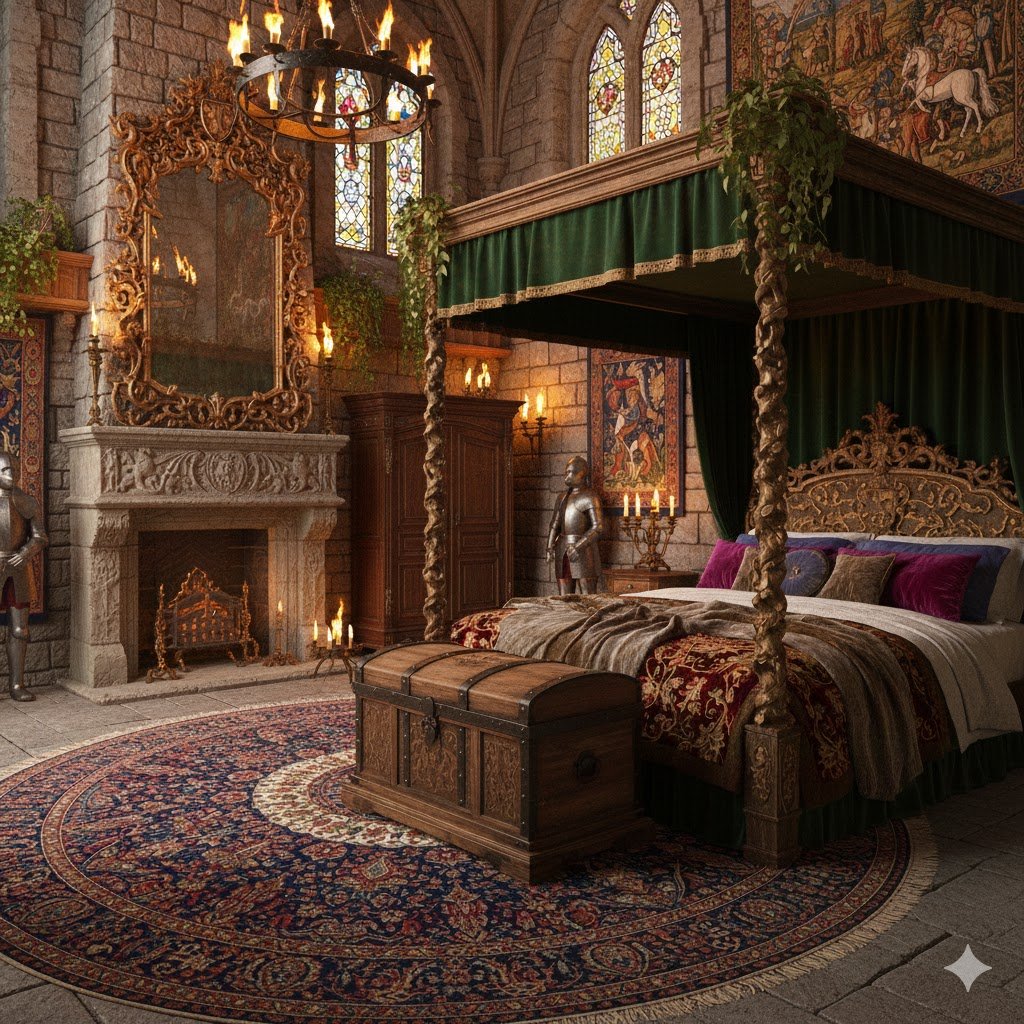
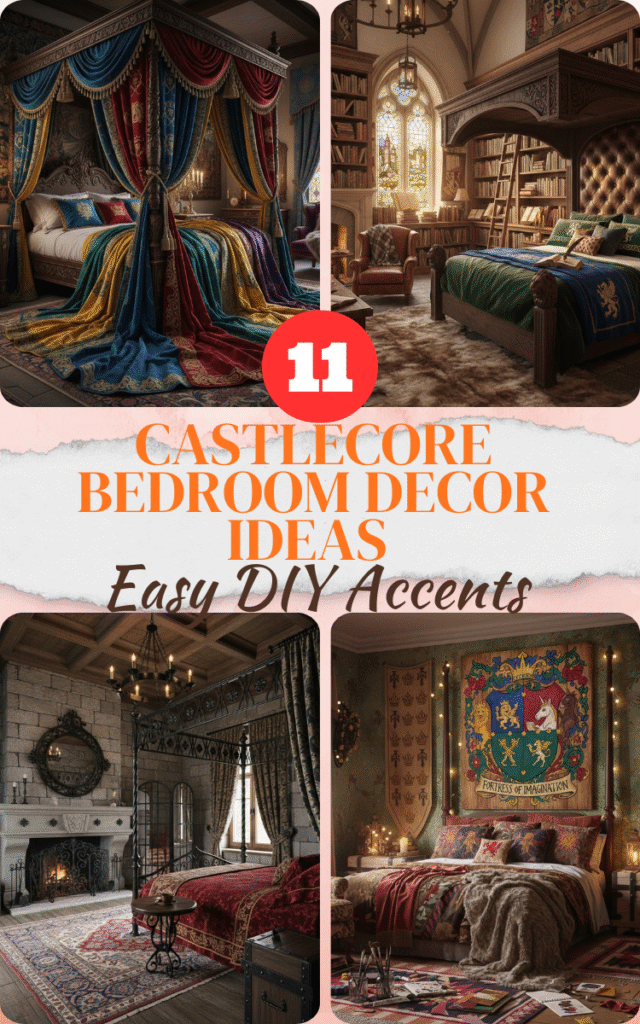
Do you ever walk into your bedroom and wish it felt less like a functional sleeping area and more like a retreat? I know I do. There’s something deeply satisfying about transforming a plain, white-walled space into an environment that truly tells a story. And for me, no story is more evocative or cozy than that of a medieval keep. That’s where Castlecore comes in—it’s the perfect blend of royal drama, the scholarly moodiness of Dark Academia, and the rugged, enduring texture of historical architecture.
This aesthetic isn’t about being historically accurate; it’s about channeling a feeling of timeless, guarded luxury. It’s about deep jewel tones, heavy materials, and the comforting sense that you are sleeping securely within thick stone walls, far away from the modern world’s noise. You might assume achieving this look requires gutting your room and commissioning bespoke furniture, but that couldn’t be further from the truth. The secret lies entirely in high-impact accents.
I’m convinced that Castlecore is one of the most accessible maximalist styles out there, especially for those of us who love a weekend DIY project. I’ve compiled 11 decor ideas here that are specifically chosen for their ease and affordability. Most of these can be accomplished with simple thrift store finds, a can of spray paint, and an afternoon’s work. Let’s now explore how you can turn your plain bedroom into a majestic, fortress-like sanctuary.
The 11 Castlecore Decor Ideas
1. The Faux Stone Wall (DIY Accent)
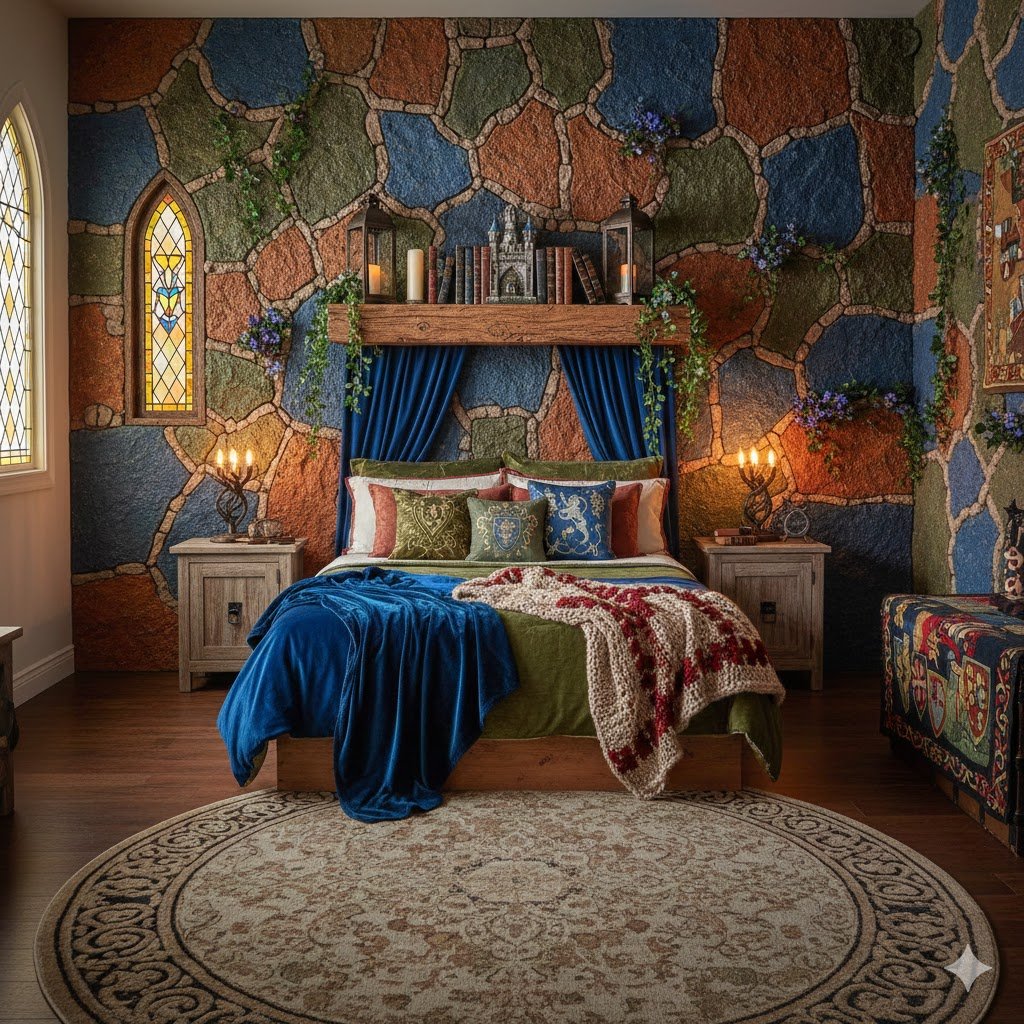
If we want the full Castlecore experience, we have to start with the foundation: stone. Few things add instant architectural weight and dramatic texture to a room quite like a rough, seemingly ancient wall. This feature immediately grounds the entire space, giving that crucial illusion of sleeping within a thick-walled fortress, and it’s arguably the most vital element in transitioning from “cozy” to “medieval.”
The great news is that you absolutely do not need to deal with messy plaster or expensive masonry work. The simplest, most renter-friendly hack is using textured paint kits or large, inexpensive foam insulation sheets. If you go the foam route, you can literally cut them into uneven, interlocking “stones” and apply them to the wall, painting them a rich charcoal or deep taupe chalk paint to mimic aged slate. For an even easier approach, look for stone-effect stencils that let you quickly sponge a pattern onto the wall with just a couple of shades of gray paint.
I always recommend reserving this dramatic effect for the headboard wall. By placing the faux stone only behind your bed, you create an instant focal point that gives the room depth and high-end feel without overwhelming the space. The visual contrast of the rugged stone against soft, layered bedding is exactly the kind of tactile and visual drama Castlecore demands.
2. The Regal Canopy Drape
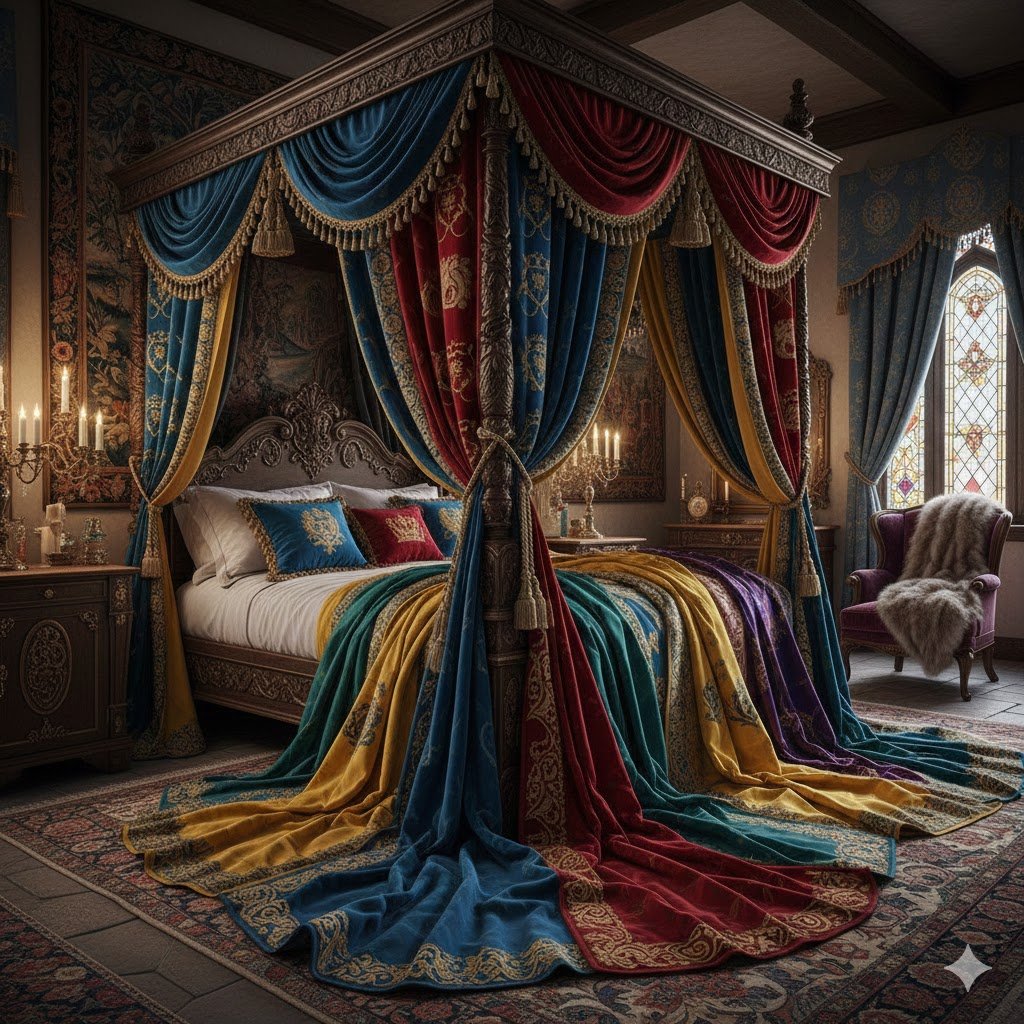
One element that instantly screams royalty is the bed canopy. In historic castles, they weren’t just decorative; they provided warmth and privacy in large, drafty rooms. Today, they serve the same aesthetic purpose, turning a standard mattress and frame into a grand, intimate sleeping chamber fit for a monarch.
Achieving this look requires minimal hardware. If you don’t have a four-poster bed, you can easily rig up a canopy by using simple PVC pipe to build a square frame slightly larger than your bed, securing it to the ceiling with hooks. Alternatively, for a softer drape, just secure two tension rods or simple ceiling hooks at the outer corners of your headboard wall and drape sheer, heavy velvet, or crushed linen between them, letting the fabric fall elegantly to the floor.
When selecting fabric, think strategically: deep jewel tones like emerald green or sapphire blue will amp up the regal factor, while a neutral, thick linen provides an air of historical authenticity and rugged luxury. This feature introduces essential vertical height and softness, beautifully contrasting the implied hardness of your stone wall, and completely transforming the profile of your bed.
3. Moody, Heirloom Tapestries
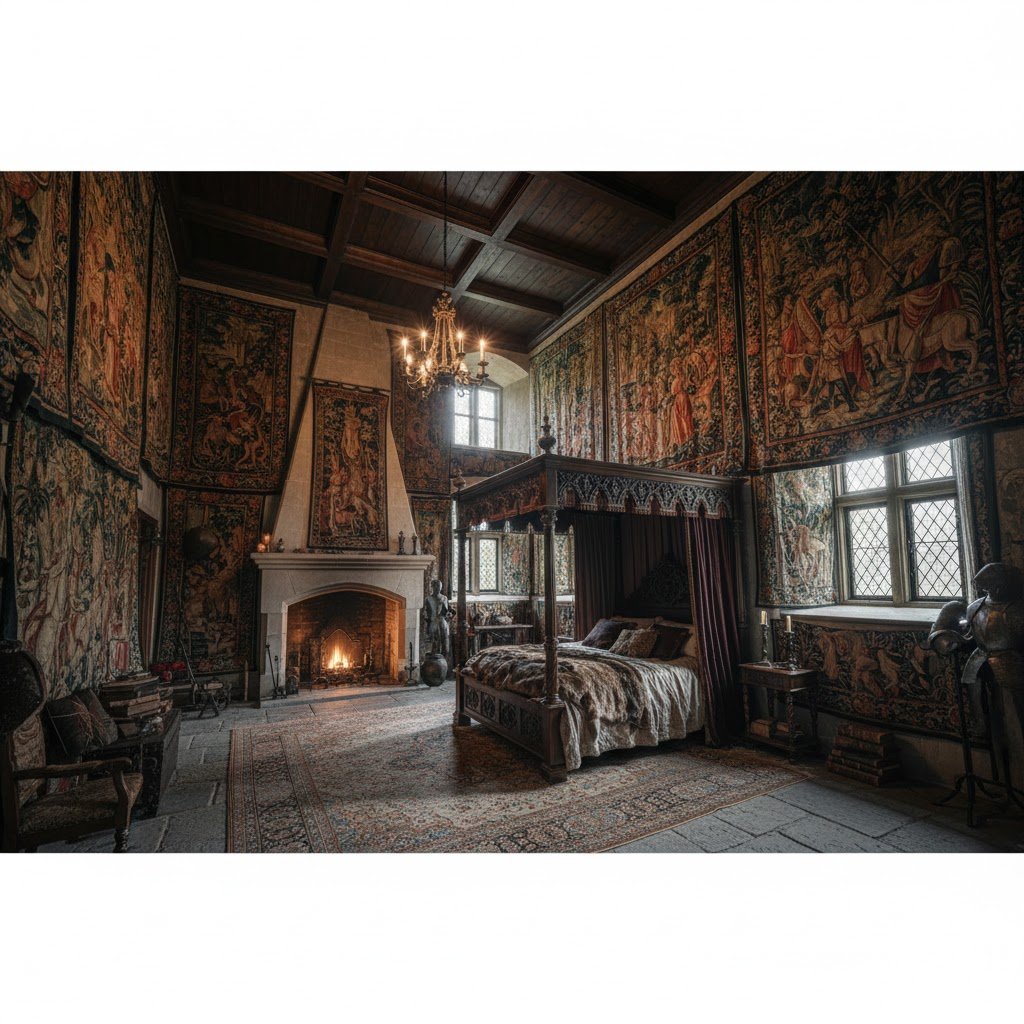
In a true castle, the stone walls were rarely left bare; tapestries were essential for insulation and decoration. Modern posters and bright digital prints just won’t cut it in a Castlecore space. We need art that feels heavy, storied, and woven, suggesting an heirloom that has been passed down through generations of noble families.
This is a fantastic opportunity for a clever DIY fabric hanging. Skip the expensive antique shops and instead purchase affordable printed fabric online—look for patterns featuring old maps, complex floral damasks, or even stylized medieval crests. Instead of framing it, which can look too modern, you simply hang the fabric using a decorative wooden dowel or a sturdy antique curtain rod, letting the fabric hang freely and ripple slightly.
These large, textile artworks command attention and immediately set a period-appropriate tone. Choose images that suggest history, such as scenes of nature, complex allegorical figures, or, for a more somber mood, dark botanical motifs. By hanging a generous piece of fabric, you add a layer of sound-dampening coziness and color saturation that only woven textiles can provide.
4. Iron-Forged Black Accents
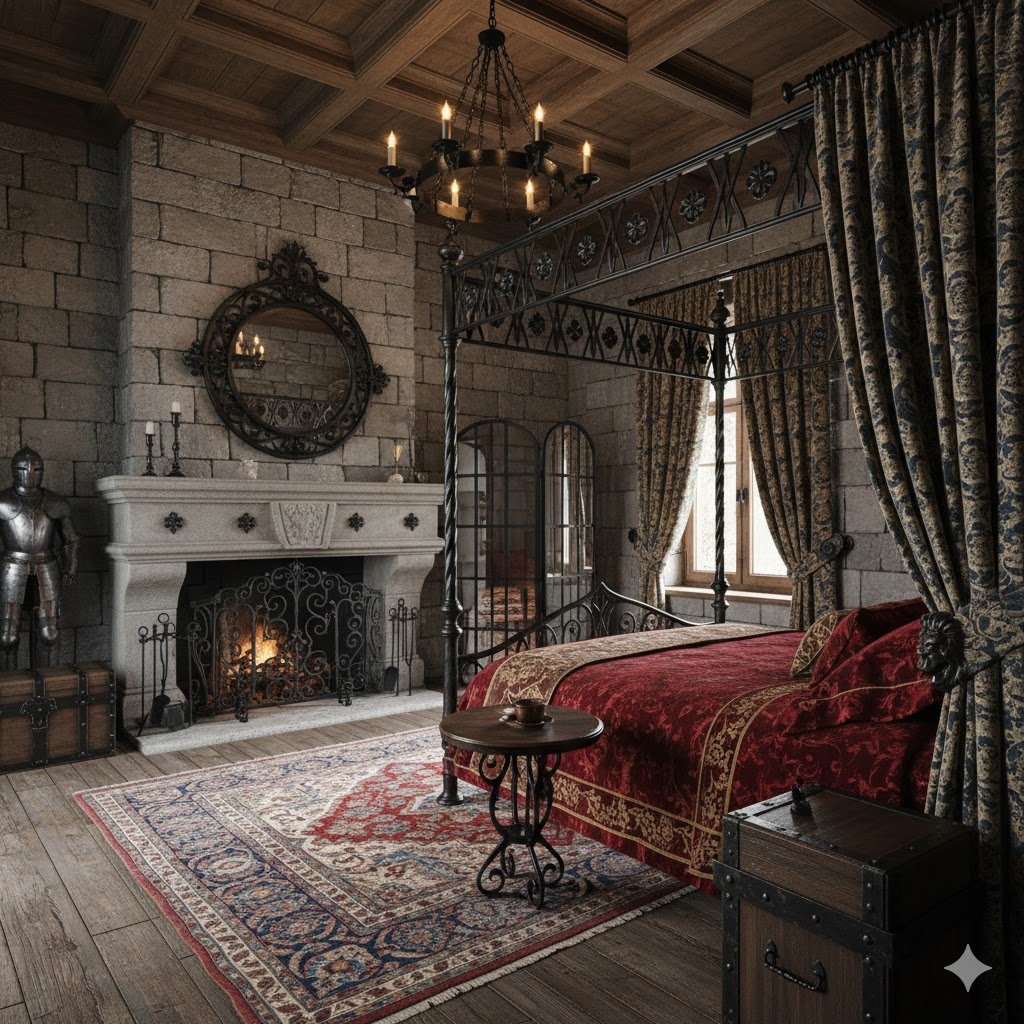
The hardware used throughout a castle—from door hinges to candlesticks—was often heavy, thick, and hand-forged iron. These dark metal accents are absolutely non-negotiable for establishing that rugged, medieval feel. If your room is currently sporting shiny chrome or thin brushed nickel, it’s time for a simple, dramatic upgrade.
Your DIY project here is all about conversion. Take stock of your modern curtain rods, basic lamps, cabinet pulls, or even simple picture frames. Using a matte black or an oil-rubbed bronze spray paint, you can quickly coat these pieces to mimic the look of hammered iron. The key is to avoid anything too shiny; we are aiming for a deep, slightly textured, and substantial finish that suggests decades of use.
Focus on key placement areas: chunky matte black hooks for hanging robes, weighty black curtain finials, and dark metal brackets for shelving. These small, deliberate touches of dark metal provide necessary visual weight, making the entire room feel more grounded and historically accurate—like every piece of hardware had to be wrestled into place by a skilled smith.
5. The Ornate, Antiqued Mirror
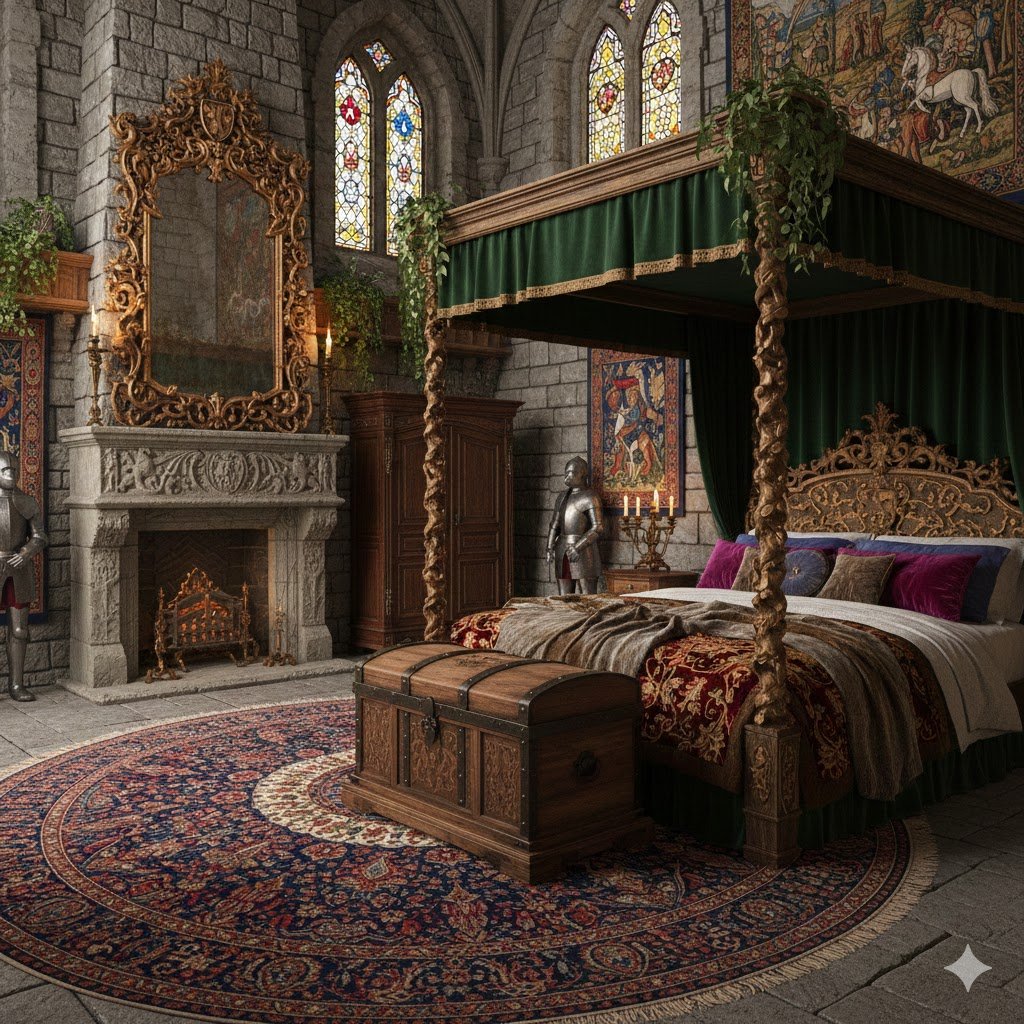
A mirror serves a practical purpose, but in a Castlecore setting, it also needs to act as a piece of architectural treasure. We’re not looking for a minimalist circle or a sleek, frameless piece; we need a substantial, intricate frame, preferably gilded, that looks like it has witnessed centuries of courtly drama.
This is a perfect opportunity for a thrift-flip project. Head to your local second-hand store and find the largest, most ornate, and perhaps slightly “tacky” modern frame you can—the more detail, the better. Your DIY approach is to age it. Use sandpaper to strategically distress the surface, then apply a layer of gold leaf paint or a dark metallic bronze spray paint. The crucial finishing step is to wipe a dark, sheer stain or wax over the wet paint, settling the dark pigment into the carved grooves to create a convincing, aged patina.
The final result should look less like it was purchased yesterday and more like it was retrieved from a dusty, forgotten storage room. Place this mirror where it can reflect some of your heavy textures or rich colors, amplifying the drama. It adds a necessary touch of aristocratic refinement and light, balancing the moodiness of the heavy textiles and dark paint.
6. Medieval-Style Lighting (Flame Effect)
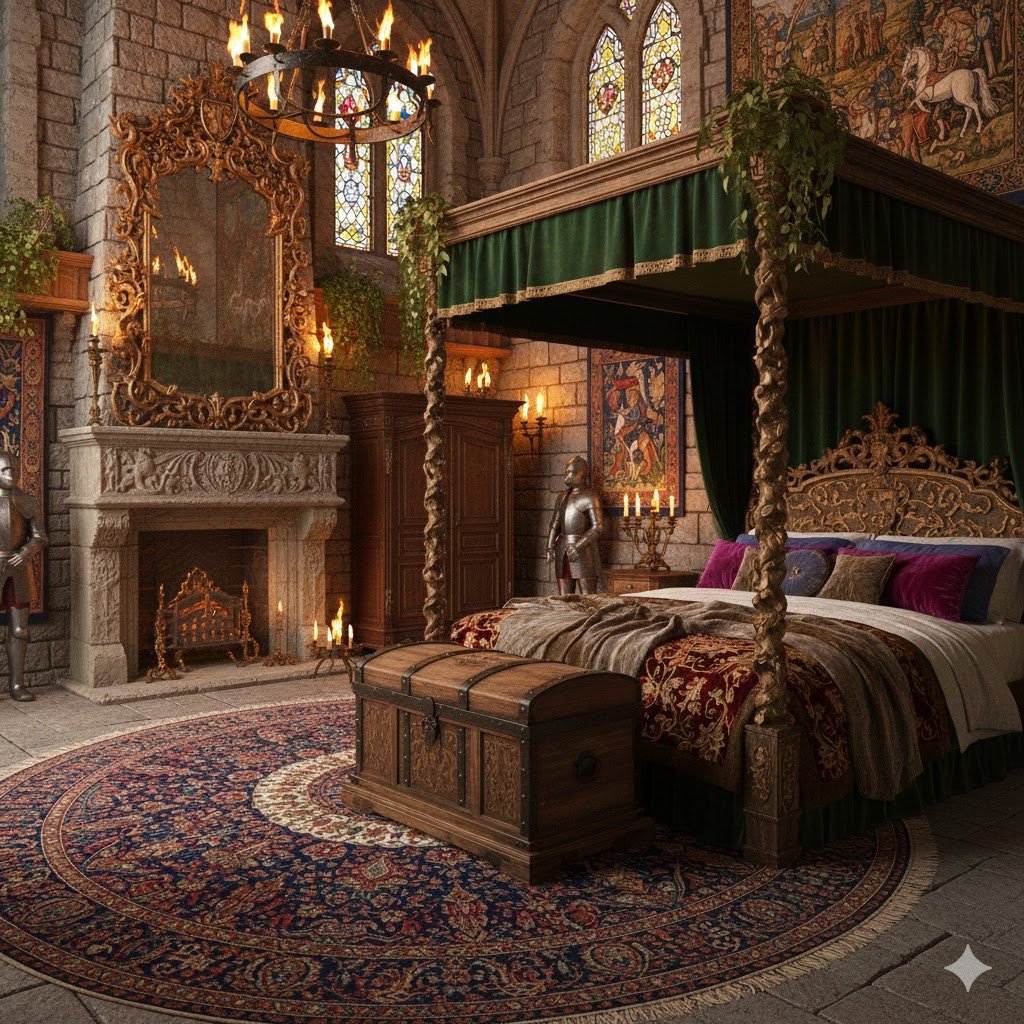
Lighting in a castle was, by necessity, warm and flickering, sourced from candles and torches. Our modern overhead LED fixtures can shatter the illusion instantly. To maintain the mood, we need light sources that are low, warm-toned, and ideally, introduce a slight hint of movement that mimics a natural flame.
Your DIY challenge here is modifying your existing fixtures. You can start by swapping out thin, bright lampshades for ones covered in deep, dark fabric (like velvet or linen) to dim the light source. For the most dramatic effect, incorporate LED flickering “flameless” pillar candles. Place these in heavy, ornate wall sconces or on a dark wooden mantelpiece to replicate the look of a torch-lit room, ensuring the bulbs themselves emit a very warm, orange-yellow glow, not a cool white.
The key look relies on low-level, atmospheric illumination. Look for exposed bulbs shaped like a flame, or choose deep bronze, gothic-style sconces. When the main light is off, these secondary, warm light sources should cast long, gentle shadows that emphasize the texture of your faux stone and the deep colors of your textiles, creating an immediate sense of quiet drama and historical depth.
7. Heavy, Luxurious Textiles
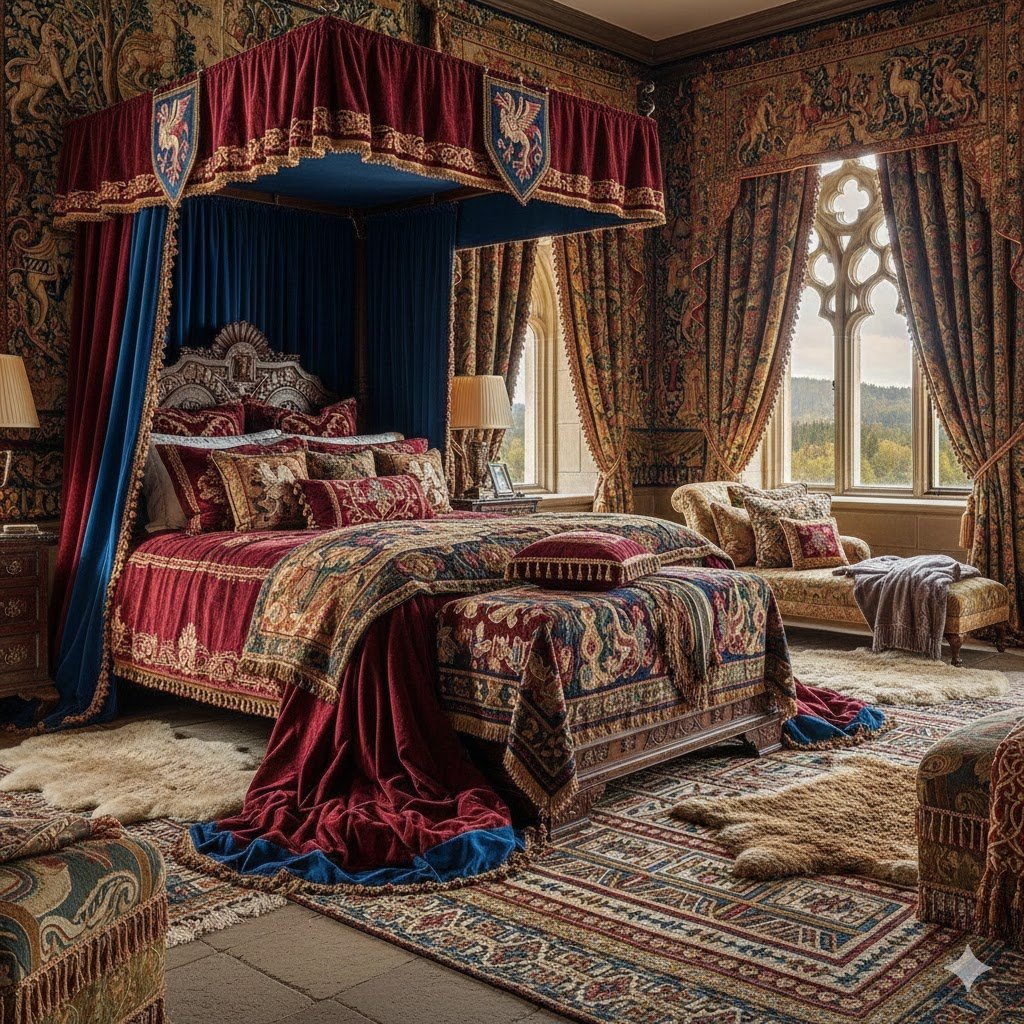
Nothing counters the implied coldness of stone walls better than an abundance of rich, touchable textiles. Castlecore bedrooms need to feel like protective cocoons, and this is achieved through layering fabrics with substantial weight, like velvet, faux fur, and thick knits. This is the ultimate comfort element in the aesthetic, turning a rugged fortress into a cozy sanctuary.
The DIY accent here is primarily about sourcing and layering smartly. Hunt for throw blankets, pillows, and rugs in inexpensive but high-quality-feeling materials like crushed velvet, thick chenille, or shaggy faux fur. Look for large blanket scarves at thrift stores that can be repurposed as beautiful, textured runners across the foot of the bed or draped over a rustic chair.
The end result must look intentionally over-the-top and opulent. Picture a heavy velvet bedspread in forest green or deep burgundy, possibly accented with a dark plaid or tartan, and then layered with a creamy faux sheepskin rug draped carelessly on the floor or over a bench. These heavy layers not only provide physical warmth but are crucial for achieving the visual richness that separates Castlecore from simple rustic decor.
8. DIY Coat of Arms/Crest Art
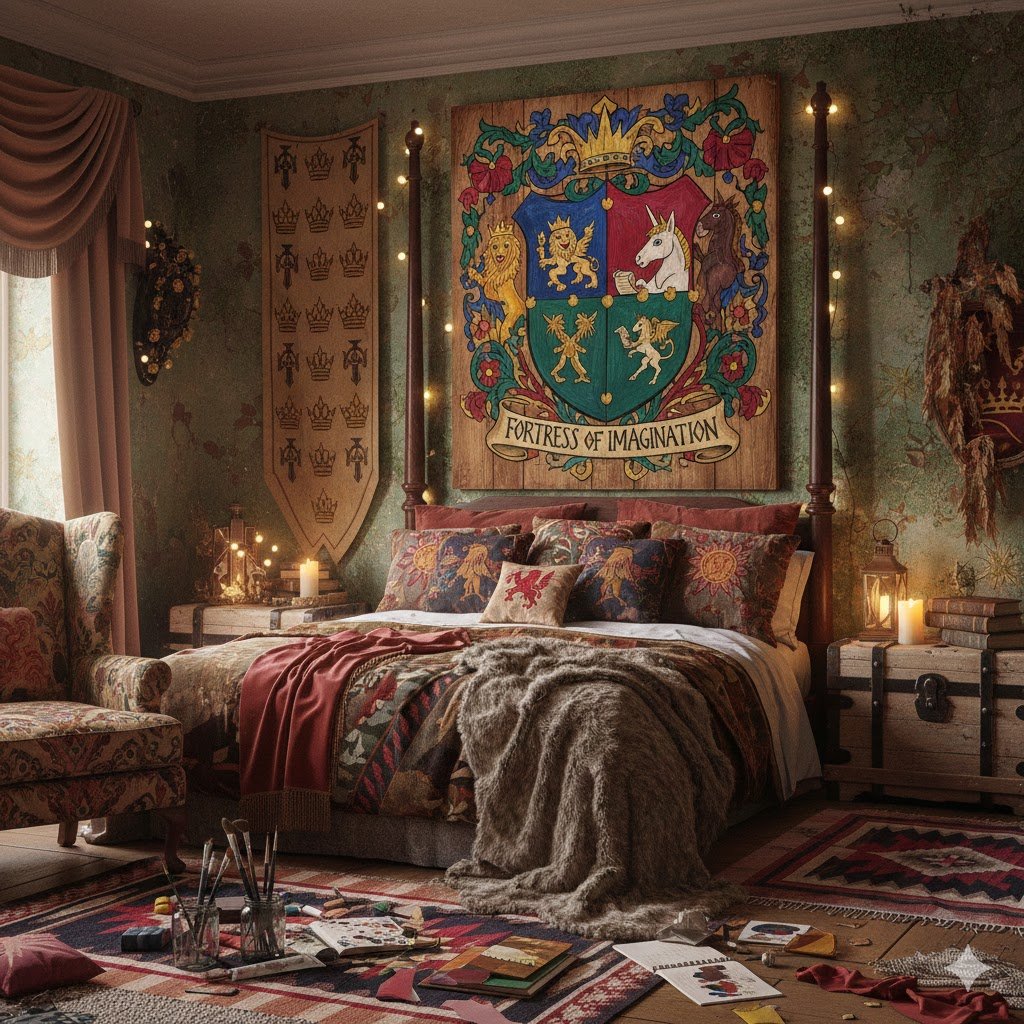
Every proper castle needs some form of heraldry to establish its aristocratic credentials and legacy. A personalized coat of arms or a stylized crest is an easy, high-impact DIY project that gives your room an instant history and a sense of personalized grandeur, making the space feel uniquely and regally yours.
This is a chance to get creative with your design. Start by designing a simple crest silhouette (think a lion, a crown, or a mythological bird) online. You can then print this out, trace it onto a thick wooden plank or a medium-sized canvas, and paint it. Use a palette of deep primary colors—like faded red, antique gold, and navy—to give it that weathered, traditional feel. Don’t worry about perfection; slight imperfections make it look more authentic.
When completed, this custom piece of art should look like a family emblem that has adorned your castle for centuries. Place it proudly above a mantelpiece, a bookshelf, or even above the doorframe. It acts as an instant conversation piece and ties back to the royal aspect of Castlecore, lending a serious, official air to your cozy-but-dramatic space.
9. Rustic Wood Trunk Nightstand
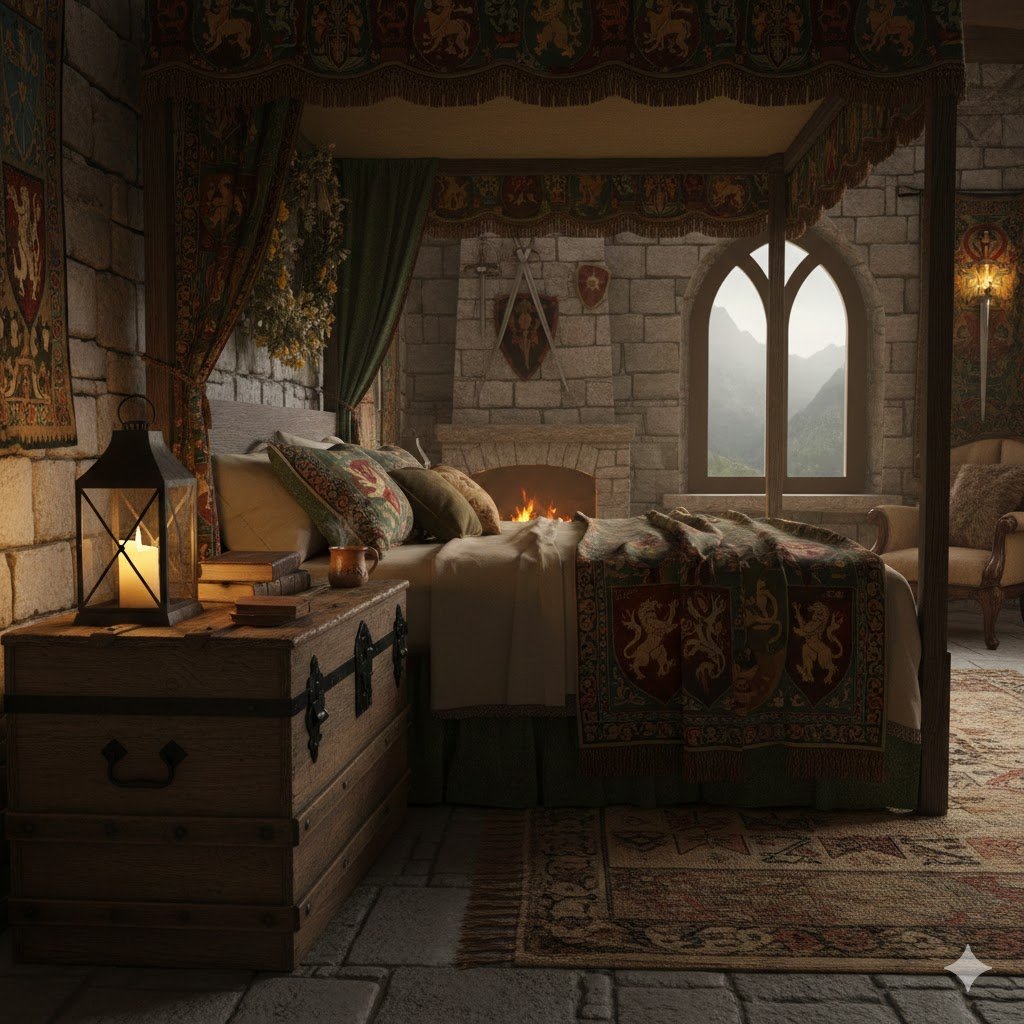
A sleek, glass, or mid-century modern nightstand will immediately betray your Castlecore aesthetic. The look demands heavy, dark storage pieces that feel like they could withstand a siege. We need pieces that suggest functionality and history, like sturdy chests used for storing goods during long, cold winters.
For this project, you need to hunt for an old wooden chest, a large trunk, or even a sturdy wooden crate at a yard sale or thrift store. Your DIY task is all about surface restoration and deepening the color. Sand it lightly to smooth any rough edges, then apply a deep walnut or espresso stain to give it a rich, dark hue. Finish by adding some decorative black metal handles or corner protectors, which are widely available and simple to screw into place.
The appeal of this piece is that it serves as functional storage while dramatically reinforcing the period-appropriate aesthetic. Placed beside your bed, the trunk’s dark color and chunky silhouette add crucial weight and texture to the room’s composition. It makes the entire sleeping area feel substantial, enduring, and delightfully grounded in history.
10. Gothic Arch Wall Accents
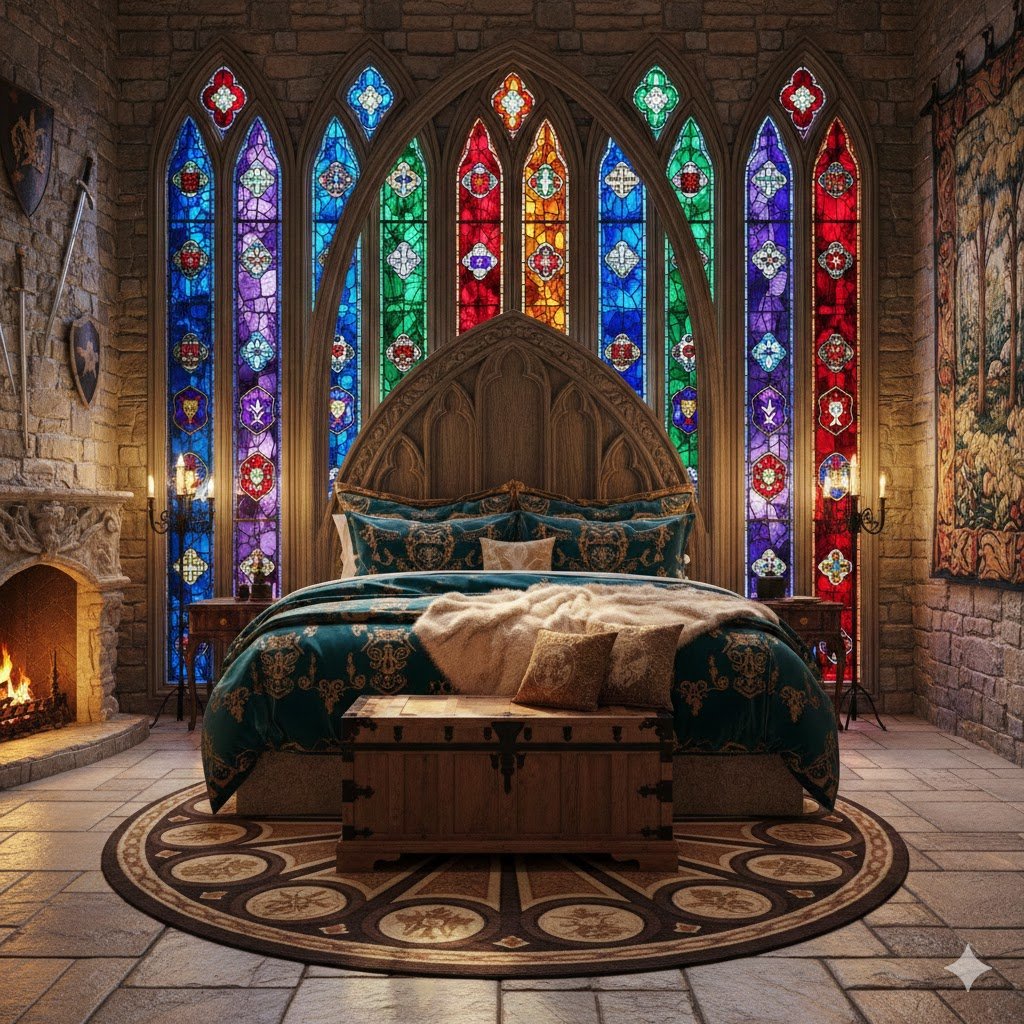
One of the defining architectural characteristics of medieval and gothic castles is the pointed arch. Introducing this signature shape subtly into your bedroom decor is a clever way to nod to the period’s architecture without needing structural changes. It introduces verticality and a beautiful sense of drama and formality.
Your DIY solution here is to use lightweight, cheap, and flexible crown molding or even thick cardboard cutouts. Create a faux arched doorway or window effect around a mirror, a simple shelf, or a large piece of tapestry. Once secured to the wall, paint the entire arch and the corresponding wall section a dark gray or matte black. This simple trick gives the illusion that a piece of your medieval architecture is peeking through the modern drywall.
This feature works best when it frames an already existing element, elevating it from mundane to majestic. The arch draws the eye upward, making the ceiling feel higher and adding depth. It’s a subtle architectural detail that, when painted in a deep, dark color, provides just the right amount of mysterious, gothic flair to complete your Castlecore transformation.
11. Leather-Bound and Vintage Books
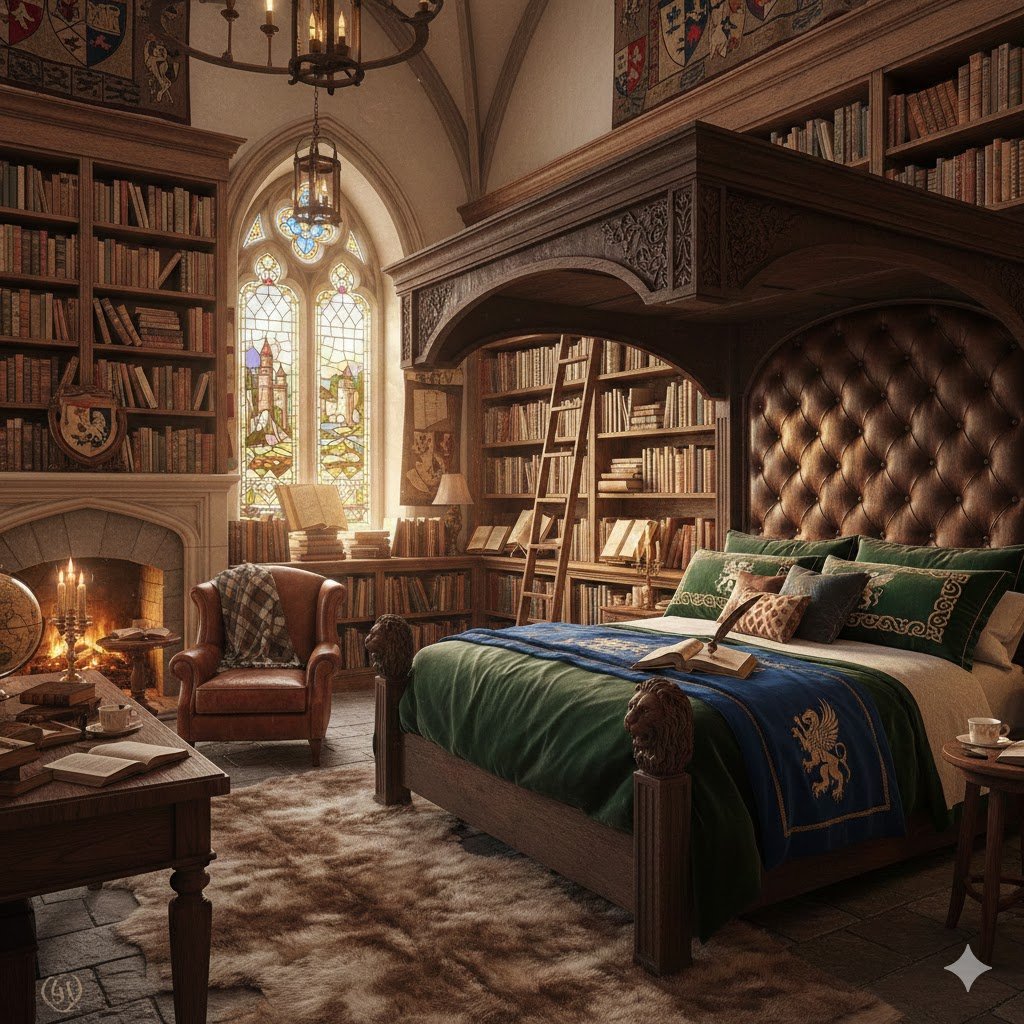
To lean into the scholarly aspect of Castlecore—that Dark Academia influence—we need books, and lots of them. But not just any books; they should look worn, weighty, and bound in leather, suggesting ancient tomes filled with forgotten wisdom, maps, and lore. Modern, colorful book jackets are an aesthetic liability here.
This is my favorite thrifting DIY project because it’s so satisfying. Buy any collection of hardback books based purely on their size and binding quality. Remove all the bright dust jackets, and then for the ultimate transformation, wrap the covers in inexpensive brown kraft paper or thin faux leather/vinyl adhesive sheets. You can then paint the spines a uniform dark color and use gold paint or a fine-tipped marker to stencil on titles in an aged, historical font.
These stacks of dark, uniform books should be scattered strategically on your rustic nightstand, stacked high on shelves, or displayed on the floor. This provides that key intellectual element, suggesting a forgotten library or a scholar’s private study. The visual weight and texture of these faux-leather volumes instantly elevate the room’s mood from just “cozy” to “intellectually intriguing.”
Wrap Up
See? Transforming a basic bedroom into a dramatic, regal sanctuary is completely within reach. Castlecore is fundamentally about a visual and tactile feast: the contrast between the ruggedness of faux stone and iron and the deep, comforting softness of velvet and faux fur. By focusing on these 11 elements—especially the DIY accents—you can create an immersive space that feels like it’s been waiting for you for a thousand years, all without spending a fortune.
I can tell you that the very first project I undertook when embracing this style was antiquing a ridiculously cheap mirror, and the impact it had was staggering. It truly shows that small details are what carry the aesthetic. So, which piece of history are you going to tackle first? Let me know if you want to dive deeper into the step-by-step instructions for the DIY Faux Stone Wall or if you’d like to explore more color palettes for that regal canopy drape. Happy decorating!
Bonus Tips
- Color Palette Suggestions: Focus on deep greens (forest, emerald), royal blues (sapphire, navy), rich burgundy and wine reds, charcoal gray, bronze and antique gold, and cream/off-white (for contrast).
- Shopping Hacks: Look for decorative trim pieces at the lumber yard for the gothic arch, raid the remnants bin at fabric stores for velvet scraps, and focus on weight/material quality over color when thrifting.
- Quick Tip: If you have an old, uncomfortable office chair, add a velvet or dark linen slipcover to blend it into the aesthetic immediately.