
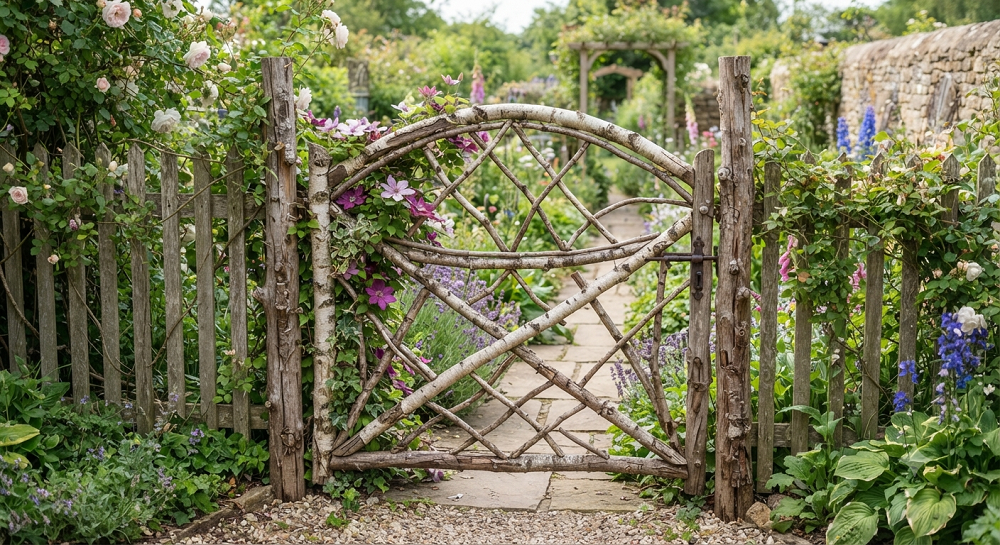
You know that moment when someone pulls into your driveway and you can literally watch their face change? That’s what a good garden gate does. It’s the handshake before the hug. And if your gate right now is a sagging chain-link thing held shut with a bungee cord, I promise you’re not alone. I replaced three gates before I found ones that actually held up to Midwest winters and my dog’s determination to test every hinge.
A garden gate isn’t just a barrier to keep the rabbits out of your lettuce (though mine has failed at that job spectacularly, more on that later). It’s the first real impression your yard makes. People decide whether your garden is “worth walking into” within about two seconds of seeing the entrance. That’s not me being dramatic, that’s just how curb appeal works.
So I pulled together my favorite garden gate styles, the ones I’ve either built myself, installed for neighbors, or straight-up copied from a garden tour that made me jealous. Some are cheap weekend projects. Some need a saw and a Saturday. One or two will cost you real money, and I’ll tell you honestly if I think it’s worth it.
1. The Classic White Picket Gate
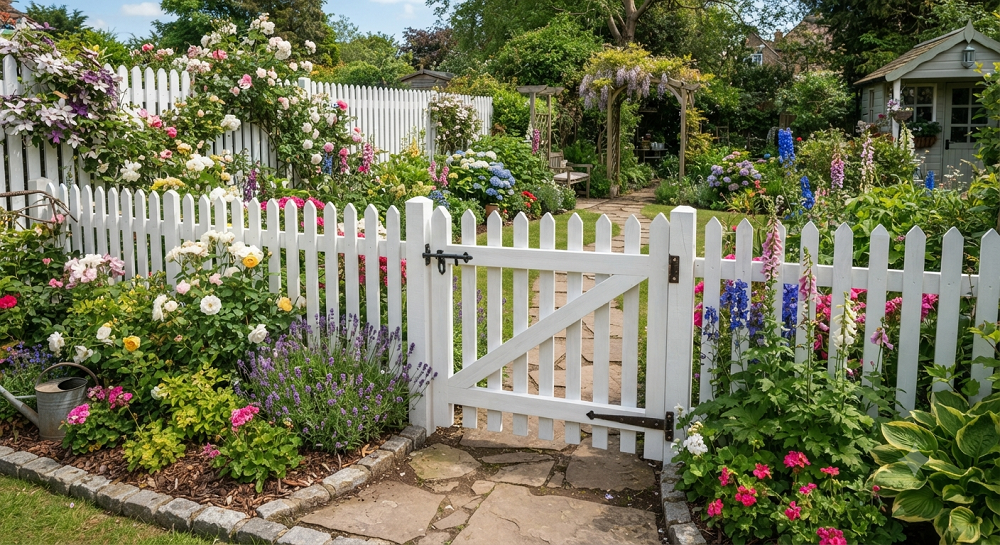
There’s a reason this shows up on every “cottage garden entrance” Pinterest board. A white picket gate says “friendly” without trying too hard. It’s the golden retriever of garden gates.
I built my first picket gate out of cedar fence pickets and a leftover 2×4 frame, and it took me one afternoon. The trick nobody tells you is to prime and paint every side of the wood, including the bottom edge, before you hang it. I skipped that step on my first attempt and had rot creeping up from the ground within two years.
For search purposes, people usually look this up as “white picket garden gate ideas” or “DIY picket fence gate.” If that’s you, know this: the spacing between pickets matters more than the picket style. Two to three inches apart looks classic. Wider than that and it starts looking like you ran out of wood.
Pair it with a simple black strap hinge and a thumb latch, and you’ve basically built a postcard. It’s not original, but there’s a reason clichés become clichés. This one works.
2. Arched Wooden Arbor Gate
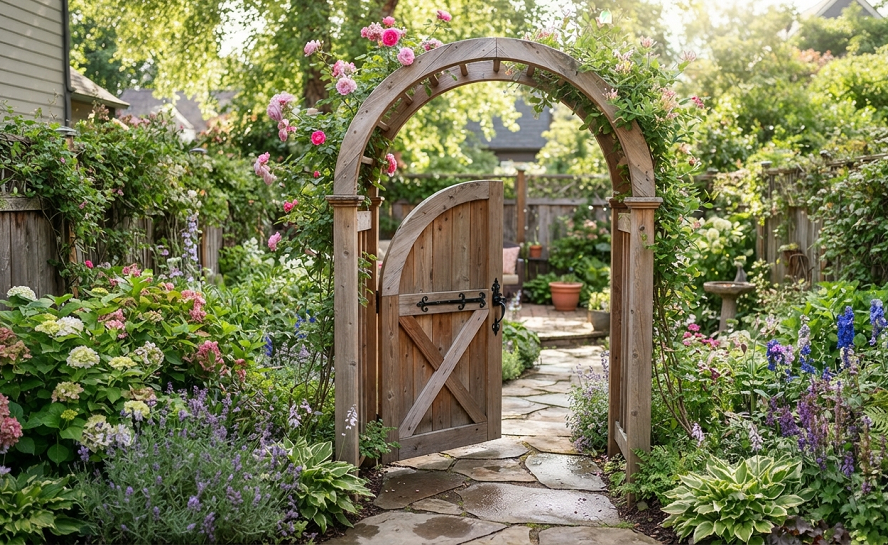
An arbor gate is a picket gate’s fancier cousin who went to design school. Instead of a flat top, you build (or buy) an arched structure over the gate itself, usually wide enough to train a climbing rose or clematis over.
My neighbor Denise has one covered in a rambling rose that blooms so hard in June it practically stops traffic. I’m not exaggerating. People slow their cars down. That’s the power of an arbor gate done right.
If you’re searching “arched garden gate with arbor” or “rose covered garden arch,” here’s my honest tip: build the arbor taller than you think you need. I’ve seen too many arbors that looked great empty and then turned into a hunched-over tunnel once the vines filled in. Aim for at least seven feet of clearance at the peak.
The downside is maintenance. Vines need pruning, the wood needs restaining every few years, and if you let a wisteria anywhere near it, you’re signing up for a decade-long wrestling match. Worth it for the wow factor, but go in with eyes open.
3. Reclaimed Wood Rustic Gate
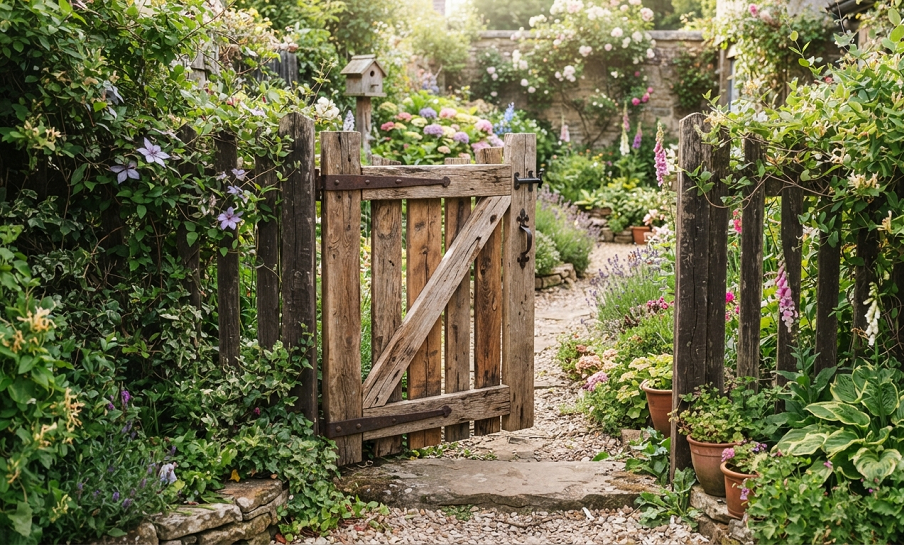
This is the gate for people who want their garden to look like it has stories to tell. Reclaimed barn wood, mismatched boards, visible saw marks, maybe a rusty old hinge you found at a salvage yard. It’s imperfect on purpose.
I built one of these from pallet wood after a move, mostly because I was too cheap to buy real lumber. Honestly, it turned out to be one of my favorite gates I’ve ever made. The unevenness gave it character that a store-bought gate just can’t fake.
“Rustic garden gate ideas” and “reclaimed wood gate DIY” are searched a ton, and for good reason. This style forgives mistakes. Crooked cut? Character. Mismatched wood tones? Charm. It’s basically the low-pressure entry point into gate-building for beginners.
One real consideration: reclaimed wood can carry old nails, splinters, and sometimes rot you can’t see until you cut into it. Inspect every board before you use it, especially if kids or bare feet will be near the gate.
4. Wrought Iron Estate Gate
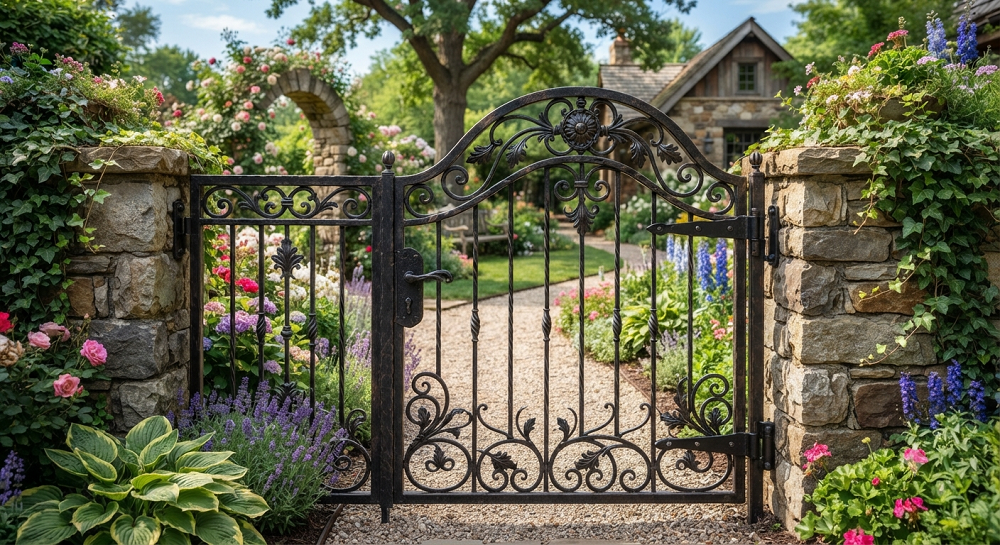
Now we’re getting into the “I have a landscaping budget” territory. Wrought iron gates bring old-world elegance, and they last basically forever if you keep them from rusting.
I installed one for a client years back on a stone pillar entrance, and it completely transformed a plain front yard into something that looked like it belonged on a postcard from the English countryside. There’s a weight and permanence to iron that wood just can’t replicate.
If your search brought you here through “wrought iron garden gate ideas” or “custom metal garden gate,” budget accordingly. A quality custom iron gate can run anywhere from several hundred to a few thousand dollars depending on size and detail. Ornate scrollwork costs more than simple bar designs.
Real talk on this one: iron gates need a repaint or rust treatment every few years, especially in humid or coastal climates. Skip that maintenance and you’ll end up with orange streaks running down your gate within a couple seasons. I’ve seen it happen to gates that cost more than my car.
5. Bamboo Garden Gate
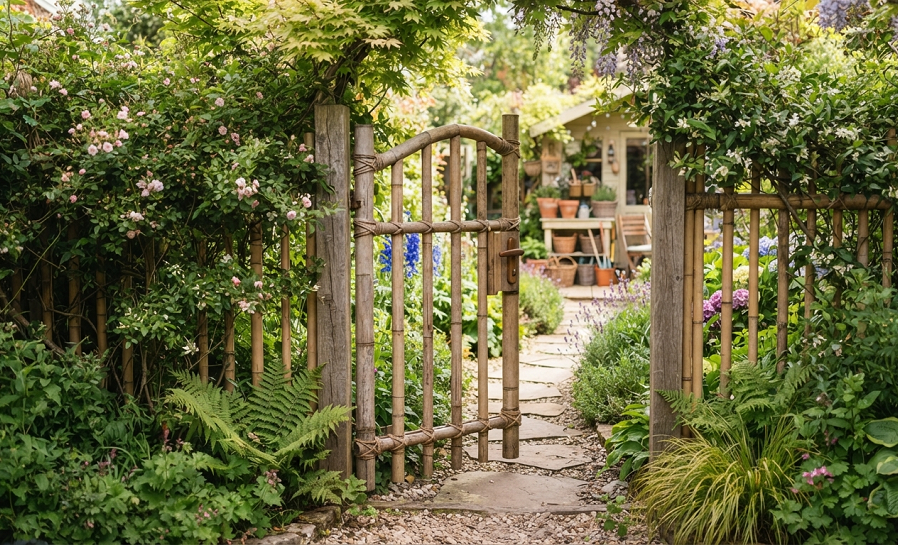
For a completely different vibe, bamboo gates bring a natural, almost zen quality that works beautifully with Asian-inspired or minimalist garden designs. They’re lightweight, renewable, and honestly kind of satisfying to build.
I put one together using pre-cut bamboo poles and marine-grade rope for a friend’s meditation garden, and the whole thing came together faster than any wood gate I’ve built. No power tools required if you don’t want them.
People searching “bamboo garden gate DIY” or “Japanese style garden gate” are usually after that specific calm, natural look, and bamboo delivers it better than anything painted or stained. It photographs beautifully too, if that matters to you.
The catch: bamboo isn’t as durable as hardwood or metal, especially in wet climates. It can develop mold or start splitting after a few years of exposure. I’d treat this as a five-to-seven-year gate, not a forever gate, unless you’re diligent about sealing it annually.
6. Modern Horizontal Slat Gate
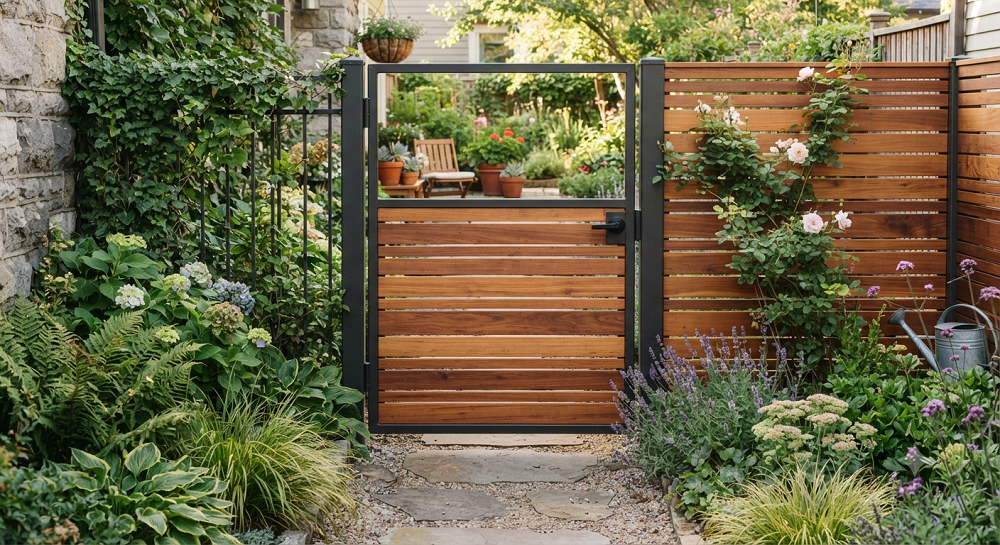
If your house leans contemporary, a horizontal slat gate is going to look a hundred times better than anything with a picket point. Clean lines, flat-top design, usually stained a deep espresso or left to weather naturally.
I built one of these for my own side yard using cedar fence boards laid horizontally with small gaps between each slat. It’s honestly one of the simplest builds on this list, and it looks like it cost way more than it did.
If you typed “modern garden gate ideas” or “horizontal slat fence gate” to find this, the design principle to remember is consistency. Even gaps, even board widths, a completely flush top edge. Any inconsistency reads as sloppy in a modern design in a way it wouldn’t in a rustic one.
I’ll be blunt: this style requires more precision than a rustic gate. If you’re not comfortable with a circular saw and a level, this might be a job to hire out rather than a Saturday DIY.
7. Arched Metal Garden Gate
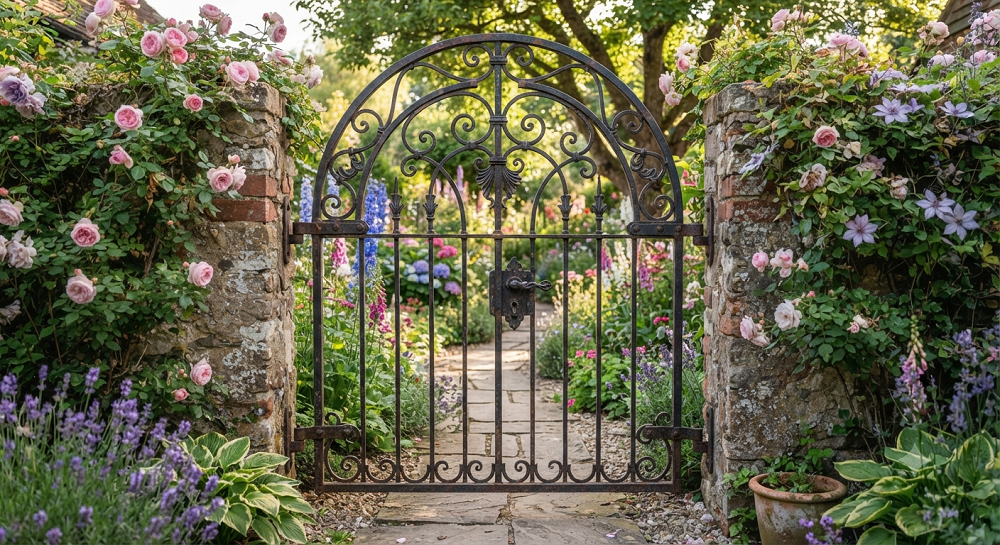
Somewhere between the heaviness of a full wrought iron estate gate and the simplicity of a wood gate sits the arched metal gate. Think black powder-coated steel, simple scrollwork, an arched top that fits into a matching fence line.
I installed one of these for my own backyard a few years ago, and it’s held up beautifully with zero rust issues so far, mostly because I sprung for the powder coating instead of raw paint.
Search terms like “black metal garden gate” and “arched iron fence gate” pull up thousands of options now, from off-the-shelf models at big box stores to custom welded pieces. The off-the-shelf route is genuinely fine for most yards, and it’ll save you a ton compared to custom work.
Quick side note here: measure your opening twice before ordering. Metal gates are far less forgiving than wood if the opening is even an inch off. I once had to return a gate because I trusted a measurement I took in poor lighting. Learn from my mistake.
8. Dutch Door Style Garden Gate
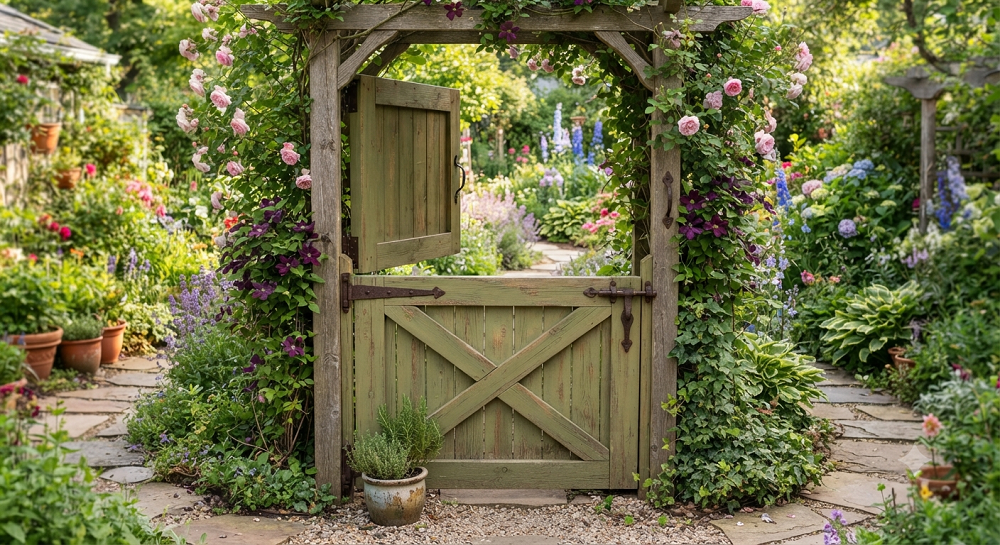
A Dutch door gate splits horizontally so the top half can open independently from the bottom. It’s a fun, slightly unexpected feature that works great if you’ve got kids or dogs you want to keep contained while still being able to chat with someone over the top.
I built one for a friend with a toddler and a very escape-artist beagle, and it solved both problems at once. She can stand at the gate and talk to neighbors without worrying about a small human or a determined dog making a break for the street.
If “Dutch door garden gate” or “split garden gate ideas” is what brought you here, know that the hardware is the tricky part. You need two separate sets of hinges and latches, and getting both halves to align properly takes some patience.
It’s a niche style, and I won’t pretend it fits every yard. But for young families or anyone with a dog who treats “stay” as more of a suggestion, it’s genuinely one of the most functional entries on this list.
9. Vine-Covered Trellis Gate
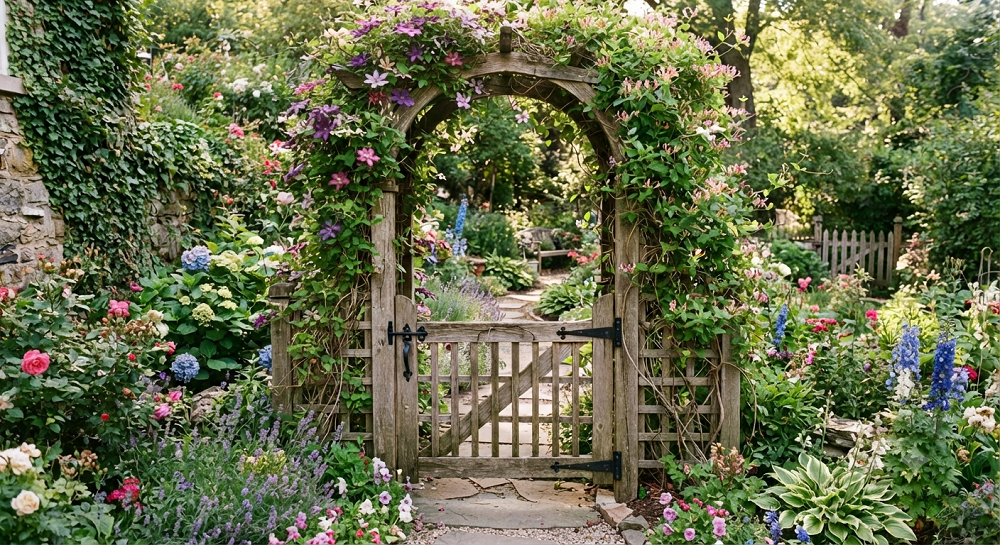
This is less a single gate style and more a strategy: take a simple, even ugly, wire or wood gate and let a fast-growing vine completely take it over. Clematis, morning glory, and climbing hydrangea all work well depending on your climate.
The summer my zucchini took over the entire ZIP code, I also let a trumpet vine loose on an old chain-link gate out of pure neglect, and it accidentally became the prettiest thing in my yard. Sometimes the best design decision is just letting nature do the work.
“Vine covered garden gate” and “flowering trellis gate” get searched constantly by people who want that lush, secret-garden look without building anything fancy. Honestly, this is the budget hack of the entire list. Start with any structurally sound gate and add a trellis panel if it doesn’t already have one for the vine to climb.
One warning: some vines are aggressive enough to warp or even break a wood gate over time as they thicken and twist through the slats. Trumpet vine and wisteria are the worst offenders. If you go this route, pick a metal or well-built gate as your base structure, not a flimsy one.
10. Rustic Twig and Branch Gate
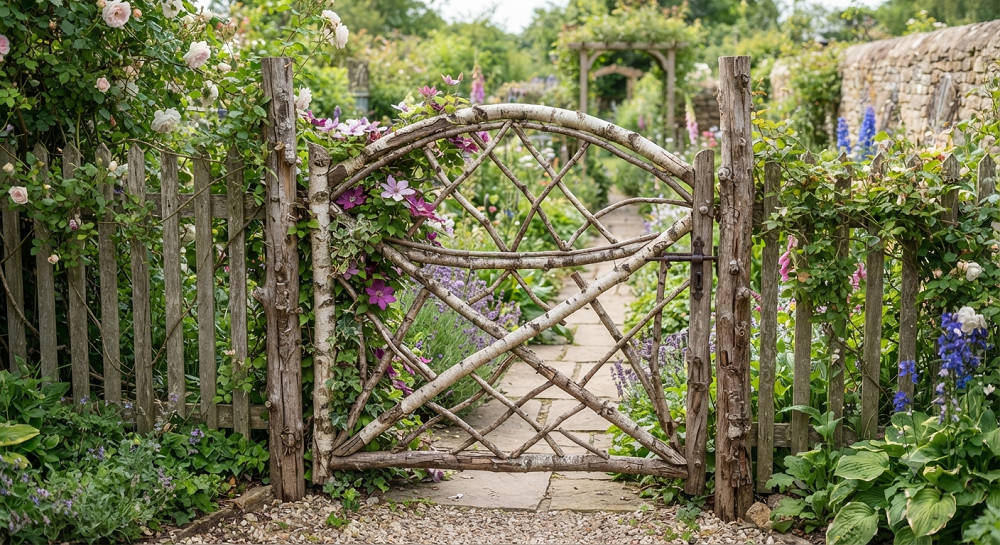
This one’s for the true DIY romantics. Using fallen branches, twigs, and natural materials, you build a gate that looks like it grew straight out of the woods around it. It’s got a fairy-tale, cottagecore energy that’s hard to fake with store-bought materials.
I made a small version of this for a garden bed border, not even a full gate, just using willow branches I wove together, and it took maybe two hours. Full-size versions take longer but the technique is the same.
If you searched “twig garden gate” or “natural branch gate DIY,” this is very much a “gather materials for free” kind of project. Willow, birch, and hazel branches all bend well for weaving. Straighter, sturdier branches like oak work better for the frame.
I’ll be honest, though: this style has a shorter lifespan than anything else on this list. Untreated branches rot, and even sealed ones rarely last more than a handful of years outdoors. I’ve found that it’s a total waste of money to spend a lot on hardware for a gate you know you’ll rebuild in five years. Keep it cheap and treat it as a fun, temporary project.
11. Board and Batten Gate
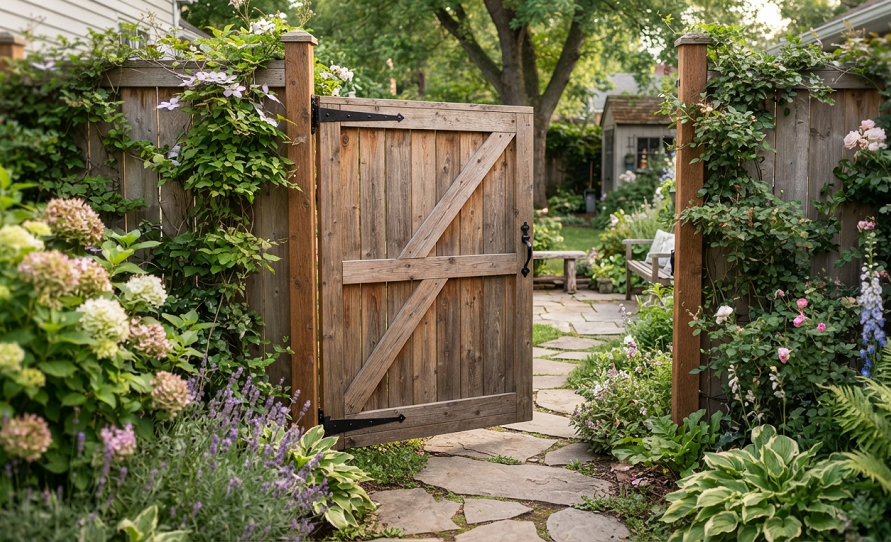
Board and batten gates use vertical boards held together with horizontal (and sometimes diagonal) battens on the back. It’s a classic farmhouse look that’s sturdier than it sounds, since the diagonal brace prevents sagging over time.
This is actually the gate style I recommend most often to friends asking for their first DIY build. I’ve built probably six of these over the years for various people’s yards, and I’ve never had one sag or twist, as long as the diagonal batten is installed correctly.
“Board and batten garden gate” and “farmhouse gate DIY” are the search terms that usually lead people here, and this style earns its popularity. It’s simple enough for a beginner, sturdy enough to last, and flexible enough to paint or stain in basically any color scheme.
The one mistake I see constantly: people install the diagonal batten running the wrong direction. It needs to run from the bottom hinge-side corner up to the top latch-side corner. Get that backwards and the gate will sag within a year, guaranteed.
12. Painted Statement Color Gate
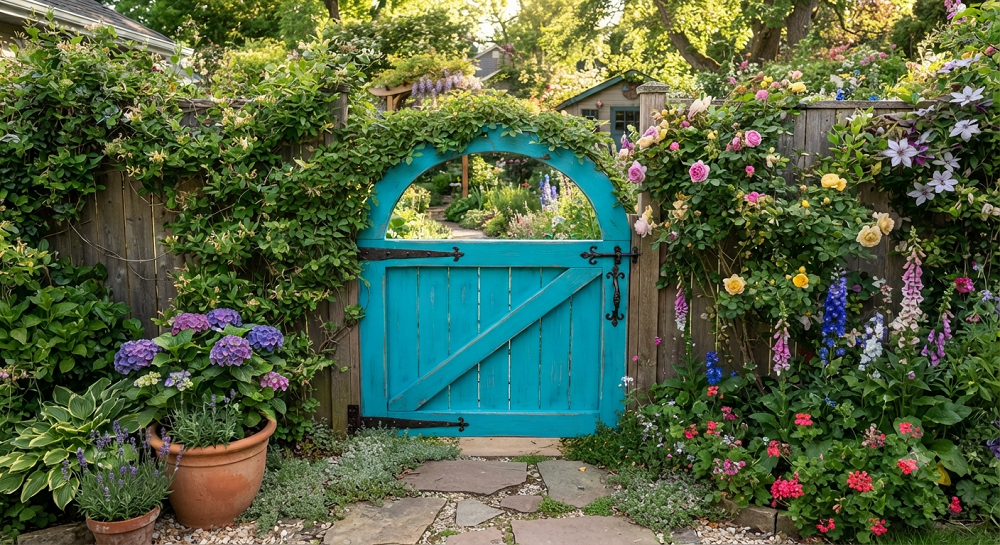
Sometimes the best gate idea isn’t about the material or the shape at all, it’s about color. A bright, unexpected paint color on an otherwise simple gate design can do more for curb appeal than any fancy woodworking.
I painted a plain picket gate a deep teal a few years back on a whim, and it’s genuinely the compliment I get most from neighbors walking by. It cost me a forty-dollar can of exterior paint and an afternoon.
If you’re here from “colorful garden gate ideas” or “painted front gate colors,” my honest advice is to pick a color that contrasts with your house, not matches it. Deep blues, teals, and even a confident red or yellow tend to photograph and read better than anything in the beige-to-white family, which your house probably already has plenty of.
Use a proper exterior-grade paint or stain-and-seal combo, not leftover interior paint from a closet project. I made that mistake once on a garden bench and watched the color fade to a chalky mess within a single summer.
13. Salvaged Door Gate
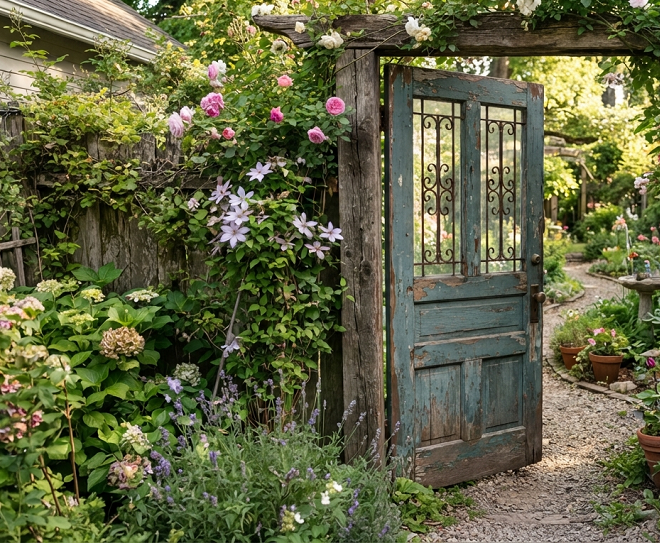
For the ultimate one-of-a-kind entrance, some people repurpose an actual old door, salvaged from a barn, an old house renovation, or an architectural salvage yard, and hang it as a garden gate. It’s bold, it’s unexpected, and no two ever look alike.
I found an old paneled door at a salvage shop for twenty bucks, cut it down to fit a shorter garden opening, and hung it with heavy-duty gate hinges. It’s easily the most-commented-on feature in my entire yard, more than the actual plants I’ve spent years cultivating.
“Salvaged door garden gate” and “old door repurposed as gate” are the exact phrases that tend to lead people to this idea, usually because they saw one on a garden tour or social media and got obsessed, the same way I did.
A quick side note before you go hunting for the perfect old door: check for lead paint if the door is from before 1978, and make sure the wood core isn’t rotted through. Doors look sturdy from a few feet away but can be surprisingly compromised underneath old paint layers. I’ve had to pass on a few “perfect” doors because a poke with a screwdriver revealed soft, spongy wood.
Real Talk: What’s Not Worth The Effort
Not every gate idea that looks amazing on a garden tour is worth doing in your own yard, and I want to be straight with you about a few things.
Ornate wrought iron custom work sounds romantic until you get the quote. Unless you’ve got the budget for it, a simpler black metal gate from a home improvement store will get you 80% of the look for a fraction of the cost. Nobody walking by is doing a close inspection of your scrollwork.
Vine-covered gates need real commitment. If you’re not someone who’s going to prune regularly, skip the aggressive climbers and stick to something slower-growing, or you’ll end up with a gate-shaped hedge instead of the delicate, romantic look you were picturing.
And twig or branch gates, much as I love the look, are genuinely not a long-term investment. If you want that natural, woven aesthetic for decades instead of years, look into willow panels sold specifically for fencing, which are treated differently than random branches you gather yourself.
Lastly, don’t skip the latch and hinge hardware to save money. I’ve watched more beautiful gates get ruined by a cheap latch that rusted shut or a hinge that couldn’t hold the weight than by any design flaw. Spend the extra fifteen dollars on quality hardware. Your future self will thank you the first time it’s fifteen degrees out and you don’t want to fight a frozen latch.
Final Thoughts
At the end of the day, your garden gate is doing a job most people never think about: it’s setting the tone for everything behind it. A tired, sagging gate makes even a gorgeous garden feel like an afterthought, and a thoughtful, well-built gate can make even a modest yard feel intentional and cared for.
Pick the style that matches how you actually live, not just how it looks in a photo. If you’ve got kids and dogs, function matters more than flourish. If you’re chasing that cottage garden dream, spend the extra time on the arbor and the roses.
So tell me, what’s happening at your garden entrance right now? Are you working with a total blank slate, or trying to fix a gate gone wrong? Drop your situation in the comments below, I’d love to help you figure out which of these would work best for your yard.

About Syprose Kiche
Syprose Kiche is the creator and writer behind My Besuited Home, a practical home and garden website covering DIY projects, gardening, lawn care, landscaping, home improvement, and outdoor living. She focuses on turning everyday homeowner questions into clear, practical guides backed by careful research and useful real-world considerations.