

Nothing kills a summer evening faster than slapping your own leg every ten seconds. I get it. You finally get the kids outside, the burgers are on the grill, and within five minutes everyone’s covered in itchy red bumps and begging to go back in. I spent three summers dumping money into store-bought mosquito foggers before I figured out that a few cheap ingredients from my kitchen and garden shed could do the job just as well, sometimes better.
This isn’t some Pinterest fantasy where you spritz a little peppermint water and mosquitoes vanish forever. Homemade mosquito yard spray takes a bit of technique and a little consistency, but once you know what actually works (and what’s a waste of a mason jar), you can turn your yard back into a place people want to hang out after 6 p.m.
Below, I’m sharing the exact recipes I use, how to apply them so they actually stick around, and the mistakes that cost me an entire weekend of reapplying spray for nothing.

Why Mosquitoes Love Your Yard (And Why Spray Alone Won’t Fix It)
Before you start mixing anything in a spray bottle, it helps to understand what you’re up against. Mosquitoes aren’t just randomly buzzing around your property. They’re drawn to specific things: standing water for breeding, tall grass and shady spots for resting during the heat of the day, and carbon dioxide plus body heat when they’re hunting for a blood meal.
My neighbor used to complain endlessly about mosquitoes eating her alive every time she sat on her porch, while my yard, twenty feet away, stayed relatively calm. The difference wasn’t luck. She had a birdbath she never changed and a kiddie pool that sat half-full for two weeks after a rainstorm. I didn’t.
Homemade mosquito yard spray works best as one piece of a bigger strategy. If you’re spraying essential oils around a yard that still has standing water breeding grounds, you’re fighting a losing battle. Think of the spray as crowd control, and eliminating breeding sites as cutting off the supply chain.
It also helps to know that mosquitoes have a range. Most species don’t wander far from where they hatched, usually somewhere between 100 and 300 feet, though a few species will travel a mile or more if the wind pushes them along. That means the mosquitoes biting you on your patio probably grew up somewhere on your own property, or your immediate neighbor’s. This was actually good news for me once I understood it, because it meant I had real control over the problem instead of just being at the mercy of whatever was flying through the neighborhood.
Female mosquitoes are the ones doing the biting, since they need the protein from blood to develop their eggs. Males stick to feeding on nectar and plant juices, which is part of why planting the right flowers around your yard can pull double duty: they feed the harmless males and pollinators while doing nothing for the females that are actually bothering you. Understanding this distinction changed how I thought about my garden layout entirely.
The Best Homemade Mosquito Yard Spray Recipes That Actually Work
I’ve tested more combinations than I care to admit, including a few that smelled so bad my own family refused to sit outside. These are the ones that earned a permanent spot in my gardening shed.
1. Essential Oil and Witch Hazel Spray

This is my go-to recipe for a quick spray you can apply to skin, clothing, or outdoor furniture in a pinch. It’s not going to last through a rainstorm, but for a single evening gathering, it’s hard to beat.
What you’ll need:
- 1 cup witch hazel
- 1 cup distilled water
- 30 drops citronella essential oil
- 15 drops eucalyptus essential oil
- 15 drops lemongrass essential oil
Combine everything in a 16-ounce spray bottle, shake it up, and spray it on porch railings, chair legs, and anywhere people will be sitting. I keep one of these bottles by my back door from May through September because I never know when we’ll decide to eat dinner outside on a whim.
The witch hazel acts as an emulsifier, which basically means it helps the oil and water blend together instead of separating into two useless layers. Without it, you’d have to shake the bottle before every single use, and even then, you’d get inconsistent coverage.
2. Garlic and Cayenne Yard Barrier Spray

This one smells rough for about an hour after application, so fair warning if you’re hosting a dinner party. But for treating the perimeter of your yard, garden beds, and shady tree lines, it’s one of the most effective homemade options I’ve used.
What you’ll need:
- 4 garlic cloves, crushed
- 1 tablespoon cayenne pepper
- 1 quart water
- 1 tablespoon liquid dish soap
Boil the garlic in the water for 15 minutes, let it cool completely, then strain out the solids. Mix in the cayenne pepper and dish soap, which helps the spray stick to leaves and surfaces instead of beading up and rolling off. Pour it into a garden sprayer and coat the base of shrubs, fence lines, and any shaded resting spots where mosquitoes like to hide during the day.
I discovered this recipe after my basil plants somehow stayed mosquito-free while everything else in the yard got hammered. Turns out garlic’s sulfur compounds genuinely repel a wide range of pests, not just mosquitoes. My tomato plants are grateful too.
3. Neem Oil Yard Spray
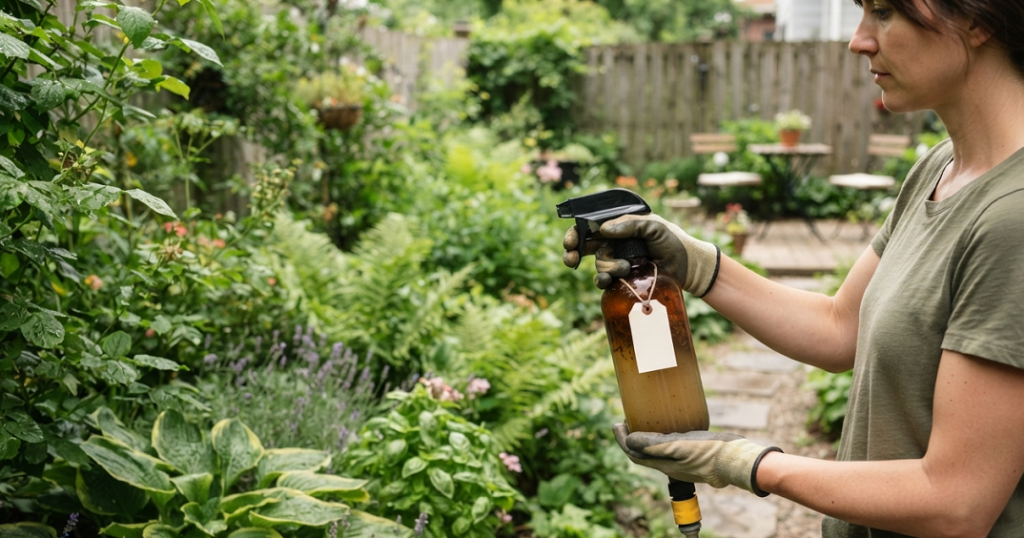
Neem oil gets thrown around a lot in gardening circles, mostly for aphids and other plant pests, but it works surprisingly well against mosquitoes too. It’s a bit more of an investment upfront since pure neem oil isn’t cheap, but a little goes a long way.
What you’ll need:
- 2 tablespoons neem oil
- 1 teaspoon liquid dish soap
- 1 gallon water
Mix the dish soap into the water first, then add the neem oil and stir well. Neem oil doesn’t dissolve in water on its own, so the soap is doing important work here as an emulsifier. Load it into a pump sprayer and treat your garden beds, grass, and any standing greenery around your patio.
I apply this one every 5 to 7 days during peak mosquito season. It’s not an instant knockdown spray. It works more as a long-term deterrent, disrupting mosquito life cycles over time rather than killing them on contact.
4. Apple Cider Vinegar Trap-and-Spray Combo

This isn’t technically a spray on its own, but I’m including it because pairing it with any of the recipes above dramatically improves your results. Mosquitoes are drawn to the sweet, fermented smell of apple cider vinegar, and you can use that to your advantage.
Fill a shallow bowl with apple cider vinegar and a few drops of dish soap, then place it a good distance away from your seating area, ideally near the edge of your property. The dish soap breaks the surface tension so mosquitoes that land in the bowl can’t escape. It’s not glamorous, but it works as a decoy that pulls attention away from your patio while your spray handles the rest.
Quick side note: Don’t place these traps too close to where people are sitting. I made that mistake once and basically created a mosquito buffet six feet from my grill. Put the trap on the opposite side of the yard from your gathering spot.
5. Peppermint and Clove Oil Spray for Sensitive Skin
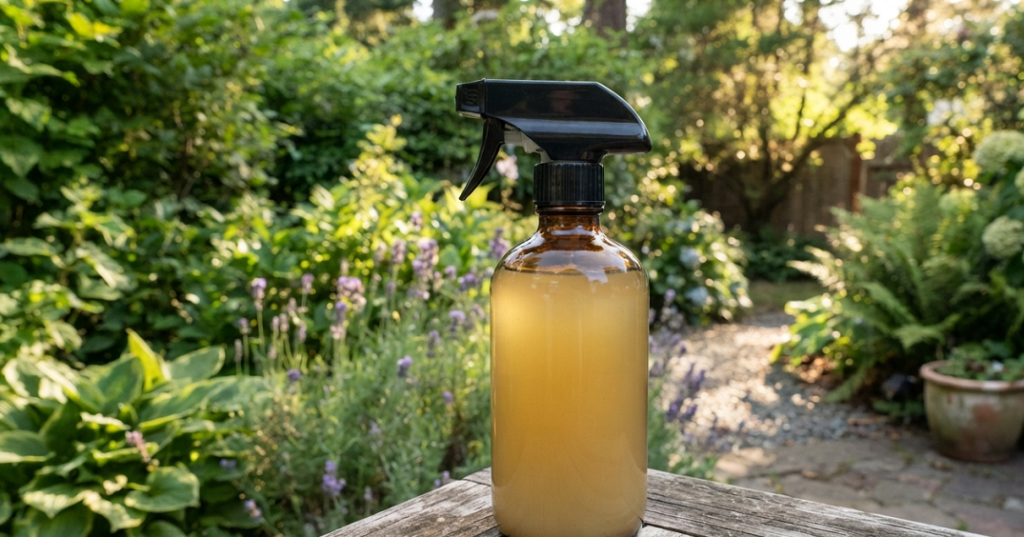
If you’ve got young kids or anyone with sensitive skin in the house, this milder recipe is worth keeping around. It’s gentler than the garlic spray and smells a lot better too, which your dinner guests will appreciate.
What you’ll need:
- 1 cup water
- 10 drops peppermint essential oil
- 10 drops clove essential oil
- 1 teaspoon vegetable glycerin
The glycerin helps the mixture cling to skin and surfaces a little longer than a straight water-based spray would. Shake well before every application since this one separates faster than the witch hazel version. I keep a small bottle of this in the diaper bag during summer cookouts because it’s mild enough to spray directly on my kid’s ankles and wrists without any complaints.
How Often Should You Spray Your Yard for Mosquitoes?
This is the part most people get wrong, myself included when I first started. A single application isn’t going to carry you through a whole weekend, especially after rain.
Here’s the schedule that’s worked for me:
- Spray garden beds and shrubs every 5 to 7 days during peak mosquito months, usually June through August depending on where you live.
- Reapply skin and clothing sprays every 2 to 3 hours if you’re outside for an extended period, since sweat and movement break down the oils faster than you’d think.
- Spray immediately after rain, since rainfall washes away most of the natural repellents and also creates fresh puddles for breeding.
- Treat problem zones more frequently than open lawn areas. Anywhere shaded, damp, or near standing water needs attention every 3 to 4 days instead of the standard weekly schedule.
I used to spray my whole yard on a strict Sunday schedule regardless of weather, which meant I was wasting spray on dry weeks and getting eaten alive on weeks it rained Wednesday and I didn’t reapply until the following Sunday. Pay attention to your actual conditions instead of the calendar.
Where to Focus Your Spray for Maximum Results
Not every square foot of your yard needs equal attention. Mosquitoes have favorite hangout spots, and if you know where to look, you can concentrate your efforts instead of spraying everything blindly.
Focus on the undersides of leaves, the base of dense shrubs, tall grass along fence lines, underneath decks and porches, and any area that stays shaded and damp for most of the day. These spots stay cooler and more humid than open lawn, which is exactly what mosquitoes are looking for when they’re not actively biting.
I walk my property line every few days during the summer specifically checking these zones. My compost bin corner, for whatever reason, is basically mosquito Grand Central Station, so it gets extra attention every time I spray.
The “Real Talk” Section: What’s Not Worth Your Time
I want to be straight with you here because a lot of gardening advice online oversells what homemade sprays can actually do.
Homemade mosquito yard spray will not eliminate every single mosquito from your property. If you’ve got a serious infestation, a nearby pond, or a neighbor with a chronically flooded yard, natural sprays alone probably won’t cut it. I’ve found that citronella candles get way more credit than they deserve. They work in a very small radius, maybe three or four feet, and the second there’s any breeze, that protective bubble is basically gone. I don’t bother with them anymore except as ambiance.
Bug zappers are another one I’d skip. They’re loud, they kill way more beneficial insects like moths and beetles than actual mosquitoes, and the research on their effectiveness against mosquito populations specifically is pretty underwhelming. If you already own one, fine, keep using it, but I wouldn’t recommend buying one just for mosquito control.
Reapplication is the other thing people underestimate. These sprays break down in sunlight and rain faster than commercial products with synthetic stabilizers. If you’re the type who sprays once and forgets about it for a month, you’re going to be disappointed with your results and probably conclude that homemade sprays “don’t work,” when really the issue is inconsistency.
And one more honest note: essential oil sprays can irritate skin, especially on kids or pets, if you go too heavy on concentration. Always do a small patch test before spraying anyone directly, and keep concentrations lower for children than what I’ve listed above if you’re dealing with particularly sensitive skin.
Combining Homemade Sprays With Yard Maintenance for Best Results
Spray is only half the equation. The habits I changed around my yard maintenance made a bigger difference than any recipe I’ve mentioned so far.
Dump and refill birdbaths every three days. Check gutters for clogs that trap water after rain. Keep grass trimmed short, since mosquitoes rest in tall grass during the day. Store any containers, buckets, or kiddie pools upside down when they’re not in use. These steps take maybe twenty minutes a week combined, and they’ll do more for your mosquito problem than the fanciest spray recipe on this list.
I also started planting more mosquito-deterring plants around my patio, including citronella grass, lavender, and marigolds. They’re not a magic bullet, but they add another layer of defense and they look nice, which is more than I can say for a spray bottle sitting on the porch railing.
What to Use to Apply These Sprays
The container you use matters more than people assume. I burned through three cheap spray bottles my first summer before I figured out what actually holds up.
For skin and clothing sprays, a standard 16-ounce plastic spray bottle with an adjustable nozzle works fine. Choose one with a locking cap so it doesn’t leak all over your gardening bag. For yard-wide treatments like the garlic or neem oil recipes, you’ll want an actual pump garden sprayer, something in the 1 to 2 gallon range. Trying to cover a whole backyard with a hand-trigger spray bottle is exhausting and you’ll end up with uneven coverage, spraying some spots heavily and missing others entirely.
I’d also recommend keeping your sprayers dedicated to mosquito control only. Don’t use the same pump sprayer you use for weed killer, even if you rinse it thoroughly. Residue lingers in the seals and hose longer than you’d expect, and the last thing you want is herbicide residue landing on plants you’re trying to protect. I learned this after a batch of neem spray came out smelling faintly of the broadleaf weed killer I’d used the sprayer for the month before. Nothing happened to the plants, thankfully, but it was enough of a scare that I bought a second sprayer and labeled both clearly.
Glass spray bottles are worth the extra cost if you’re making the essential oil recipes. Citrus and clove oils can break down certain plastics over time, leaving a cloudy residue inside the bottle and potentially degrading the oils faster. It’s a small upgrade, but my glass bottles have lasted years longer than the plastic ones I started with.
Storing Your Homemade Sprays
Most of these recipes don’t have a long shelf life, which is another reason store-bought products lean so heavily on synthetic preservatives. Without those additives, you’re working with something closer to a fresh batch of salad dressing than a bottle of bug spray.
The witch hazel and essential oil blends will keep for about two weeks if stored in a cool, dark spot, like a cabinet or garden shed shelf out of direct sunlight. The garlic and cayenne spray is more perishable since it involves boiled plant matter, and I wouldn’t push it past five to seven days even refrigerated. Neem oil spray should be mixed fresh each time you plan to use it, since the emulsion tends to separate permanently after a day or two and stops working as effectively once it does.
I keep a small dry-erase label on each bottle with the date I mixed it. It sounds excessive, but after dumping out a batch of garlic spray that had gone properly rancid in my garage, I started taking expiration a lot more seriously.
Final Thoughts
Homemade mosquito yard spray isn’t a one-and-done fix, but it’s a genuinely effective, low-cost tool when you pair it with good yard habits and a realistic reapplication schedule. Start with one recipe, see how your yard responds, and adjust from there. Every yard is a little different depending on shade, moisture, and what’s growing nearby.
What’s your biggest mosquito battle this summer? Drop a comment below and let me know what’s worked (or completely flopped) in your yard. I read every one and I’m always looking for new combinations to test.

About Syprose Kiche
Syprose Kiche is the creator and writer behind My Besuited Home, a practical home and garden website covering DIY projects, gardening, lawn care, landscaping, home improvement, and outdoor living. She focuses on turning everyday homeowner questions into clear, practical guides backed by careful research and useful real-world considerations.