
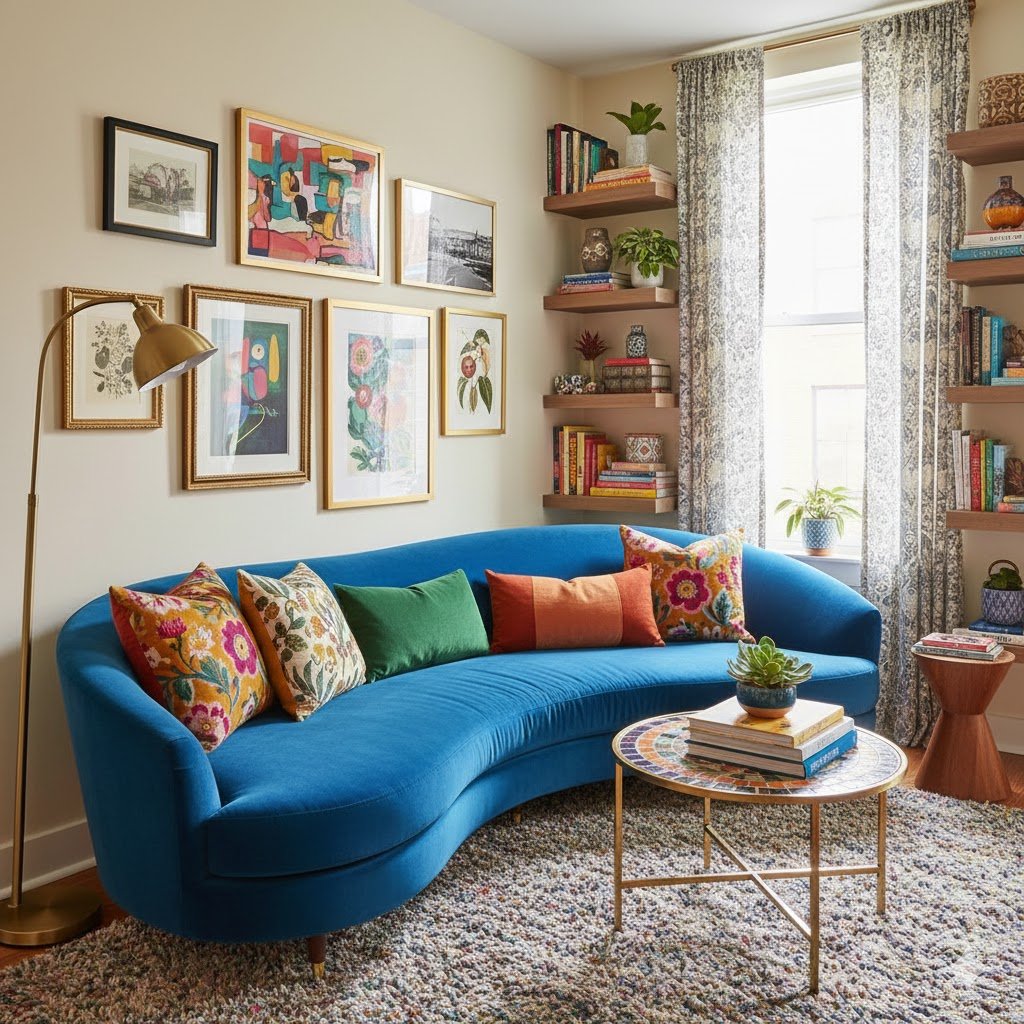
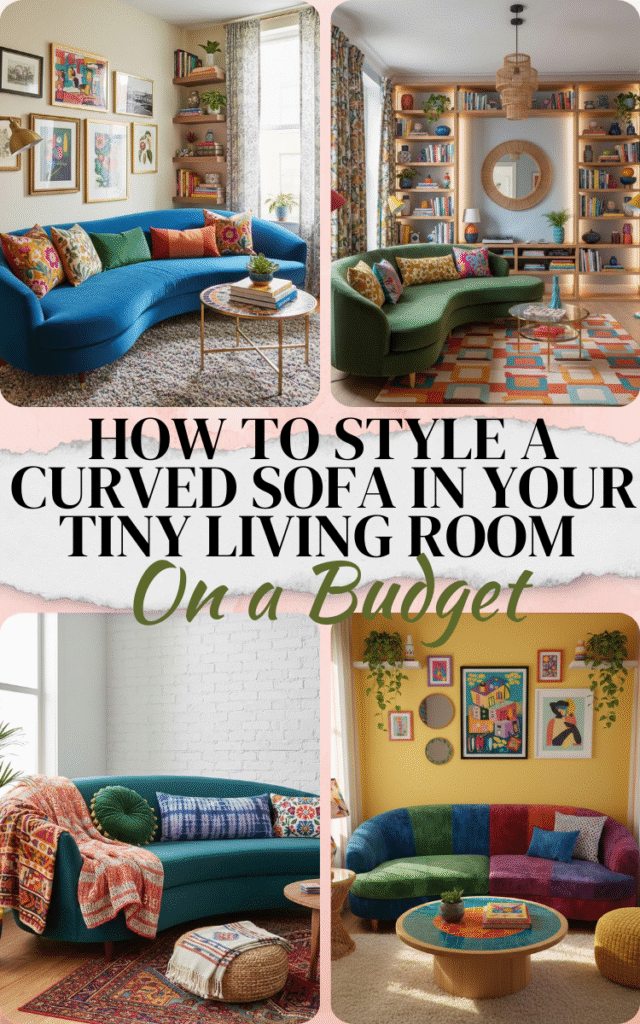
I’m going to let you in on a secret: the curved sofa is having a serious moment, and for good reason. It’s the ultimate combination of cozy comfort and high-end, architectural drama. But if you’re anything like me, you’ve probably scrolled past those perfect, velvety arcs, assuming they belong only in giant, sun-drenched lofts or sprawling designer showrooms.
We’ve all been told that statement furniture should be avoided in small spaces, especially if you’re shopping on a budget (because those expensive pieces require space). But I disagree. A curved sofa isn’t a problem; it’s a design loophole. It introduces fluid lines that immediately soften a boxy room and foster better conversation. You just need to know the smart, low-cost tricks to integrate it seamlessly. I’ve broken down the four essential, budget-friendly strategies you need to make that swooping silhouette the stunning centerpiece of your small home.
1. Mastering Placement: Forget the Wall, Embrace the Flow
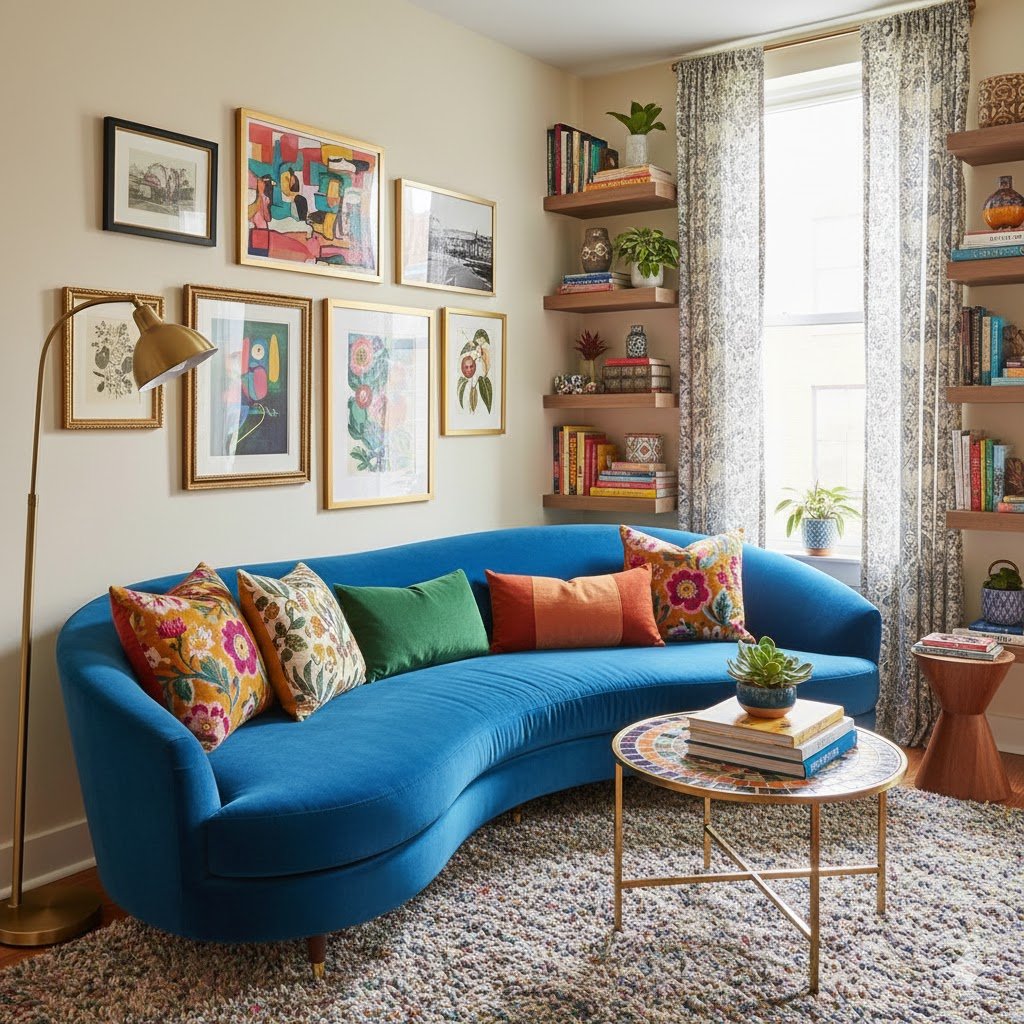
In a small space, every single inch matters. Your first instinct might be to cram that sofa against the longest wall, but resist! A curved sofa is meant to be admired from all angles, and suffocating it against plaster is the biggest mistake you can make.
The Core Rule: Give It Room to Breathe. Even if you can only manage 6 to 8 inches of space between the sofa’s back and the wall, that small gap is crucial. It tricks the eye into seeing the sofa as an intentional, “floating” element, which immediately makes the room feel more expansive and well-designed.
- Soften the Corner: If your space is tiny, use the curve to your advantage. Try placing the center point of the sofa against a hard 90-degree corner. The roundness instantly softens the harsh lines of the architecture, making the whole room feel less rigid and more welcoming.
- Define Your Zones: In a studio or an open-concept living/dining area, the back of the curved sofa is your best friend. It acts as a natural, low-profile barrier, clearly separating the ‘living’ zone without needing a bulky screen or shelving unit. This structure is essential for making multi-purpose spaces feel coherent.
- Create an Illusion of Depth: This is my favorite trick. If you float the sofa, place a slender console table, or even just a strategically placed stack of beautiful books, directly behind it. This small visual detail creates a gap, suggesting the room continues further than it actually does.
2. Budget-Friendly Pairings: Keep it Light and Curvy
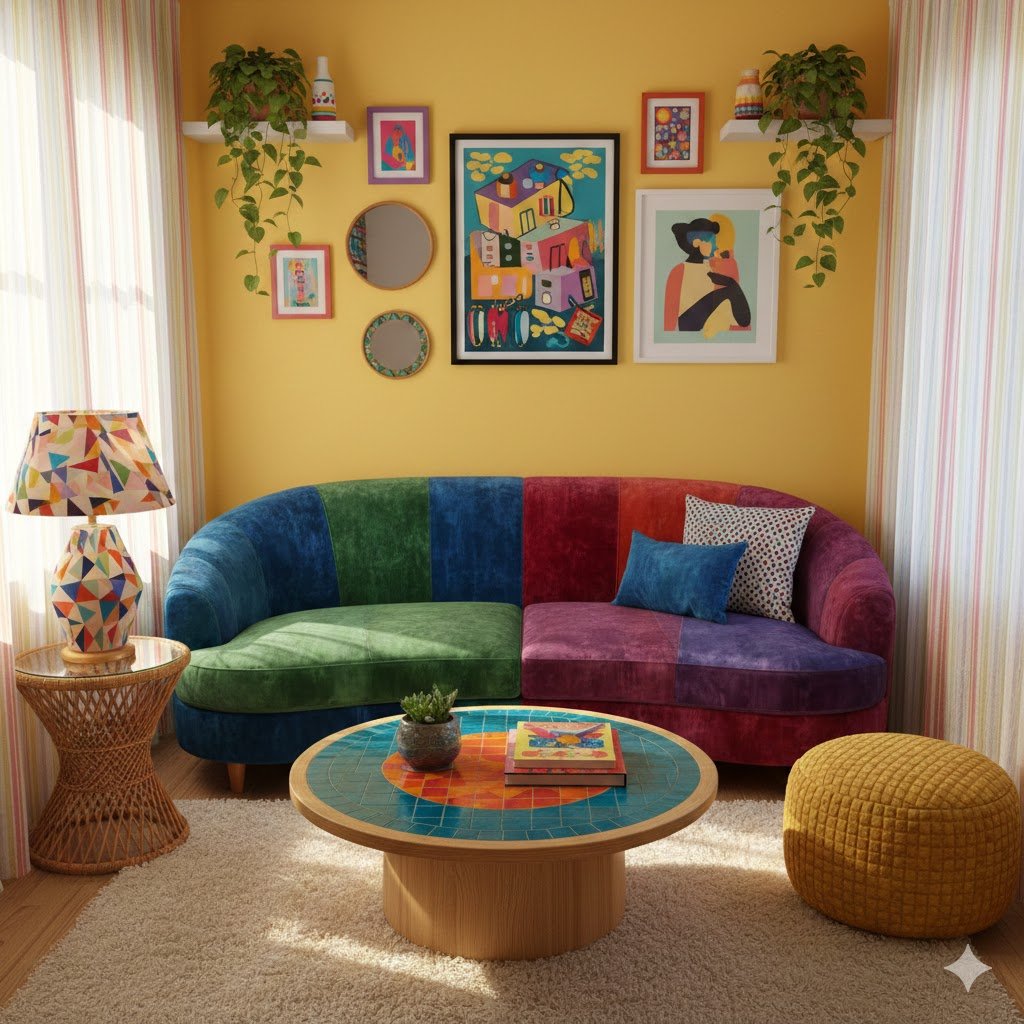
Once the sofa is placed, you need supporting furniture that doesn’t compete with or overpower the curve. The key is to choose visually lightweight pieces that echo the rounded edges of the sofa. Always avoid heavy, chunky, or strictly square tables.
- The Coffee Table Alternatives (The Budget Savior) A big, expensive, solid coffee table will eat up valuable floor space. Skip it entirely and opt for affordable nesting tables. I’ve found incredible sets at thrift stores and discount retailers that look high-end after a quick coat of spray paint. They are versatile: you can spread them out when guests arrive and tuck them neatly together when you need to maximize floor space. Always look for round or oval shapes—the geometric consistency with the sofa is vital.
- Slender Side Tables You still need a spot for your drink and remote. Tall, skinny pedestal tables or C-tables are perfect. C-tables, in particular, slide right over the edge of the sofa and disappear when not in use. Choose pieces with wire, metal, or ultra-thin wooden legs. The less solid material between the floor and the tabletop, the smaller the visual footprint will be.
- The Power of Transparency For smaller pieces, lean into transparency. Items like acrylic side tables, clear glass lamp bases, or even a glass-topped end table occupy physical space but take up almost no visual space. This makes the room feel wonderfully airy and prevents the curved sofa from feeling heavy.
- Small-Scale Seating If you need extra seating for guests, resist the temptation of a bulky armchair. Instead, use a small, round upholstered ottoman or a versatile pouf. They tuck away seamlessly under side tables or into the sofa’s curve and can double as footrests or casual surface areas.
3. Layering with Affordable Textiles and Decor
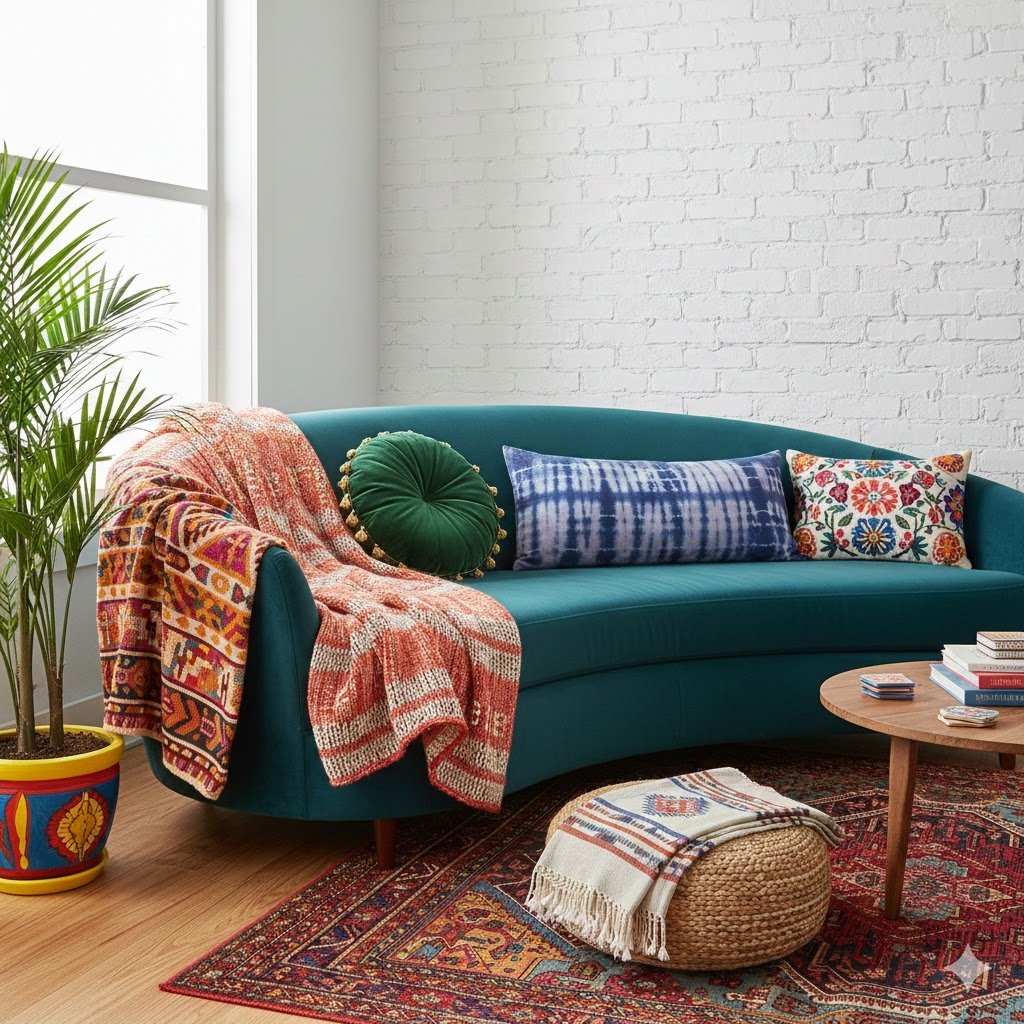
This is where you bring the personality and hide any budget deficiencies. You can make a mid-range sofa look like a custom piece just by focusing on texture and scale in your accessories.
- Pillows & Throws (High-Impact, Low-Cost) The budget hack here is to focus on texture over pricey patterns. Stick to a tight, tonal color palette—think creams, deep grays, and perhaps one deep accent color like terracotta or olive. Then, mix textures like bouclé, chunky waffle knits, or soft velvet. Purchase inexpensive pillow inserts and refresh the look seasonally just by swapping the covers from budget-friendly sites.
- The Right Rug Size A postage-stamp rug placed only in the center of the room fragments the space and highlights its small size. You must anchor the entire seating area. Choose a rug that is large enough for, at minimum, the front two legs of your curved sofa and any supporting seating (like your ottoman) to rest on. This ties the pieces together. For affordability, look for durable synthetic options, such as polypropylene or Jute blends, that mimic the look of more expensive wool.
- Coffee Table Styling: The Rule of Three Since your surfaces are small, keep the styling minimal. Use the Rule of Three for your nesting tables. Style with repurposed or thrifted items: 1) A stack of beautiful hardback books (acquired for pennies at a library sale), 2) A small, sculptural object or plant, and 3) A simple, textured candle or catch-all bowl. The key is to keep your surfaces 70% clear to avoid visual clutter.
4. Vertical Space and Lighting Hacks
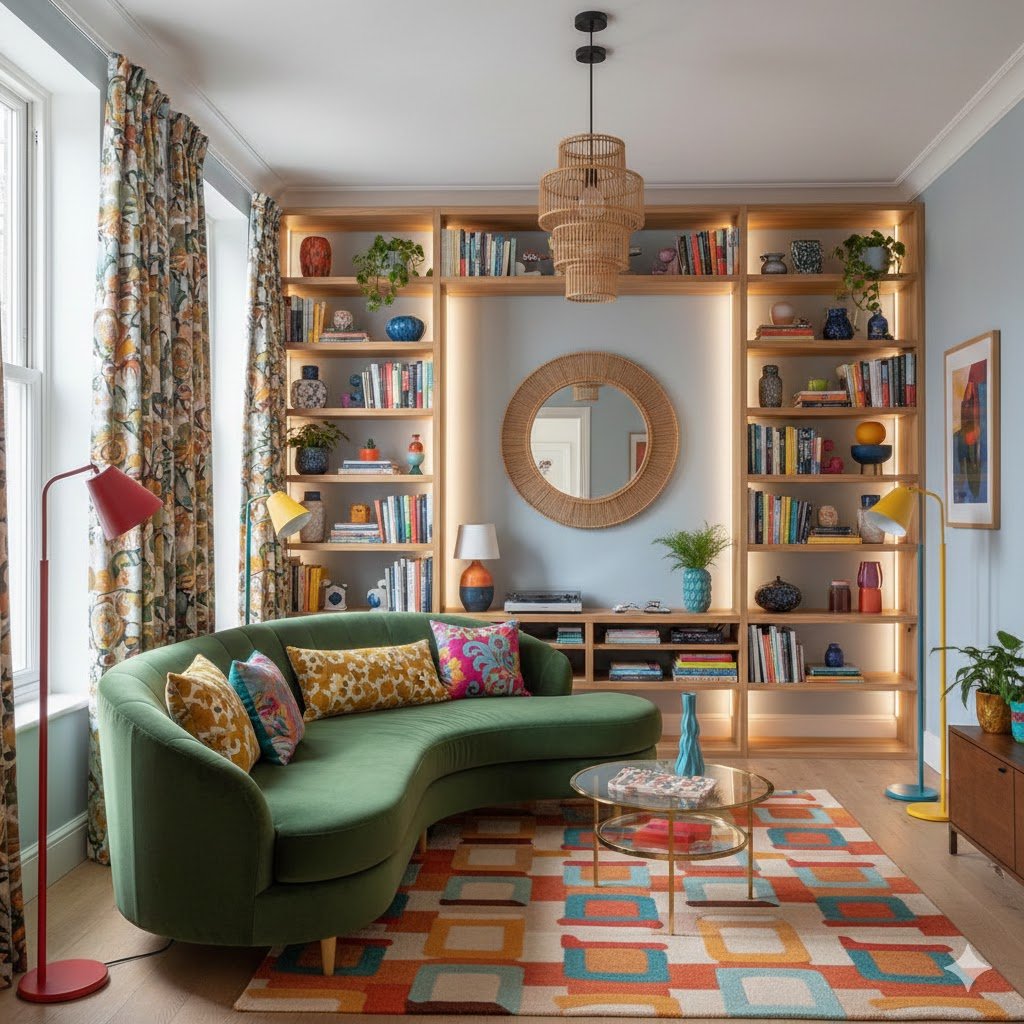
When your horizontal space is limited, you have to utilize the vertical plane. Drawing the eye upward expands the perceived size of the room and reinforces the drama of your new sofa.
- Echo the Curve with Lighting: Use lighting to play off the sofa’s shape. Floor lamps with curving or arched necks are often surprisingly affordable online and they beautifully mimic the soft shape of the sofa, creating visual harmony without taking up surface area.
- Statement Wall Decor: Instead of cluttering side tables, install a gallery wall above the sofa. You can find beautiful, high-resolution digital art to print affordably, or purchase inexpensive frames from discount stores for a sophisticated look. This adds personality and drama where it won’t interfere with traffic flow.
- Mirror Magic: This is the oldest trick in the small-space book, but it works. Strategically place a large, budget-friendly mirror—even a cheap full-length mirror leaning against the wall—to reflect the curved sofa and any natural light. It instantly doubles the perceived size of the room and highlights your beautiful new centerpiece.
Wrap Up
Your curved sofa is a perfect, flowing statement piece. With smart placement that allows it to float, lightweight supporting furniture, and a focus on layered, affordable textures, you can absolutely create a high-style, spacious-feeling living room, even if your budget is tight and your square footage is limited. It’s not about how big the room is; it’s about creating flow and breathing room around your design focal point.
Ready to try it? Share a picture of your curved sofa placement in your small space with us!

About Syprose Kiche
Syprose Kiche is the creator and writer behind My Besuited Home, a practical home and garden website covering DIY projects, gardening, lawn care, landscaping, home improvement, and outdoor living. She focuses on turning everyday homeowner questions into clear, practical guides backed by careful research and useful real-world considerations.