
A bouquet bought in January has usually been through a lot before it reaches your vase. It has sat in a chilled warehouse, a truck and a store cooler, then crossed a cold parking lot, and now it is going into a room with the heating on and dry air. Flowers that handle that route well and keep looking good are the ones worth building winter arrangements around. Tulips and delphiniums mostly aren’t.
That is why the strongest winter flower arrangements lean on a short list of reliable performers: bulbs forced in water or soil, tough cut flowers like carnations and roses, and evergreen foliage that was built for cold weather. The 17 ideas below are grouped by plant, with notes on what each one needs and where it tends to go wrong. First, a few care basics apply to almost every arrangement, so they’re covered once here.
What Keeps Winter Arrangements Alive in a Heated Room
Heated rooms are the main enemy. Warm, dry air pulls water out of petals and leaves faster than stems can replace it, so most of the care comes down to water access and placement.
Cut stems with a sharp knife, not dull scissors. Crushed stems take up water poorly. Trim about an inch (2.5 cm) at an angle, and do it right before the stems go into the vase. Stems that have been out of water for a while can seal at the cut end. If you bought flowers that traveled long distances, trimming again at home is worth the thirty seconds.
Strip every leaf that would sit below the waterline. Submerged foliage rots, and rotting leaves feed bacteria that clog stems. This matters most for roses and carnations, which are leafy at the base.
Use the flower food packet, and clean the vase. Commercial flower food combines a sugar source, an acidifier and an antibacterial agent, which is hard to replicate with kitchen ingredients. Many popular home recipes online give no reliable measurements, so I’d skip them. Whatever you use, scrub the vase with soap and hot water first. A vase that looks clean can still hold a bacterial film.
Change the water every two or three days. Top-ups alone leave old bacteria in place. A full change, with a fresh trim every other time, adds days to an arrangement’s life.
Placement matters as much as care. Keep arrangements away from heat vents, radiators, fireplaces, the top of a television, and sunny windowsills that heat up midday. A cooler room, even by a few degrees, slows water loss. Some people move a bouquet to a cool hallway or porch overnight, which gives it a rest period.
Keep carnations and other ethylene-sensitive flowers away from fruit. Ripening fruit gives off ethylene gas, and carnations are among the flowers most affected by it. A fruit bowl beside a carnation centerpiece can shorten its life noticeably. Roses and some lilies are affected to a lesser degree.
Skip wet floral foam if you can. It is a single-use plastic that crumbles into fragments, and many florists have moved away from it. A crumpled ball of chicken wire in the vase, or a grid of clear tape across the mouth, holds stems just as well and can be reused.
A rough proportion rule: in a tall vase, stems that rise about one and a half times the height of the container tend to look balanced. For a centerpiece people will talk across, keep the whole arrangement low enough that nobody has to lean around it.
Amaryllis: The Reliable Showpiece
Amaryllis (Hippeastrum) is the safest answer to “what can I grow indoors that looks dramatic?” A single bulb can produce two or more stems with four to six large blooms each, and bulbs are widely sold in late autumn. They’re also easy to time. From planting, bloom usually arrives in roughly six to eight weeks, though it varies by variety and room temperature, so check the packaging.
1. One Bulb in a Snug Pot
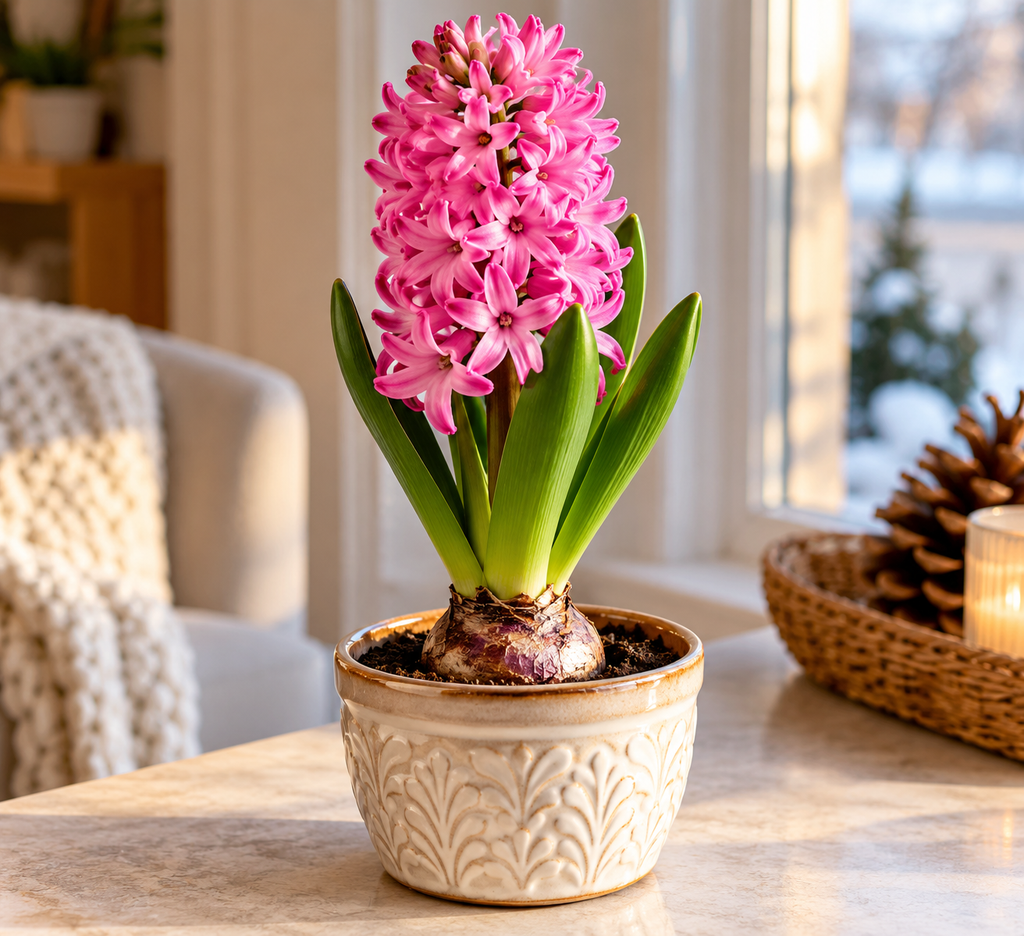
Amaryllis blooms best when the bulb is a little cramped. A pot about an inch (2.5 cm) wider than the bulb on each side is the usual guidance. Plant it with roughly the top third of the bulb exposed, firm the potting mix around it, and water once. After that, water sparingly until a green shoot appears. Soaking a bulb with no leaves yet to use the moisture is the most common route to rot.
The common failure is a tall flower stem that leans toward the window and eventually flops under the weight of its own blooms. Turn the pot a quarter turn every few days to keep the stem straight, and insert a slim bamboo stake early rather than after it tips. A heavy ceramic pot helps too. Lightweight plastic nursery pots tip over easily once the flowers open, so slip the pot inside a heavier cachepot.
For a winter look that isn’t just red, white amaryllis in a dark glazed container, or a striped red-and-white variety in raw concrete, feels more designed than the standard foil-wrapped kit.
2. Cut Amaryllis in a Tall, Heavy Vase
Cut amaryllis stems are hollow, which gives them problems that other flowers don’t. They tend to split and curl at the base, and the heavy flower heads can pull the stem over. Florists often wrap the bottom inch or so of the stem with clear tape or a rubber band to stop the splitting. Some also slide a thin stake up the hollow stem for support. Either approach works, and neither is complicated.
Choose a vase that supports the stems, wide enough at the base that they can’t tip but narrow enough at the neck to keep them upright. Keep the water level modest, since a very deep fill can cause the stems to turn slimy faster. Expect a cut amaryllis arrangement to last about a week, sometimes a little longer, so treat it as an event arrangement rather than a long-term fixture.
If you cut stems from a bulb you’re growing, leave the bulb and foliage in place. The bulb needs its leaves to rebuild for next year. This is the one case where cutting the flowers early, before the blooms fully open, protects the bulb’s energy. Whether it will rebloom reliably is a separate question, covered in the FAQ.
3. Wax-Dipped Amaryllis as a No-Water Centerpiece
Those wax-coated bulbs sold in winter need no soil and no water. The bulb already holds enough stored energy to bloom, and the wax slows moisture loss. Set it on a plate or a shallow stand, add moss or small pinecones around the base, and wait.
The tradeoff is length of life. Without roots, a wax-dipped bulb usually blooms once and is then discarded, since the wax coating makes regrowth difficult. They suit a table that needs a quick, low-maintenance accent, like a buffet or entry console. They don’t suit anyone hoping to grow the bulb on year after year.
Paperwhites: Scent and Light Texture
Paperwhites (Narcissus papyraceus) are daffodil relatives, and they have a particular advantage: they don’t need chilling before planting, so they can go straight into pebbles and water. Bloom usually arrives in about three to five weeks. They bring a fine-boned, white contrast to heavier arrangements like amaryllis and poinsettia.
One caveat about scent. It is strong, and some people find it pleasant while others find it overpowering, particularly in a small room or near a dining table. Some varieties are marketed as less fragrant, so check the description at purchase. If scent bothers you, put the paperwhites in an entryway or a hall rather than the kitchen.
4. Bulbs on Pebbles in a Glass Bowl
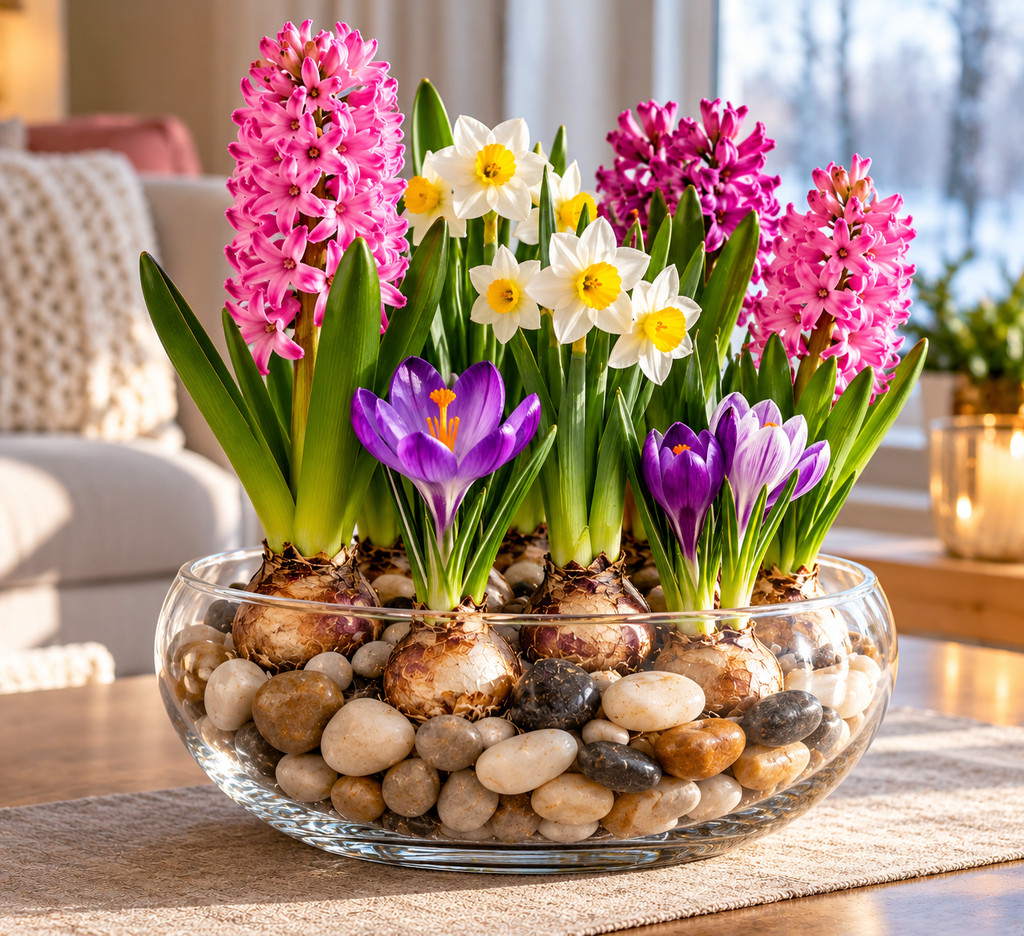
The simplest paperwhite display is a shallow bowl filled with stones, glass beads or marbles. Set the bulbs pointed side up, close together but not touching, and pack the stones around them so they stand upright. Add water until it just reaches the base of the bulbs, not higher. If the bulb bottom sits in water, it rots; it should sit just above the water, with roots reaching down.
Glass is a good choice because the roots become part of the display. Check the water level every few days, since roots drink faster than you’d expect, and top up carefully. A cool, bright room slows growth and produces sturdier stems than a warm, dim one.
5. Tall Cylinder With Supports
Paperwhites are notorious for growing tall and then collapsing. A tall glass cylinder, with the bulbs set at the top and stones or glass beads supporting them, gives the stems something to lean against. Alternatively, loop twine or raffia loosely around the whole cluster as the stems lengthen.
Another approach is stunting the growth with a diluted alcohol solution. Cornell University horticulture researchers have described watering paperwhites with a weak solution of alcohol, around 4 to 6 percent, once the shoots reach a couple of inches, which keeps the stems shorter without hurting the flowers. Verify the exact guidance against Cornell’s current published material before relying on it. Stronger solutions can damage the plant, and the research described specific spirits and dilutions. Support with twine or stakes is the more forgiving fallback if you don’t want to experiment.
6. Staggered Planting for a Longer Display
Paperwhites bloom for roughly two weeks, which is short. If you want flowers across the whole winter rather than one burst, plant a new batch every two weeks from late autumn. Each bowl is ready as the previous one fades, and the finished bulbs can be dropped from the display.
Keep the later bowls somewhere cool and bright, since they’ll be growing under a heated winter room’s drier conditions. A windowsill that gets bright light but not direct heat from a radiator is best. Stagger the vessels too: a glass bowl one week, a ceramic cup the next, so the table doesn’t look like a production line.
Poinsettias: Color That Lasts Past the Holidays
Poinsettias are potted plants first and cut flowers second, and their color comes from bracts (modified leaves) rather than petals. That’s why the red lasts for weeks. The small yellow clusters in the center are the actual flowers.
7. A Trio in Mixed Colors
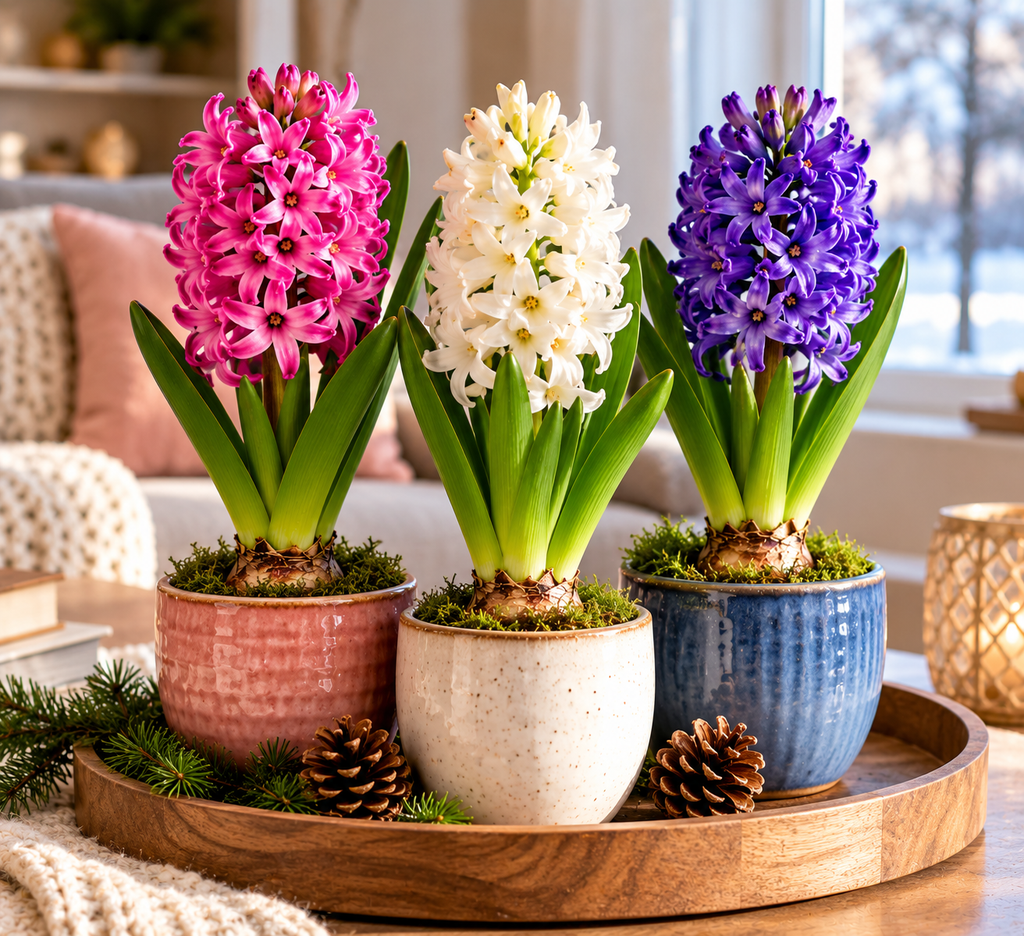
Poinsettias come in red, white, pink, and marbled and speckled varieties. Grouping three on a tray or in a shallow basket reads as an arrangement rather than a plant. Vary the colors but keep them related. Two creams and one soft pink looks calmer than red, white and burgundy at once.
Practical care is simple but easy to get wrong. Poinsettias are sensitive to cold, and temperatures below about 50°F (10°C) can damage them, so keep them away from drafty doors and cold windows on the way home and in the room. Water when the top of the soil feels dry, and remove the decorative foil sleeve or poke a drainage hole through it. Standing water collecting in a foil wrapper is the single most common reason poinsettias decline.
Don’t overlook the pet question. Poinsettias are generally regarded as mildly irritating rather than seriously toxic. The sap can cause mouth and stomach upset if chewed, and may irritate skin. That is different from the severe risk associated with lilies, covered below.
8. Cut Poinsettia Stems in a Vase
Cut poinsettias are possible but fussy. The stems bleed a milky latex sap, and bracts wilt quickly unless that sap is sealed. A common florist technique is to sear the cut end in boiling water or a flame for a few seconds before placing it in water, which is tricky to do safely at home. Expect a shorter lifespan than you’d get from a potted plant, often a few days up to a week.
Handle the sap with care. It can irritate skin, and people with latex sensitivity should wear gloves. If you want poinsettia color without the fuss, a small potted plant moved into a cachepot beside a vase of other flowers gives a similar effect with far less risk.
Roses: Dependable and Easy to Style
Roses remain among the best winter cut flowers, mostly because the tight, high-quality blooms from commercial growers hold up reasonably well in heated rooms. The main problems are bent necks, where the flower head droops from a blocked stem, and rapid petal drop in dry air.
9. Red Roses in a Low Bowl With Cedar or Fir
Red roses with evergreens is a classic pairing because the dark green makes the red read richer. Use a low, wide bowl, with a chicken wire or tape grid across the mouth, and cut the roses short so the heads sit just above the rim. Tuck cedar, fir or juniper around and between them so the greenery frames the flowers instead of hiding them.
If a rose’s head bends over, recut the stem under water and let it stand in deep water for an hour or two. This sometimes recovers a stem that has an air bubble stuck in it, though not always. Remove thorns carefully and remove any leaves that would sit below the waterline.
Keep the arrangement out of direct sun and well away from the fruit bowl. Change the water every two to three days, and recut the stems each time.
10. White and Blush Roses With Silver Foliage
A monochrome palette feels distinctly wintry. White and blush roses combined with silvery foliage such as dusty miller or eucalyptus give a cool, frosted effect that works well beside candles or metallic vases. Dusty miller is a common florist foliage with soft, felted leaves, and a few stems go a long way.
Add height with a few tall branches, such as bare birch or pussy willow, to break up the roundness of the roses. Keep the container simple, in clear glass, silver, or white ceramic. A busy vessel competes with a pale arrangement and flattens it.
Lilies: Tall, Fragrant, and a Serious Pet Hazard
Lilies deliver height and long-lasting buds. A single stem often carries several buds that open in sequence, so a bunch can stay in flower for a surprisingly long period. They also come with the most significant safety issue in this article.
If you live with cats, do not bring true lilies (Lilium) or daylilies (Hemerocallis) into your home. Every part of these plants, including the pollen and even the water in the vase, is considered dangerous to cats, and ingestion can cause kidney failure. A cat that brushes against pollen and grooms its fur can be poisoned. Veterinary organizations and poison control services consistently warn about this. If your cat may have come in contact with lilies, contact a veterinarian immediately rather than waiting for symptoms. Dogs are less severely affected but can still get an upset stomach.
If cats are never in the house, or you’re arranging for an office or a home with no pets, the following are worth considering.
11. Oriental Lilies in a Tall Vase
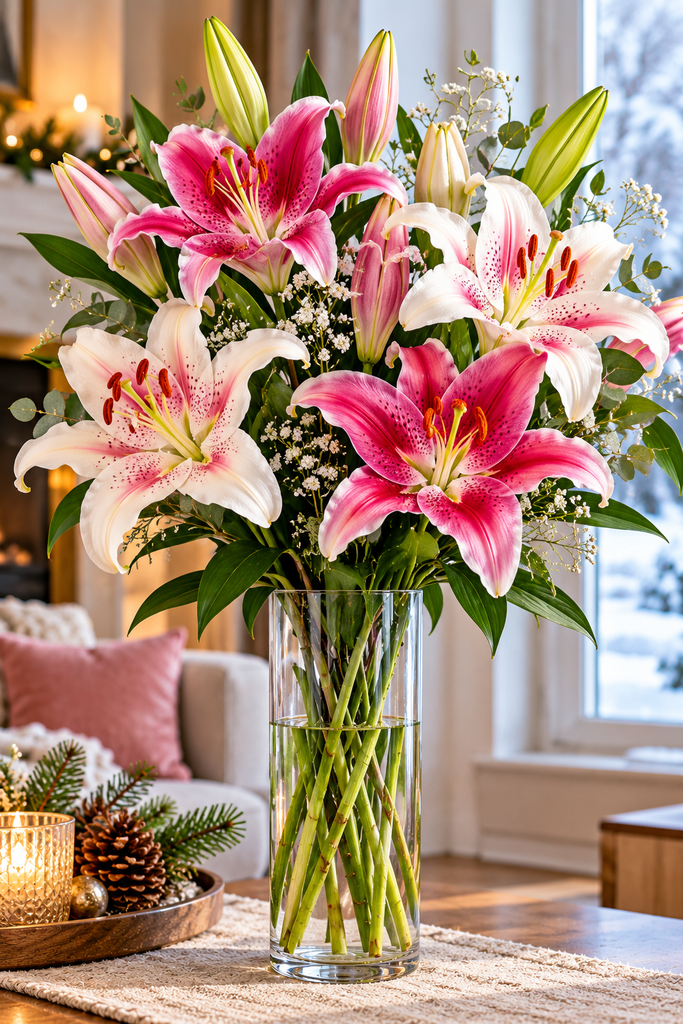
Oriental lilies, with big, scented, often white or pink flowers, make a strong centerpiece in a tall, heavy vase. Remove the pollen-bearing anthers (the orange tips) as each flower opens. Pollen stains fabric and skin and is hard to remove, and removing it also extends the bloom a little. Pinch or snip them off with tissue rather than your fingers, and avoid brushing against clothing or tablecloths.
Remove leaves below the water, and expect the stems to take up a lot of water, so check levels daily. Strong fragrance can fill a room, which is lovely in a large space and tiring in a small one.
12. Asiatic Lilies With Winter Greens
Asiatic lilies have little or no scent, which suits dining tables where fragrance competes with food. They come in warmer shades, including orange, burgundy, and deep pink. Paired with dark pine or boxwood, they bring a rich, jewel-toned look that isn’t the usual red-and-green.
The same pet warning applies. If you’d like an unscented lily-style flower with no cat risk, alstroemeria (sometimes called Peruvian lily) has a similar look and is not a true lily. Check with a veterinarian or a reputable pet-safety list if you have any doubt, since cat safety around alstroemeria is regarded as better but sources vary on mild effects.
Carnations: The Underrated Winter Workhorse
Carnations have a reputation for being cheap and old-fashioned, which is partly why they’re underused. They’re also among the longest-lasting cut flowers, and their ruffled, dense petals suit winter’s heavier styles. Their sensitivity to ethylene is the one thing to watch.
13. A Dome of Carnations in a Compote
A tight mound of carnations in a footed bowl or compote looks full and old-fashioned in a good way. Cut the stems very short, nearly flush with the rim, and place them in a close, even pattern with a grid of chicken wire or tape below. A single color, such as deep burgundy, creates the strongest effect. Mixed colors tend to look like a bargain-bin bouquet.
For the best result, use a dome of roughly the same height all around, with the highest flowers in the center. Keep the arrangement away from fruit and from rooms where ripening produce is stored.
14. A Row of Single-Color Bud Vases
A line of small bud vases down a table, each holding one or two carnations, makes use of an inexpensive flower in an elegant way. Vary the vase heights and shapes but keep the carnation color consistent, or use two closely related shades. Mismatched thrifted bottles and jars work well if the palette is controlled.
This also suits a long, narrow table where a single large arrangement would block conversation. If one stem fades, you can pull it out and the row still holds together. It’s also the easiest arrangement here to adjust through the week.
Evergreens and Branches: The Backbone of Winter Design
Seasonal greenery does most of the work in a winter arrangement, because it lasts longer than flowers and costs less. It also gives you structure without having to rely on blooms at all.
15. An All-Green Pitcher
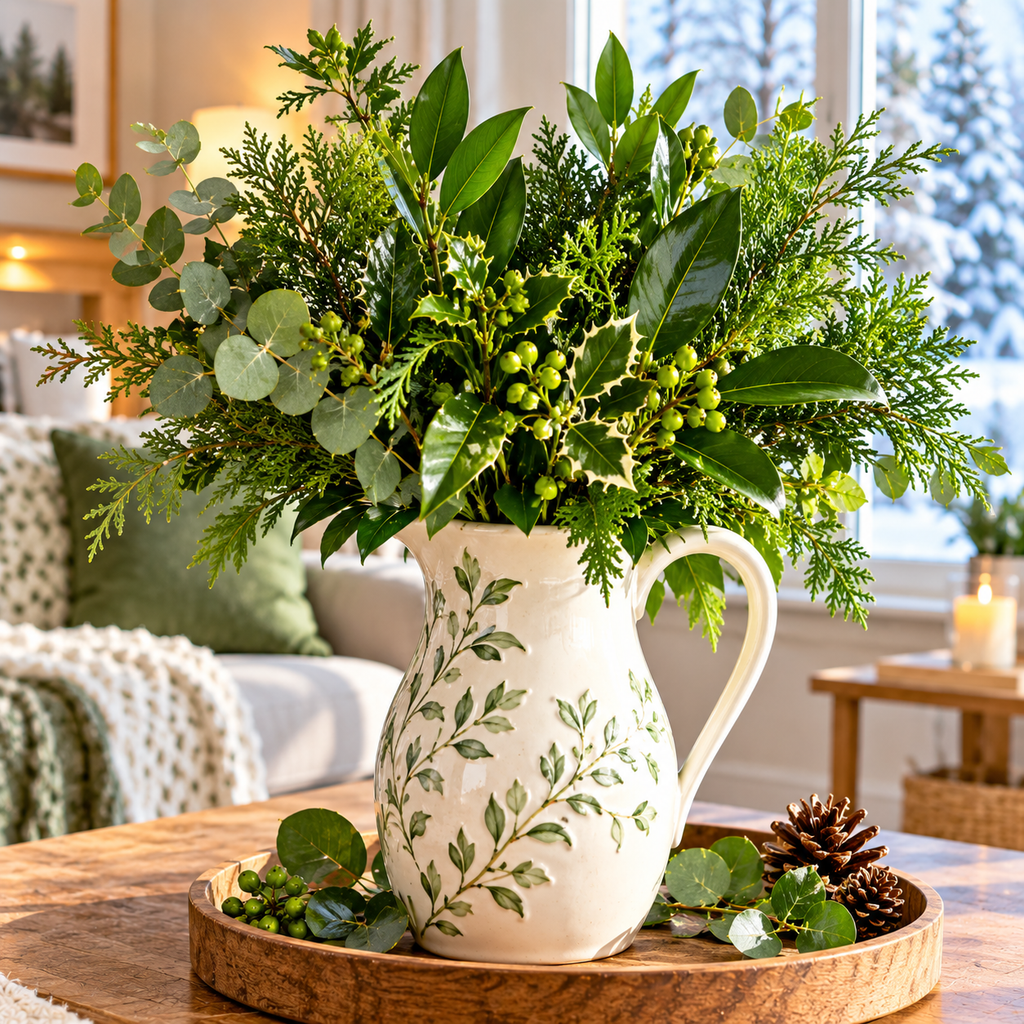
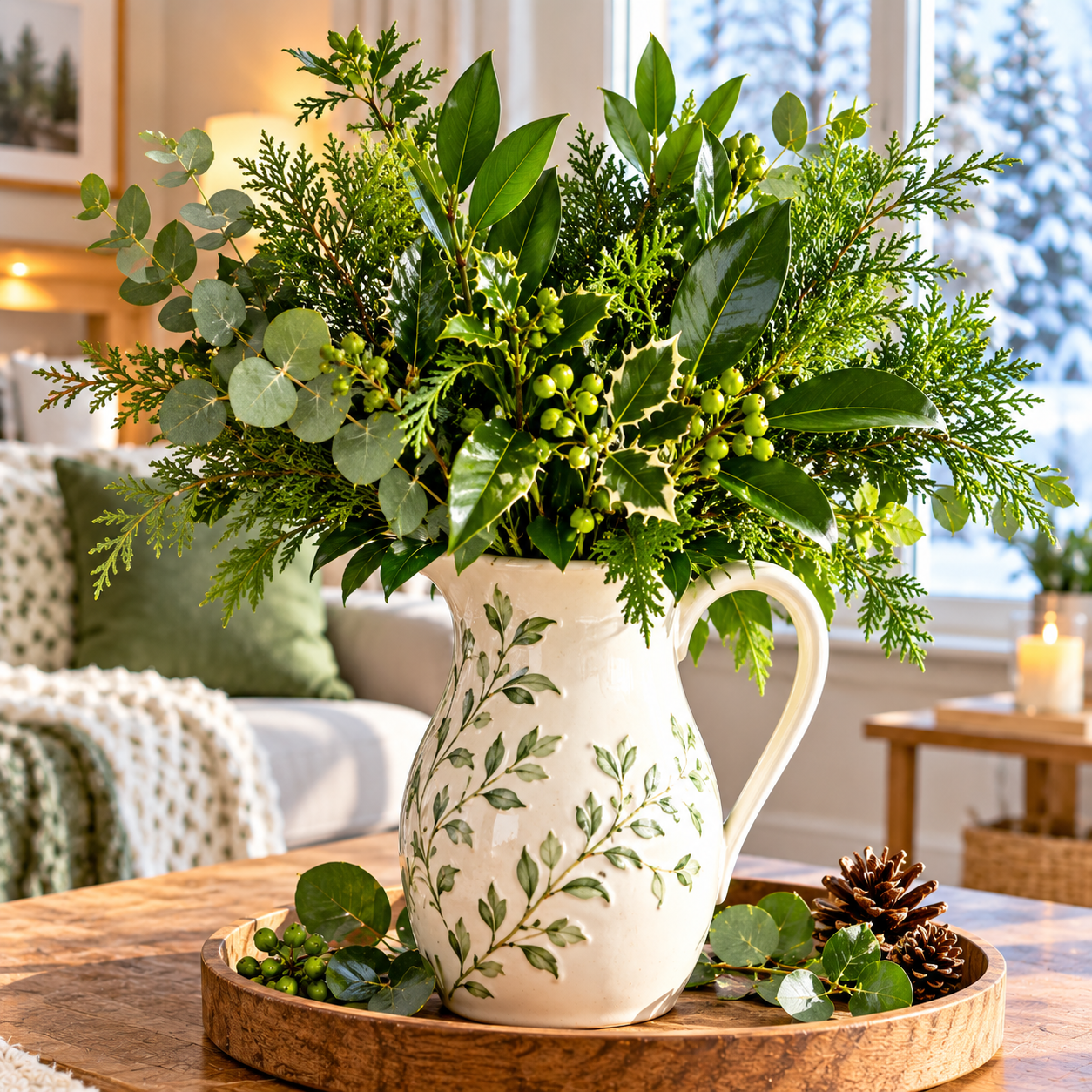
A pitcher or jug filled only with mixed evergreens can look better than a weak flower arrangement. Combine contrasting textures: soft, feathery cedar or fir, spiky juniper, glossy boxwood or magnolia leaves, and a few trailing ivy stems. Vary the shades from blue-green to dark green.
A practical note on longevity: spruce tends to shed needles sooner indoors than fir or cedar, so if you want greens that hold through several weeks, choose fir or cedar. Recut the stems and keep them in water, and mist or place them away from heaters. Some evergreens, like yew, are highly toxic to pets and people if eaten, so don’t use them in a home with animals or children who might chew on branches.
16. A Tabletop Greens-and-Candle Centerpiece
A long run of mixed greens down the center of a table, studded with candles, berries and small ornaments, is a standard holiday look. It works well for a dinner or a sideboard, and it can be assembled without any flowers.
Use caution with flame. Fresh greenery does burn, and dried greenery burns faster. Keep candles well clear of foliage, never leave burning candles unattended, and consider battery-operated candles if the arrangement is dense or if children and pets are around. Holly berries and similar red berries add color but are toxic if eaten, so keep them out of reach of children and animals, or use faux berries.
17. Forced Branches and Twigs for Late Winter
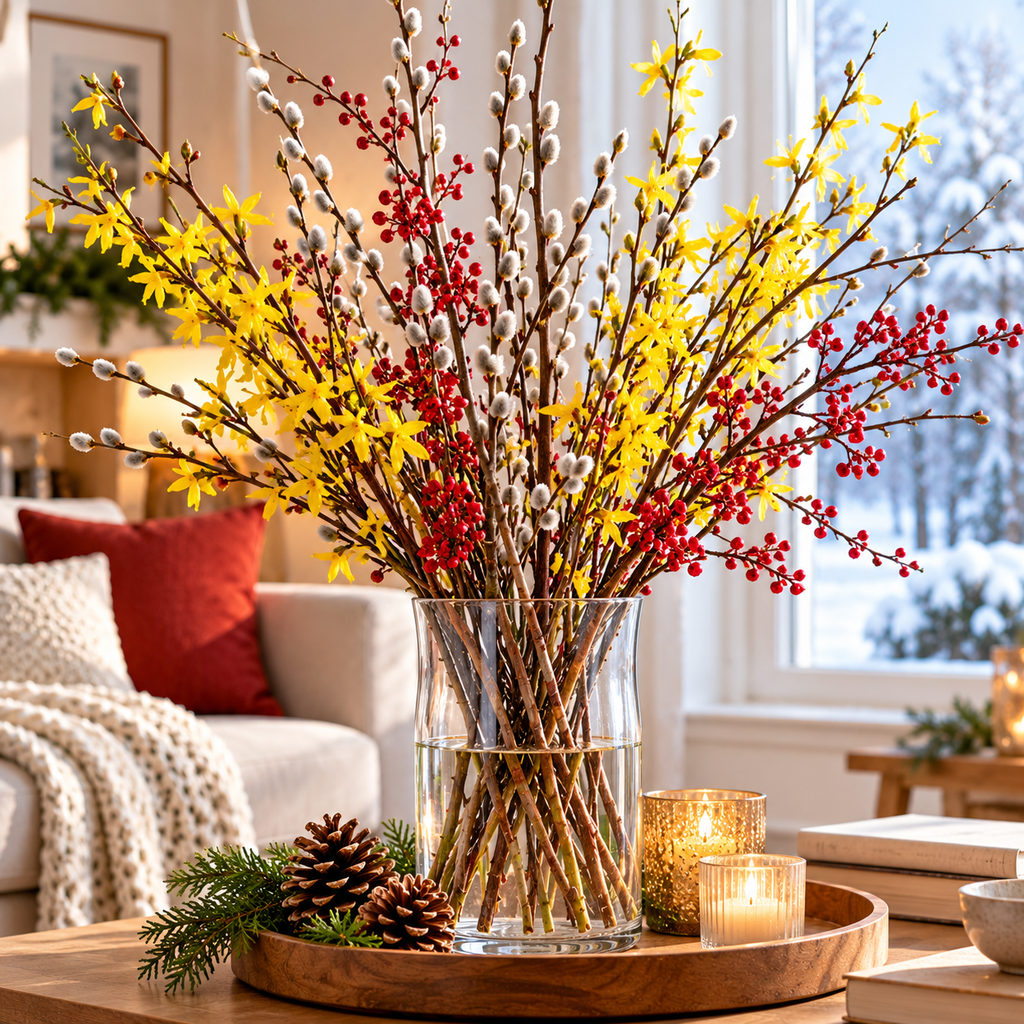
By late winter, branches cut from outdoor shrubs and trees can bloom indoors if brought into warmth, a process called forcing. Forsythia, quince, and flowering cherry are common candidates. Cut stems when buds are swelling, split or crush the base slightly, and set them in water in a cool room. Blooms may take a couple of weeks. Pussy willow and red-twig dogwood need no forcing and offer color on their own. The red stems of dogwood are particularly good with white flowers.
Timing varies a lot by species and by how cold the winter has been, so there’s no single reliable schedule. Cut only where you have permission, and take small amounts from a shrub rather than stripping one side.
Which of These Are Safe Around Pets?
This isn’t an exhaustive list, and toxicity information varies between sources, so confirm with your veterinarian or a poison-control service before bringing plants into a home with animals.
- True lilies and daylilies: considered dangerous for cats, including the pollen and vase water. Avoid if you have a cat.
- Amaryllis and paperwhites (Narcissus): the bulbs and plant parts are toxic if eaten, and can cause vomiting and other symptoms in pets.
- Poinsettia: generally considered mildly irritating, not severely toxic.
- Holly berries and yew: toxic if eaten. Keep out of reach.
- Carnations and roses: usually regarded as low risk, although thorns and stomach upset are possible.
Questions Readers Often Have
Flowers froze in my car on the way home. Can they be saved?
Sometimes. If the petals are limp and translucent, the cells have probably been damaged, and they won’t fully recover. If the stems and leaves look firm but chilled, bring them in gradually, trim the stems and place them in lukewarm water in a cool room rather than a warm one. Rapid warming often makes damage worse. Next time, wrap the bouquet in paper and keep it inside the cabin of the car.
Will my amaryllis flower again next year?
It can, though it takes some effort. The general method is to keep the plant growing after bloom, cut the spent flower stalk, let the leaves feed the bulb through spring and summer, then give it a rest period in a cool, dark spot for several weeks in autumn before bringing it back into light and water. Details on timing vary by source, so follow the grower’s instructions if the bulb came with any. Wax-dipped bulbs rarely rebloom.
Can I keep paperwhite bulbs after they bloom?
Forced paperwhites are usually discarded. They use up much of their reserves growing in water or pebbles, and in colder climates they won’t survive outdoors. In mild regions, some gardeners plant them out after flowering. Check local guidance for your zone before trying it.
Key Takeaways
Pick arrangements based on how long you want them to last and what else is in the house. Potted bulbs like amaryllis and paperwhites give weeks of color from one purchase. Carnations and roses are the most reliable cut flowers for a heated room, provided you keep them away from fruit and heat. Evergreens carry the structure of any winter arrangement and cost less than flowers.
Before you buy anything, check the pet situation. Lilies are the biggest concern for cat owners, and several other popular winter plants are toxic if chewed. Candles and fresh greenery need separation. Beyond that, the care routine is dull but effective: sharp cuts, clean vases, fresh water every two or three days, and a cool spot away from vents.

About Syprose Kiche
Syprose Kiche is the creator and writer behind My Besuited Home, a practical home and garden website covering DIY projects, gardening, lawn care, landscaping, home improvement, and outdoor living. She focuses on turning everyday homeowner questions into clear, practical guides backed by careful research and useful real-world considerations.