
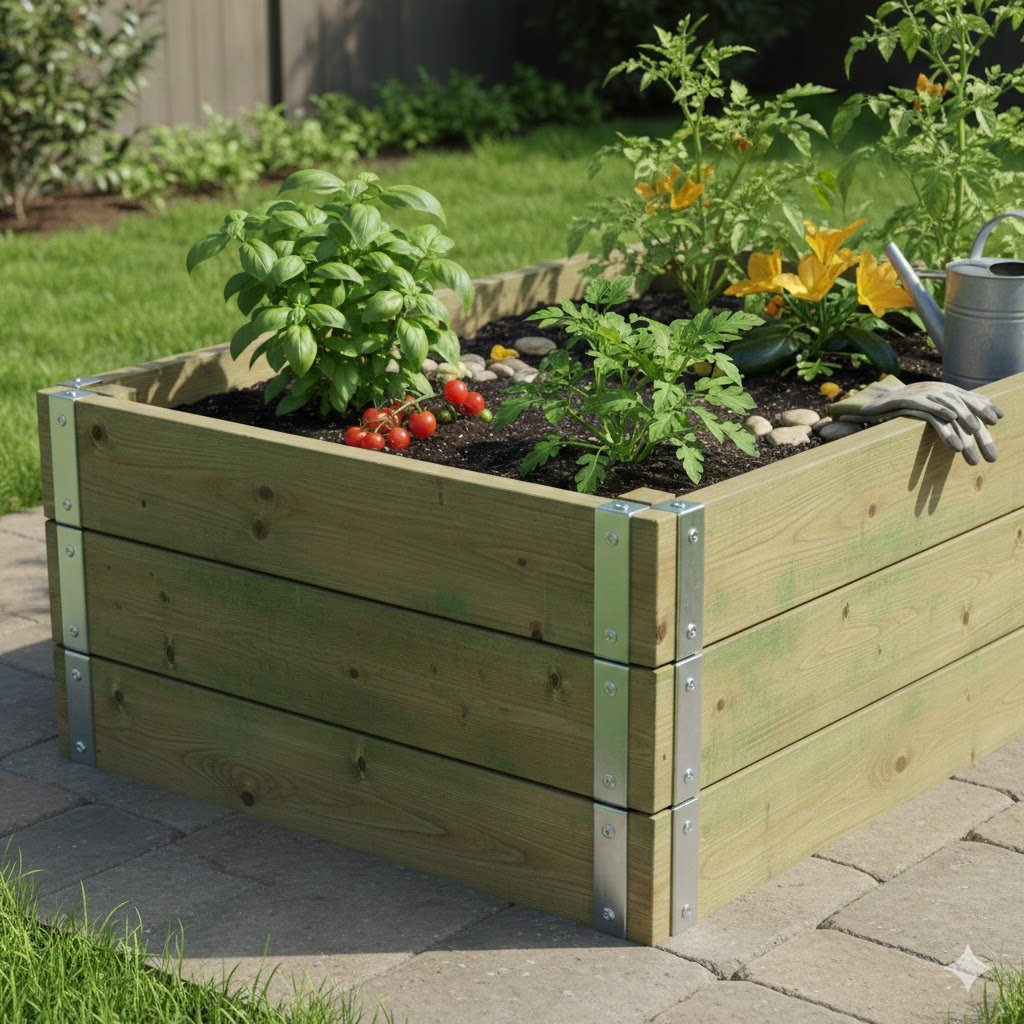
I still remember the first raised bed I ever built back in 2011. I was young, broke, and had just read a magazine article about “intensive gardening.” I marched myself down to the big-box hardware store, loaded up a rickety cart with those heavy, greenish-tinted 4x4s, and spent a whole weekend sweating and cursing while I bolted them together. I thought I was being brilliant. I thought those beds would outlive me.
Fast forward three years, and my “everlasting” beds were warping like a cheap record left in the sun, and my soil smelled—well, it didn’t smell like healthy earth. It smelled like a chemistry lab. That was the summer I realized that just because something is sold in the lumber aisle doesn’t mean it belongs anywhere near your dinner plate. I’ve spent fifteen years since then digging in the dirt, and if there’s one hill I’m willing to die on, it’s this: stop putting pressure-treated wood in your vegetable patches. It’s a shortcut that leads to a dead end, usually paved with copper and fungicides.
The Green Monster in the Backyard
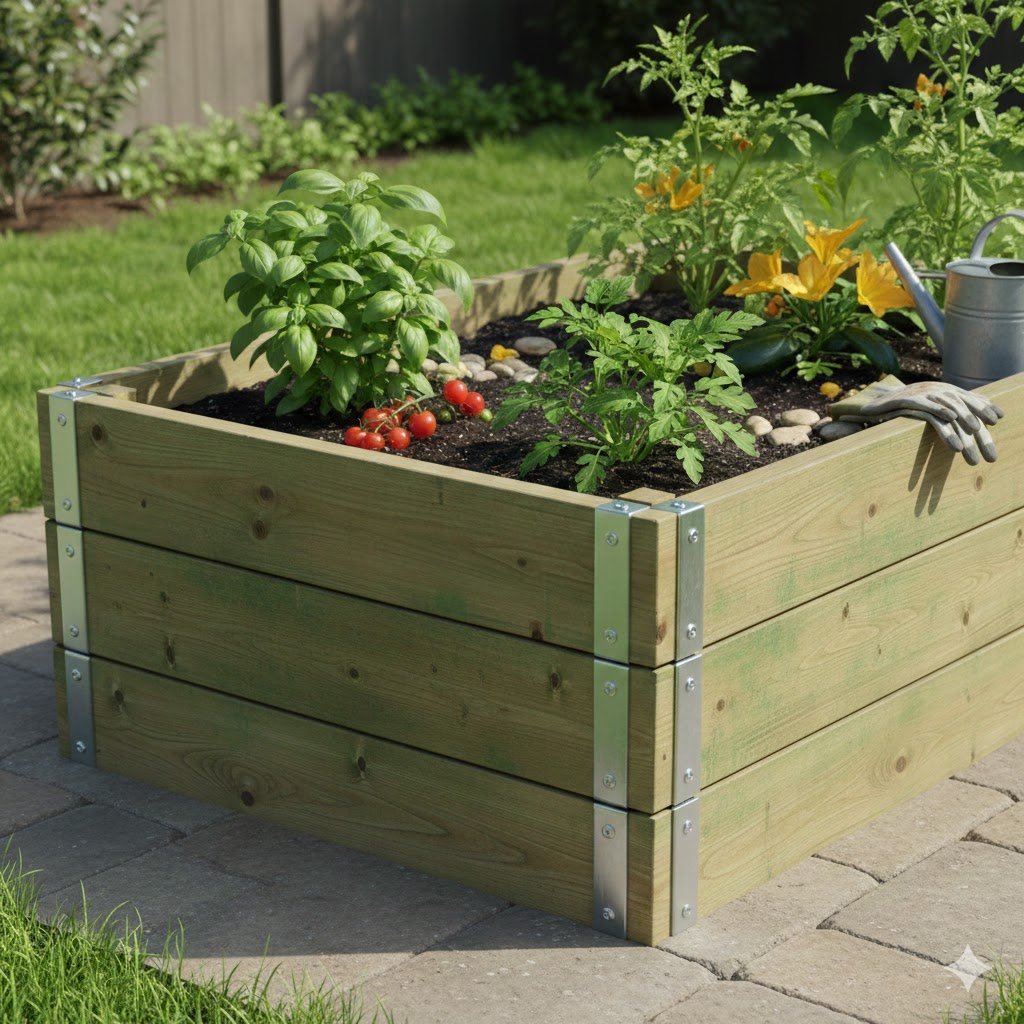
We’ve all seen it. That distinct, slightly sickly olive-green hue of pressure-treated (PT) lumber. It looks sturdy. It feels heavy. It’s cheap—or at least cheaper than cedar. But here’s the thing: that wood isn’t green because it’s “natural.” It’s green because it’s been shoved into a giant vacuum cylinder and blasted with a chemical cocktail designed to kill anything that tries to eat it.
Back in the day, the boogeyman was CCA—Chromated Copper Arsenate. Yes, arsenic. The stuff of old mystery novels and poisonings. The industry “voluntarily” stopped using it for residential use around 2003, but I still see people scavenging old deck boards or fence posts to build garden beds. If you’re doing that, you’re essentially seasoning your tomatoes with heavy metals.
Nowadays, they use ACQ (Alkaline Copper Quaternary) or MCQ (Micronized Copper Quaternary). The industry says it’s “safe.” They say the copper won’t migrate. I say I’ve seen what happens to a worm that tries to crawl too close to a PT board, and it isn’t pretty. If the goal of your garden is to foster a living, breathing ecosystem, why are you surrounding it with a wall of stuff designed to be a “biocide”? It’s like trying to host a dinner party inside a giant bottle of disinfectant.
The “Oh No” Moment (The Leaching Reality)
I once had a neighbor, a real “by the book” type, who insisted that because the new copper treatments were EPA-approved, there was zero risk. He built six massive beds out of PT pine. Two years later, he invited me over to see why his spinach was stunted. We pulled back the soil from the edge of the boards, and you could see a literal “dead zone.” The soil within two inches of the wood was gray, crusty, and devoid of any fungal life.
Here’s the “real talk”: Copper is an essential micronutrient for plants, sure, but in the concentrations found in PT wood? It’s a toxin. When it rains, or when you water your garden, those chemicals don’t stay locked inside the wood fibers forever. They leach. They migrate. And while some scientists will tell you the migration is “minimal,” I’ve found that “minimal” is a relative term when it’s your kids eating the carrots that grew right up against that board.
Plus, there’s the “Quat” part of ACQ. That’s a quaternary ammonium compound. It’s a powerful fungicide. Think about that for a second. Your garden relies on mycorrhizal fungi—the “internet of the soil”—to help your plants trade nutrients. By lining your beds with a potent fungicide, you’re effectively cutting the fiber-optic cables of your garden’s communication network. You’re making your plants work twice as hard for half the results.
Why “Rot-Resistant” is a Total Lie
The biggest selling point for pressure-treated wood is that it lasts forever. I’m here to tell you that’s a load of compost. I’ve replaced more PT garden beds than I care to count.
Because PT lumber is usually made from fast-grown, low-quality yellow pine, it’s incredibly prone to warping, twisting, and “cupping.” I once built a cold frame out of treated 2x10s, and by the following spring, the boards had bowed so badly that the lid wouldn’t even sit on top. It looked like a Pringles chip.
Standard PT wood is rated for “ground contact,” but that rating is based on it being used for a fence post or a deck joist where it has airflow. When you pack it full of wet, heavy, organic soil, you’re creating a literal pressure cooker for rot. The chemicals might keep the termites away, but the wood fibers themselves still break down. Within five to seven years, that “forever” wood is usually a mushy, splintery mess that’s a nightmare to dismantle because the screws have all corroded (thanks to the high copper content in the wood eating the metal). It’s a total waste of money, even if it looks like a bargain at the register.
Real Talk: The “Safe” Sealant Myth
Whenever I tell people to skip the treated stuff, someone always chimes in with, “But what if I line it with plastic?” Or, “Can’t I just paint the inside with a sealant?”
Listen, I’ve tried the plastic liner trick. It’s a disaster. All it does is trap moisture between the plastic and the wood, which accelerates the rot you were trying to avoid in the first place. Plus, after a season or two, the plastic gets brittle, starts to tear, and then you’re just picking bits of poly-whatever out of your kale for the next decade. It’s a mess.
As for sealants? If you’re going to spend $40 on a “food-safe” eco-sealant to put on $50 worth of cheap, chemically-treated wood, you’ve already spent more than it would have cost to just buy decent cedar or hemlock in the first place. You’re adding labor and cost to a product that was supposed to be the “easy” option. It’s like buying a cheap car and then spending five grand on a custom rust-proofing job. Just buy a better car.
Better Ways to Build (That Won’t Poison Your Peas)
So, if you’re ditching the green stuff, what are you supposed to use? I’ve tried everything—including a very brief and regrettable experiment with hay bales that turned into a slug resort—and here are my honest-to-goodness recommendations.
1. Cedar and Redwood (The Gold Standard)
I know, I know. It’s expensive. It’ll make your wallet cry. But here’s the thing: my oldest cedar beds are going on year twelve and they still look fantastic. Cedar has natural oils (thujaplicins, if you want to be fancy) that repel bugs and fungi without needing a chemistry degree to apply. It smells like a spa, it ages to a beautiful silvery-gray, and it’s actually “safe.”
Quick Side Note: If you want cedar results on a pine budget, look for “Cedar Fence Pickets.” They’re thin, but if you double them up or frame them well, they’ll last 5-6 years and cost next to nothing.
2. Black Locust (The “Holy Grail”)
If you can find a local sawmill that sells Black Locust, buy it. Don’t think, just buy it. It’s a native hardwood in many places, and it is virtually rot-proof. It’s so dense it’ll practically spark if you try to cut it with a dull blade. I have Black Locust stakes that have been in the ground for a decade and they look exactly the same as the day I hammered them in. It’s the closest thing to “forever” wood that nature provides.
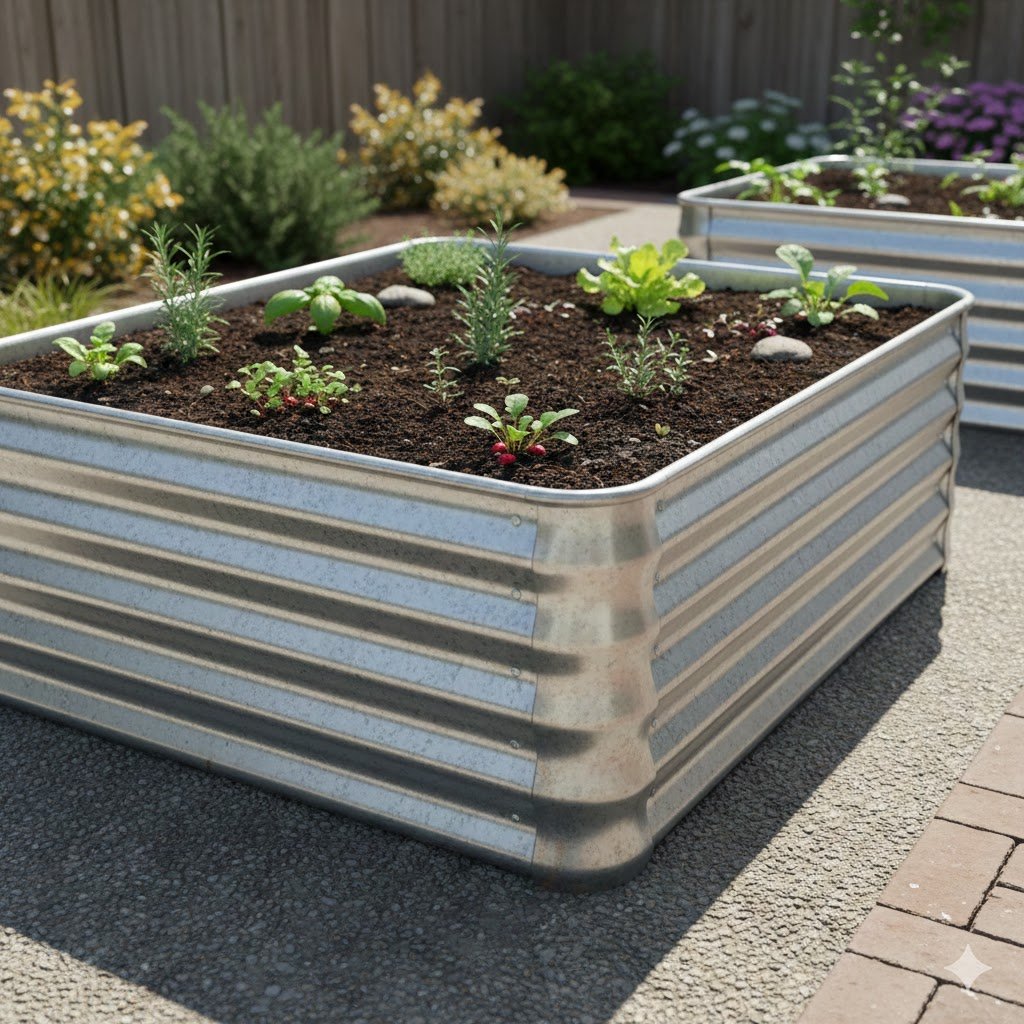
3. Galvanized Steel
This has become my new favorite in the last five years. Those corrugated metal beds? They’re brilliant. They don’t rot, they don’t leach anything scary into the soil (zinc is a nutrient, and the amounts are negligible anyway), and they stay cool enough in the summer. Just make sure you get the ones with a rolled top edge so you don’t slice your thumb open when you’re weeding.
4. Just… Nothing?
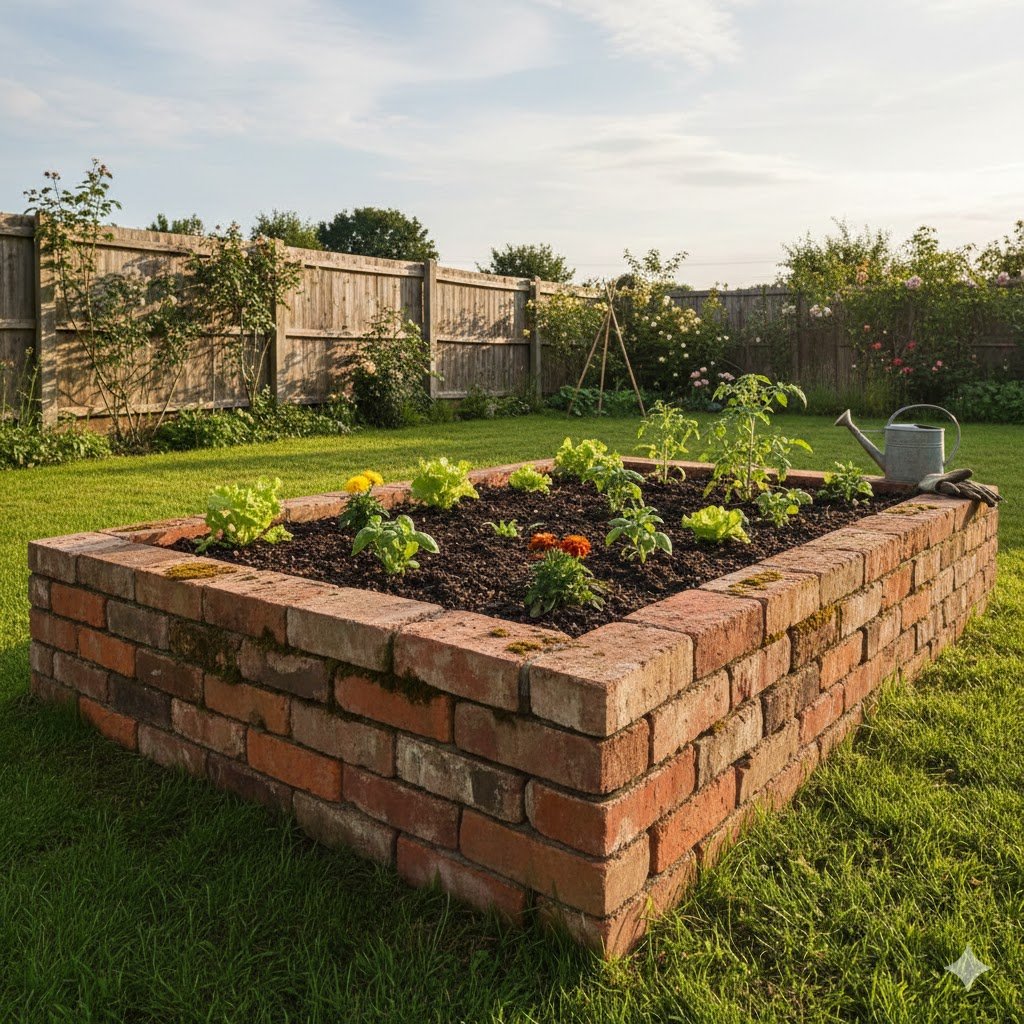
I’ve found that for about 40% of my garden, I don’t even need “beds.” I just mound the soil into long, flat-topped ridges. No wood, no cost, no leaching. It’s called “mound gardening” or “French Intensive,” and while it’s not as “Pinterest-perfect” as a wooden box, my plants don’t seem to mind the lack of a border.
The Stuff That’s Not Worth the Effort
While we’re talking about what not to use, let’s address the “upcycling” crowd. I love a good reuse project as much as anyone—I once built a chicken coop entirely out of old shipping pallets—but the garden bed is where I draw the line.
- Railroad Ties: Do not, under any circumstances, use these. They are soaked in creosote, which is basically distilled coal tar. It’s toxic, it’s carcinogenic, and it will smell like a hot parking lot every time the sun hits it. I made this mistake once with a flower bed, and nothing grew there for three years except some very confused weeds.
- Used Pallets: Unless you can verify the “HT” (Heat Treated) stamp on every single board, stay away. Many pallets are treated with Methyl Bromide, a nasty pesticide. Plus, you have no idea what was spilled on them. Was it organic soap? Or industrial degreaser? It’s not worth the gamble for five bucks worth of wood.
- Old Tires: People love to grow potatoes in tires. I don’t get it. Tires are a cocktail of heavy metals, oils, and carbon black. As they degrade in the sun, they off-gas and leach. Your potatoes deserve better than to live in a Michelin radial.
The Big Picture: Your Soil is a Stomach
If you take nothing else away from my rambling, remember this: your garden bed isn’t just a container. It’s an extension of your soil’s digestive system. Everything you put around that soil eventually ends up in that soil.
When I look at my garden, I want to see a riot of life. I want to see worms, spiders, fungi, and bacteria all working together. Pressure-treated wood is designed to stop that life in its tracks. It’s a barrier to the very biology we’re trying to encourage. Sure, building with cedar or stone or metal takes a bit more effort or a bit more cash upfront, but the peace of mind you get when you bite into a sun-warmed tomato—knowing it’s made of nothing but sun, water, and clean earth—is worth every penny.
I’ve made the “cheap and easy” mistakes so you don’t have to. I’ve had the warped boards, the dead zones, and the “What is that smell?” moments. Save yourself the headache and keep the hardware store chemicals out of your salad.
My parting wisdom: The best time to build a “clean” garden bed was ten years ago; the second best time is this weekend. Just leave the green wood for the backyard fence where it belongs.
Are you planning on building some new beds this spring, or are you looking to replace some old ones that have finally bitten the dust? Let me know your thoughts in the comment box below.