
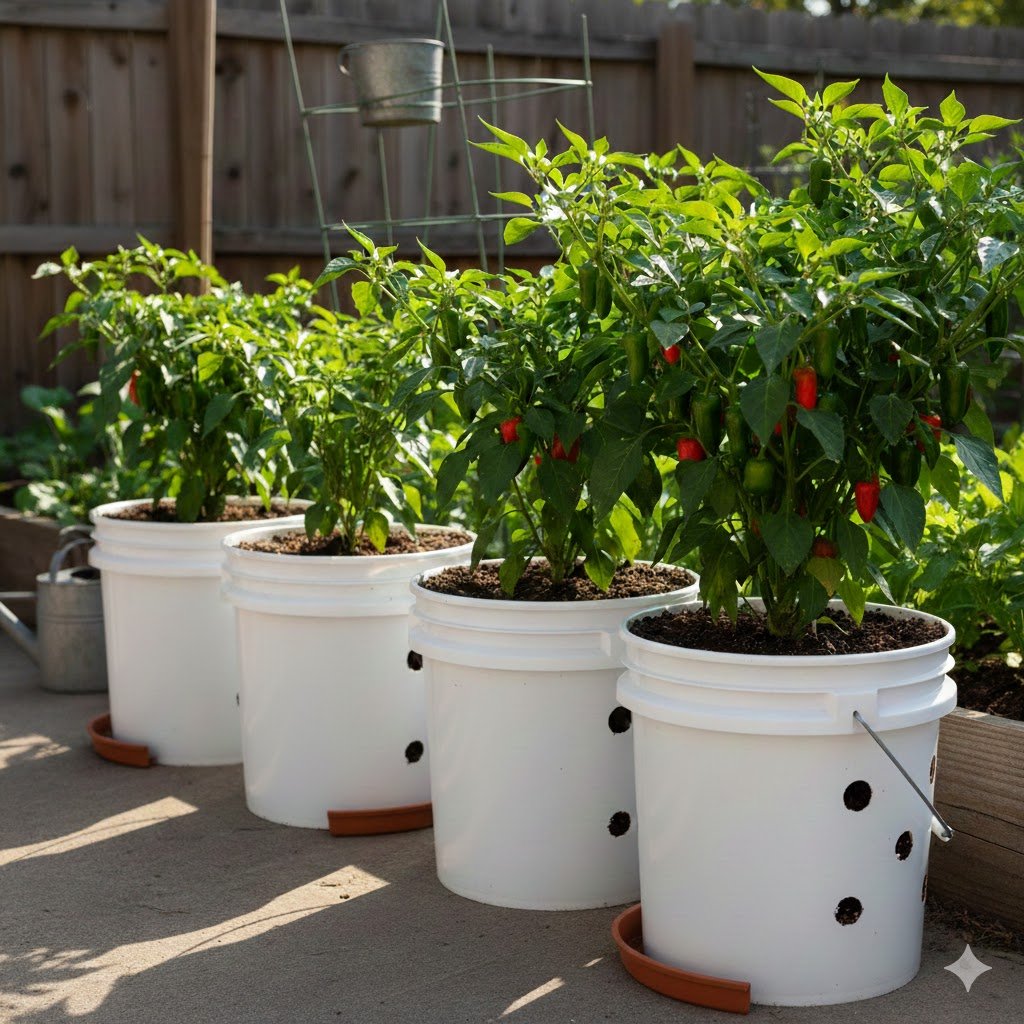
If I see one more “aesthetic” gardening reel featuring a $500 cedar raised bed for two heads of lettuce, I might actually lose it. After 15 years of getting my hands dirty, I’ve learned that plants don’t care about your Pinterest board. They care about drainage, sun, and enough room to stretch their toes.
That’s why the humble 5-gallon bucket is my secret weapon. It’s cheap (often free if you know a guy at a bakery), portable, and keeps your back from screaming at you. I once tried to grow a “victory garden” in my rocky backyard soil and ended up with carrots that looked like gnarled, orange toes. Since then, I’ve moved almost my entire veggie operation into buckets.
If you’ve got a balcony, a driveway, or just a patch of dirt that grows nothing but weeds, listen up. Here is the real-world guide to what actually grows in a bucket and what is a total waste of your time.
1. Growing High-Yield Tomatoes in Containers
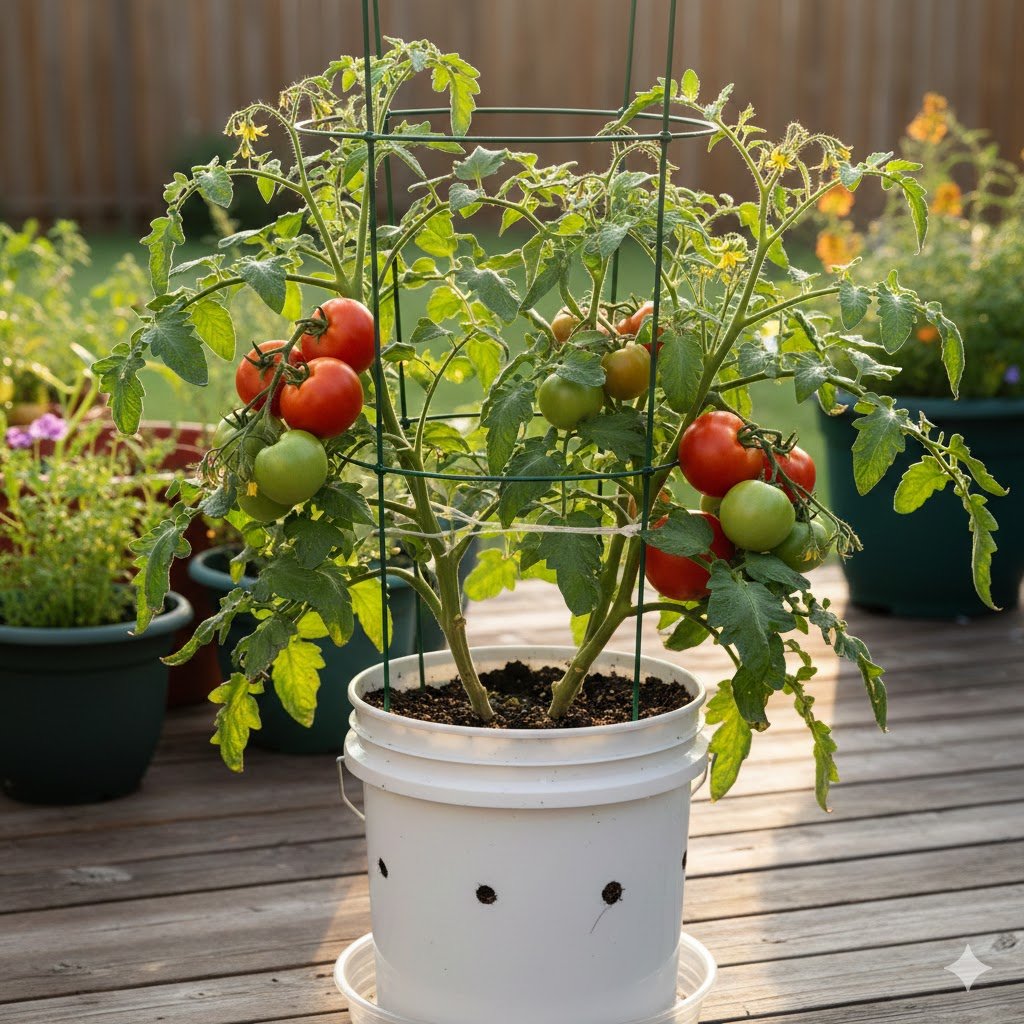
You can’t call it a garden if there isn’t a tomato plant nearby. But don’t go buying those massive beefsteak varieties for a bucket. I made that mistake in 2014; the plant got so top-heavy it tipped over and crushed my neighbor’s prize-winning petunias.
For 5-gallon buckets, you want Determinate or Bush varieties. These are bred to reach a certain height and then stop, rather than trying to climb to the moon. “Celebrity” or “Patio Choice” are my go-tos. They give you a massive harvest all at once, which is perfect if you want to make a batch of salsa that will actually last more than ten minutes.
The trick with tomatoes is the “vampire rule”: bury them deep. I strip the bottom leaves off the seedling and bury about two-thirds of the stem. The plant grows roots all along that buried stem, making it way more stable. Also, for the love of all things green, give them a stake or a cage the day you plant them. Trying to shove a cage over a full-grown plant is like trying to put a sweater on a cat.
2. Best Bell Peppers for Small Spaces
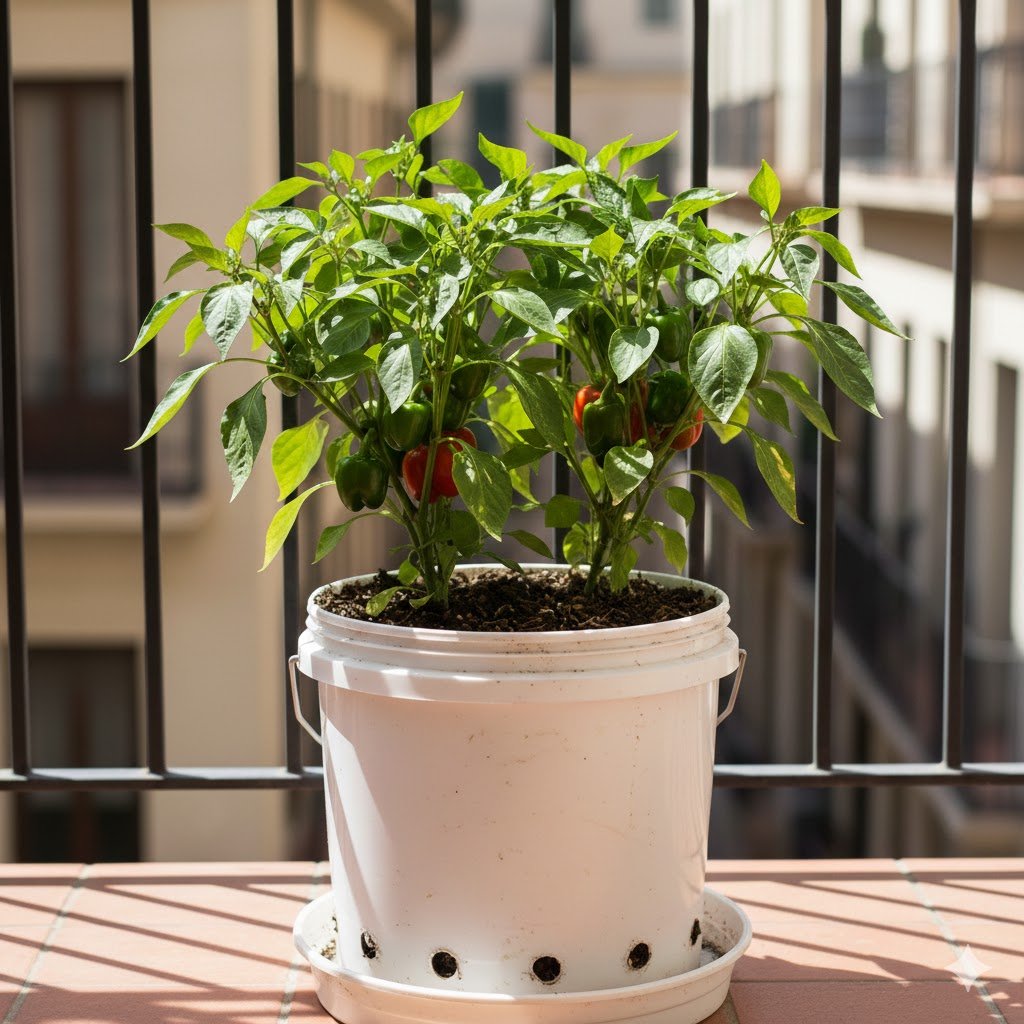
Peppers are the divas of the bucket world. They love the heat that a black plastic bucket provides, but they hate having “wet feet.” If you don’t drill at least six half-inch holes in the bottom of that bucket, your pepper plant will turn yellow and pout until it dies.
I’ve found that “California Wonder” performs okay, but if you want to feel like a pro, go for “Lunchbox” peppers. They are smaller, sweeter, and produce about three times as much fruit per square inch. My kids used to eat them right off the plant like they were candy, which saved me from having to pack snacks for a week.
One thing I’ve learned the hard way: peppers need support too. Even a small bell pepper plant can get heavy enough to snap its own branches under the weight of the fruit. A simple bamboo stake and some twine will save you a lot of heartbreak when a summer thunderstorm rolls through.
3. Bush Beans for Constant Harvesting
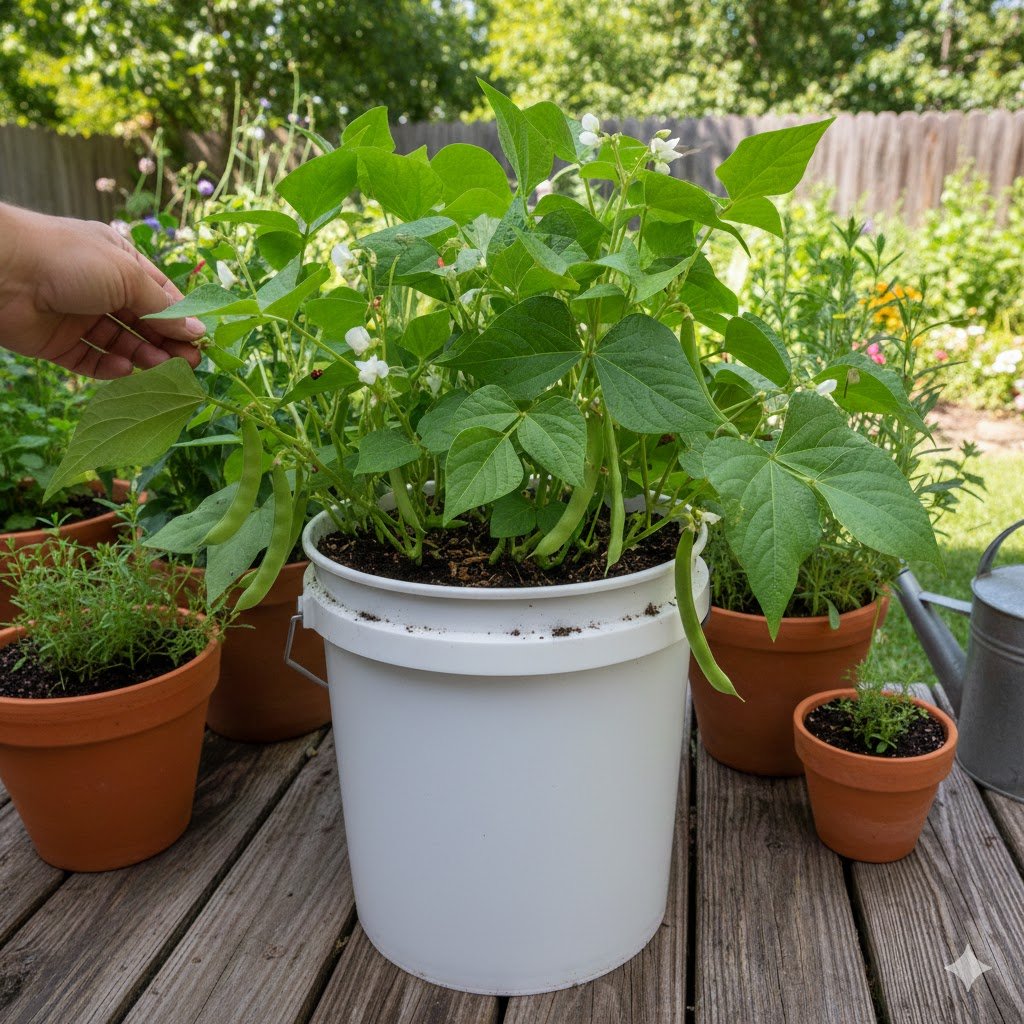
If you want instant gratification, bush beans are your best friend. Pole beans are great if you want a massive trellis, but in a 5-gallon bucket, “Blue Lake 274” bush beans are king. You can fit about three or four plants in a single bucket, and they’ll be ready to eat in about 50 days.
I once tried to see how many beans I could get from a single row of buckets on my porch. By August, I was literally handing bags of beans to the mailman because I couldn’t keep up. The key is to harvest them every single day. If you leave the big, tough ones on the plant, the plant thinks its job is done and stops producing.
Don’t bother with fancy fertilizers here. Beans actually fix their own nitrogen in the soil. Just give them decent potting mix and plenty of sun. If the leaves start looking a bit pale, a splash of compost tea is all they need to get back in the game.
4. Why You Should Grow Zucchini in Buckets
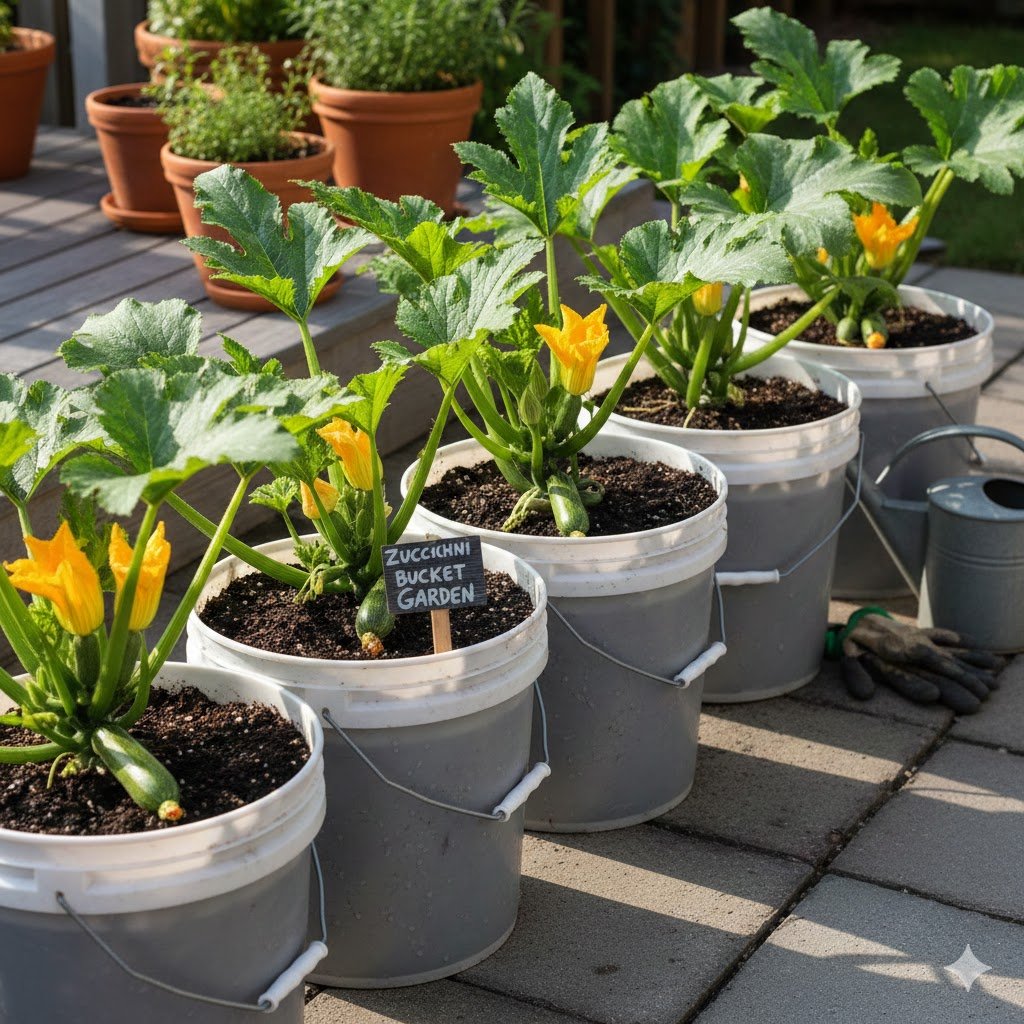
Everyone warned me about the “Zucchini Apocalypse.” I didn’t listen. I planted four plants in the ground and by July, my backyard looked like a scene from Jumanji. Now, I only grow “Black Beauty” zucchini in buckets. It keeps the plant contained and, more importantly, keeps it away from the dreaded squash vine borer that lives in the dirt.
A 5-gallon bucket is the perfect size for exactly one zucchini plant. Do not try to be a hero and plant two. They will fight for nutrients like siblings over the last slice of pizza, and neither will thrive.
The biggest perk? When the powdery mildew inevitably shows up (because it always does), you can just move the bucket to a spot with better airflow. It’s much easier than trying to perform surgery on a plant stuck in the ground. Just remember that zucchini are thirsty. On a hot July day, that bucket will be bone-dry by noon, so keep the watering can handy.
5. Growing Crunchy Cucumbers Vertically
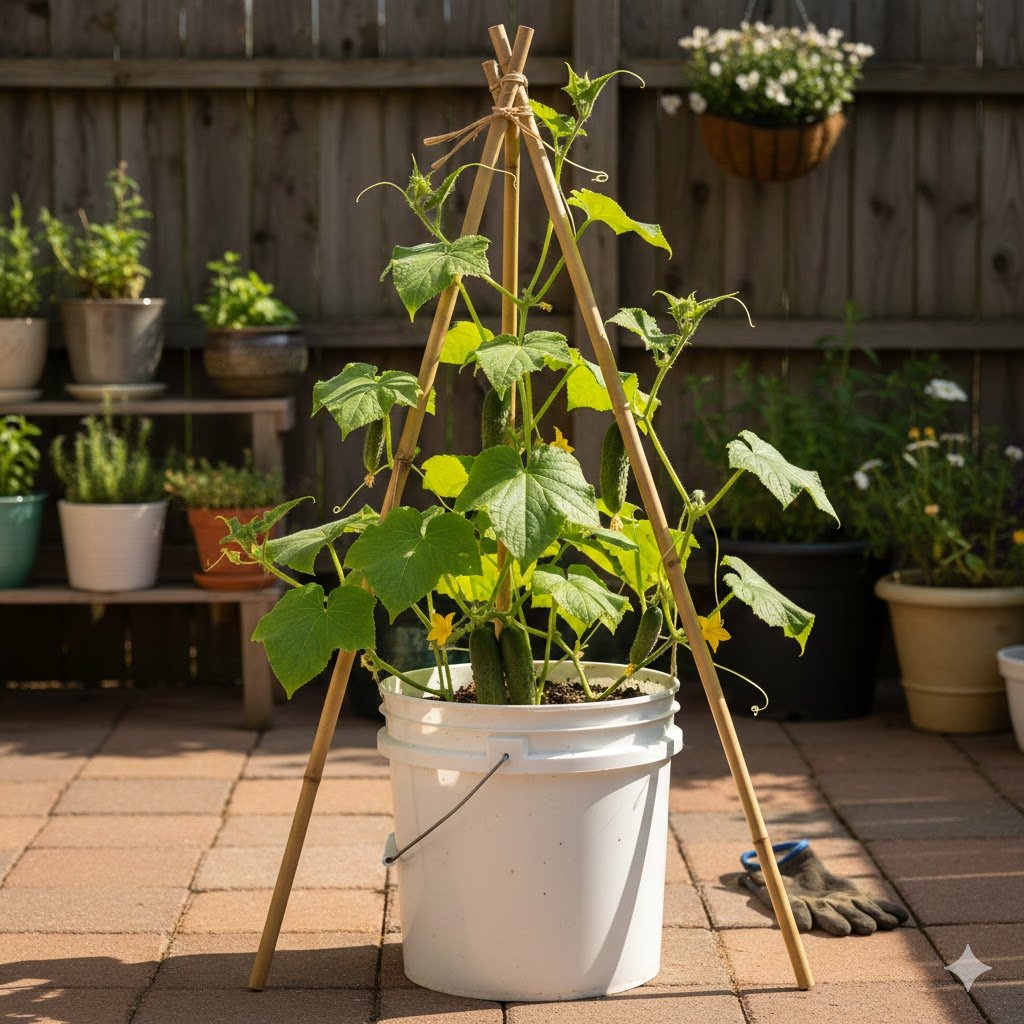
Cucumbers in a bucket are a game-changer, but you have to pick the right seeds. Look for “Bush Slicer” or “Spacemaster.” If you buy a standard vining variety, it will crawl across your deck and trip you every time you try to go outside.
I like to shove a small A-frame trellis right into the bucket. The vines will naturally want to climb, which keeps the cucumbers off the ground and away from slugs. There is nothing worse than picking a beautiful cucumber only to find a slug has already turned the bottom into a studio apartment.
Keep the soil consistently moist. If a cucumber plant gets stressed from lack of water, the fruit turns bitter. I once grew a batch that tasted like lawn clippings because I went on a weekend camping trip and forgot to set up my drip lines. Lesson learned: happy roots make sweet fruit.
6. Easy Eggplant for Container Gardens
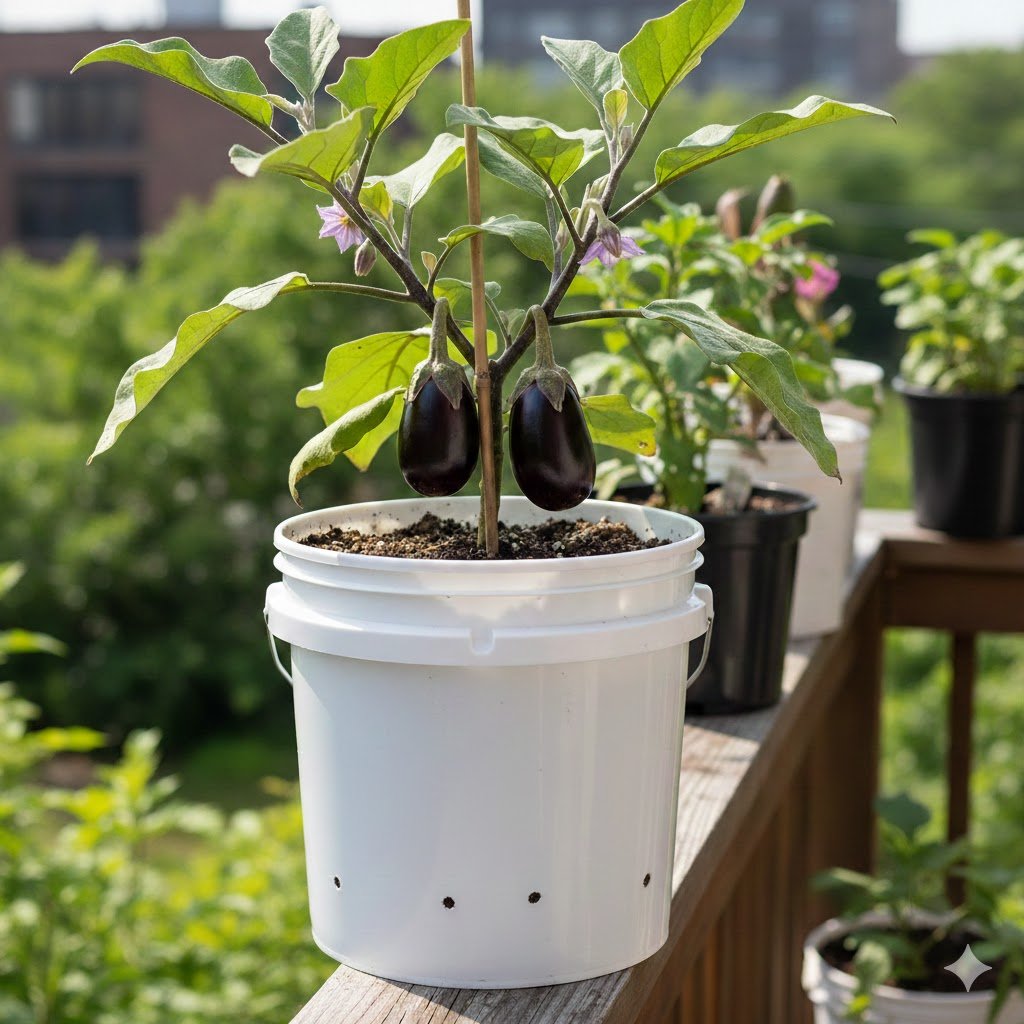
Eggplants are honestly some of the most beautiful plants you can grow. The “Fairytale” variety has these gorgeous purple-and-white striped fruits that look like they belong in a gourmet magazine. They also happen to love the confined, warm environment of a bucket.
Flea beetles are the nemesis of the eggplant. They’ll poke a thousand tiny holes in the leaves until the plant looks like Swiss cheese. Growing them in buckets up on a table or a porch railing helps keep the bugs at bay.
I’ve found that eggplants are heavy feeders. I usually mix in a handful of worm castings when I plant them and hit them with some organic fish emulsion every two weeks. It smells like a wharf, but the plants absolutely love it. Just maybe don’t do it right before you host a backyard BBQ.
7. Growing Leafy Greens and Kale
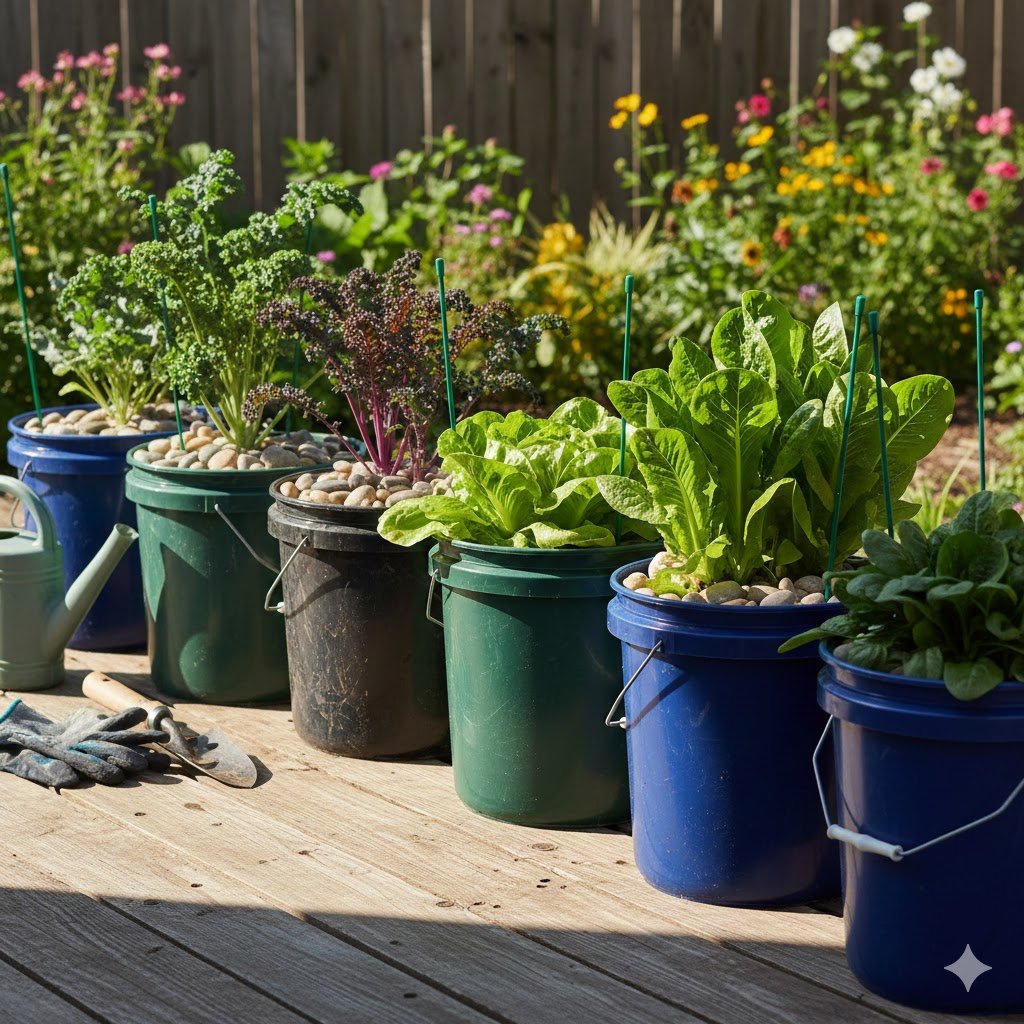
If you think kale is just a garnish for salad bars, you haven’t had it fresh. “Lacinato” (Dinosaur) kale is my favorite for buckets. You can fit two plants in one bucket, and they’ll produce from early spring all the way through a light frost.
The best part about bucket greens is that you can move them into the shade when the summer heat kicks in. Lettuce and kale hate the sun once it hits 80 degrees; they turn bitter and “bolt” (send up a flower stalk). When my neighbor’s lettuce was shriveling in the garden bed, I just dragged my buckets onto the shaded patio and kept harvesting.
Try “Cut and Come Again” varieties. Instead of pulling the whole plant, you just snip the outer leaves. It’s like a never-ending salad bowl. I haven’t bought a plastic tub of wilted grocery store spinach in three years.
8. Hot Peppers for High Yields
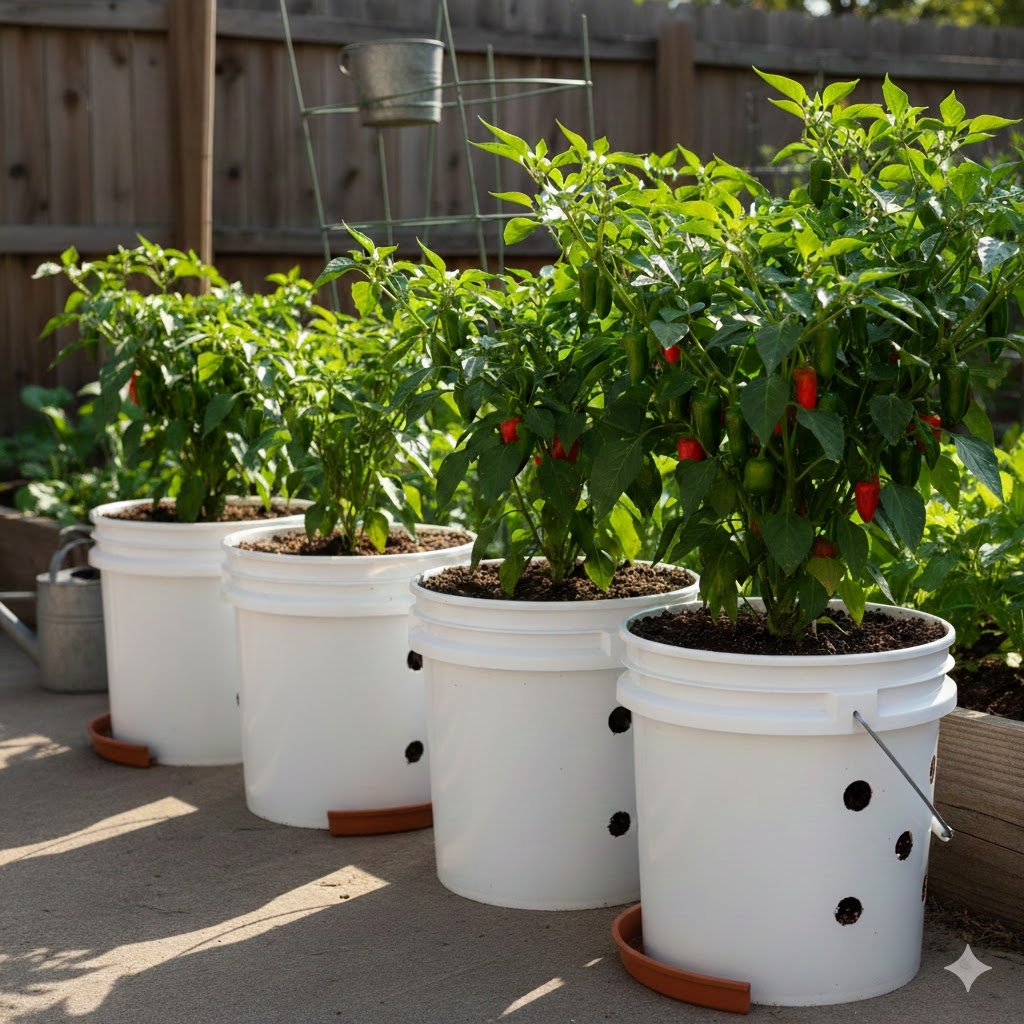
If you like heat, Jalapeños and Habaneros are built for bucket life. They actually seem to produce better fruit when their roots are slightly restricted. It’s like the plant gets a little stressed and decides to put all its energy into making those spicy peppers as a defense mechanism.
I’ve got a “Early Jalapeño” plant that has been in the same bucket for two seasons (I bring it inside for the winter). Last year, it gave me enough peppers to dehydrate and turn into “cowboy candy” for the whole neighborhood.
One pro tip: use a high-quality potting mix, not “garden soil” from a bag. Bagged garden soil is too heavy and will compact into a brick inside a bucket. You want something with peat moss or coco coir and plenty of perlite so the roots can actually breathe.
9. Potatoes in Buckets (The Lazy Way)
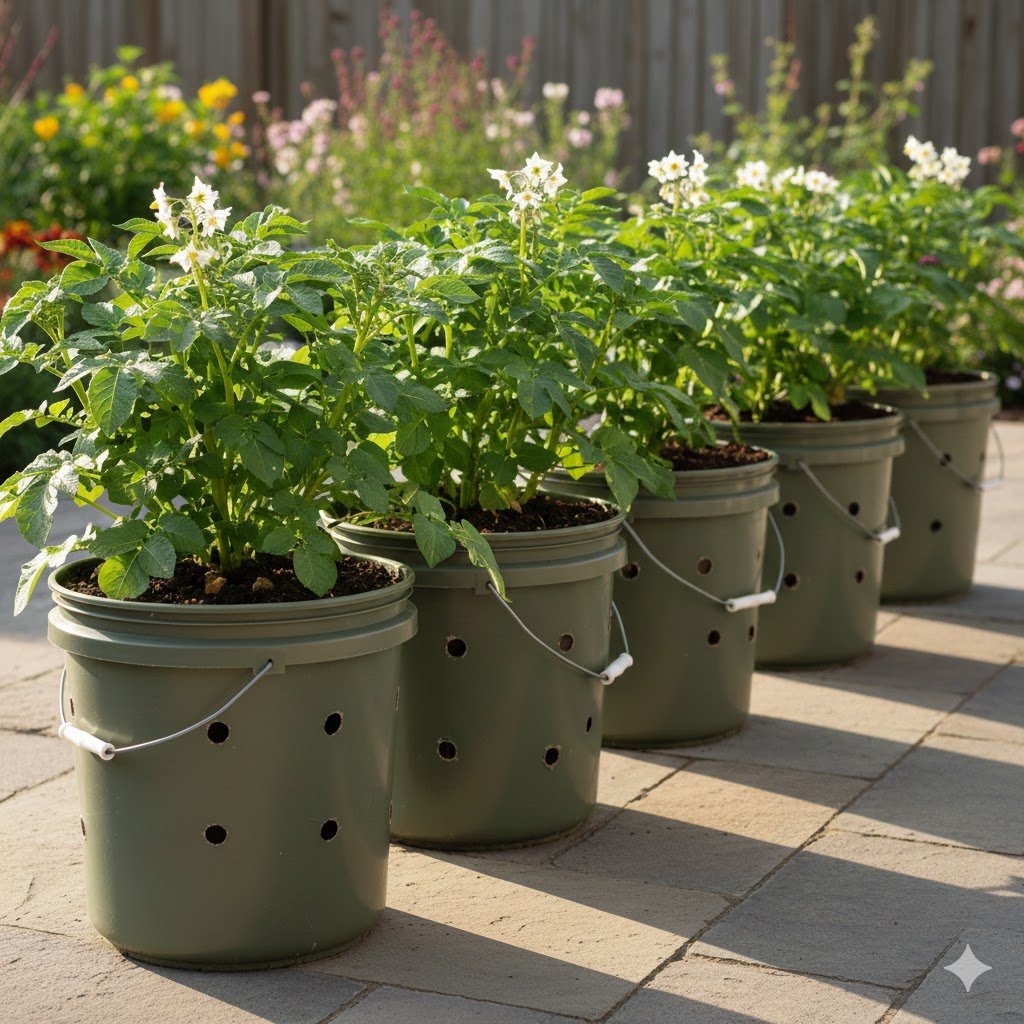
Growing potatoes in the ground is a nightmare. You have to dig a trench, hill them up, and then pray you don’t slice the tubers in half when it’s time to harvest. In a 5-gallon bucket, it’s a breeze.
Fill the bottom 4 inches of the bucket with soil, toss in two seed potatoes, and cover them with another 4 inches. As the green leaves grow up, keep adding more soil until you reach the top of the bucket.
When the vines die back in the fall, you don’t need a shovel. You just tip the bucket over onto a tarp and “mine” for your gold. It’s the cleanest, easiest way to get homegrown spuds. I once got five pounds of Yukon Golds out of a single bucket I found behind a dumpster.
10. Swiss Chard for Colorful Containers
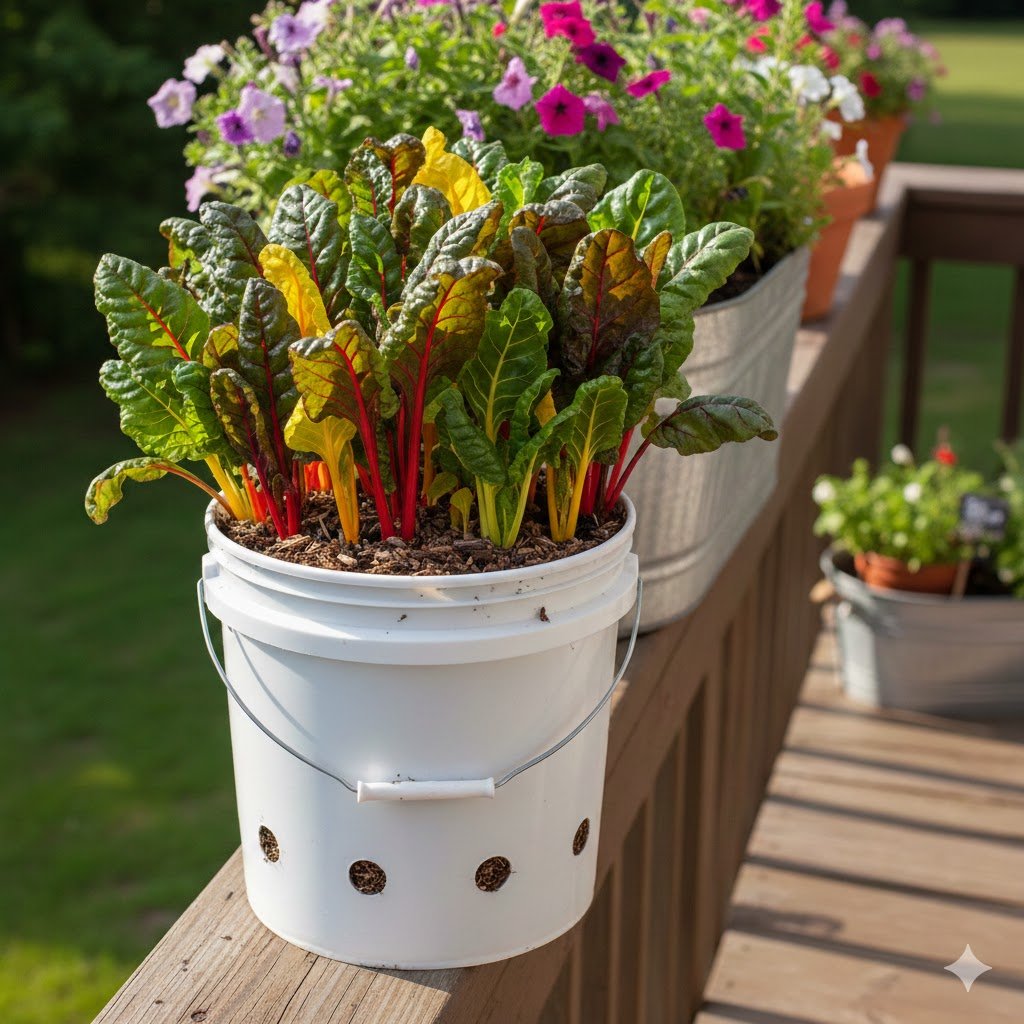
“Bright Lights” Swiss chard is so pretty it could be an ornamental plant. The stems come in neon pink, yellow, and orange. It’s much tougher than spinach and can handle both the heat of July and the nip of October.
I usually plant three chard plants per bucket. They grow upright, so they don’t take up much room. If you keep the soil moist, they’ll just keep pumping out leaves.
Side note: the stems are edible too! I chop them up and sauté them with garlic and butter. It’s a great way to use the whole plant and feel like a fancy chef while you’re at it.
11. Carrots and Root Vegetables
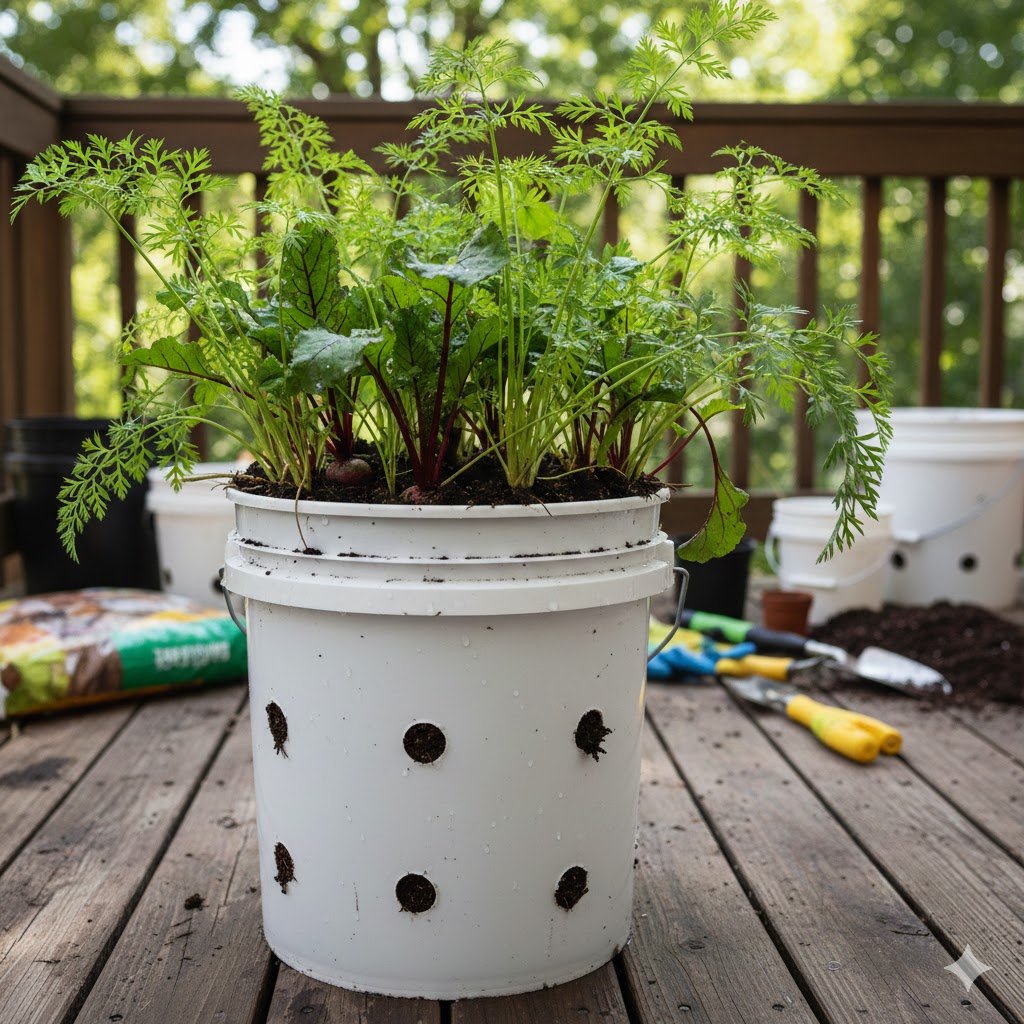
You can grow carrots in buckets, but you have to be smart about the variety. Don’t try to grow those long, 10-inch “Nantes” types; they’ll hit the bottom and curl up like a pig’s tail. Go for “Danvers Half Long” or “Little Finger” carrots.
The soil needs to be completely rock-free. I usually sift my potting mix through a piece of hardware cloth to make sure there are no clumps. If a carrot root hits a pebble, it splits in two.
I like to over-seed the bucket and then thin them out as they grow. The “thinnings” are actually delicious in salads. It feels a bit heartless to pull out perfectly good baby plants, but if you don’t, you’ll end up with a tangled mess of orange threads instead of actual carrots.
12. Garlic for Over-Wintering
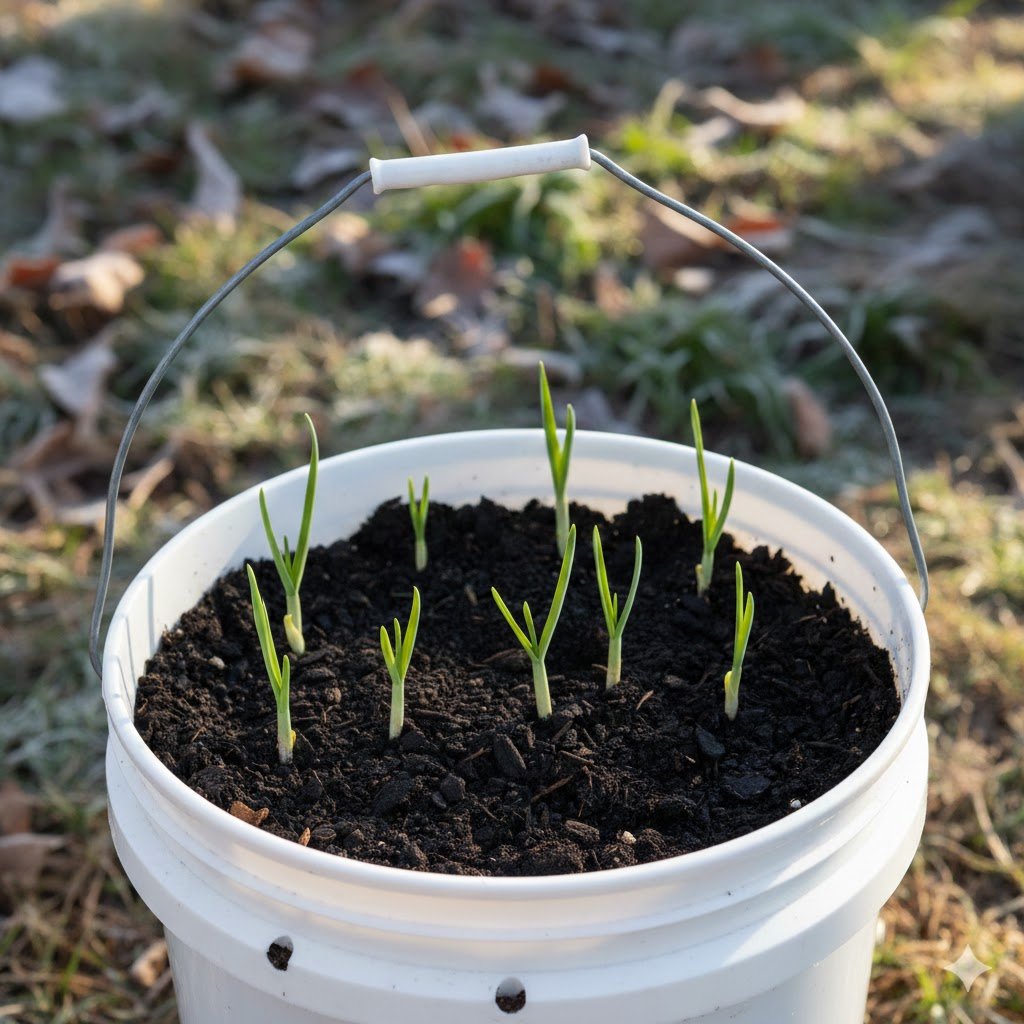
Most people think you need a big farm to grow garlic, but it loves a bucket. You plant the cloves in the fall (around October), leave the bucket outside all winter, and harvest in June.
Garlic is the ultimate “set it and forget it” crop. As long as the bucket doesn’t dry out completely during a winter thaw, it will be fine. I’ve had buckets frozen solid in a snowbank, and the garlic still popped up green and happy in the spring.
Just make sure you use “Hardneck” garlic if you live in a cold climate. It produces “scapes”—curly green stems that you can snip off in late spring to make the best pesto you’ve ever tasted.
13. Radishes: The 30-Day Wonder
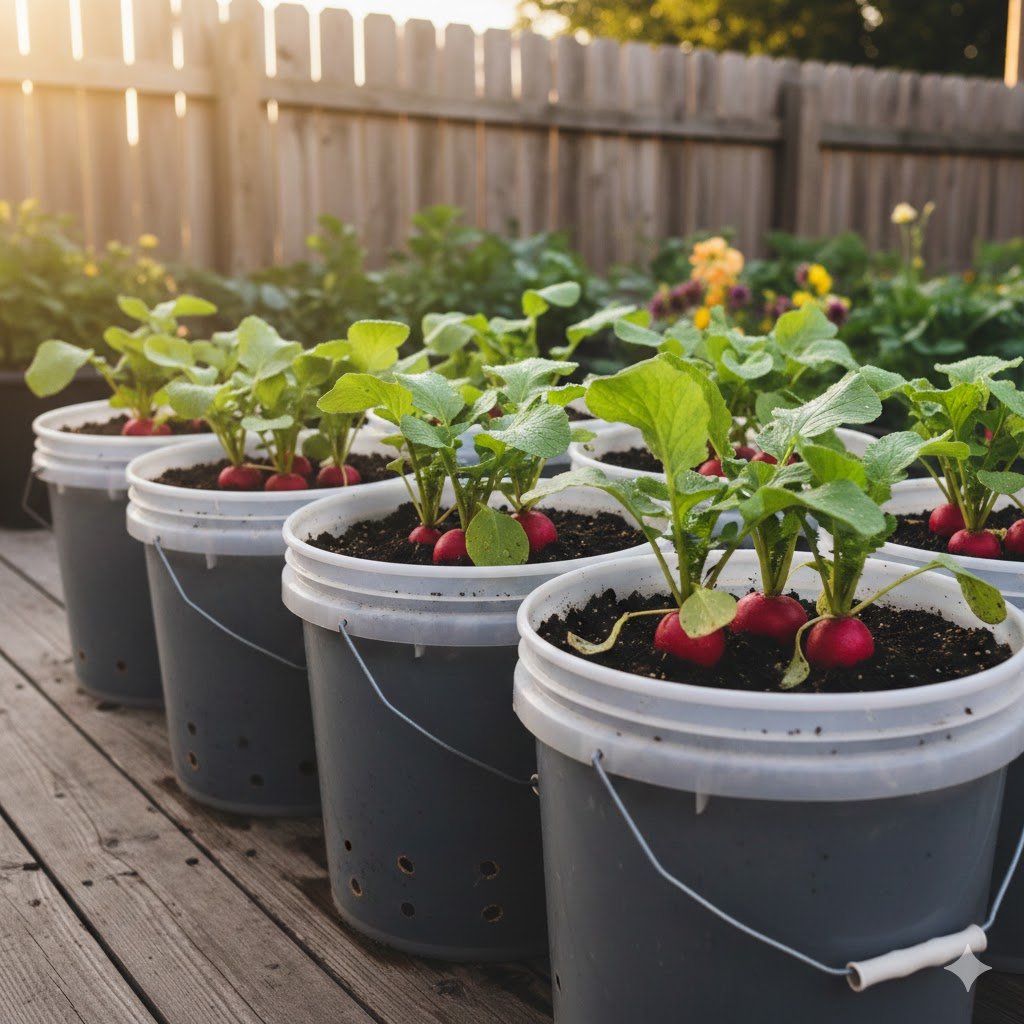
Radishes are the “gateway drug” of gardening. They grow so fast you can almost see it happening. You can fit about 15 radishes in a single 5-gallon bucket.
I usually plant them around the edges of my larger plants, like tomatoes or peppers. By the time the tomato plant is big enough to need the space, the radishes are already harvested and on my dinner plate.
“French Breakfast” radishes are my favorite because they aren’t quite as “spicy” as the round red ones. If you leave them in the bucket too long, though, they get woody and gross. Harvest them the second they look big enough to eat.
14. Herbs: The Bonus Bucket
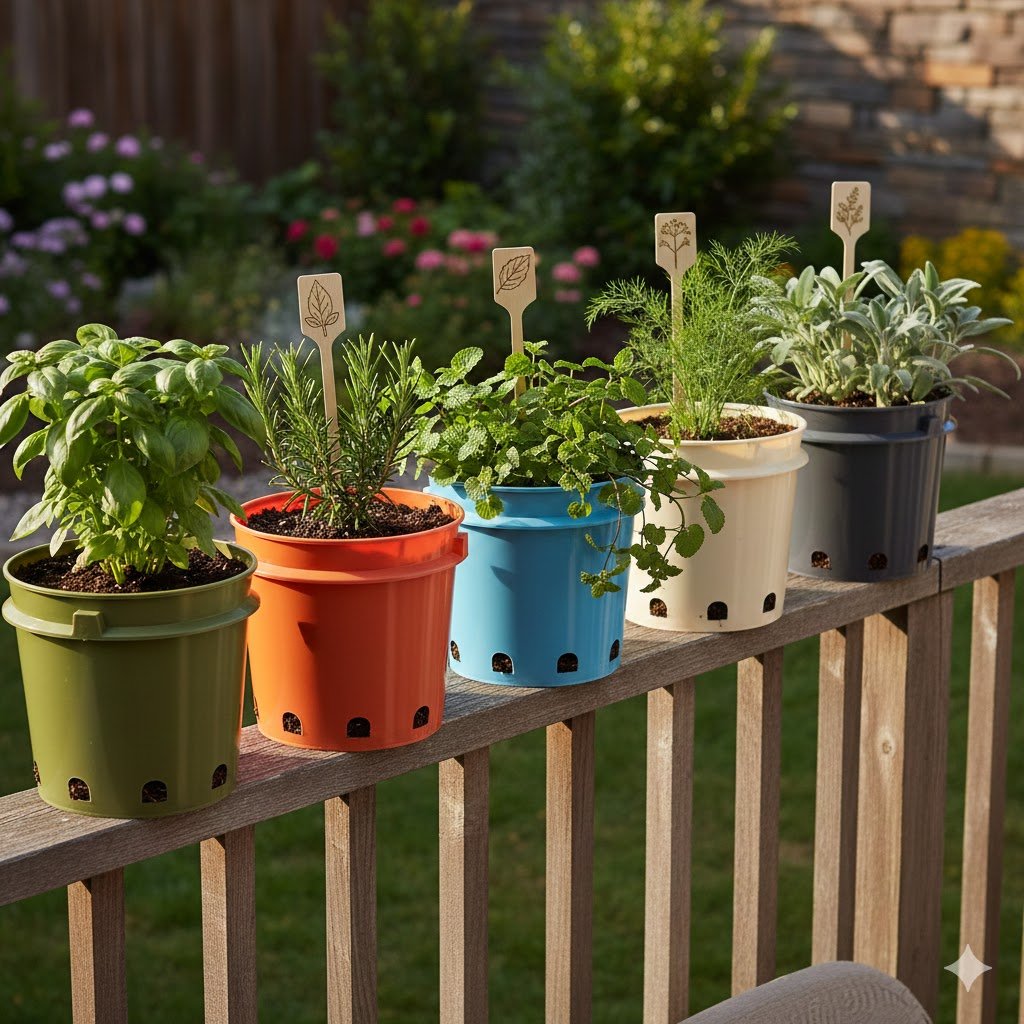
Okay, this isn’t technically one vegetable, but a “Kitchen Scrap Bucket” is a must. I fill one bucket with basil, parsley, and cilantro. Having these right outside the kitchen door saves me a fortune at the grocery store.
Basil is the only one that really loves the heat. Parsley and cilantro prefer the cooler corners of the porch. If you keep snipping the tops off the basil, it will bush out and stay productive until the first frost.
Real Talk: The Bucket Truth
Before you go out and buy a dozen buckets, let’s talk about the stuff no one tells you. First, color matters. If you live in a place like Texas or Arizona, avoid black buckets. They will cook your roots like a sous-vide machine. Go for white or light grey.
Second, drainage is non-negotiable. I once forgot to drill holes in a potato bucket during a rainy June. Within a week, the whole thing smelled like a swamp and the potatoes had turned into grey mush. It was the most disgusting thing I’ve ever smelled in my life. Get a power drill and go to town on the bottom and the lower inch of the sides.
Third, cheap soil is a trap. Don’t buy the $2 bags of “topsoil” from the big box store. It’s basically just clay and wood chips. Spend the extra money on a high-quality potting mix with perlite and vermiculite. Your plants will thank you by actually staying alive.
Finally, fertilize more than you think. Because you are watering these buckets constantly, the nutrients wash out of the bottom. I use a liquid organic fertilizer every two weeks. If you don’t, your plants will start looking “tired” by mid-August, and your harvest will suffer.
Parting Wisdom
Gardening shouldn’t be a high-stress hobby. It’s about trial and error, a little bit of sweat, and the pure joy of eating a tomato that actually tastes like a tomato. If a plant dies, don’t sweat it. I’ve probably killed more plants than most people have ever grown. Just dump the soil, find out what went wrong, and try again.
The 5-gallon bucket is the great equalizer. It doesn’t matter if you have a sprawling estate or a tiny fire escape—you can grow your own food.
What’s the one vegetable you’ve always wanted to grow but were too afraid to try in a container? Drop a comment below and let’s figure it out together!