
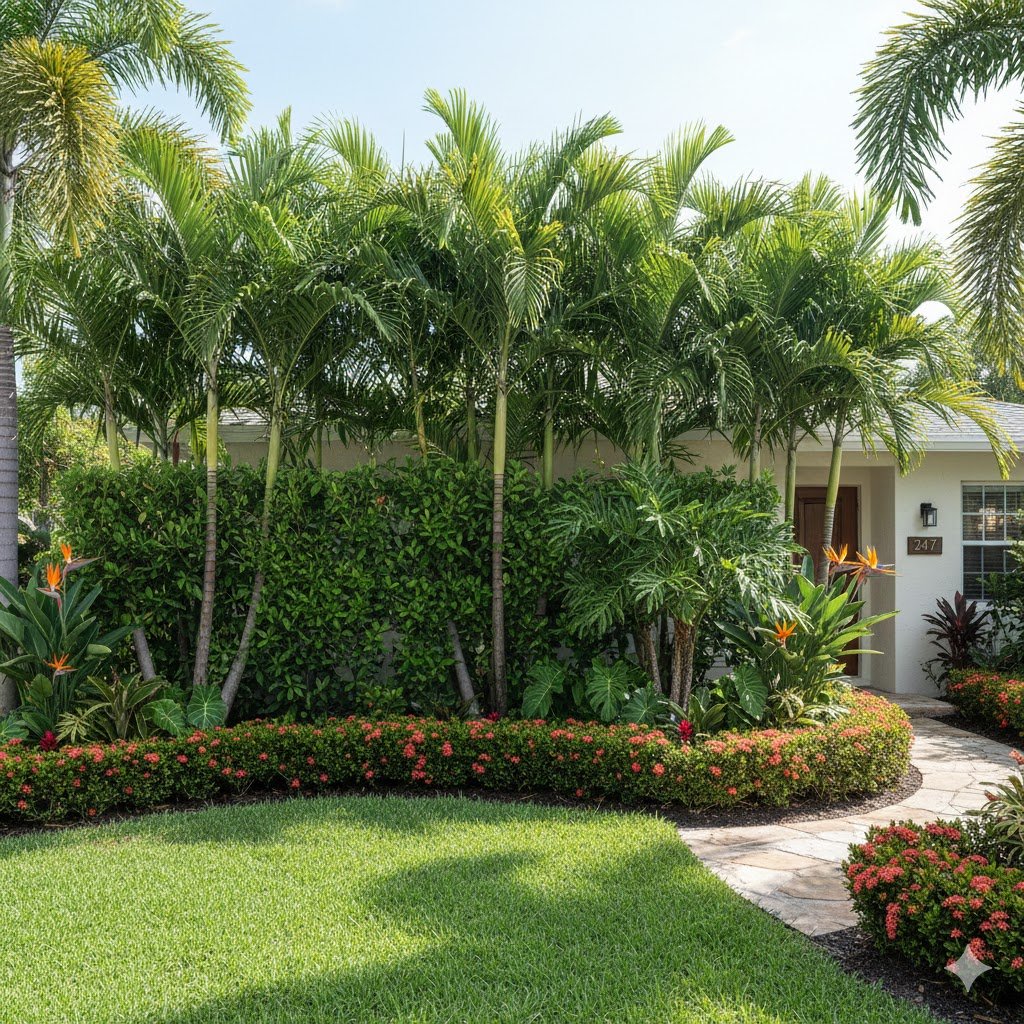
I’ve spent the last decade engaged in a silent, muddy war with my front yard. I’ve survived the Great Aphid Invasion of ’12 and that one summer my zucchini grew so fast it nearly swallowed my neighbor’s cat. If there’s one thing I’ve learned, it’s that people want a front yard that looks like a high-end resort in Bali, but they usually end up with a collection of crispy brown sticks because they didn’t plan for reality.
Tropical front yard landscaping is the ultimate “flex” for curb appeal, but it’s easy to mess up. You want lush, leafy, and vibrant—not “abandoned jungle where a lawnmower went to die.” Let’s get your house looking like a vacation spot without you having to spend every Saturday sweating through your shirt.
1. Planting Large Leaf Tropical Plants for Instant Privacy
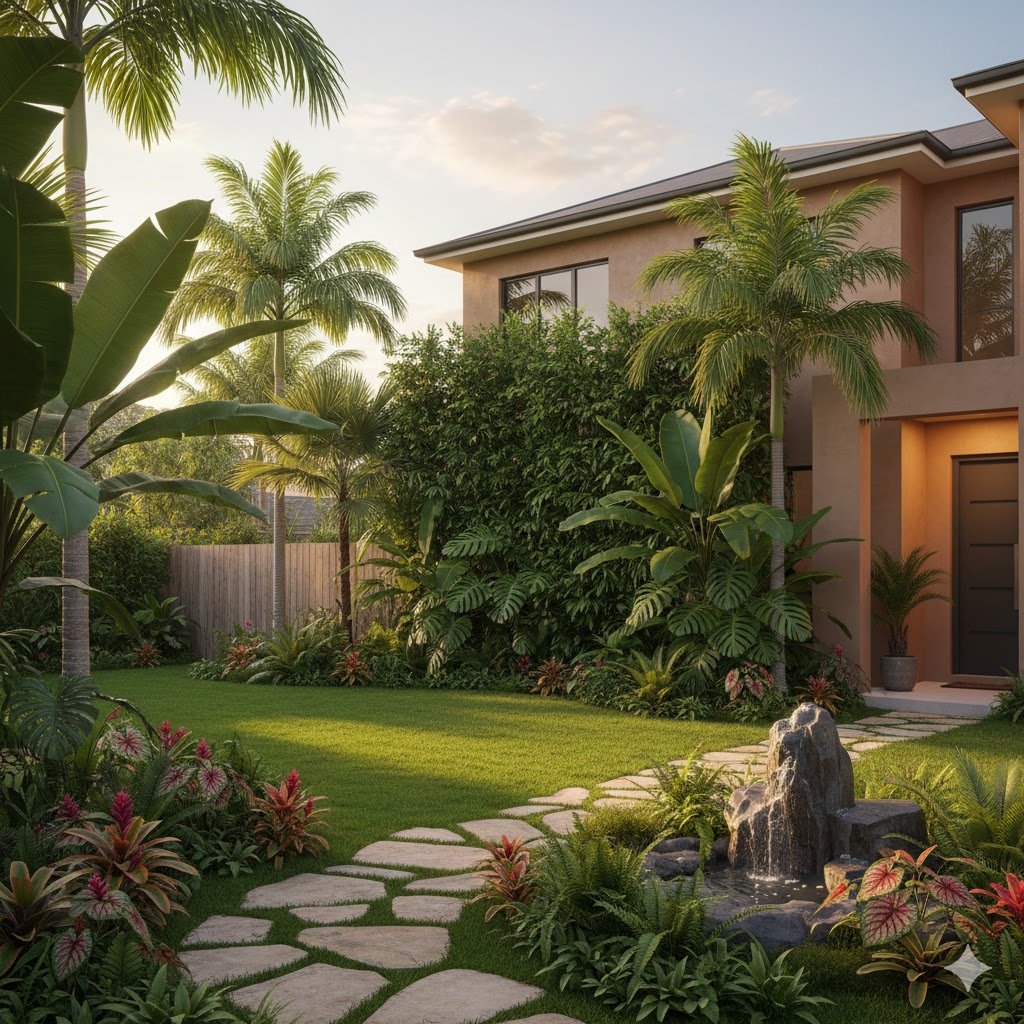
When most people think “tropical,” they think big. I’m talking leaves the size of a trash can lid. If you want to hide that neighbor who stares while you’re in your bathrobe, Giant Bird of Paradise (Strelitzia nicolai) or Elephant Ears (Colocasia) are your best friends.
I remember planting my first Bird of Paradise near my driveway. I thought it would stay a cute four feet tall. Three years later, it was peering into my second-story bedroom window. These things are monsters in the best way possible. They create a “living wall” that catches the wind and makes that soothing rustling sound that drowns out the local traffic.
When you’re digging these in, don’t skimp on the hole. Dig it twice as wide as the pot. I’ve seen so many “Pinterest gardeners” just shove a plant into a tiny hole in hard clay and wonder why it dies in a month. Give those roots some room to breathe, toss in some compost, and watch them take over. Just keep them a few feet away from your foundation—their roots are polite, but they don’t need to be that close to your plumbing.
2. Using Layered Garden Beds for That Lush Jungle Look
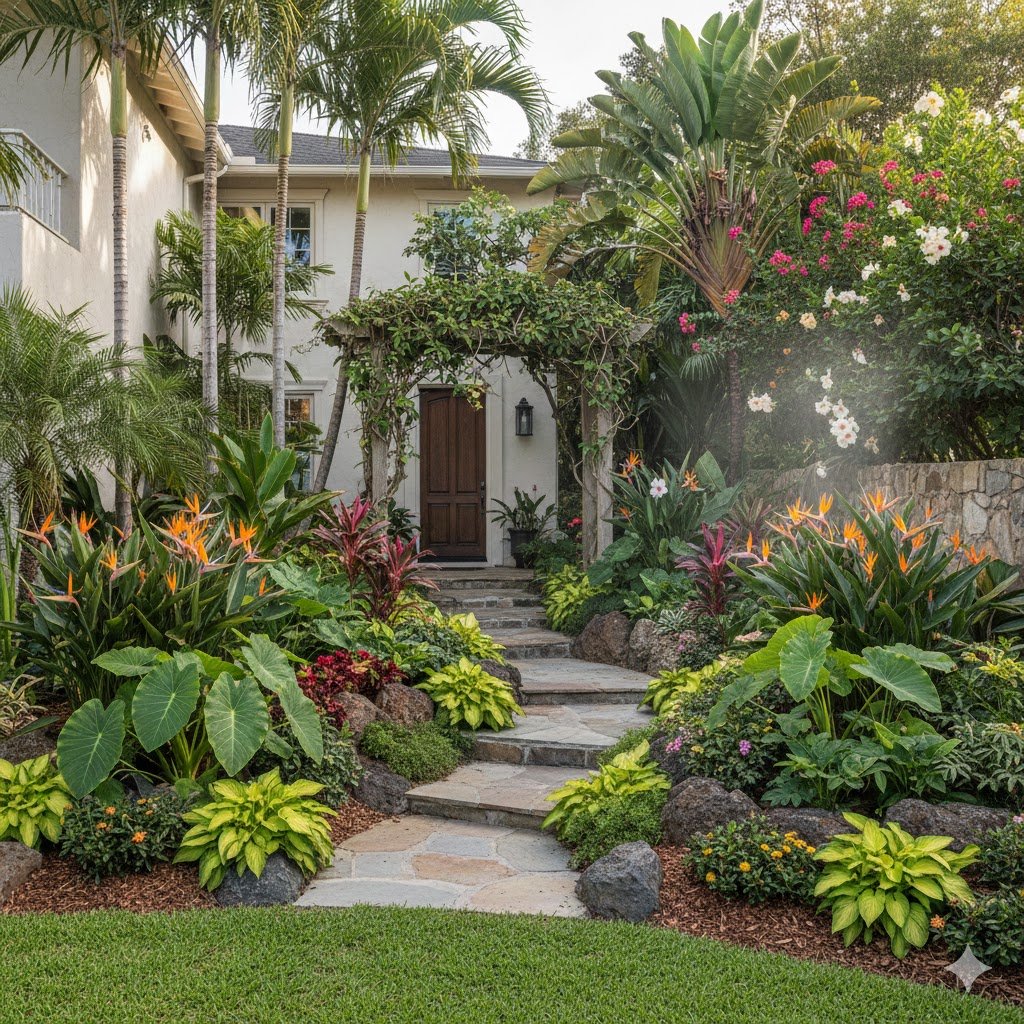
The biggest mistake I see? The “Soldier Row.” That’s when someone plants a straight line of the exact same shrub against their house. It looks like a lineup at a police station. If you want a real tropical vibe, you have to layer your heights.
Think of it like a staircase. You want your tall palms or bamboo in the back, mid-sized shrubs like Crotons or Hibiscus in the middle, and low-growing groundcovers like Mondo Grass or Bromeliads in the front. This creates depth and makes your yard look twice as big as it actually is.
I once tried to skip the middle layer because I was being cheap. My yard looked like a giant basketball player standing behind a toddler—there was just this awkward gap in the middle. It was hideous. Now, I always make sure to pack in those mid-level plants. Ti Plants (Cordyline fruticosa) are a personal favorite here because they add a pop of pink or deep red that breaks up all that green.
3. Selecting Low Maintenance Palms for Curb Appeal
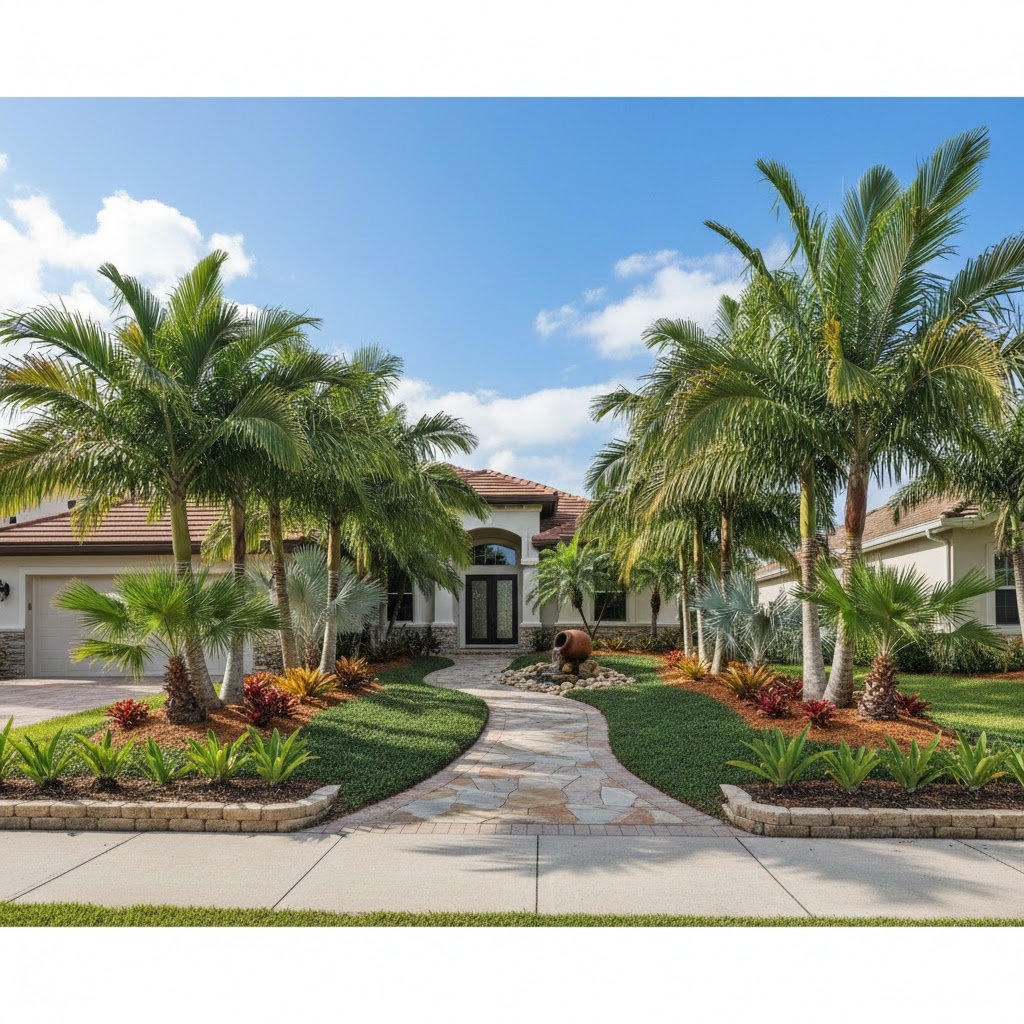
Not all palms are created equal. Some are elegant; others are just tall weeds that drop heavy seeds on your car. If you want that classic tropical front yard, stick with the Adonidia (Christmas Palm) or the Pygmy Date Palm.
I have a love-hate relationship with the Pygmy Date Palm. It looks fantastic, but it has these wicked thorns near the base. I learned that the hard way when I tried to weed around one in flip-flops. Wear gloves, folks. But for the “curb appeal” factor? You can’t beat them. They stay relatively small, so they won’t swallow your house, and they have that perfect “Florida postcard” silhouette.
If you have a bit more room, a European Fan Palm is a tough-as-nails option. It’s chunkier and handles a bit of cold better than the delicate stuff. Whatever you do, avoid the Queen Palm unless you enjoy spending your weekends trimming dead fronds. They grow fast, sure, but they look “shabby-chic” within a week of a breeze. Stick to the sturdy stuff that holds its shape.
4. Best Tropical Flowering Shrubs for Year-Round Color
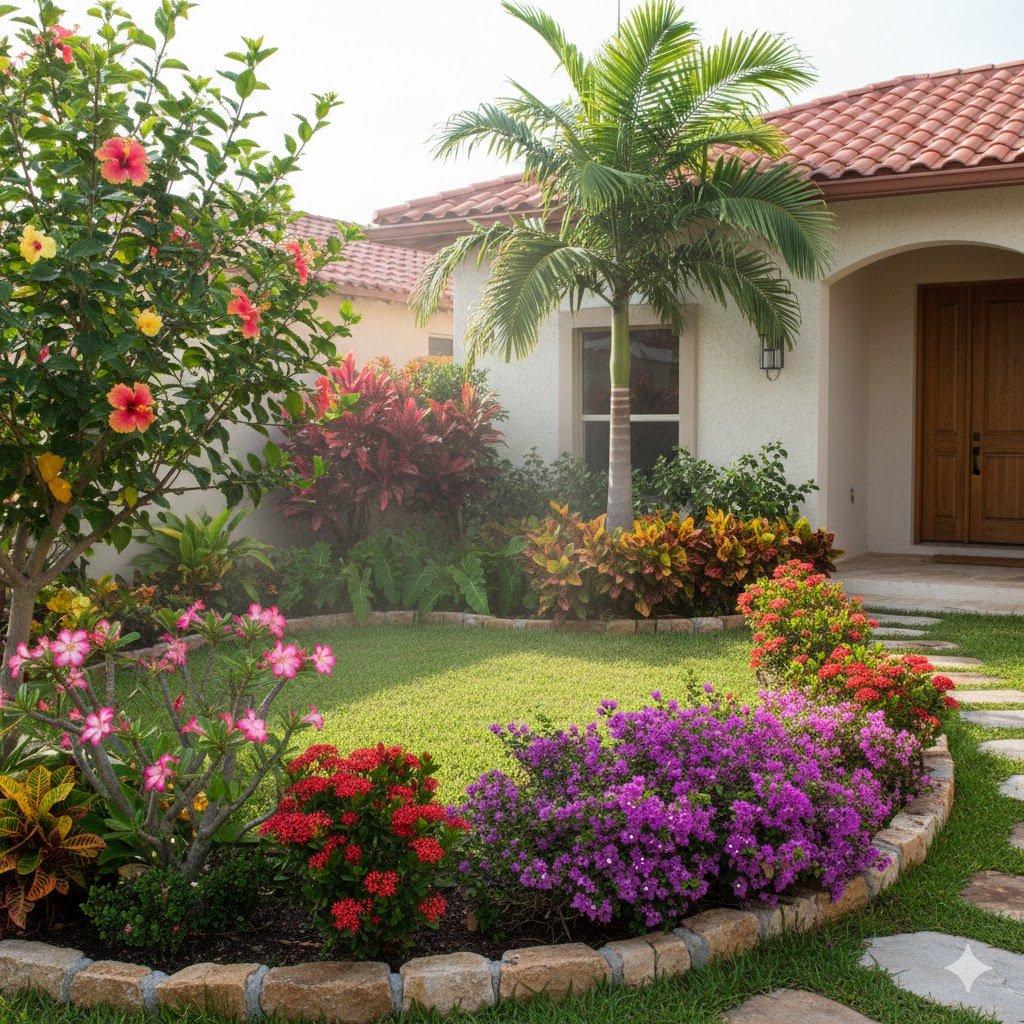
Green is great, but a tropical yard needs “bang.” You want colors so bright they make your mailman wear sunglasses. Hibiscus is the obvious choice, but let me give you a pro tip: look for the “Hollywood” or “Tradewinds” varieties. They bloom more frequently and the flowers stay open longer.
I once planted a generic hibiscus I found in a clearance bin. It grew six feet tall but only gave me about three flowers a year. It was basically a very expensive stick. Now, I’m much pickier. Ixora is another powerhouse. It grows into these dense, hedge-like mounds of orange, red, or pink flowers. It’s the “set it and forget it” of the tropical world.
One thing to watch out for: whiteflies love hibiscus. If you see the leaves turning sticky or getting black soot on them, don’t panic. Just hit them with some neem oil or a blast from the hose. It’s a small price to pay for having a front yard that looks like a Hawaiian lei.
5. Incorporating Rock Mulch vs. Wood Mulch in Tropical Designs
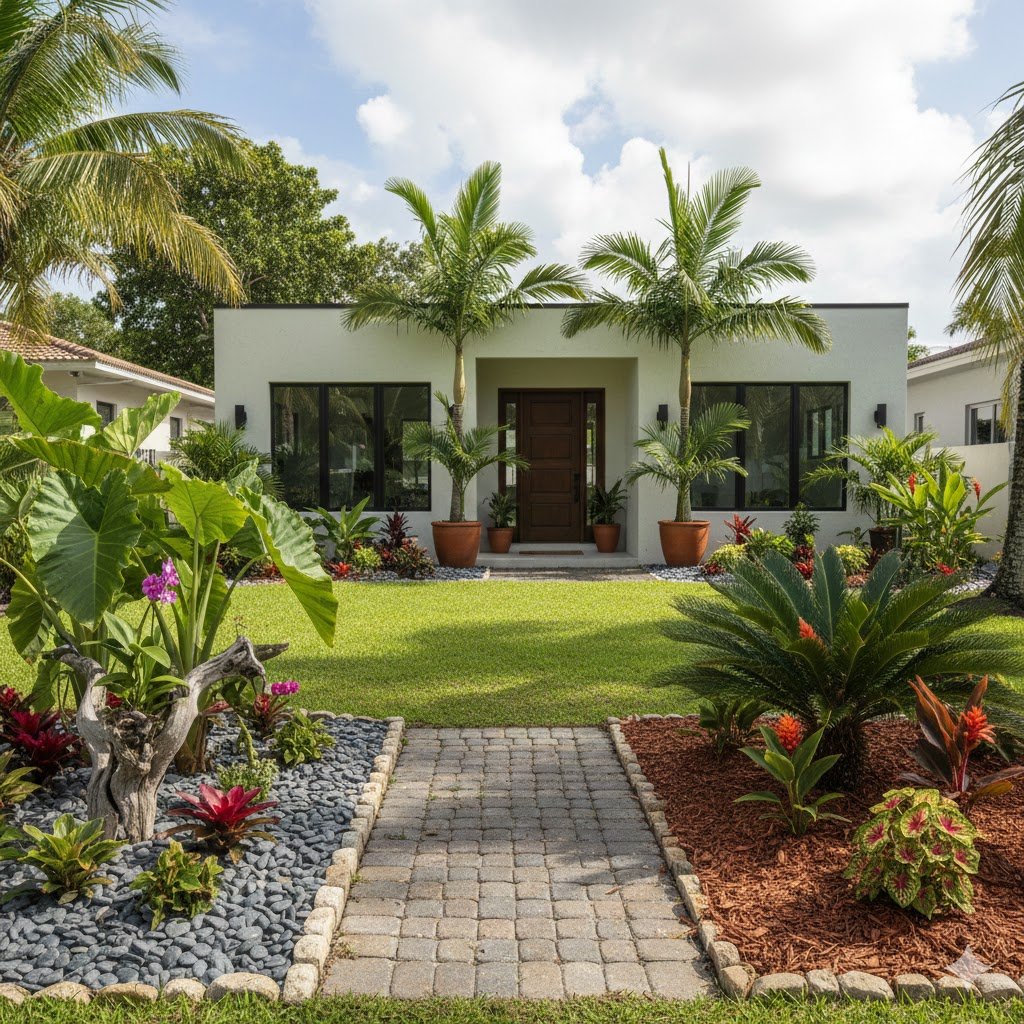
Here is my hill to die on: stop using that dyed red wood mulch. It looks fake, it fades to a weird grey, and it washes away the second you get a tropical downpour. For a real tropical aesthetic, go with river rock or lava rock.
I switched to Mexican Beach Pebbles five years ago and I haven’t looked back. Yes, they are more expensive upfront. But you know what’s more expensive? Re-mulching your entire front yard every six months because the wood chips rotted. Rock stays put, it helps with drainage (which tropical plants love), and it gives that clean, modern look that makes your house look like a million bucks.
If you’re worried about heat, just make sure you aren’t packing the rocks right against the stems of your more sensitive plants. Leave a little “breathing room” of a couple of inches. This setup is great for Succulents or Agaves tucked into the corners of your tropical beds. It gives the eye a place to rest between all those big, leafy greens.
6. Creating a Tropical Walkway with Pavers and Groundcover
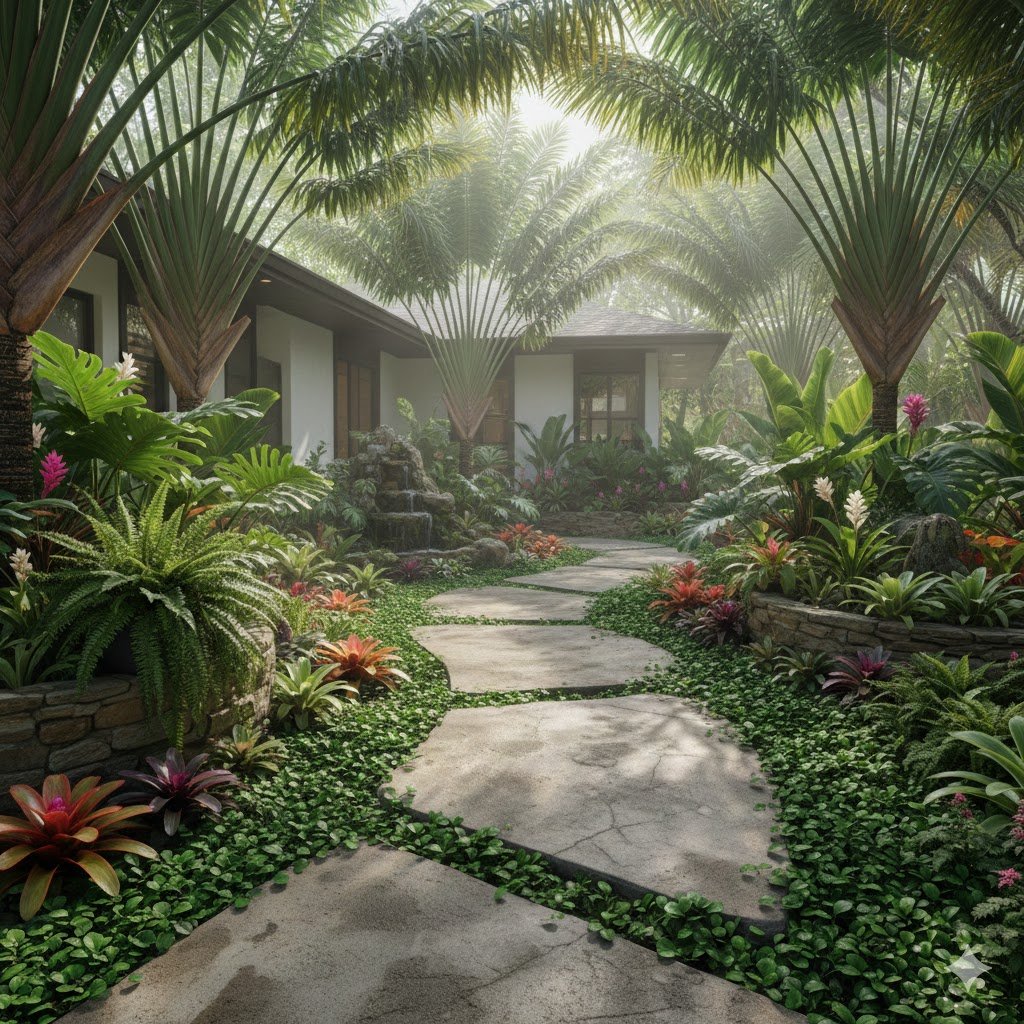
Your front walkway shouldn’t just be a slab of boring concrete. That’s for dentists’ offices. For a tropical feel, you want steppers. Large, flat stones or concrete pavers with space in between for groundcover.
I used Silver Falls Dichondra between my pavers, and it looks like a literal waterfall of silver spilling across the ground. It’s soft, it’s hardy, and it doesn’t mind if you step on it occasionally. You could also use Blue Star Creeper or even Miniature Mondo Grass.
The trick is the “stagger.” Don’t lay the stones in a perfect, straight line. Offset them. It makes the walk to your front door feel like a stroll through a botanical garden. Just make sure the stones are level. I didn’t level mine properly once, and my brother-in-law nearly did a backflip after catching his toe on a rogue piece of flagstone. Save yourself the lawsuit; use a level.
7. Installing Tropical Garden Lighting for Nighttime Drama
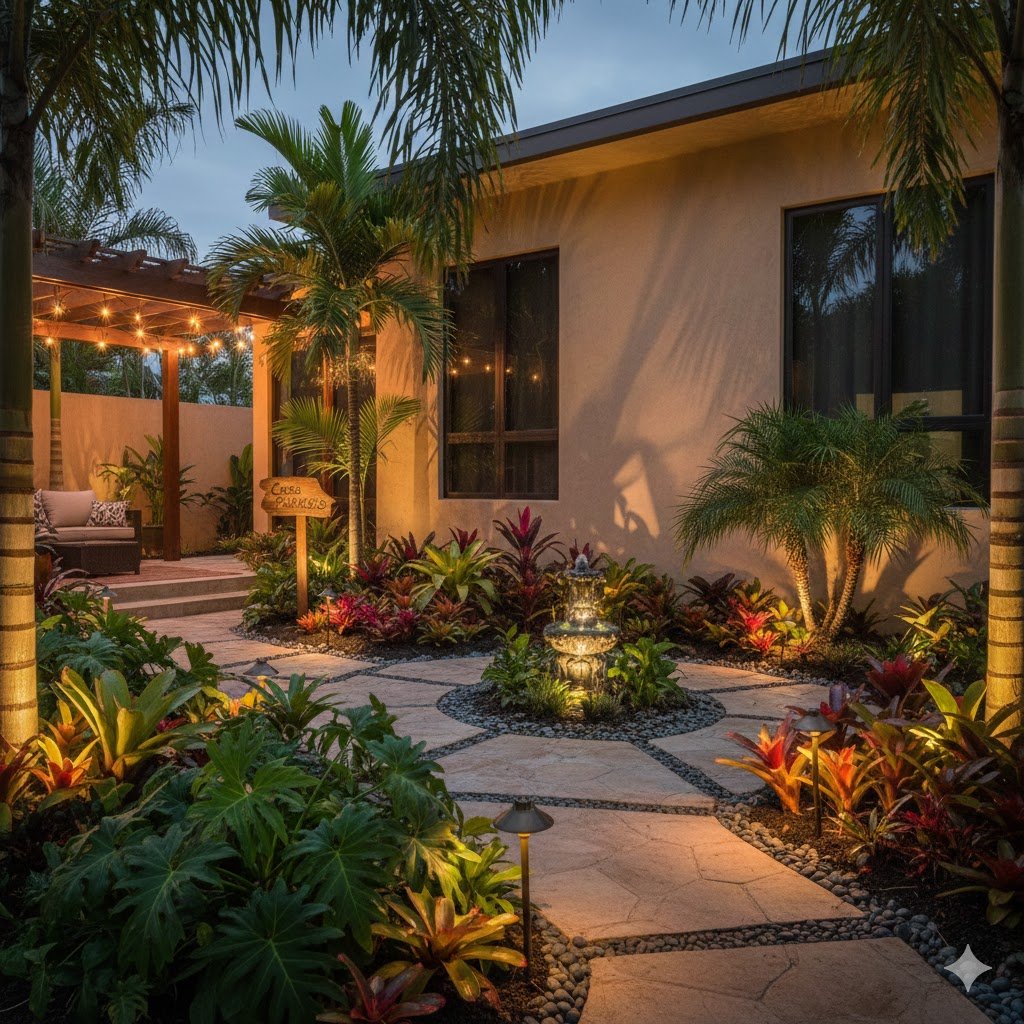
A tropical yard at night is a completely different animal. If you aren’t “up-lighting” your palms, you are missing out. You want to place a small LED spotlight at the base of your focal plants (like a Palm or a large Dracaena) and point it straight up the trunk.
I used to use those cheap solar stakes from the big-box stores. They provide about as much light as a tired firefly. Total waste of money. Spend the extra bit for a low-voltage wired system. It’s not as scary to install as it sounds—you’re basically just burying a thin wire a few inches under the dirt.
When those lights hit the underside of a large palm frond, it creates these amazing shadows against your house. It makes your front yard look expensive. Plus, it’s a great deterrent for burglars. Hard to be sneaky when you’re standing in the middle of a professionally lit jungle.
8. Adding Water Features to Mimic a Tropical Paradise
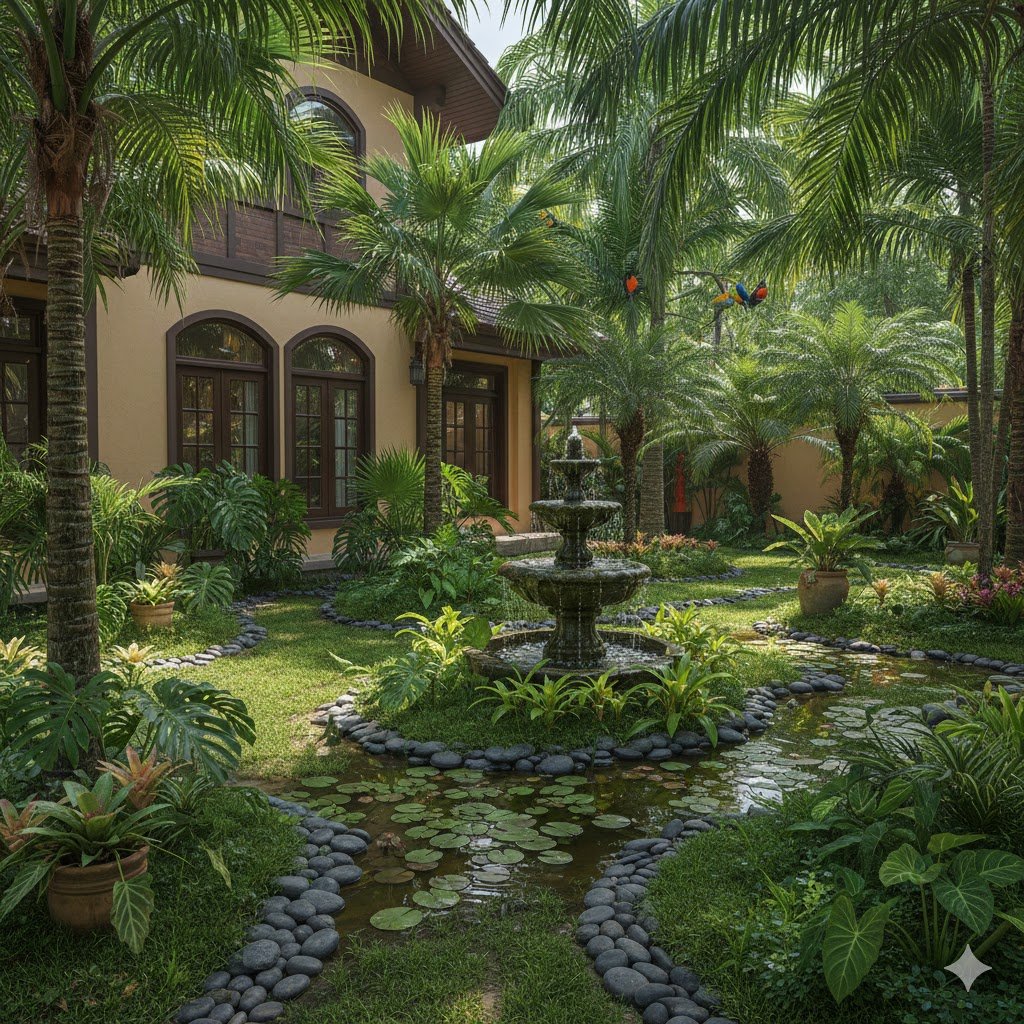
You don’t need a full-blown koi pond with a bridge. In fact, unless you want to become a full-time pond skimmer, I’d advise against it. But a simple disappearing fountain or a “pot fountain” is a game changer.
I have a blue glazed ceramic pot that I turned into a fountain. The sound of bubbling water does something to the brain—it makes the 90-degree humidity feel five degrees cooler. It also attracts birds and butterflies, which adds to that “nature” vibe you’re going for.
The key is to keep it simple. If you build something with a huge open pool of water, you’re just building a nursery for mosquitoes. A “disappearing” feature where the water drains into a gravel-covered reservoir is the way to go. It’s low maintenance, and you won’t spend your Sundays scrubbing algae off of rocks.
9. Tropical Container Gardening for Front Porches
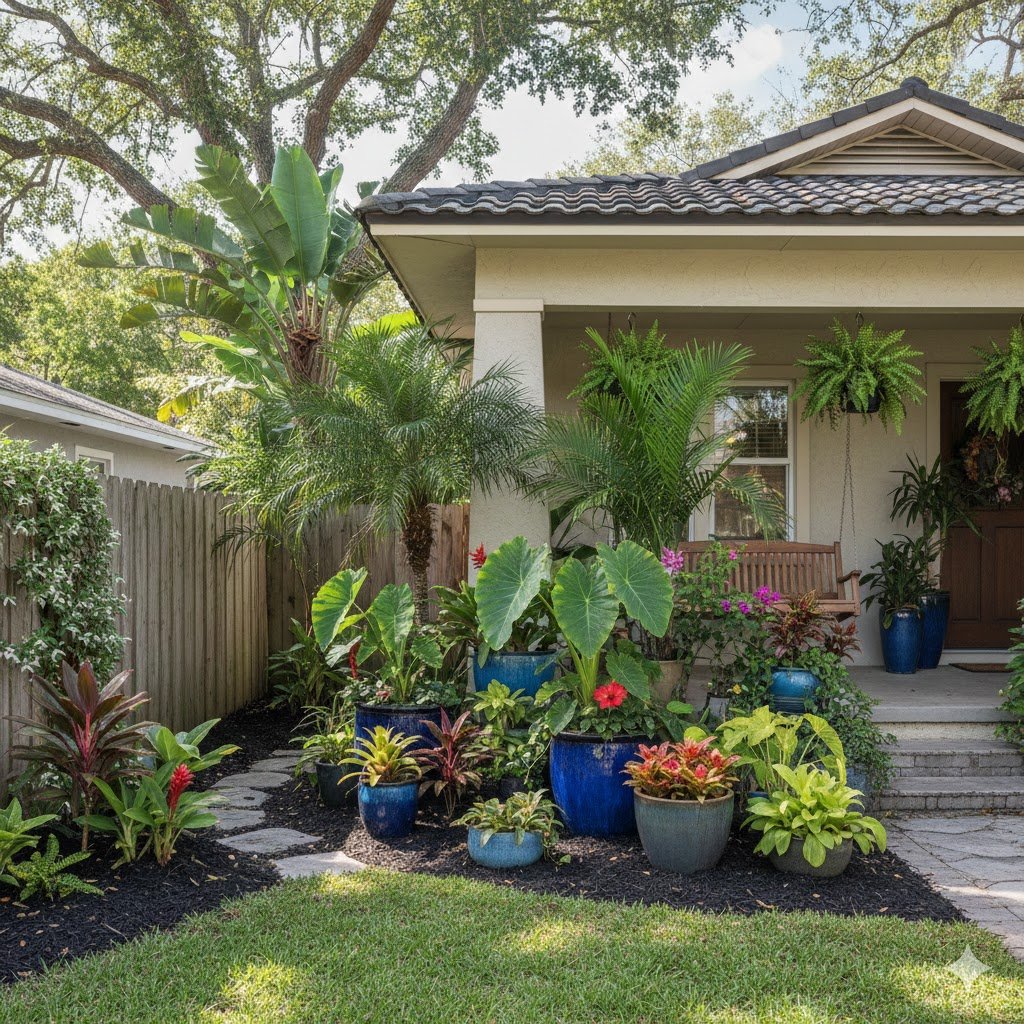
If you have a small front yard or a large porch, containers are your secret weapon. You can grow things in pots that might not survive in your actual soil. I’m a huge fan of Mandevilla vines on a trellis in a big pot.
I once tried to grow a Mandevilla directly in my sandy soil, and it just pouted for six months. Put it in a pot with high-quality potting mix, and it took over my entire porch railing in eight weeks. The pink trumpet-shaped flowers are spectacular.
Don’t just use one pot. Group them in threes. Use different heights. This is where you can play with “thrillers, fillers, and spillers.” Put a tall Cordyline in the middle, some Caladiums around the base, and some Sweet Potato Vine to hang over the edge. It’s an instant tropical vignette that greets you every time you come home.
10. Best Privacy Hedges for Tropical Landscapes
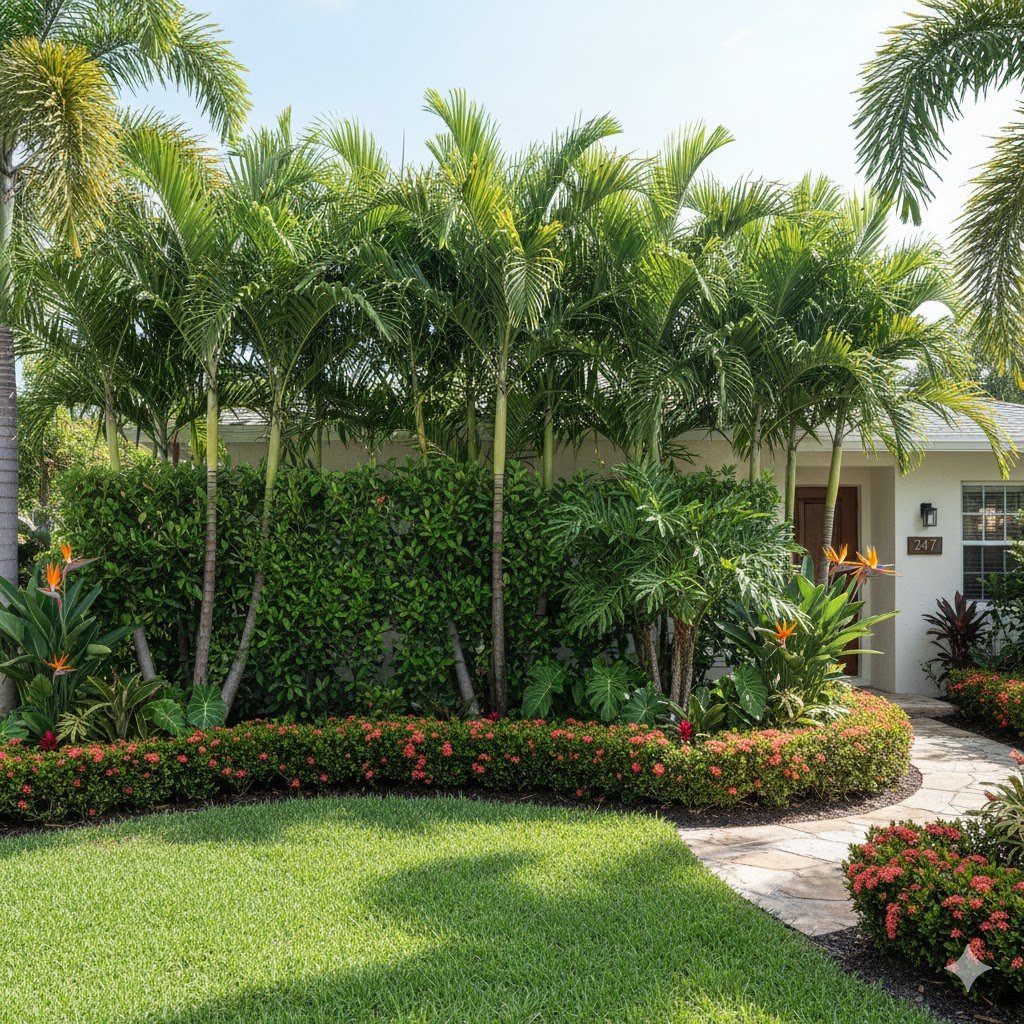
If you want a hedge but hate the look of boring Boxwoods, go for Areca Palms or Clusia. Clusia, specifically the “Small Leaf” variety, is the “it” plant right now for a reason. It has thick, rubbery leaves that look incredibly lush and it grows like a weed.
I use Clusia to hide my trash cans. They are virtually indestructible. You can prune them into a tight wall or let them grow a bit more “wild.” They don’t drop a ton of leaves, which is a blessing for your driveway.
Areca palms are great too, but they can get a bit “yellow” if you don’t feed them. If you go the Areca route, be prepared to toss some palm fertilizer their way twice a year. They provide a much softer, filtered privacy than a solid wall of greenery.
11. Using Bromeliads for Low-Water Tropical Accents
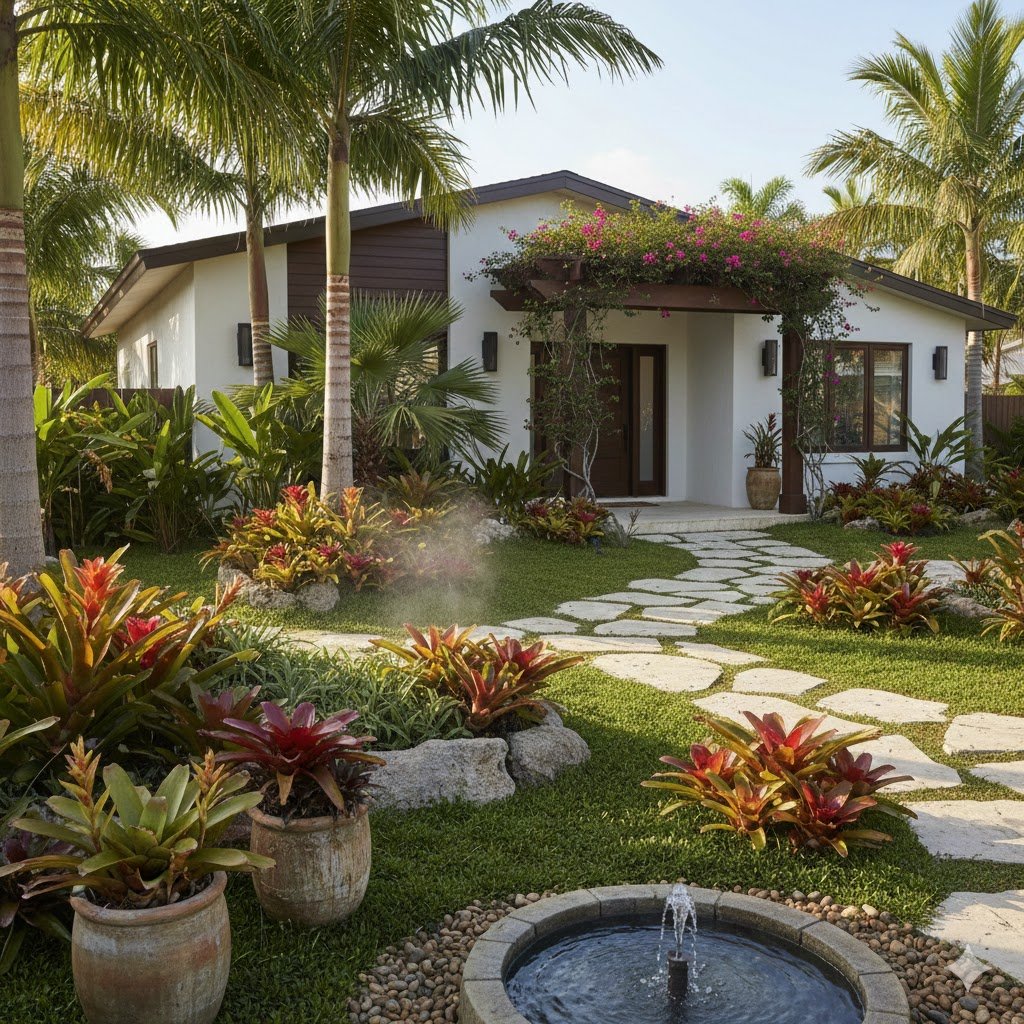
Bromeliads are the “cheaters” of the tropical world. They look exotic and difficult, but they are actually tough as nails. They hold water in their central “tank,” so they can handle a bit of neglect.
I like to tuck these into the crooks of trees or use them as a border along a walkway. The Aechmea fasciata (the pink ones with the silver leaves) are stunning. They look like they belong in a sci-fi movie.
The best part? They produce “pups.” Once the main flower dies, the plant will grow little babies at the base. I started with three bromeliads a decade ago, and now I have about fifty. I haven’t bought a new one in years; I just keep dividing the families and moving them around.
12. Tropical Groundcovers to Replace Traditional Grass
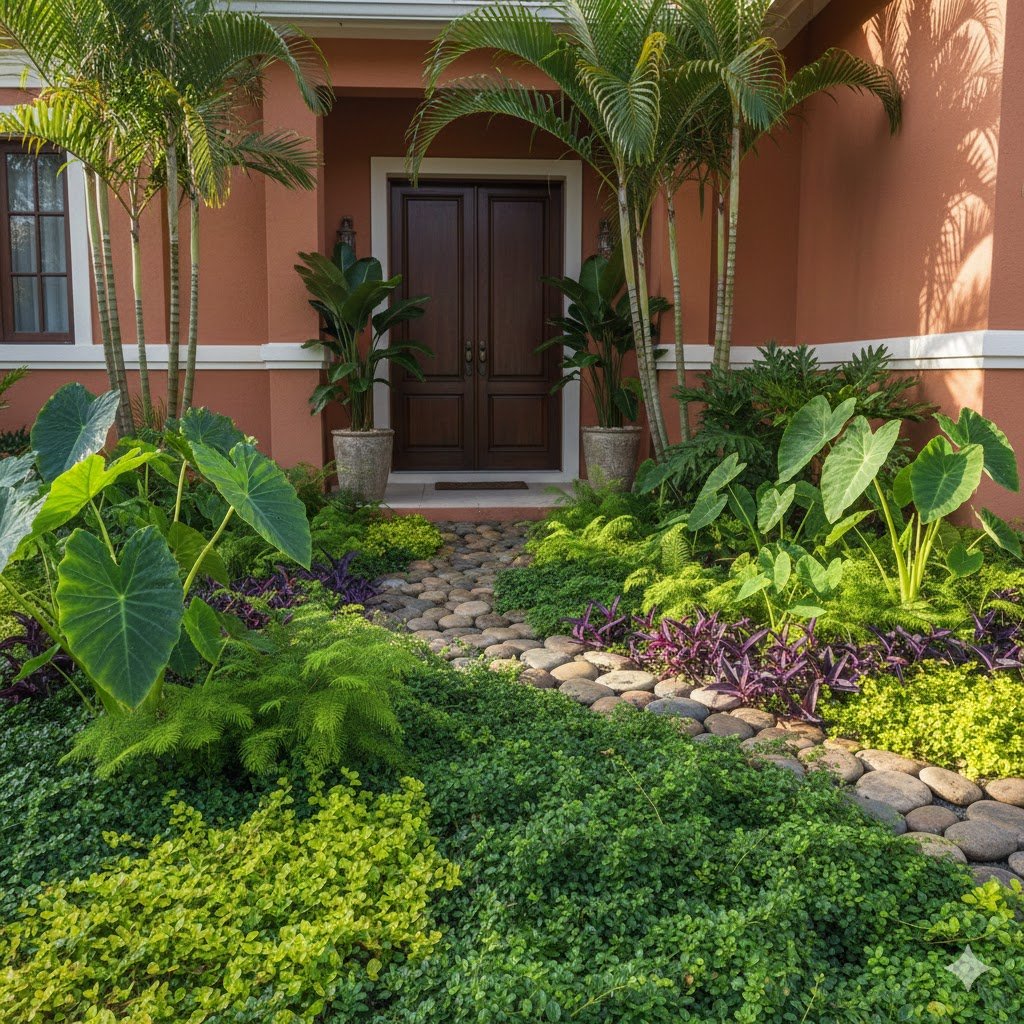
Let’s be honest: keeping a perfect green lawn in a tropical climate is a full-time job. Between the chinch bugs and the fungus, it’s a nightmare. I’ve slowly been replacing my grass with Perennial Peanut.
It has these tiny yellow flowers that look like sunshine on the ground, and it doesn’t need mowing nearly as often as grass. It’s also incredibly drought-tolerant. Another great option is Sunshine Mimosa. It has these little pink “puffball” flowers that close up when you touch them. Kids love it, and I find it hilarious to watch people’s faces when they realize the ground is “moving.”
Replacing grass with groundcover makes your front yard look more like a curated garden and less like a suburban chore. Plus, you get to sell your lawnmower. Win-win.
13. Incorporating Bamboo for Vertical Interest
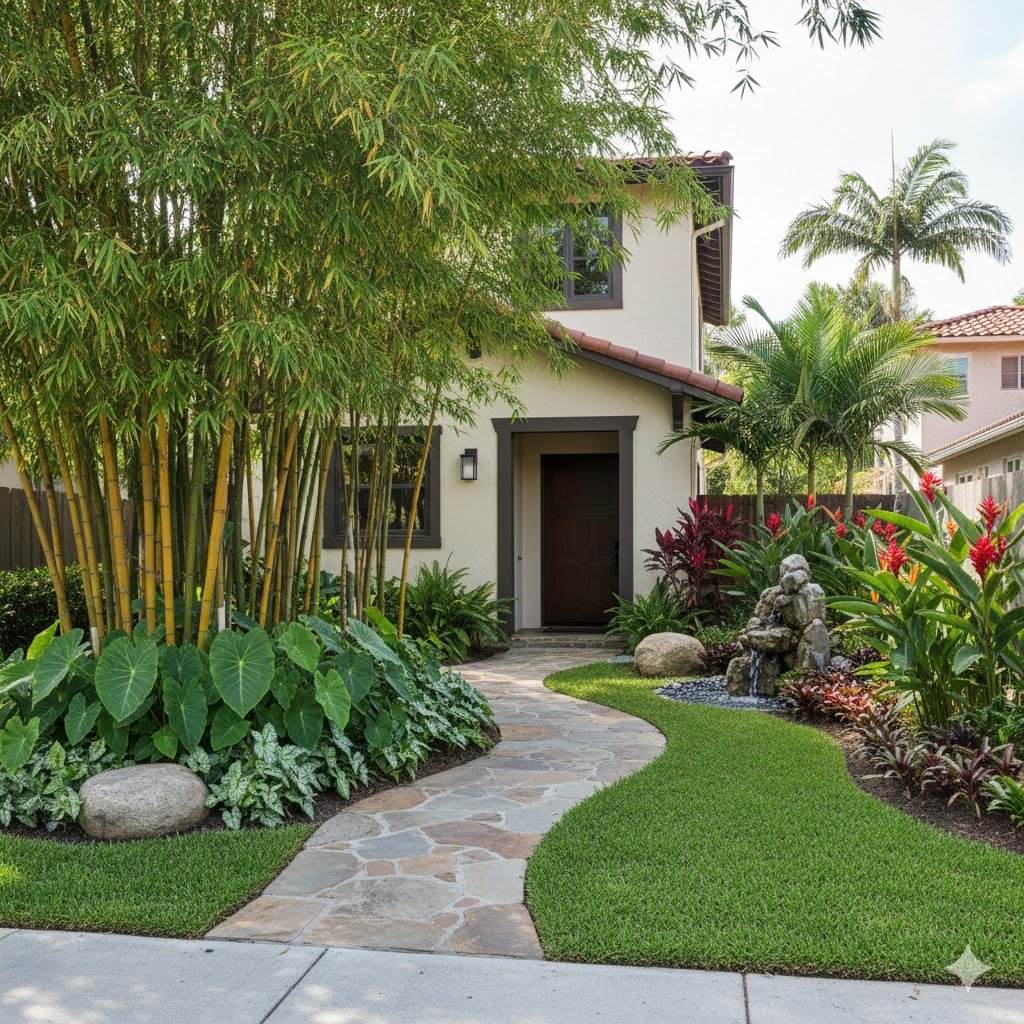
Bamboo gets a bad rap because of the “running” varieties that take over your neighbor’s yard and end up in their swimming pool. Don’t do that. You want Clumping Bamboo. Specifically, Alphonse Karr or Graceful Bamboo.
I planted a screen of Graceful Bamboo along my side fence, and it’s the best landscaping decision I ever made. It grows straight up, doesn’t spread aggressively, and creates a wall of green feathers. It’s the ultimate “vertical” plant.
One quick side note: even clumping bamboo needs a bit of thinning out every few years. If you let it get too thick, the inner canes die out and it starts looking messy. Just take a pair of loppers and snip out the old, tan-colored canes at the base. It takes ten minutes and keeps the plant looking fresh.
14. Using Ornamental Grasses to Soften Tropical Textures
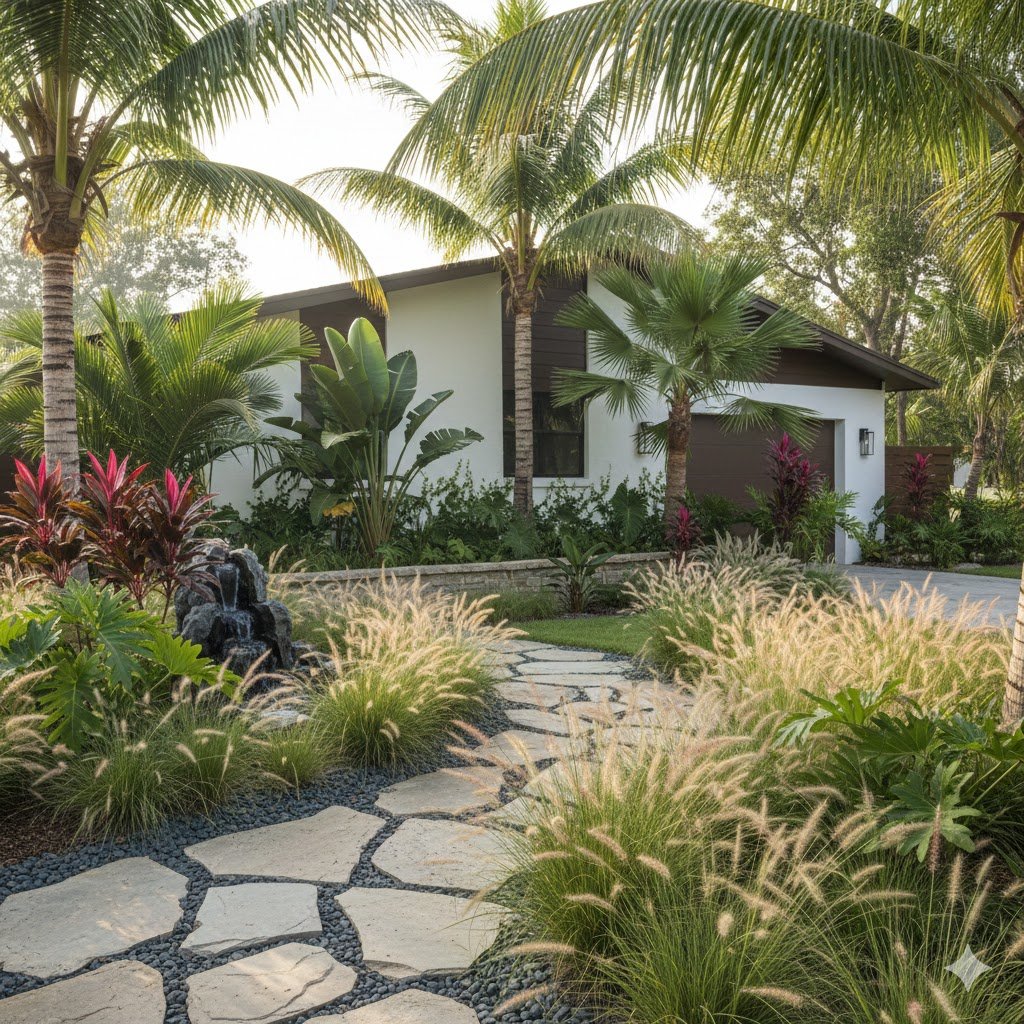
Tropical plants can be very “heavy” with their big, thick leaves. You need something to lighten the mood. Ornamental grasses like Muhly Grass or Fountain Grass add a wispy, airy texture that balances out the big stuff.
When Muhly grass blooms in the fall, it turns into a purple cloud. It’s honestly one of the most beautiful sights in a garden. I have mine planted next to some dark green Philodendrons, and the contrast is chef’s kiss.
These grasses are also great for filling in those awkward “holes” in your garden beds. They grow fast, they don’t need much water, and they dance in the wind. Just make sure to cut them back once a year to about six inches tall so they can regrow fresh and green.
15. Exotic Accents: Using Driftwood and Statuary
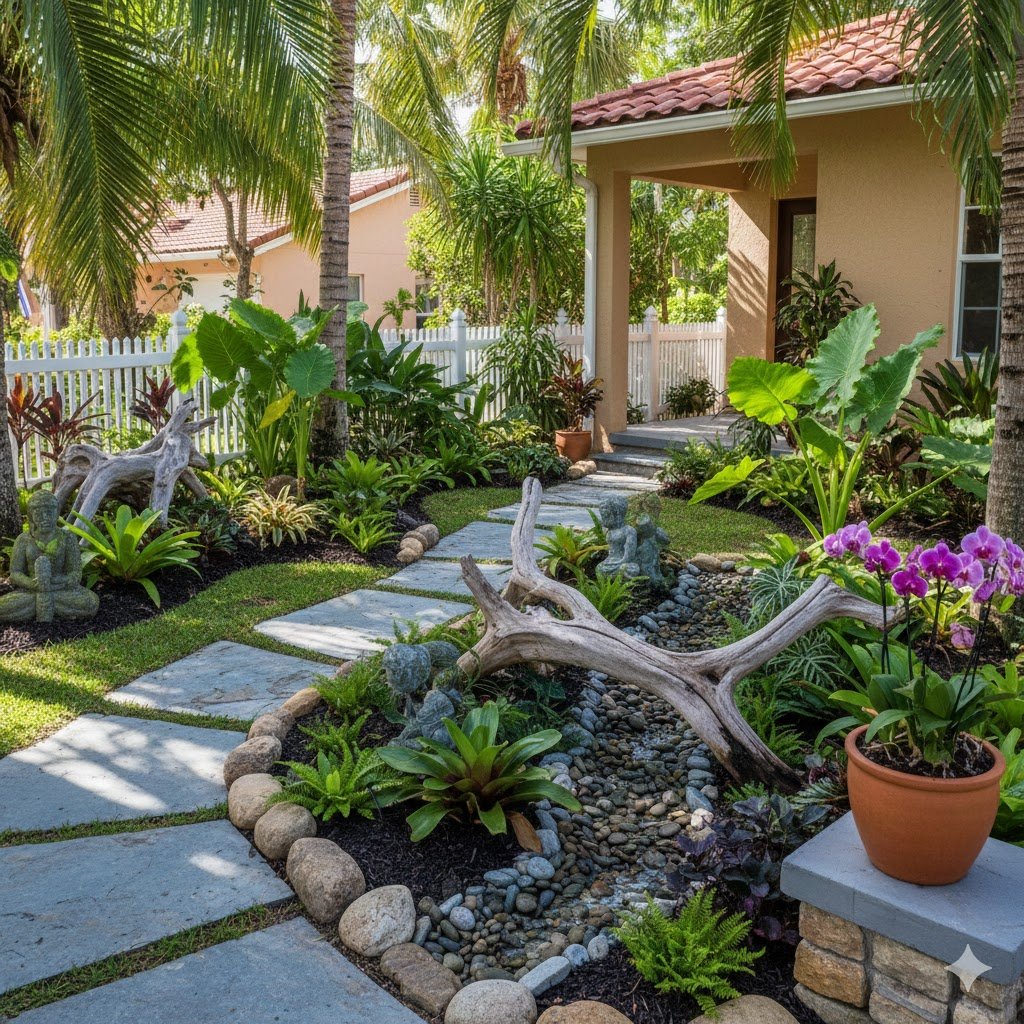
Finally, don’t be afraid to add some “non-plant” elements. A large, weathered piece of driftwood tucked into a garden bed looks incredibly “designer.” It gives the yard an organic, established feel.
I found a massive piece of cedar driftwood on the beach (legally, of course) and hauled it into my front bed. I grew some air plants (Tillandsia) right on the wood. It looks like a piece of art.
Avoid the cheap plastic flamingos or the “gnomes.” If you want a statue, go for something stone or concrete—maybe a Buddha head or a simple geometric pillar. You want it to look like it’s been there for fifty years, slowly being reclaimed by the jungle.
The Real Talk: What’s Not Worth Your Time
Listen, I’m going to be straight with you. Gardenias are a trap. Yes, they smell like heaven. But they are the “divas” of the plant world. They want perfect soil, perfect water, and they attract every pest known to man. I’ve killed more gardenias than I care to admit. Unless you want to spend your life monitoring pH levels, just buy a gardenia-scented candle and plant some easy-going Star Jasmine instead.
Also, avoid artificial turf in a tropical setting. It gets hot enough to fry an egg on, and it looks weirdly “perfect” next to real, living plants. It’s like wearing a tuxedo to a beach party. Stick to real groundcovers or stone. Your feet (and your curb appeal) will thank you.
Parting Wisdom
The best tropical front yard isn’t the one that looks the best on the day it’s planted—it’s the one that grows into its space over time. Start with your big “anchor” plants and fill in the gaps as you go. Gardening is a marathon, not a sprint, and half the fun is moving things around when you realize you put a sun-loving plant in the shade of your new palm tree.
What’s the biggest “tropical” headache you’ve dealt with in your yard? Drop a comment below and let’s troubleshoot your jungle together!