
I remember the summer I decided my backyard needed to look like a villa in Tuscany. I bought three overpriced olive trees, a truckload of gravel, and enough terracotta to bankrupt a small nation. Two weeks later, my “Mediterranean paradise” looked more like a dusty construction site, and my olive trees were shedding leaves faster than a golden retriever sheds fur in July.
Gardening is 10% planning and 90% realizing you should have listened to the guy at the nursery. After 15 years of killing things and occasionally getting them to grow, I’ve discovered the hard way that the Mediterranean look isn’t just about slapping some blue paint on a wall. It’s about heat, drainage, and knowing which plants actually want to live in a pot without a constant IV drip of water.
If you’re working with a cramped terrace or a courtyard that feels like a brick oven, here are 15 ways to get that coastal vibe without the 15 years of trial and error I went through.
The Big “Anchor” Ideas
1. Terracotta: Not Just for Your Grandma
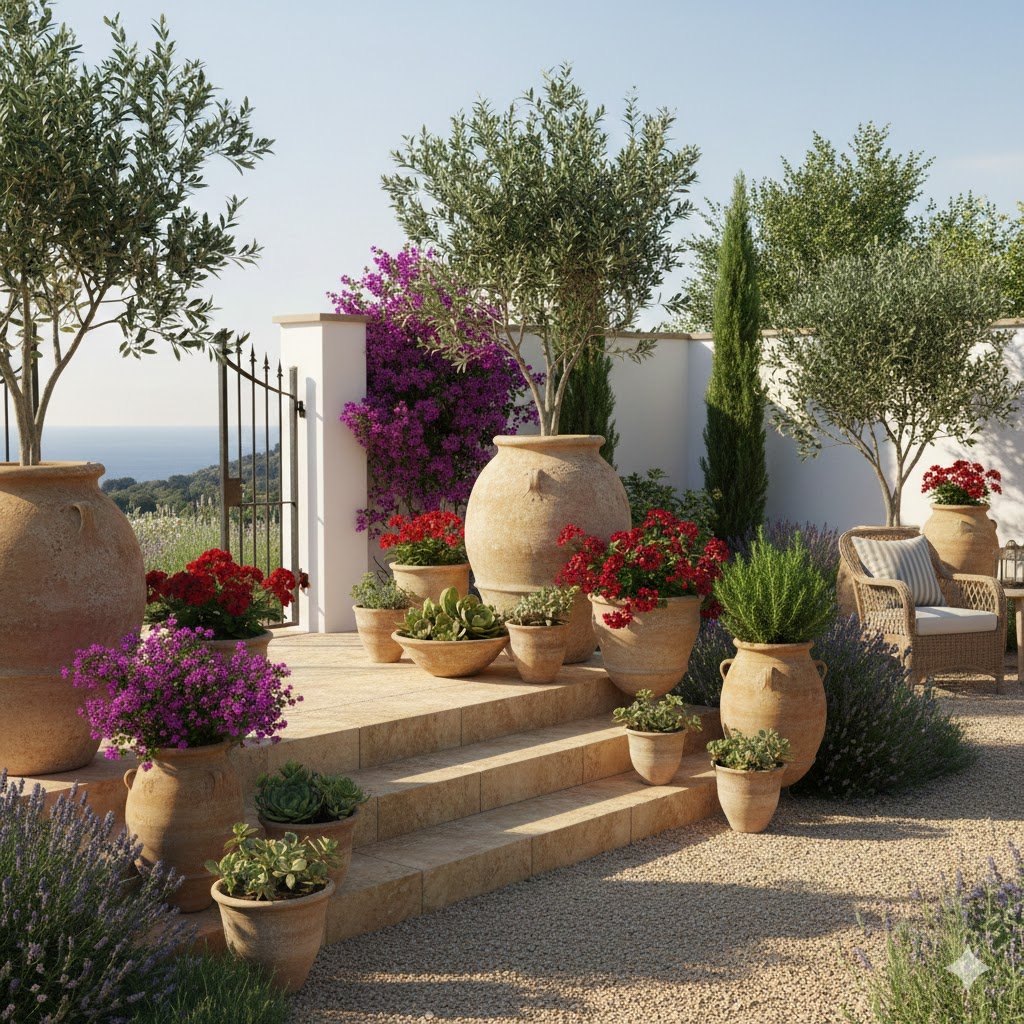
If you walk away with one thing today, let it be this: buy real terracotta. I once tried to save twenty bucks by buying plastic “terracotta-colored” pots for my terrace. Within one season, the sun had bleached them into a sickly salmon color, and they were so light they blew over every time someone sneezed.
Real terracotta is porous. It breathes. This is vital because Mediterranean plants—like lavender and rosemary—absolutely hate “wet feet.” In a plastic pot, the roots sit in a swamp. In terracotta, the moisture wicks away.
- Pro Tip: Look for “Impruneta” clay if you can afford it; it’s frost-proof.
- The “Oops” Moment: I once forgot to empty a cheap terracotta pot before a hard freeze. It shattered like a dropped dinner plate. Always lift them off the ground with “pot feet” to help with drainage and prevent cracking.
2. Gravel: The Great Grass Replacement
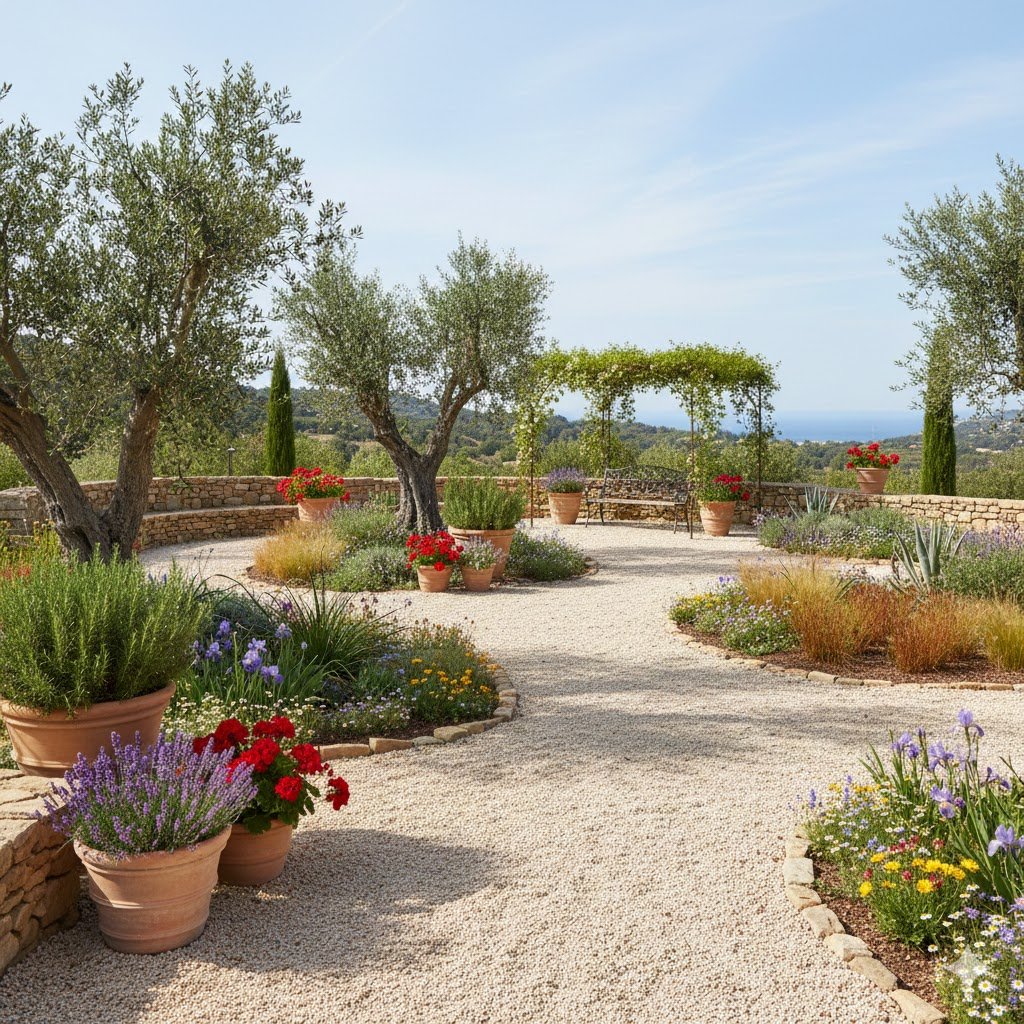
Stop trying to grow grass in a small courtyard. It’s a losing battle against shade, heat, and your own sanity. I ripped out my patchy, brown lawn years ago and replaced it with pea gravel and limestone chips.
Gravel gives you that instant “South of France” crunch under your boots. It reflects light into darker corners and, more importantly, it doesn’t need a lawnmower.
- The Strategy: Lay down a heavy-duty weed fabric first. Don’t use the cheap stuff from the dollar store; get the industrial grade.
- A Side Note: If you have dogs, go for smooth pea gravel. Sharp limestone chips and paws don’t mix, as my vet bill from 2018 can attest.
3. The “Exclamation Point” Trees
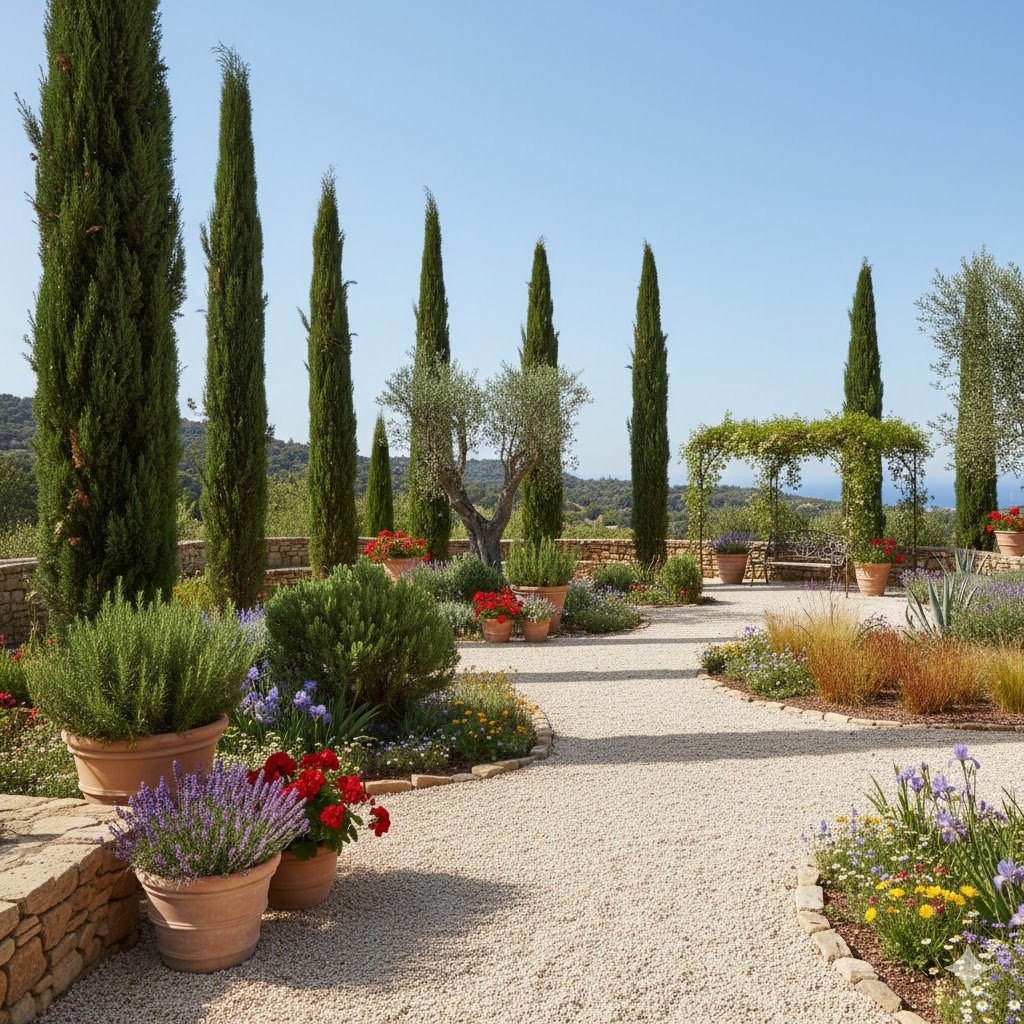
In a Mediterranean garden, you need height. I’m talking about Italian Cypress (Cupressus sempervirens). They are the “exclamation points” of the garden. They grow tall and skinny, which is perfect for tight terraces where you don’t have room for a wide canopy.
I planted two of these flanking my back door, and suddenly my house looked like it belonged in a travel magazine instead of a suburb. Just be careful—if you don’t buy the “stricta” variety, they can get wider than you’d expect and start looking like a giant green hairy thumb.
Things That Smell Like Vacation
4. Lavender (The “English vs. French” War)
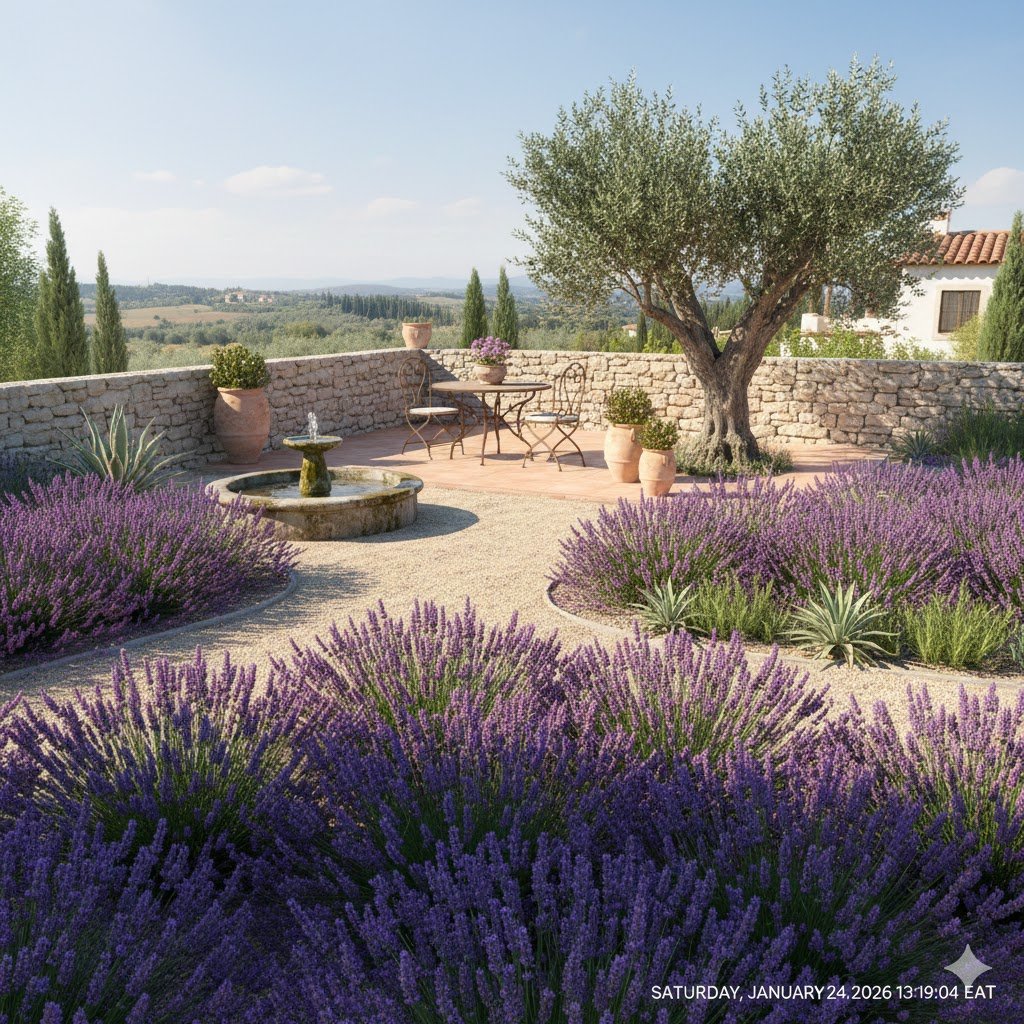
Everyone wants lavender, but most people kill it by loving it too much. I used to water mine every day until the roots turned to mush.
- English Lavender (Lavandula angustifolia): Tougher, better for cooking, handles a bit of cold.
- French/Spanish Lavender: Prettier ears (bracts), but way more finicky about frost.
I’ve found that the variety ‘Phenomenal’ is the only one that survives my humid summers without melting into a gray pile of sadness. Plant it where you’ll brush against it.
5. Rosemary Hedges
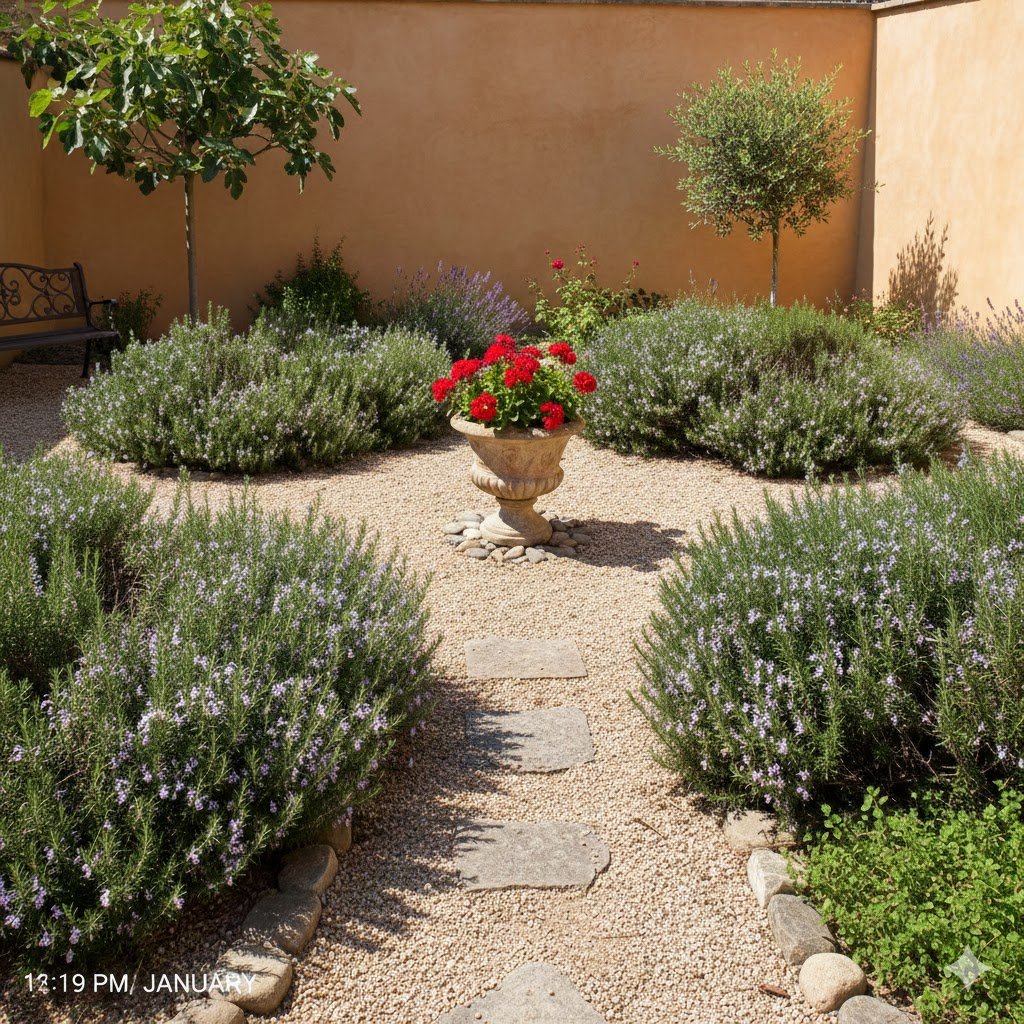
Why grow a boring boxwood when you can grow a hedge you can eat? I have a rosemary hedge along my patio that I prune with garden shears twice a year.
It loves the heat reflecting off the stones. If you’re in a colder climate, try the ‘Arp’ variety—it’s the only one I’ve seen survive a real winter without turning into a stick.
6. Star Jasmine: The Night Scent
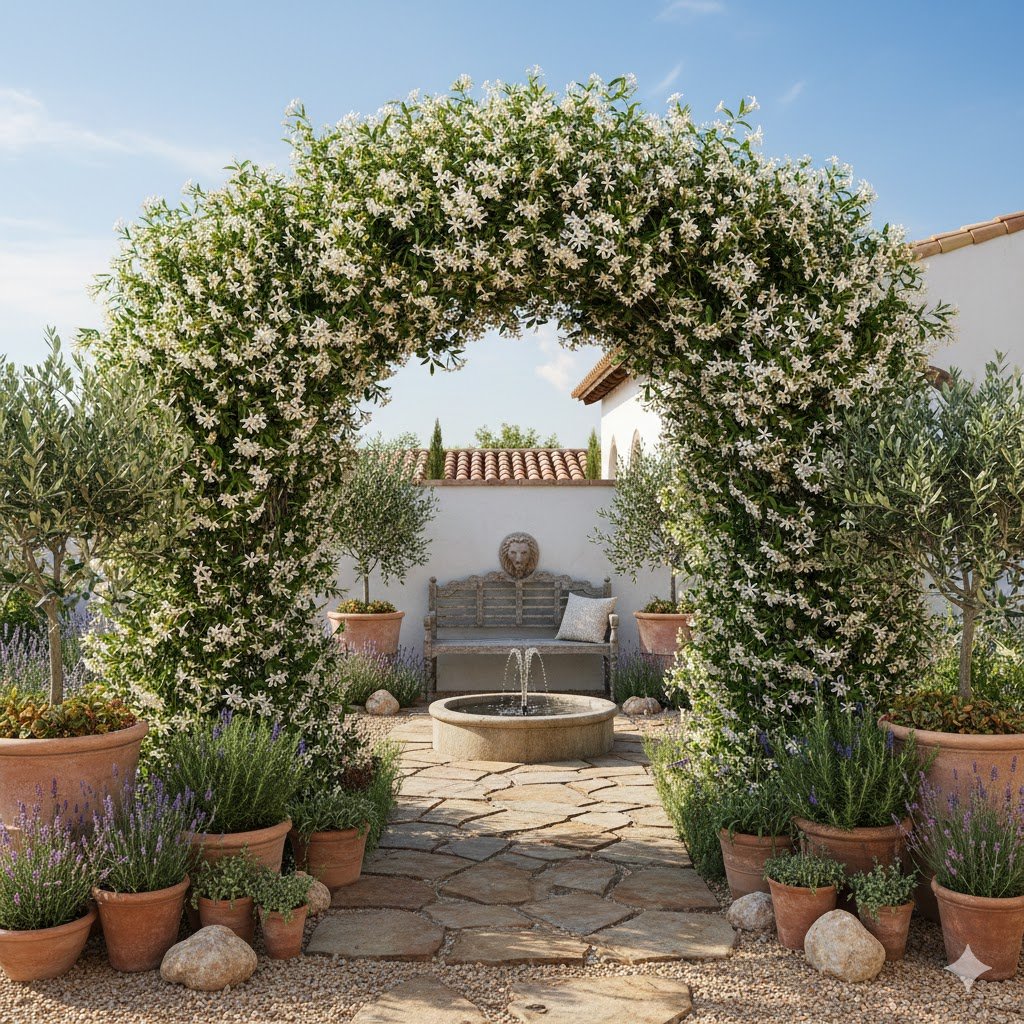
If you have a wall or a fence, you need Star Jasmine (Trachelospermum jasminoides). It’s not a true jasmine, but it smells like a dream.
I planted some under my bedroom window. In June, the scent is so strong it practically knocks you unconscious (in a good way). It’s evergreen, too, so you won’t be looking at dead sticks all winter.
Creating the “Vibe” (Hardscaping & Decor)
7. The “Santorini Blue” Accent
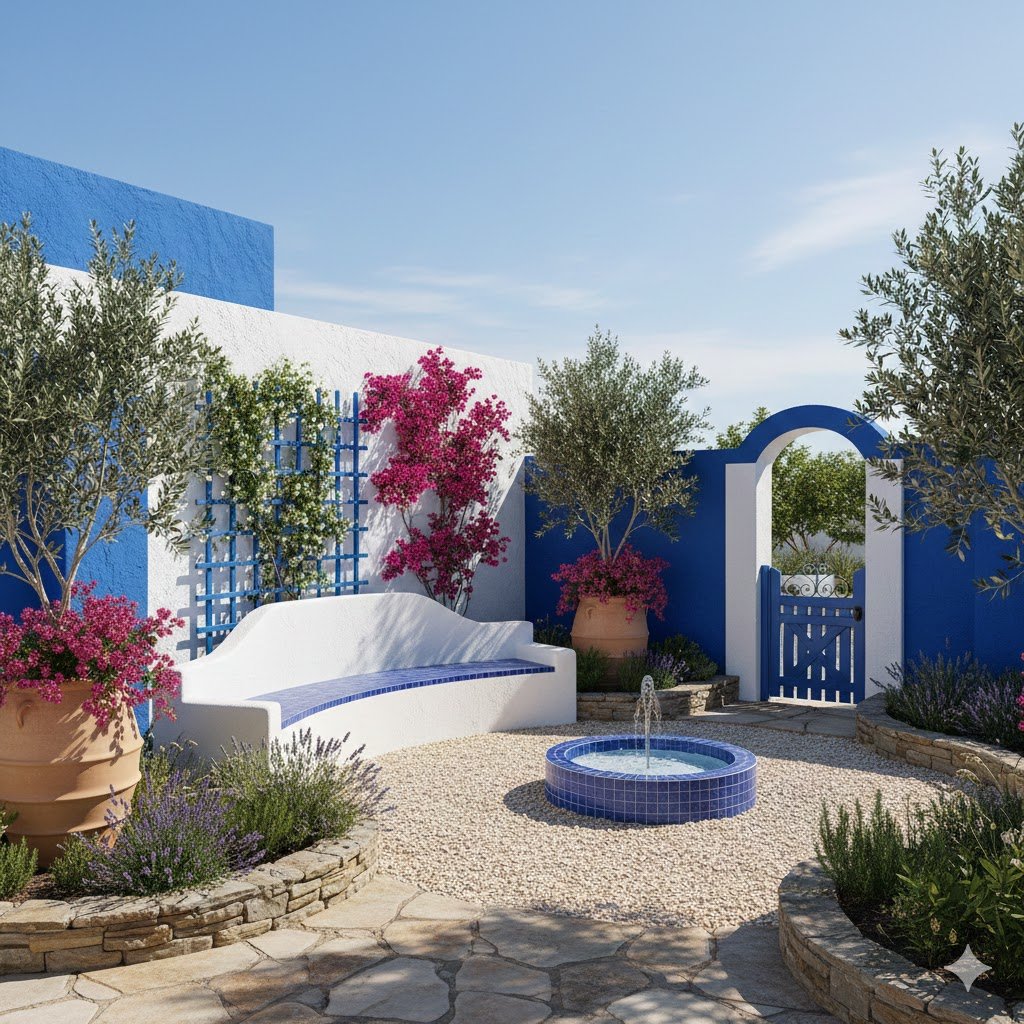
You don’t need to paint your whole house. Just a door, a gate, or even just a few shutters in a bold, cobalt blue.
I once painted a wooden garden bench this color, and it changed the entire energy of the courtyard. It makes the greens of the plants pop and gives your eyes a rest from all the beige stone and terracotta.
8. Water, But Keep It Small
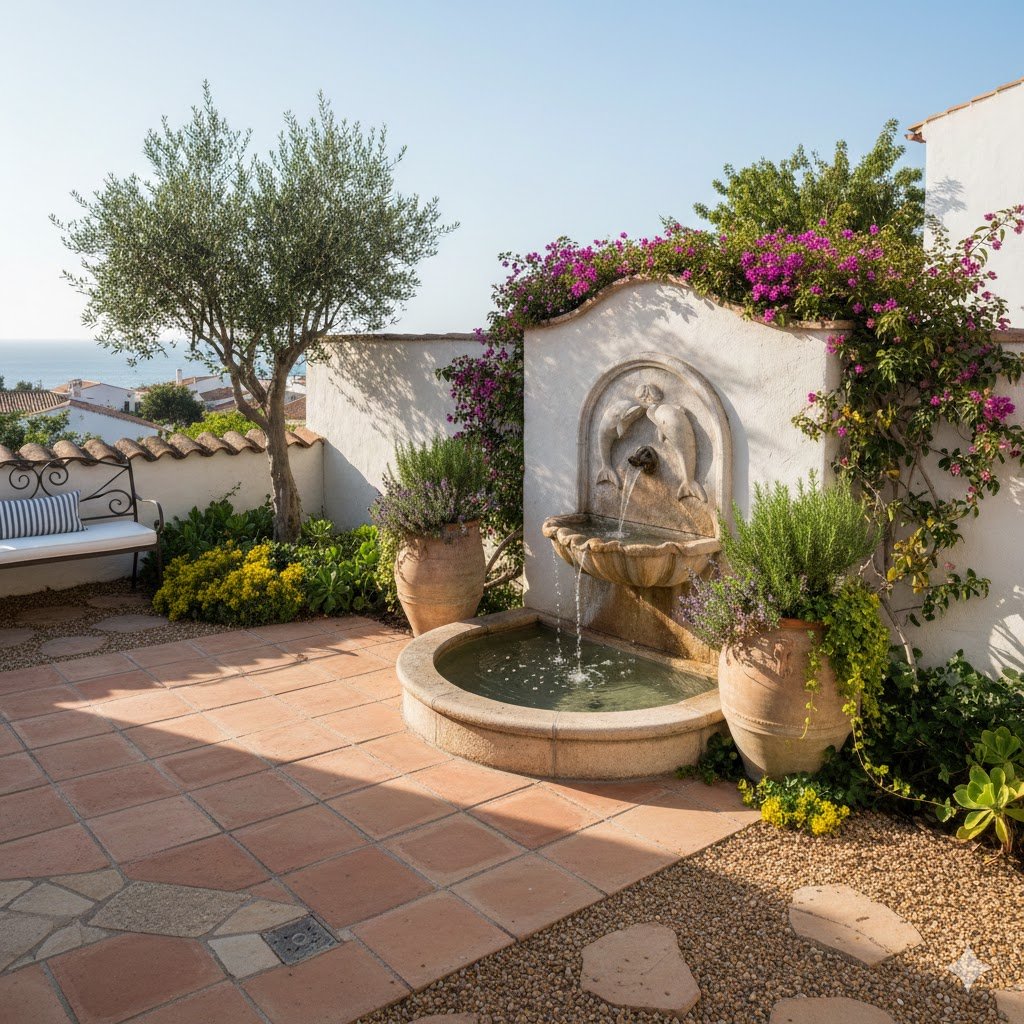
You don’t need a pool. A simple wall fountain or even a large “pot-in-a-pot” bubbling fountain adds that trickling sound that masks the neighbor’s leaf blower.
My Biggest Mistake: I once built a fancy pond with a pump that sounded like a jet engine. It wasn’t relaxing; it sounded like a plumbing disaster. Stick to a small, quiet recirculating pump. The birds will thank you, and your electricity bill won’t spike.
9. Wrought Iron Furniture
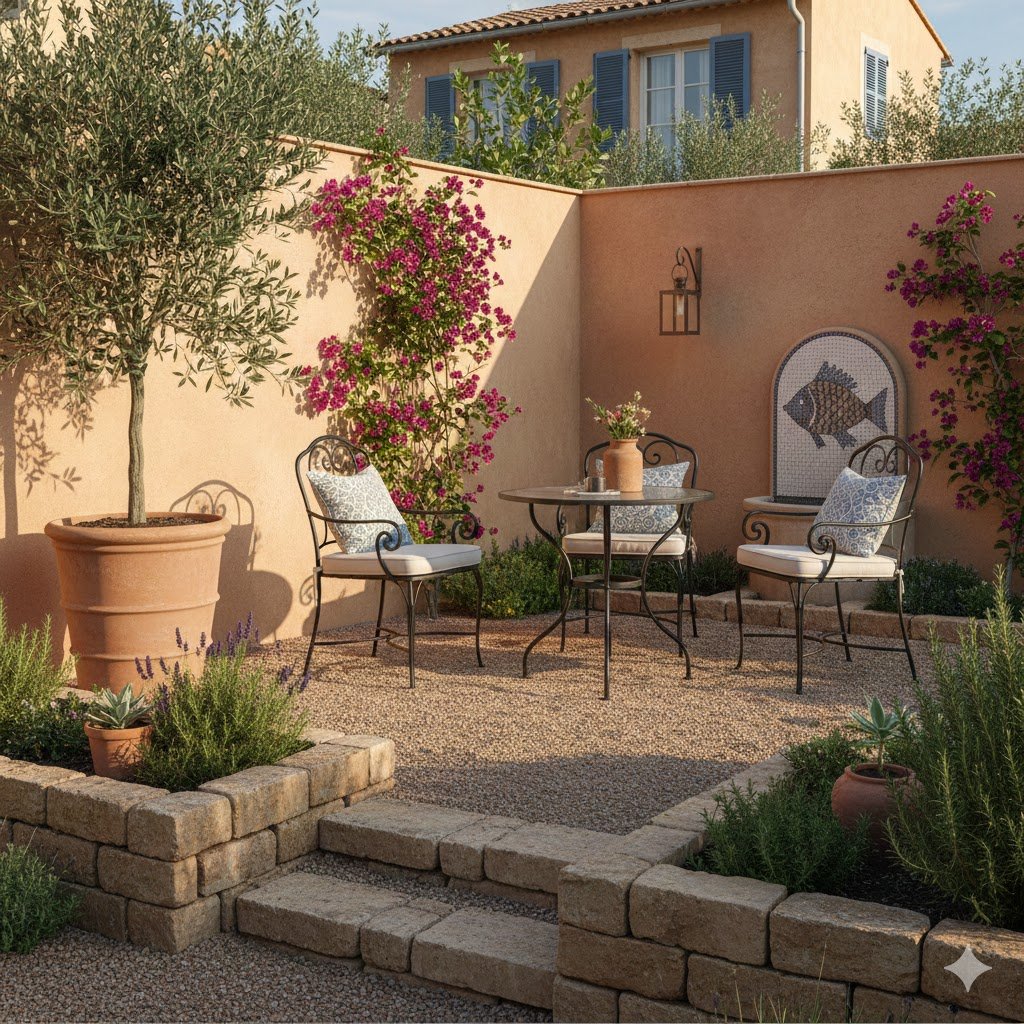
Wicker is for Florida. For a Mediterranean terrace, you want wrought iron. It’s heavy enough that it won’t blow away in a thunderstorm, and it looks better as it ages and gets a little rusty.
I found a set at a garage sale for $50, hit it with some black spray paint, and it’s lasted me a decade. Toss some linen cushions on there, and you’re golden.
10. Patterned Tile Inlays
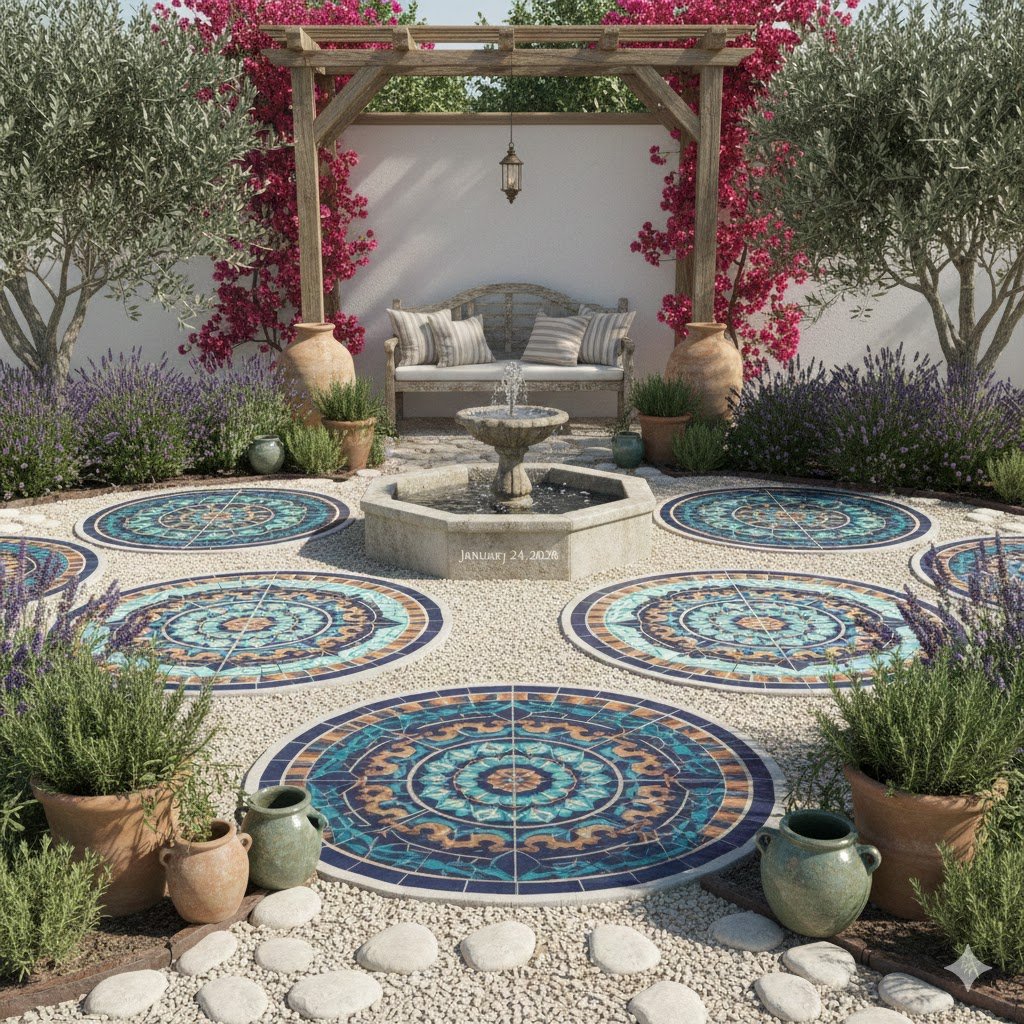
If you’re laying a new patio, don’t just do plain concrete. Even a small “rug” of patterned cement tiles in the middle of the space can make it look like a Moroccan riad.
I used some leftover hand-painted tiles to top a small outdoor table. It’s a great way to get the look without the cost of tiling a whole floor.
Unique Mediterranean Plants
11. Olive Trees (The Potted Version)
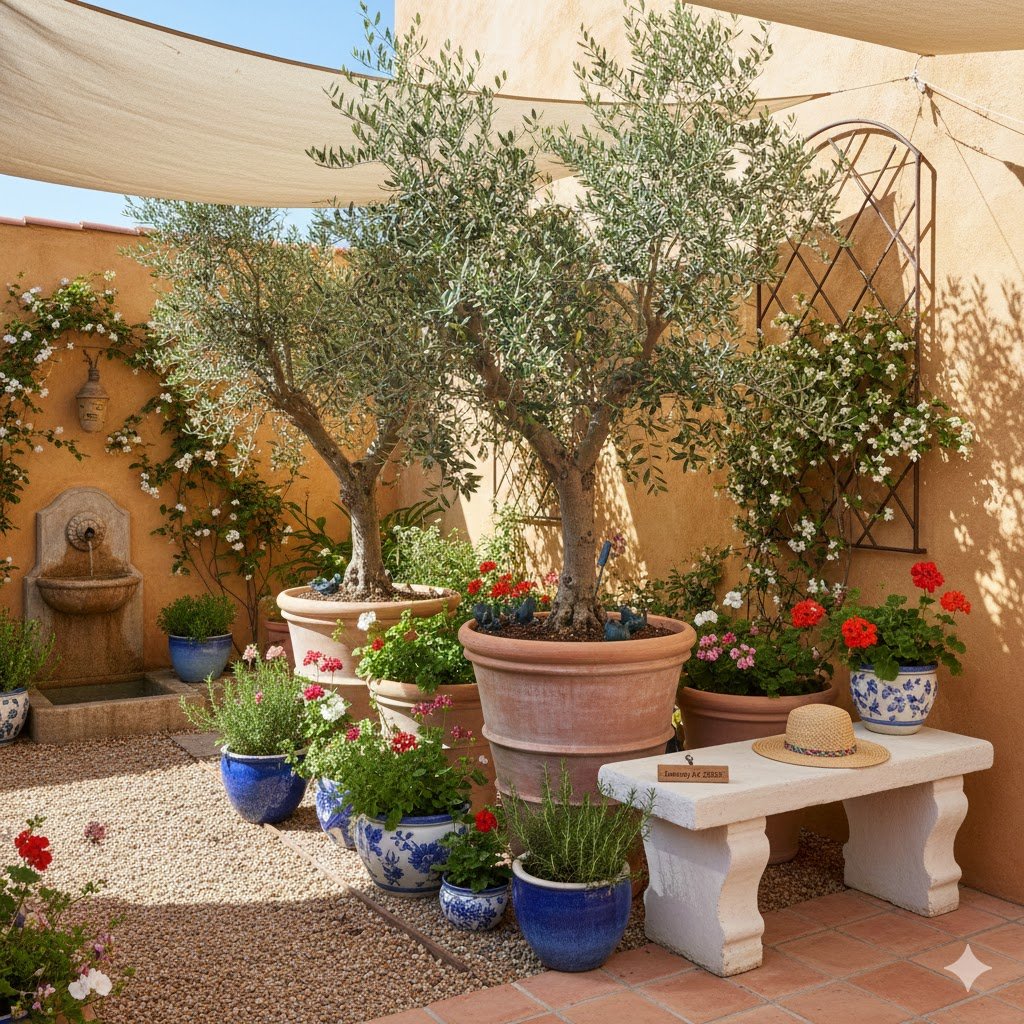
You don’t need a grove. One olive tree in a massive pot is a statement piece. I recommend the ‘Arbequina’ variety. It’s slow-growing and handles life in a container better than most.
Be warned: they are messy. They drop tiny leaves and, if you’re lucky/unlucky, oily fruit that will stain your fancy tiles. I just call it “character,” but my wife calls it “a trip hazard.”
12. Bougainvillea: The “Beautiful Pain”
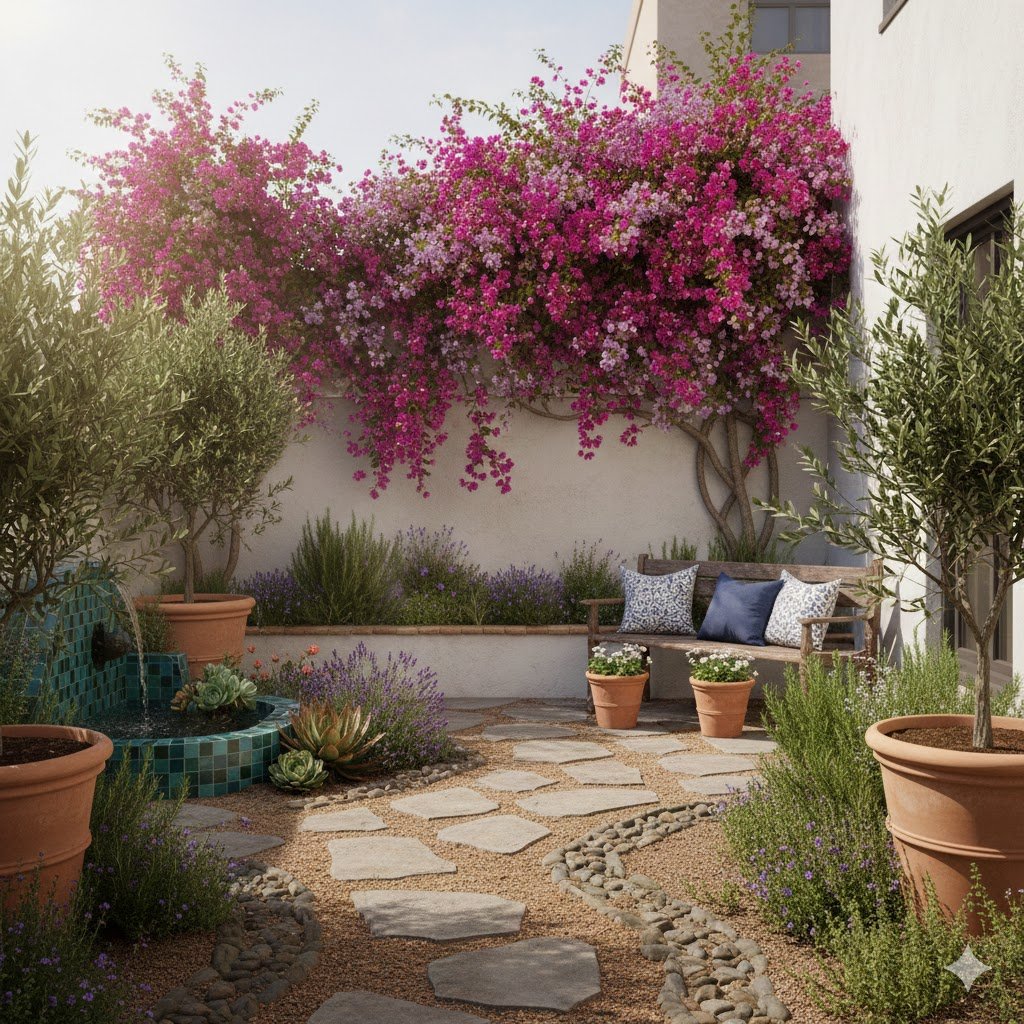
Nothing says “Mediterranean” like a riot of neon pink bougainvillea. But let me tell you, those thorns are no joke. I once got stuck in my own vine while pruning it and had to wait for my neighbor to come clip me out.
It loves to be root-bound and hates being moved. If you put it in a pot, leave it there. And don’t overwater it, or you’ll get plenty of green leaves but zero flowers. It blooms when it’s stressed—sort of like how I work best right before a deadline.
13. Citrus: The Calamondin Trick
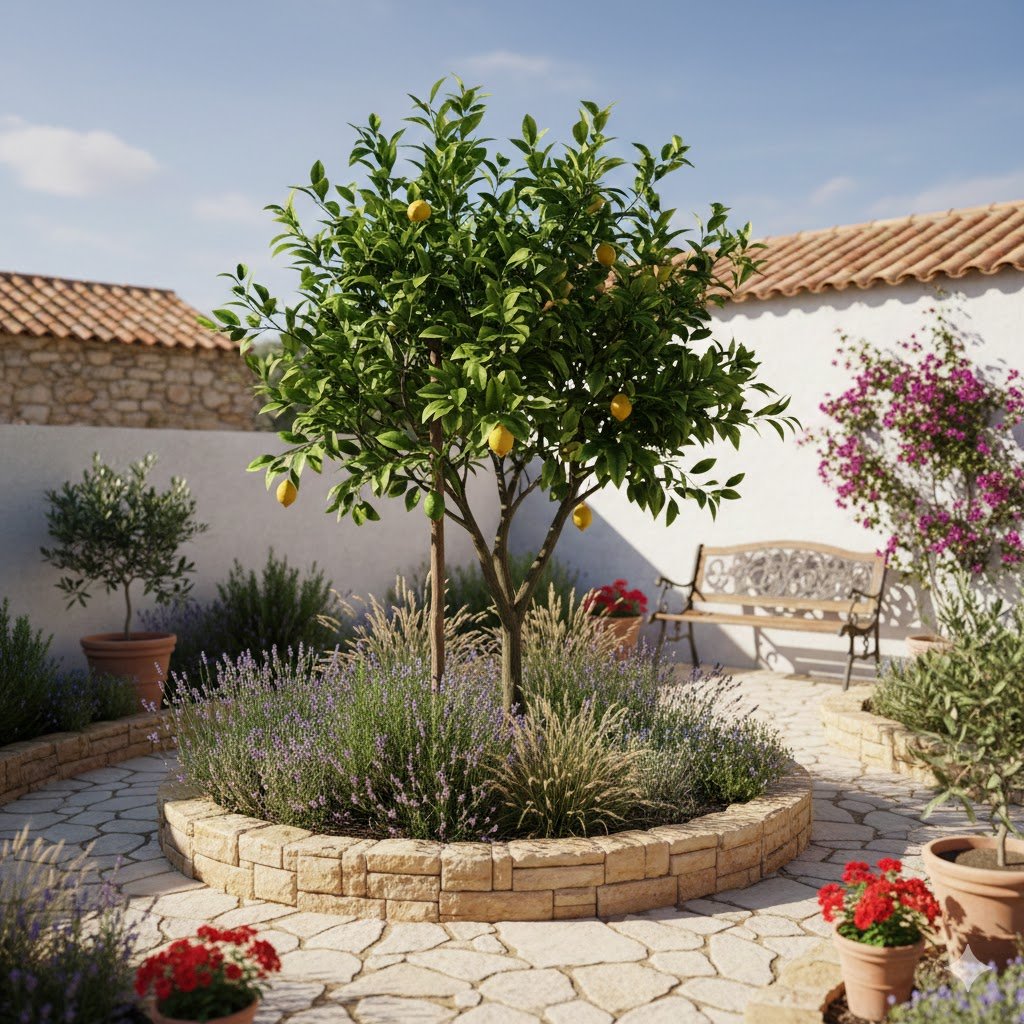
Everyone wants a lemon tree, but they can be divas. If you’re a beginner, get a Calamondin orange.
They are much more forgiving than Meyer lemons and stay small enough for a terrace. The fruit is sour—think of it as a “lime-orange”—but they smell incredible and look like little orange jewels against the dark green leaves.
14. Succulents for the “I Forgot to Water” Crowd
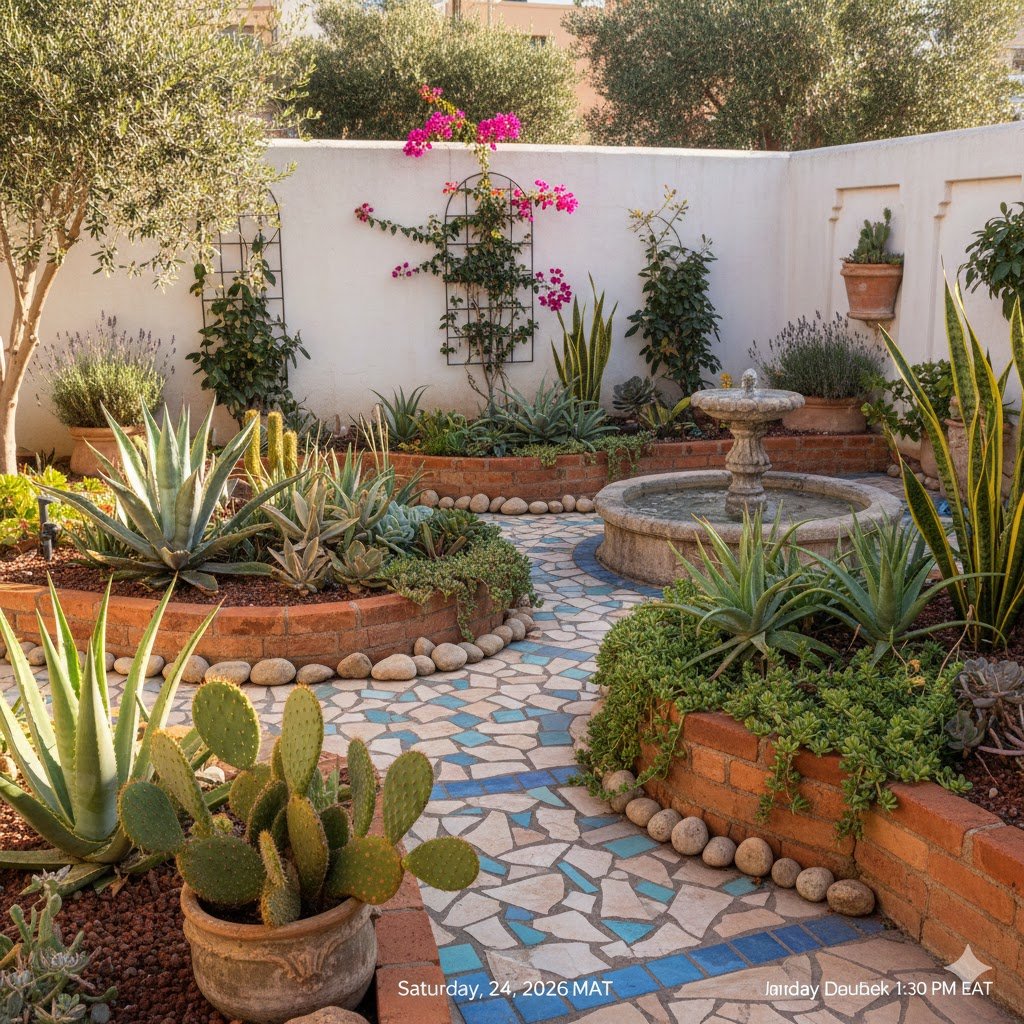
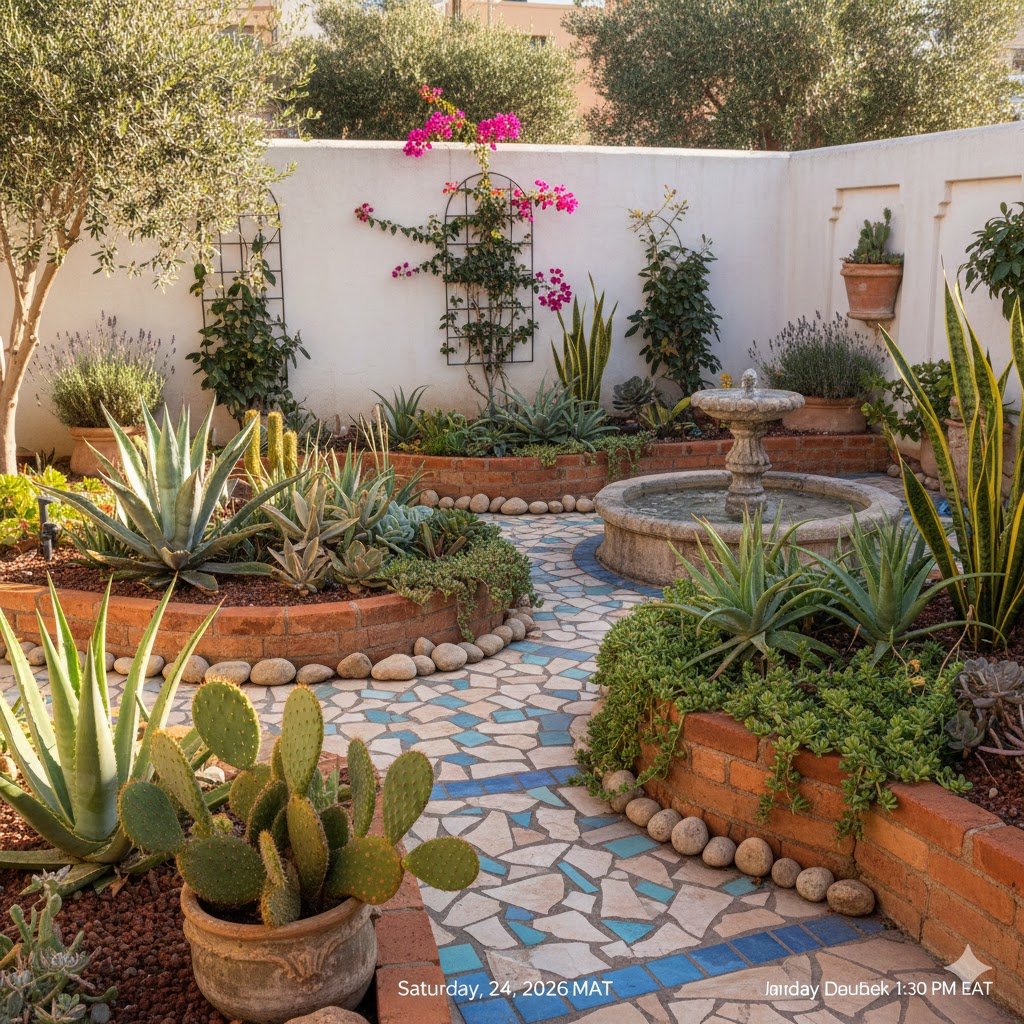
Succulents are the backbone of a low-maintenance courtyard. I like to mix Agave (watch the spikes!) with “Hen and Chicks” in the cracks of stone walls.
They add a structural, modern look to the garden. I once ignored an Agave in a corner for an entire summer, and it looked better in September than it did in May. That’s my kind of plant.
15. The Herb Spiral
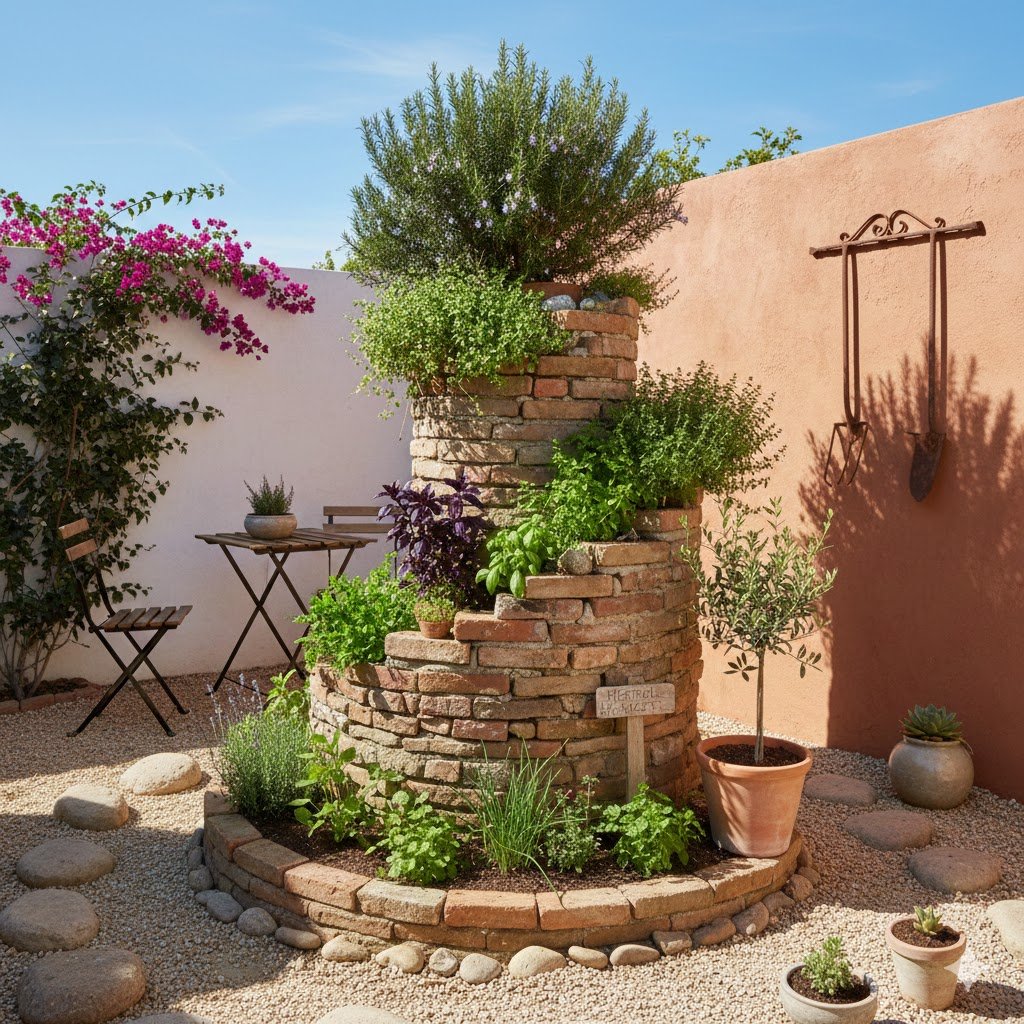
If you have a small courtyard, don’t plant herbs in rows like a farm. Build a small stone spiral. It creates different “micro-climates”—dry and hot at the top for rosemary and thyme, and a bit more moist at the bottom for parsley and chives.
It’s a functional piece of art. Plus, it’s a great conversation starter when you’re hosting a dinner party and need to grab some basil for the Caprese salad.
The “Real Talk” (What They Don’t Tell You on Pinterest)
Let’s get real for a second. That “effortless” Mediterranean look actually takes a bit of work—mostly in the beginning.
| The Dream | The Reality |
| Lush climbing vines | They will try to eat your gutters. Prune them twice a year or say goodbye to your drainage. |
| White-washed walls | They reflect heat. Great for plants, but you’ll need sunglasses just to go outside at noon. |
| Potted citrus | They are magnets for spider mites. Keep some neem oil handy and check the undersides of leaves. |
| Gravel paths | Leaves will fall on them. You can’t rake gravel easily. You’ll need a leaf blower or a lot of patience. |
Waste of Money Alert: Don’t buy those “self-watering” pots for Mediterranean plants. These plants want to dry out. If you keep them constantly moist, you’re just inviting root rot to the party. Also, skip the fancy “Mediterranean Soil Mix” at the big box stores. Just buy regular potting soil and mix in a generous amount of perlite or coarse sand. They want grit, not fluff.
How to Not Kill Everything in Year One
- Drainage is Non-Negotiable: If your pot doesn’t have a hole in the bottom, don’t put a plant in it. I don’t care how pretty the vase is; use it for umbrellas instead.
- Group Your Pots: Small pots dry out in an hour in the sun. Group them together so they shade each other’s “feet.” It creates a little humid micro-climate and looks way better than a bunch of lonely pots scattered around.
- Feed the Beasts: Potted plants run out of food fast. I use a slow-release organic fertilizer in the spring. Don’t overdo the nitrogen, or you’ll get all leaves and no flowers.
- Winter Survival: If you live somewhere it snows, your Mediterranean “paradise” needs to go into the garage or basement. I spent one winter dragging 200-pound pots into my kitchen. Now I keep everything on heavy-duty rolling plant stands. My lower back thanks me every October.
Final Thoughts
I’ve spent years trying to force plants to grow where they don’t want to. The secret to that relaxed, European garden feel isn’t about having a green thumb; it’s about picking plants that are as tough as nails and then mostly leaving them alone.
My first courtyard was a disaster because I tried to make it look like a manicured English garden in a climate that felt like a pizza oven. Once I embraced the gravel, the terracotta, and the drought-tolerant “tough guys,” everything clicked.
The best part? Now I spend more time sitting on my terrace with a glass of wine than I do pulling weeds or dragging a hose around. And isn’t that the whole point of a Mediterranean garden anyway?
What’s the one plant you’ve always wanted to grow but were too afraid you’d kill within a week? Would you like me to help you pick the right variety for your specific space?