

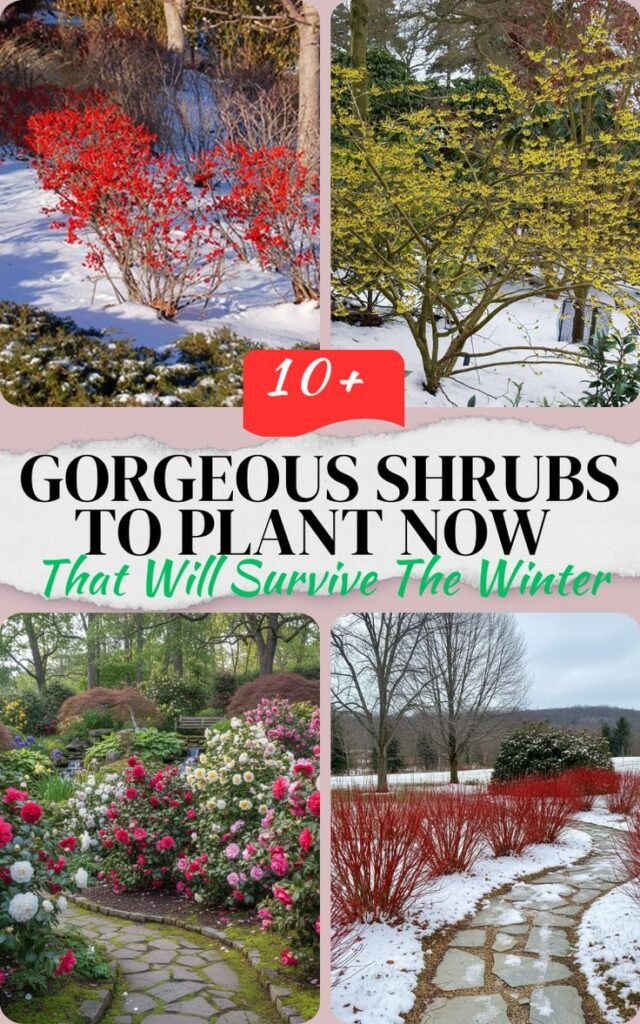
I used to think that November marked the “death” of my garden. I’d look out the window at a sea of brown stalks and gray mulch, sighing as I waited for the first tulip of spring. But then I realized I was looking at gardening all wrong. Winter isn’t a time for the garden to disappear; it’s a time for the “bones” of your landscape to shine.
Planting shrubs in the late fall or early winter is actually one of the smartest moves you can make as a gardener. While the air is chilly, the soil is often still warm enough for roots to grow without the blistering stress of summer sun. By the time spring rolls around, these plants are already established and ready to explode with new growth.
In this guide, I’m going to share my ten favorite shrubs that don’t just “survive” the winter—they actually make it look beautiful. We’re talking about vibrant berries, neon-colored stems, and even flowers that bloom in the snow. Let’s turn your backyard into a winter wonderland that stays green (and red, and gold) all year long.
What Makes a Shrub “Winter-Hardy”?
Before we dig a hole, we need to talk about what “hardy” actually means. A plant’s hardiness is its ability to survive the lowest temperatures in your specific area. Most gardeners use the USDA Plant Hardiness Zone Map. If you live in a Zone 5, you need plants rated for Zone 5 or lower. If you buy a Zone 7 plant and live in Vermont, that shrub is going to be toast by January.
True winter interest comes from more than just surviving; it comes from “structure.” This is a fancy gardening word for how a plant looks when it doesn’t have any leaves. I look for plants with interesting bark, architectural branches, or evergreen foliage. A garden without structure in the winter looks flat and empty, like a room without any furniture.
You also want to consider “desiccation,” which is just a big word for drying out. Winter winds are incredibly thirsty. They suck the moisture right out of evergreen leaves. A truly hardy shrub is one that can hold onto its moisture or one that goes dormant so deeply that the wind doesn’t bother it.
When you go to the nursery, look for labels that mention “four-season interest.” This is a signal that the plant offers something unique in every month of the year. Some shrubs have beautiful spring flowers, lush summer leaves, fiery fall color, and then stunning berries or bark in the winter. Those are the real MVPs of the landscape.
Finally, remember that “winter-hardy” doesn’t mean “indestructible.” Even the toughest shrub needs a little help getting started. If you plant a shrub and then immediately have a record-breaking blizzard, it might struggle. But with the right selection and a little bit of mulch, these ten picks will stand tall against the frost.
10 Gorgeous Shrubs to Plant Now That Will Survive The Winter
1. Winterberry Holly (Ilex verticillata)
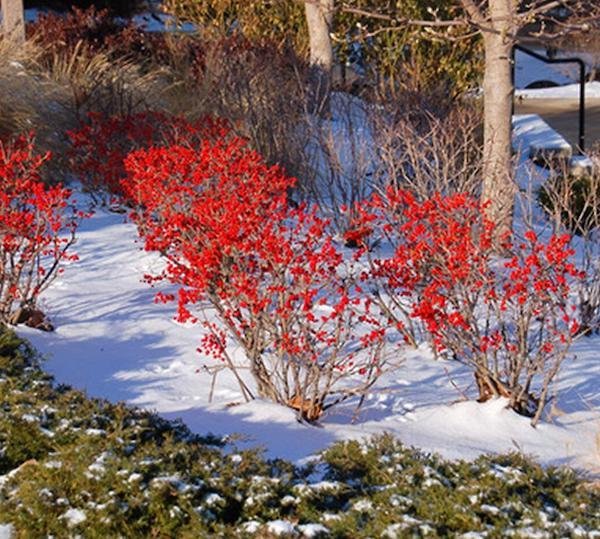
If you want a pop of color that looks like a painting against the snow, Winterberry is your best friend. Unlike the classic English Holly, this variety is “deciduous,” meaning it drops its leaves in the fall. You might think that’s a bad thing, but it’s actually a secret weapon. Once the leaves fall off, you are left with stems packed with thousands of tiny, electric-red berries.
I love using Winterberry because it feeds the birds when food is scarce. You’ll look out your window in February and see bluebirds or robins feasting on the branches. It’s like having a natural bird feeder that never needs refilling. Plus, the bright red color stays vibrant all the way through the darkest months of the year.
The most important thing to know about Winterberry is that it’s a “dioecious” plant. This means there are male plants and female plants. Only the females produce berries, but they can’t do it without a male plant nearby to provide pollen. Usually, one male plant can “service” up to six or eight female plants in the same general area.
When planting, make sure you check the tags at the nursery. You’ll see names like ‘Winter Red’ (female) and ‘Southern Gentleman’ (male). I recommend planting the male tucked away in a corner where it doesn’t need to be the star, and putting the berry-heavy females front and center where you can see them from your kitchen window.
Winterberry loves “wet feet,” which makes it perfect for those low spots in your yard where water tends to collect. While many plants rot in soggy soil, Winterberry thrives. It prefers full sun to produce the most berries, but it can handle a bit of shade. Just make sure to give it plenty of water during its first year of life.
2. Boxwood (Buxus)
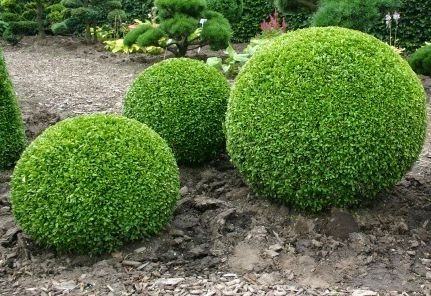
Every winter garden needs a “backbone,” and Boxwood is the ultimate structural element. It stays green all year long, providing a sense of order and permanence when everything else has gone dormant. I think of Boxwoods as the “little black dress” of the garden—they go with everything and never go out of style.
One of the best things about Boxwood is its versatility. You can shear it into a perfect sphere, a formal hedge, or even a whimsical topiary. Or, if you’re like me and prefer a lower-maintenance look, you can just let it grow into its natural, soft mounded shape. It provides a lush green backdrop that makes other colors, like red dogwood stems, really stand out.
In the winter, Boxwood serves as a vital windbreak for smaller, more delicate perennials. It catches the snow and creates “pockets” of protection in the garden. Plus, because it’s an evergreen, it provides shelter for small birds looking to escape the freezing wind. It’s a functional plant that happens to look incredibly elegant.
One tip for winter success with Boxwood: watch out for “bronzing.” This is when the leaves turn a reddish-brown color due to winter sun and wind. To prevent this, make sure you water them well in the late fall. A well-hydrated Boxwood is much more resistant to winter burn than a thirsty one. You can also apply a layer of anti-desiccant spray if you live in a very windy area.
There are many varieties to choose from, but ‘Green Mountain’ or ‘Winter Gem’ are some of the hardiest. ‘Green Mountain’ grows in a natural cone shape, which is perfect for framing a doorway during the holidays. Just add some twinkle lights, and you’ve got an instant Christmas decoration that lives in the ground!
3. Blue Princess Holly (Ilex x meserveae)
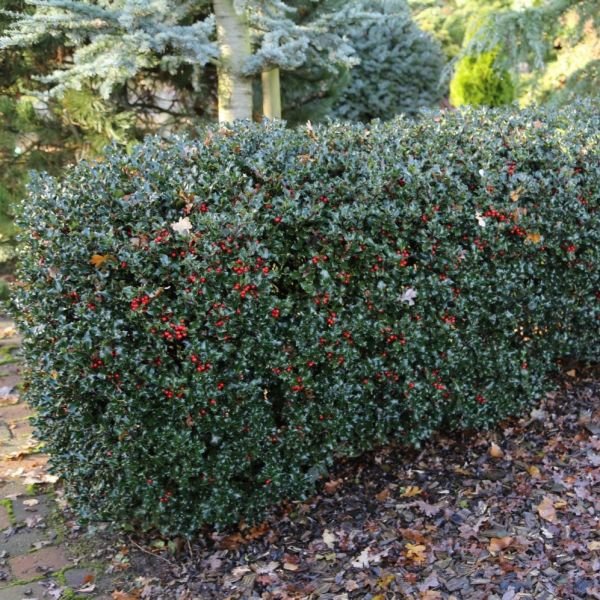
If you’re looking for that classic “Christmas Card” look, Blue Princess Holly is the winner. This is an evergreen holly, meaning it keeps its glossy, dark green leaves all winter long. The “Blue” in the name comes from the deep, bluish-tinted sheen on the foliage, which looks absolutely regal when covered in a light dusting of frost.
The contrast on this plant is what makes it a showstopper. You have these dark, prickly leaves paired with bright red berries. It’s a texture powerhouse. Like the Winterberry, you’ll need a male pollinator (often called ‘Blue Prince’) nearby if you want the Princess to produce those iconic berries. One Prince is usually enough for a whole royal court of Princesses.
I find that Blue Princess is incredibly hardy compared to other evergreen hollies. It can handle colder temperatures and harsher winds than many of its cousins. It grows into a dense, upright shrub that can reach 6 to 8 feet tall, making it a fantastic choice for a privacy screen that works 365 days a year.
Planting these near a walkway is a great idea because they provide color at eye level. However, because the leaves are a bit prickly, keep them a foot or two back from where people frequently brush past. They are also excellent for cutting; I often snip a few branches in December to make my own wreaths and table centerpieces.
To keep your Blue Princess happy, plant it in slightly acidic soil. If your soil is very alkaline, the leaves might turn a bit yellow. A simple application of holly-tone or another acidic fertilizer in the spring will keep that deep “blue-green” color looking its best. It’s a low-maintenance plant that gives back way more than it takes.
4. Witch Hazel (Hamamelis)
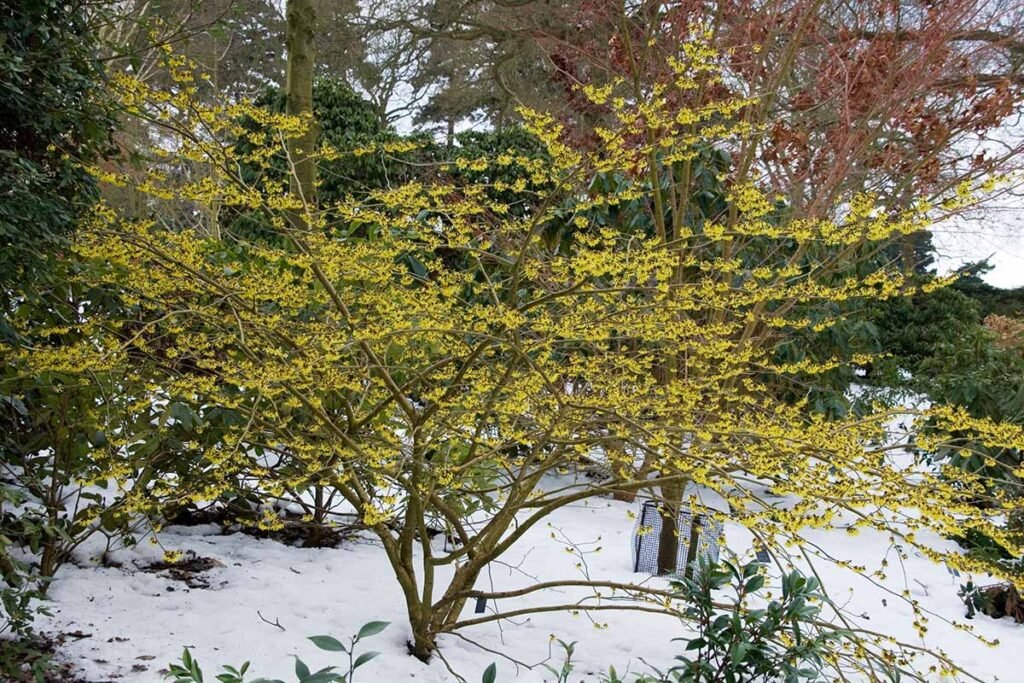
Witch Hazel is the plant for people who hate winter. Why? Because it blooms when everything else is frozen solid. Depending on the variety, Witch Hazel will send out these incredible, ribbon-like flowers in January, February, or March. They look like little bursts of yellow or orange fireworks clinging to the bare branches.
The flowers are fascinating to look at close up. They have four thin, crinkly petals that actually curl up when the temperature drops to protect themselves, then unfurl again when the sun comes out. It’s like the plant has its own built-in thermostat. It’s a reminder that life is still happening in the garden, even on the coldest days.
Beyond the cool flowers, many varieties of Witch Hazel are incredibly fragrant. On a sunny winter day, you might walk past one and catch a scent that is spicy, citrusy, and sweet all at once. It’s an unexpected treat that makes a winter walk in the yard so much more enjoyable. I always recommend planting these near a path you use often so you don’t miss the scent.
Witch Hazel is also a fall superstar. Before the winter blooms appear, the leaves turn a brilliant gold or glowing orange. It’s a large shrub—sometimes reaching 15 feet—so give it some room to spread its “wings.” It has a lovely, vase-shaped growth habit that looks very architectural even when the flowers aren’t in bloom.
When planting, look for Hamamelis x intermedia hybrids like ‘Arnold Promise’ (bright yellow) or ‘Jelena’ (coppery orange). These are bred specifically for their large, showy flowers. They aren’t picky about soil, but they do appreciate a spot that gets a decent amount of sun. It’s a tough, reliable plant that offers a “reward” right when you need it most.
5. Winter Daphne (Daphne odora)
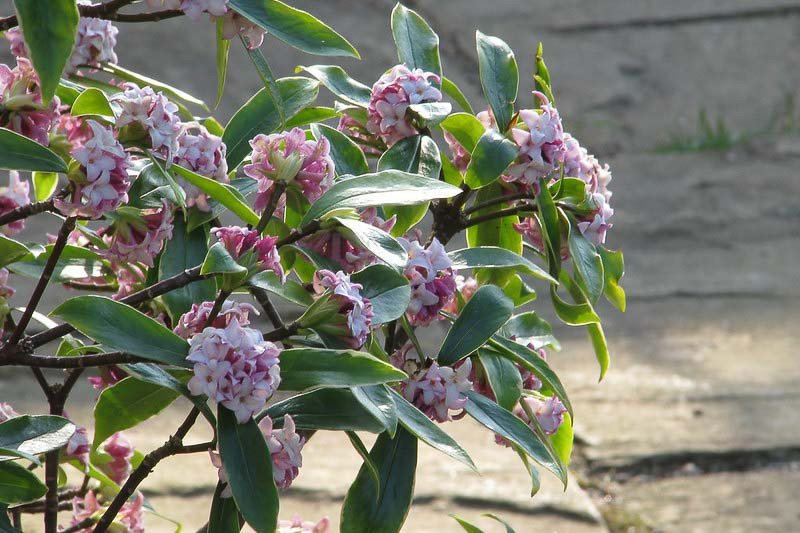
Winter Daphne is the “perfume bottle” of the garden. If you live in a slightly warmer zone (Zones 7–9), this is a must-have. It’s a small, rounded evergreen shrub with long, leathery leaves—often with a beautiful yellow border. But the real reason people grow Daphne is for the blooms that appear in late winter.
The flowers are small, waxy, and usually pink or white. They grow in clusters and emit a scent so powerful and sweet that it can fill an entire backyard. I’ve had neighbors stop at my fence just to ask what that “amazing smell” is in the middle of February. It’s one of the most intoxicating fragrances in the plant world.
Now, I have to be honest with you: Daphne has a reputation for being a bit of a “diva.” It doesn’t like to be moved once it’s planted, so you need to pick its forever home carefully. It also demands excellent drainage. If its roots sit in soggy soil for too long, it might suddenly drop its leaves and call it quits.
However, don’t let the “diva” status scare you off. If you plant it in a raised bed or a spot with loose, loamy soil, it will be perfectly happy. It prefers partial shade, especially in the afternoon, which makes it a great choice for planting under larger trees or near the side of the house.
To give your Daphne the best chance of survival, mulching is key. A thick layer of pine bark or leaf mold will keep the roots cool in summer and warm in winter. Once it’s established, it’s actually quite drought-tolerant. It’s a plant that requires a little “getting to know you” time, but the payoff of that winter scent is worth every bit of effort.
6. Camellia (Camellia japonica)
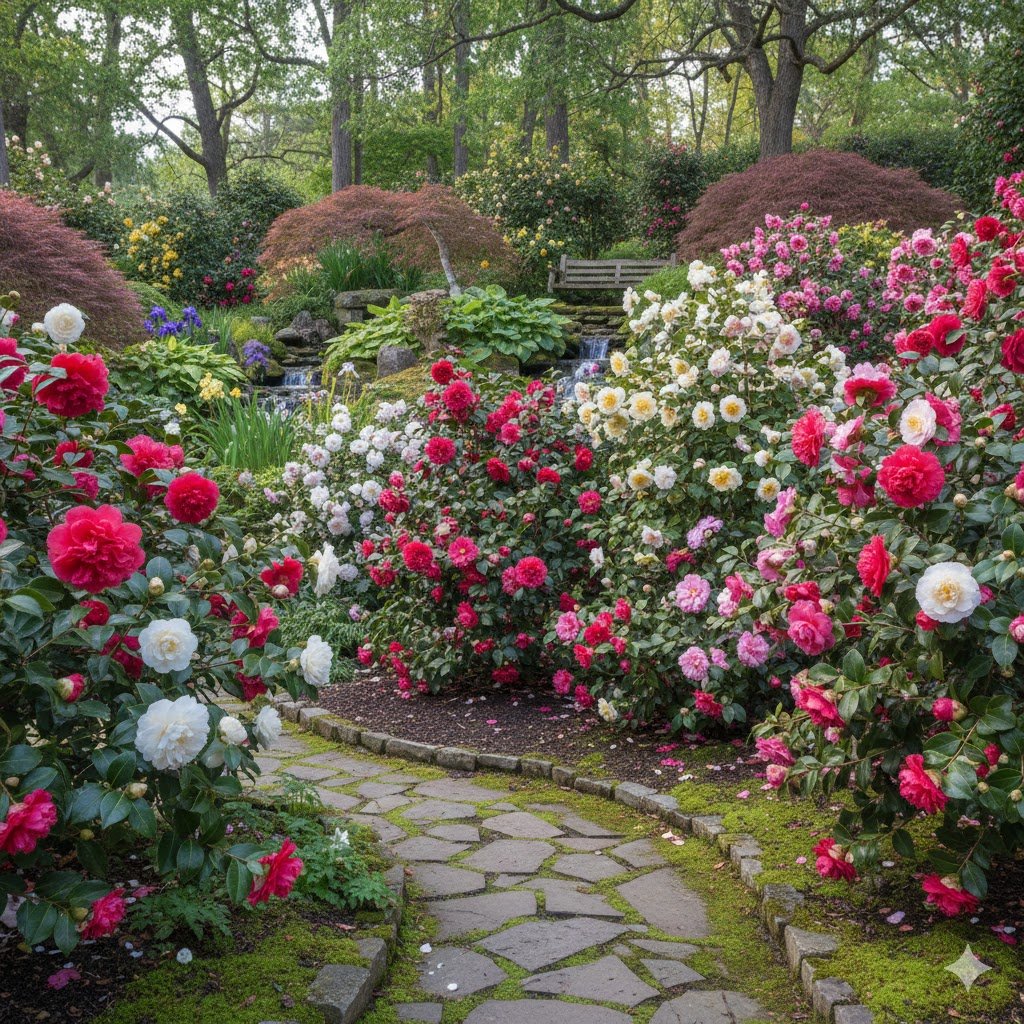
The Camellia is often called the “Rose of Winter,” and for good reason. When the rest of the world is gray, the Camellia is producing massive, lush, multi-petaled flowers that look like they belong in a tropical paradise. They come in shades of pure white, soft pink, and deep, dramatic red.
Most Camellia japonica varieties bloom from late winter into early spring. They have thick, glossy, dark green leaves that look beautiful all year long, even when the plant isn’t in flower. They bring a level of elegance and “southern charm” to any garden, though there are now many cold-hardy varieties that can survive as far north as Zone 6.
One thing I love about Camellias is their height. They can be grown as large shrubs or even pruned into small trees. This makes them excellent for creating a “living wall” or a focal point in a flower bed. Because they bloom when pollinators are just starting to wake up, they provide a vital early-season food source for bees.
When planting Camellias, remember that they are “understory” plants. In the wild, they grow under the canopy of larger trees. This means they love filtered light and acidic soil. If you plant them in the direct, harsh afternoon sun, their leaves might get sunburned. A spot with morning sun and afternoon shade is usually the “sweet spot.”
To ensure they survive the winter, make sure they stay hydrated through the fall. Their flower buds are formed months before they actually open. If the plant gets too dry in October or November, those buds might fall off before they ever get a chance to bloom. A little bit of extra water and some acidic mulch will keep your “Winter Roses” happy for decades.
7. Red Twig Dogwood (Cornus sericea)
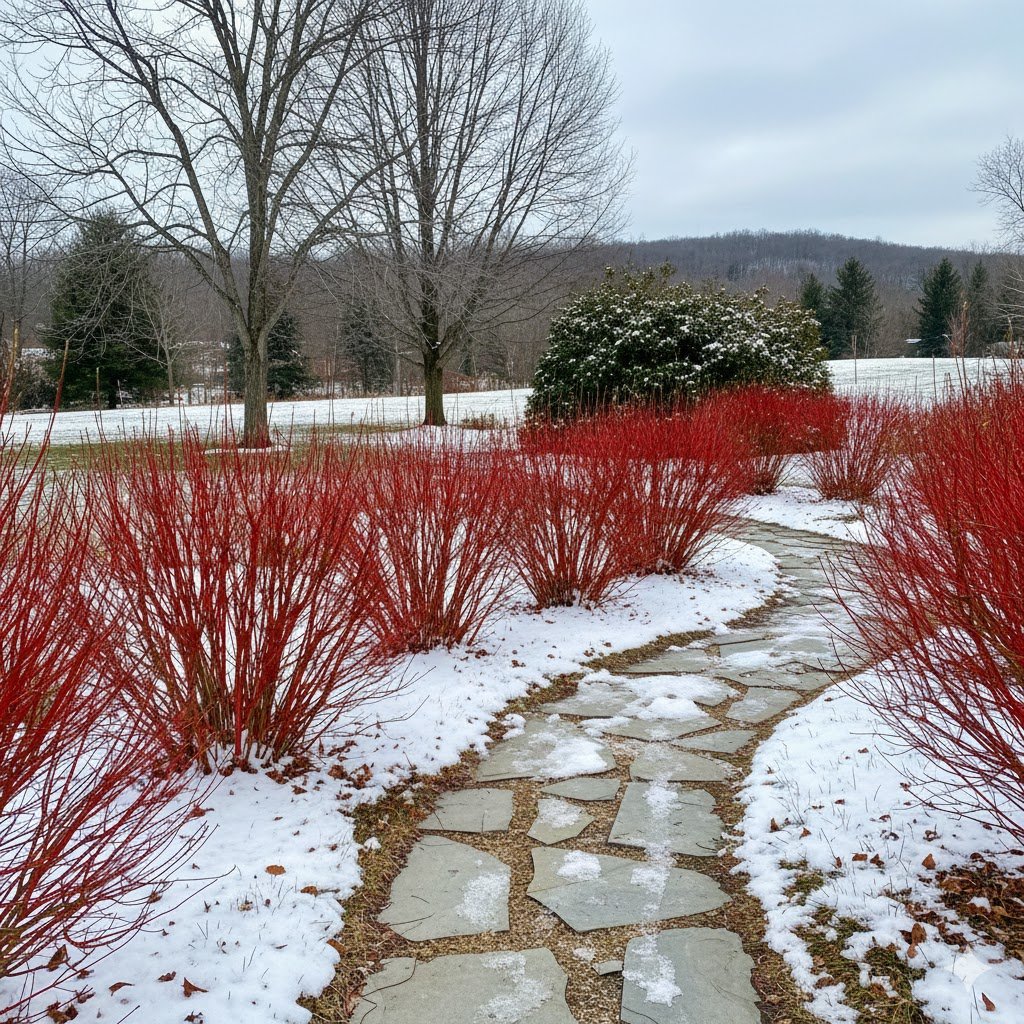
While many shrubs are prized for their leaves or flowers, the Red Twig Dogwood is all about the bark. In the summer, it’s a nice, green, unassuming shrub. But as soon as the leaves fall off in autumn, the magic happens. The stems turn a vivid, fire-engine red that looks absolutely stunning against a backdrop of white snow.
I always tell people that Red Twig Dogwood is the easiest way to add “instant drama” to a winter landscape. It’s a fast grower and very hardy, often surviving all the way down to Zone 2 (where temperatures can hit $-40^\circ F$). It’s a tough-as-nails plant that asks for almost nothing but gives back a huge visual punch.
One secret to keeping that red color bright is “renewal pruning.” The youngest stems have the brightest color, while the older wood tends to turn a dull grayish-brown. Every spring, I cut out about one-third of the oldest branches right down to the ground. This encourages the plant to send up fresh, new, neon-red shoots for the following winter.
These shrubs are also great for stabilizing soil. If you have a hill or a slope that is eroding, their aggressive root systems will hold the earth in place. They love moisture, so they are perfect for rain gardens or near a pond. If you have a spot in your yard that stays a bit mucky, the Red Twig Dogwood will thank you for planting it there.
If red isn’t your color, look for the “Yellow Twig” variety (Cornus sericea ‘Flaviramea’). It has bright, chartreuse-yellow stems that offer a completely different look. I love planting the red and yellow varieties together for a “sunset” effect in the middle of a blizzard. It’s a simple, inexpensive way to make your winter garden look professionally designed.
8. Oakleaf Hydrangea (Hydrangea quercifolia)
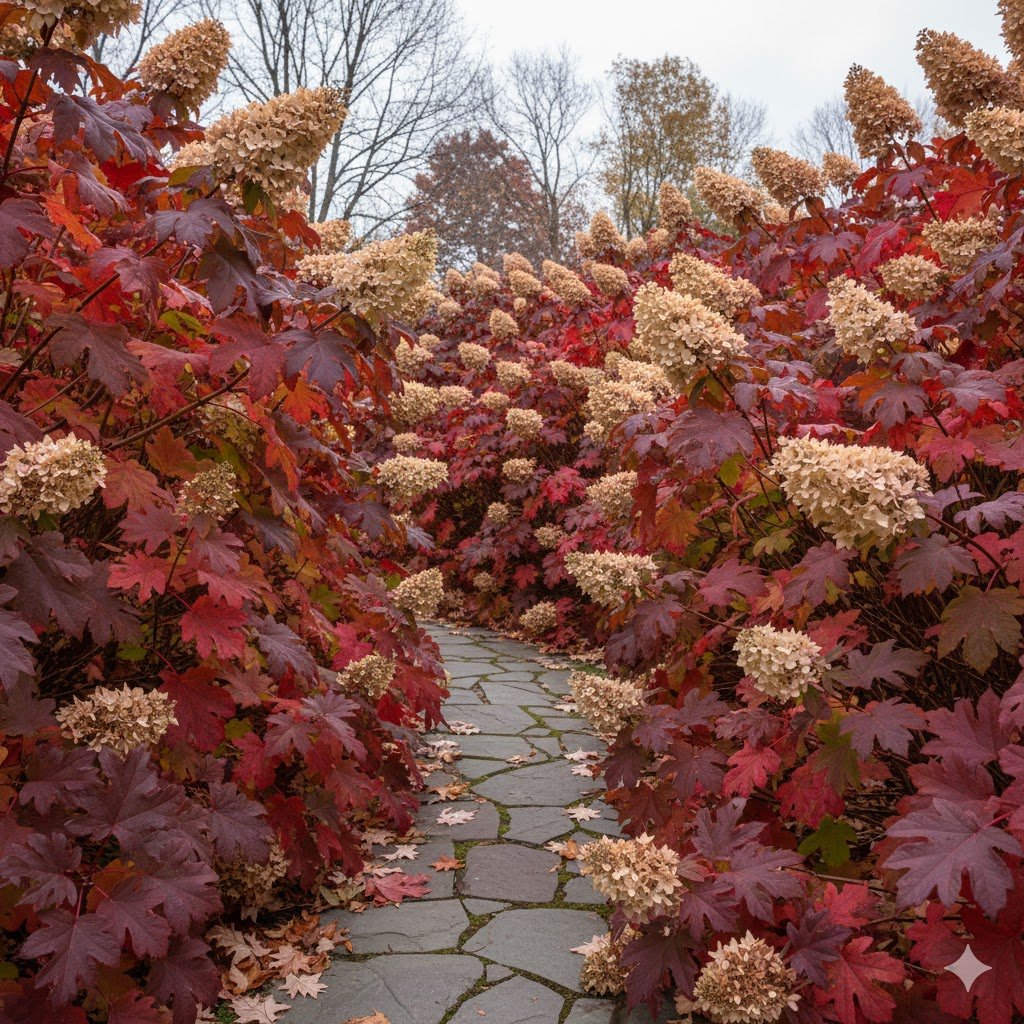
Most people think of Hydrangeas as summer plants, but the Oakleaf variety is a true four-season powerhouse. Its leaves are shaped like giant oak leaves (hence the name), and in the fall, they turn the most incredible shades of burgundy, purple, and bronze. But the real winter interest starts after those leaves finally drop.
Once the branches are bare, you can see the Oakleaf’s “exfoliating” bark. The bark peels back in thin, papery layers to reveal a rich cinnamon color underneath. It’s a beautiful textural detail that adds a lot of character to the garden. Plus, the dried flower heads often stay on the plant all winter, looking like tan, papery ghosts of the summer past.
I love the “architectural” look of this shrub. It has thick, sturdy branches that don’t flop over under the weight of heavy snow. It’s a native plant in many parts of the U.S., which means it’s generally more resistant to local pests and diseases than some of the fancier imported varieties.
Oakleaf Hydrangeas are also incredibly tough. They can handle more sun and more drought than the common blue “mophead” hydrangeas. They grow well in full sun to partial shade. If you have a woodland-style garden, these will fit right in, looking natural and effortless.
When planting, give them plenty of space. Some varieties can grow 8 feet tall and wide. If you have a smaller yard, look for dwarf varieties like ‘Ruby Slippers’ or ‘Pee Wee.’ They offer all the same winter bark and fall color but in a much more manageable size. It’s a plant that truly earns its keep every single month of the year.
9. Harry Lauder’s Walking Stick (Corylus avellana ‘Contorta’)
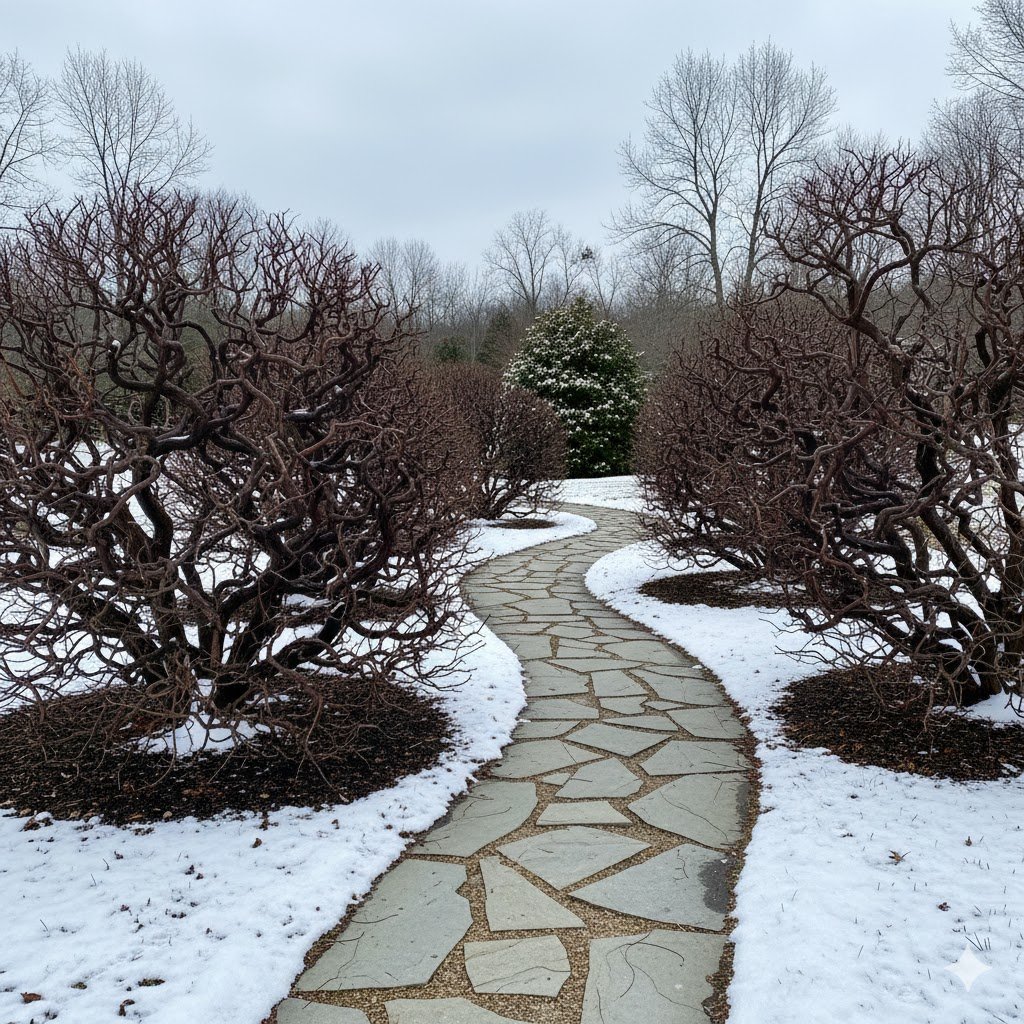
This is arguably the most “interesting” plant on this list. Also known as the Contorted Filbert, this shrub is grown almost exclusively for its winter silhouette. While the leaves are on it in the summer, it looks a bit messy. But in the winter, it reveals a crazy, tangled mess of corkscrew-twisted branches that look like a piece of living sculpture.
The name “Harry Lauder’s Walking Stick” comes from a famous Scottish comedian who used a twisted cane. It’s a conversation starter. Whenever I have guests over in the winter, they always end up standing in front of this plant, asking if it’s real. It looks like something out of a Tim Burton movie or a fairytale forest.
In late winter, the plant produces long, golden “catkins.” These are dangling flower spikes that dance in the wind. They add even more movement and interest to the already dramatic branches. It’s a slow-growing shrub, so you don’t have to worry about it taking over your yard, but it does become a permanent fixture once established.
I recommend planting this as a “specimen” plant. That means you put it somewhere it can stand alone and be admired, rather than burying it in a crowded hedge. It looks fantastic near an entrance or in a large container. Because the branches are so unique, people often snip them to use in high-end floral arrangements or as a “tree” to hang ornaments on during the holidays.
One thing to watch for is “suckers.” Occasionally, the straight-branched rootstock will try to grow through the twisted branches. If you see a perfectly straight branch growing out of your curly shrub, just snip it off at the base. Other than that, it’s a very low-maintenance plant that provides a high-end, designer look to your winter landscape.
10. Pieris Japonica (Japanese Andromeda)
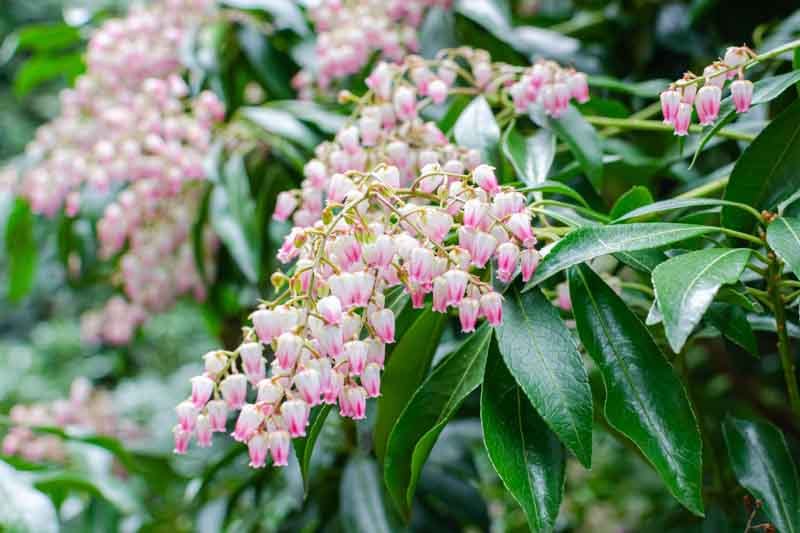
Pieris Japonica is like the “jewelry” of the winter garden. It’s an evergreen shrub with neat, tiered branches and elegant, pointed leaves. But its most unique feature is its flower buds. These buds form in the late fall and hang in long, drooping clusters that look like strings of tiny pearls or “beads” all through the winter.
What’s cool is that the buds are often a different color than the eventual flowers. You might have deep red buds all winter long that finally open into white, bell-shaped flowers in the early spring. It’s like the plant is holding its breath for four months, just waiting for the right moment to pop.
The foliage is also dynamic. Many varieties, like ‘Mountain Fire,’ have new growth that emerges in a bright, fiery red before turning a deep, glossy green. So even when it’s not blooming, the plant is constantly changing colors. It provides a very “polished” and sophisticated look to a garden bed.
Pieris loves the same conditions as Azaleas and Rhododendrons: acidic soil and partial shade. It’s a great companion plant for those species because it fills in the gaps when they aren’t in bloom. It’s also deer-resistant, which is a huge plus if you live in an area where the local wildlife treats your garden like a 24-hour buffet.
To keep your Pieris looking its best, make sure it’s protected from the harshest afternoon sun and the strongest winter winds. It likes a consistent level of moisture, so a good layer of mulch is essential. It’s a slow-to-medium grower, making it perfect for foundation plantings near the house where you want something that won’t outgrow its space too quickly.
Pro-Tips for Winter Planting Success
Now that you’ve picked out your gorgeous shrubs, you need to get them in the ground. Planting in the late fall or early winter is a bit different than planting in the spring. Here are the golden rules to make sure your new additions survive until the thaw:
- Water is Life: This is the most important rule. Even though it’s cold, plants still need water. In fact, most winter “kill” isn’t caused by the cold—it’s caused by the plant drying out. Water your new shrubs deeply once a week until the ground actually freezes solid.
- The Mulch “Blanket”: Think of mulch as a winter coat for your plant’s roots. Apply a 3-inch layer of wood chips, bark, or shredded leaves around the base of the shrub. This keeps the soil temperature stable and prevents “frost heaving” (where the ground freezes and thaws, pushing the plant out of the dirt).
- Don’t Fertilize Yet: You want your shrub to focus on growing roots, not new leaves. If you give it fertilizer now, it might try to put out tender new growth that will just get nipped by the frost. Save the plant food for the spring.
- Dig a Wide Hole: Don’t just dig a hole the size of the pot. Dig it twice as wide! This loosens up the surrounding soil and makes it much easier for the young roots to spread out before the ground gets hard.
- Wind Protection: If you’re planting an evergreen in a very exposed, windy spot, consider a temporary burlap screen. It might not look pretty for a few months, but it will prevent the wind from “sucking” the life out of the leaves during their first winter.
Summary: Your Garden’s Second Act
Your garden doesn’t have to go to sleep just because the temperature drops. By choosing a mix of evergreens, berry-producers, and shrubs with interesting bark, you can create a landscape that is just as exciting in January as it is in June.
Imagine looking out your window on a gray Tuesday in February and seeing the bright red stems of a Dogwood, the “pearl” buds of a Pieris, and the defiant yellow blooms of a Witch Hazel. It changes your whole perspective on the season. Gardening is about more than just flowers; it’s about appreciating the beauty of every stage of life.