
My neighbors used to see me as the “crazy plant lady” who was always hunched over a trowel, back to the street, ignoring the world. For years, I treated my front yard like a chore list rather than a living room. I spent a fortune on high-maintenance perennials that nobody—including me—ever actually sat down to enjoy.
If your front yard is currently just a patch of grass you mow out of obligation, you’re wasting the best real estate you own. I finally got smart and carved out a spot for a chair and a cold drink, and it changed everything. I actually know my neighbors’ names now, and I spend way less time weeding because I’ve replaced “empty” space with functional, relaxing nooks.
Here is the “dirt-under-the-fingernails” guide to front yard seating area ideas that actually work, without the Pinterest-perfect fluff that falls apart after one rainstorm.
1. Small Front Porch Seating Idea for Tight Spaces
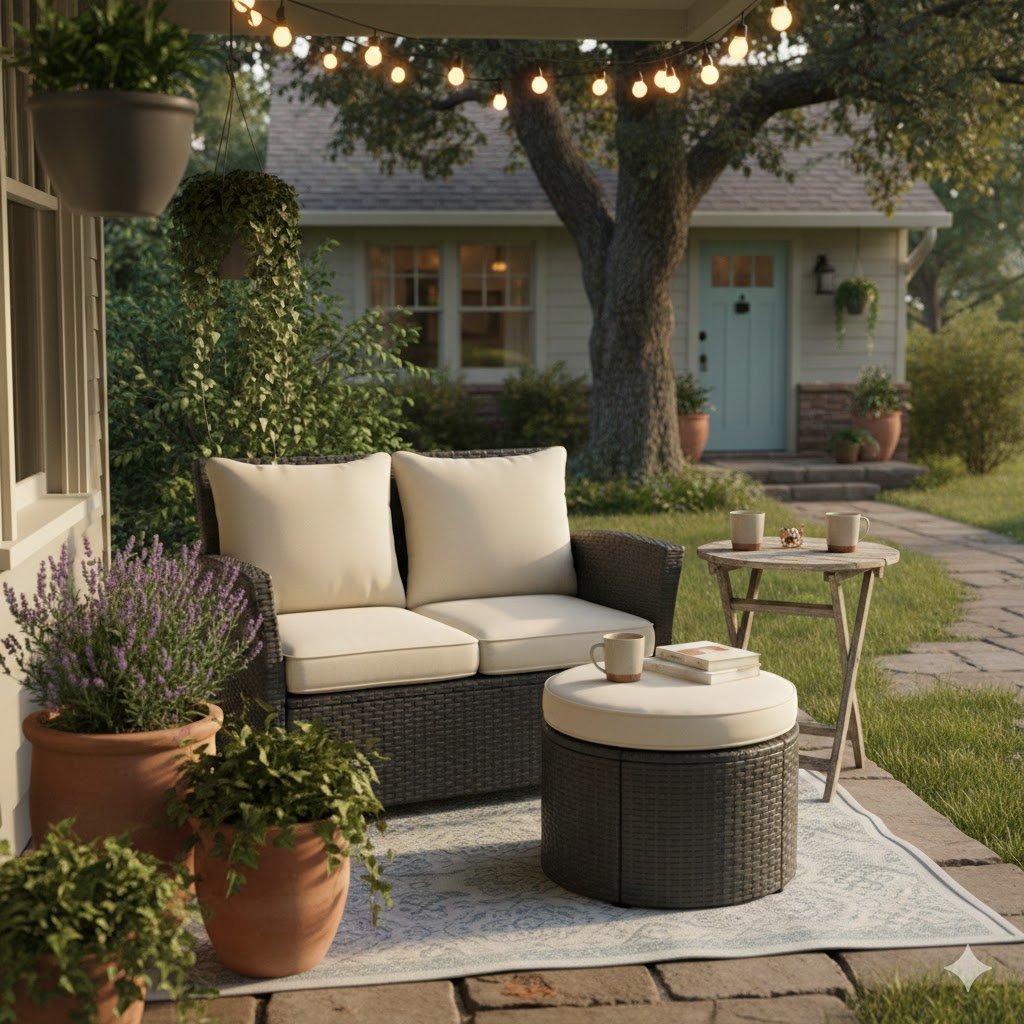
I once tried to cram a full-sized wicker sofa onto a three-foot-wide concrete stoop. It was a disaster. I spent the whole summer tripping over furniture legs just to get to my front door. If you have a tiny footprint, you have to think about “visual weight.” You don’t want bulky furniture that makes your house look like it’s being swallowed by a couch.
For small porches, I swear by slim-profile bistro sets. I’m talking about the metal ones that fold up. Why? Because when the winter storms hit, I can tuck them in the garage in thirty seconds. I’ve found that heavy wooden benches in a small space just collect cobwebs and make the entryway feel claustrophobic.
Keep the “floor” of your seating area clear. Instead of big pots on the ground, use railing planters or hanging baskets. This keeps the footprint open so you don’t feel like you’re sitting in a closet. I once grew a “pizza garden” in railing boxes right next to my bistro chair—having fresh basil within arm’s reach while I sipped my coffee was a total game-changer.
The trick to making a small space feel like a “destination” and not just a landing pad is a good outdoor rug. Get one that is slightly smaller than the porch floor to show a bit of the border. It anchors the chairs and tells your brain, “This is a room, not a walkway.” Just make sure it’s a hosed-down polypropylene rug, because fancy natural fibers will turn into a moldy mess by July.
2. Low-Maintenance Gravel Patio Design for the Front Yard
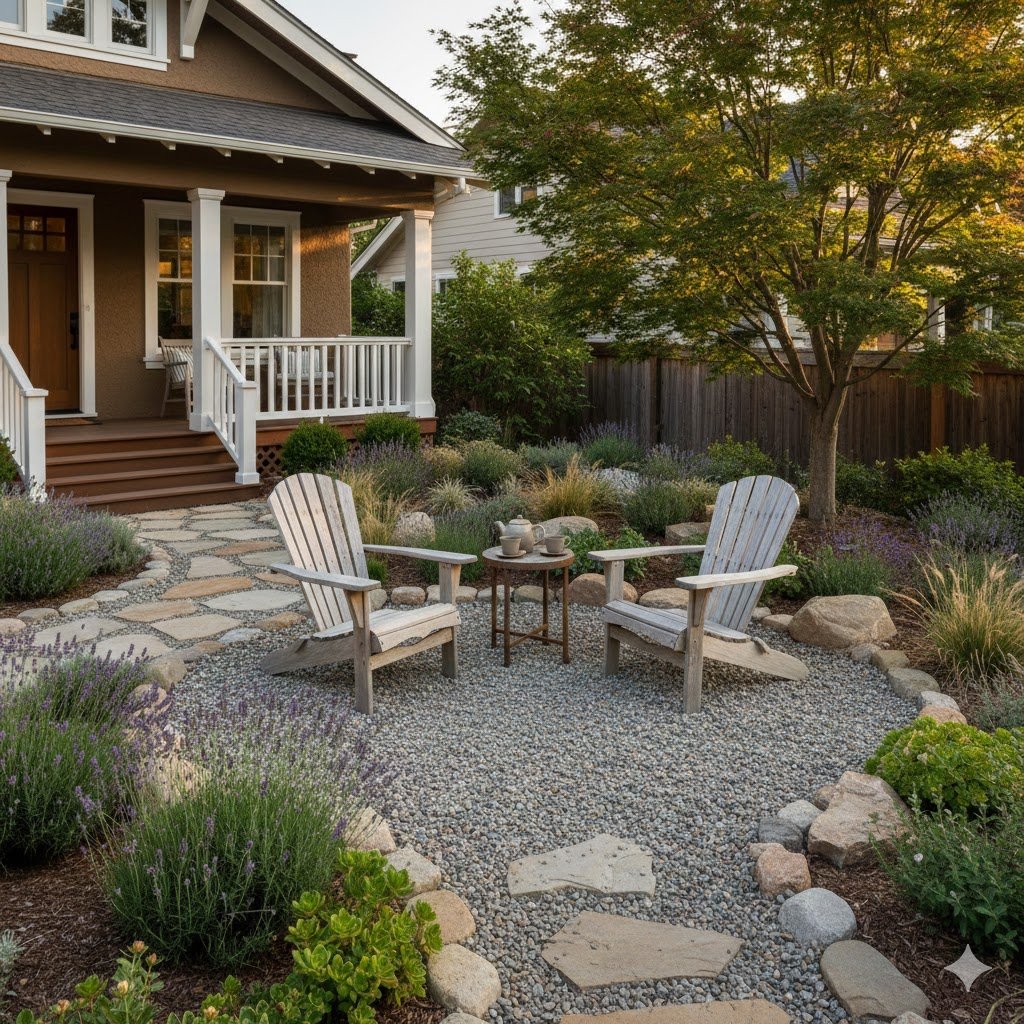
Stop obsessing over a perfect green lawn. The summer my zucchini took over the entire ZIP code, I realized I was spending way too much time watering grass I didn’t even like. I ripped out a 10×10 section of patchy turf near the sidewalk and put down crushed pea gravel. It was the best $200 I ever spent on my landscape.
A gravel patio is the “lazy gardener’s” best friend. You don’t need to pour concrete or level heavy pavers perfectly. You just dig out a few inches of dirt, lay down high-quality weed fabric (don’t skimp here, or you’ll be hand-pulling grass forever), and dump the stones. I prefer pea gravel because it feels nice underfoot, even if you’re barefoot.
When you’re searching for “DIY front yard patio ideas,” people often forget about drainage. That’s the beauty of gravel—it’s permeable. When it pours, the water sinks straight into the ground instead of pooling against your foundation. I’ve seen neighbors build beautiful wood decks that rotted out in five years because they didn’t account for the damp soil underneath. Gravel stays forever.
To keep it from looking like a construction site, you need a solid edge. I used heavy cedar beams, but oversized cobblestones look great too. Throw a fire pit in the middle (if your local code allows it) or a simple Adirondack chair set. It creates a “neighborhood hub” vibe that invites people to stop and chat rather than just waving from a distance.
3. Creating Privacy with Front Yard Privacy Screens and Hedges
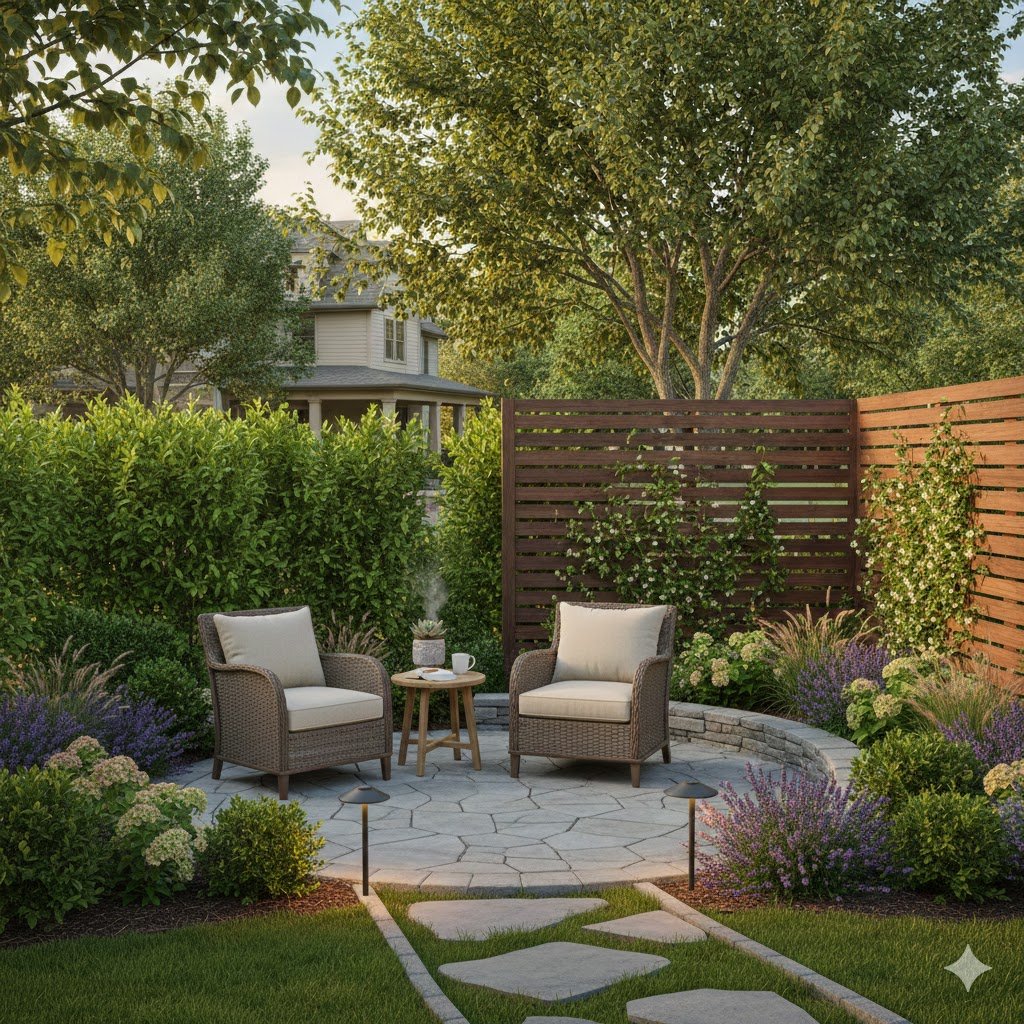
I love my neighbors, but I don’t always want them watching me eat a messy taco in my pajamas. The biggest hurdle to front yard seating is feeling “exposed.” You want a “secret garden” vibe, not a “fishbowl” experience. But whatever you do, don’t build a six-foot solid fence; it looks unfriendly and usually violates city codes.
I’m a huge fan of layered planting for privacy. Instead of a wall, use a mix of tall ornamental grasses and mid-sized shrubs. I planted ‘Karl Foerster’ feather reed grass around my seating nook. It grows fast, sways beautifully in the breeze, and provides a blurred screen that feels airy rather than walled-off. Plus, it’s much cheaper than wood fencing.
If you’re impatient and don’t want to wait for plants to grow, a wooden trellis with climbing vines is your best bet. Avoid English Ivy unless you want it to eat your house and your neighbors’ houses too. I made that mistake once; three years later, I was still pulling it out of my siding. Use Clematis or Honeysuckle instead—they smell divine and stay relatively well-behaved.
Another “pro tip” for privacy: use height to your advantage. If your yard slopes down toward the street, build your seating area on the highest point. It naturally puts you above the eye level of people walking by. If you’re on flat ground, a simple oversized umbrella can do wonders for blocking the view from the house across the street while still letting you see the sidewalk.
4. Modern Front Yard Landscaping with Built-in Benches
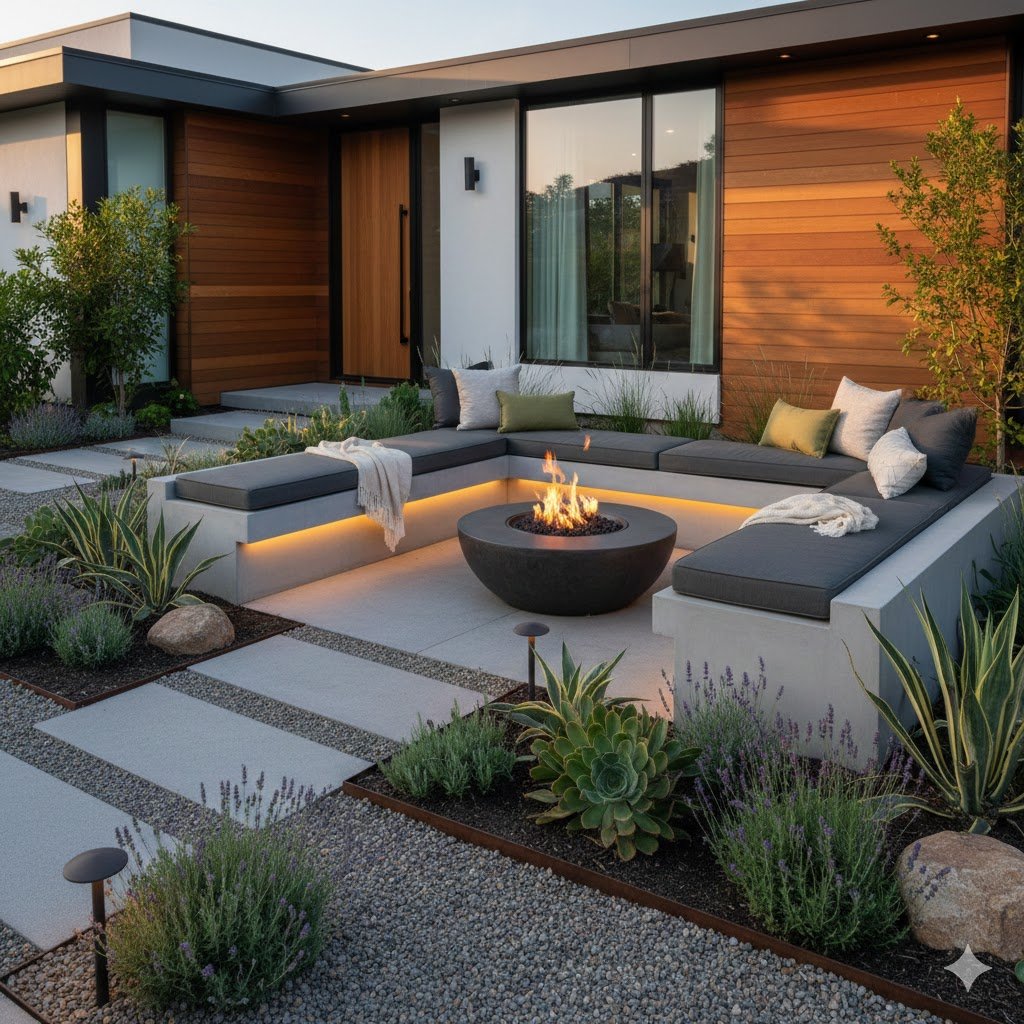
If you want your yard to look like a pro designed it, stop buying individual chairs and start thinking about integrated seating. I’ve seen people spend thousands on “outdoor sets” that blow away in a stiff breeze. A built-in planter box that doubles as a bench is a much more permanent and stylish solution.
I once built a L-shaped bench out of pressure-treated lumber and wrapped it in cedar slats to match my house. It looks high-end, but the guts of it are just basic framing. The best part? I built the top with hinges so I can store my outdoor cushions and gardening tools inside. No more running outside when a rain cloud appears to save the pillows!
Position these benches near a focal point, like a specimen tree or a small water feature. There is nothing more relaxing than sitting on a solid bench under a Japanese Maple while a little solar-powered fountain gurgles in the background. It drowns out the sound of traffic and makes you feel like you’re at a spa, even if you’re just ten feet from the curb.
For the “modern” look people search for, stick to clean lines. Use dark stains like charcoal or ebony for the wood, and pair it with light gray concrete pavers. I’ve found that trying to mix too many colors makes a front yard look cluttered. Pick two colors and stick to them for the furniture, the pots, and the mulch.
5. Cozy Fire Pit Ideas for Front Yard Socializing
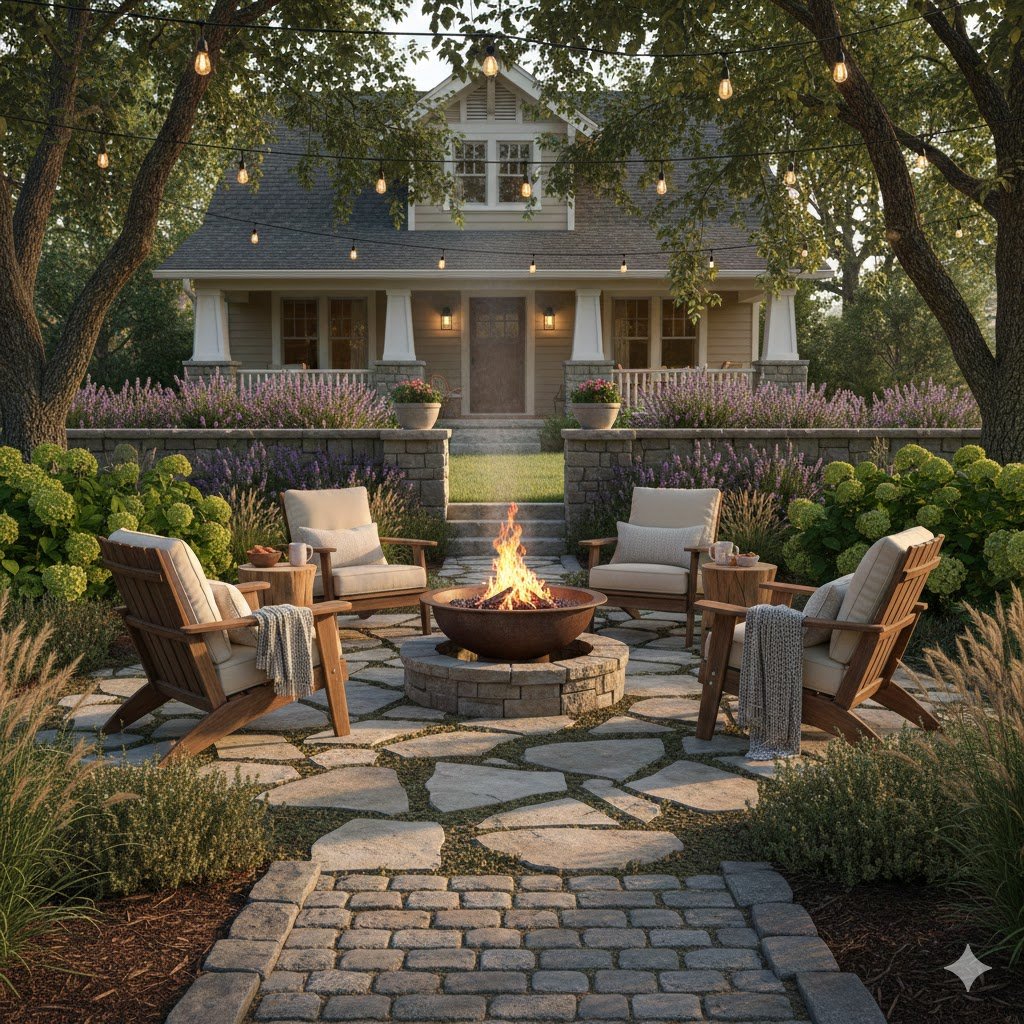
Most people put their fire pits in the backyard, but that’s a mistake if you actually want to meet people. Moving my fire pit to the front yard was the single best social move I ever made. Suddenly, the “walking the dog” crowd started lingering, and we became the go-to spot for Friday night drinks.
I’m going to be honest: gas fire tables are superior to wood-burning pits for front yards. I know, I know—the “purists” love the smell of wood. But I’ve found that when I have to deal with logs, soot, and smoke blowing into my neighbors’ open windows, I use the pit way less. A propane table turns on with a click, produces no smoke, and doubles as a coffee table when you aren’t using the flame.
If you do go the wood route, make sure you have a dedicated “hearth” area. Don’t just plop a metal bowl on the grass; you’ll kill the lawn and it looks messy. Use large flagstones or a circular gravel pad to define the space. I once tried to have a fire on a “temporary” patch of dirt, and after one rain, it was a mud pit that tracked sludge into my house for a week.
Safety is huge here. Keep the pit at least 10 feet away from your house and any overhanging branches. I’ve seen a “relaxing evening” turn into a 911 call because someone put a fire pit under a dry cedar tree. Be smart, keep a fire extinguisher nearby (tuck it behind a planter so it’s not an eyesore), and enjoy the glow.
6. Under the Tree Seating: Using Natural Shade
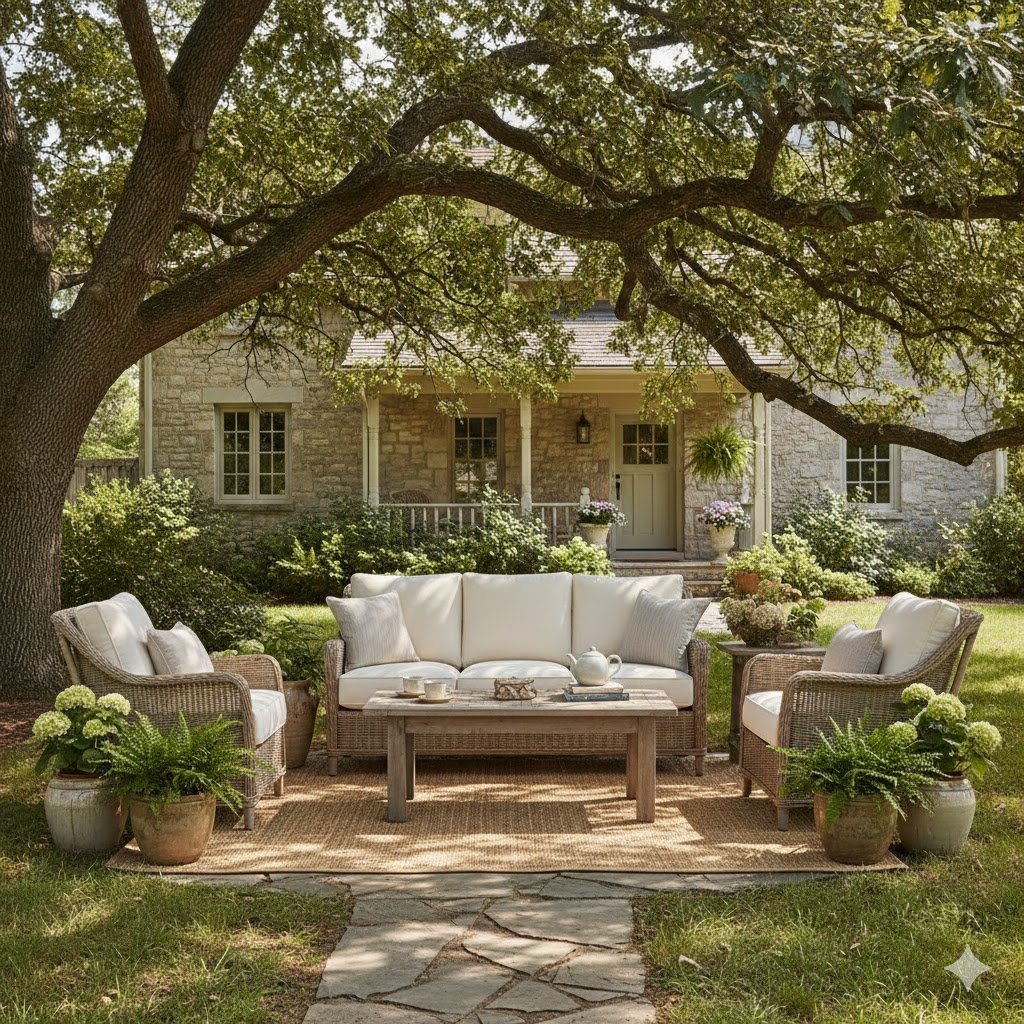
I have a massive old Oak tree in my front yard, and for years, I struggled to grow grass under it. It was just a patch of dirt and exposed roots. Finally, I gave up on the grass and built a wrap-around tree bench. It’s now the coolest spot in the neighborhood—literally. On a 90-degree day, it’s about 10 degrees cooler under that canopy.
If a built-in bench sounds too complicated, a couple of heavy-duty Adirondack chairs under a shade tree are a classic for a reason. They’re meant to be sat in at an angle, which is perfect for reading. Just a heads-up: don’t put your furniture directly on the soil or the legs will rot. Use a few “steppers” or flat rocks under the feet of the chairs to keep them dry.
Be careful about what you plant around tree seating. I once planted a bunch of “pretty” berries near my bench, only to realize they attracted every bird in the county. My white chairs were covered in purple bird droppings within 24 hours. Stick to shade-loving greens like Hostas or Ferns that don’t produce messy fruit or sticky sap.
Also, consider the “ceiling” of your outdoor room. I hung a few battery-operated lanterns from the lower branches of my Oak tree. At night, it creates this magical, flickering light that makes the space feel incredibly cozy. It’s way better than a harsh porch light that attracts every moth in a three-mile radius.
7. The “Front Porch Swing” Revival
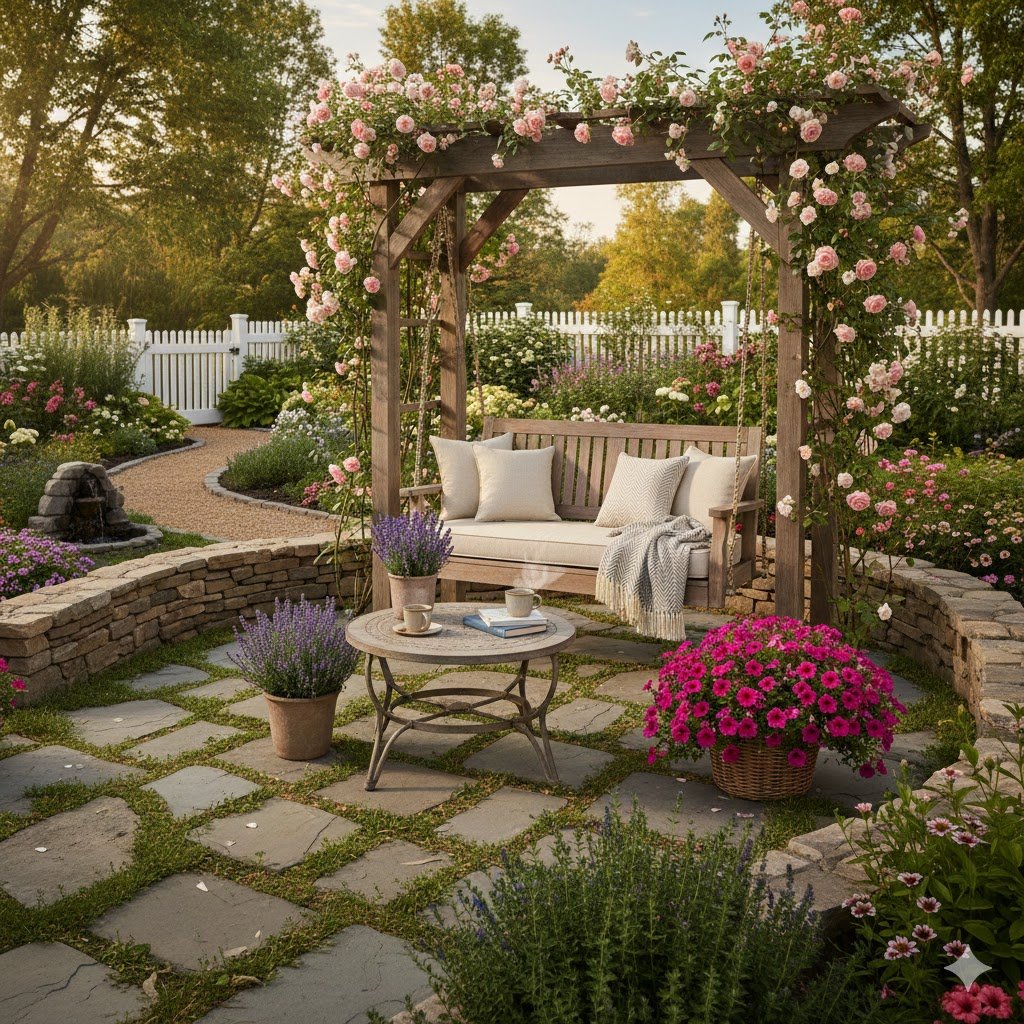
There is a reason the classic porch swing has never gone out of style. It’s the ultimate relaxation tool. But let me tell you from experience: Check your joists twice. I once saw a DIY swing installation rip a 4×4 beam clean out of a porch ceiling because the owner didn’t use the right lag bolts. It’s not relaxing if you’re constantly worried about falling through the floor.
If you don’t have a porch roof strong enough for a swing, don’t despair. You can buy “A-frame” swing sets that sit on the ground. I’ve found that putting one of these in a garden bed—surrounded by tall flowers like Foxgloves or Delphiniums—creates a really romantic, cottage-core look that people go crazy for.
The key to a good swing is the cushion. Don’t buy the cheap ones that feel like you’re sitting on a gym mat. Invest in “high-density foam” with Sunbrella fabric. I’ve left mine out through thunderstorms and scorching sun, and they still look brand new. It’s one of those things where spending an extra $50 upfront saves you $200 in replacements later.
One little side note: if you have a swing, you need a side table. There is nothing more frustrating than swinging and having nowhere to set your iced tea. A heavy ceramic “garden stool” is perfect for this because it won’t tip over when you accidentally kick it while swinging.
8. Flagstone Patios for a Timeless, Natural Look
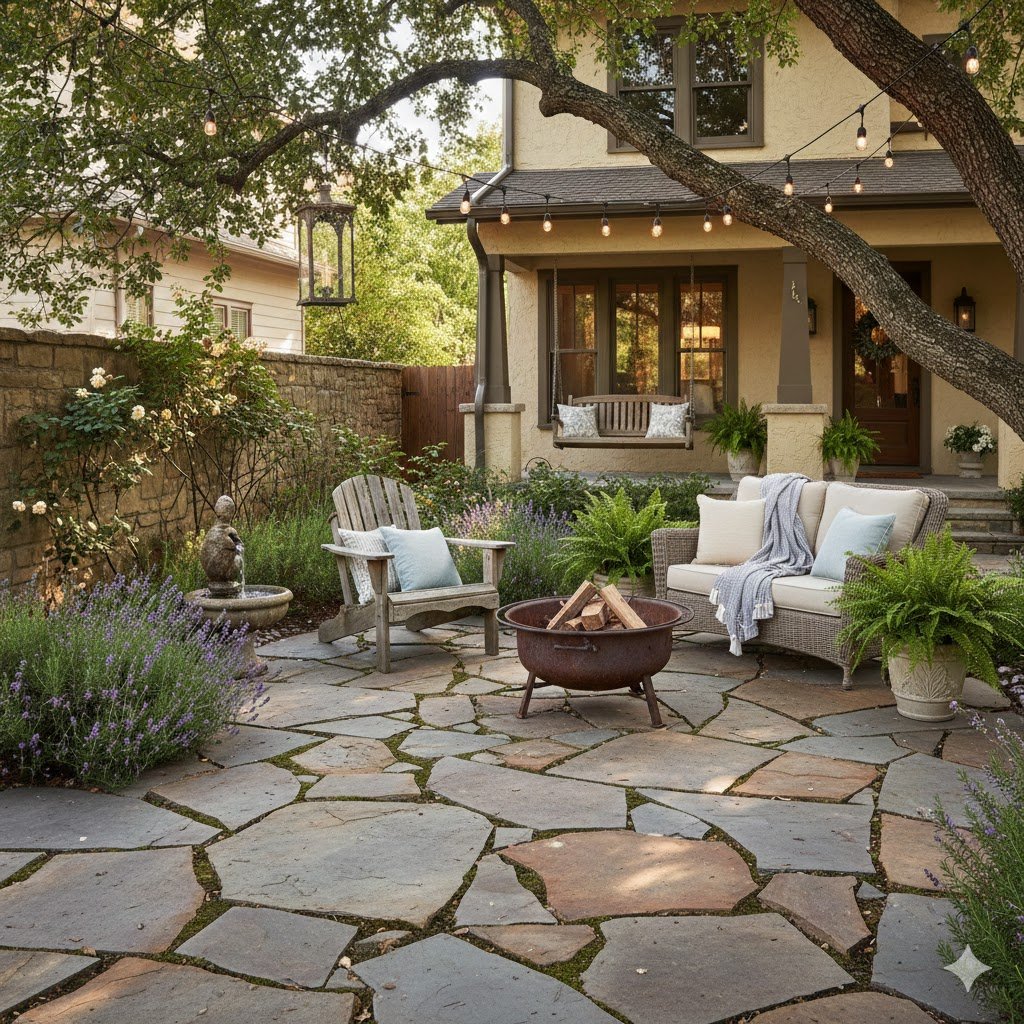
If gravel feels too “loose” for you and concrete feels too “cold,” flagstone is the middle ground. It looks like it’s been there for a hundred years. I love using irregular flagstones with wide gaps filled with “creeping thyme.” When you step on the thyme to get to your chair, it releases this amazing herbal scent.
Building a flagstone patio is like doing a giant, heavy puzzle. I’ve found that the “dry-laid” method is best for front yards. This means you set the stones in a bed of sand and gravel rather than using mortar. Why? Because when the ground shifts in the winter (and it will), the stones just move a little bit instead of cracking.
When shopping for stone, don’t just look at the colors. Feel the texture. Some stones get incredibly slippery when they’re wet. I once bought some beautiful polished slate for a walkway and nearly broke my neck the first time it drizzled. Stick to “natural cleft” finishes—they have a bit of grip to them.
To make this space feel intentional, “bury” the edges of the patio with plants. You don’t want a sharp line where the stone meets the grass. Let some low-growing Sedum or Moss spill over the edges. It softens the look and makes the seating area feel like it grew out of the ground naturally.
9. Front Yard Courtyards for Maximum Curb Appeal
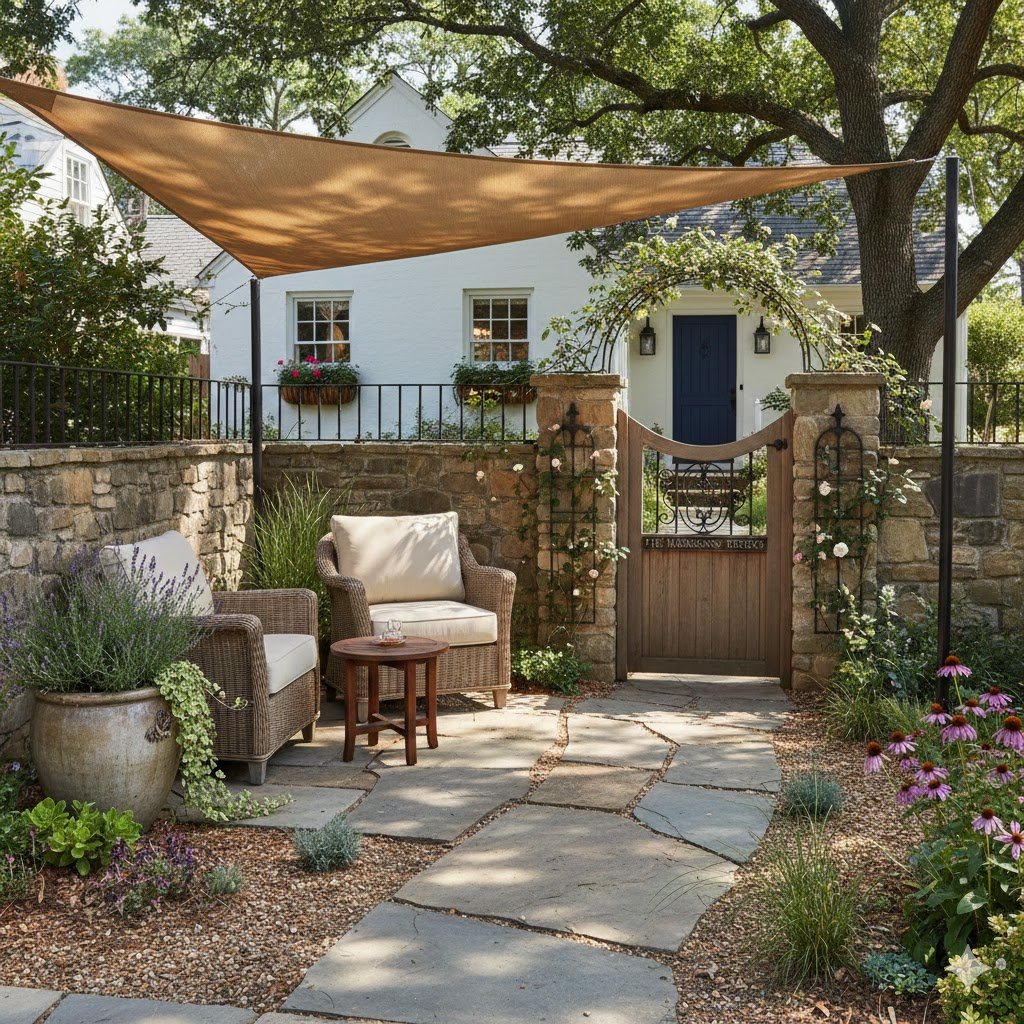
If you have a ranch-style house or a “U-shaped” entryway, you are sitting on a goldmine. You can create a full-blown courtyard. This is more than just a place to sit; it’s a complete transformation of your home’s facade. I’ve seen “courtyard” designs add tens of thousands of dollars to a home’s value.
The secret to a good courtyard is a low perimeter wall. I’m talking maybe 18 to 24 inches high. It’s just enough to define the space and provide extra seating for big gatherings, but low enough that it doesn’t look like a fortress. I used stacked stone for mine, and it’s the perfect height to set a tray of snacks on when we have neighbors over.
Inside the courtyard, go crazy with textures. Mix large pavers with river rock borders. Add a “water bowl”—which is just a large, shallow pot filled with water and maybe a single water lily. It’s a low-maintenance way to get that “fountain” feel without the plumbing headaches. I once tried to build a real waterfall in my front yard and ended up with a mosquito-breeding swamp because I couldn’t get the pump right. Keep it simple!
Lighting is the “secret sauce” for courtyards. Use low-voltage path lights to highlight the walkway and a few “uplights” on your best plants. It makes the house look incredibly expensive at night, and it’s much safer for guests coming to your door.
10. Repurposing “Dead” Space Near the Sidewalk
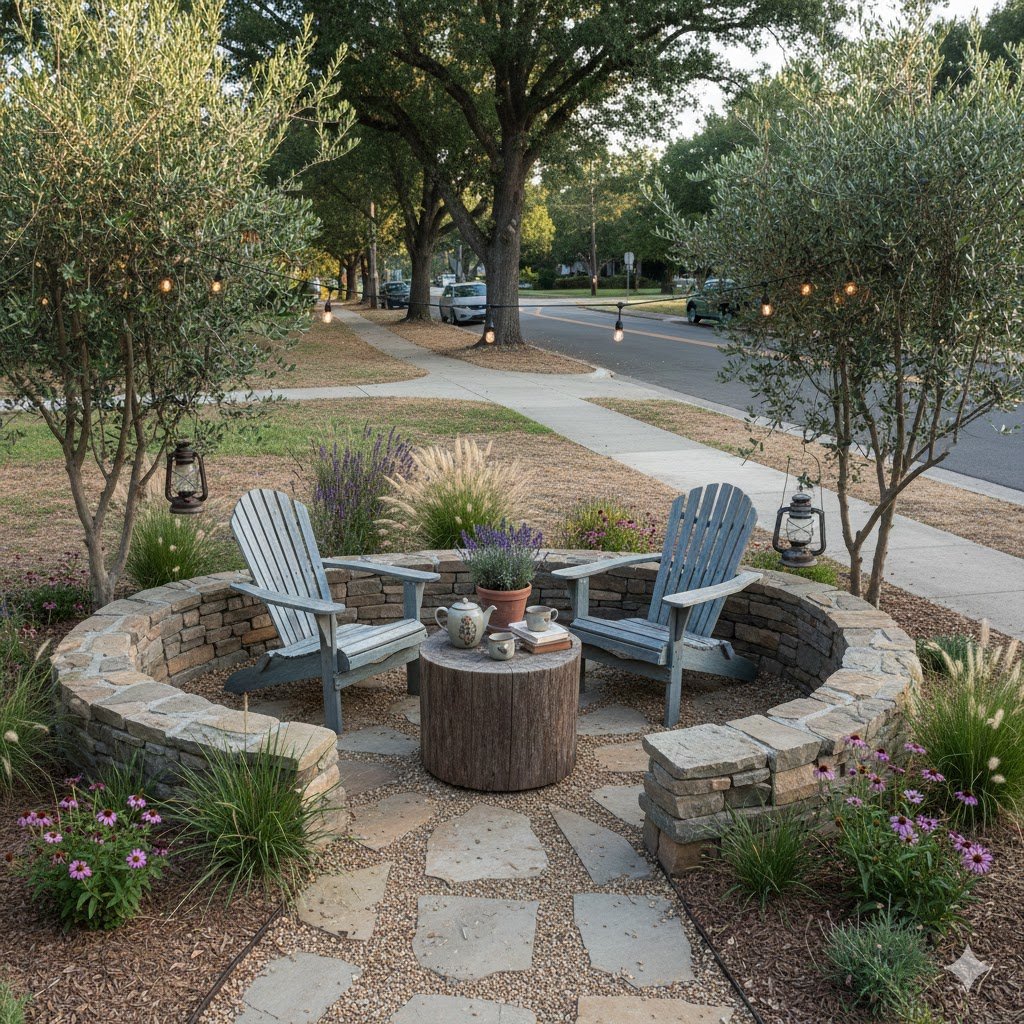
Most people have that awkward strip of grass between the sidewalk and their actual yard. Usually, it’s full of weeds or dying grass. I decided to reclaim mine. I put a small, sturdy bench right facing the street, surrounded by “hellstrip” plants—the tough stuff like Daylilies and Yarrow that can handle heat and road salt.
This is what I call the “Chatty Cathy” spot. It’s for when you want to be part of the neighborhood action. It’s perfect for watching the kids play in the cul-de-sac or waiting for the mailman. I’ve found that a simple metal bench works best here because it’s easy to wipe down after the street sweeper goes by.
Keep the landscaping low here. You don’t want to create a blind spot for cars pulling out of driveways. Stick to plants that stay under two feet tall. I made the mistake of planting tall sunflowers near my mailbox once; they looked great until I realized I couldn’t see oncoming traffic when I was trying to leave for work.
Bonus tip: Put a “Little Free Library” next to a sidewalk bench. It gives people a reason to stop, and it makes your home the most charming house on the block. I did this three years ago, and I’ve met more interesting people through book swaps than I ever did at the grocery store.
11. Creating a “Zen Corner” with Minimalist Seating
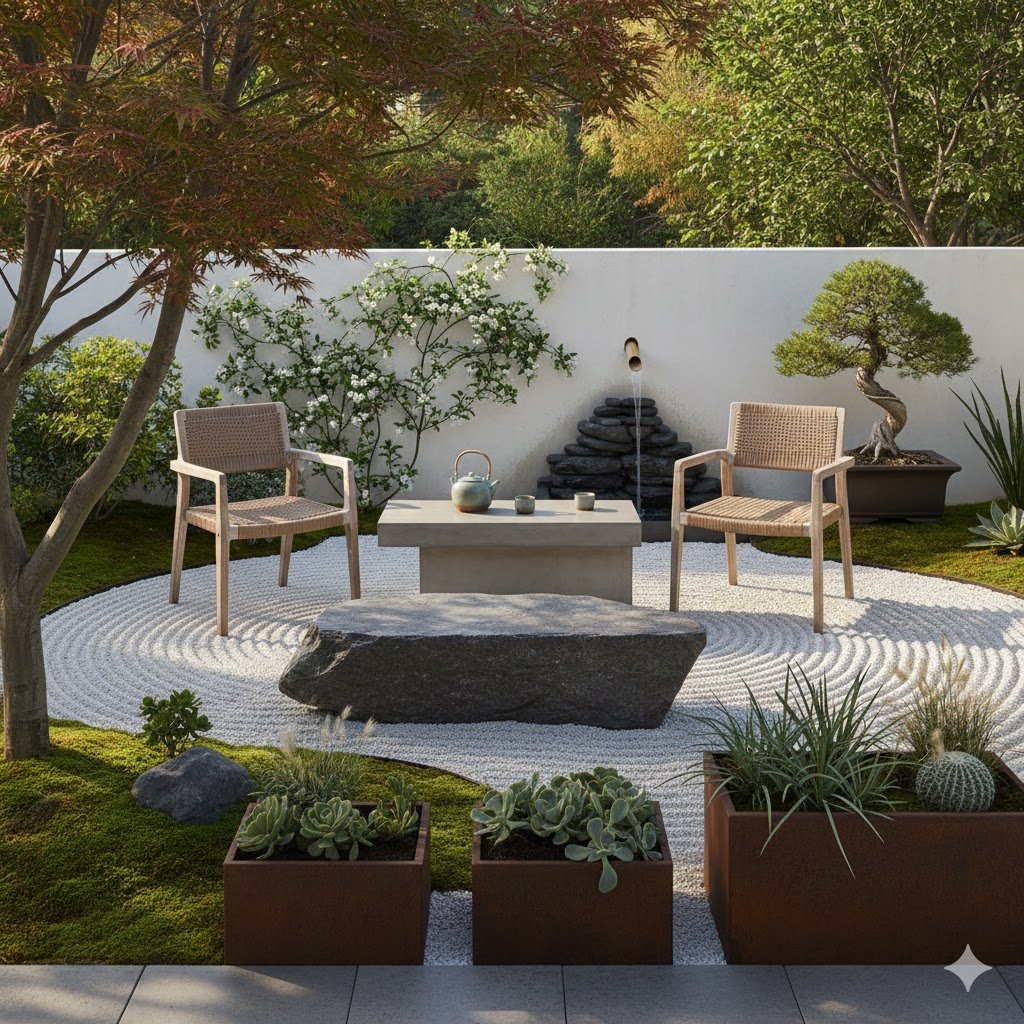
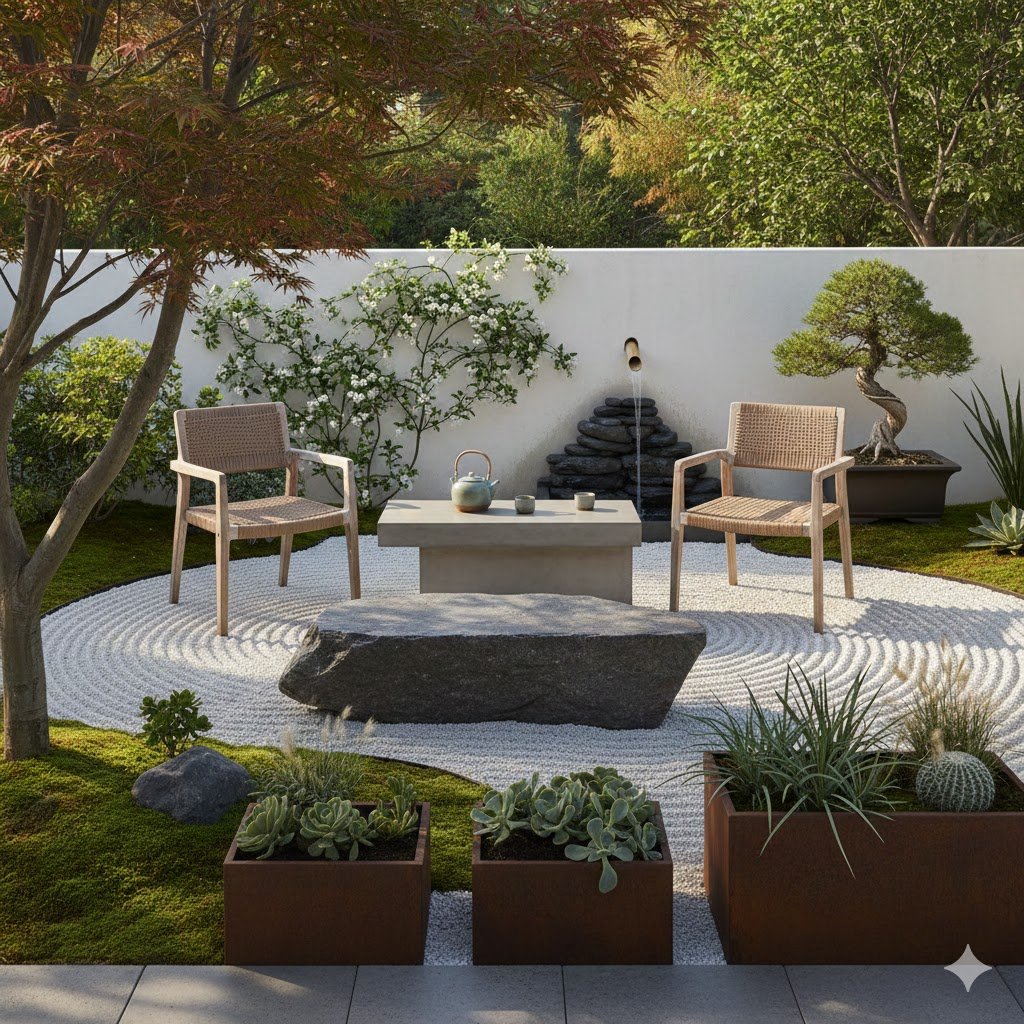
Sometimes you don’t want a social hub; you just want a place to hide from your family for twenty minutes. For this, I recommend a “Zen Corner.” This is a minimalist approach using one high-quality chair, a single large boulder for a “side table,” and a very limited plant palette (mostly greens and whites).
I have a corner like this tucked behind a large Boxwood hedge. I used a “gravity chair” that I can lean back in. There’s no lawn to mow here—just a thick layer of dark mulch and a few well-placed Japanese Forest Grasses that rustle in the wind. It’s my “reset” spot.
The key to a Zen space is removing “visual noise.” That means no plastic pots, no bright red mulch (please, never use red mulch), and no clashing colors. Stick to natural materials like wood, stone, and clay. Even the chair should be a neutral tone.
I’ve found that a wind chime—the deep-toned bamboo ones, not the high-pitched metal ones that sound like a kitchen accident—really completes the vibe. It covers the sound of the neighbor’s leaf blower and lets you pretend you’re in a remote mountain retreat.
Real Talk: What’s Not Worth Your Time (and Money)
I’ve spent a lot of money on things that ended up in the “free” pile on the curb. Here’s the honest truth:
- Cheap Plastic Furniture: It will fade in the sun, crack in the cold, and blow into your neighbor’s yard during a thunderstorm. Buy wood, metal, or high-quality resin.
- White Cushions: Unless you live in a vacuum, these will be gray within a month. Go with patterns or darker “earth” tones.
- Complicated Fountains: If it requires a plumber, don’t do it. The pumps break, the filters clog, and you’ll end up with a dry stone eyesore. Stick to “still water” bowls or solar-powered birdbaths.
- Mulch as a “Floor”: I tried using wood chips for a seating area once. It was okay for a week, then it started staining my shoes and getting tracked into the house. Mulch is for plants; gravel or stone is for people.
Parting Wisdom
Your front yard shouldn’t just be something you look at while you’re pulling into the driveway. It should be a place where you actually live. Start small—even just one chair and a flat rock for your coffee mug is a win. Once you experience the “magic” of a front yard sunset, you’ll never want to go back to sitting in the backyard alone.
What’s the biggest thing stopping you from sitting in your front yard? Is it the privacy, the lack of space, or just not knowing where to start? Let me know in the comments below—I’ve probably made the mistake you’re worried about, and I’m happy to help you avoid it!