
My first balcony garden was a mess. Pots tipped over in the wind. Basil fried in the sun. Cherry tomatoes staged a full rebellion and died dramatically in week three. I remember standing there with a watering can thinking, Why does Pinterest make this look so easy?
If you’ve got a small balcony and big gardening dreams, you’re in the right place. Container vegetable gardening for beginners is part joy, part chaos, and part learning things the hard way. I’ve killed more plants than I care to admit, and I’ve finally figured out what actually works in tight spaces.
These are my 14 favorite container vegetable garden ideas for beginners with small balconies—tested through heat waves, forgotten watering days, and one summer when my zucchini tried to annex the neighbor’s chair.
1. Grow Salad Greens in Shallow Containers
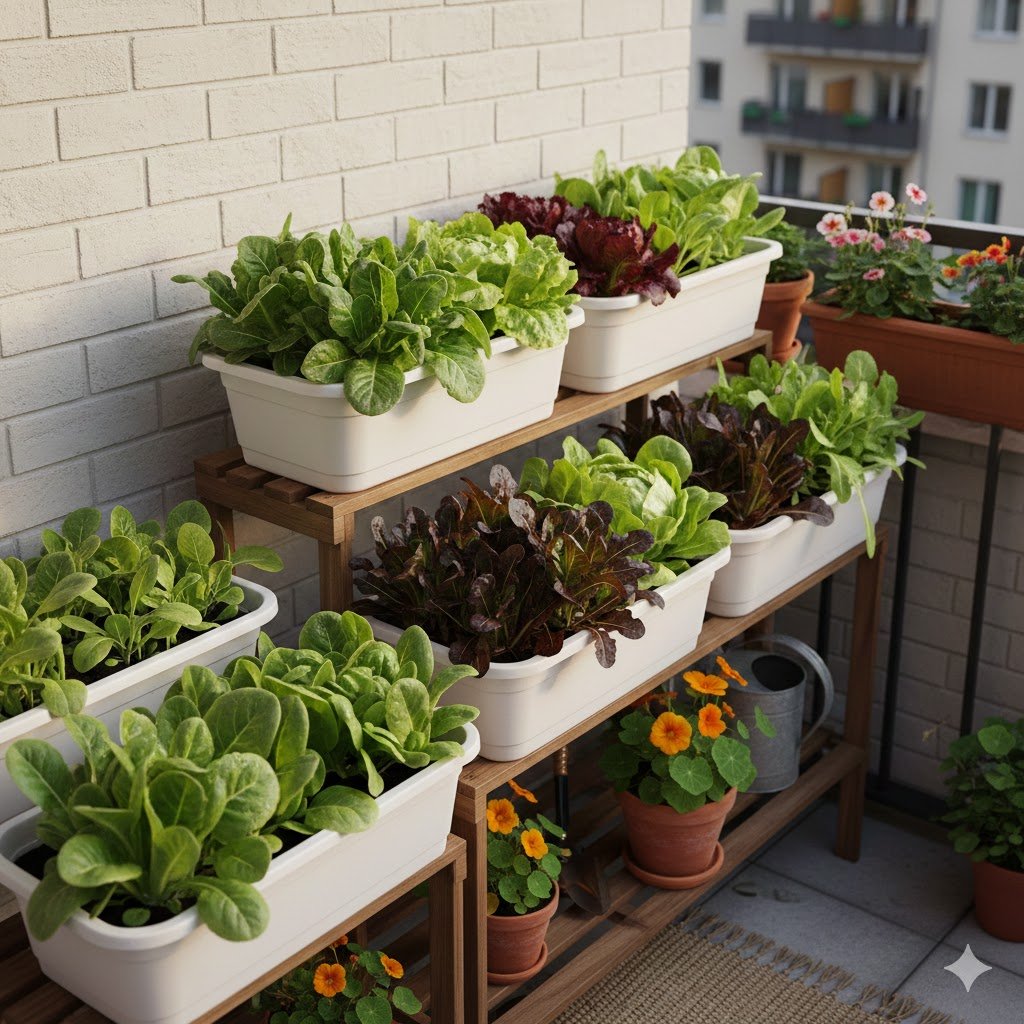
If you want fast success, start with leafy greens. Lettuce, arugula, spinach, and mixed salad greens are the friendliest plants I know. They don’t need deep soil, they grow quickly, and they forgive mistakes.
I once planted salad greens in an old storage bin with holes drilled in the bottom. It looked ridiculous, but it produced enough lettuce for weeks. That’s when I learned shallow containers work perfectly fine for greens as long as drainage exists.
Place them where they get morning sun and afternoon shade. Harvest often. Cut the outer leaves instead of pulling the whole plant. Your balcony turns into a mini salad bar, and that feels like wizardry the first time it happens.
2. Cherry Tomatoes in 5-Gallon Buckets
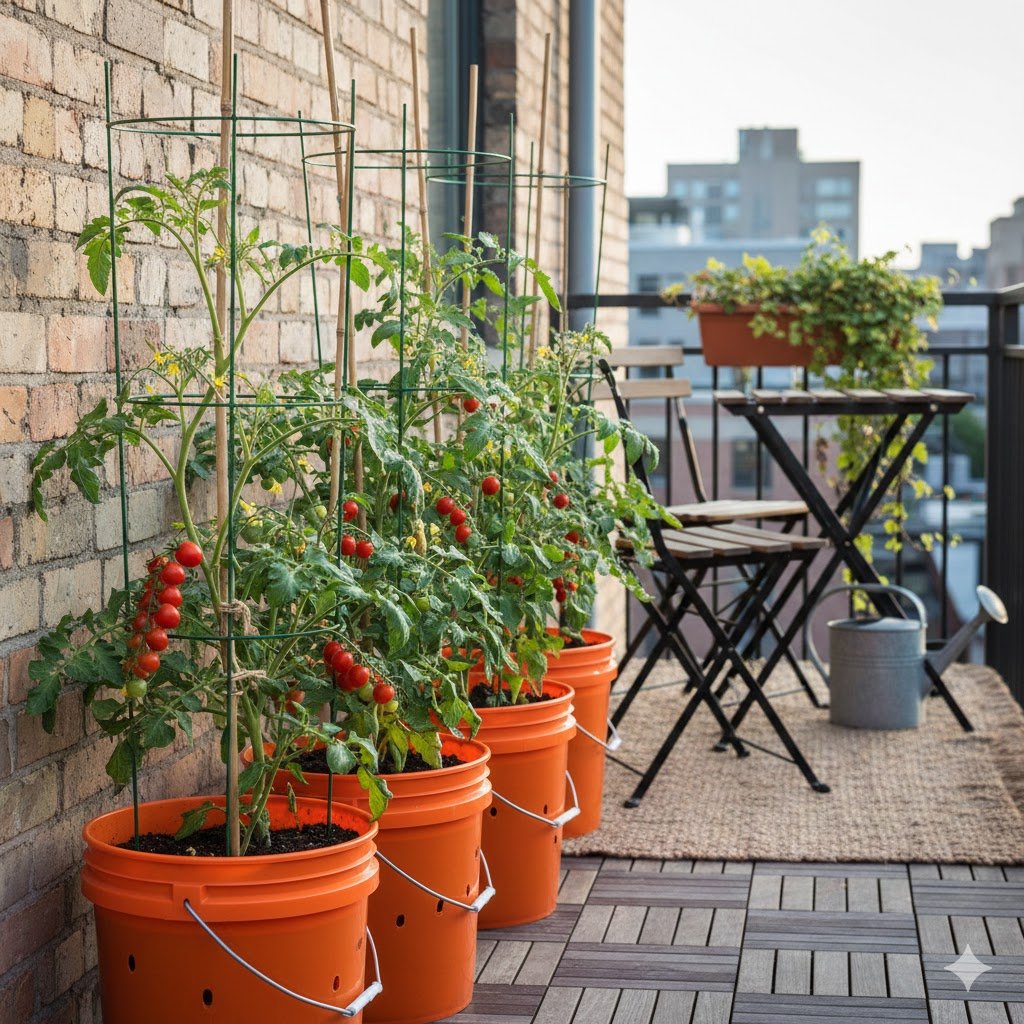
Big tomatoes are drama queens. Cherry tomatoes are your laid-back friend who shows up and does the job. For beginners, they’re the smartest tomato choice for containers.
I tried growing beefsteak tomatoes in a small pot once. It ended with a sad, leggy plant and three tomatoes the size of marbles. Cherry tomatoes, on the other hand, thrive in buckets and reward you with dozens of fruits.
Use a 5-gallon bucket with holes drilled in the bottom. Add a sturdy stake or cage early. Water consistently or the plant will punish you with split tomatoes. Ask me how I know.
3. Herbs in Window Boxes
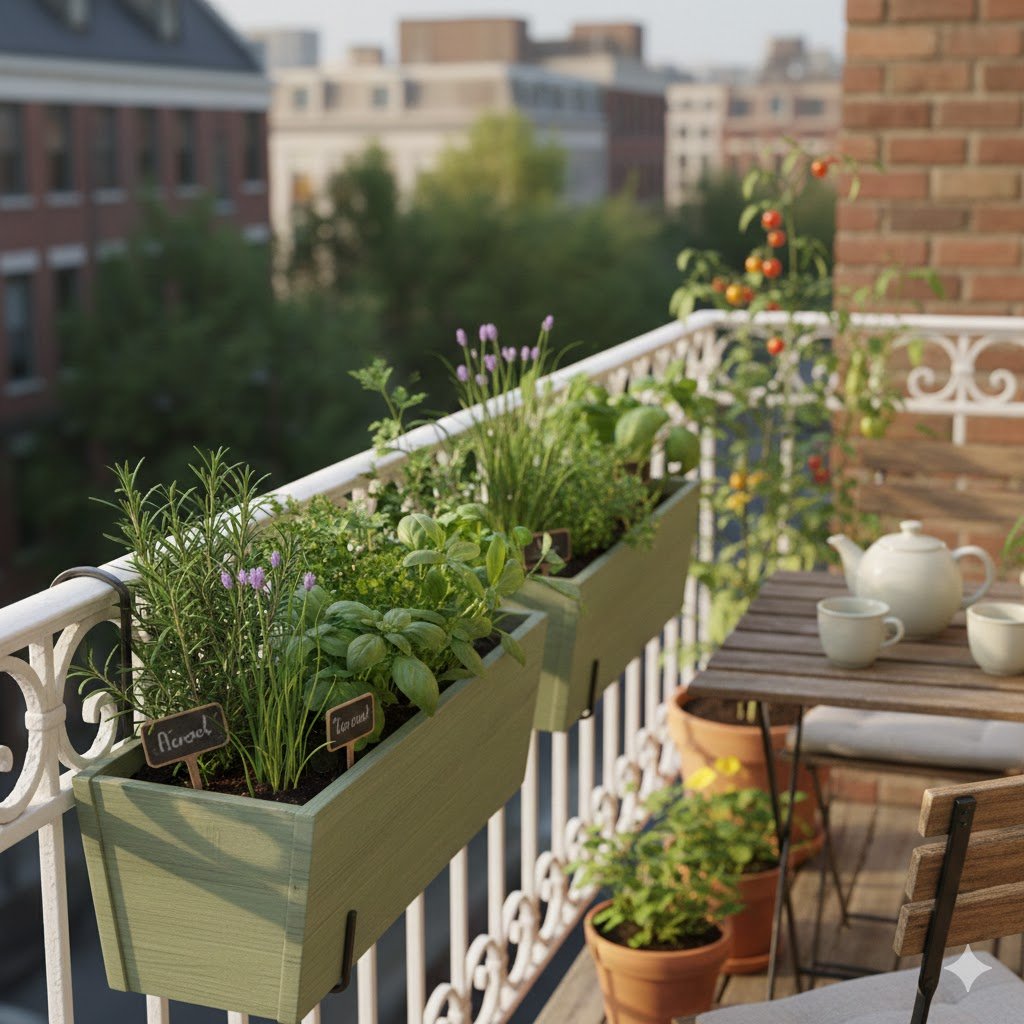
Herbs are the gateway drug to balcony gardening. Basil, parsley, cilantro, thyme, and chives love containers and don’t take much space.
I once crammed six herbs into one box and learned a hard lesson: basil will bully everyone else. Now I group herbs by water needs—Mediterranean herbs in one box, thirsty herbs in another.
Keep herbs near your kitchen door if possible. You’ll actually use them. There’s something deeply satisfying about snipping basil for pasta like you’re starring in your own cooking show.
4. Peppers in Deep Pots
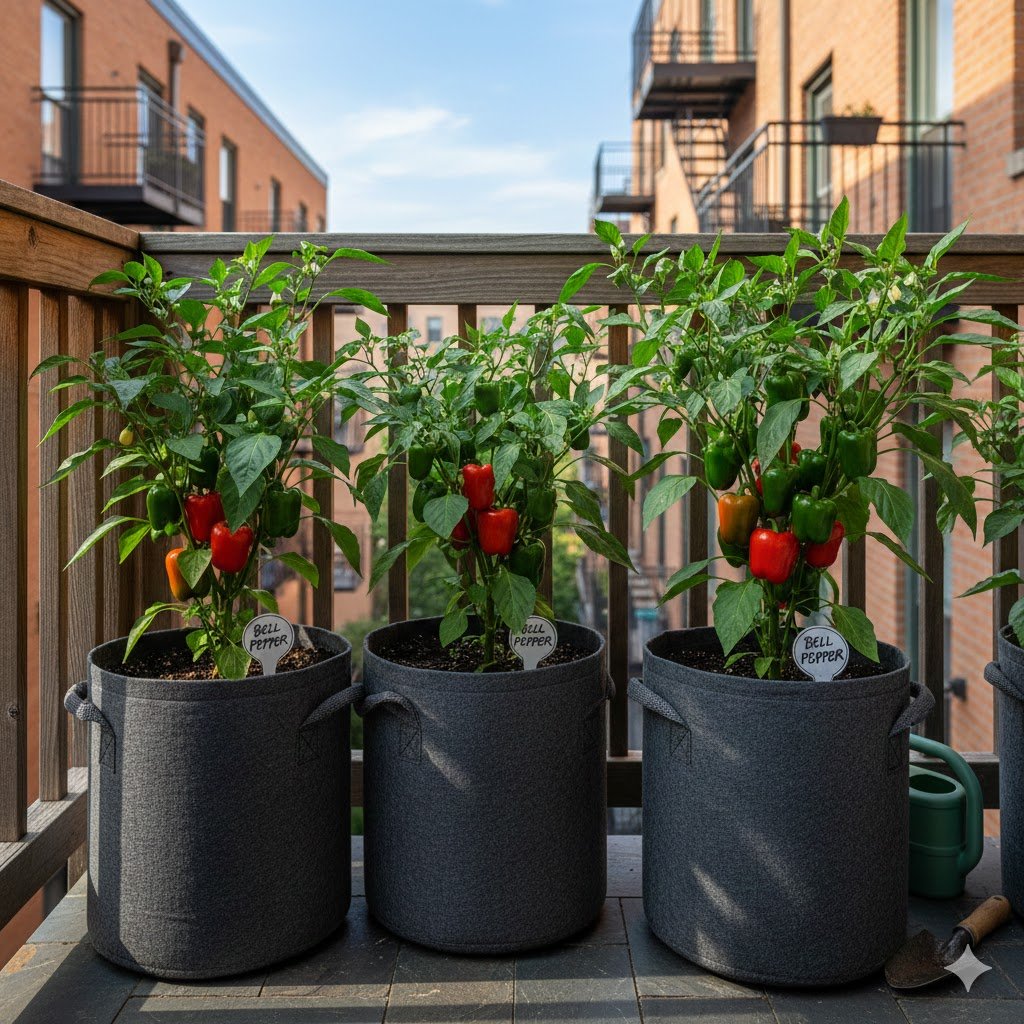
Peppers love heat. Balconies love heat. This is a beautiful friendship.
Bell peppers, jalapeños, and mini sweet peppers all do great in containers with deep soil. They like steady watering and full sun. Skip tiny pots—pepper roots want space.
One summer I underestimated how heavy pepper plants get when loaded with fruit. A windstorm knocked over half my pots like bowling pins. Now I use heavier containers or place them against a wall.
5. Vertical Gardening with Hanging Grow Bags
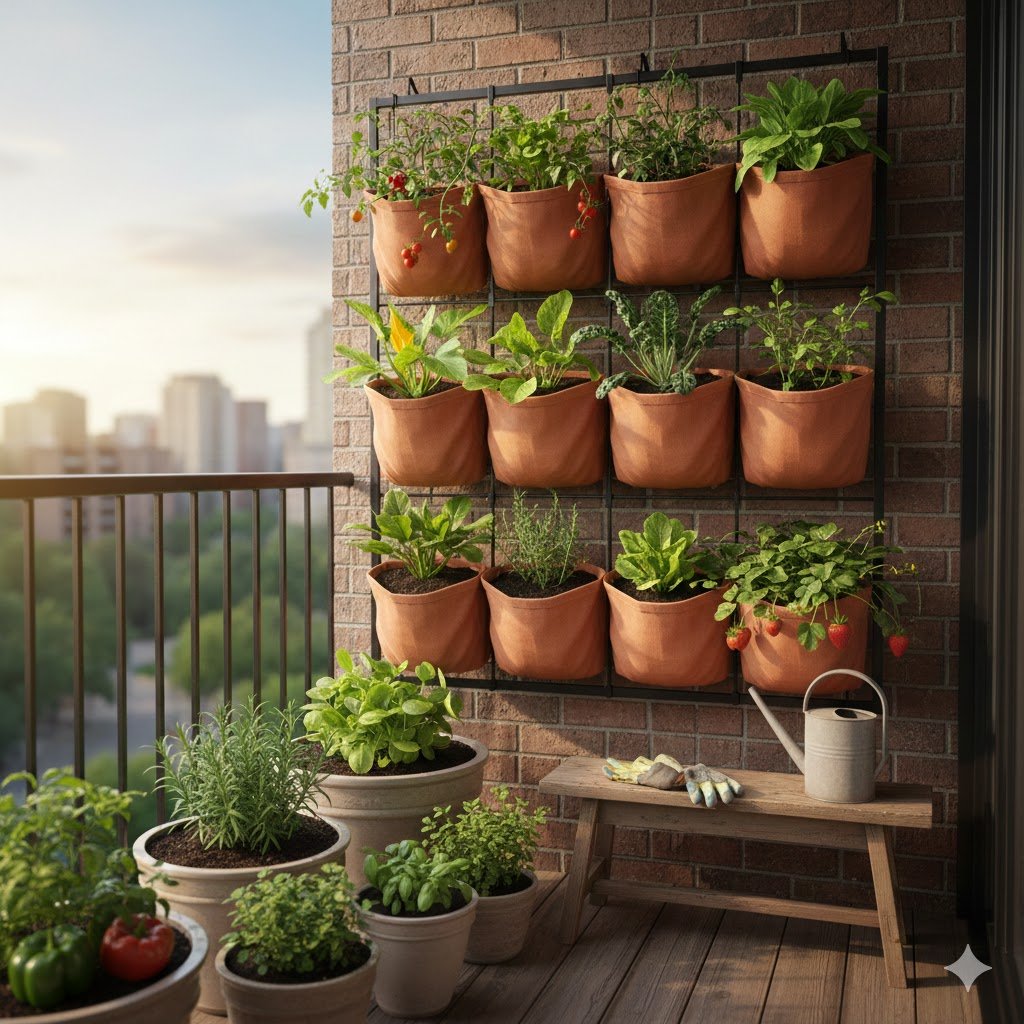
When floor space runs out, go up. Hanging grow bags are perfect for balconies. Strawberries, lettuce, and herbs thrive in them.
I used shoe organizers once. Yes, actual shoe organizers. It worked shockingly well until I overwatered and created a waterfall situation for my downstairs neighbor.
Hang them on a sunny wall or railing and plant light feeders. Water carefully. Gravity is unforgiving.
6. Radishes for Quick Wins
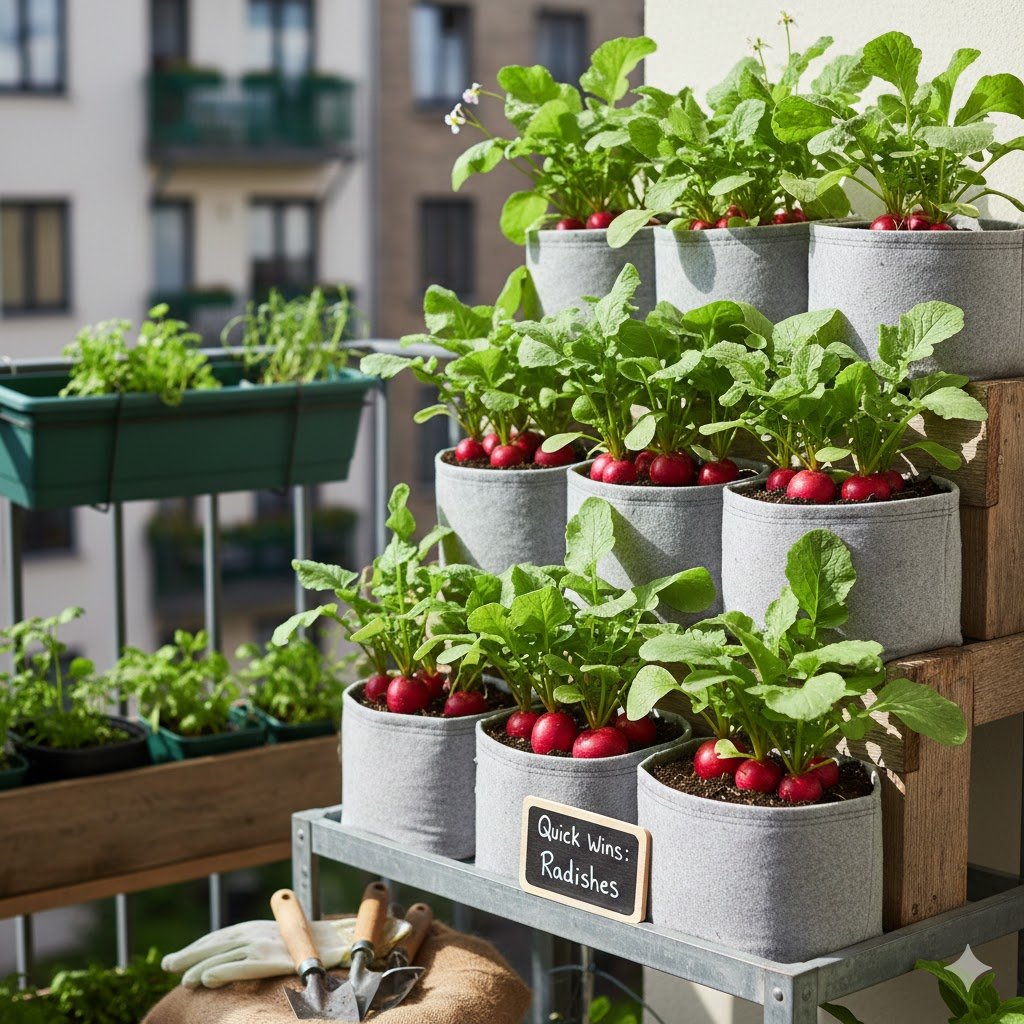
Radishes are the sprinters of the vegetable world. You plant them and three weeks later you’re harvesting.
They grow well in shallow containers and don’t demand much care. Kids love them. Impatient adults love them more.
I plant radishes whenever I need a confidence boost. They remind me that gardening doesn’t always require months of waiting and prayer.
7. Bush Cucumbers in Containers
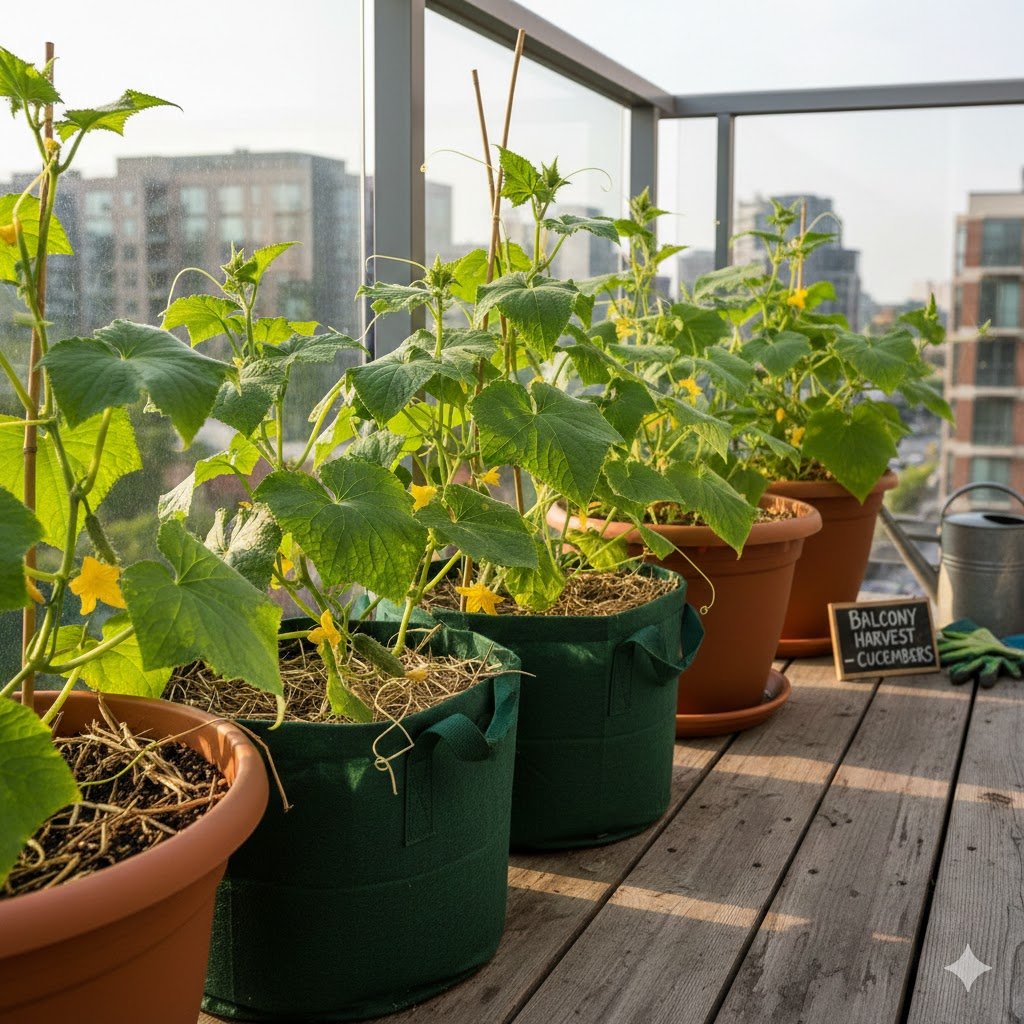
Forget vining cucumbers unless you want your balcony turned into a jungle. Bush cucumbers stay compact and behave themselves.
I once planted a regular cucumber plant without reading the label. By August it had wrapped around my railing like it was auditioning for a jungle movie.
Choose bush varieties and give them a small trellis. Keep soil evenly moist and harvest often. Young cucumbers taste better and keep the plant productive.
8. Carrots in Deep Buckets
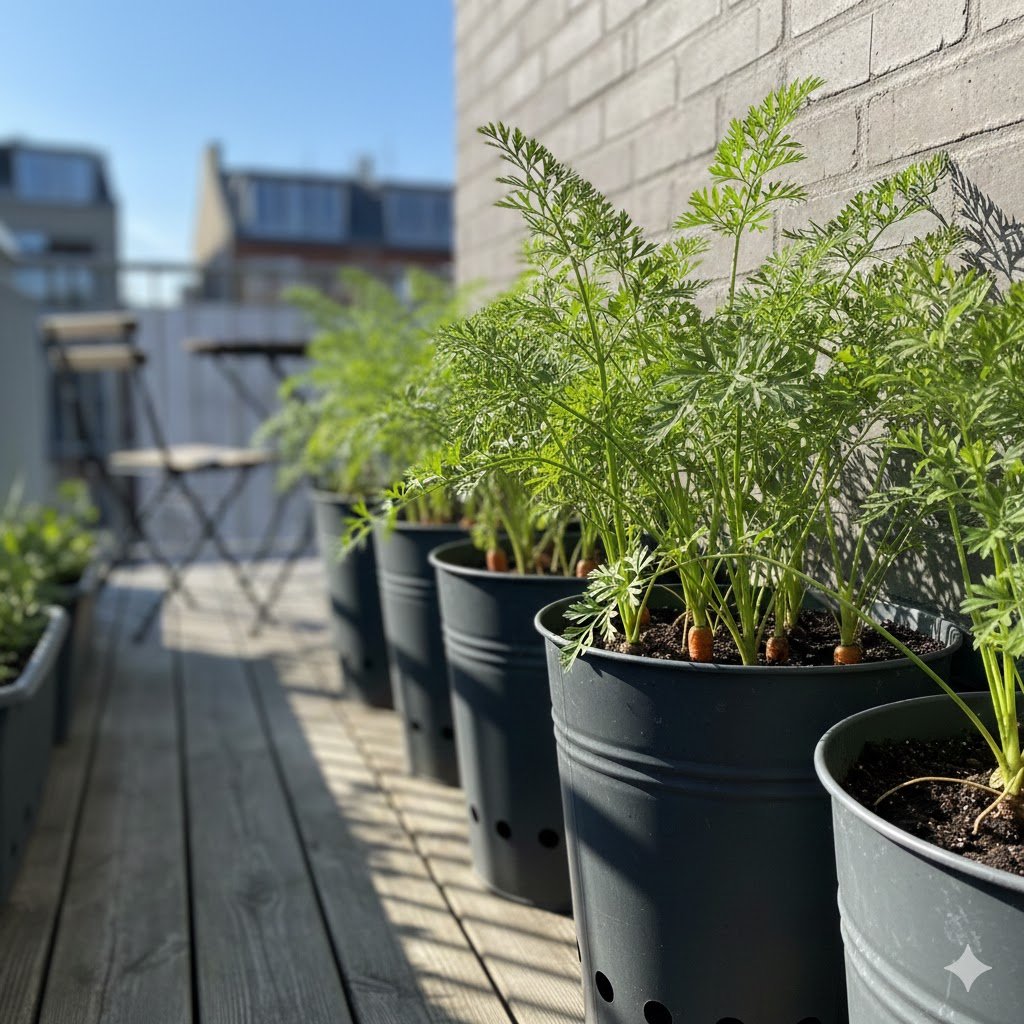
Carrots need depth, not width. Tall containers work beautifully for them.
I used an old trash can once and grew the straightest carrots I’ve ever seen. It felt like cheating nature.
Use loose soil with no rocks. Thin seedlings early or you’ll get carrot knots instead of carrots. Patience here pays off big time.
9. Green Onions from Kitchen Scraps
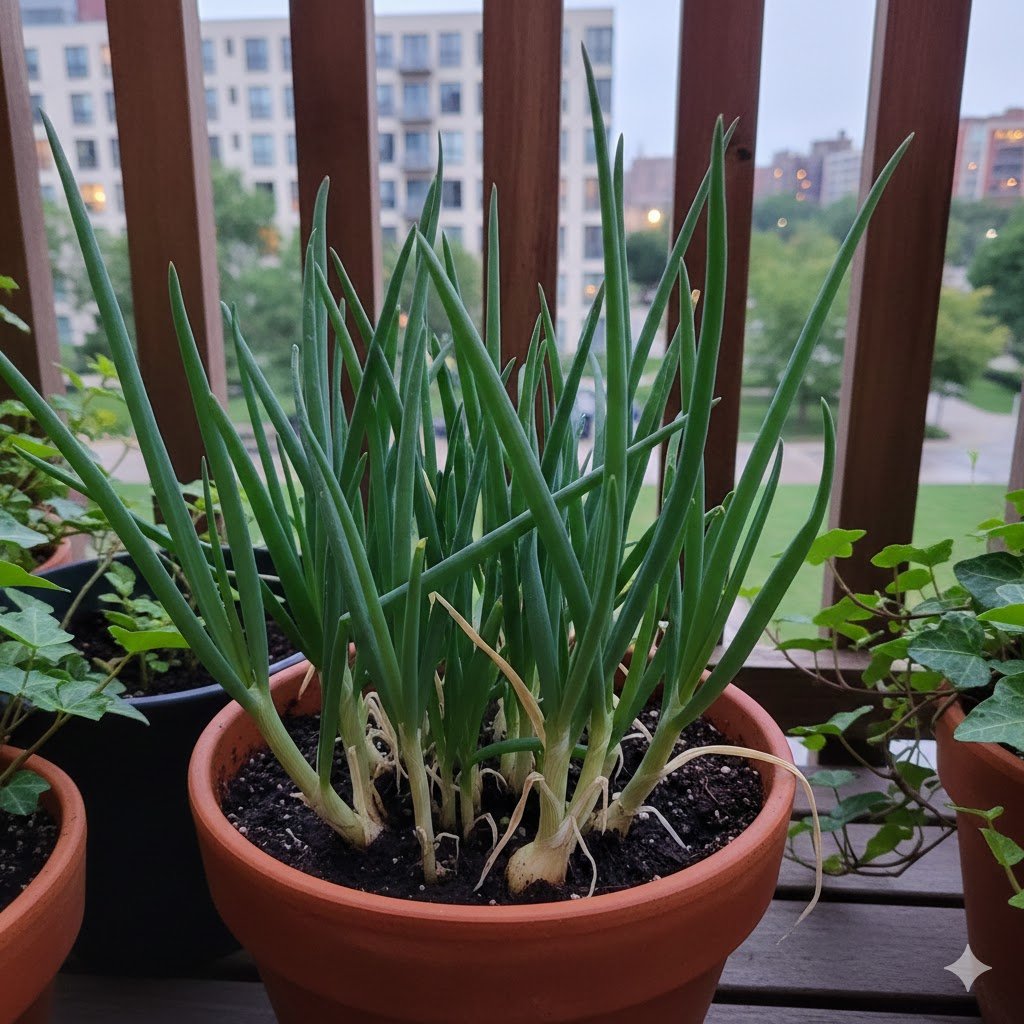
This one feels like magic. Save the root ends of green onions, plant them in soil, and they grow again.
I keep a pot of green onions by my balcony door. I snip what I need and they keep coming back like tiny vegetable zombies.
They don’t need much sun and tolerate mistakes well. Perfect beginner project.
10. Dwarf Beans in Containers
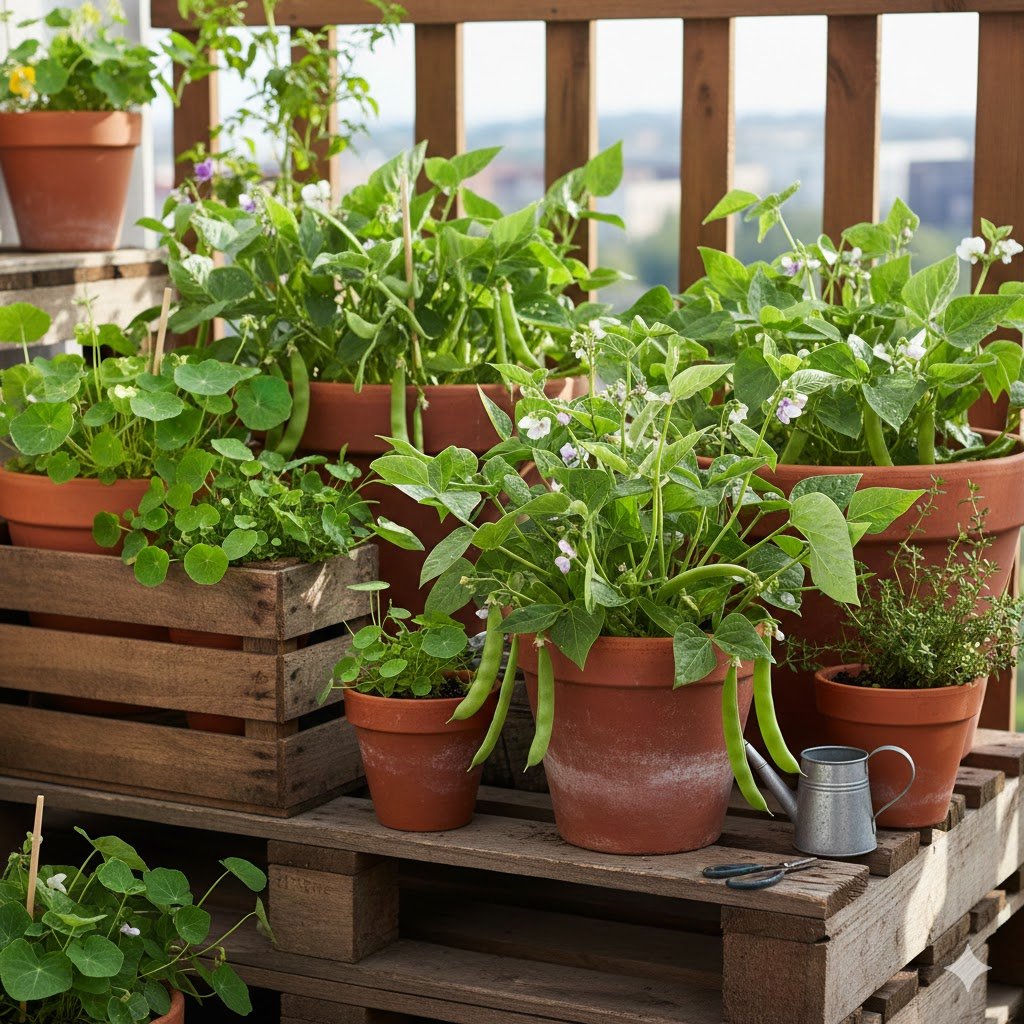
Bush beans are generous plants. They grow fast, produce heavily, and don’t need fancy care.
I once planted too many and spent weeks giving beans away to anyone who made eye contact. It was a good problem.
Give them sun and regular water. Skip pole beans unless you enjoy wrestling with vines on a balcony.
11. Spinach for Cooler Seasons
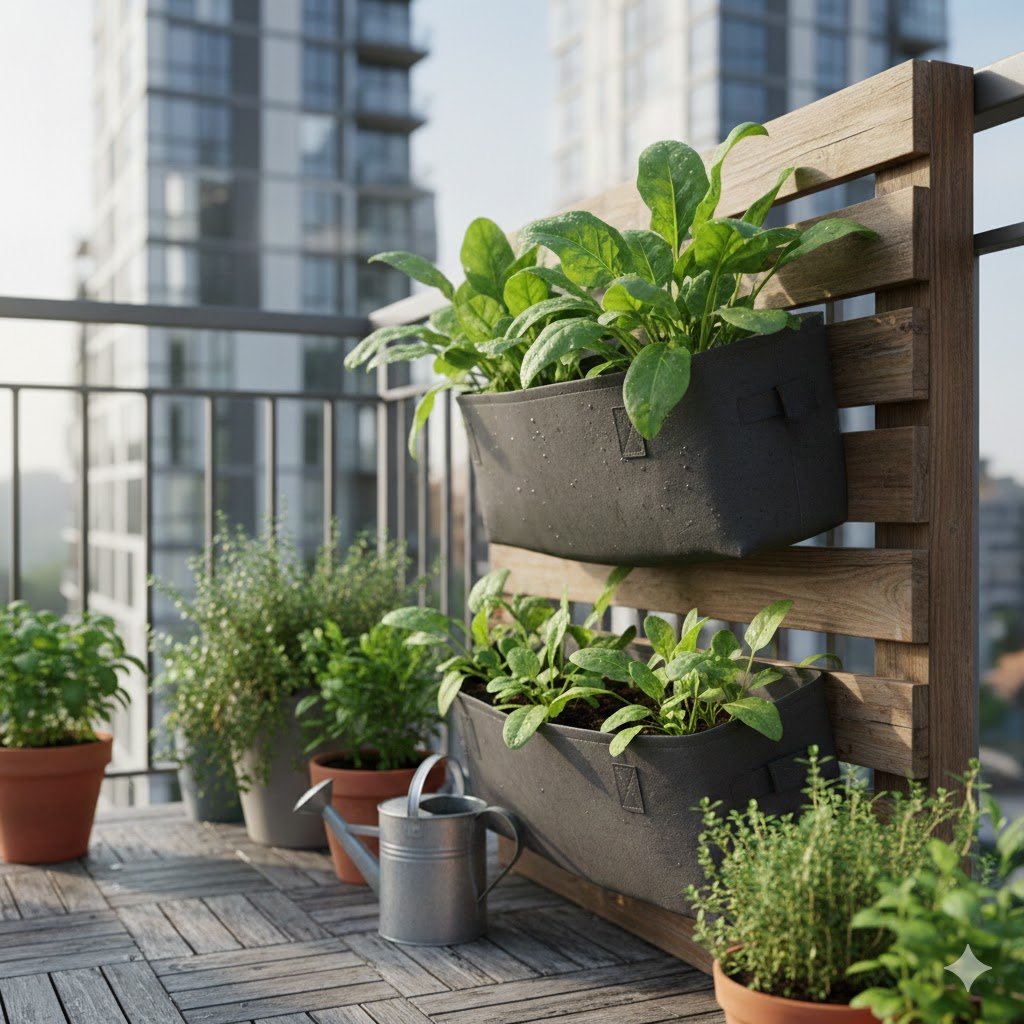
Spinach thrives in spring and fall when other plants quit. It grows fast and fits nicely into medium pots.
I grow spinach when the weather cools and my tomatoes look exhausted. It keeps my garden alive longer into the year.
Shade it from harsh sun and harvest young leaves. Older leaves get bitter, and nobody needs bitter spinach in their life.
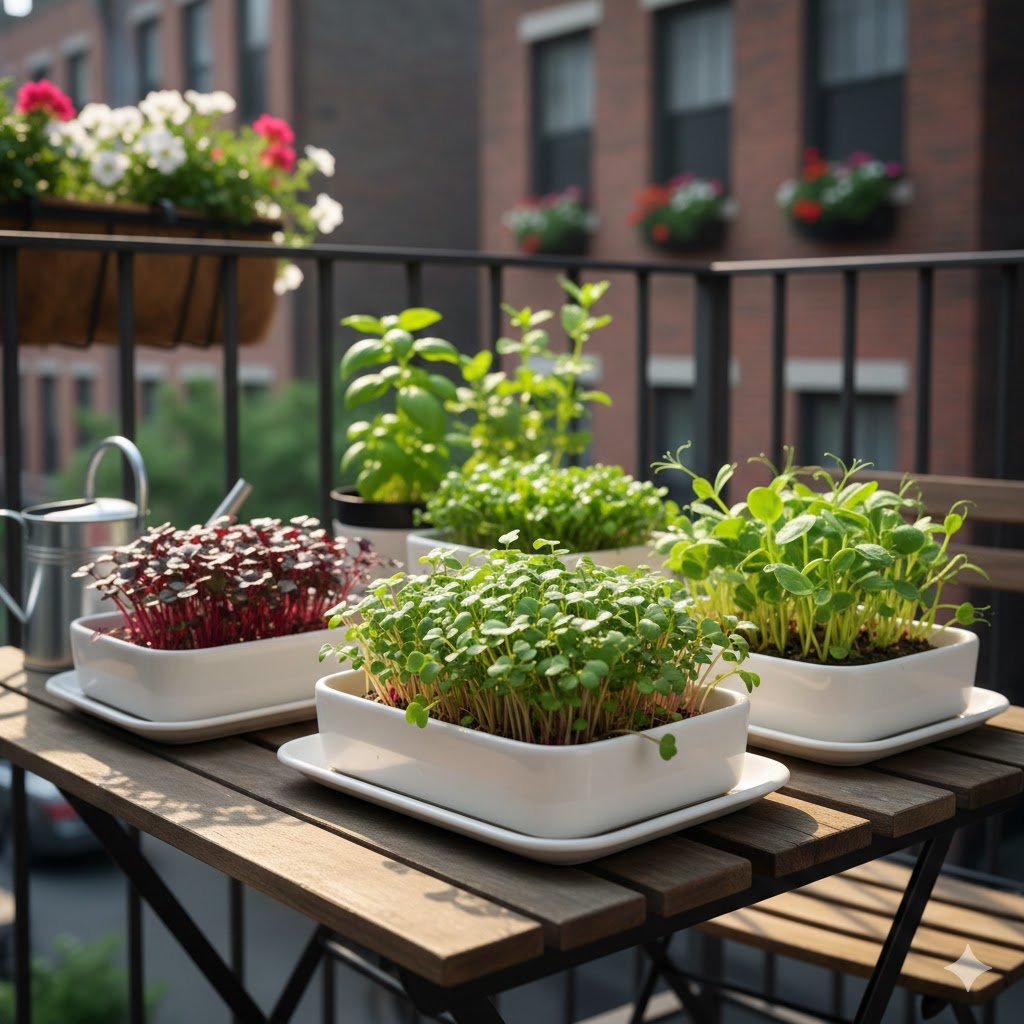
12. Microgreens on a Tabletop
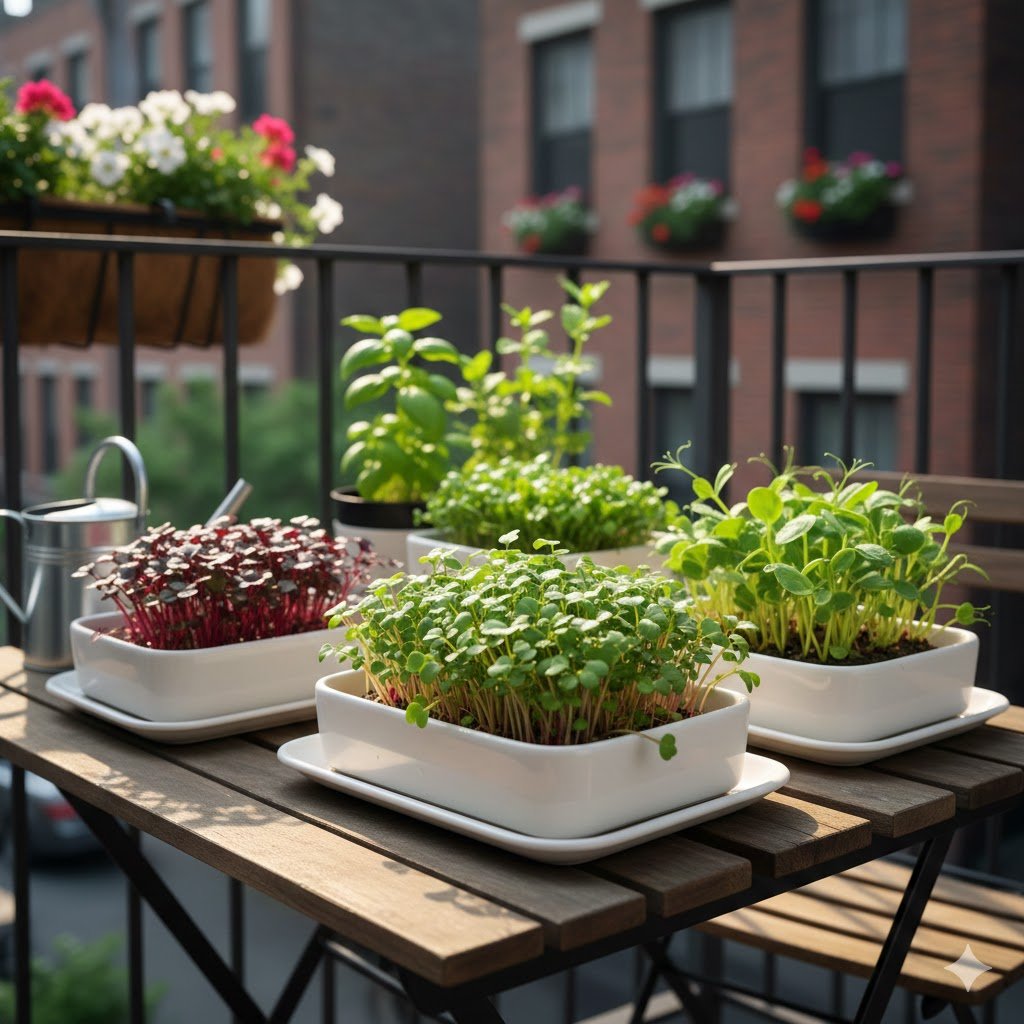
Microgreens don’t even need a balcony. A small table or shelf works fine.
I grow them in shallow trays and harvest with scissors. It feels like running a tiny farm inside my apartment.
They’re fast, cheap, and foolproof. If everything else fails, microgreens will still love you.
13. Mixed Veggie Containers (One Pot Meals)
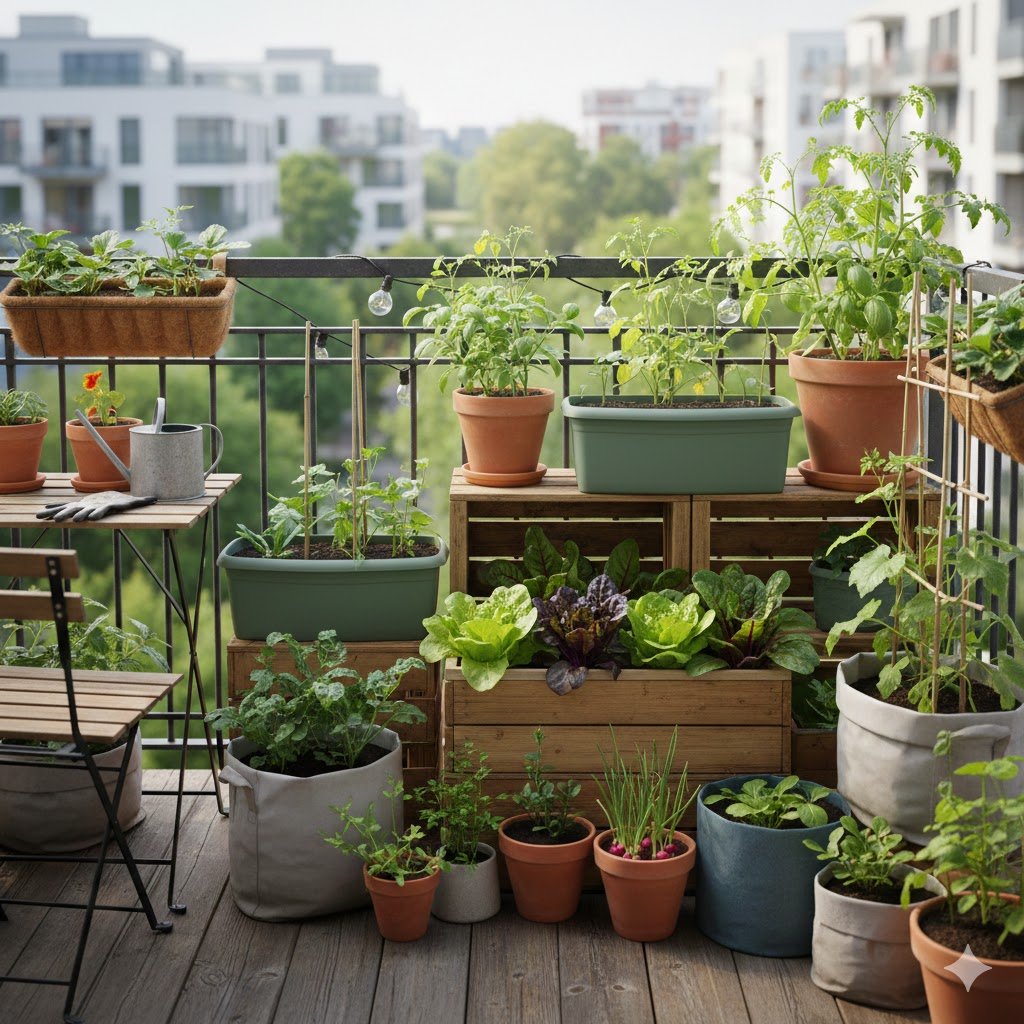
Instead of one plant per pot, mix compatible veggies. Lettuce with radishes. Herbs with greens. Carrots with onions.
I once planted a “taco pot” with lettuce, cilantro, and jalapeños. It was ridiculous and wonderful.
Just match plants with similar water and sun needs. Don’t mix slow growers with aggressive plants unless you enjoy chaos.
14. Bonus: Self-Watering Containers for Forgetful Gardeners
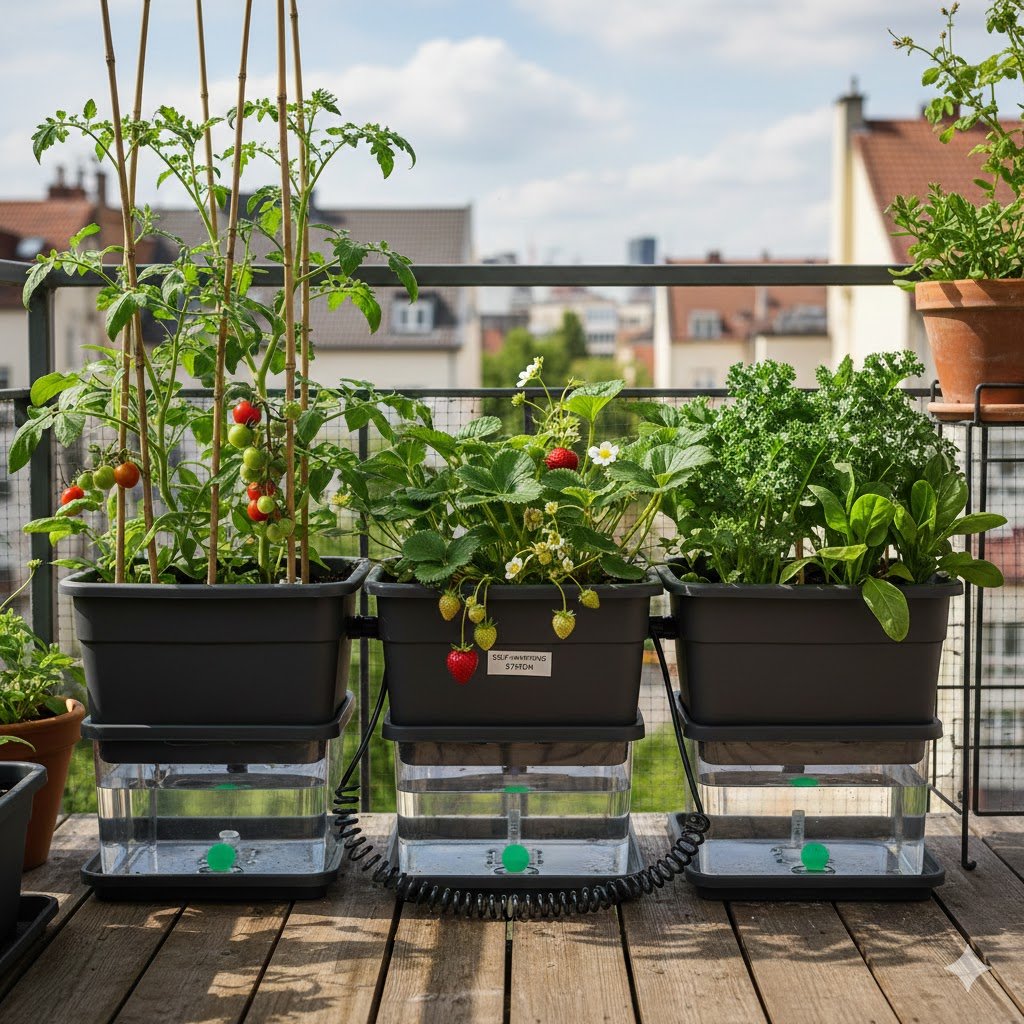
This one saved me after I forgot to water during a heat wave and lost half my plants.
Self-watering containers keep soil consistently moist and reduce stress for beginners. They cost more, but they pay for themselves in surviving plants.
If you travel or forget easily, these are worth it. I consider them training wheels for balcony gardening.
Real Talk: What Goes Wrong (and What’s a Waste of Time)
Overcrowding is the biggest mistake I see. Stuffing ten plants into one pot feels efficient but ends badly. Plants need breathing room.
Tiny decorative pots are another trap. They dry out too fast and starve roots. Pretty containers mean nothing if plants die inside them.
Fancy fertilizers? I’ve found most of them are a total waste of money, even if they look impressive on store shelves. Good soil and regular watering beat expensive bottles every time.
Wind is the silent killer on balconies. Secure your pots. Heavy containers matter more than cute ones.
And please, don’t plant pumpkins on a balcony. I tried. It was a mistake I still laugh about.
Parting Wisdom from a Dirt-Stained Neighbor
Start small. Pick three or four plants and learn them well. Container vegetable gardening for beginners works best when you keep things simple and build confidence.
You don’t need perfection. You need sunlight, soil, water, and patience. Everything else is just bonus.
Your balcony can feed you. That still amazes me every season.
What are you thinking of growing first? Tomatoes? Herbs? Something weird and brave? Drop your questions or ideas in the comment box below—I’d love to hear what you’re planning and help you avoid the same dumb mistakes I already made.