
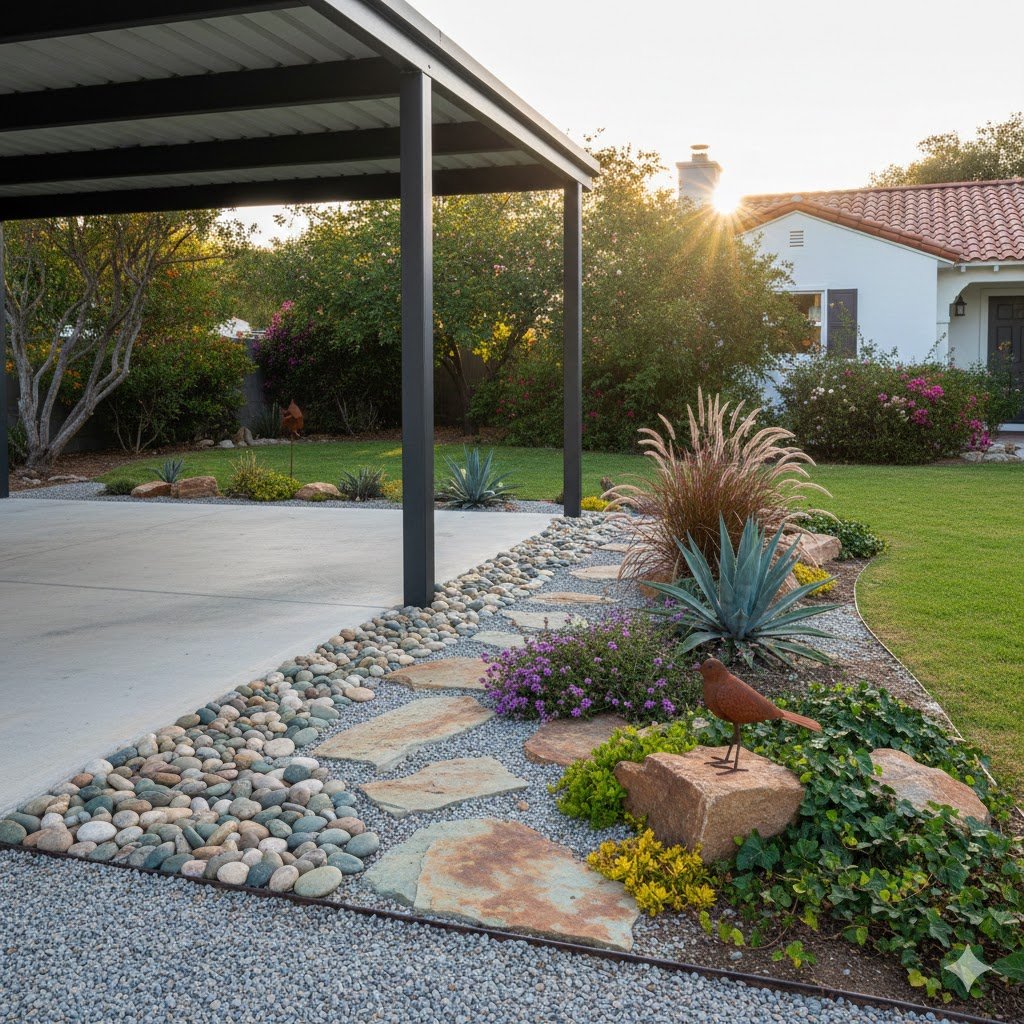

Most carports look like an afterthought—a sad metal or wooden umbrella for your car that somehow manages to collect every rusted rake and flat tire you own. I’ve lived in houses where the carport was basically a glorified graveyard for failed DIY projects, and let me tell you, it kills your curb appeal faster than a brown lawn. It’s that awkward middle ground between a garage and a porch, and if you don’t give it some love, it just looks like a construction site that the builder forgot to finish.
My own carport journey started with a disaster. I once tried to grow Wisteria over the beams because I saw a photo of a cottage in France and got overconfident. Within three years, that “pretty vine” had actually started lifting the metal roofing panels and sent a stray runner into my kitchen window screen. I spent a whole weekend with a hacksaw and a lot of regrets. I’ve learned the hard way that you need a plan that doesn’t involve your house being eaten by greenery. We’re going to make your parking space look like it actually belongs to the house.
1. Using Climbing Plants for Carport Pillars
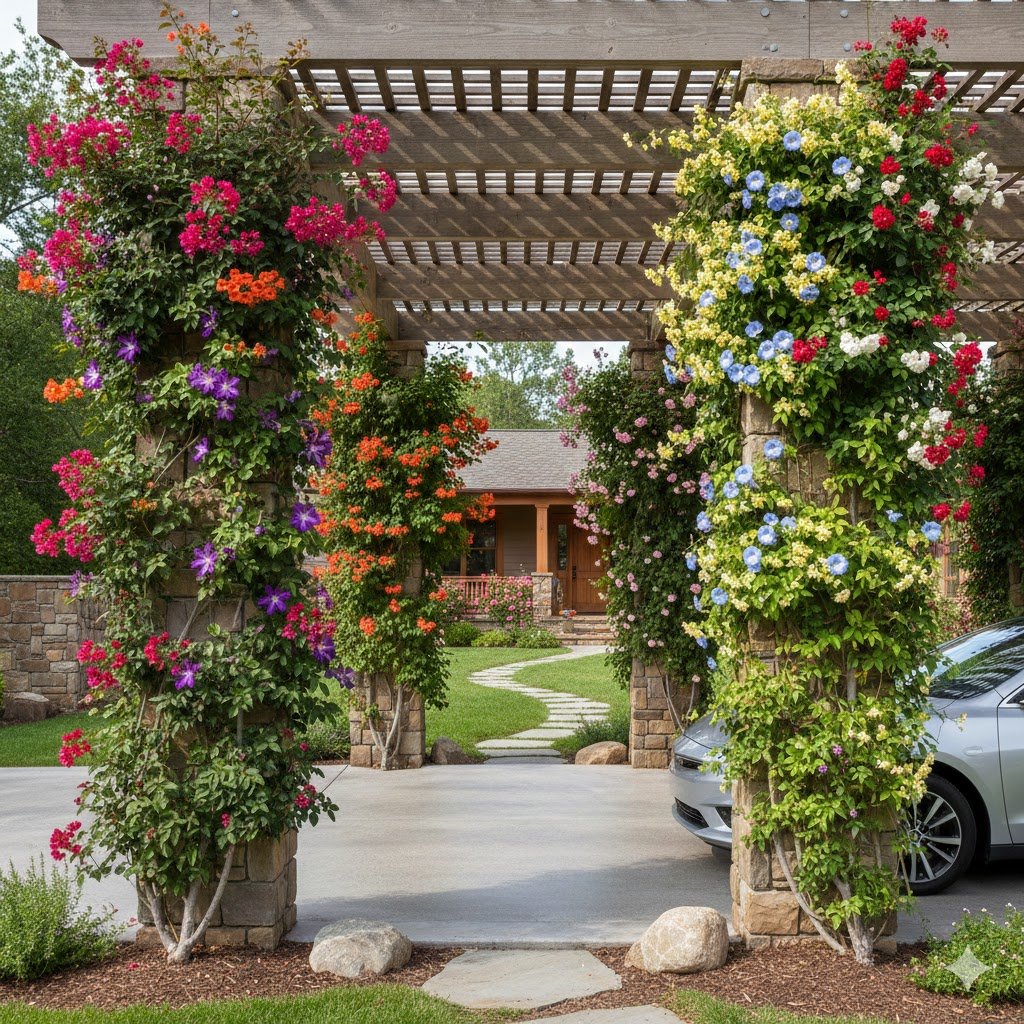
Vertical interest is the fastest way to turn a structural post into a design feature. Most people see those 4×4 posts as eyesores, but I see them as a free trellis. Instead of leaving the metal or wood bare, you can train a vine to soften the sharp angles. It creates a “living wall” effect that keeps the area cooler during those brutal July afternoons when the asphalt feels like a frying pan.
I am a huge advocate for Clematis. It’s not as aggressive as Wisteria, so it won’t try to dismantle your home while you’re sleeping. It comes in a thousand colors, and it clings with little tendrils that don’t dig into the wood. I once planted a “Jackmanii” variety at the base of my neighbor’s carport, and by mid-summer, it was a purple explosion that hid the rusted bolts perfectly. Just make sure you give it a bit of bird netting or wire to grab onto.
Avoid English Ivy at all costs. I’ve found that ivy is a total waste of time and a massive liability, even if it looks classic on Pinterest. It traps moisture against the structure, which leads to rot, and it provides a highway for spiders and ants to move directly into your car. If you want that green look without the structural damage, go with Star Jasmine. It smells like a dream and stays green all year in many climates.
The trick to making this look intentional is the “ground-to-sky” transition. Don’t just stick a plant in the dirt and hope for the best. Dig a hole twice as wide as the root ball and mix in some good compost. If your carport is surrounded by concrete, you can use a large, heavy ceramic pot at the base of each pillar. Just make sure the pot is heavy enough that you don’t knock it over every time you swing the car door open.
2. Low Maintenance Foundation Plants for Carport Borders
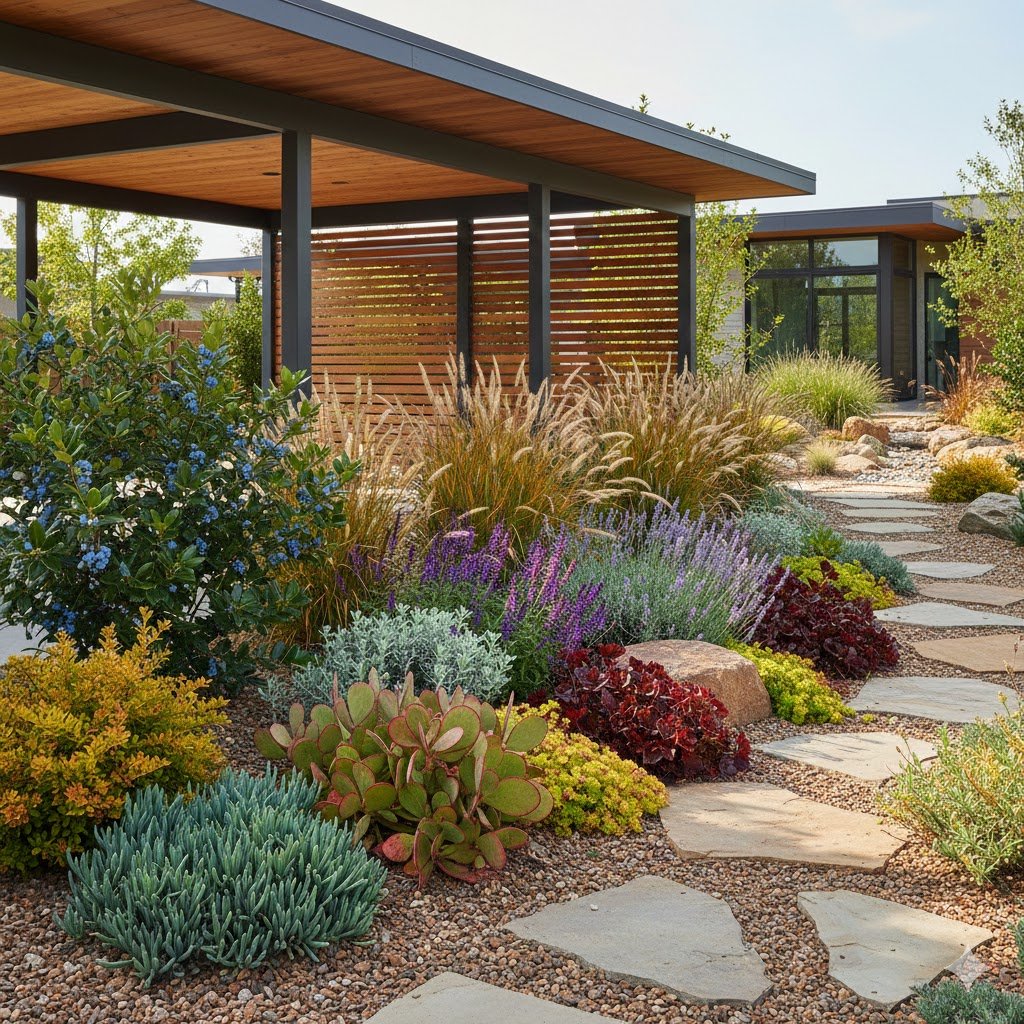
The base of your carport is usually a “no-man’s land” of gravel and weeds. This is the perfect spot for foundation plantings that can handle a bit of neglect and the occasional puff of car exhaust. You want something hardy that doesn’t mind a little heat radiating off the driveway. Boxwoods are the “old reliable” here, but they can be a bit boring if you don’t spice them up with something more textured.
I’m a big fan of using Ornamental Grasses like Little Bluestem or Fountain Grass. They provide movement, which is a nice contrast to the static, boxy shape of a carport. Plus, they hide the lower part of the structure that might be stained or ugly. I remember the summer my zucchini took over the entire ZIP code; I had planted them too close to the driveway and ended up having to dodge giant squash just to get to my driver’s side door. Don’t plant edibles here—stick to things that stay in their lane.
When you’re choosing your border plants, think about “evergreen structure.” You don’t want the area to look like a barren wasteland in January. Mixing in some Dwarf Yaupon Holly or a few Hostas (if you have shade) keeps the curb appeal high year-round. I’ve found that variegated Liriope is basically bulletproof. It survives the heat, it doesn’t mind the occasional footstep, and it spreads just enough to choke out the weeds without becoming a nuisance.
The secret “pro” move is to leave a small gap between the plants and the actual carport frame. This isn’t just for airflow; it’s so you can get a broom or a hose in there to clean out the leaves and spiderwebs that inevitably accumulate. If you plant things right up against the edge, you’ll end up with a compost pile of dead leaves that eventually rots your siding or wood trim.
3. Installing Modern Privacy Screens with Lattice and Vines
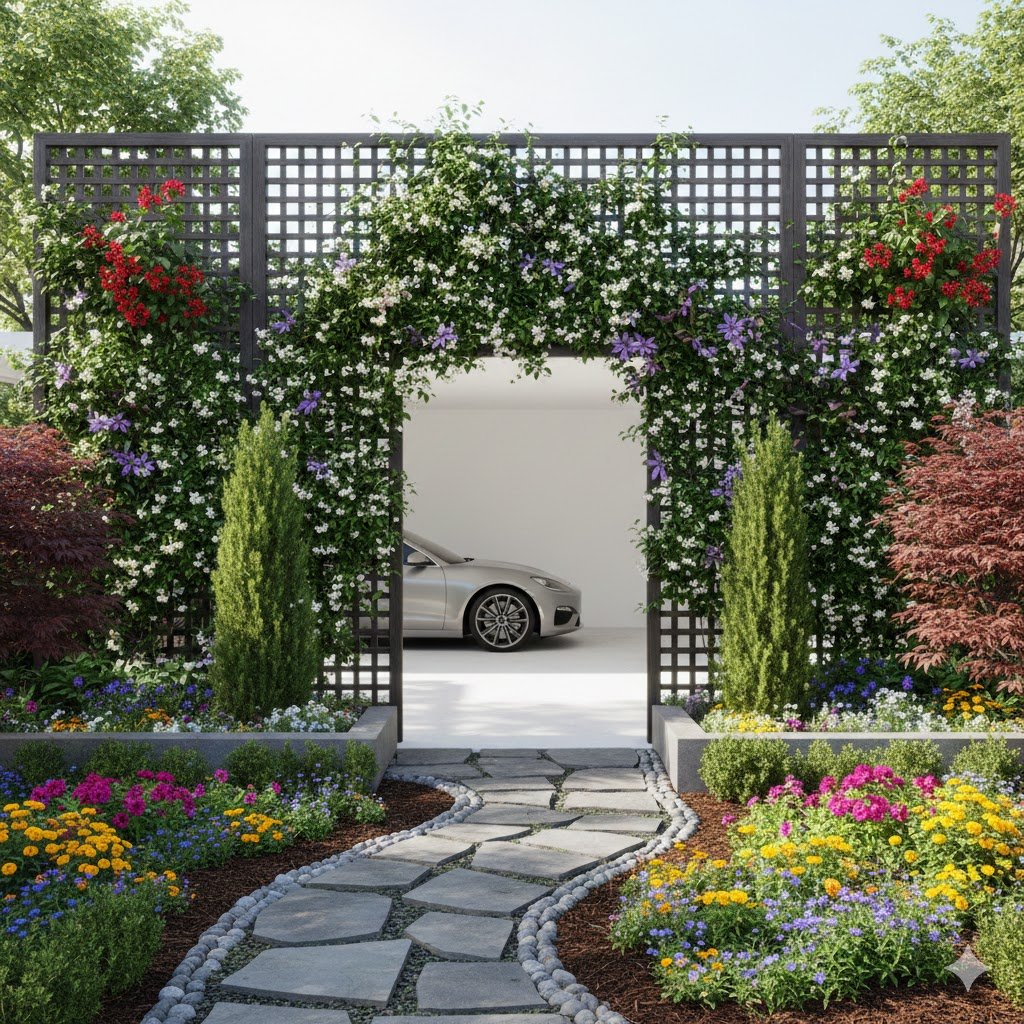
Privacy is the biggest issue with carports. Nobody wants to feel like they’re on display while they’re unloading groceries in their pajamas. Instead of building a solid wall—which can make the space feel like a dark cave—I recommend using modern horizontal slat screens or high-quality lattice. This allows the breeze to move through so your car doesn’t turn into an oven, but it blocks the nosy neighbor’s view.
I’ve found that those cheap, diamond-patterned plastic lattices from the hardware store are a total waste of money. They look tacky, they crack in the sun, and they scream “temporary fix.” Spend the extra bit of cash on cedar slats or a heavy-duty vinyl screen with a laser-cut pattern. I once installed a set of black metal screens with a leaf pattern for a client, and it turned their boring carport into something that looked like a high-end architectural feature.
Once the screen is up, you can treat it like a piece of art. Hang some outdoor-rated wall planters or train a light vine like Honeysuckle to weave through the gaps. If you go with Honeysuckle, make sure it’s a non-invasive variety like ‘Dropmore Scarlet.’ It gives you those hummingbirds and that incredible scent without the “I’m going to eat your garage” attitude of the wild stuff.
One quick side note: check your local codes before you go attaching permanent walls to a carport. Some cities consider a “walled-in” carport to be a garage, which changes your property taxes and your permit requirements. Keep it “semi-transparent” with slats or lattice, and you usually get to keep the “carport” designation while still getting the privacy you crave.
4. Landscaping with Potted Plants for Driveway Visuals
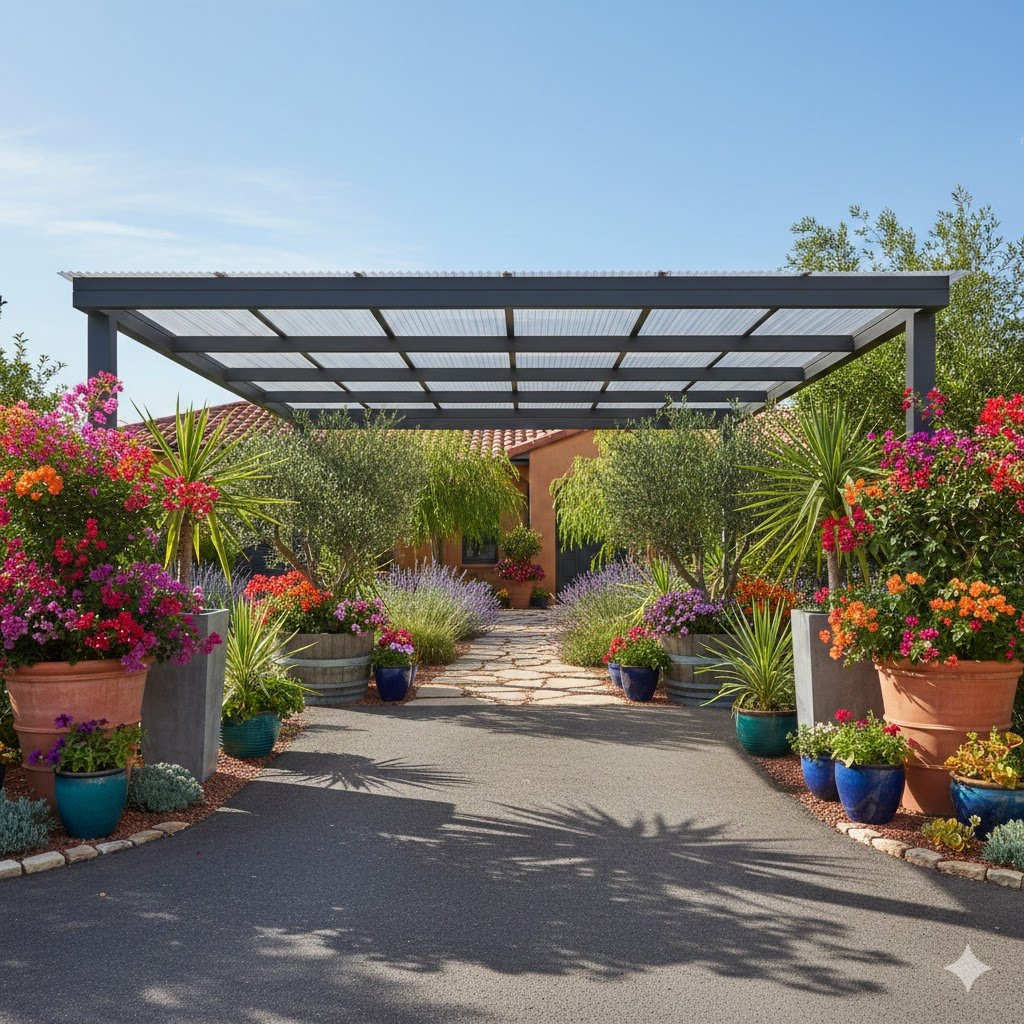
If your carport is surrounded by a sea of asphalt or concrete, you can’t exactly dig a hole. This is where “pot-scaping” comes in. The mistake people make is using a bunch of tiny, mismatched pots that look like a yard sale. To boost curb appeal, you need scale. You want a few massive, statement-making containers that anchor the corners of the space.
I’m obsessed with large galvanized steel stock tanks for this. They have a cool, industrial-farmhouse look that pairs perfectly with the metal roof of a carport. You can fill the bottom with empty soda cans or plastic milk jugs to save on soil (and weight), then plant a “Thriller, Filler, and Spiller” combo. A tall grass in the middle, some colorful petunias around the edges, and some sweet potato vine to spill over the sides.
I once tried to use terra cotta pots in my driveway, but between the heat from the sun and the heat from the car, they dried out so fast the plants were crispy by noon. Stick to resin or glazed ceramic pots that hold moisture better. Dark-colored pots look sophisticated, but be warned: they absorb a ton of heat. If you’re in a hot climate, go with lighter grays or tans to keep the roots from cooking.
Don’t forget to put your pots on “feet” or little rollers. Concrete can get stained if a pot sits in the same spot for three years, and being able to move them makes cleaning the carport much easier. I’ve found that a cluster of three pots of varying heights always looks better than a straight line. It feels more like a garden and less like a parking lot.
5. Adding Landscape Lighting to Carport Entries
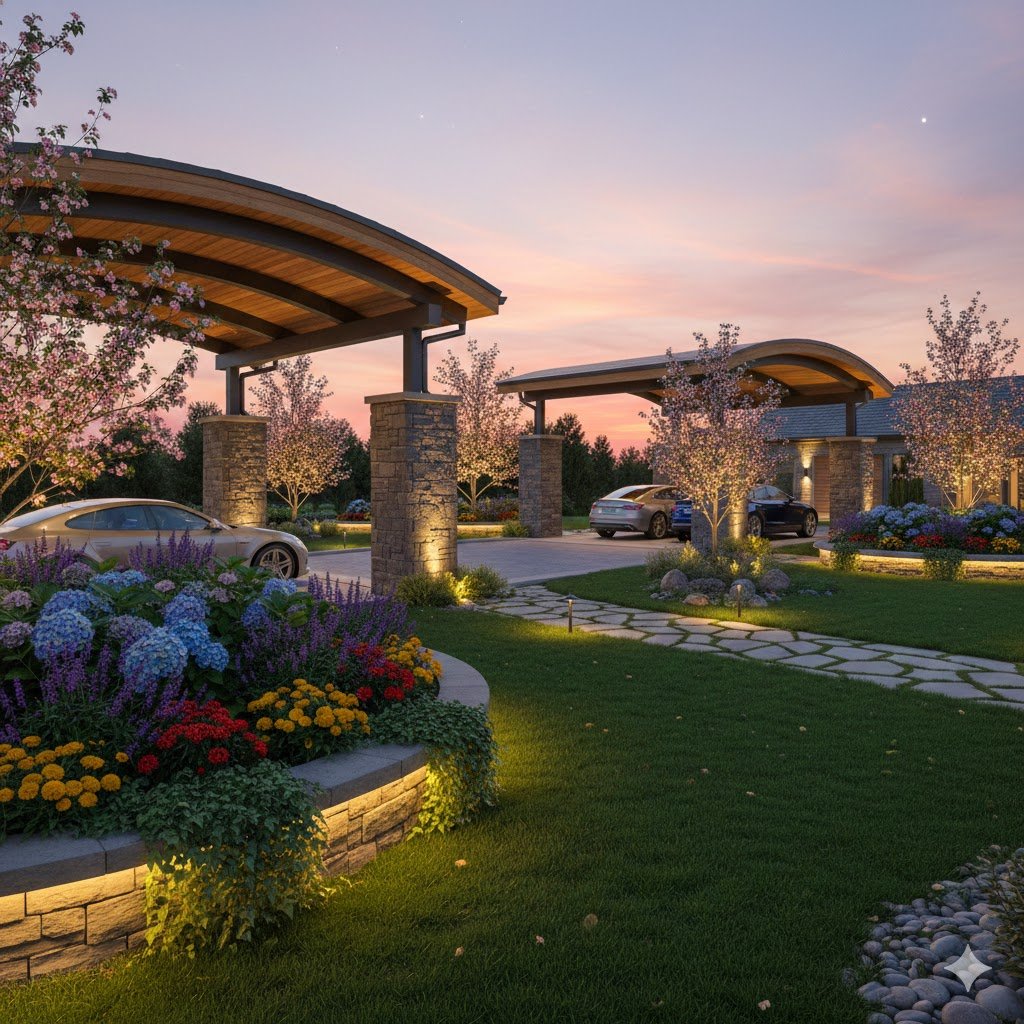
Curb appeal doesn’t stop when the sun goes down. Most carports have one sad, flickering bulb that makes the area look like a scene from a horror movie. Upgrading your lighting is probably the highest ROI project you can do. You want “layered” lighting—something for safety and something for drama.
I’m a huge fan of low-voltage LED uplighting. Position a few small spotlights at the base of your pillars (or inside those big pots we just talked about) and aim them upward. It highlights the architecture and the plants, giving the whole house a warm, high-end glow. I once spent an entire Saturday morning wiring solar lights along the driveway, and by the next year, they were all clouded over and dim. Solar is fine for a quick fix, but if you want real curb appeal, go with a wired transformer system.
String lights (the “Edison” style ones) can be great, but they can also look like a permanent dorm party if you aren’t careful. If you’re going to use them, string them tight and straight along the interior beams of the carport. Don’t let them swag so low that they hit the roof of your SUV. They provide a nice, even light that’s perfect for unloading the car at night without being blinded by a floodlight.
A quick “pro” tip: install a motion sensor on your main overhead light, but keep your accent “uplights” on a timer. This way, the house looks beautiful all evening, but you still get that blast of bright light when you actually pull into the driveway. It’s the perfect blend of “pretty” and “practical.”
6. Gravel and Stone Accents for Carport Edging
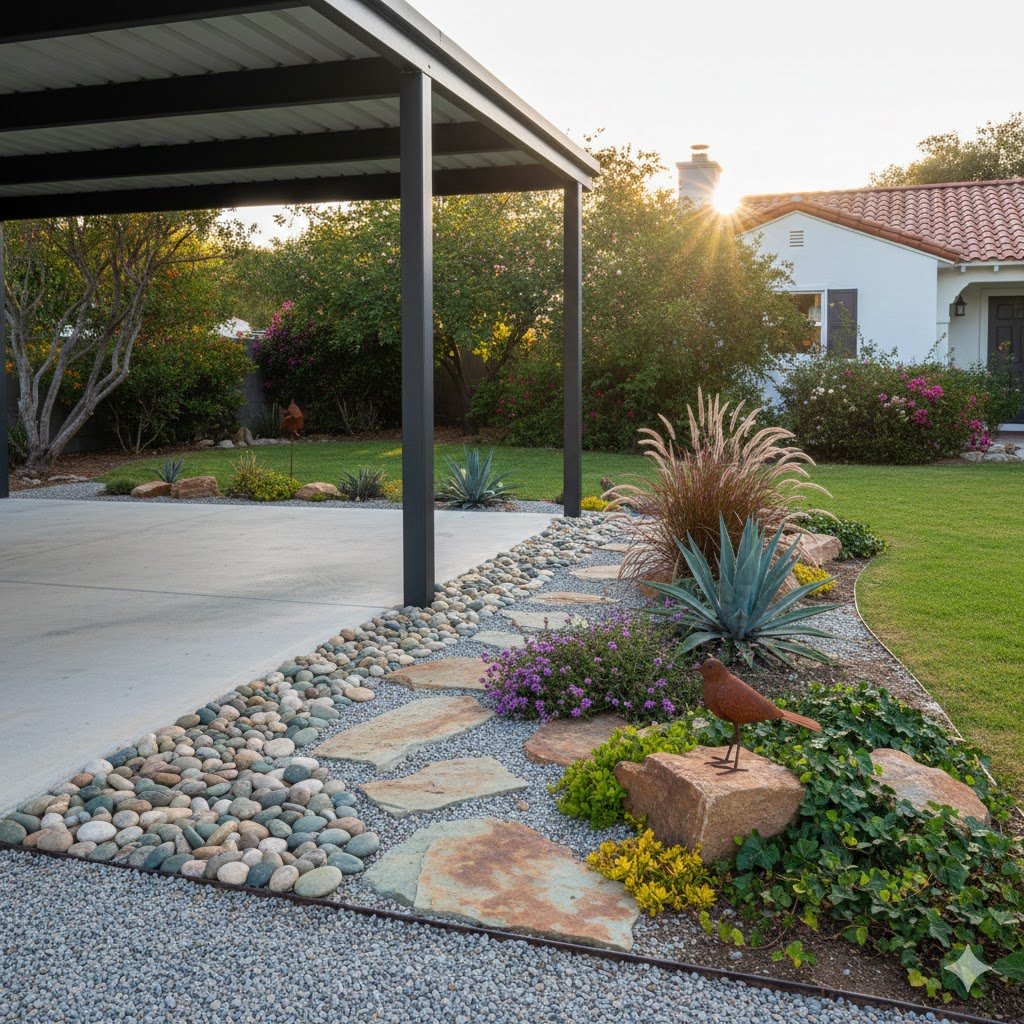
If you’ve got a “mud problem” around the edges of your carport, stop trying to grow grass. Grass hates the shade of a carport and it hates being dripped on by a roof without gutters. Instead, embrace the “hardscape.” A clean border of river rock or crushed slate looks intentional and stays neat regardless of the weather.
I like to use a “French Drain” style approach here. Dig a shallow trench around the drip line of the carport roof, line it with landscape fabric (the heavy-duty stuff, not the paper-thin junk), and fill it with 2-3 inch river stones. This catches the runoff from the roof and prevents that “mud splash” that ends up on the side of your car. I’ve found that Mexican Beach Pebbles are the gold standard for this—they look dark and sleek when wet and never lose their color.
Don’t use white marble chips. I know they’re cheap, but they turn yellow-green with algae within two seasons, and they stand out way too much against most driveways. Go with something that has natural earth tones—tans, grays, or browns. It blends in better with the surroundings and hides the dirt.
For a bonus, you can “inlay” some larger flagstones within the gravel to create a dry path from the car door to the house. It looks high-end and saves your shoes on rainy days. Just make sure the stones are set deep enough so they don’t wobble. I once tripped over a “loose” flagstone while carrying a birthday cake, and let’s just say the cake didn’t make it to the party.
7. Creating a “Green Wall” with Succulents or Herbs
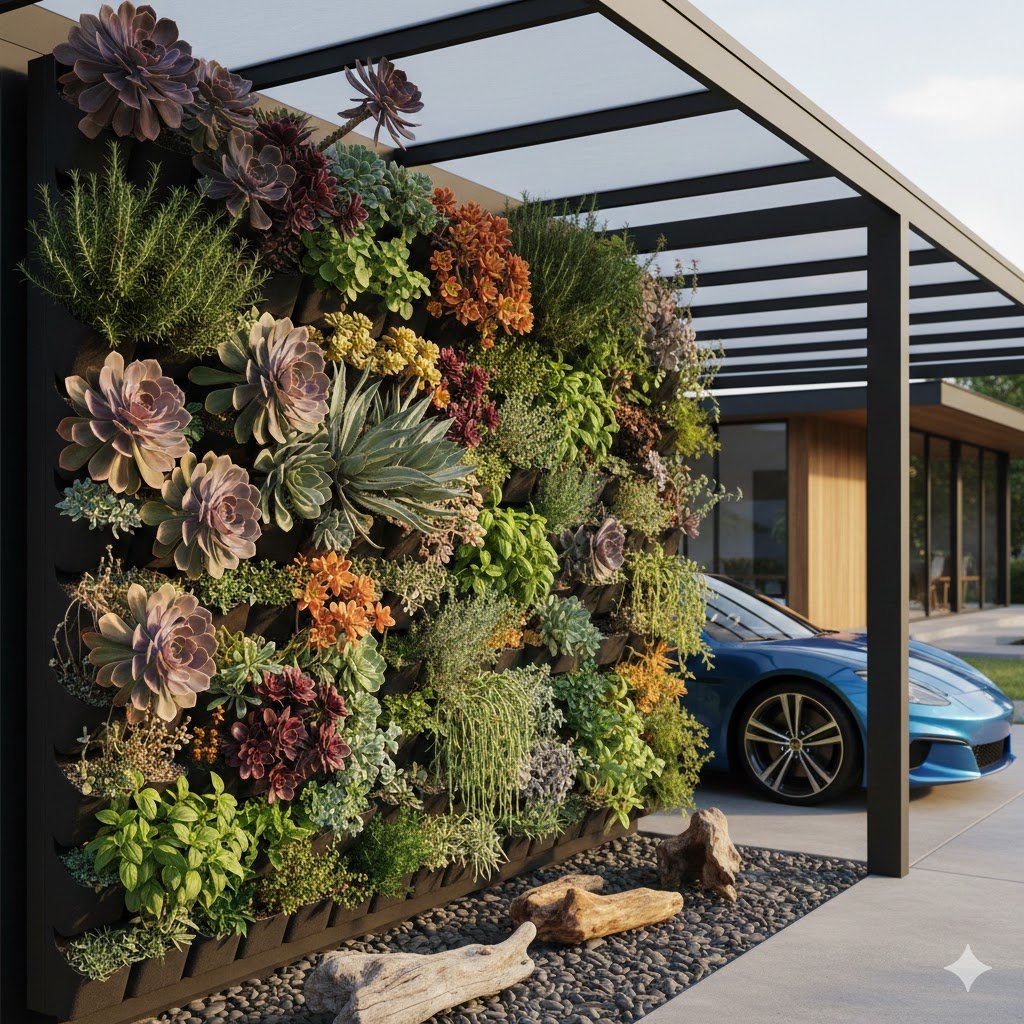
If your carport has a side that gets a lot of sun, a vertical herb garden or a succulent wall is a genius move. It turns a boring structural wall into a conversation piece. You can buy pre-made vertical planters that attach directly to the siding or the support beams.
I’m a big fan of using herbs like Rosemary and Thyme for this. They are tough as nails, they love the heat, and they smell incredible when you brush against them. Plus, it’s handy to grab a handful of herbs on your way inside for dinner. I once tried to do a vertical strawberry garden in my carport, but the birds realized what was happening before I did. I ended up with a lot of bird droppings on my car and zero strawberries. Stick to herbs or succulents.
Succulents are great if you’re the kind of person who forgets to water things for weeks at a time. Hens and Chicks (Sempervivum) are basically indestructible. They’ll grow in the tiny cracks between stones or in a shallow vertical tray. They provide a cool, geometric texture that looks very modern and “designer.”
Just be careful with the weight. A vertical garden filled with wet soil is surprisingly heavy. Make sure whatever you’re mounting it to can handle the load. If you’re attaching it to a metal carport, you might need to use self-tapping screws or even some heavy-duty zip ties if you’re just doing a lightweight “living picture frame” style setup.
8. Using Mulch and Edging for a Clean Finish
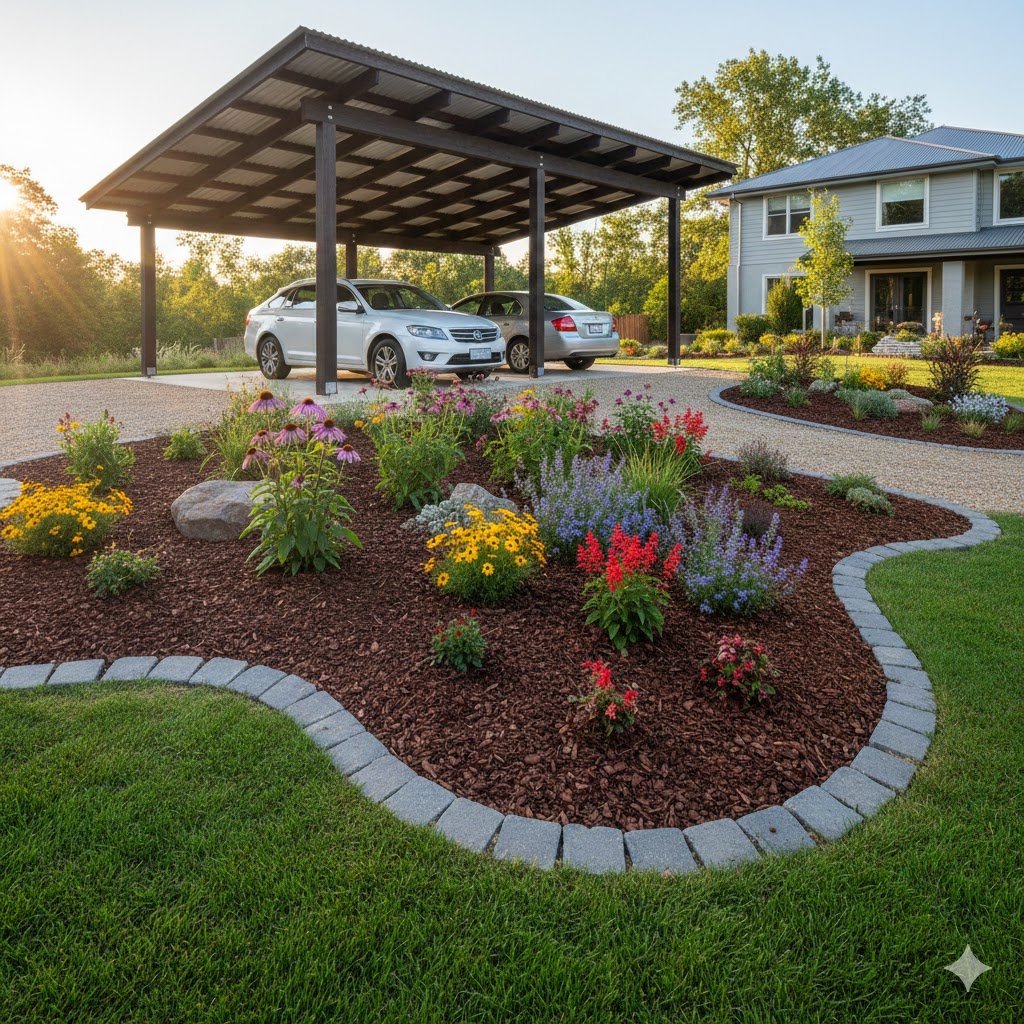
Nothing says “I’ve given up on life” like mulch that is spilling out onto the driveway. If you have planting beds around your carport, you need a crisp, hard edge to keep things looking sharp. I’m a huge advocate for steel edging. It’s thin, it’s nearly invisible, and it stays put for decades. Those plastic “picket fence” edgings are a total waste of money—they look cheap and they shatter the first time you hit them with a string trimmer.
When it comes to mulch, stay away from the “Dyed Red” stuff. It looks fake, it stains your concrete when it rains, and it’s usually made from ground-up pallets that might contain chemicals you don’t want near your house. Use a dark brown triple-shredded hardwood mulch or pine bark nuggets. It looks like “real” earth and breaks down into great soil over time.
I’ve found that “mulch creep” is a real problem under carports because of the wind. To combat this, I often use a “ground cover” plant like Vinca Minor or Pachysandra to knit the mulch together. Once the plants fill in, the mulch stays put and you don’t have to refresh it every single spring.
Quick side note: Don’t pile mulch up against the wooden posts of your carport. This is a “termite buffet” waiting to happen. Keep the mulch a few inches away from any structural wood. I once saw a carport that literally collapsed because the owner had piled “volcano mulch” around the base of the posts, and the wood had rotted completely through in five years.
9. Decorative Trellis and Screen Accents
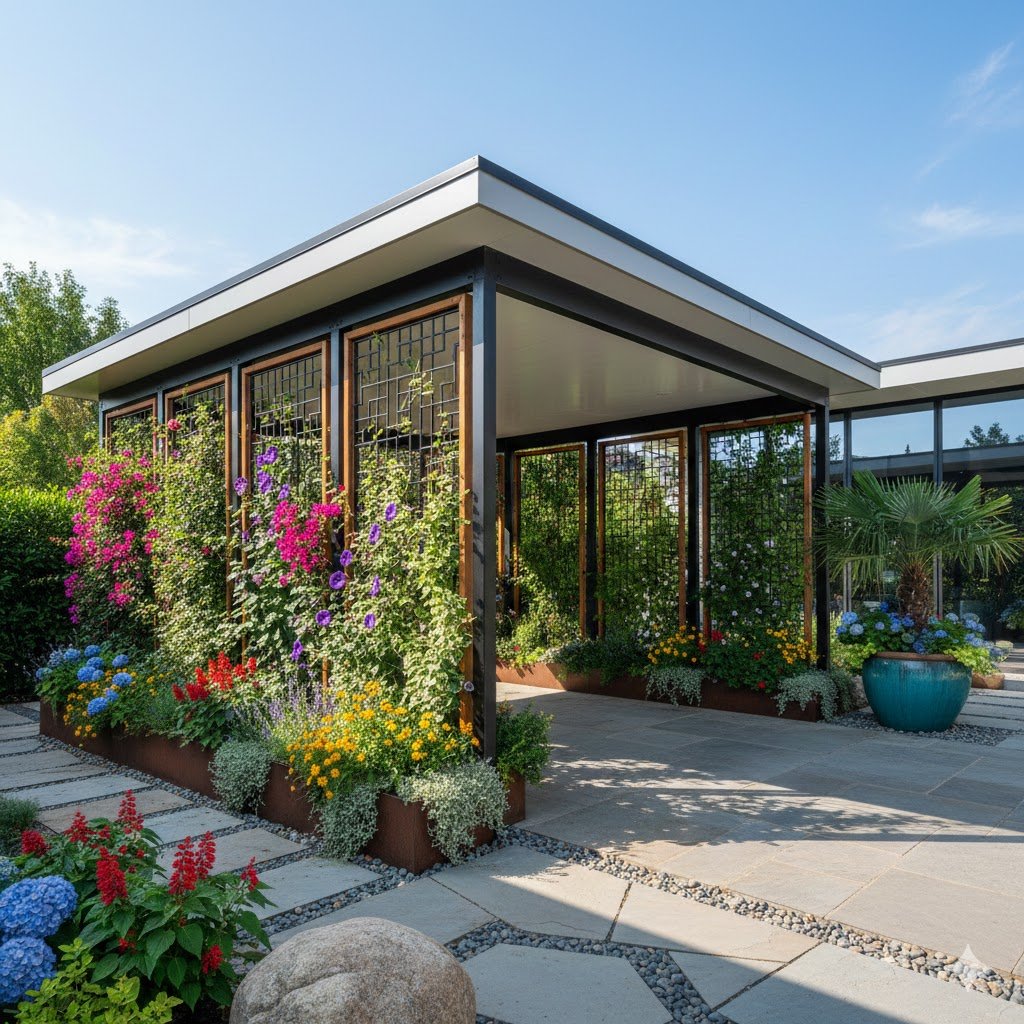
Sometimes you don’t want a full privacy wall, but you need something to break up the “big open box” look of a carport. A decorative trellis panel placed strategically can act like a piece of outdoor furniture. You can find beautiful metal panels with geometric or floral designs that look great even without plants on them.
I like to place one of these panels at the “back” of the carport if it’s attached to the house. It creates a visual end-point for the space. You can hang a few outdoor lanterns or even a decorative “Welcome” sign on it. It makes the carport feel like an extension of your home’s entryway rather than just a place to stash the car.
If you’re a fan of the “boho” look, you can even use heavy-duty outdoor curtains on one side of the carport. They can be tied back when you’re driving in and out, but closed when you’re hanging out in the yard. I once tried this with regular “indoor” curtains I found on sale—big mistake. Within a month, they were covered in mildew and smelled like a wet dog. Spend the money on Sunbrella or other outdoor-rated fabrics that can handle the humidity.
The key is “symmetry.” If you have a trellis on one side, try to balance it with something of similar visual weight on the other—maybe a tall planter or a small ornamental tree. It gives the whole setup a balanced, professional look that instantly bumps up your home’s value.
10. Small Trees for Corner Framing
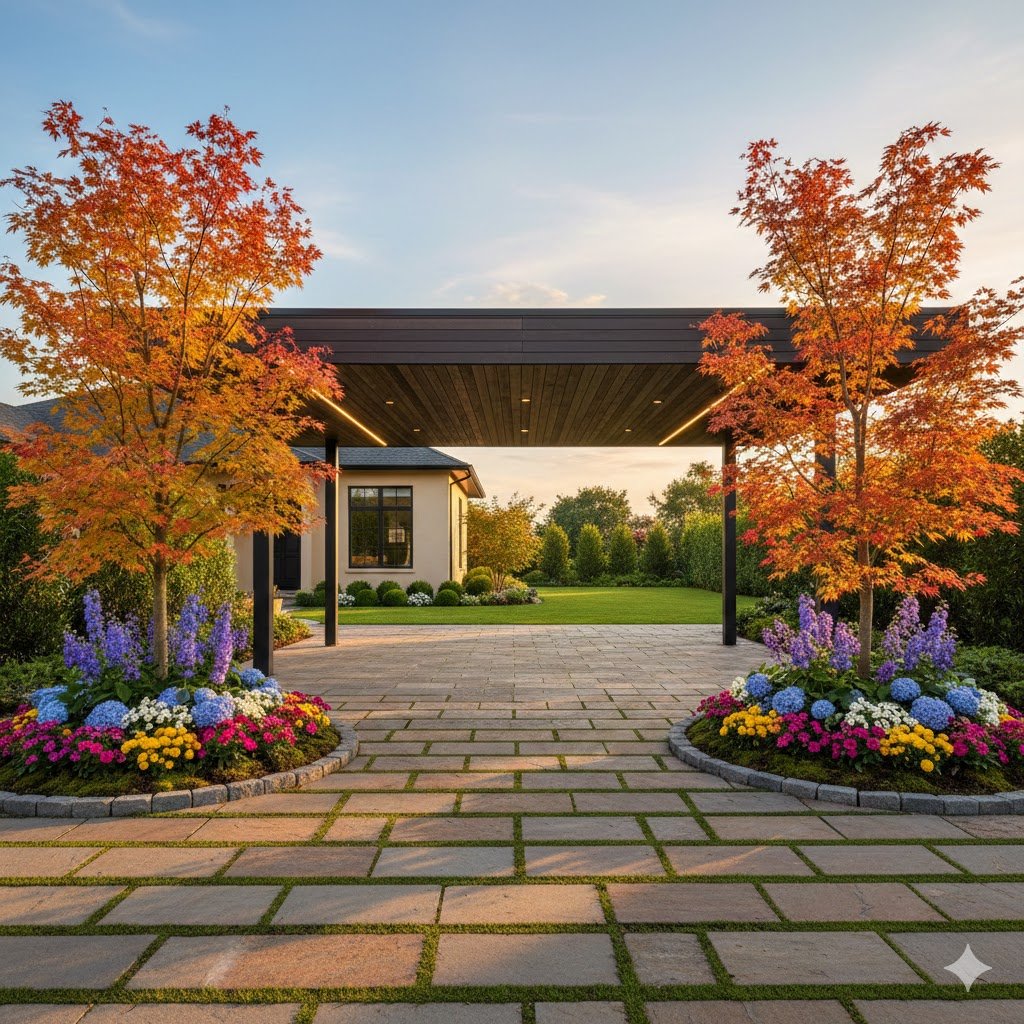
If your carport is on a corner or at the end of a long driveway, a small “specimen” tree can act like a frame for the whole structure. You don’t want something that’s going to grow 50 feet tall and drop limbs on your car. You want a “dwarf” variety that stays manageable and has interesting bark or flowers.
Japanese Maples are the undisputed kings of carport landscaping. They stay small, they have incredible fall color, and they look like living sculptures. I have a ‘Bloodgood’ Japanese Maple at the corner of my drive, and it’s the first thing people notice when they pull up. Just make sure it’s far enough away that the branches won’t scratch your car’s paint in a windstorm.
Serviceberry or Star Magnolia are also great choices. They stay compact and provide beautiful spring blooms. Avoid trees with “messy” fruit or heavy sap. I once lived under a house with a giant Mulberry tree over the carport. Between the purple bird droppings and the sticky fallen fruit, I had to wash my car every three days. It was a nightmare. Stick to “clean” trees.
When planting a tree near a carport, consider the root system. You don’t want a tree with aggressive surface roots that will lift up your driveway or the carport slab. This is why “dwarf” varieties are so important—small top usually means a smaller, less destructive root system.
11. Integrated Bench and Seating Areas
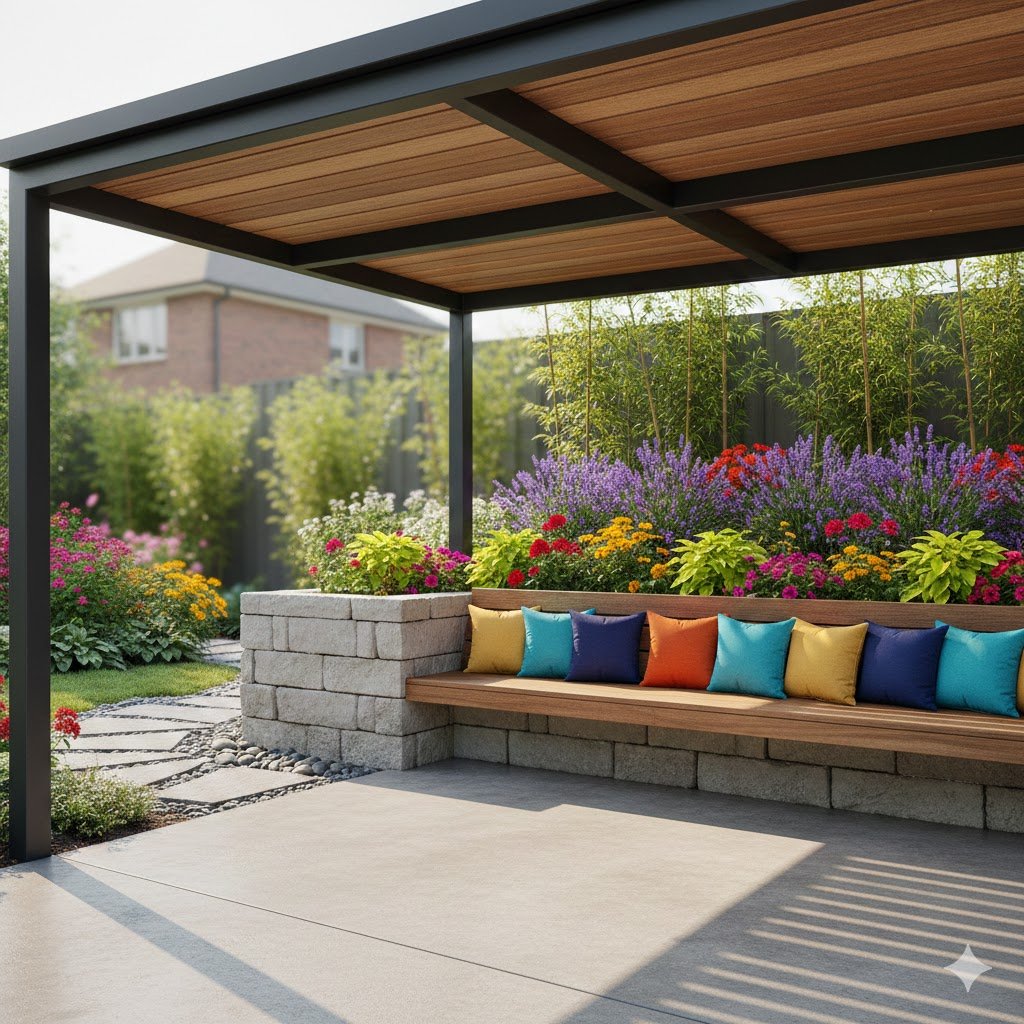
If your carport is large enough, why not make it a multi-use space? Adding a small built-in bench or a couple of weather-resistant chairs at the edge of the landscaping turns it into a “mudroom” of sorts. It’s a place to sit and take off muddy boots before going inside.
I’ve found that a simple cedar bench built between two of the carport pillars looks incredible. It ties the structure together and makes it feel cozy. You can surround the bench with some of those fragrant herbs we talked about earlier. I once built a bench out of old pallets for my carport, and while it looked “Pinterest-perfect” for a month, it eventually gave my father-in-law a splinter that required a doctor’s visit. Use smooth, high-quality wood for seating.
Add a few outdoor cushions in a pop of color—maybe a bright blue or a sunny yellow. It draws the eye and makes the whole area look “finished.” Just make sure the seating is positioned so you don’t actually hit it with your car. I like to put a “parking curb” (a heavy timber or a concrete block) on the floor to make sure I stop well short of my seating area.
This is also a great place to put a “boot scraper” or a decorative mat. It’s a small detail, but it shows that you’ve thought about the transition from “outdoor” to “indoor.” It’s these little touches that take a carport from “utilitarian” to “designed.”
12. Utilizing Paint and Stain for Structural Harmony
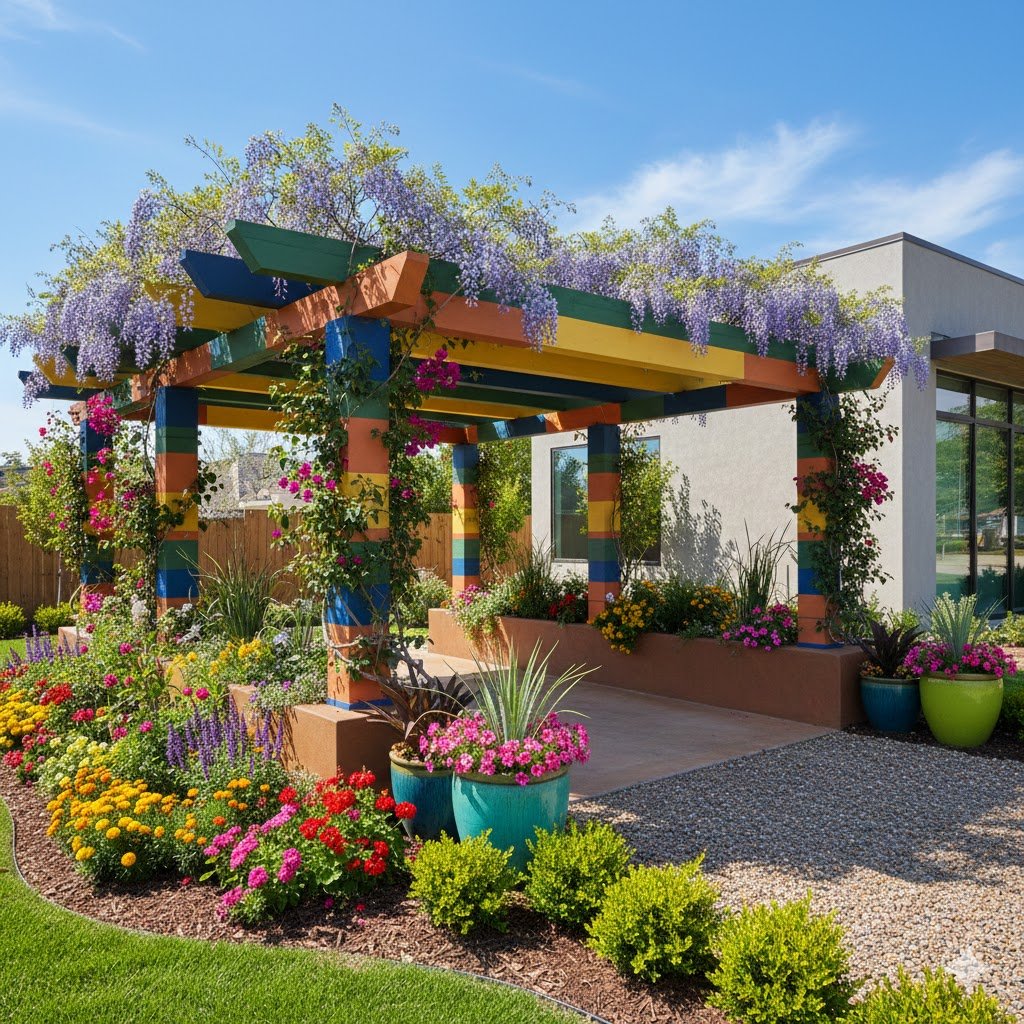
This isn’t strictly “plants,” but it’s the foundation for all your landscaping. If your carport is a different color than your house, no amount of flowers will make it look right. The carport should either match the trim of your house or the main siding color.
I’m a huge fan of staining wooden carports rather than painting them. Paint eventually peels, especially on the horizontal beams where water sits. A high-quality semi-transparent stain shows the grain of the wood and just fades over time, making it much easier to refresh. I once painted a carport “Safety White” because I had the leftover paint, and it looked like a commercial loading dock. I ended up stripping the whole thing and staining it a deep walnut brown, and the difference was night and day.
If you have a metal carport, you can still paint it! Use a high-quality DTM (Direct To Metal) paint. A dark charcoal or a forest green can make a cheap metal carport look like a custom steel structure. Once the color is right, the green of your plants will pop against the dark background.
A quick bonus tip: Paint the ceiling of your carport a very light “Haint Blue” or a crisp white. It reflects more light, making the space feel bigger and cleaner. Plus, there’s an old Southern legend that blue ceilings keep wasps from nesting there—I don’t know if it’s true, but I’ve had fewer nests since I painted mine!
Real Talk: What’s Not Worth the Effort
Look, I love a good project, but some things are just a “money pit” when it comes to carport landscaping. First on the list: expensive “outdoor” rugs. Unless your carport is 100% dry and you never drive over it, that rug is going to become a soggy, oil-stained mess in six months. Save the rugs for the actual porch.
Second: “Drip irrigation” for pots in the carport. I know it sounds high-tech and convenient, but running tubes across a driveway where you’re constantly walking and driving is a recipe for a trip hazard and a broken system. If you can’t remember to water the pots, stick to the indestructible plants like Yucca or Agave that thrive on neglect.
Third: High-maintenance “fussy” plants like Roses. Carports are usually “high-traffic” areas. You’re going to be bumping into things with grocery bags, car doors, and kids’ bikes. Planting something with thorns or something that drops petals everywhere is just going to annoy you. Keep it simple, keep it hardy, and keep it “clean.”
Wrap Up
The goal of carport landscaping isn’t to hide the fact that you have a car—it’s to show that you care about every inch of your property. When you take the time to add some greenery, better lighting, and a clean edge, that “parking shed” suddenly becomes a highlight of your home’s exterior.
What’s the biggest “eyesore” currently living in your carport, and which of these ideas do you think could fix it? Drop a comment below and let’s get that curb appeal sorted!