
Put orange roses in a clear glass vase next to a bowl of candy and you have a bouquet on a table. Nothing about it says Halloween yet. Put the same stems in a matte black vase, surround them with burgundy foliage and a few bare branches, and the arrangement reads as Halloween from across the room. The flowers didn’t change. The contrast, the silhouette and the container did.
That is the real challenge with Halloween flowers. Orange, rust, gold and burgundy also belong to Thanksgiving, so the arrangement has to suggest something darker or stranger without turning into a costume-shop display. Color ratio, shape and vessel do most of that work. The 17 arrangements below use them in different ways, with notes on which stems last, which are risky around pets, and what tends to go wrong.
What Separates a Halloween Arrangement From a Fall One
Most fall arrangements are warm all the way through: orange, yellow, red and brown in roughly equal amounts. Halloween arrangements usually work the other way. A small amount of intense orange sits against a large amount of something very dark, and the eye reads the contrast as drama. A rough starting point is two-thirds dark material (deep burgundy, near-black foliage, black containers) and one-third orange. Push it further toward dark if you want a gothic look, or toward orange if the setting is family-friendly.
True black flowers don’t exist. Flowers sold as “black” are very dark red, maroon or purple, and they look nearly black in low light or against a black vase. Black dyed or spray-painted roses and carnations also exist, but they are treated stems, not a natural color. It helps to know the difference when you shop, because the natural dark varieties tend to look richer and less flat.
Shape matters as much as color. Spiky, drooping, trailing and twisted forms (spider mums, bare branches, amaranthus tassels) look more unsettling than round, symmetrical bouquets. A tall, asymmetrical arrangement looks spookier than a low dome, even in identical colors.
Props deserve restraint. One plastic spider on a vase of dark flowers can look like a deliberate joke. Six spiders, a skeleton hand and fake cobwebs turn the flowers into background filler. The arrangements here lean on the plants themselves, with props as the finishing touch.
Flowers and Foliage Worth Buying, and What to Expect From Them
Vase life varies with freshness at purchase, room temperature and how the stems are handled, so treat these as typical ranges and not guarantees.
- Orange roses: Often five to seven days indoors. They exist naturally in shades from peach-orange to deep copper, and some orange roses sold in bright, uniform tones may be dyed or color-enhanced. The outer petals browning first is normal.
- Chrysanthemums: Among the longest-lasting cut flowers, commonly two weeks or longer when the water stays clean. Burgundy, bronze and deep red varieties are easy to find in fall.
- Dahlias: Beautiful but short-lived in a vase, often around five to seven days. They bloom until frost in many climates, so they suit garden-cut bouquets.
- Scabiosa (pincushion flower): Dark maroon varieties such as ‘Black Knight’ look almost black and add a delicate, spiky texture.
- Celosia and amaranthus: Celosia (cockscomb) looks like velvet brains, which suits the theme, and dries well. Amaranthus, sometimes sold as love-lies-bleeding, has long, drooping burgundy tassels.
- Smoke bush and ninebark: Woody branches with deep purple or burgundy leaves. Dark-leaved ninebark cultivars such as ‘Diabolo’ and purple smoke bush hold dramatic color, and smoke bush foliage often turns orange-red in autumn.
- Ornamental kale: Ruffled purple and cream heads that last well but smell cabbage-like if the water goes unchanged.
- Marigolds and zinnias: Cheap, bright orange, and good for garden-cut bunches. Marigolds have a pungent scent some people dislike indoors.
- Hydrangea: Fresh, it wilts quickly if stems aren’t recut. Left to dry on the plant or in a vase, it keeps its shape for months.
Orange Roses and Warm Color Done Well
1. Orange Roses in a Matte Black Vase, With Nothing Else
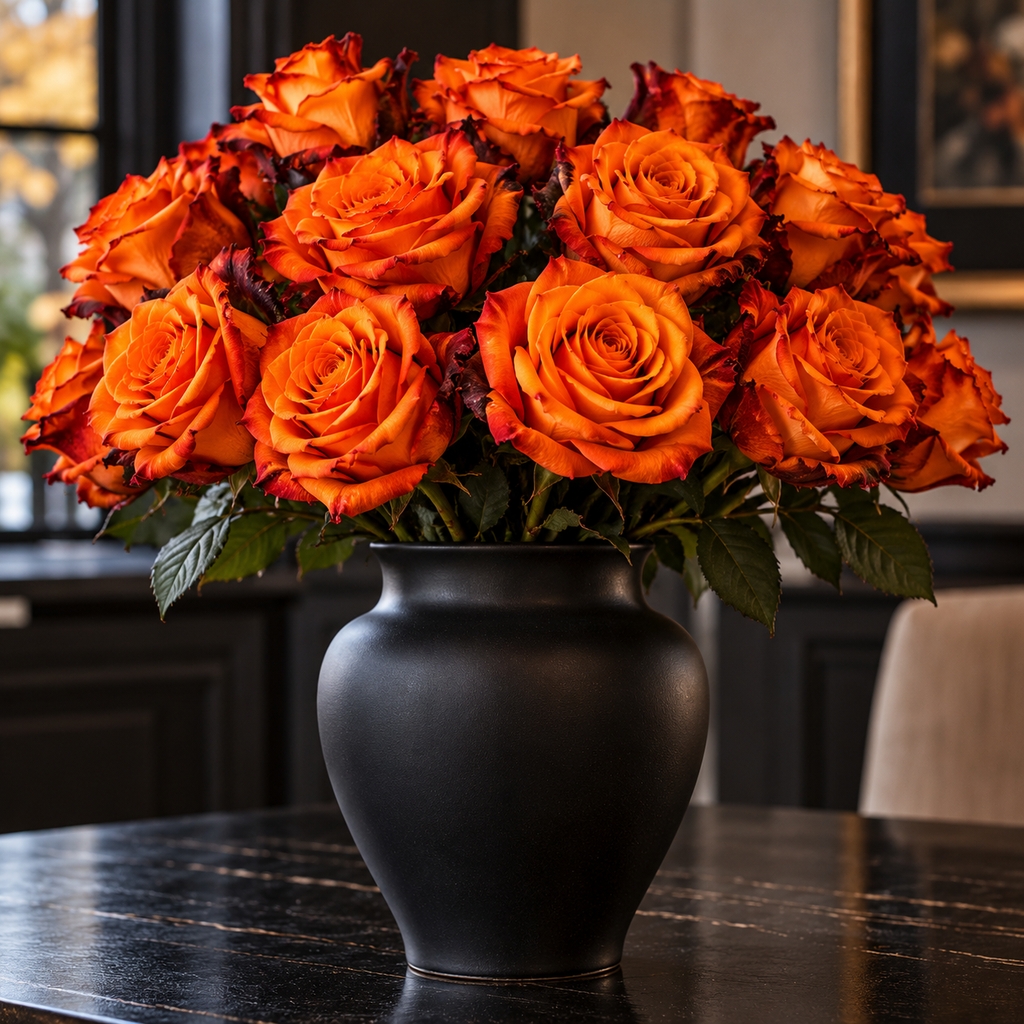
This is the simplest arrangement on the list and the quickest to get wrong. Use a dozen stems or more of a single orange rose in a cylinder vase. As a general guideline, cut the stems to about one and a half times the height of the vase so the proportions look balanced. A matte finish absorbs light, so the orange seems to glow against it, while a glossy black vase picks up reflections from windows and lamps and looks busier.
Resist adding filler. The strength of this look is the plainness. If it feels too sparse, add three or four stems of very dark foliage such as ninebark. Remove any leaves that would sit below the waterline, since submerged leaves rot and cloud the water.
2. Orange Roses and Burgundy Dahlias in a Low Bowl for the Dining Table
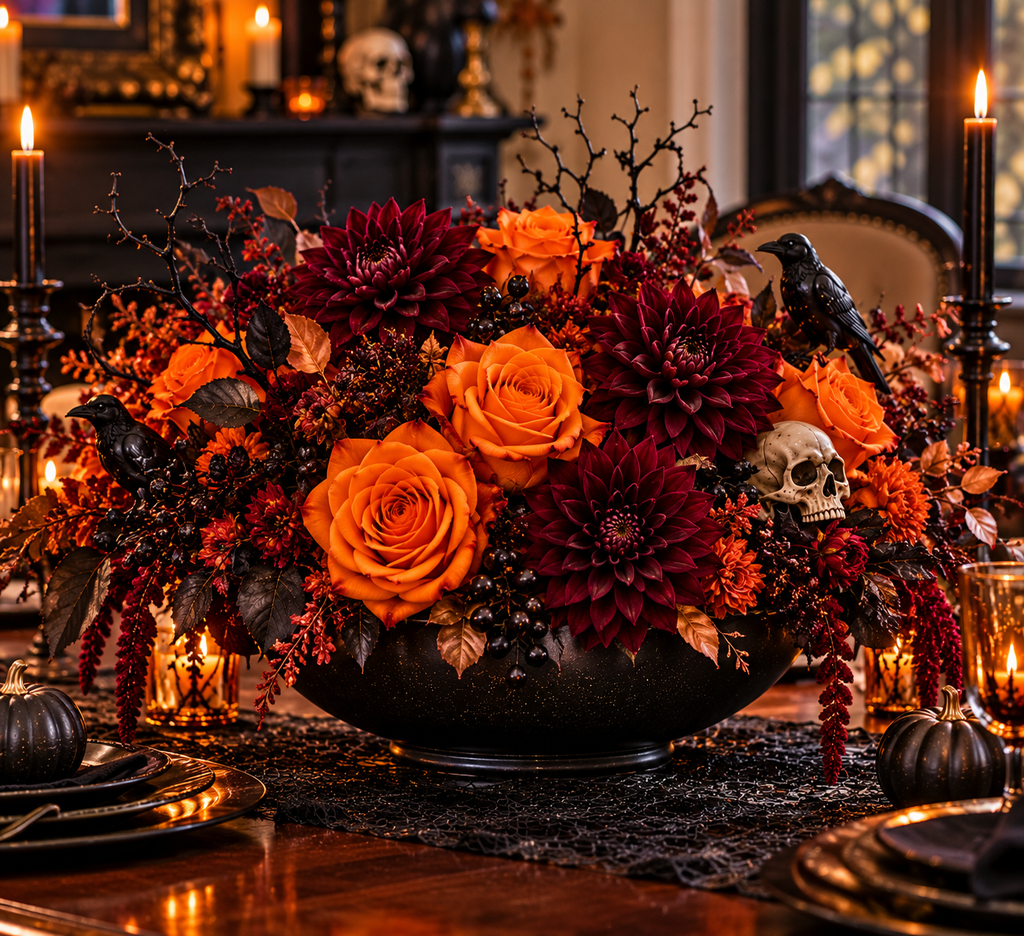
A dinner table centerpiece has different rules from a hallway arrangement. A common rule of thumb is to keep it under about twelve inches, so guests can see each other across it. A low black ceramic bowl or tray works well, with stems held in place by crumpled chicken wire or a metal pin holder (a kenzan) so you aren’t relying on foam.
Pair the roses with deep burgundy dahlias and a few trailing stems of amaranthus draping over the rim. Dahlias have the shortest vase life of the flowers here, so buy them as close to the day as possible, and recut stems before arranging.
3. Orange Roses Inside a Hollowed Pumpkin
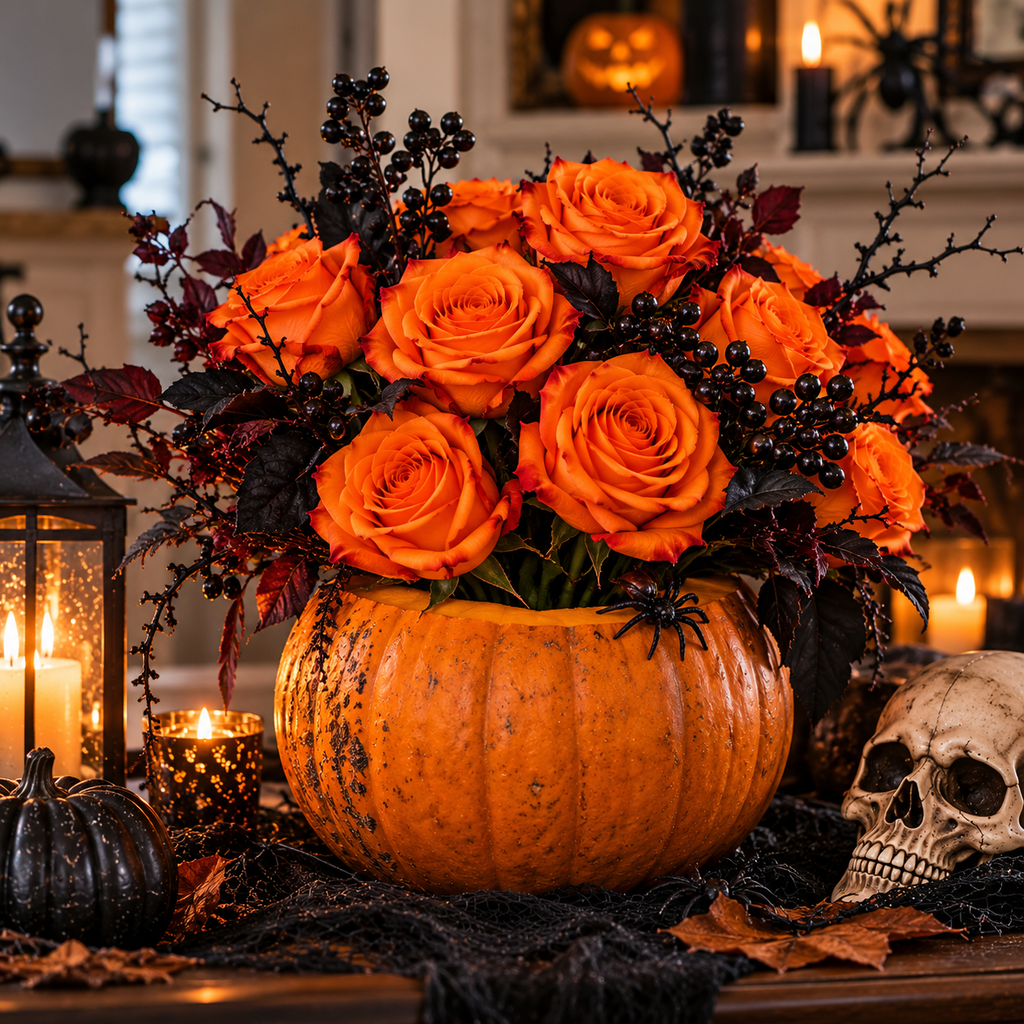
A pumpkin is porous and will eventually leak and rot, so it should never hold water directly. Cut a wide lid, scoop out the seeds and strings, and drop in a plastic container, jar or bowl that fits snugly inside. Fill that with water and arrange the roses so they spill slightly over the rim.
Pumpkin life is the limit. An uncarved pumpkin can last weeks in a cool spot, but one that has been cut open breaks down faster, especially in a warm room. Set it on a tray or plate, because pumpkin liquid can stain wood. White or pale pumpkins give a cleaner look. Faux pumpkins last indefinitely and don’t leak at all.
4. Rose Hips, Marigolds and Zinnias in a Loose, Garden-Style Bunch
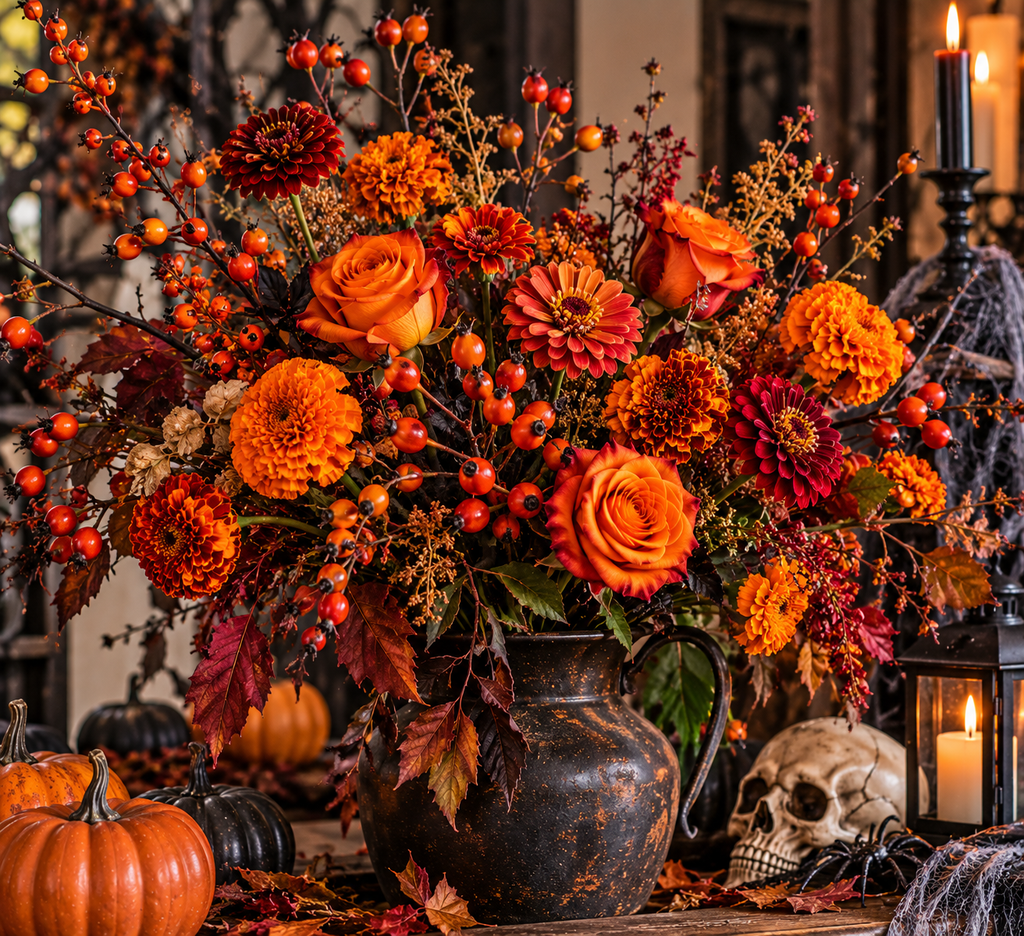
Not every Halloween arrangement has to be dark. A loose bunch of orange zinnias, marigolds and rose hips (the orange-red fruit that forms after roses bloom) in an old dark glazed jug feels more harvest than horror, but a handful of black or burgundy stems tilts it toward the season. Zinnias and marigolds bloom until the first frost in many regions, so they are realistic to cut from a garden or buy cheaply from a market.
Wear gloves when handling rose branches, since the thorns catch easily. Strip leaves below the waterline from all stems, and change the water every other day, because marigolds foul water quickly.
Dark Chrysanthemums: The Reliable Workhorse
5. Burgundy Mums Packed Tight in a Low Black Bowl
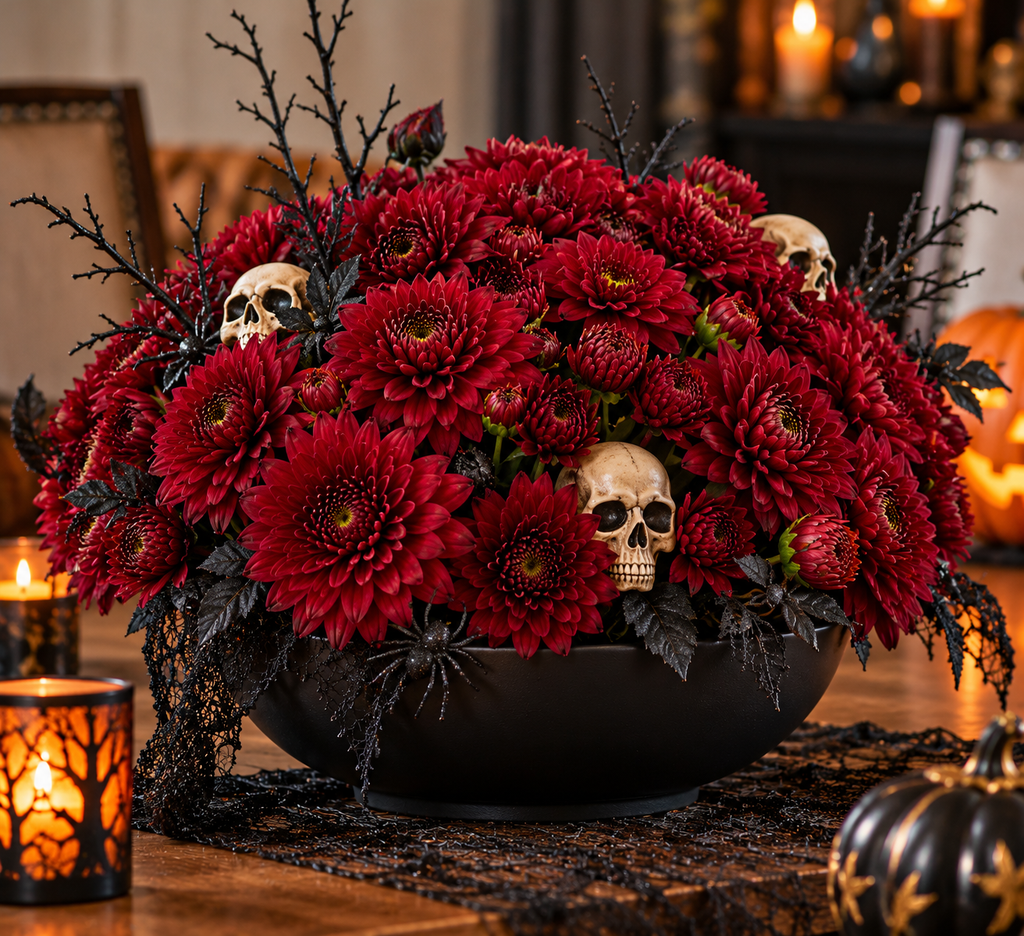
Chrysanthemums are forgiving, which makes them a good choice for an arrangement that needs to last from early October to the 31st. Cut the stems short, remove the lower foliage completely (mum leaves decay fast and smell sharp in standing water), and pack the blooms tightly into a shallow bowl so the flower heads form a dense, velvety mound of dark color.
This is a quiet look, not an obviously “spooky” one. It works best on a mantel or entry table with a few candles in black or smoky glass holders. Use LED candles if the flowers are within reach of the flame.
6. Spider Mums as Cobweb-Like Blooms in a Tall Vase
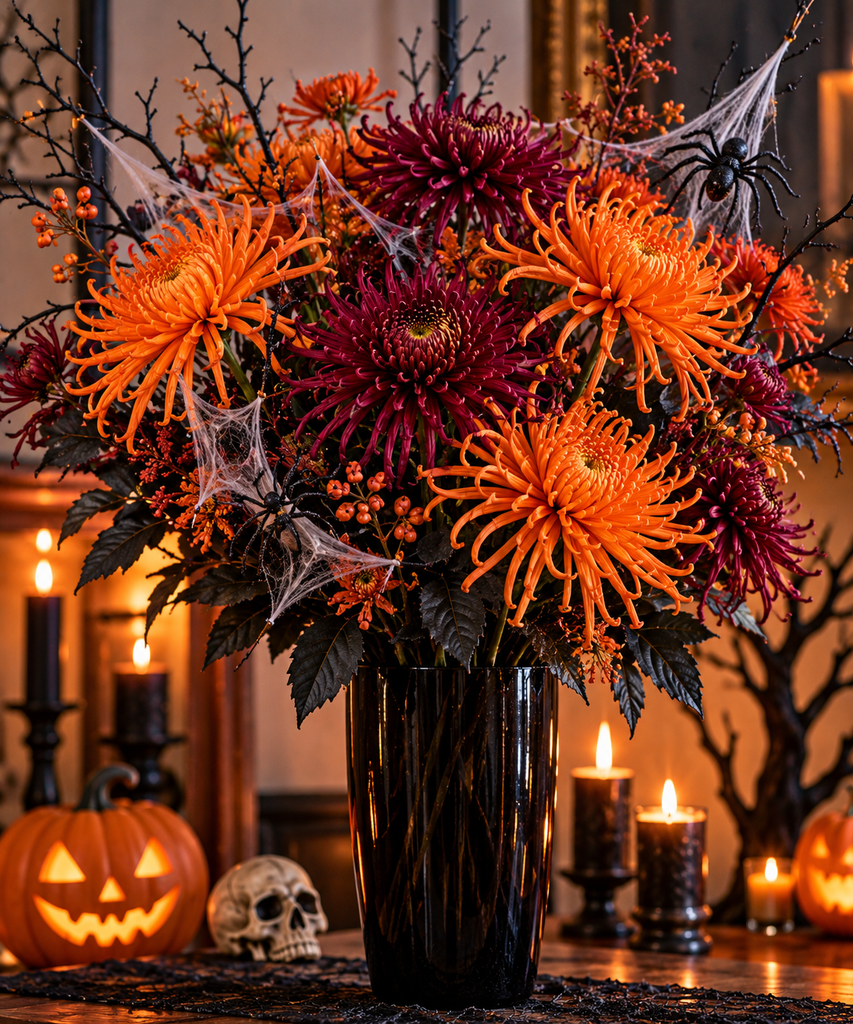
Spider mums have thin, tubular petals that radiate outward and droop at the tips, which looks a bit like legs. Dark red or bronze varieties in a tall black vase make a strikingly eerie silhouette. Green spider mums also exist, and a few of them among the dark ones add a sickly, acid-green note that photographs well.
Give the stems room. Spider mums look best when each bloom has space around it instead of being crowded into a dome. Leave the arrangement slightly asymmetrical, with one or two stems taller than the rest.
7. Potted Dark Mums on the Porch, With Ornamental Kale
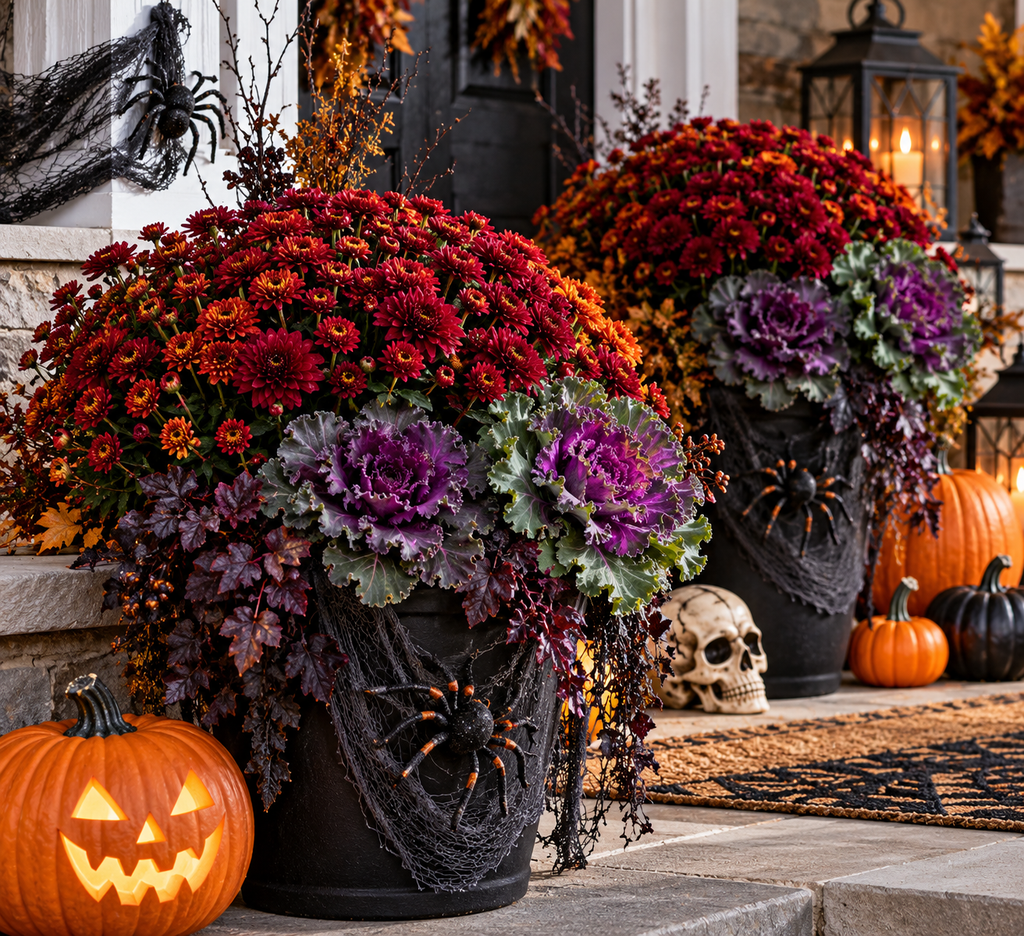
A potted porch display lasts longer than cut flowers and can stay outdoors through Halloween night. Put two or three burgundy mums in a large black planter and tuck ornamental kale around the base. Kale tolerates cool nights and adds ruffled purple and cream leaves that look like a plant from another planet.
Check the plant tag. Many potted mums sold in fall are bred as seasonal color, and whether they survive winter and regrow depends on the type and local climate. Make sure the pot has drainage holes, and water when the top inch of soil feels dry. Mums in full bloom dry out surprisingly quickly in sun and wind.
Dramatic Foliage as the Main Event
8. Smoke Bush and Ninebark Branches in a Tall Black Vase
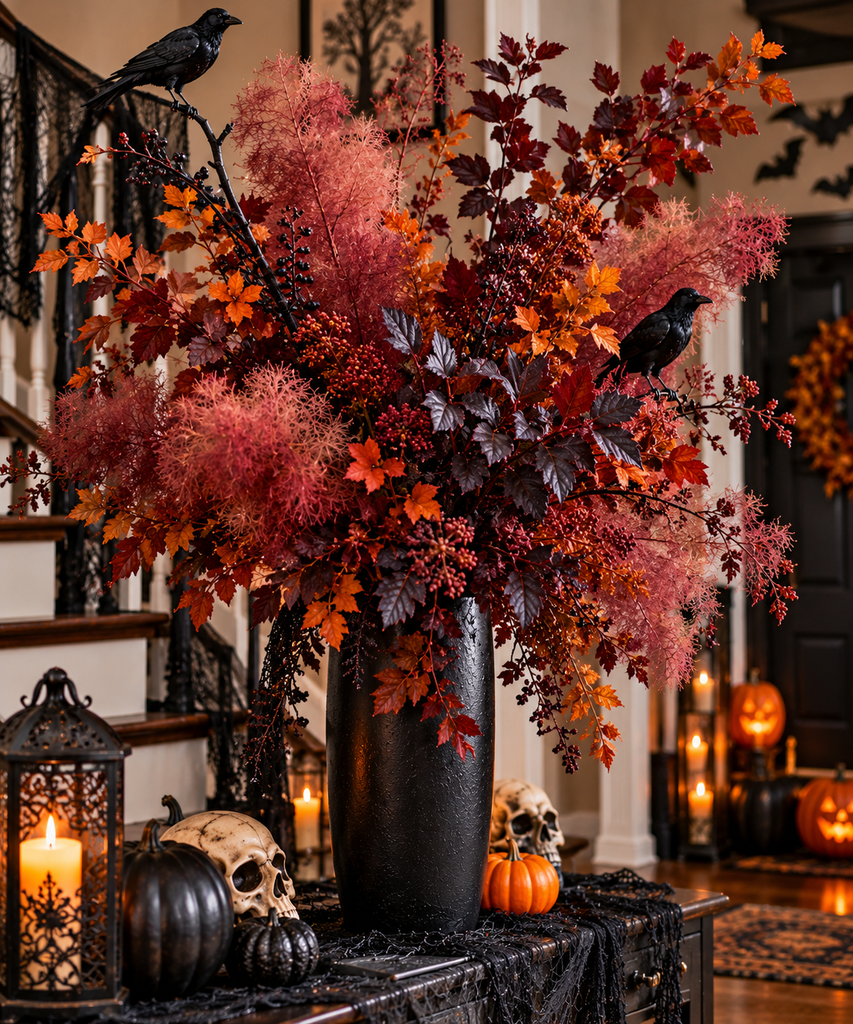
When flowers are expensive or scarce, branches carry the whole arrangement. Dark purple smoke bush or ninebark cut to different lengths, in a tall black vase, looks sculptural and a little menacing. Take the cut at an angle, put the stems in deep water immediately, and expect the foliage to last a week or more, though some leaves will drop.
If you’re cutting from your own shrubs, take branches sparingly and from the back or the interior of the plant. Pair the branches with two or three orange roses or dahlias placed low near the vase rim so the color doesn’t compete with the dark foliage.
9. An All-Foliage Bowl of Kale, Amaranthus and Coleus
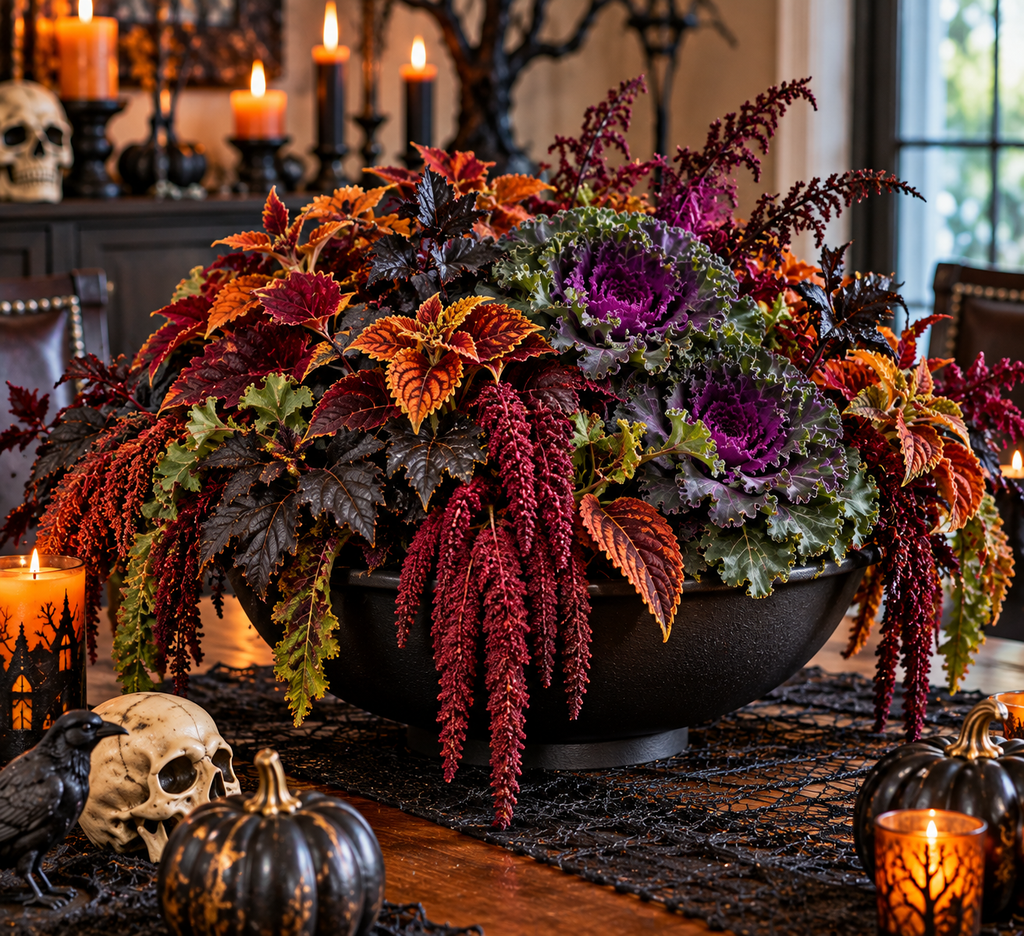
An arrangement with almost no flowers can still look lush. Mix ornamental kale heads, trailing amaranthus and dark coleus stems in a wide low bowl. Coleus is a tender plant, so cut stems come from a garden or garden center, and they root readily in water if you want to keep some.
Brassicas, including kale, develop a sulfur smell when their water ages. Change the water every day or two, and wash the container, not just the water, if it begins to smell.
10. A Spooky Branch Arrangement With Hanging Details
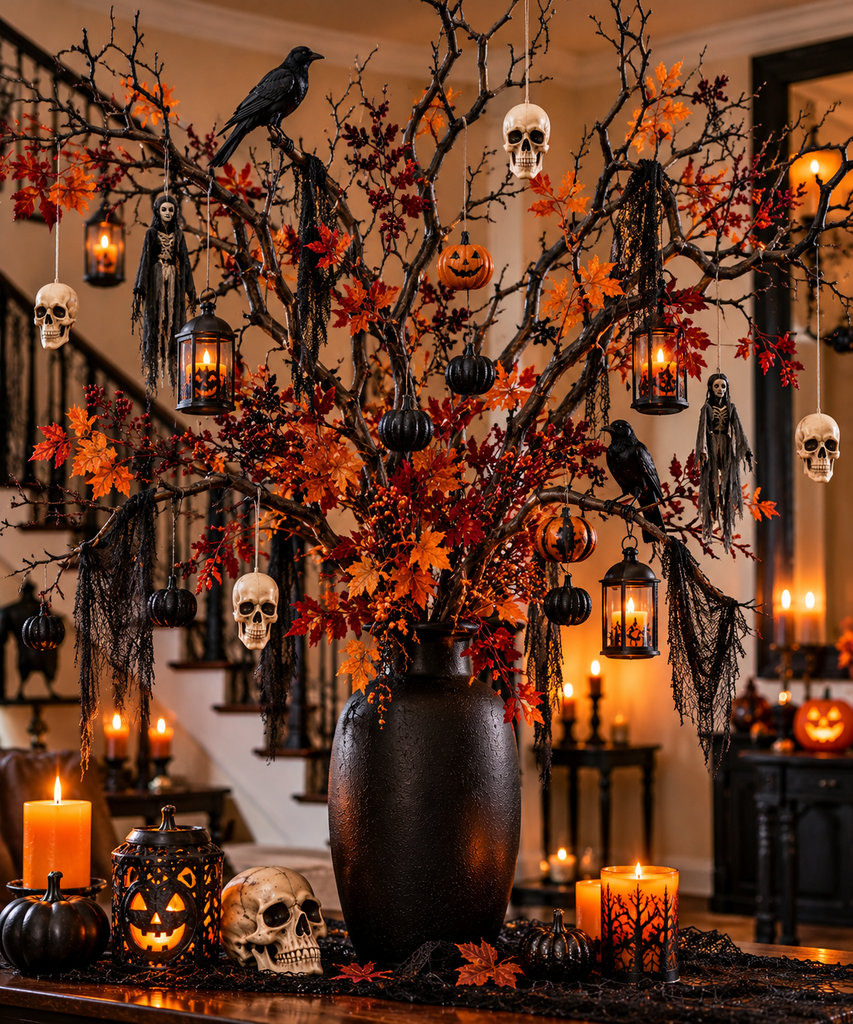
Curly willow, corkscrew hazel or any bare, gnarled branch can be a base for a dark, skeletal arrangement. Spray the branches matte black outdoors or in a well-ventilated space, and let them dry fully before moving them indoors. Stand them in a heavy vase weighted with stones or sand, because tall branches tip over easily.
Hang lightweight decorations from the branches: paper bats, small glass baubles, black ribbon, or small paper tags. Heavy ornaments bend the branches and tip the vase. A single orange rose or two placed at the base keeps the look from feeling bare.
Dried Flowers That Last the Whole Season
11. Dried Hydrangea, Celosia and Statice in a Black Urn
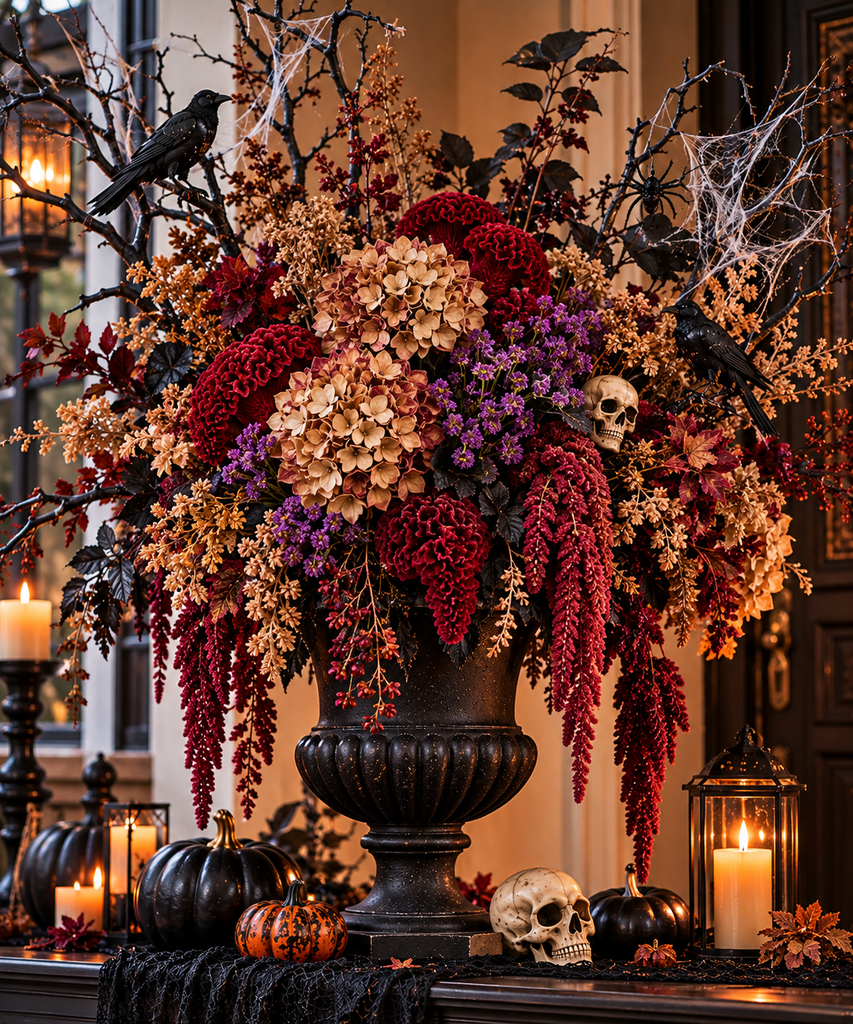
Dried arrangements need no water, which makes them practical for entryways and mantels. Hydrangea heads dry well when left on the plant until the petals feel papery in autumn. Celosia and statice can be hung upside down in a dark, dry, ventilated space for roughly two to three weeks, depending on humidity.
In a black urn, the muted rust, pink and burgundy tones of dried flowers look aged and gothic, as if the arrangement has been sitting in an old house. Keep it out of direct sunlight, which fades color, and expect some dust to settle over the season. A soft brush or a hair dryer on the cool setting works for cleaning.
12. Blackened Dried Grasses and Bleached Stems
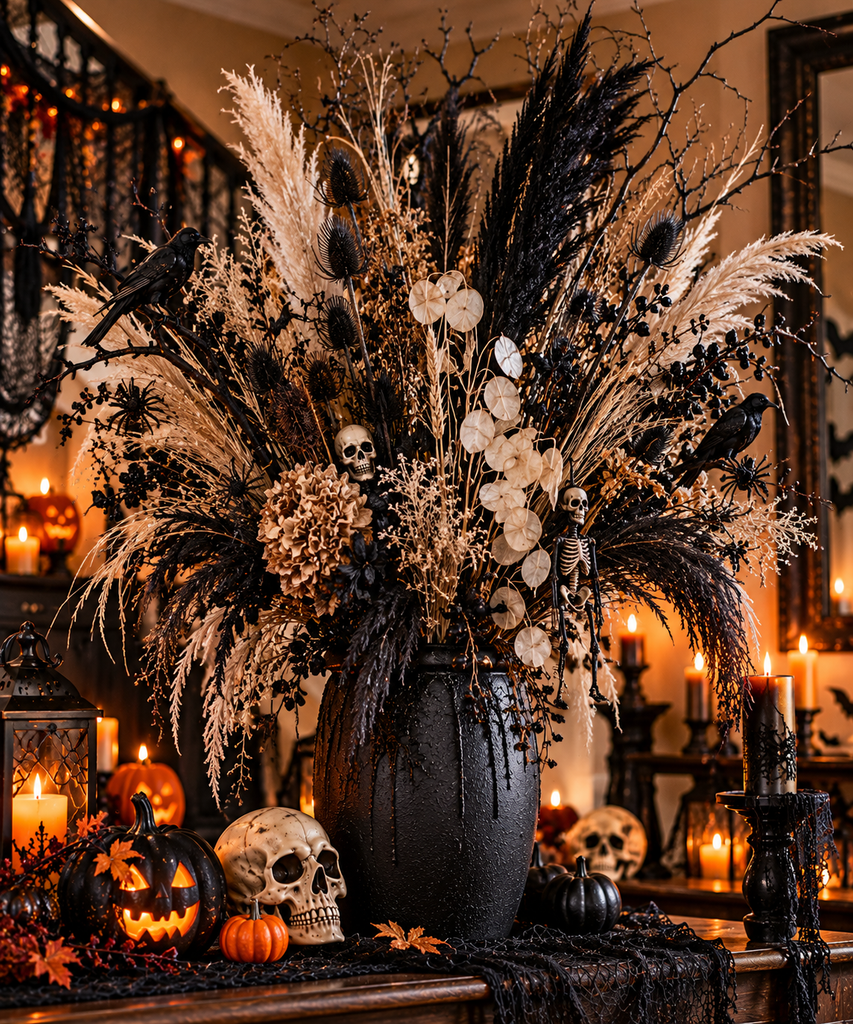
Dried wheat, bunny tail grass and similar stems can be painted matte black with spray paint, or bought pre-dyed. Test the paint on a single stem first, because some dried plant material absorbs paint unevenly and looks patchy. Spray outdoors or in a ventilated space, and let everything dry completely before arranging.
Pampas grass plumes are a popular choice, but pampas grass is considered invasive in parts of the United States, so if you’re growing your own, check your regional guidance before planting. Dried stems also shed, so this style suits a spot where you won’t mind a bit of mess.
13. A Dried Flower Mantel Garland
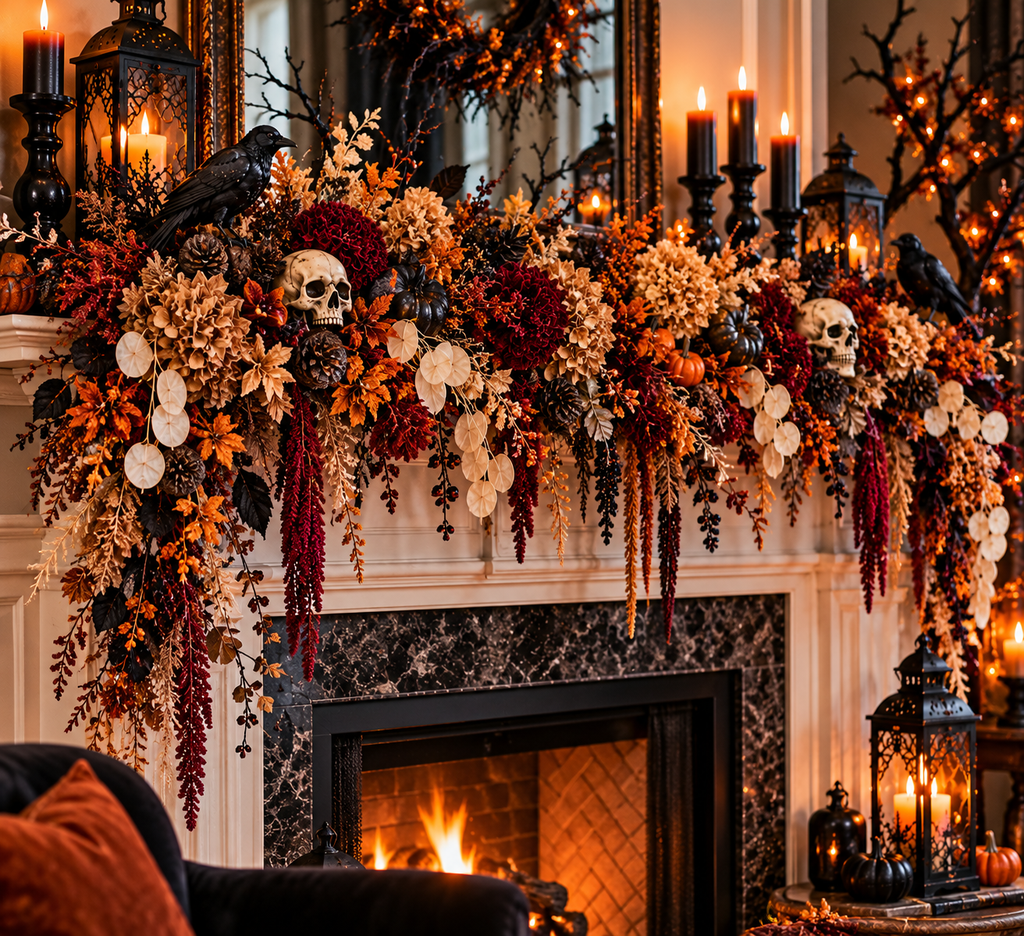
A garland along a mantel or shelf makes a larger statement than a vase. Wire dried hydrangea, celosia, preserved eucalyptus and dark seed heads to a flexible base such as a rope, thick wire or a length of garland. Weave in a few orange accents, such as dried orange celosia or faux orange roses, so the dark tones don’t look flat.
Safety matters more with dried materials than fresh. Dry stems and grasses are flammable, so keep the garland well away from fireplaces, open flames and heat sources. Use battery-operated candles in the same display.
Spooky Centerpieces With a Theme
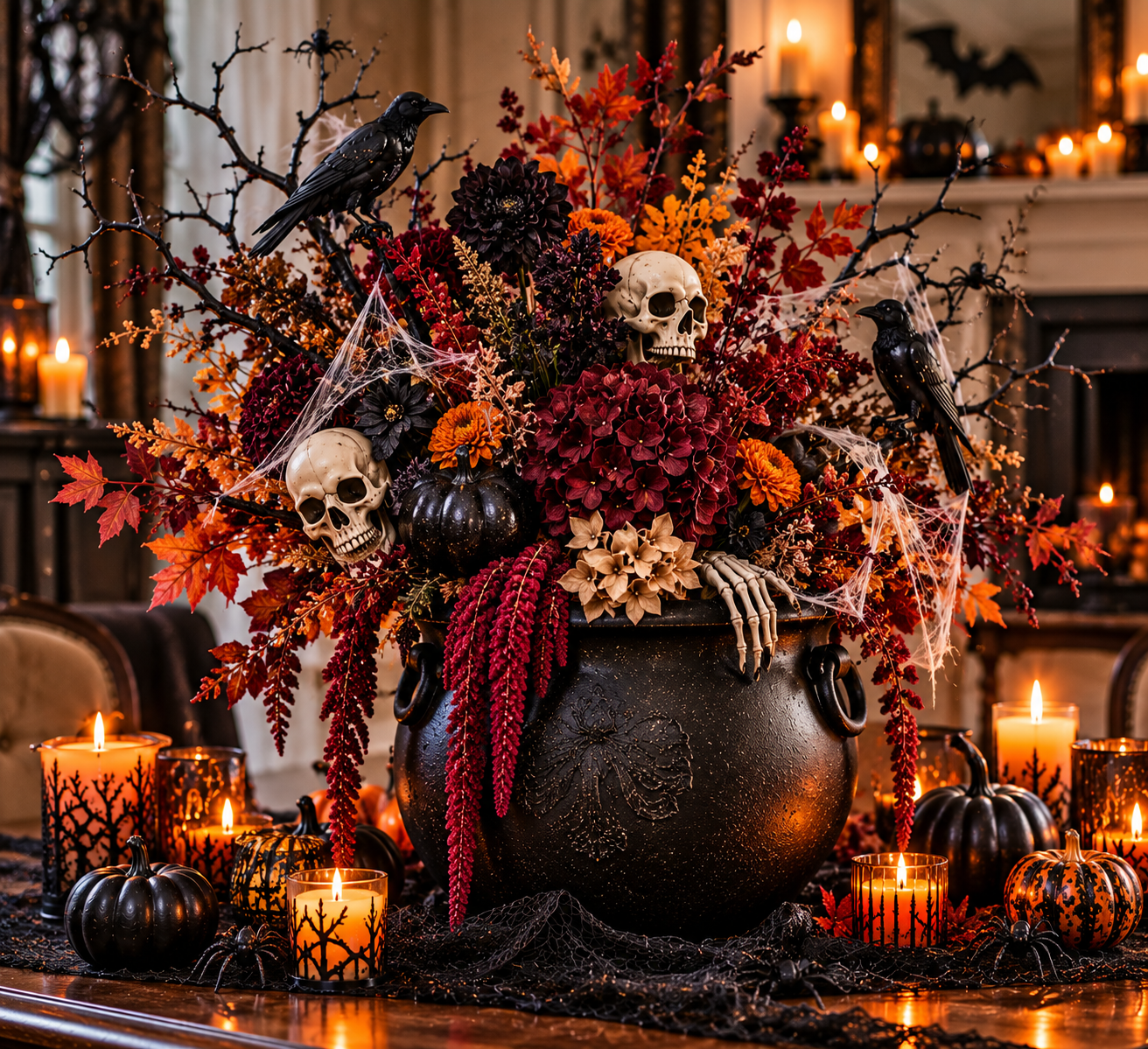
14. A Cauldron Centerpiece
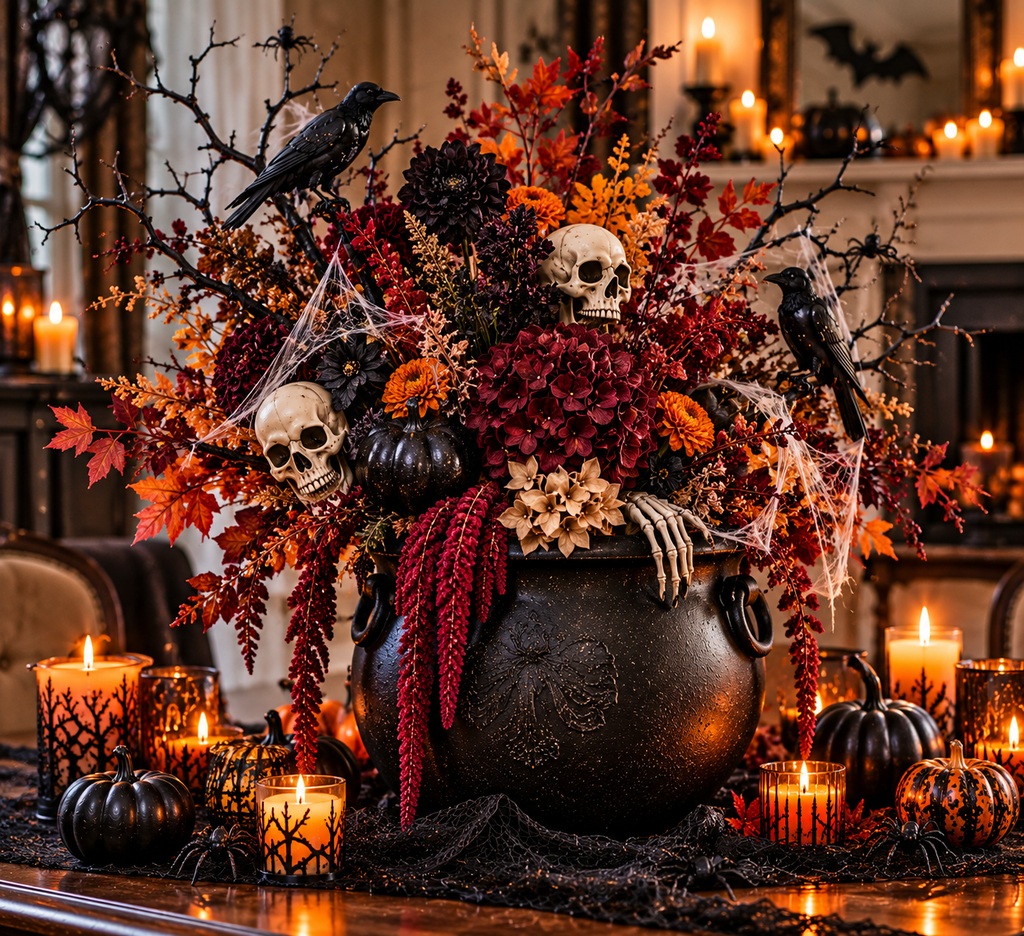
A black cauldron is a classic container, but metal or cast iron shouldn’t hold flowers directly. Rust can stain surfaces and some metals react with water. Place a plastic liner or jar inside, fill it with water, and arrange orange roses, burgundy mums and trailing greenery so the stems spill over the lip.
Some people add dry ice for a smoking effect. Dry ice can cause frostbite on contact and releases carbon dioxide, which accumulates in closed spaces. It should never be placed in a sealed container, and it needs good ventilation. LED lights or a small fog effect in a separate container are safer for an indoor display.
15. Moody Blooms in a Skull Vase
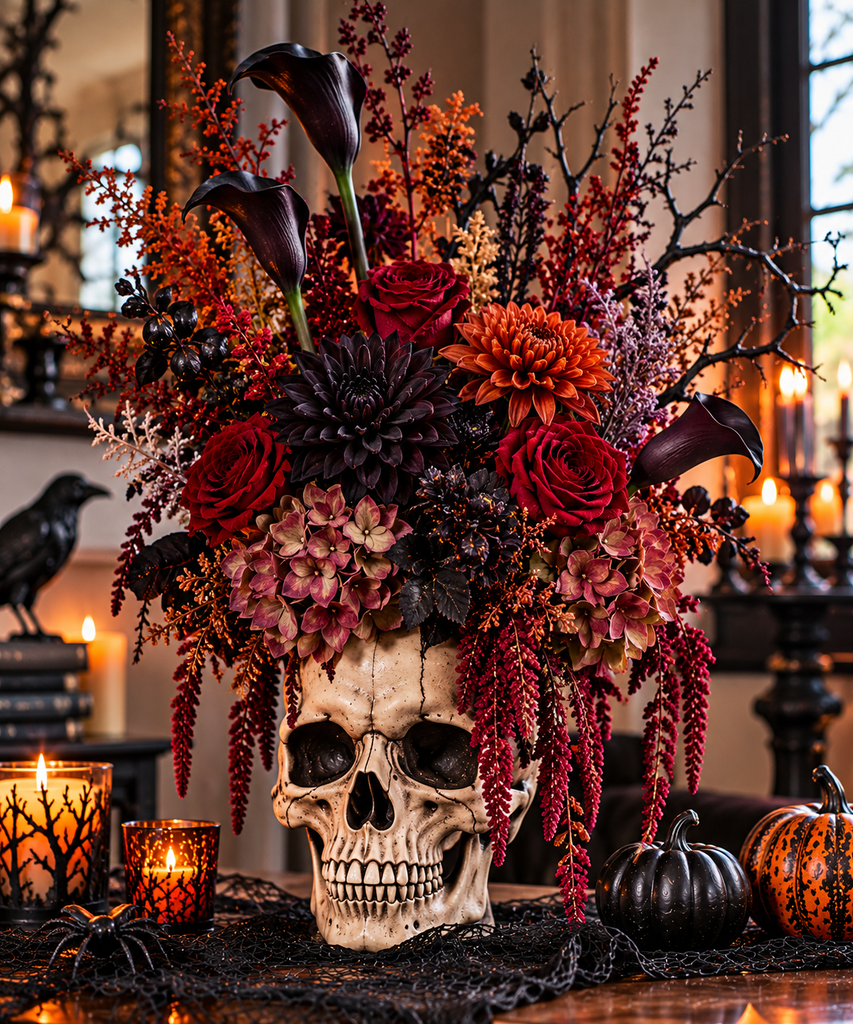
Ceramic skull planters and vases are widely available around Halloween. The opening is usually small, so the arrangement has to be compact. Place a small jar inside if the skull isn’t watertight, then fill it with short-stemmed dark flowers such as scabiosa, burgundy mums and a few orange roses.
The effect is theatrical, so keep the rest of the table simple. A skull with flowers and two candles tends to look better than a skull with flowers, spiders, cobwebs and a plastic raven.
16. A Ghostly White Arrangement With White Pumpkins
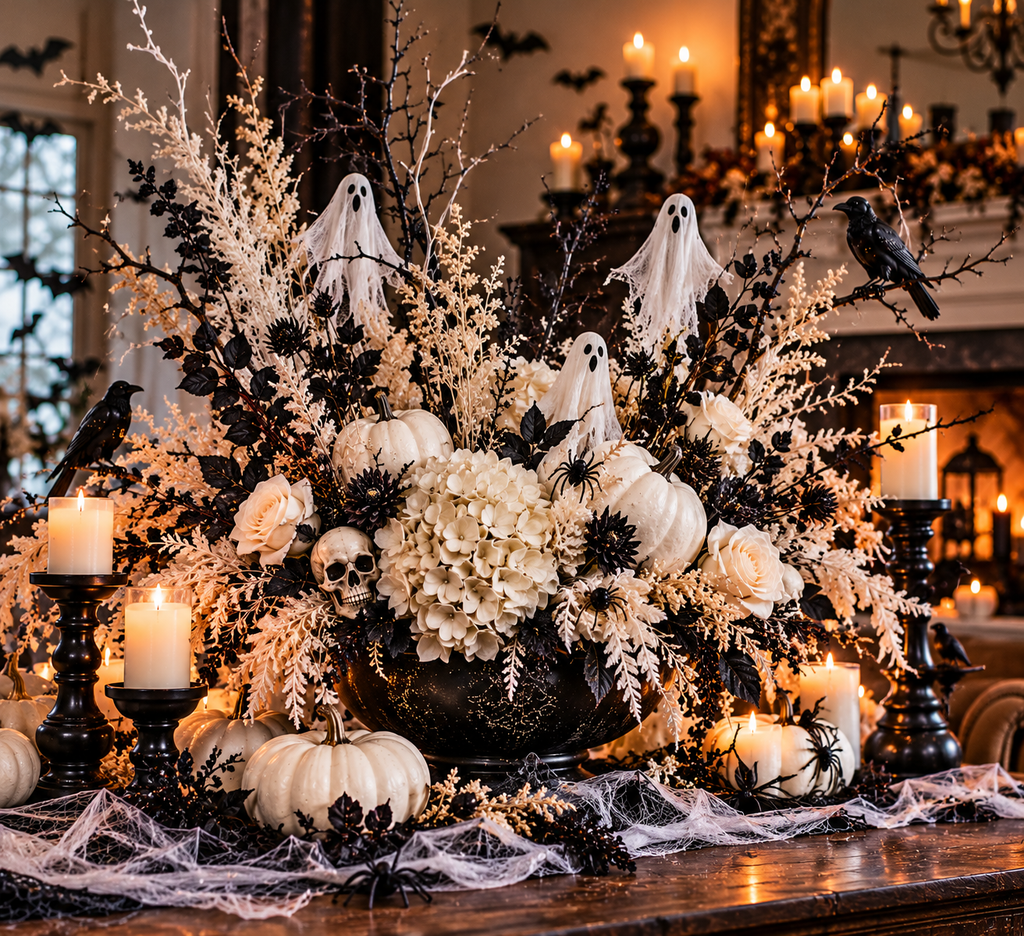
Halloween doesn’t have to be orange and black. White roses, white chrysanthemums and pale dried grasses arranged in a white pumpkin or a pale ceramic vase look eerie in a more restrained way. Set it against a dark wall or tablecloth for contrast.
White flowers show every blemish, so remove browning petals daily and recut the stems regularly. If you add cheesecloth or gauze for a ghostly effect, keep it far from candle flames.
17. A Row of Apothecary Bottles, One Stem Each
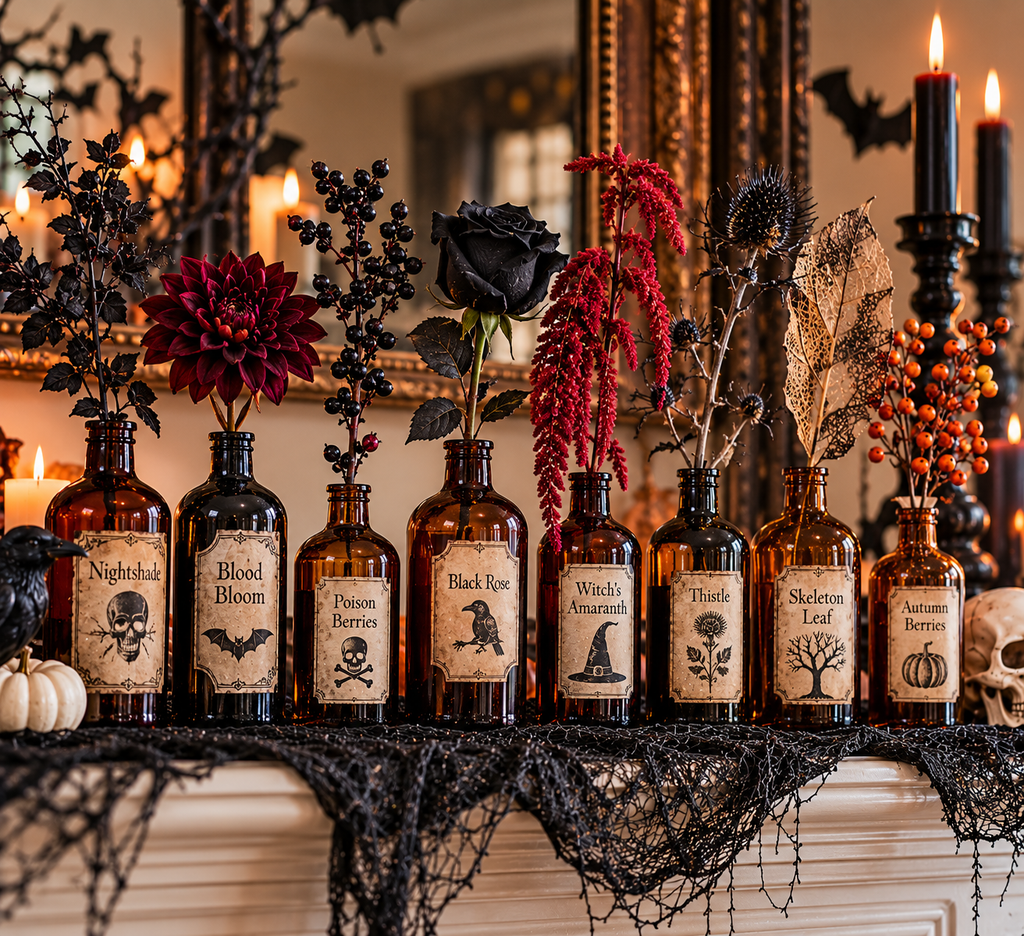
This is the best use for leftover stems. Collect five to seven small glass bottles of different heights, and place a single stem in each: one orange rose, one dark mum, one scabiosa, a sprig of ninebark. The lineup looks like a witch’s potion shelf and works well on a windowsill, bookshelf or mantel.
Use bottles that held food, perfume or other non-toxic contents, and wash them thoroughly. Small bottles hold little water, so top them up daily. Printed paper labels on string add atmosphere, and because each bottle is separate, you can swap out wilted stems without taking the whole display apart.
What to Know About Black Vases Before You Buy
An opaque black vase hides the water level, and that is a practical problem as much as a stylistic one. Flowers sitting in a nearly empty vase wilt fast, and in a dark container the water can look fine while smelling bad. Check the level daily, or keep a clear glass liner inside the vase so you can see the water.
Matte vases look more sophisticated in photographs and in person, but they show fingerprints and dust. Glossy ones are easier to wipe, though they reflect light. Spray-painted vases can flake where water or hands touch them, so use paint formulated for glass or ceramic, apply it outdoors, and keep the interior unpainted. Tall, narrow vases tip easily with branches in them, so weigh the bottom with stones or marbles.
Keeping Fresh Halloween Flowers Alive Until the 31st
Buy fresh flowers a day or two before you want them at their best, since cut flowers have often been in transit for days before they reach a shop. Start with a clean vessel, because bacteria in dirty vases shorten vase life considerably. Wash with hot soapy water, and rinse well.
Cut about an inch off the bottom of each stem at an angle, strip any leaves that would sit under water, and use flower food if it came with the bouquet. Change the water every two days and recut the stems each time. Keep the arrangement away from direct sun, heating vents and ripening fruit, which releases ethylene gas that speeds aging in sensitive flowers like roses.
If you’re making the arrangement a week ahead, choose the longer-lasting materials (mums, foliage, dried flowers) and add the shorter-lived ones (dahlias, roses) closer to the day.
Pets, Children and Candles: What to Check Before Placing an Arrangement
Several plants commonly used in Halloween décor are risky for animals or children. True lilies and daylilies are dangerous to cats, and even small exposures, including licking pollen off fur, can cause serious kidney problems. Chrysanthemums are listed by the ASPCA as toxic to dogs and cats and can cause vomiting, drooling and skin irritation. Calla lilies cause mouth irritation, and Chinese lantern plants (Physalis) and foxglove are poisonous in parts. Monkshood (Aconitum) is highly toxic and often appears in lists of spooky plants, but it can cause skin and mouth reactions and isn’t suitable for a home with children or pets.
If you have animals, check each plant against the ASPCA’s toxic plant list before buying, and place arrangements out of reach. Roses are generally considered non-toxic, but thorns can injure.
Candles and dried plant material are a fire hazard together. Use battery-operated candles near anything dry, and never leave real flames unattended near foliage, paper decorations or fabric. When spraying paint on vases, branches or stems, work outdoors or in a well-ventilated space and follow the label.
Questions People Actually Ask
How far ahead can I make a fresh arrangement?
Two to three days is a reasonable window for roses and dahlias, and up to a week for chrysanthemums and foliage if you change the water. For Halloween night, assemble the final version the day before.
Are orange roses naturally orange, or dyed?
Both exist. Naturally orange roses come in shades from peach to deep copper. Very bright or unusually uniform tones may involve dye, so if color accuracy matters, ask the florist.
Can I reuse a dried arrangement next year?
Often yes. Stored in a dry place away from sunlight, dried flowers can last a year or longer, though colors fade and stems become brittle. Wrap them loosely in paper and avoid sealed plastic, which traps moisture.
Final Thoughts
Halloween flowers work best when contrast does the heavy lifting: a small amount of bright orange against deep burgundy and black, in a container with some character. Choose one arrangement from the list, buy the longest-lasting stems you can find, and plan for the practical details, such as a liner in any pumpkin or cauldron, a way to check the water in a black vase, and LED candles in place of flames near dried material. Most of what makes these look polished is what happens before the flowers go in the vase.

About Syprose Kiche
Syprose Kiche is the creator and writer behind My Besuited Home, a practical home and garden website covering DIY projects, gardening, lawn care, landscaping, home improvement, and outdoor living. She focuses on turning everyday homeowner questions into clear, practical guides backed by careful research and useful real-world considerations.