
Over the last fifteen years, I have lived with dirt permanently lodged under my fingernails and a back that groans every time I see a 40-pound bag of mulch. I’ve killed more “unkillable” plants than I care to admit, including the time I accidentally turned my backyard into a swamp trying to grow water lilies in a plastic kiddie pool.
If you’re tired of your garden borders looking like a lush paradise in May and a desolate wasteland by July, you aren’t alone. Most people buy what looks pretty at the garden center on a Saturday morning, forget that flowers have “shift work,” and end up with a brown mess by August. I’m here to tell you that you don’t need a degree in botany—you just need plants that actually pull their weight.
Here are the heavy hitters I’ve relied on to keep my borders blooming from the first spring thaw until the frost finally puts the garden to bed.
1. Rozanne Cranesbill Geranium (The Groundcover Queen)
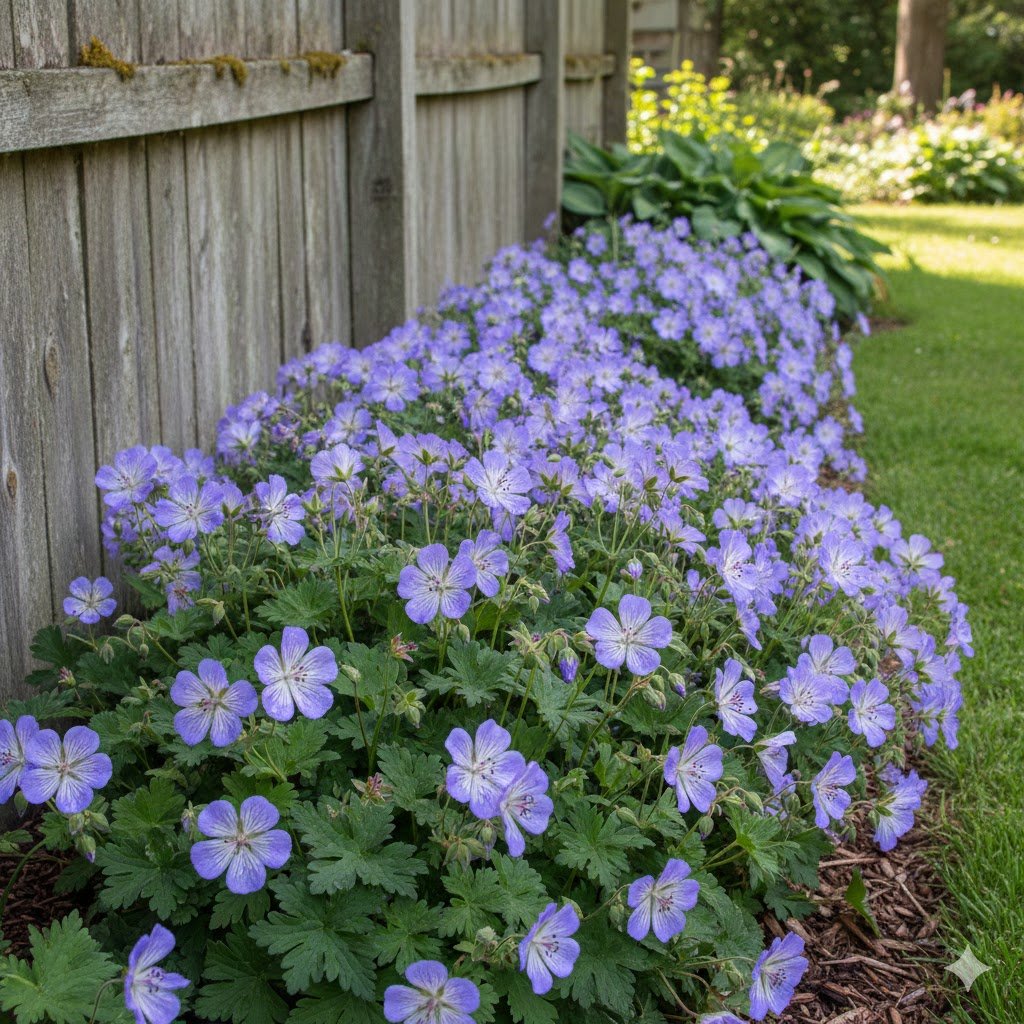
If you’ve spent any time on Pinterest, you’ve seen those “perfect” cottage gardens. I used to try to replicate them with finicky roses that dropped their petals the moment a breeze hit them. Then I found ‘Rozanne.’ This isn’t your grandma’s red potted geranium; this is a perennial powerhouse that spreads out like a violet carpet.
I planted three of these near my front walkway five years ago. By June, they had formed a solid mass of violet-blue flowers that didn’t stop until a hard freeze in late October. They are remarkably low-maintenance. While other plants are flagging in the summer heat, Rozanne just keeps pumping out new buds.
The best part? You don’t have to deadhead them. I’m a lazy gardener at heart, and anything that cleans up after itself is a winner in my book. Just give them a little room to spread, because they will definitely try to colonize your lawn if you aren’t looking.
2. Walker’s Low Catmint (Better Than Lavender)
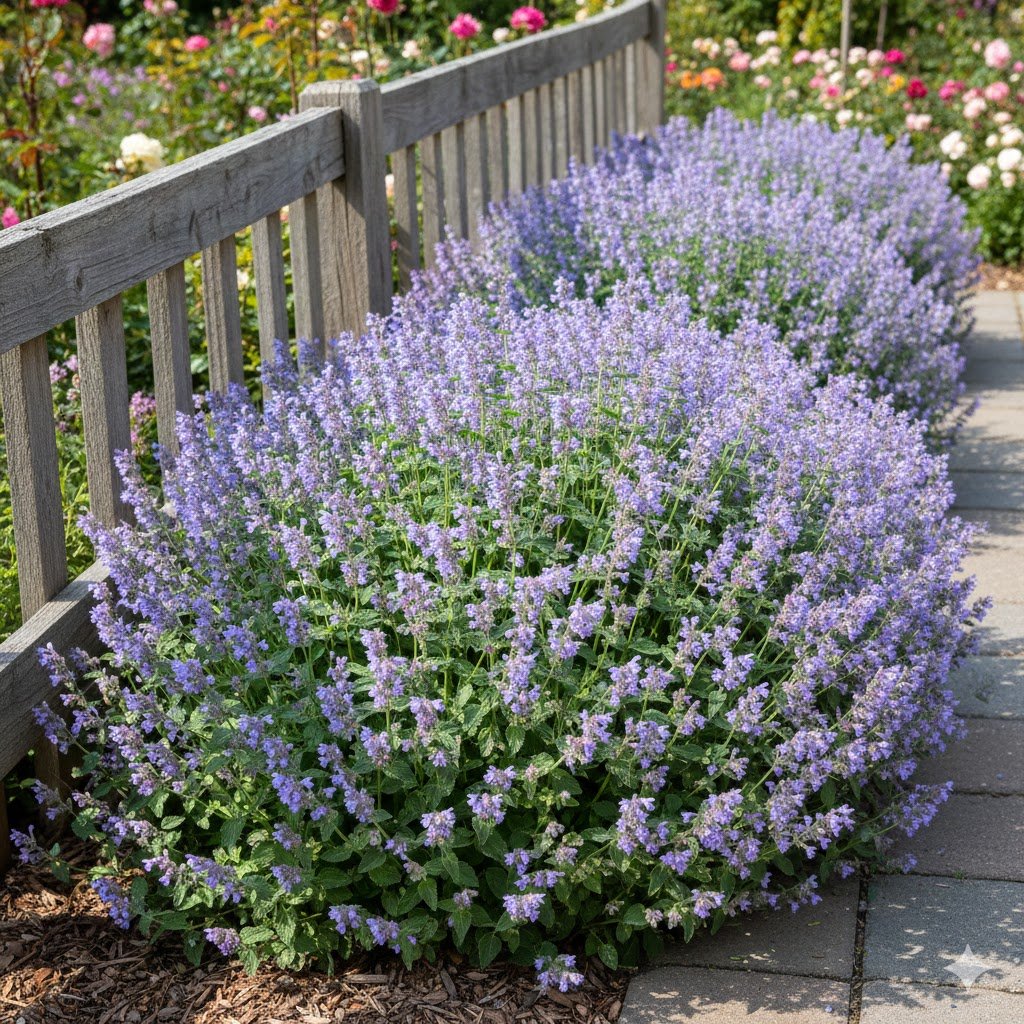
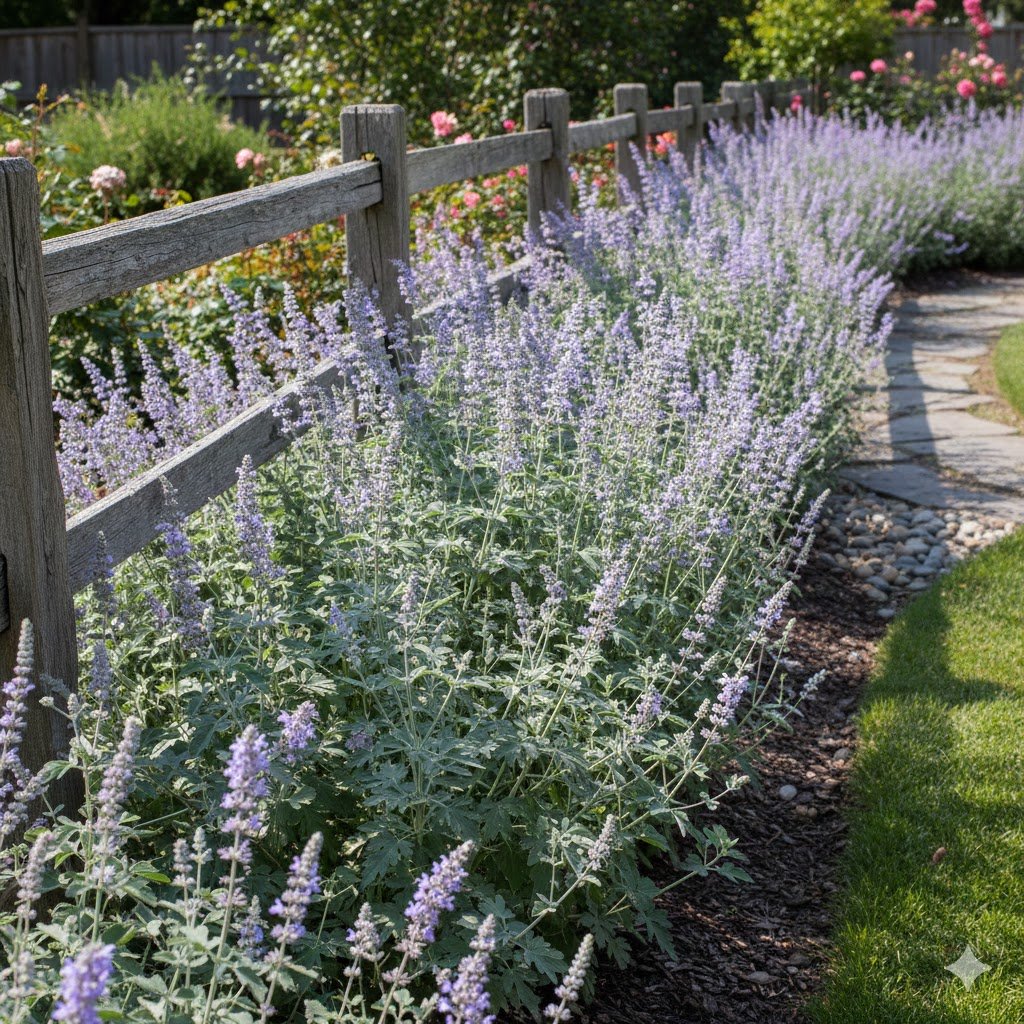
I’m going to be honest: I think lavender is overrated for most home gardeners. Unless you live in a Mediterranean climate with perfect drainage, lavender usually turns into a woody, dead-looking stick within two seasons. I wasted hundreds of dollars on “English Lavender” before I switched to Walker’s Low Catmint.
Catmint gives you that same hazy purple look but is virtually indestructible. It starts blooming in late spring and, if you give it a “haircut” (shearing it back by half) after the first flush fades, it’ll bounce back and bloom all the way through autumn. My neighborhood cats love it, too, though luckily it doesn’t make them as crazy as true catnip.
I once backed my lawnmower over a clump of this stuff by mistake. I thought for sure I’d killed it. Two weeks later, it was pushing up fresh green shoots like nothing happened. It’s the ultimate “set it and forget it” border plant for people who have better things to do than coddle their perennials.
3. Stella d’Oro Daylily (The Reliable Workhorse)
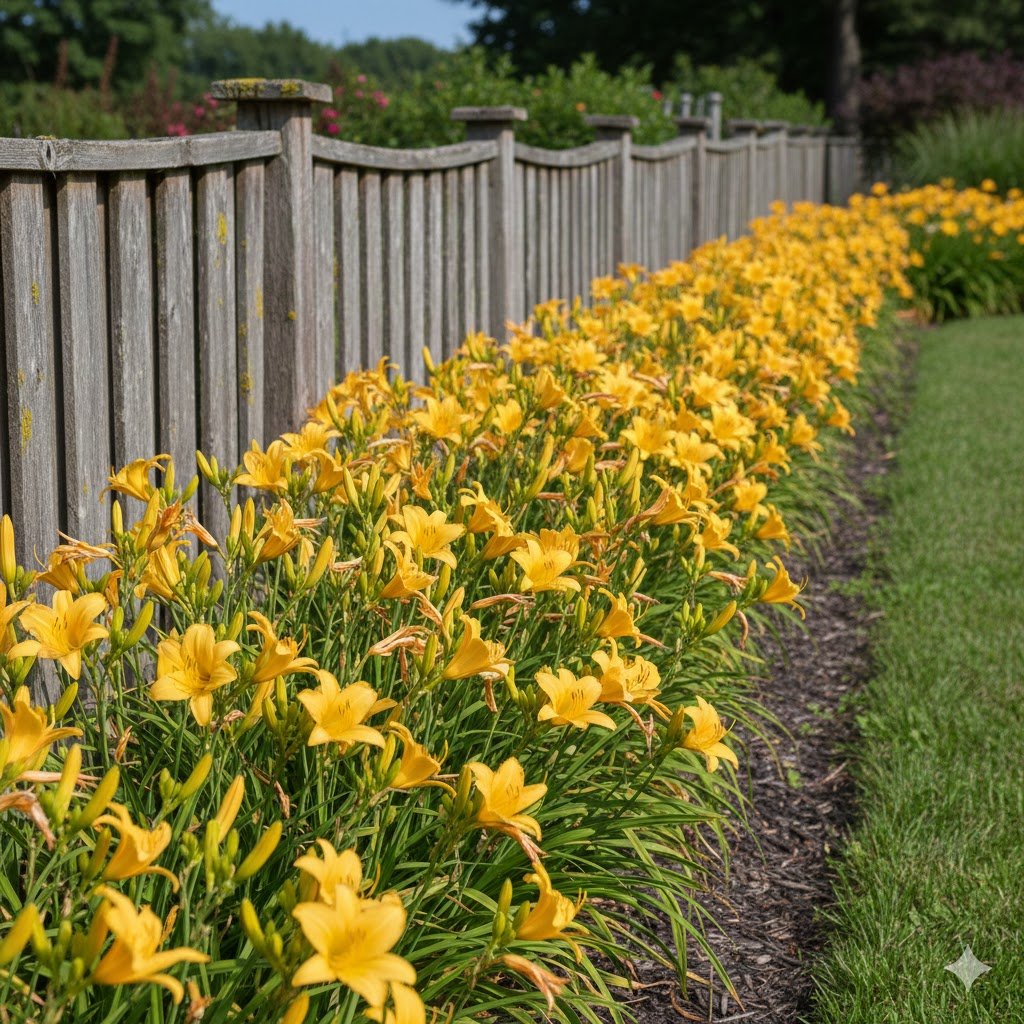
Some garden snobs will tell you that Stella d’Oro is “boring” because you see it in every McDonald’s parking lot in America. You know why you see it there? Because it can survive being blasted by car exhaust, ignored by landscapers, and baked on asphalt, all while blooming its head off.
I use these to anchor the very edge of my borders. They start their golden-yellow show in late May and keep reblooming in waves. They are the Toyota Camry of the plant world—not flashy, but they will never let you down. I’ve divided my original three plants into about twenty over the years; it’s basically free landscaping.
Just a heads-up: deer think daylilies are a five-star salad bar. If you have a deer problem, you’ll want to spray these with something stinky or stick to the prickly stuff. But for everyone else, these are the backbone of a long-season garden.
4. Coneflowers (Echinacea) for Pollinators
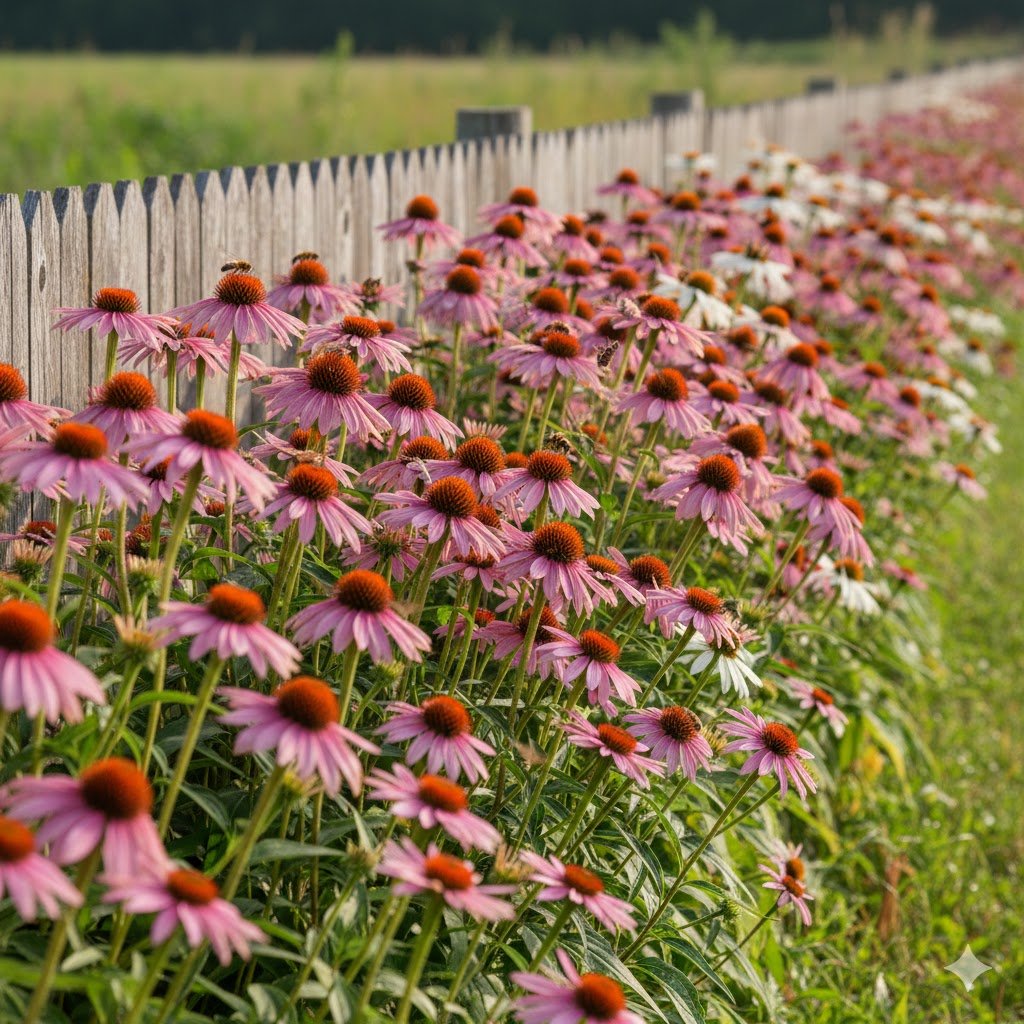
The summer my zucchini took over the entire ZIP code, I realized I needed more bees. I started planting Echinacea, and my vegetable yields skyrocketed. These plants are tough, drought-tolerant, and they come in every color from classic purple to “Cheyenne Spirit” orange.
I prefer the native purple varieties because the fancy “double-scoop” hybrids tend to be a bit finicky and often don’t come back after a wet winter. The standard purple coneflower will bloom from mid-summer straight into the fall. Plus, if you leave the seed heads up in the winter, the goldfinches will treat your yard like a local bistro.
Don’t bother buying the expensive “designer” colors unless you’re prepared to treat them like annuals. Stick to the basics. They’ve got deep taproots, so once they’re established, you can basically stop watering them. I’ve ignored mine during three-week droughts, and they just looked at me and asked for more sun.
5. Black-Eyed Susans (Rudbeckia)
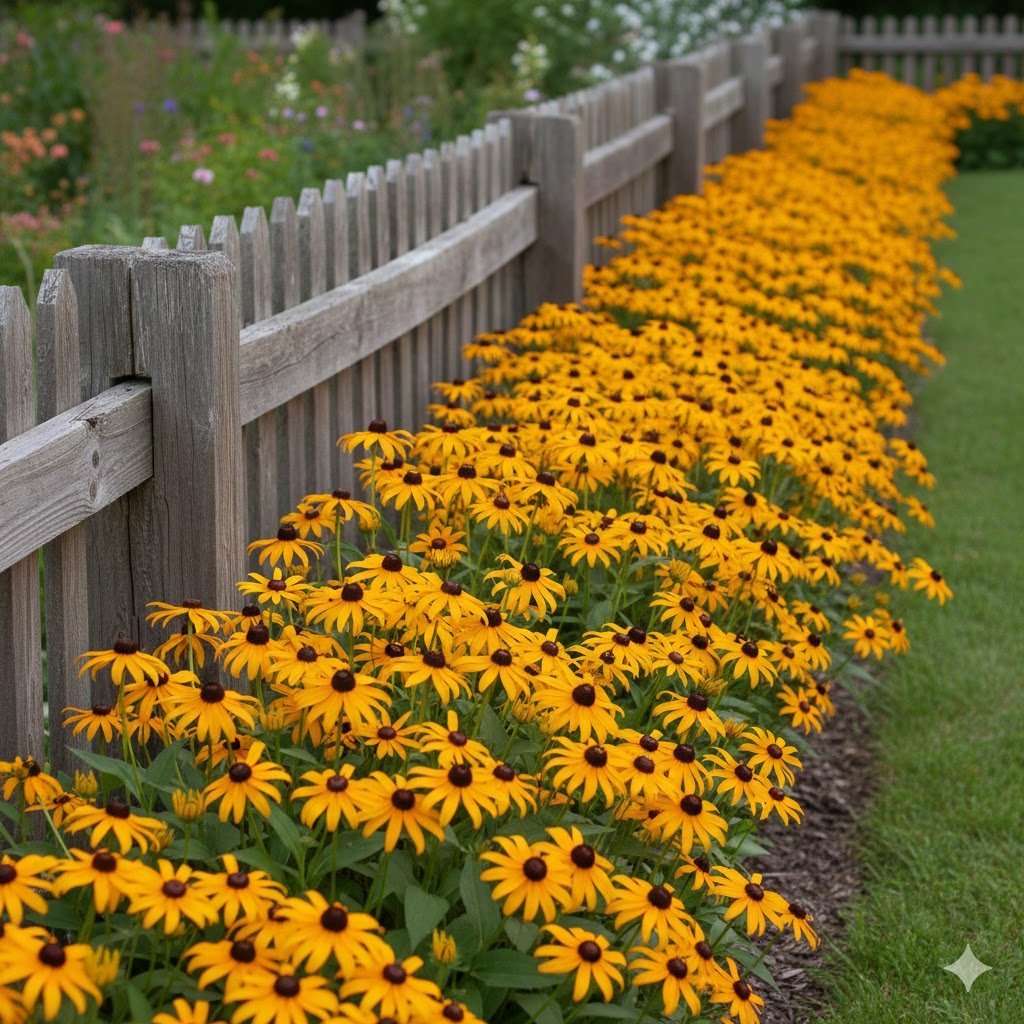
If you want a garden that looks like a sunset, you need Rudbeckia. Specifically, look for ‘Goldsturm.’ These are the quintessential late-summer plants that refuse to quit. They start up in July and are still glowing when the pumpkins start appearing on people’s porches.
I love these because they fill in gaps. If you have a hole in your border where a spring bulb died back, shove a Black-Eyed Susan in there. They have a cheerful, “happy-to-be-here” vibe that offsets some of the more dramatic, drooping plants.
One word of caution: they can get powdery mildew if you crowd them too much. I learned that the hard way when I packed them in like sardines. Give them some breathing room for airflow, and they’ll stay bright green and golden until the snow flies.
6. Autumn Joy Sedum (The Late Season Hero)
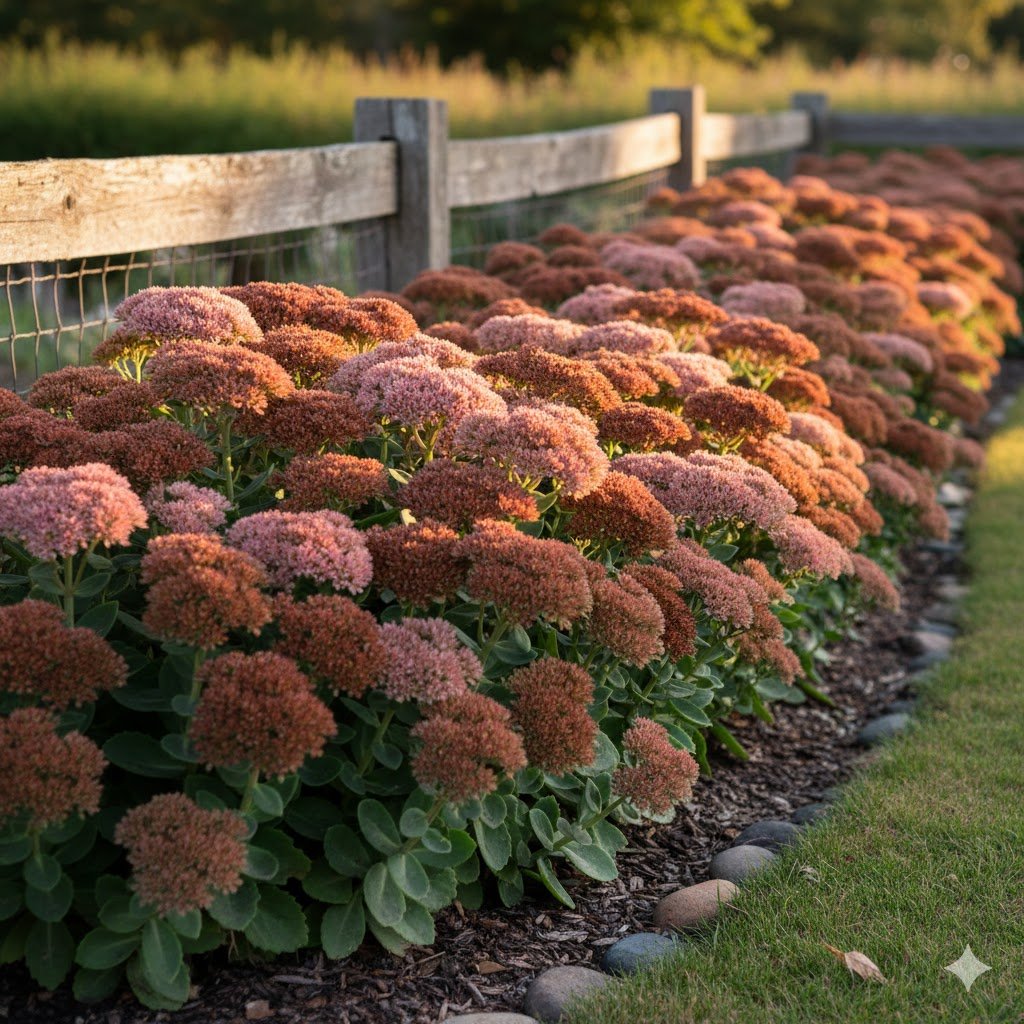
Most people forget about succulents in their borders, but Autumn Joy is a mandatory addition. It looks like a heads of broccoli in the spring, turns a dusty pink in late summer, and then deepens into a rich rusty red as the temperatures drop.
It’s one of the few plants that actually looks better the colder it gets. Even in the dead of winter, the dried flower heads look great covered in frost. I’ve used them to border my driveway because they don’t mind the heat reflecting off the concrete.
It’s almost impossible to kill these. I once left a clump sitting on top of the soil for a week because I got distracted by a neighborhood BBQ, and the thing just started growing roots into the air. If you can’t grow Sedum, you might want to consider plastic flowers.
7. Salvia ‘May Night’
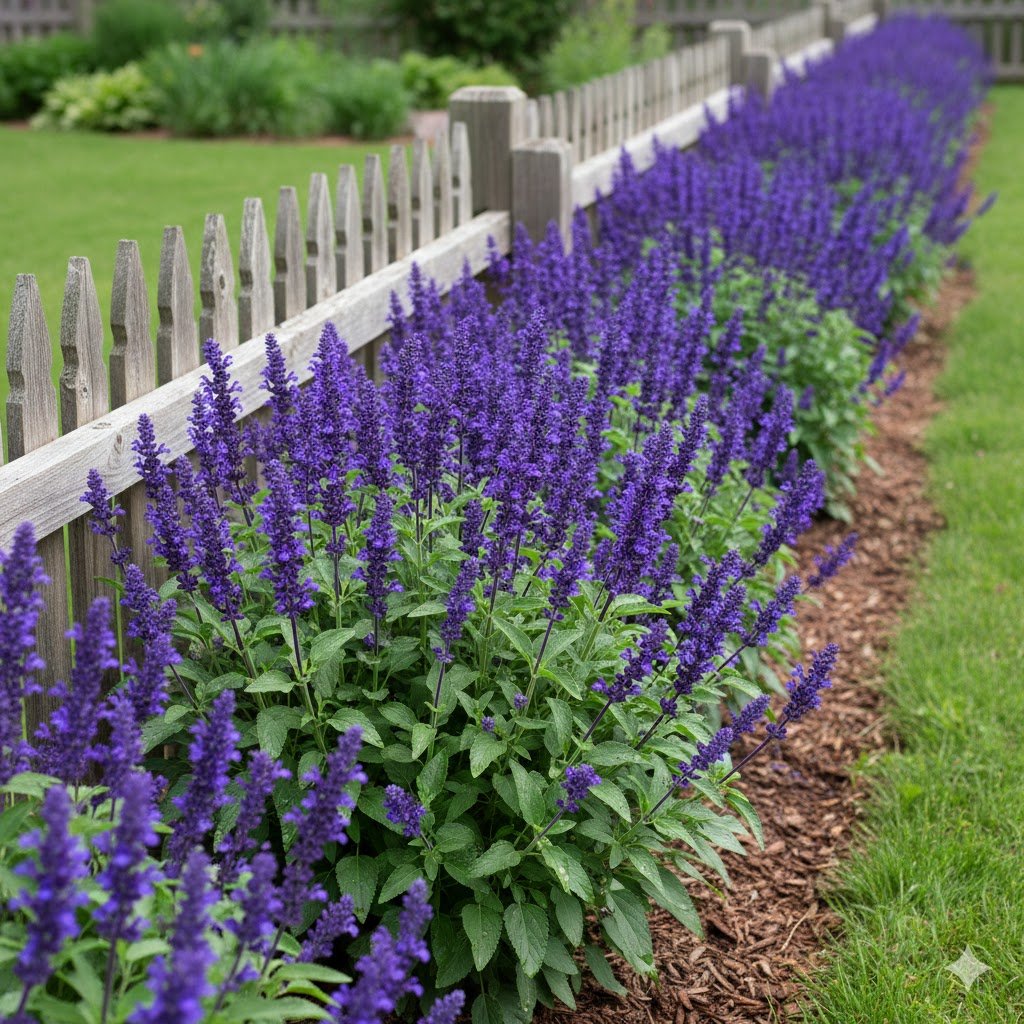
I’m a sucker for spikes. Most border plants are mounded or round, so you need something vertical to break up the silhouette. Salvia ‘May Night’ is my go-to. It produces these deep, dark purple spikes that stand up straight and salute the sun.
The trick with Salvia is the “deadhead dance.” If you cut off the spent flower spikes, the plant will immediately start working on a second and third round. I’ve had mine blooming in June, August, and even a little bit in October.
Be careful not to over-fertilize these. I once gave mine a heavy dose of nitrogen, and they grew so fast they flopped over and looked like a pile of purple spaghetti. They actually prefer “lean” soil, so don’t be too nice to them.
8. Coreopsis ‘Moonbeam’
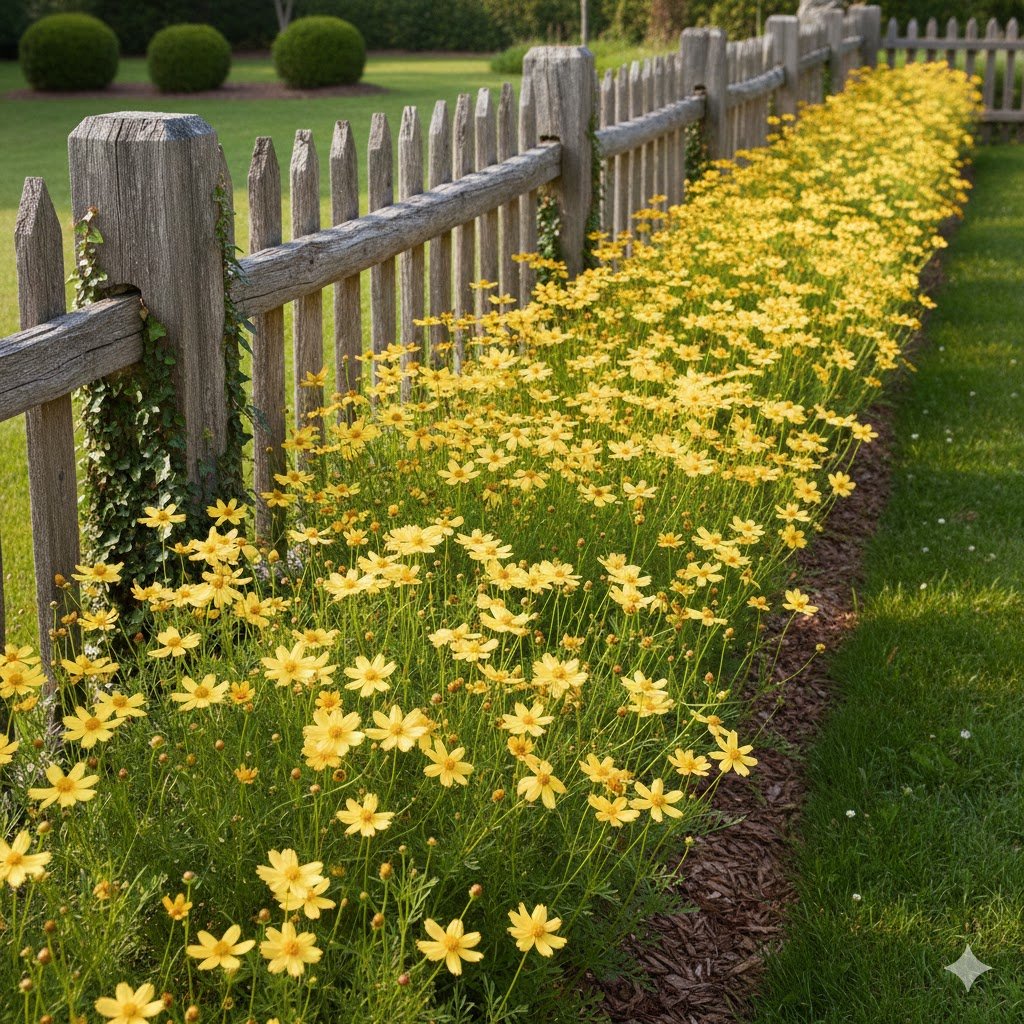
If you want a soft, buttery yellow color that blends with everything, ‘Moonbeam’ is the answer. It has thread-like foliage that looks delicate but is actually tough as nails. It’s like a cloud of tiny stars that hovers at the front of your border.
I love these because they don’t scream for attention; they just provide a consistent background of color. They bloom from June until the first frost without much fuss.
I’ve found they do best in full sun. If you put them in the shade, they get “leggy”—which is gardener-speak for “tall, ugly, and falling over.” Keep them in the bright spots and they’ll stay compact and beautiful.
9. Blanket Flower (Gaillardia)
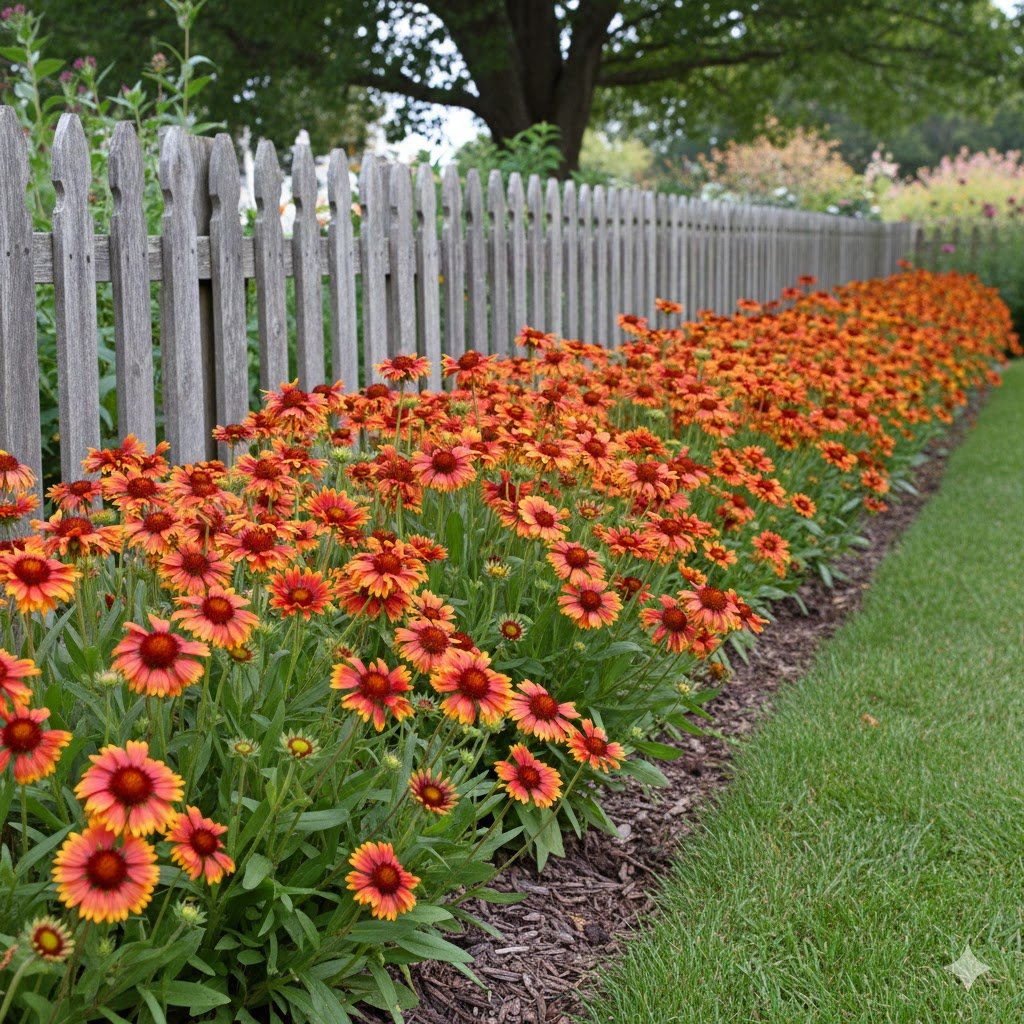
These are for the bold gardeners. They are red and yellow striped and look like something out of a circus. They thrive on neglect. In fact, if you water them too much or give them too much rich compost, they’ll actually die.
I planted these in a sandy, miserable patch of dirt near my mailbox where nothing else would grow. They loved it. They bloomed for four months straight. They’re technically a short-lived perennial, meaning they might only last three years, but they usually drop enough seeds to keep the party going.
Quick Side Note: If you’re looking for a plant that makes your neighbors stop and ask, “What is that?”, this is the one. Just don’t put it next to anything too pastel or it’ll make the other plants look washed out.
10. Butterfly Bush (Buddleia)
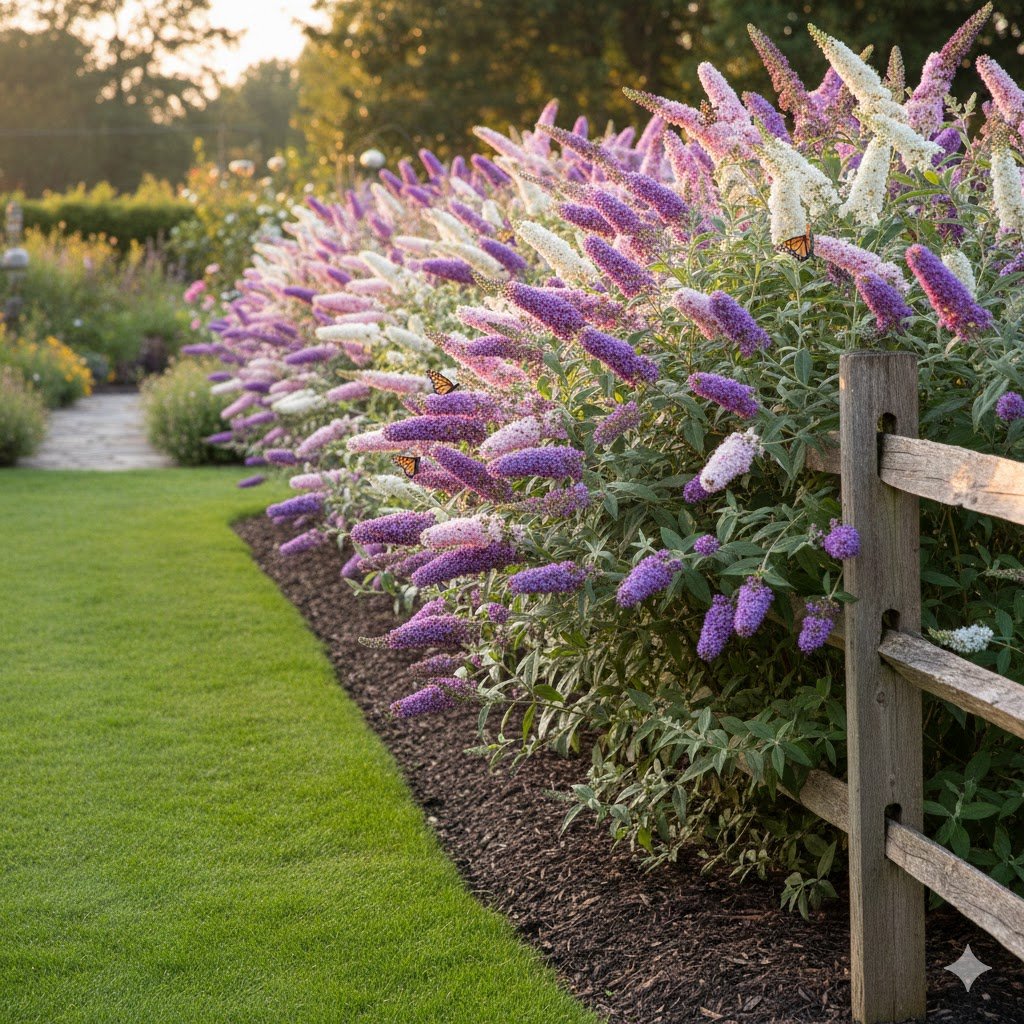
Wait—before the “invasive species” police come for me, look for the sterile, dwarf varieties like ‘Lo and Behold.’ These don’t turn into 12-foot monsters that take over the neighborhood. They stay about 2 or 3 feet tall, making them perfect for the middle of a border.
They smell like honey and, as the name suggests, butterflies will treat your yard like a Coachella for insects. They bloom on “new wood,” so I just hack mine back to about 12 inches in the early spring, and they grow back better than ever.
I’ve had these bloom well into November during a mild year. They are tough, sun-loving, and provide a nice structural element that most “floppy” perennials lack.
11. Russian Sage
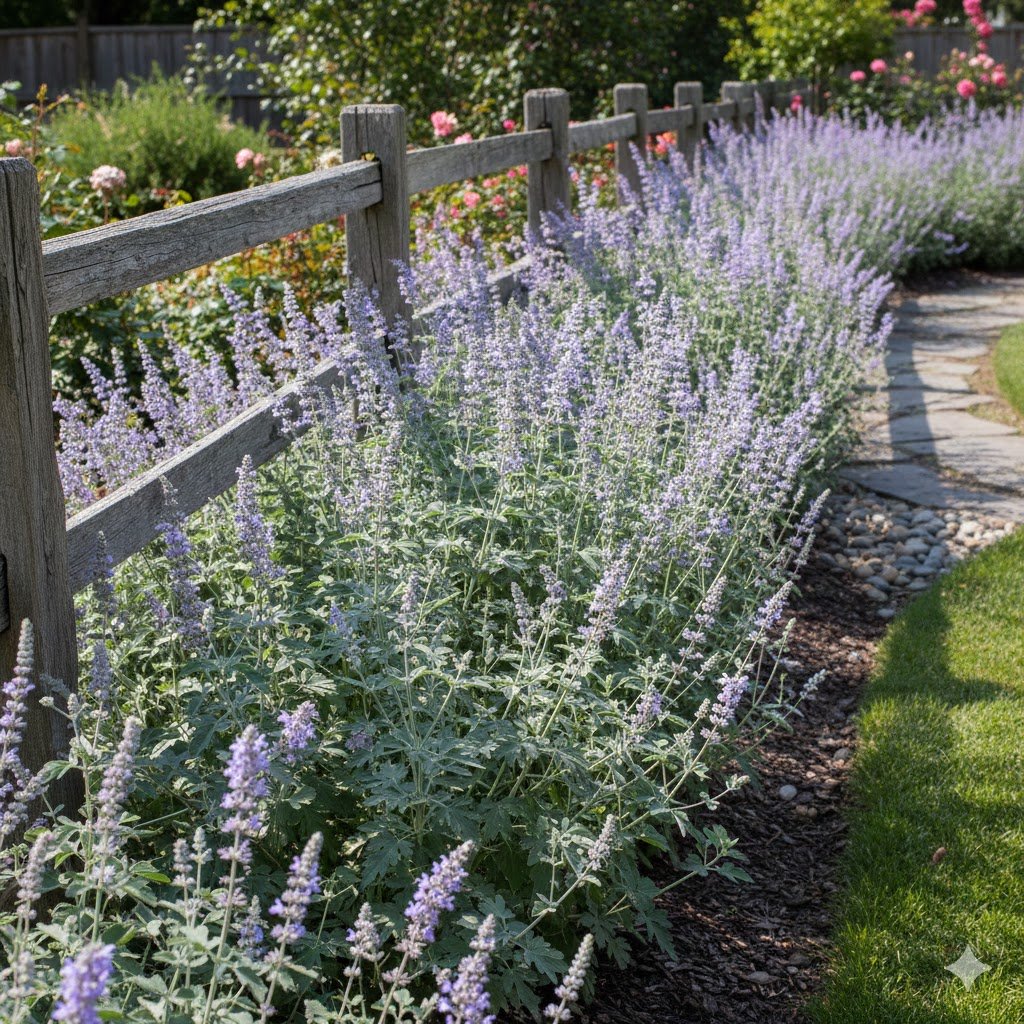
If you have a spot that is hot, dry, and generally miserable, put Russian Sage there. It has silvery-grey foliage and airy blue flowers. It looks like a cloud of smoke from a distance.
I use this at the back of my borders because it can get a bit tall. It’s the ultimate “drought-buster.” I didn’t water mine once during the record-breaking heatwave of ’22, and it looked better than I did.
One thing to watch: it smells a bit like turpentine if you crush the leaves. Some people love it; some people hate it. I personally like it because it keeps the rabbits away from my more expensive lilies.
12. Phlox ‘Jeana’
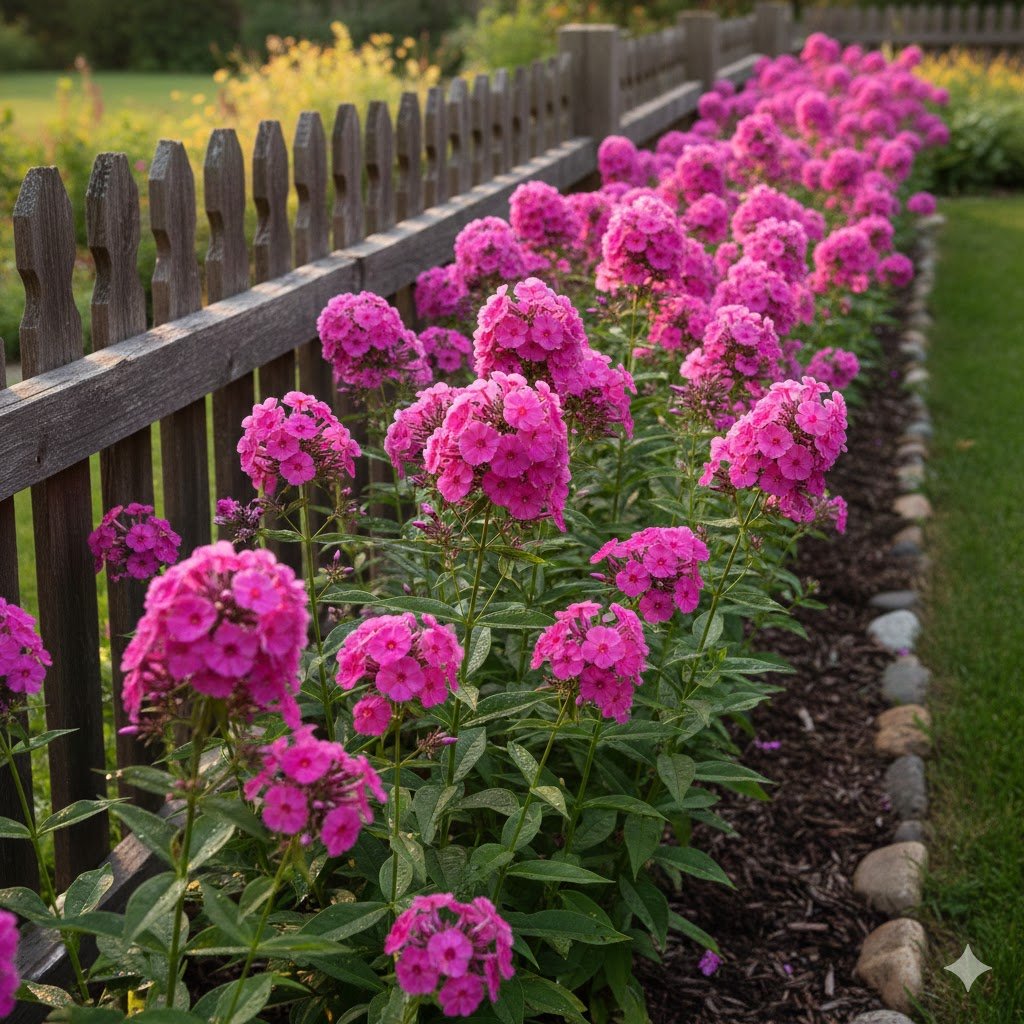
Garden phlox is a classic, but most varieties get “mildew” (that white flour-looking stuff on the leaves) by July. ‘Jeana’ is the exception. It’s incredibly resistant to disease and has smaller, more numerous flowers that butterflies go absolutely nuts for.
It starts blooming in mid-summer and goes long after other plants have quit. I’ve found it’s best in the middle of a border because it grows about 3 to 4 feet tall.
It’s one of the few long-bloomers that can handle a little bit of afternoon shade. If your garden isn’t a total sun-drenched desert, ‘Jeana’ will be your best friend.
13. Scabiosa (Pincushion Flower)
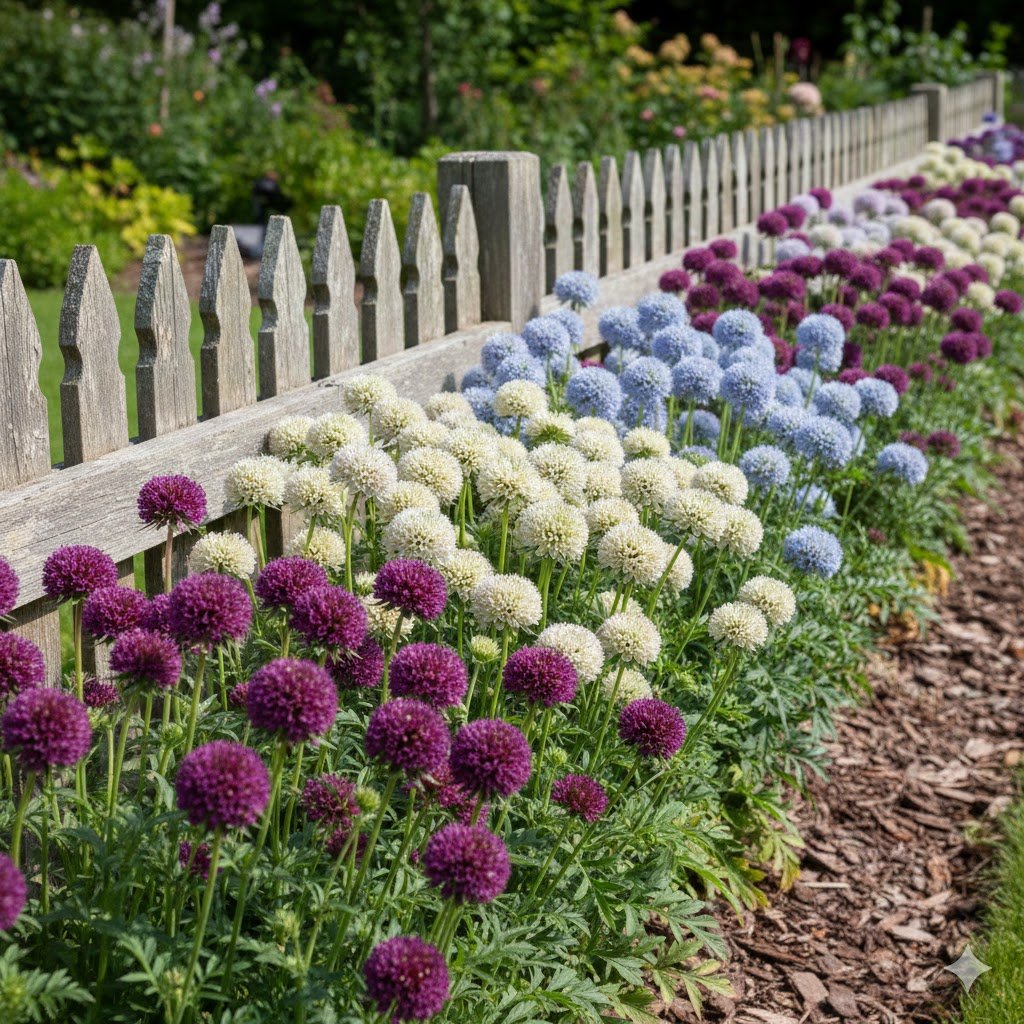
These are just charming. They have these wiry stems with flowers that look like little blue or pink pincushions. They are much tougher than they look.
I use these in the very front of the border because they stay low to the ground. They start in late spring and will keep going if you’re diligent about snipping off the dead ones.
I’ve found that the ‘Butterfly Blue’ variety is the most reliable. I once had a patch of these survive a freak hailstorm that shredded my hostas; they just tucked their heads down and kept on blooming the next day.
14. Hellebores (The Early Birds)
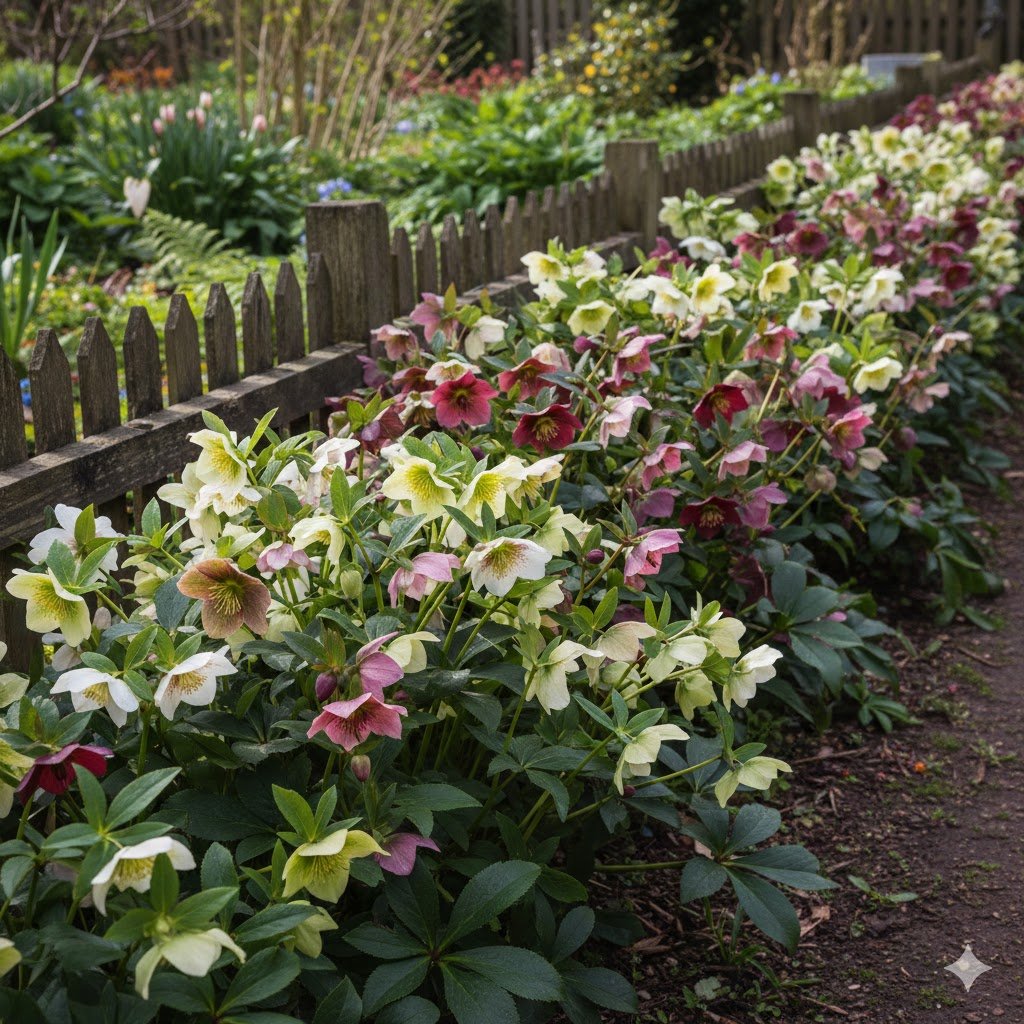
Okay, these don’t bloom until fall, but they start so early in the spring (sometimes while there is still snow) that they earn their spot for the “Spring” part of the “Spring to Fall” promise. They are the “Lenten Rose.”
Their leather-like leaves stay green all winter, which is a godsend when everything else is brown. They start blooming in February or March and the flowers actually last for months because they aren’t true petals—they’re sepals.
I put these in the shady parts of my borders where the summer-bloomers won’t go. They are the “warm-up act” for the rest of the garden.
15. Ice Plant (Delosperma)
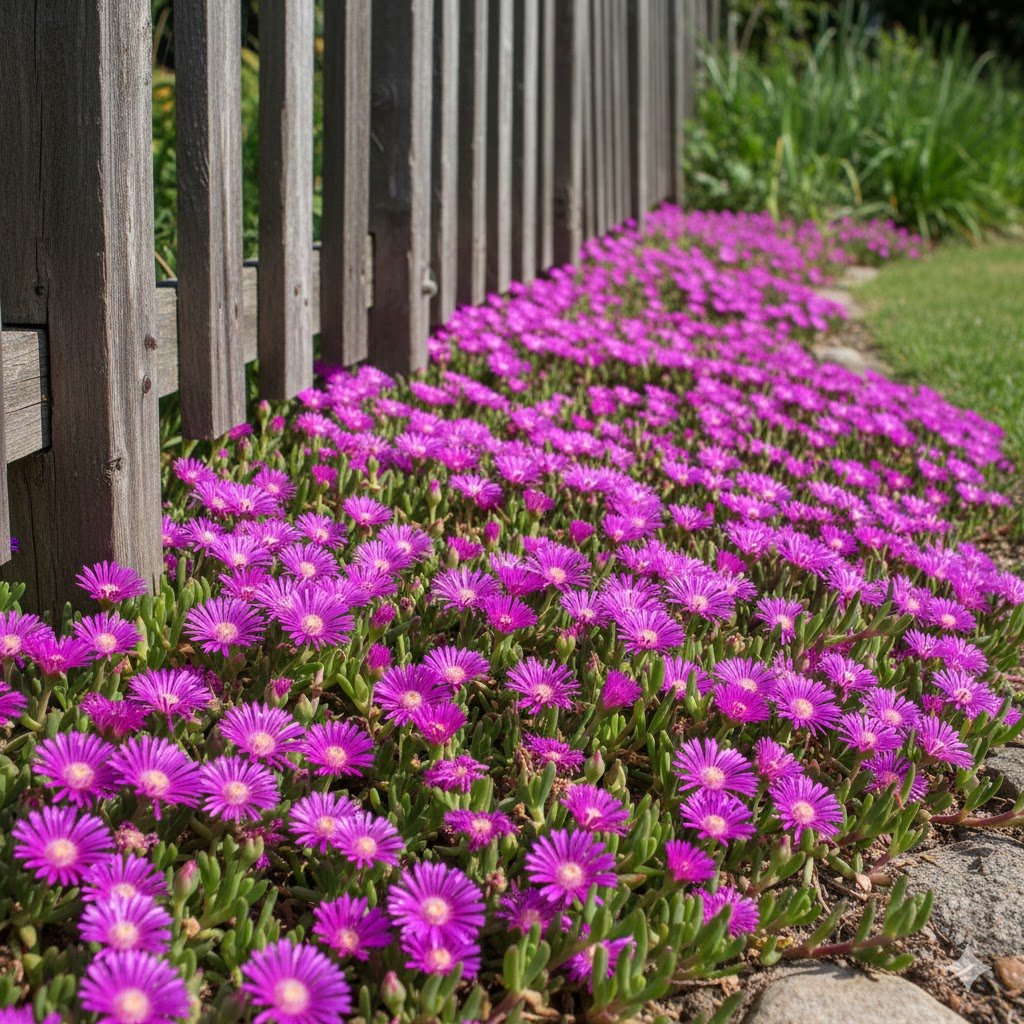
This is a groundcover that looks like it belongs in a neon-lit 80s music video. The flowers are incredibly vibrant—magenta, orange, or yellow—and they have a shimmering, metallic look to them.
They are succulents, so they love the heat. They start blooming in late spring and keep popping up all summer. In my experience, they are the best way to “edge” a border that hits a sidewalk.
Just don’t plant them in soggy soil. They hate “wet feet.” If their roots sit in water, they’ll turn into mush faster than you can say “overwatering.”
The Real Talk: What’s Not Worth Your Time
Let’s be real for a second. You’re going to see “Bleeding Hearts” at the nursery and think they’re beautiful. They are. For about three weeks. Then they turn yellow, die back to the ground, and leave a giant hole in your garden for the rest of the year. Unless you have a plan to hide that hole, they aren’t worth the prime real-time in a small border.
Also, avoid the “Bigleaf Hydrangeas” (the blue/pink ones) unless you live in a place with perfect humidity and no late frosts. I’ve spent a decade trying to get mine to bloom consistently, and 80% of the time, a late freeze kills the buds and I’m left with a giant green bush that does nothing but drink water. Stick to “Panicle Hydrangeas” (like ‘Limelight’) if you actually want flowers every year.
Lastly, stop buying “Mixed Wildflower” seeds in a can. You’ll end up with 90% weeds and maybe three cosmos that fall over the first time it rains. Invest in a few good perennials instead; your future self will thank you when you aren’t weeding a disaster zone in July.
Parting Wisdom
Gardening isn’t about having a green thumb; it’s about having a thick skin and a sense of humor. Half the stuff you plant will probably die because a squirrel decided to dig it up or the weather decided to act like a moody teenager. That’s fine. Just dig it out and try one of the plants above.
The goal is to have a yard that makes you happy when you pull into the driveway after a long day, not one that adds another ten items to your “to-do” list. Choose the “workhorses” and let them do the heavy lifting for you.
I’m curious—what’s the one plant you’ve tried to grow that just absolutely refused to cooperate? Let me know in the comments, and maybe we can figure out why it hated you so much!

About Syprose Kiche
Syprose Kiche is the creator and writer behind My Besuited Home, a practical home and garden website covering DIY projects, gardening, lawn care, landscaping, home improvement, and outdoor living. She focuses on turning everyday homeowner questions into clear, practical guides backed by careful research and useful real-world considerations.