
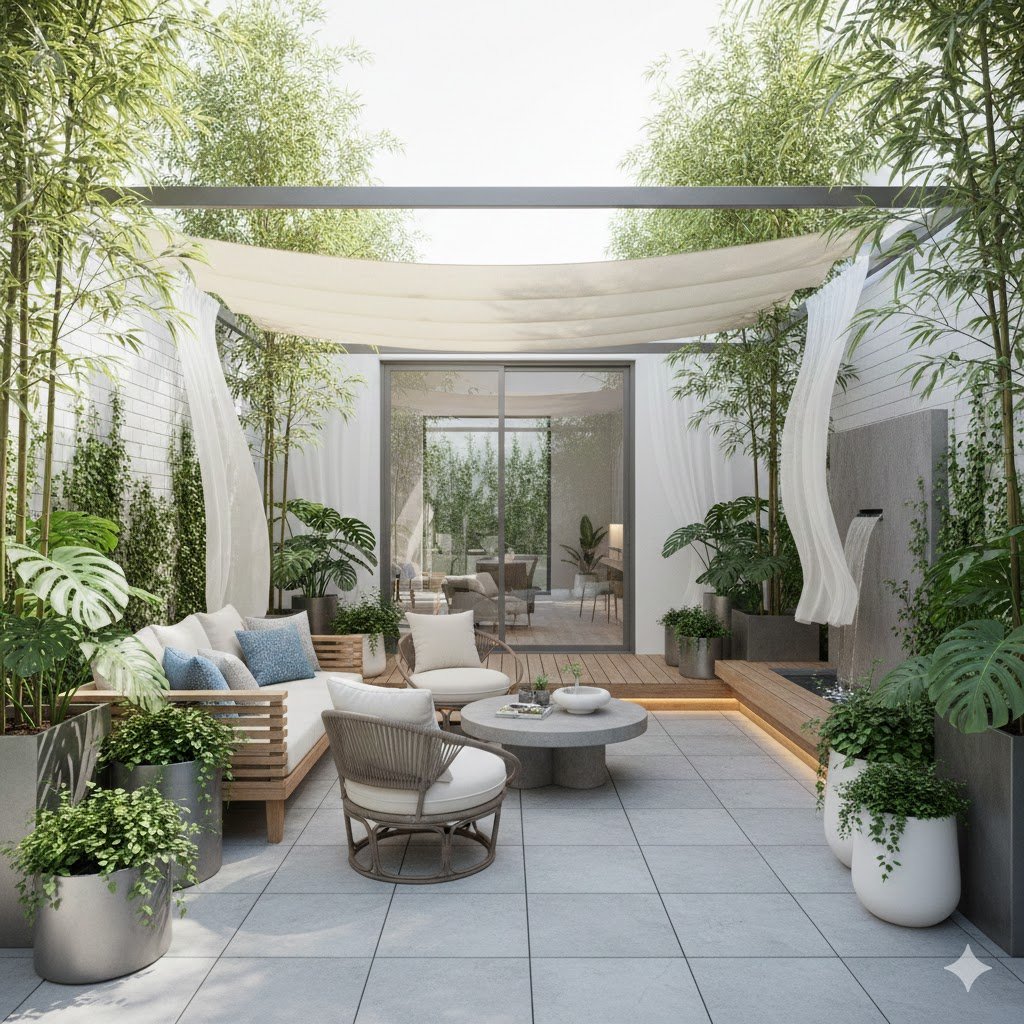
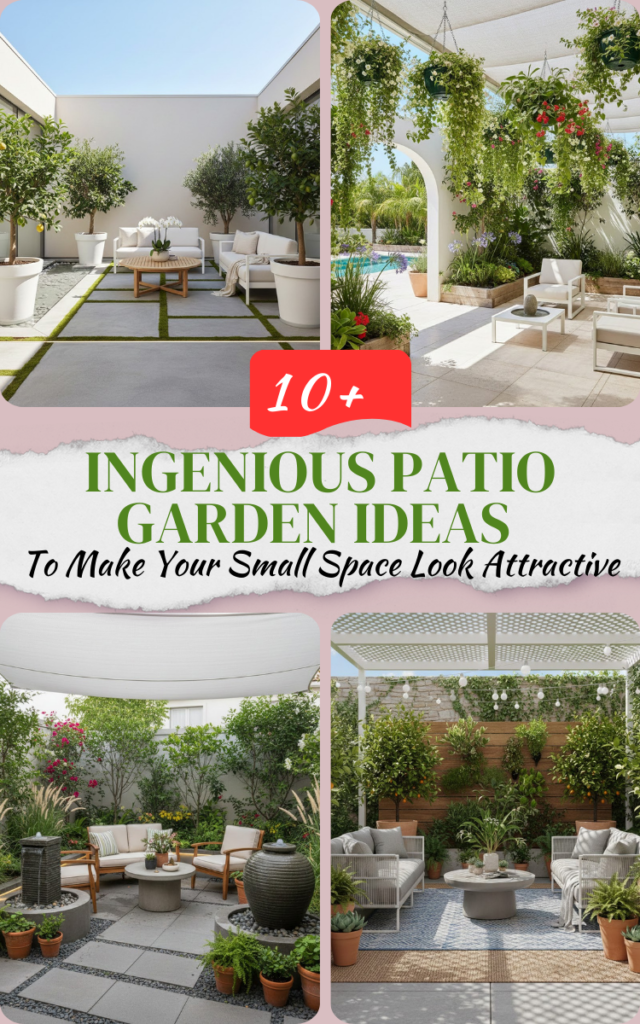
I’ve spent the last fifteen years engaged in a slow-motion wrestling match with Mother Nature, and let me tell you, Mother Nature usually wins. My fingernails haven’t been truly clean since 2011, and I once lost a pair of expensive pruning shears inside a particularly aggressive tomato plant for an entire season.
If you’re staring at a tiny, cramped patio and thinking it’s impossible to grow anything more than a single, sad petunia, I’m here to tell you that’s nonsense. You don’t need an acre of land; you just need to stop thinking horizontally. I’ve turned concrete slabs smaller than a parking space into lush jungles that actually produce food and flowers. It took a lot of trial and error (and one spectacular incident where a “self-watering” pot turned my balcony into a swamp), but I’ve figured out what actually works for small-space gardening.
15 Ingenious Patio Garden Ideas that Actually Work
1. Best Vertical Gardening Ideas for Small Patios
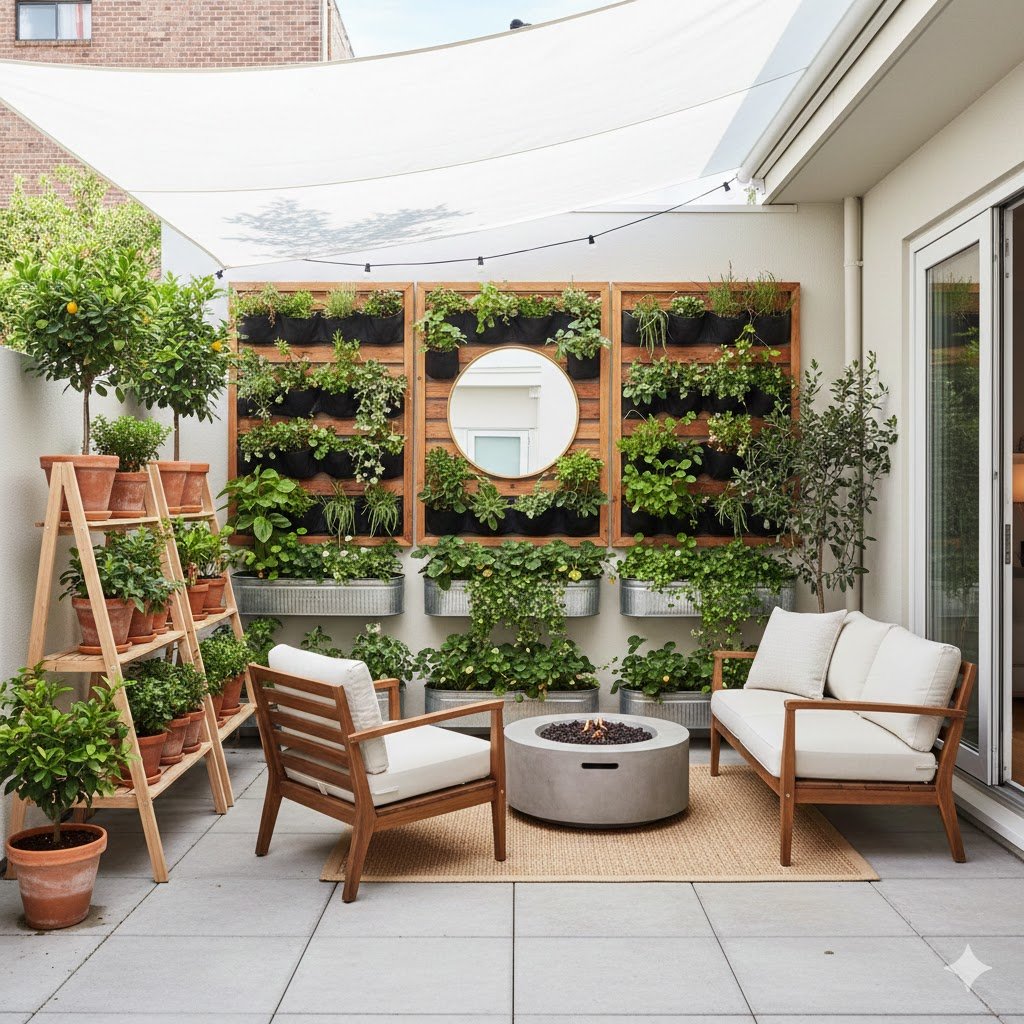
Stop looking at your floor space. If you’ve only got twelve square feet of concrete, you’re going to run out of room for your feet if you keep buying round pots. The secret to a high-end patio look is using your walls. I’m a huge fan of vertical wall planters, but stay away from those cheap felt pockets you see in targeted ads. I tried those once, and they dried out so fast my succulents turned into dust within a week.
Instead, look for modular plastic wall systems or even a simple wooden trellis. When you grow upward, you create a “living wall” effect that provides privacy from that neighbor who likes to stare while you’re drinking your morning coffee. I once grew an entire crop of pole beans up a lattice I’d zip-tied to a railing. It looked like a luxury estate feature, but it was really just a $15 piece of wood and some dirt.
The trick to making vertical gardens look attractive—and not like a science experiment—is grouping your plants by water needs. Don’t put a thirsty fern right above a cactus. The runoff from the top will drown the guy on the bottom. I’ve made that mistake enough times to know that gravity is a cruel mistress in a vertical garden.
2. Low Maintenance Container Gardening Tips
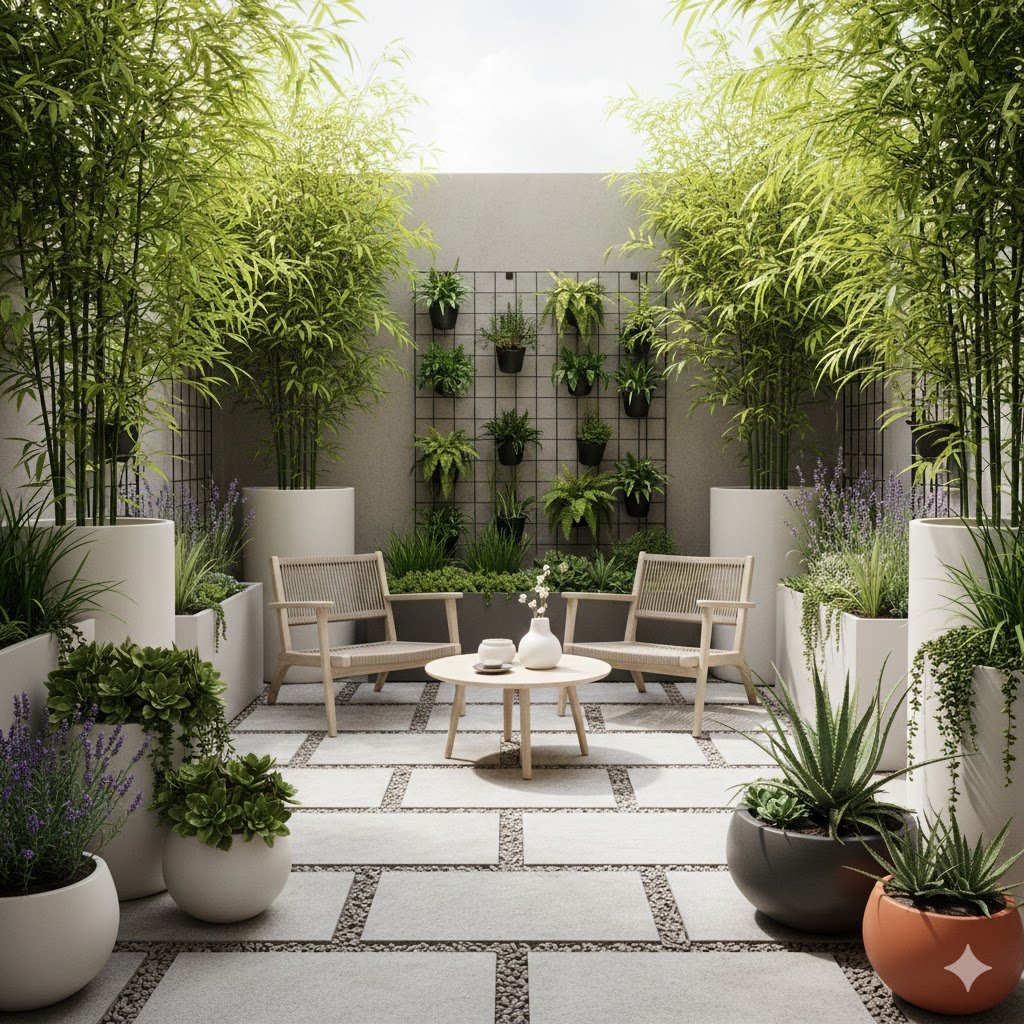
I’m a lazy gardener at heart. If a plant requires me to sing to it or monitor its pH levels every hour, it’s going to die in my care. For a small patio, you want “set it and forget it” setups. This starts with the size of your pots. Small pots are the enemy. They look cute, but they hold about two tablespoons of soil, which means they dry out the moment the sun hits them.
I always tell people to buy the biggest pots that will physically fit on their patio. More soil means more moisture retention, which means you aren’t a slave to the watering can. I learned this the hard way the summer my zucchini took over the entire ZIP code; I had it in a massive 20-gallon tub, and while it tried to eat my patio furniture, it only needed watering every few days.
Also, skip the “potting soil” that’s mostly just cheap mulch. Spend the extra five bucks on the good stuff with perlite and peat moss. Your plants will actually have room to breathe. If you see me at the garden center, I’m the one poking the bags to make sure they aren’t compressed into bricks.
3. Creating Privacy with Tall Potted Plants
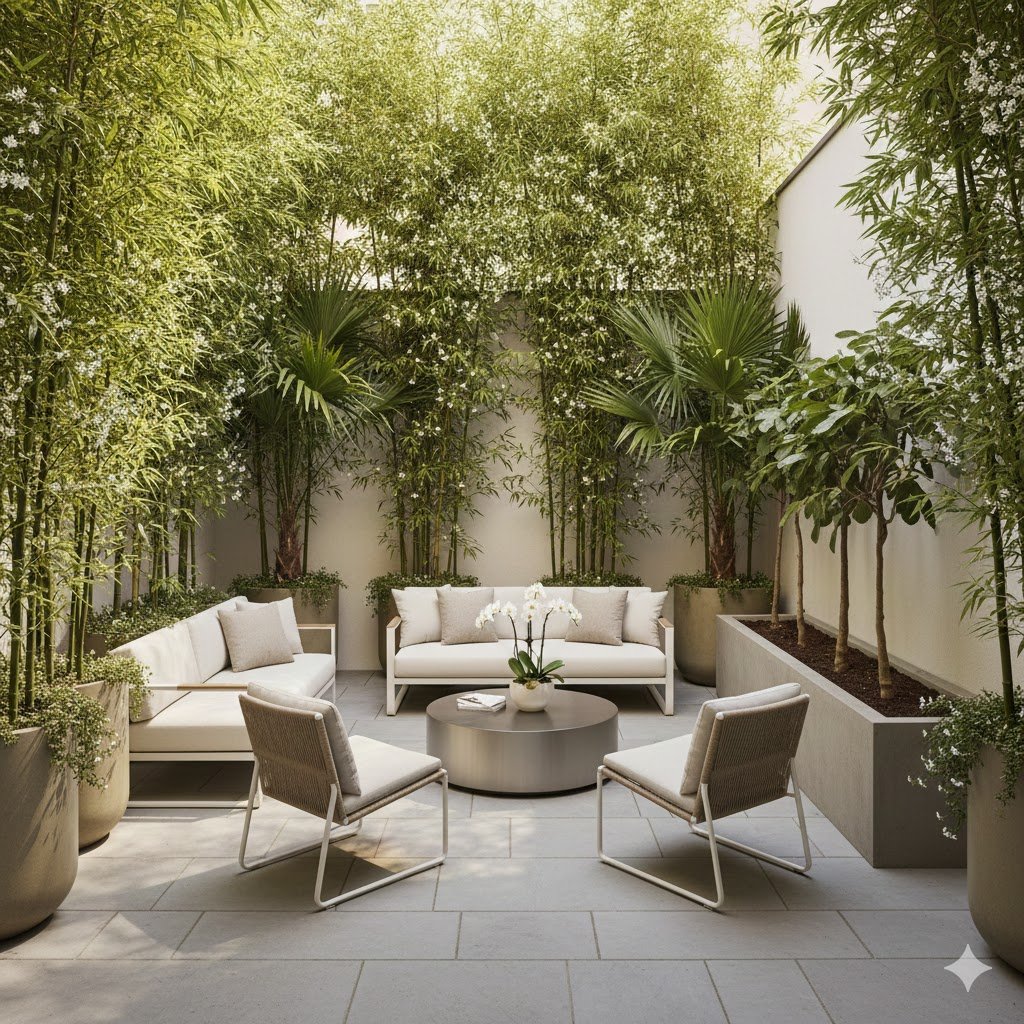
Living in a condo or a townhouse usually means your “private” patio is about three feet away from your neighbor’s. You could buy one of those plastic screens, but those look like they belong in a cubicle. I prefer using “green screens.” Bamboo is the classic choice here, but be warned: never, ever plant bamboo in the ground unless you want it to eventually grow through your living room floor.
In a large, heavy pot, however, clumping bamboo is a miracle worker. It grows fast, it’s tall, and it makes a lovely rustling sound in the wind. I used a row of black bamboo to hide my neighbor’s collection of rusty lawn ornaments, and it changed the entire vibe of my space. It went from “cramped alleyway” to “zen retreat” in about one afternoon.
If bamboo isn’t your thing, try ornamental grasses like Karl Foerster. They get tall, they don’t flop over, and they look great even in the winter when they turn a golden tan. I’ve found that mixing three different heights of plants in a corner creates a “depth” that makes the patio feel bigger than it actually is.
4. Using Tiered Plant Stands for Organization
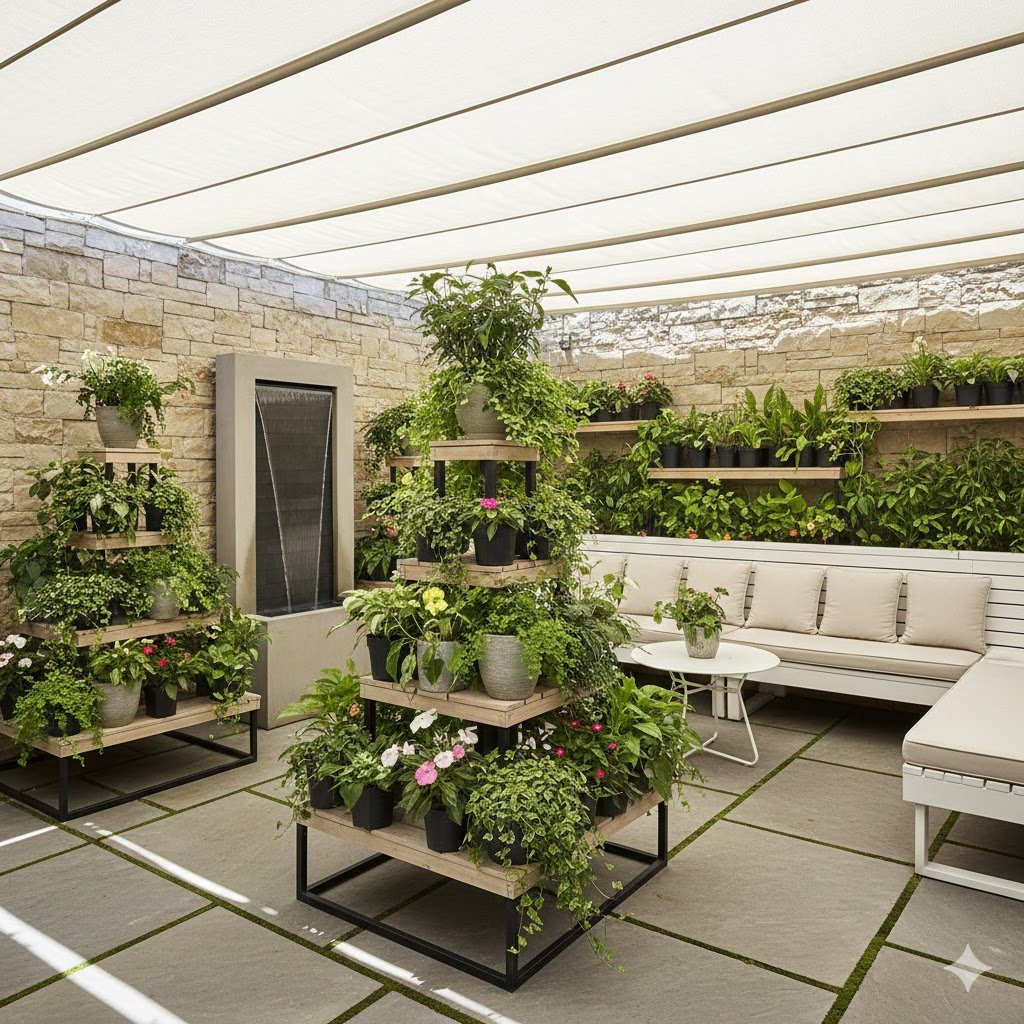
If you have a collection of small herbs, don’t just line them up on the ground like a bunch of soldiers. It looks messy and makes it hard to sweep up the dead leaves. I’m a big believer in the tiered plant stand. It’s basically a bookshelf for your plants. This is a total game-changer for herb gardens because it keeps the basil away from the mint (which, if left unchecked, will colonize your entire home).
I once built a tiered stand out of old shipping pallets, which looked “rustic” for about a month until the wood started to rot. My advice? Buy a metal or treated wood stand. It’s worth the investment to not have your oregano collapse onto your rosemary in the middle of a rainstorm.
Tiering also helps with light exposure. You can put your sun-hating plants on the bottom shelf and the sun-worshippers on the top. It’s like a little apartment complex for your greenery. Plus, it leaves you enough floor space to actually put a chair down so you can sit and enjoy the view.
5. Edible Landscaping in Small Spaces
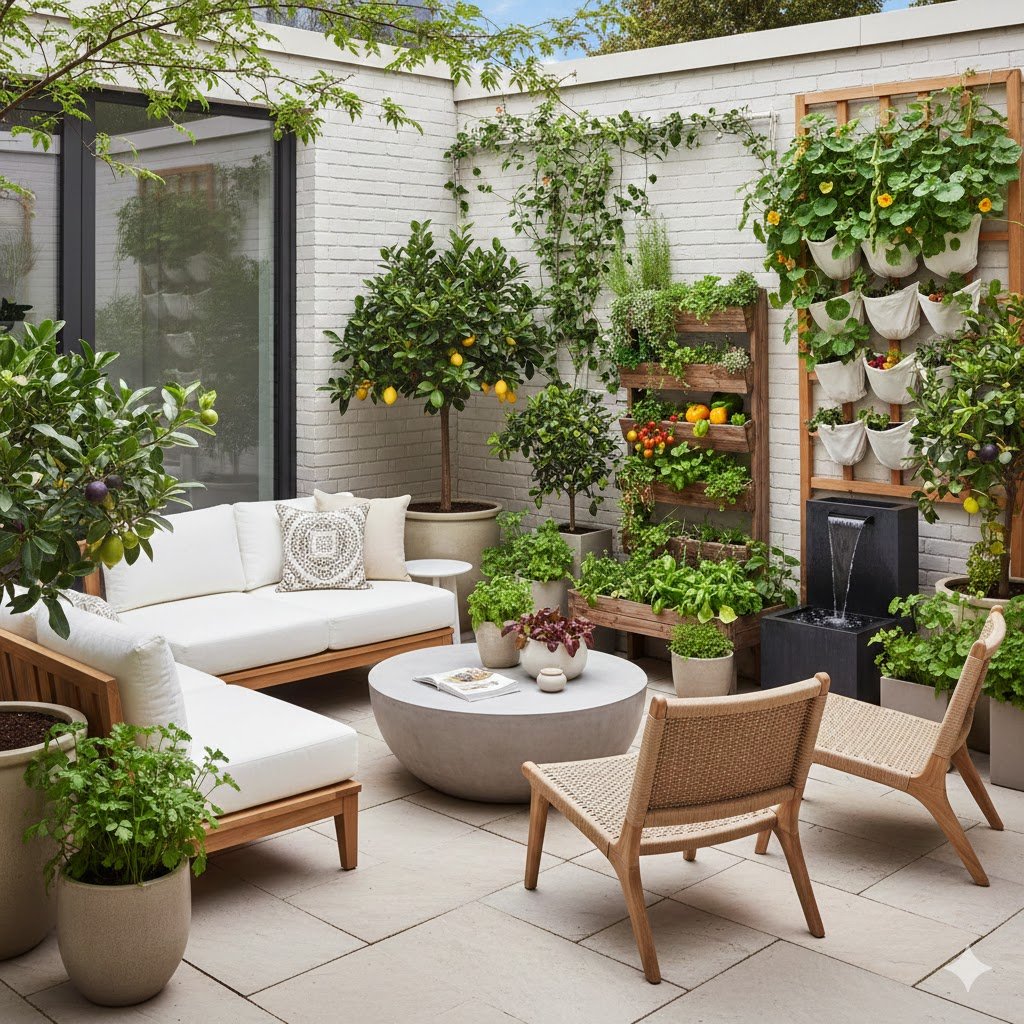
Who says a “pretty” garden can’t be one you can eat? I stopped growing purely decorative flowers years ago when I realized I could get the same colors from vegetables. Rainbow chard has stems that look like neon lights, and purple kale is honestly more beautiful than most ornamental shrubs.
The mistake most people make is putting their “veggie patch” in ugly plastic buckets. If you want an attractive patio, put your tomatoes in a high-end ceramic glazed pot. I’ve grown “Patio Choice” yellow tomatoes that look like cascading gold vines. They taste better than anything at the grocery store, and they don’t look like a farm project.
Just a side note: if you’re growing food on a patio, you’re going to attract “guests.” I once had a squirrel who developed a taste for my heirloom peppers. I had to start sprinkling cayenne pepper on the soil to keep him away. It felt a bit like seasoned psychological warfare, but my salsa harvest survived.
6. Hanging Baskets That Actually Survive the Summer
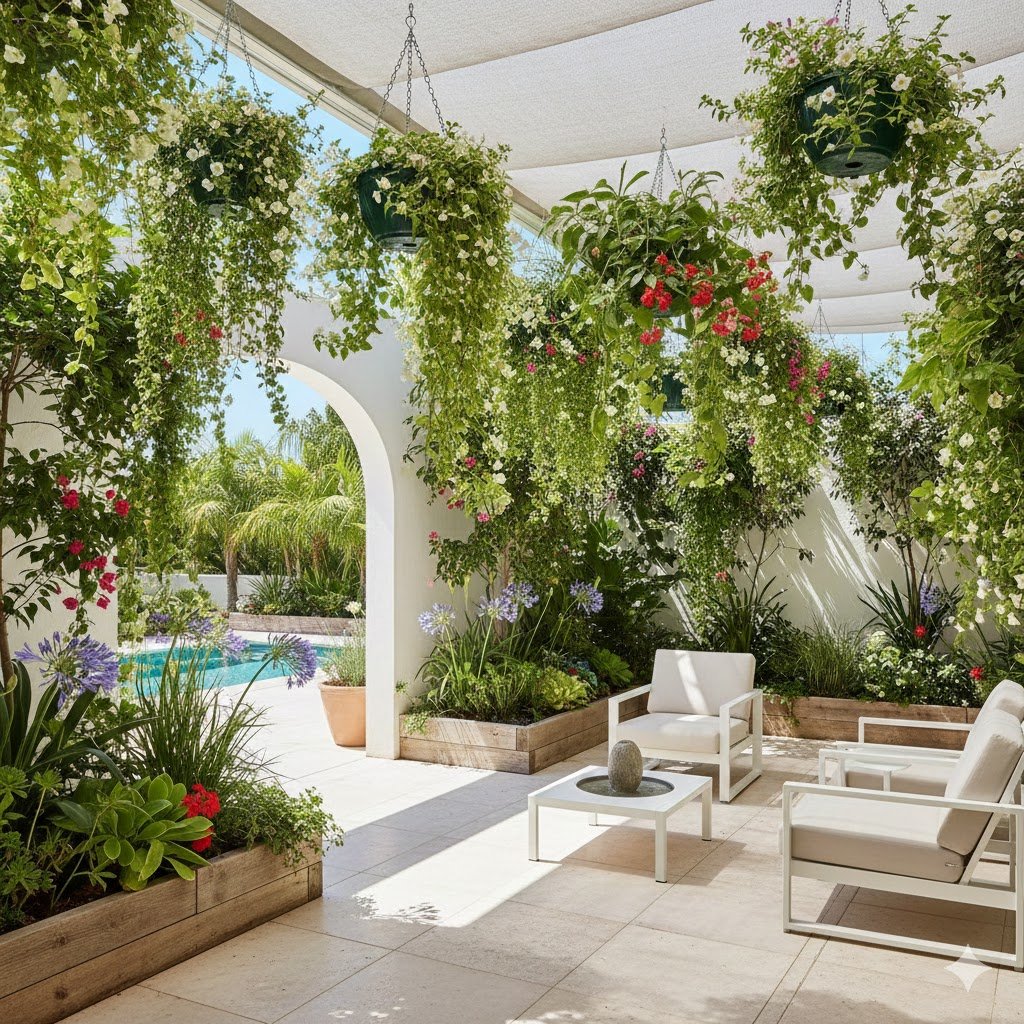
Most people treat hanging baskets like disposable décor, but I think that’s a crying shame. The problem is those cheap plastic ones from big-box stores that come with “petunias on life support.” If you want a patio that looks like a high-end bistro, you need coco-fiber liners. They breathe better, and they don’t look like cheap Tupperware dangling from your eaves.
I once hung a massive basket of fuchsias right above my favorite reading chair. It was beautiful until I realized I’d hung it too high to reach with a watering can. I ended up having to stand on a wobbly stool every morning like a circus performer. Now, I use pulley systems or “reach-arm” hooks. My back—and my plants—thank me.
For the best results, mix a “thriller, filler, and spiller.” Put something upright in the middle, something mounded around it, and something like Creeping Jenny to trail down the sides. It creates a lush, overflowing look that hides the container entirely. Just remember: hanging plants dry out twice as fast because they’re hit by wind from all sides. If you aren’t prepared to water them daily, stick to plastic liners hidden inside the coco-fiber to hold onto that moisture a little longer.
7. Mirror Magic to Double Your Garden Size
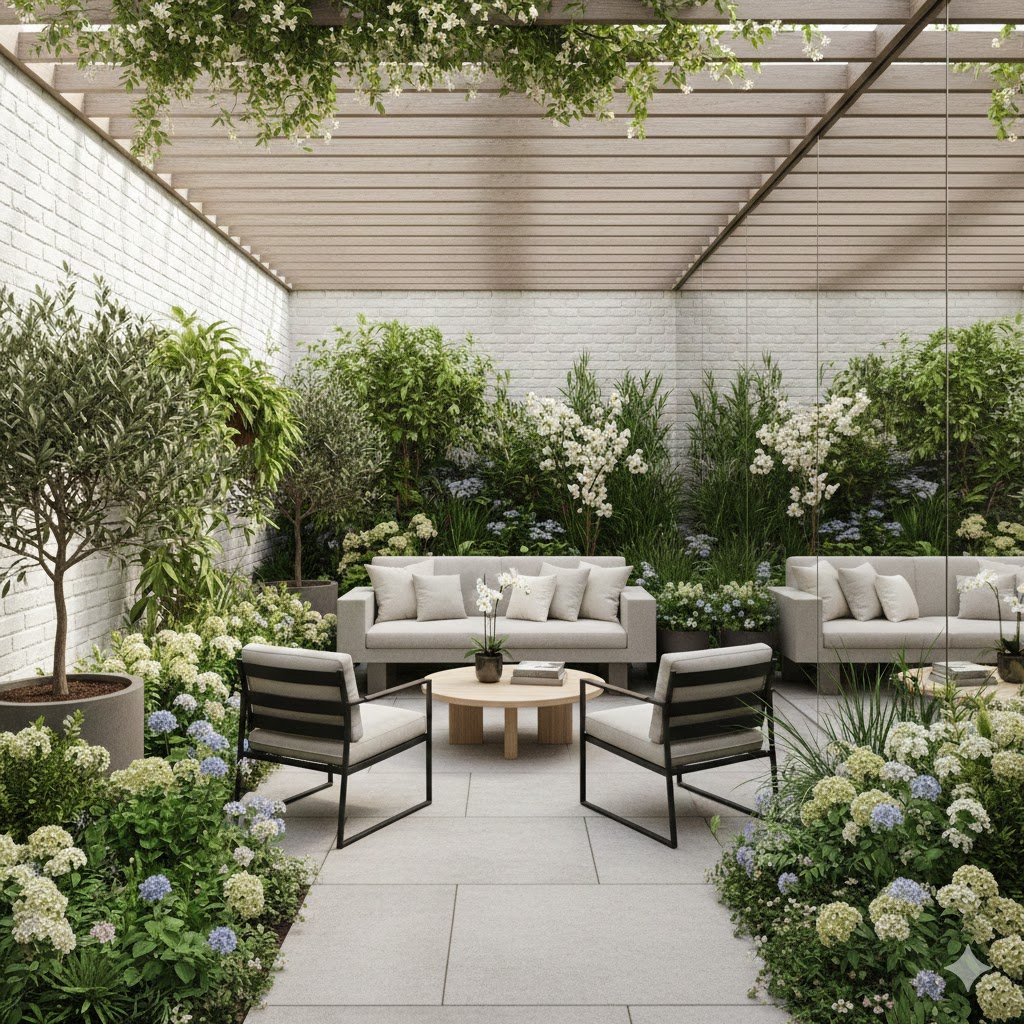
This is my favorite “designer” trick that costs almost nothing. If you have a blank wall or a sturdy fence, hang a weather-treated mirror. It’s an old trick I learned after I accidentally shattered a floor mirror while moving a heavy oak planter. Instead of tossing the frame, I replaced the glass with an acrylic mirror sheet and tucked it behind some tall ferns.
The reflection creates an optical illusion that your garden continues into another “room.” It doubles the amount of green your eye sees and bounces light into those dark, dingy corners where only moss likes to grow. I’ve found that arched mirrors or those that look like window frames work best because they look intentional, not like you just forgot to take the trash out.
One quick side note: don’t place a mirror where it will reflect the direct midday sun onto your most delicate plants. I once inadvertently turned a mirror into a magnifying glass and scorched a hole right through my prize-winning Hosta. Position it to reflect shade or indirect light, and your plants won’t end up as crispy snacks.
8. Integrated Bench Planters for Dual-Purpose Seating
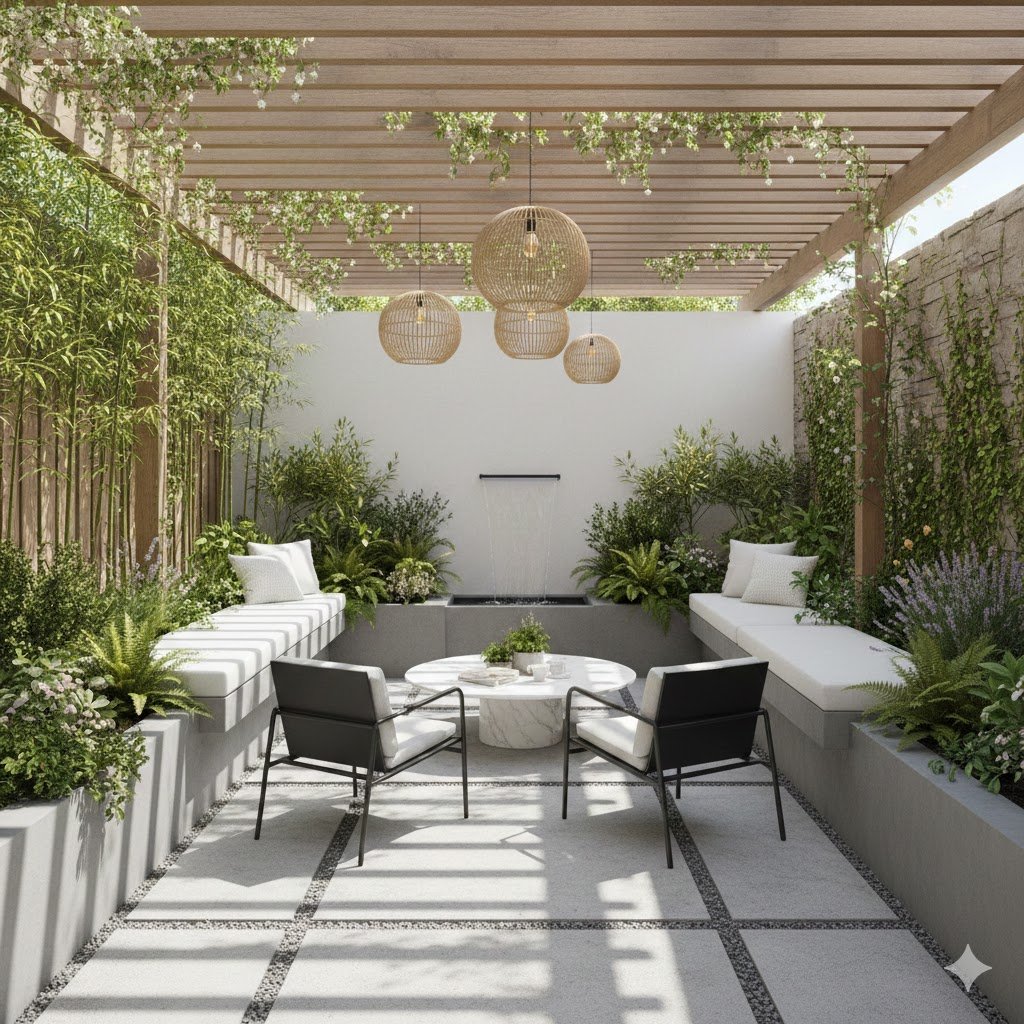
In a small space, every piece of furniture has to earn its keep. If you have a chair, it should also be a storage bin. If you have a bench, it should also be a garden. I’m a massive fan of built-in bench planters. These are basically long wooden boxes with a seating surface in the middle.
I built one for my back deck after realizing I didn’t have room for both a seating area and my herb collection. It’s a total space-saver, and there is something incredibly satisfying about sitting on a bench while the scent of lavender or lemon balm wafts up around your ears. It makes your patio feel like a cohesive “built-in” space rather than a collection of random pots you tripped over at the store.
When you’re building or buying these, make sure the planter sections are lined with heavy-duty plastic or zinc. Wood rot is the silent killer of patio dreams. I spent an entire weekend one spring replacing the bottom of a bench because I’d skipped the liner and the damp soil had turned the cedar into mush.
9. Choosing a Cohesive Color Palette
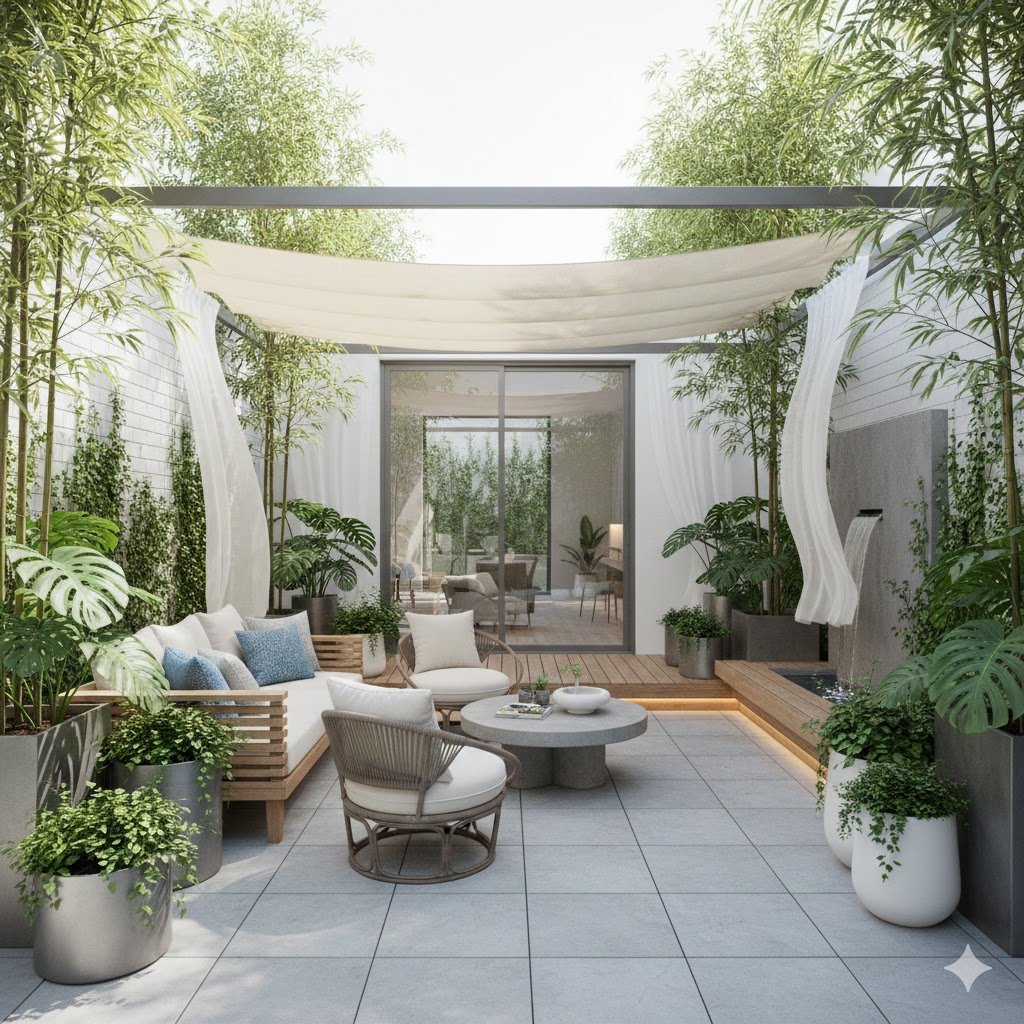
Nothing makes a small patio look “cluttered” faster than a riot of every color under the sun. I know, I know—everything looks good at the nursery. But if you buy one red geranium, one blue lobelia, one yellow marigold, and a pink rose, your patio is going to look like a clown’s pockets.
I’ve found that sticking to a three-color palette makes even the tiniest space look professionally designed. My personal favorite is “The Moon Garden” look: whites, silvers, and deep greens. It glows at night when you’re out there with a glass of wine. Another great option is “Hot and Spicy”: oranges, deep reds, and dark purples.
Whatever you choose, carry that color through to your pots and cushions. It creates a “visual flow” that tricks the brain into thinking the space is organized and larger than it is. I once tried to do a “rainbow” theme, and it honestly just gave me a headache every time I looked out the window. Less is definitely more when it comes to color in tight quarters.
10. The Magic of Solar Lighting
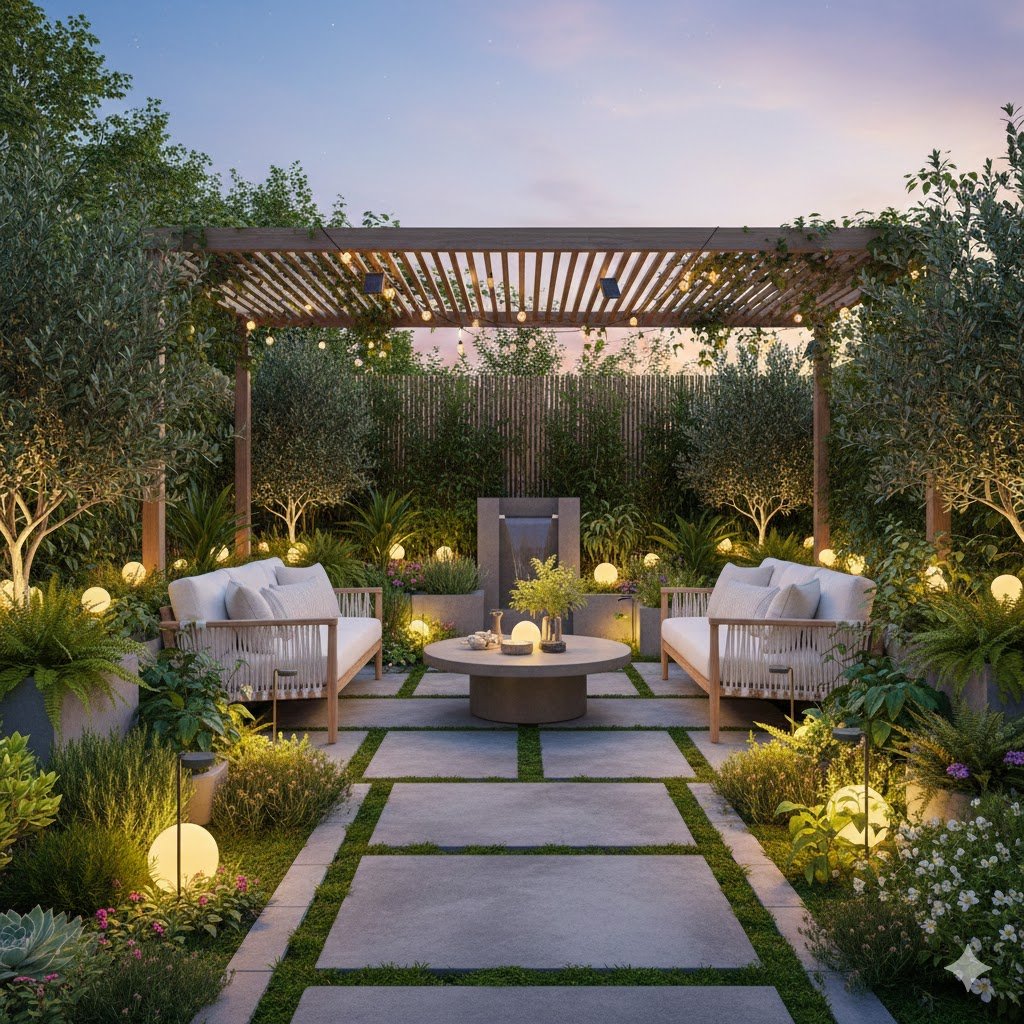
You shouldn’t have to go inside just because the sun went down. But please, I am begging you, stay away from those cheap solar “stakes” that look like little glowing mushrooms lined up in a row. They look like a landing strip for a very small, very tacky airplane.
Instead, use “up-lighting.” Hide small solar spotlights behind your largest pots and aim them up into the foliage of your tall plants or bamboo. This creates dramatic shadows and makes your garden feel like a high-end hotel lounge. I also love stringing Edison-style solar bulbs across the top of the space.
One summer, I got a bit carried away and installed so many solar lights that my patio could be seen from space. My neighbors thought I was hosting a permanent festival. The key is subtlety. You want a “glow,” not a searchlight. Use warm white bulbs—cool blue LEDs make everything look like a sterile hospital wing.
11. Dwarf Fruit Trees for High-Impact Greenery
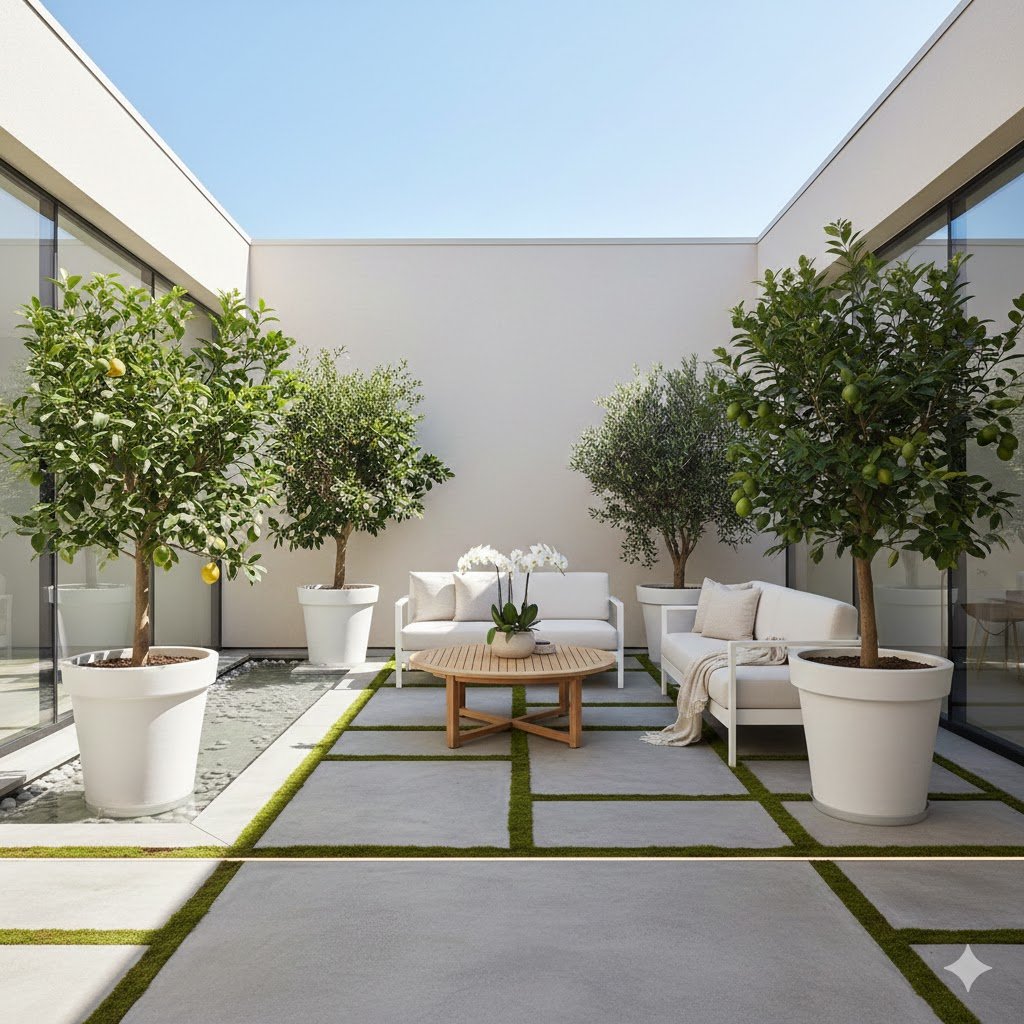
You don’t need an orchard to grow fruit. Thanks to the wonders of modern grafting, you can grow apples, lemons, and even peaches in pots. I have a “Meyer” lemon tree that lives on my patio every summer, and the smell of the blossoms alone is worth the price of admission.
The trick is to look for “columnar” varieties. These trees grow straight up like a pillar rather than branching out wide. I’ve grown “Sentinel” apples that produced full-sized fruit while only being two feet wide. It’s a total conversation starter when guests realize they can literally pick their snacks while standing on your balcony.
Just be prepared: fruit trees in pots are heavy. If you’re on a wooden deck, check your weight limits. I once had a heavy terracotta pot with a fig tree that started to “sink” into the floorboards after a heavy rain. Now, I use high-quality resin pots that look like stone but weigh about 90% less.
12. Using Herbs as Ground Cover in Pots
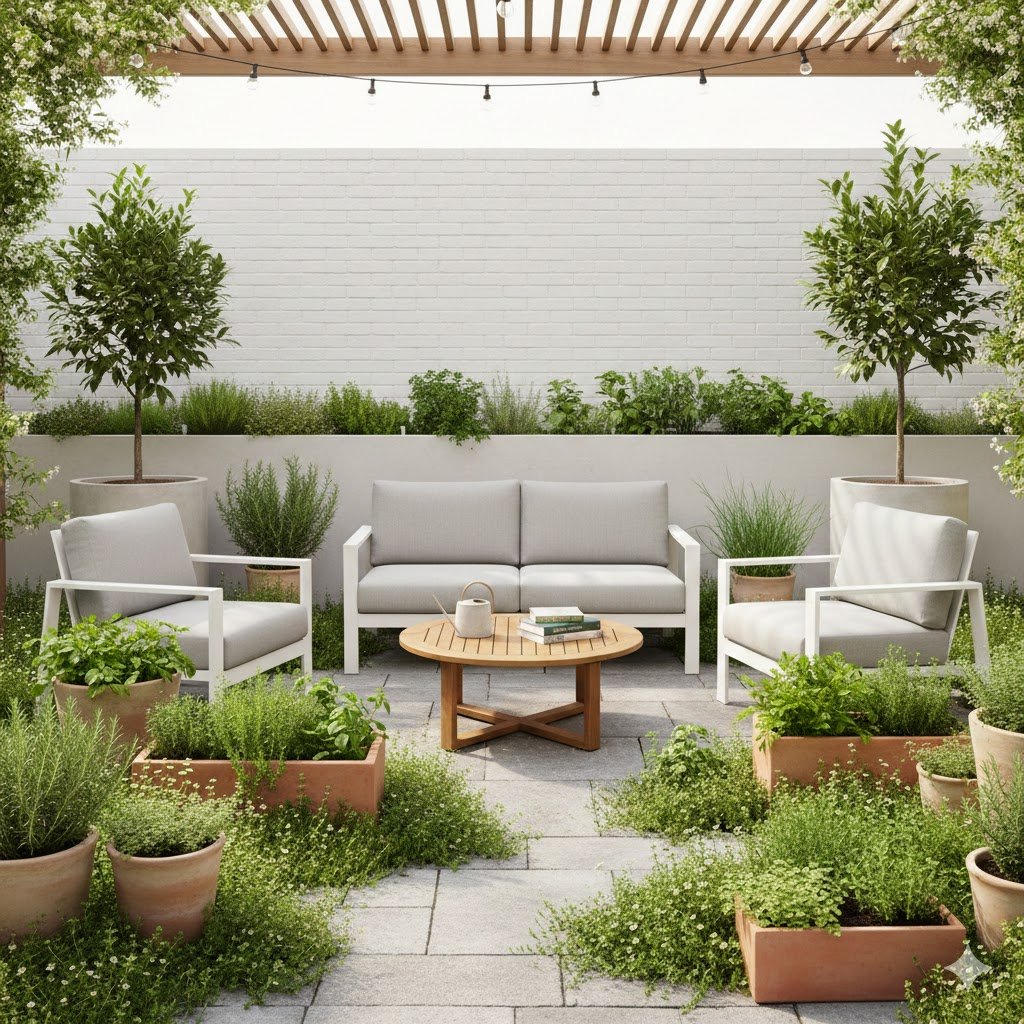
Don’t leave the soil bare at the base of your larger plants. It looks unfinished and lets the weeds in. Instead, use “living mulch.” I love using creeping thyme or prostrate rosemary to fill in the gaps around the base of my larger trees or shrubs.
It creates a lush, carpeted look that stays green year-round. Plus, every time you accidentally brush against it, you get a hit of fresh herbal scent. I’ve found that this also helps keep the soil temperature stable, which prevents your “main” plant from getting stressed out during heatwaves.
I once tried to use mint as a ground cover in a large pot with a rose bush. Mistake. Mint is a horticultural bully. Within two months, it had strangled the rose and was trying to climb the walls. Stick to thyme, oregano, or even small succulents for this trick.
13. Strategic Use of “Statement” Furniture
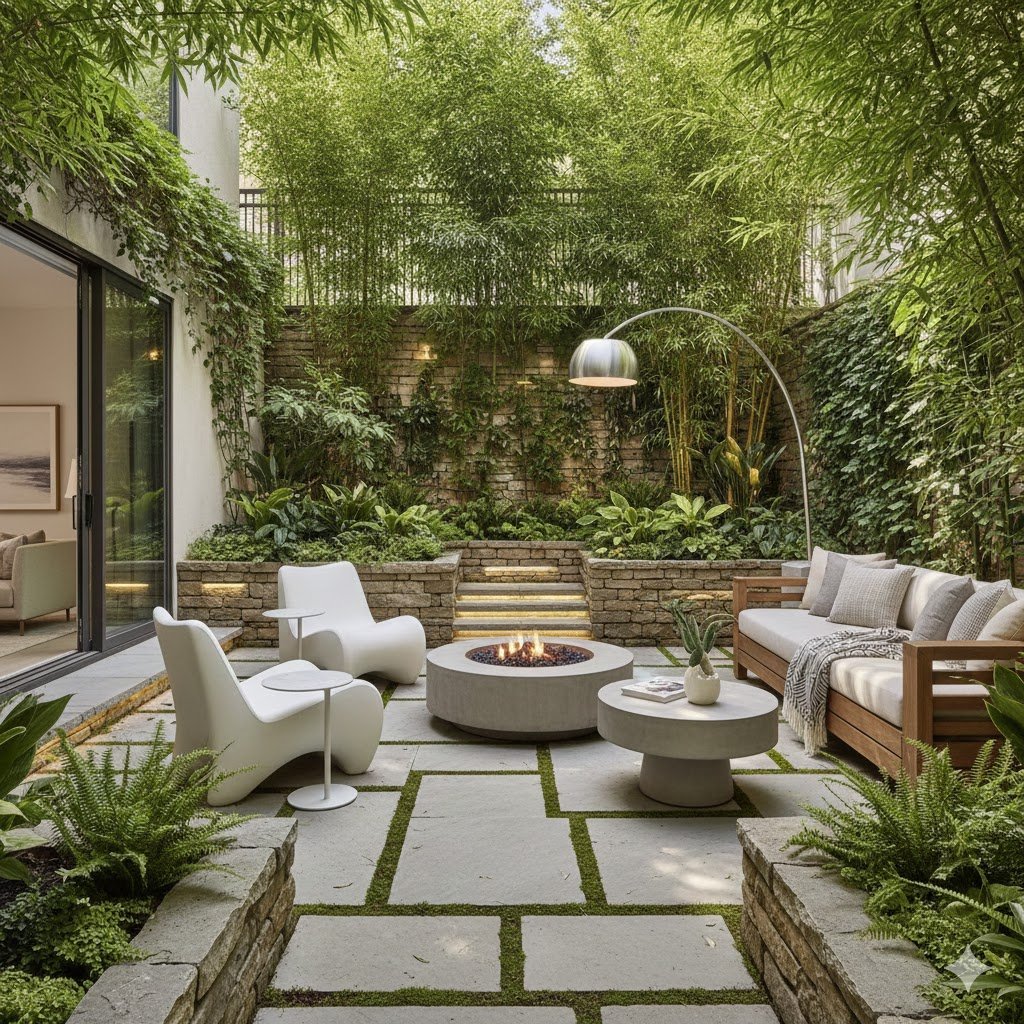
If your patio is small, don’t try to cram a full dining set out there. You’ll just spend your time shimming past chairs and bruising your shins. I’m a big advocate for the “bistro set”—two chairs and a tiny table. But here’s the pro tip: make it a statement piece.
Choose a bold color like turquoise or a classic wrought iron. If the furniture is pretty enough, you don’t need as many plants to make the space look “finished.” I once found a vintage metal cafe set at a yard sale, spray-painted it a bright poppy red, and it became the focal point of the whole garden.
This also allows you to move things around easily. If you’re having a party, you can fold the chairs and tuck them away to make room for more standing space. Flexibility is the name of the game when you’re working with limited square footage.
14. Water Features That Don’t Require Plumbing
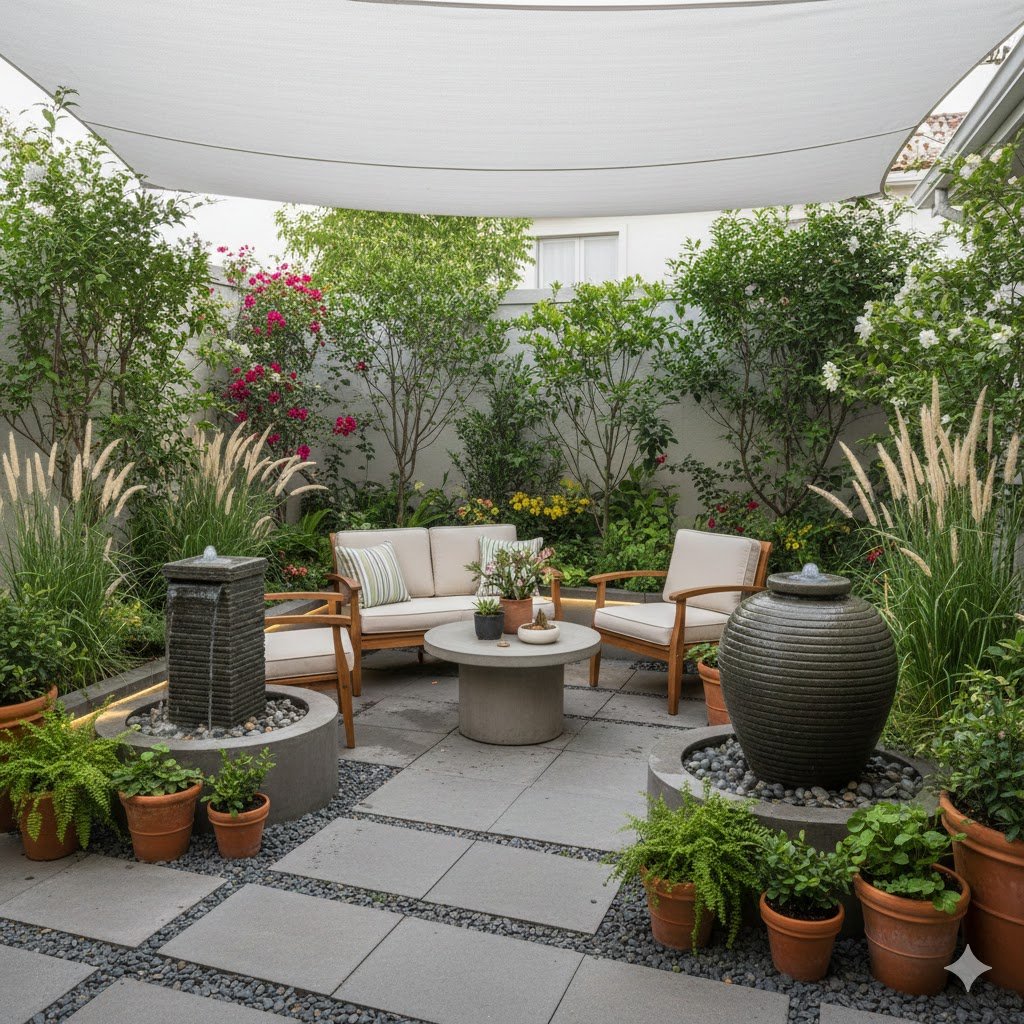
The sound of running water is the ultimate way to drown out the sound of city traffic or your neighbor’s leaf blower. You don’t need a pond; you just need a “plug-and-play” fountain. I have a small tabletop stone fountain that runs on a tiny solar pump.
It’s small enough to sit on a side table, but it adds a layer of “luxury” that makes the patio feel like a destination. I’ve even seen people turn large glazed pots into “disappearing” fountains using a hidden reservoir. It’s a bit of a weekend project, but it’s totally doable for a DIYer.
Just a word of caution: if you live in a cold climate, you have to drain these in the winter. I forgot once, and the water froze, expanded, and cracked my favorite ceramic fountain right down the middle. It sounded like a gunshot in the middle of the night. Lesson learned.
15. The “Layered Look” with Outdoor Rugs
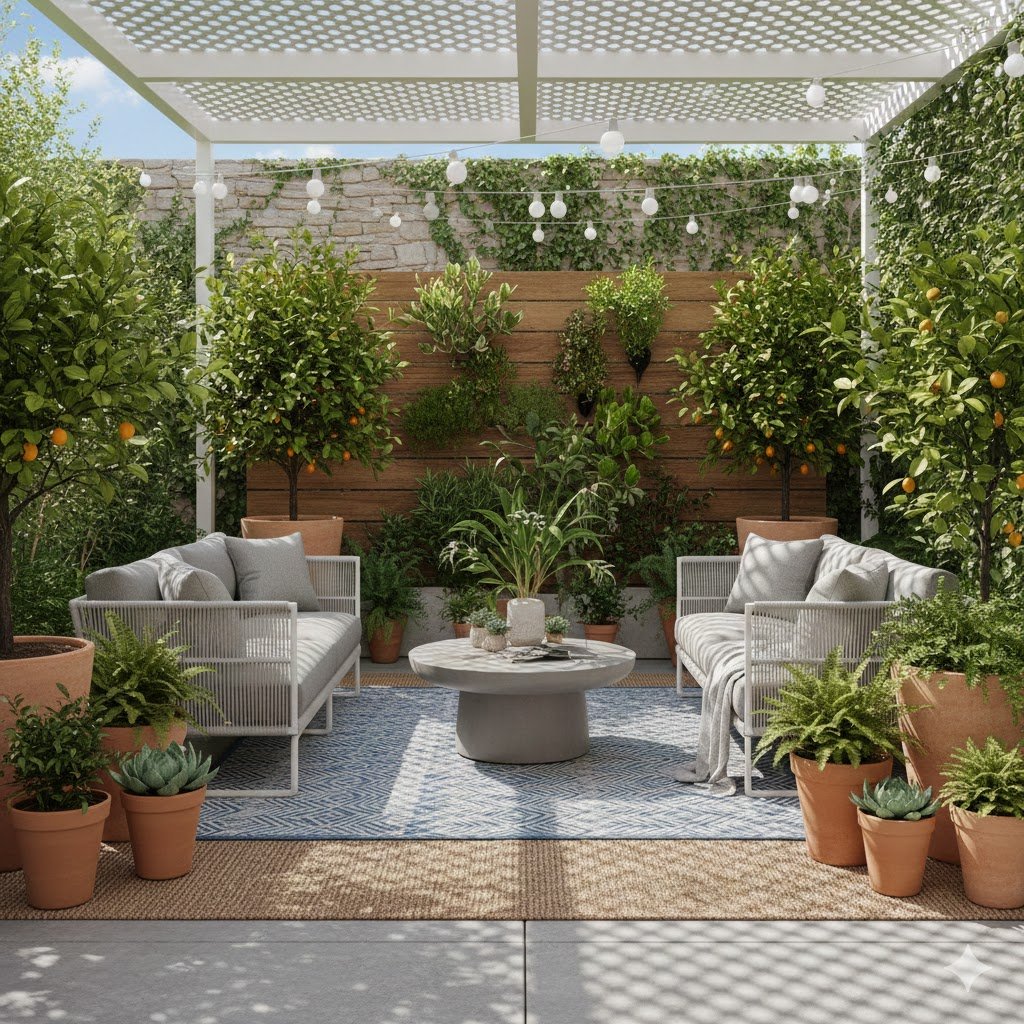
If your patio floor is ugly concrete or stained wood, hide it. An outdoor rug is the “rug that ties the room together” for your garden. It defines the space and makes it feel like an outdoor living room rather than just a porch.
I prefer rugs with a simple geometric pattern. It provides a structured contrast to the organic, messy shapes of the plants. I’ve found that a good rug also makes the space feel warmer and more inviting for bare feet.
One bonus tip: get a rug made from recycled plastic (polypropylene). They are virtually indestructible, they don’t grow mold, and you can literally hose them off when they get dirty. I’ve had one for five years that has survived dogs, spilled wine, and a very messy potting session, and it still looks brand new.
The Real Talk: What’s Not Worth Your Time
I’m going to be honest with you—half the stuff you see on Pinterest for small gardens is a total waste of money. Those “automated” misting systems? They clog up with hard water minerals in three weeks. Those tiny glass watering globes? They’re basically just mosquito breeding grounds that don’t actually reach the roots.
Also, stay away from “miracle” seeds sold on sketchy websites that promise blue strawberries or rainbow roses. They don’t exist. I’ve wasted more money than I care to admit on “exotic” seeds that turned out to be common weeds. Stick to reputable nurseries.
And for the love of all that is holy, don’t buy a fire pit for a tiny patio if you also want a lot of plants. I once tried to have both, and I ended up “flash-searing” my favorite fern when the wind shifted. Choose one: a cozy fire or a lush garden. You can’t have both in a 5×5 space without a disaster.
Parting Wisdom
Gardening isn’t about having a “green thumb.” It’s mostly just about remembering to water things and not being afraid to throw a plant in the compost bin if it’s clearly miserable. Your patio is your sanctuary, not a chore list. Start small—maybe just three pots—and see how it feels before you turn the whole place into a botanical garden.
I’m curious, what’s the biggest “fail” you’ve had trying to grow something in a small space? Tell me your horror stories in the comments below, and I’ll tell you if I’ve done the same thing (spoiler: I probably have).

About Syprose Kiche
Syprose Kiche is the creator and writer behind My Besuited Home, a practical home and garden website covering DIY projects, gardening, lawn care, landscaping, home improvement, and outdoor living. She focuses on turning everyday homeowner questions into clear, practical guides backed by careful research and useful real-world considerations.